Gili Islands
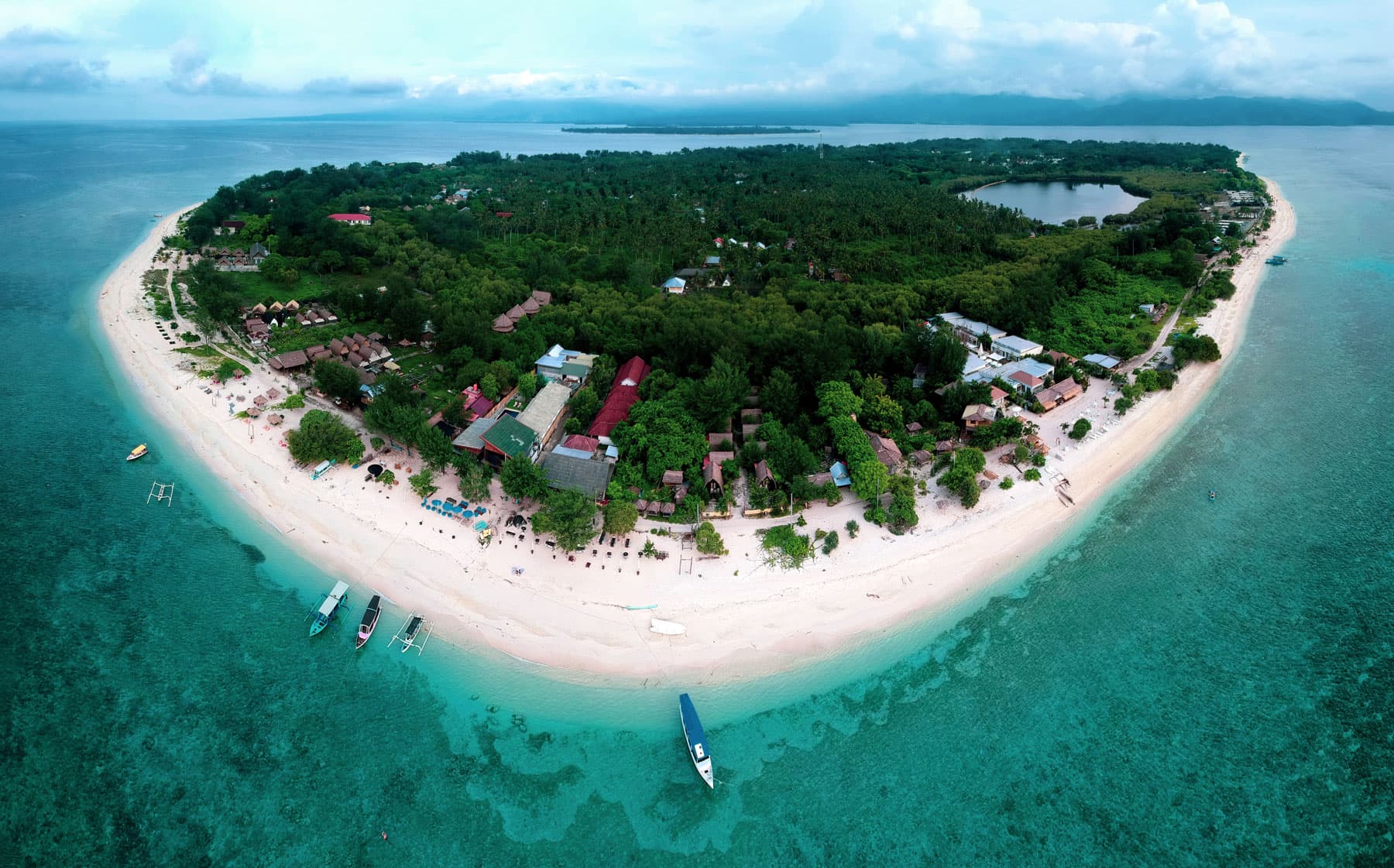
Planning a trip to the Gili Islands? Most travelers book a night on Gili Trawangan expecting one big party island, then either love it or spend the trip trying to escape it. Both reactions miss the point. The Gilis are three separate islands sitting 15 minutes apart off Lombok’s northwest coast, sharing the same reef but running at three completely different tempos. Pick the wrong base and you fight the island for a week. Pick the right one and the whole archipelago opens up around it.

Matching the base to the traveler is the real trick, then using the fast public boats to sample the other two without repacking. No cars, no motorbikes, cidomo carts and bicycles only, which sounds like a novelty until you realize it’s what actually resets your pace. The logistics that matter most are which side of an island to sleep on, when to move between them, and how to time the fast boat back to avoid the swell, small calls that make the difference between a slow, restorative trip and a scattered one. Here’s what each island actually delivers.
The Three Gilis
The Gilis sit just off Lombok’s northwest tip, close enough that on a clear day you can see Mount Rinjani rising behind them on one side and Bali’s Mount Agung on the other. Each island is small enough to walk around in an hour or two. The single fact, no engines, is what gives the islands their pace. The island you pick sets the tone for the whole trip.
Gili Trawangan is the active choice for yoga, diving, restaurants, nightlife, all without feeling overdeveloped. The west coast stays quiet and untouched. Gili Meno is pure digital detox, the honeymoon island where days run on sunlight and nights on silence. Gili Air is the middle ground, a community driven village with wellness, good food, and that rare mix of accessibility and authenticity.
The best part is that you’re not locked in. A public shuttle connects all three, so you can base yourself on one and explore the others in a day. Most travelers pick wrong on their own, worth getting advice before you book.
Beaches, Snorkelling, and the Lagoons
The draw above water is the water itself. The Gilis are ringed by shallow reef, and you can snorkel straight off most beaches without a boat. Green and hawksbill turtles are genuinely abundant here, not a lucky sighting but a near constant presence, grazing the sea grass close to shore all around the three islands, especially off Meno and the northeast of Air. Wade in almost anywhere and you’ll likely have one cruising past within a few minutes.


That abundance is not an accident. The Gili Meno Turtle Sanctuary, a small conservation hatchery on the island, collects eggs from nests around the Gilis, protects them through incubation, and raises the hatchlings until they’re strong enough to release. It is open to visitors, and the population you see snorkelling today is in real part the result of that ongoing work.
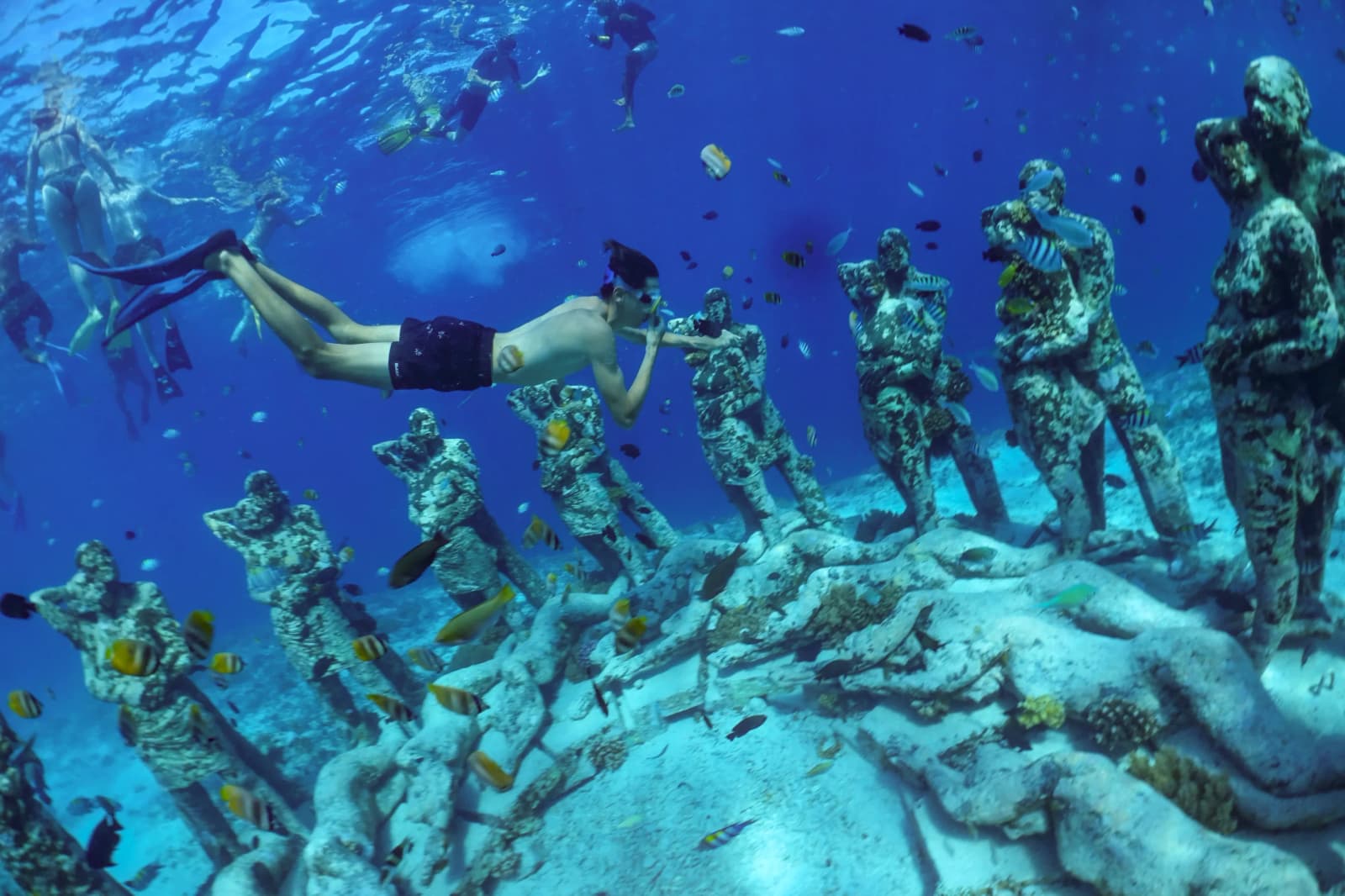
A couple of features are worth seeking out. Off Gili Meno sits the Nest, an underwater statue circle of figures arranged on the sand in a few metres of water. It is a fun, easy free dive or snorkel and one of the most photographed spots on the islands. Trawangan and Air both have swings and platforms set out in the shallows, a small thing that has become a Gili signature. For a longer day on the water that strings the best of it together, we run a private snorkelling trip around the three islands by boat, stopping at the turtle grounds and the statues.
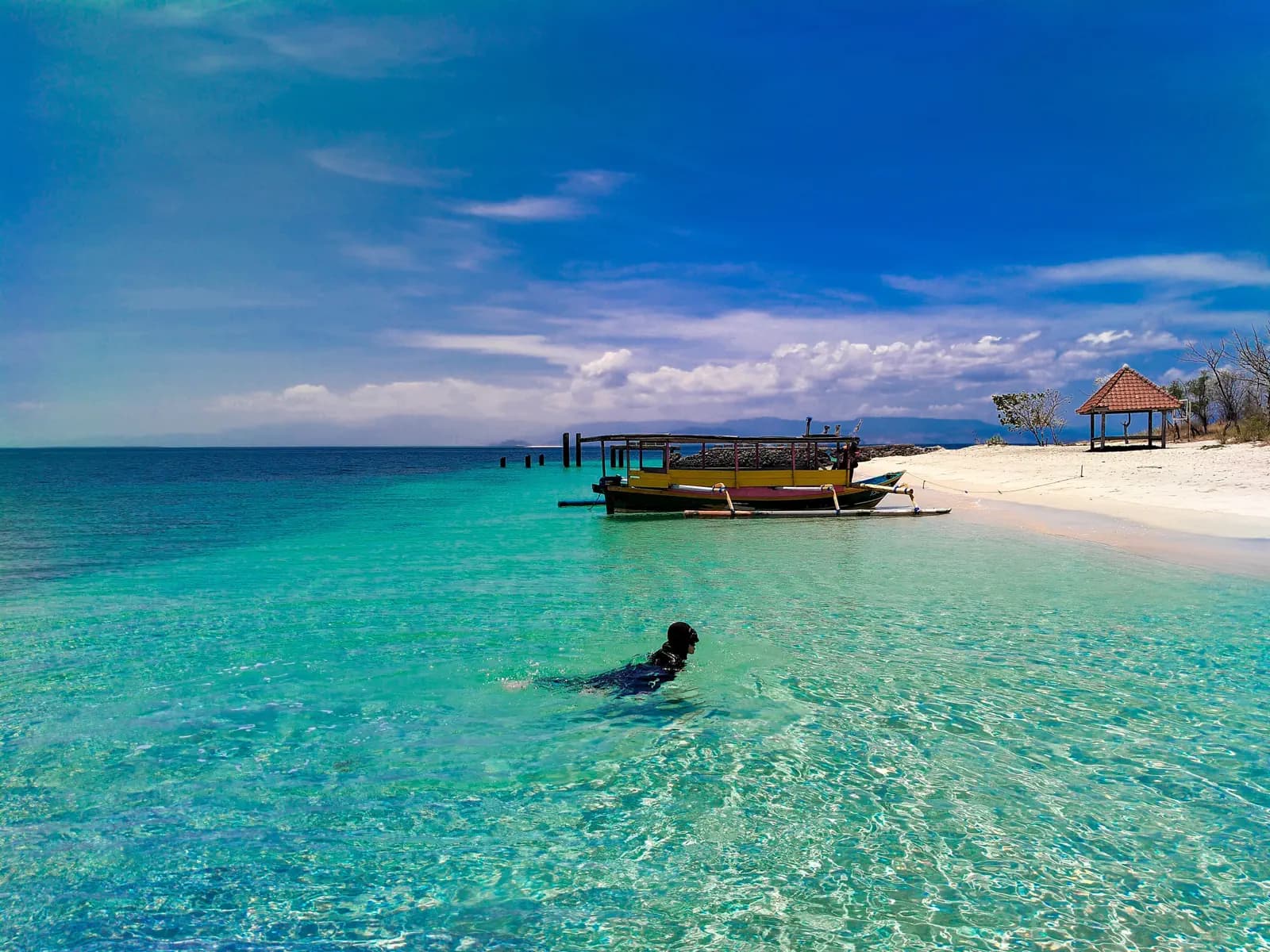
If you want the beaches without the crowds, point yourself at Gili Meno or at the secret Gilis off Lombok’s northeast and southwest coast, a separate, far quieter cluster of small islands most visitors never reach. We run a day trip out to them and, for those who want to wake up there, an overnight snorkelling and camping trip.
Things to Do Above Water
The Gilis are built for doing nothing, but there’s more here than a beanbag if you want it.
Cycle the island. Hire a beach cruiser and ride the sandy loop around whichever island you’re on. Trawangan’s circuit is the longest at around 6-7 km, taking you from the busy eastern strip past the quiet northern coast and up to the old Japanese concrete bunkers on the hill. Meno and Air are smaller and gentler. Every island has a stretch on the far side where the sand softens and you’ll end up pushing your bike for fifty metres or so. In a place this relaxed, it’s just part of the ride.
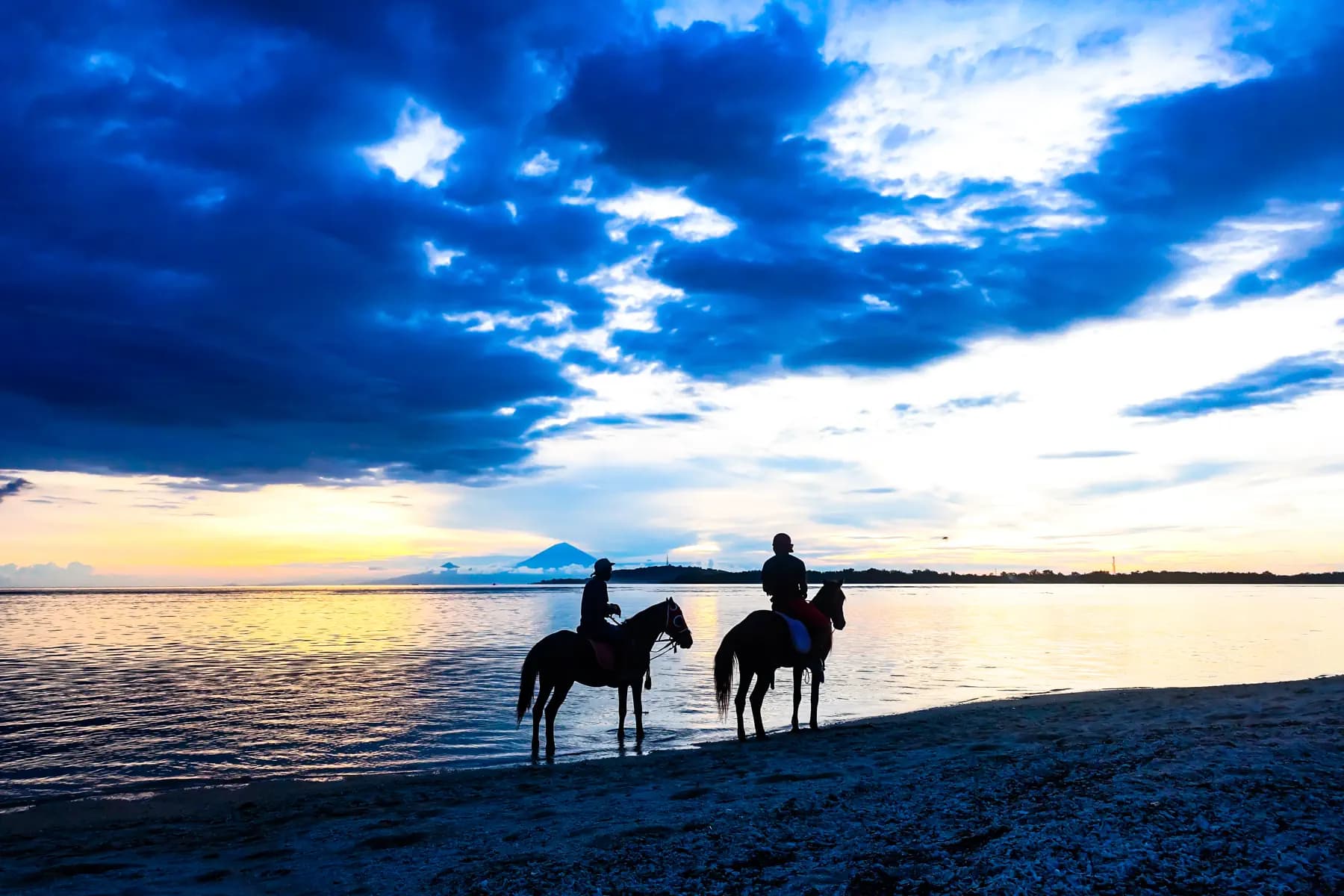
Ride a horse on the beach. One of the more memorable Gili outings is a horseback ride along the shoreline on Gili Air, timed for the golden 5 PM window when the air cools and the light drops low. The horses move through the shallows at the edge of the tide. Rides operate with a strict 90kg weight limit to keep the animals comfortable.
Watch the sunset properly. The west coast of each island faces Bali directly, and on a clear evening the sun drops right behind Mount Agung. Trawangan’s west side bars and beanbags are the social version. Meno’s empty western beach is the quiet one. Stay twenty minutes after the sun disappears, the sky regularly turns crimson and violet once the crowds start packing up.

Day-trip to Lombok. The big island is 15 minutes away by fast boat and a completely different world. Waterfalls, rice fields, traditional Sasak villages, and the foothills of Rinjani. A Lombok land tour makes an easy contrast to the flat, sandy Gilis and gives you a real feel for the culture sitting just across the strait.
Just eat and drink slowly. Every island has a string of warungs and beach cafes. The food leans Sasak and Indonesian such as nasi campur (rice with spiced meats, tofu, and sambal), fresh grilled snapper in garlic butter, fruit shakes, sate. Trawangan also has a genuinely good spread of international options if you want a change. At dusk, the Trawangan Night Market by the harbour fills with charcoal smoke, build your own sate skewers, grab some grilled corn, share a wooden bench with whoever’s around. It’s the cheapest and best feed on the islands.
Scuba Diving in the Gilis
Diving and snorkelling are a real part of why people come, and the Gilis punch above their size for it. The reefs are warm, clear and gentle, turtle sightings are close to guaranteed, and a cluster of dive centres makes this one of the best and cheapest places in Indonesia to learn. All three islands dive the same ring of sites and share the boats, so where you stay does not limit where you dive.

Top Dive Sites
Shark Point, off the northwest tip of Trawangan, is the adrenaline dive featuring parallel canyons at 18 to 30m funnel current that pulls in white tip and black tip reef sharks, schooling jacks, and barracuda. Some current here at times, which is what brings the sharks in. Takat Malang, a separate deeper reef between Gili Air and Gili Meno, is the other big fish site worth booking. For easier days, Bounty Wreck is a sunken pontoon turned artificial reef, now blanketed in soft corals and clouds of glassfish, ideal for newer divers and photographers. Meno Wall drops in gentle steps and hides ghost pipefish and Spanish dancers, while Secret Garden, around Gili Meno and better known locally as Turtle Heaven, is a shallow, mild-current site with hard and soft coral where green turtles graze constantly among ghost pipefish and colour shifting cuttlefish. And across almost every site above, expect green and hawksbill turtles on the reef, they’re a near guaranteed part of any Gili dive day.
A top place to learn. Shallow, warm, gentle sites and a stack of dive centres make the Gilis one of Indonesia’s go to spots for an Open Water or Advanced course. Currents are mild on most sites, conditions are forgiving for first timers, and prices are among the lowest in the country. We set people up with a Learn to Dive course in the Gili Islands, and for breath hold divers there is a freediving course in the Gilis too, which suits the clear, shallow reef perfectly.
Best time to dive. Year round, with warm water sitting at 27 to 29 degrees. The dry season, May to October, brings the calmest crossings and the clearest water. Turtles are present all year, so there is no bad time for them.
How to Get There
Getting to these car free shores is straightforward, but a little advance planning saves you from navigating chaotic harbor ticket counters.
From Bali: Fast boats depart from Padangbai for a 1.5 to 2 hour crossing, or from Serangan and Sanur for a convenient 3 hour journey if you are staying in south Bali. Because the open strait is deep and prone to choppy afternoon swells, morning departures are highly recommended if you are prone to seasickness.
From Lombok: The islands sit just off the coast, making it a quick 15 minute hop from Bangsal Harbour. If you fly into Lombok International Airport (LOP), it requires a 1.5 hour taxi ride north through the monkey forest to reach the boats at Bangsal.
We arrange the boat, the airport or hotel transfers on either side, and your island base, so you are not negotiating ticket counters at the harbour. The Bali crossing can get bumpy in the wet season, worth knowing if you are prone to seasickness.
Getting Around the Islands
Once you land, there are no cars and no scooters. You walk, you cycle, or you take a cidomo, the pony cart that serves as the local taxi for luggage and longer hops. Island hopping between the three Gilis runs on a public shuttle boat a few times a day, plus private charters if you want to set your own time. Distances are tiny, nowhere on any island is more than a short walk or ride from anywhere else.

Best Time to Visit
The Gilis are a year round destination, but the dry season, roughly May to October, is the sweet spot. Reliable sun, calm seas, the smoothest boat crossings and the clearest water for snorkelling and diving. July and August are the busiest and priciest months, so the shoulders of May to June and September to October give you the same good weather with fewer people.
The wet season, November to March, is warmer, greener and much quieter, with short afternoon downpours rather than all day rain and noticeably lower prices. Snorkelling and diving carry on fine and the turtles do not leave. The main trade off is rougher boat crossings, so build in a little flexibility around the Bali fast boat if you travel then.
Combining the Gilis With the Rest of the Trip
The Gilis work beautifully as a slow few days bolted onto a busier Indonesia route, and the geography makes it easy. They pair naturally with Bali (the fast boat link is the obvious one) and with Lombok itself, including Rinjani treks, the south coast surf beaches and the waterfalls of the interior.
For divers who want the islands as part of a longer journey at sea, we run a 13 day dive safari that links Bali and the Gili Islands, and the Gilis also sit on the route east toward Komodo, with a 4 day liveaboard running from Lombok and Sumbawa through to Komodo for those carrying on to the dragons and the mantas.
Frequently Asked Questions
Three to four days is the sweet spot, enough to settle into the no traffic pace, snorkel or dive a couple of times, island hop to see all three, and still have a slow day. Two days works if you are passing through from Bali. If you are learning to dive, budget four days for an Open Water course plus a day either side.
It depends on your pace. Trawangan for the widest choice of food, dive centres and some nightlife. Gili Meno for the quietest beaches and a honeymoon feel. Gili Air for the balance of the two, which suits most couples and families. You can base on one and visit the others by day, so you are not missing out either way.
The dry season, May to October, has the best weather, calmest seas and clearest water. May to June and September to October give you that without the July and August peak crowds. The wet season is quieter and cheaper with short afternoon rain and rougher boat crossings.
Fast boats from Bali take about 1.5 to 2.5 hours, or it is a 15 minute hop from Bangsal on Lombok if you fly into Lombok airport. We arrange the boat, transfers and your island accommodation so the harbour end is sorted.
There are no cars or scooters on any of the islands. You walk, hire a bicycle, or take a cidomo pony cart. A public shuttle boat hops between the three islands a few times a day.
Both. Gili Air and Gili Meno are calm, safe and easy with children or for a quiet couples’ trip, with gentle shore snorkelling and no traffic to worry about. Trawangan suits travellers who want a bit more going on in the evening.
Yes, easily, and often. Green and hawksbill turtles are genuinely abundant here, grazing the sea grass close to shore all around the three islands, especially off Gili Meno and the northeast of Gili Air. You can usually snorkel with them straight off the beach, no boat needed. The Gili Meno Turtle Sanctuary, a local hatchery that protects eggs and raises hatchlings before release, is a real part of why the population has recovered, and it’s open to visit.
Very. Warm, clear, gentle reefs with near guaranteed turtles, plus a cluster of dive centres at some of the lowest prices in Indonesia, make the Gilis one of the country’s top places to take an Open Water or Advanced course. Sites like Shark Point also keep certified divers happy.
Easily. The fast boat links them straight to Bali, and Lombok is 15 minutes away with Rinjani, waterfalls and Sasak villages. We can build the Gilis into a wider Bali, Lombok or even Komodo route, including a Bali to Gili dive safari.
Your adventure starts here
Plan your trip to Gili Islands
Tell us what you want to see and we'll craft the perfect itinerary — usually within 24 hours.
Plan My Trip →Enquire About This Destination
Any question, special request or custom itinerary, we reply within 24hrs.
Tours & Activities in Gili Islands
Lombok North East Secret Gilis Snorkeling and Camping Trip
Horse Riding on the Beach in Gili Air