Lombok
Lombok sits a short hop east of Bali, and it feels like Bali did decades ago. Quieter roads, emptier beaches, and one giant volcano dominating the skyline. Mount Rinjani for the trekkers, white sand surf bays in the south, the Gili Islands offshore, a strong Sasak culture, and diving that runs from gentle turtle reefs to one of Indonesia’s serious hammerhead sites. Here is what Lombok is really about, and how a trip fits together.
Mount Rinjani and the High Country
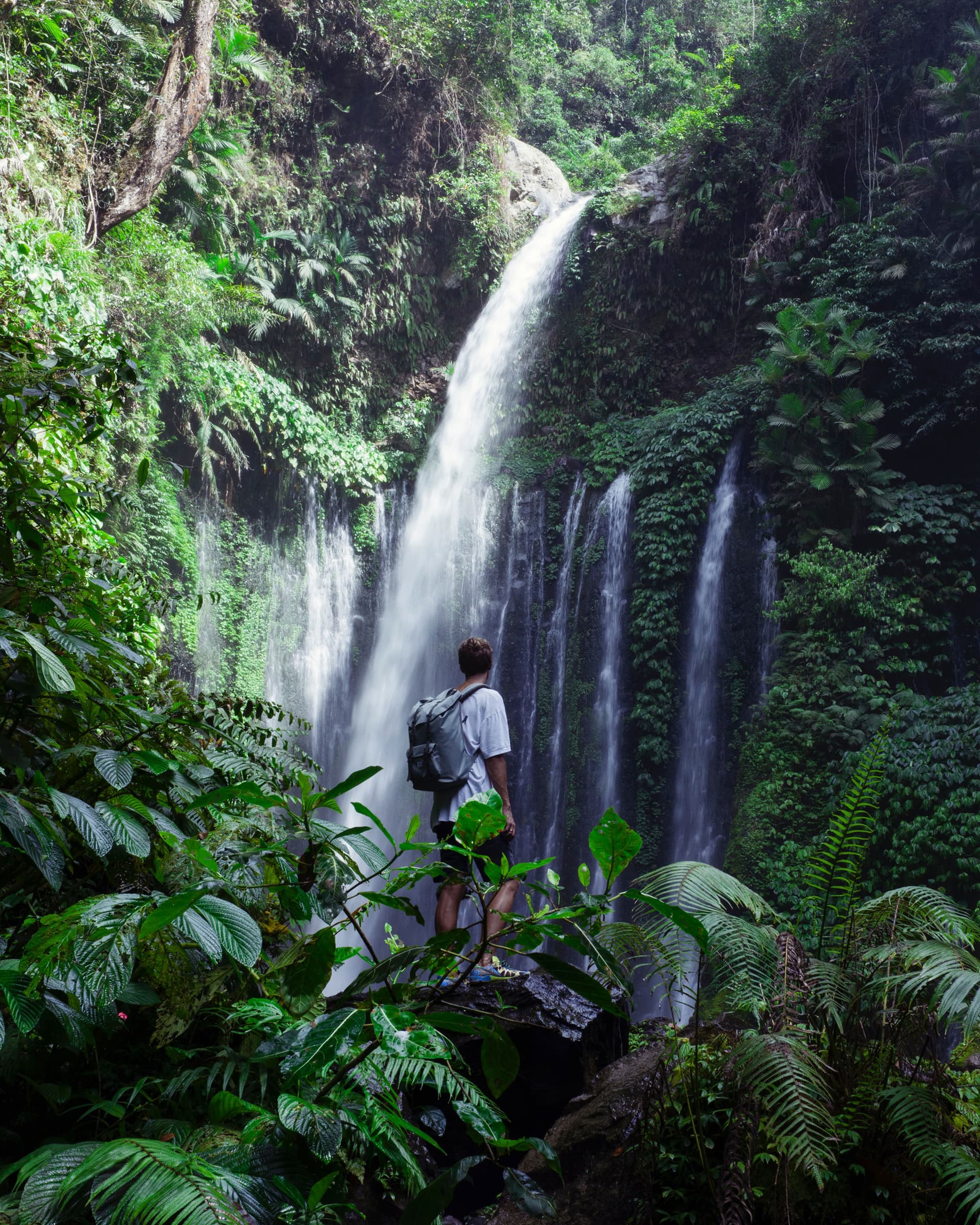
Rinjani is the reason a lot of people come. At 3,726 metres it is the second highest volcano in Indonesia, and the multi day trek to its rim and down to the crater lake, Segara Anak, is one of the best hikes in the country. The classic route starts from the village of Senaru on the northern slopes, climbing through tropical forest, past waterfalls and hot springs, before the tree line gives way to bare volcanic ridge. The summit push is a pre dawn slog up loose scree, and the reward is a view over the caldera, the lake, and the small active cone of Gunung Barujari rising out of it.


Be honest with yourself about fitness. The full summit trek is two to three days with overnight camping, steep inclines, rocky ground and weather that turns fast. It is not a beginner walk. There are shorter versions, a rim and lake circuit without the summit, or a day hike to a viewpoint and a waterfall, that give you the scenery without the full punishment. Either way you go with a licensed guide and porters, which is both safer and how the local trekking economy works.
The lower slopes are worth time on their own. The waterfalls around Senaru, Sendang Gile and Tiu Kelep, are an easy half day, and the cooler highland villages are a good break from the coast heat. Rinjani sits inside a national park, so trekking is seasonal and weather dependent. The dry months from April to October are the window, and the park usually closes around the wettest part of the year.


South of the volcano, Tetebatu is a different kind of Rinjani base entirely. The village sits among rice terraces at the edge of thicker jungle, and it is the low-key, local alternative to the busier Senaru side, easy walking country good for families or anyone who wants Rinjani’s scenery without the summit push. The Tetebatu Monkey Forest is the main draw for a half day, home to grey macaques and Lombok’s rarer black Ebony Leaf Monkeys, alongside walking trails through the rice fields and a waterfall or two. Tetebatu also has its own, far quieter trekking route up to the Rinjani crater rim, a genuine alternative to Senaru for hikers who want the same views without sharing the trail.
Sasak Culture and Everyday Lombok
Lombok is a Muslim island with its own indigenous people, the Sasak, and that gives it a different texture from Hindu Bali next door. You hear the call to prayer rather than see temple offerings on the pavement, and the rhythm of village life, markets and craft is the draw rather than ceremony.
The traditional villages are the easiest way in. Sade and Ende near Kuta Lombok keep the old Sasak architecture, thatched rice barns (lumbung) with their distinctive curved roofs, and the weaving tradition that Lombok is known for like women work back strap looms making ikat and songket textiles, and you can watch the whole process from spinning to dyeing. Pottery from Banyumulek and basketry round out the craft scene. Our Lombok land tour day trip is built around exactly this, pairing the Sasak villages and weaving with the island’s viewpoints and a local lunch, with a guide who reads the etiquette for you.
Food is its own reason to explore. Sasak cooking is hotter than Balinese. The signature dish is ayam taliwang, grilled chicken in a fierce chilli paste, usually served with plecing kangkung, water spinach in tomato chilli lime. Sate rembiga (sweet spicy beef satay) and nasi balap are local staples. The best of it is in simple warungs around Mataram and Cakranegara, not the resorts.
The South Coast: Beaches and Surf
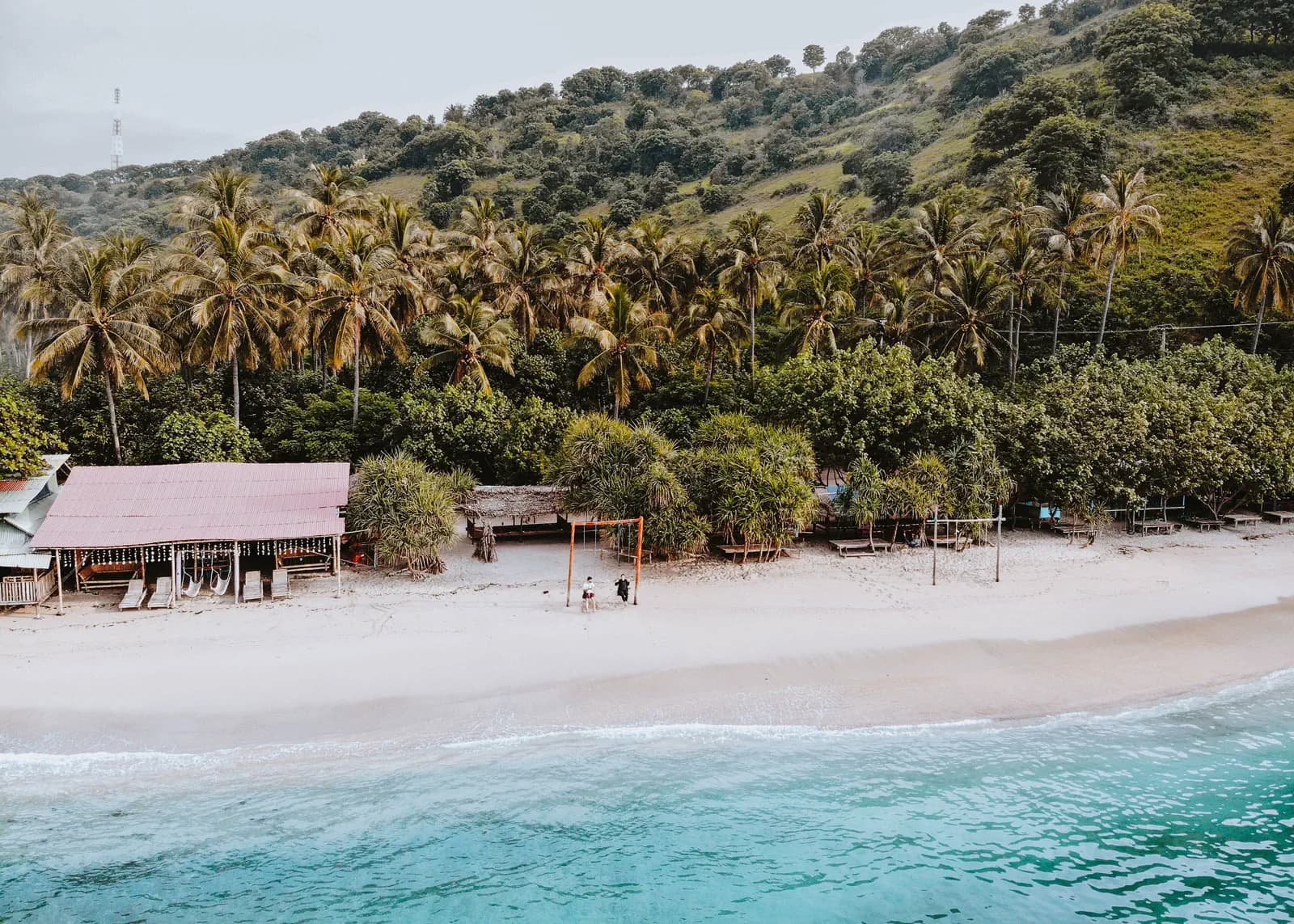
The south of Lombok is the part that surprises people. It is drier and more rugged than the north, a coastline of headlands and horseshoe bays with white sand and turquoise water, and for now it is still relatively quiet. Kuta Lombok (no relation to Bali’s Kuta) is the hub, a laid back base with a growing but still low-key food and stay scene.
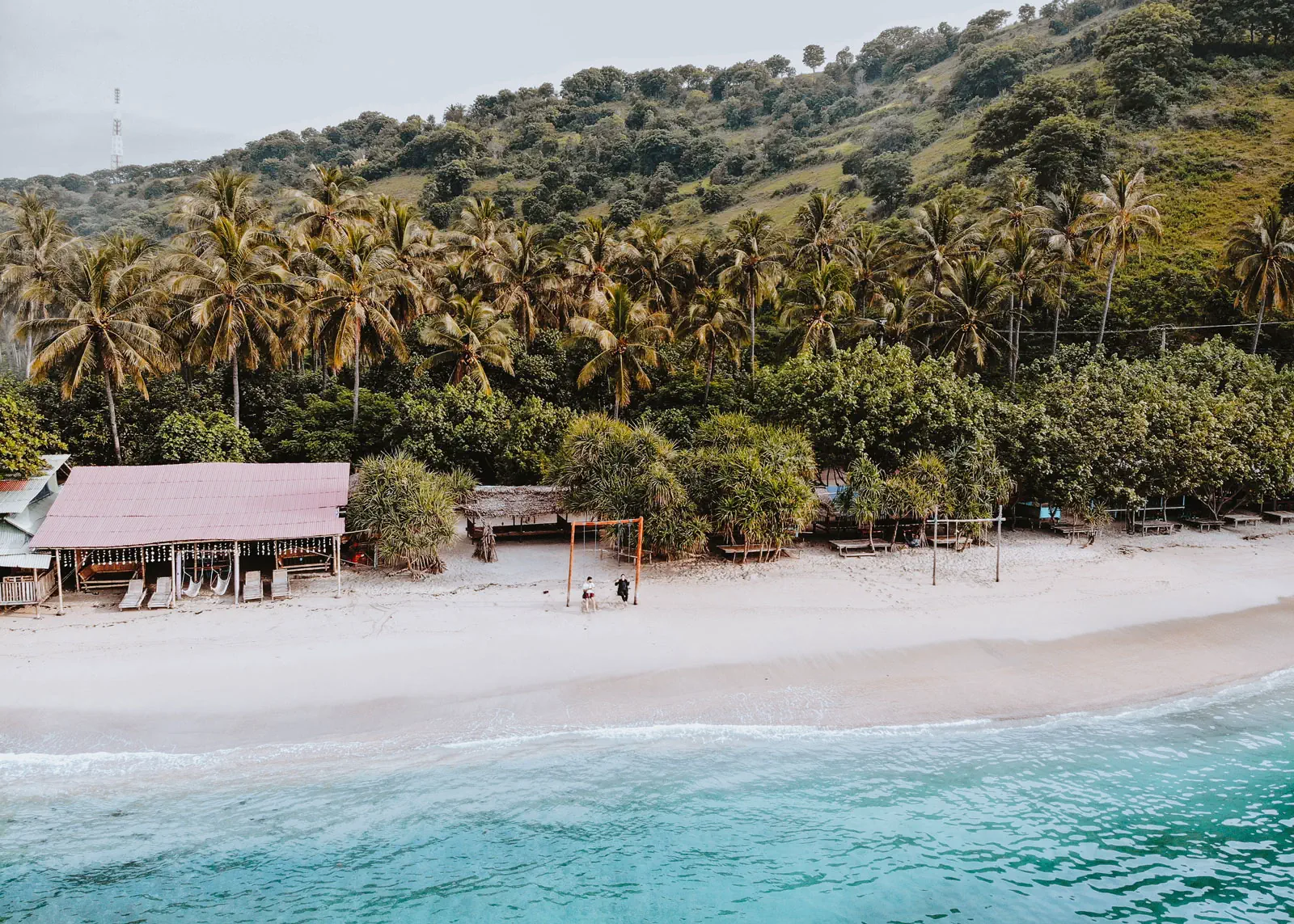

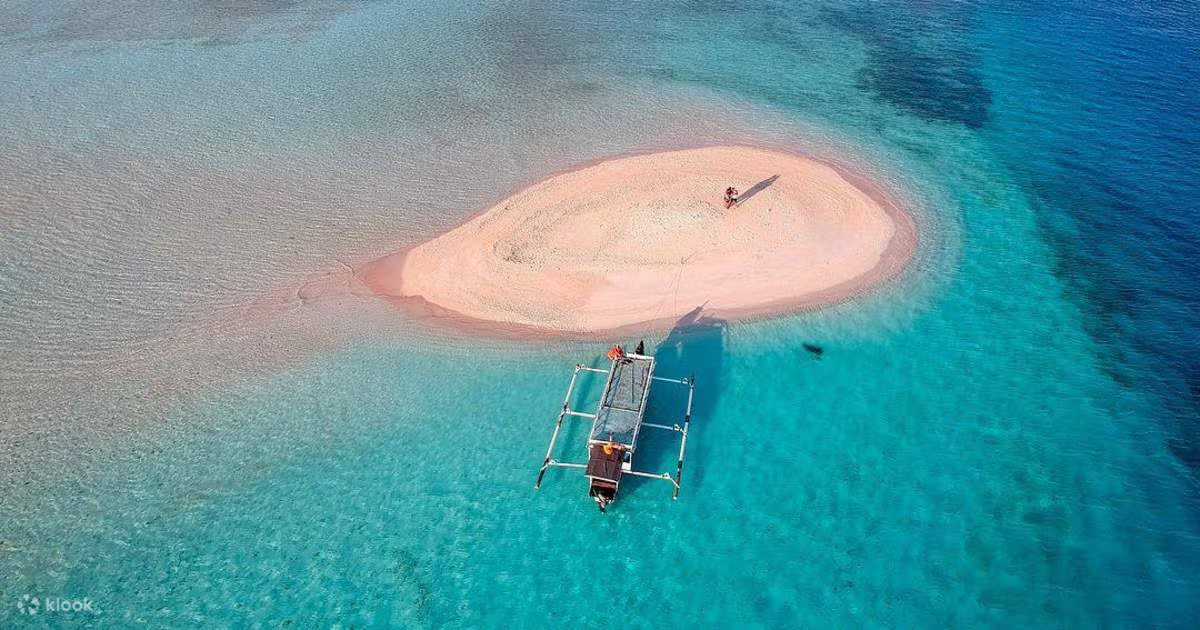
From there the bays line up west and east. Selong Belanak is a wide, gentle arc that has become the island’s main learn to surf beach, with mellow whitewater rollers ideal for first timers. Mawi, Are Guling, and Mawun range from beginner to serious experienced surfers chase the reef breaks at Mawi and the barrels further out. Non surfers get the scenery for free like the viewpoint hike up Merese Hill above Tanjung Aan looks back over two of the prettiest bays on the island, and the pink tinged sand at Tanjung Aan is the real thing, not a filter.
Pace yourself. The south is spread out and the roads are slow, so it suits travellers who want to settle in one base for a few days rather than tick beaches off a list. It is also a different season story from the diving. The surf works much of the year, with the dry months giving the cleanest conditions.
The Islands: Gili and the Southwest
Lombok’s offshore islands are a big part of its appeal, and they split into two clusters.
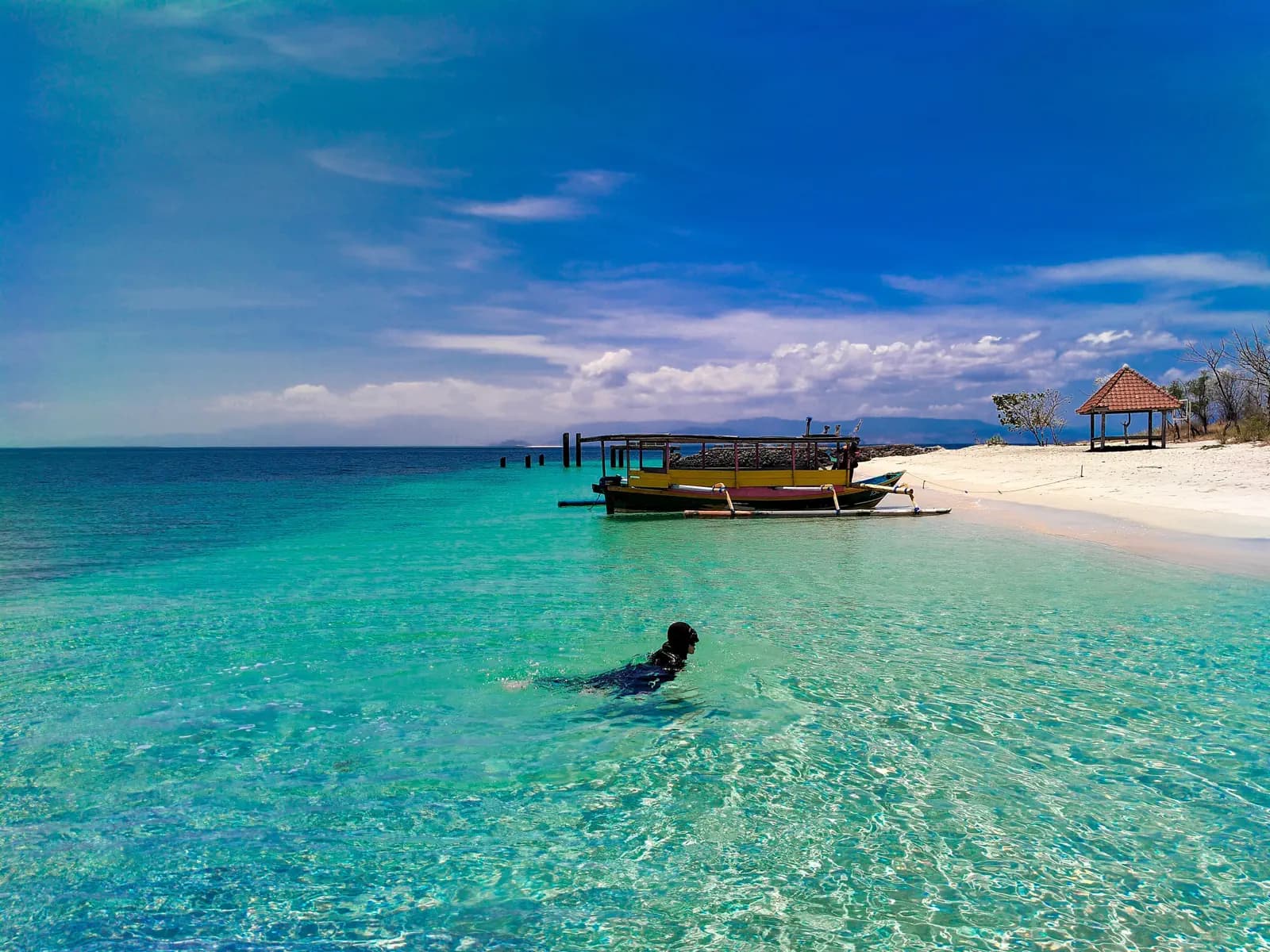
Off the northwest coast are the famous three Gilis. Gili Trawangan (the busiest, with the bars), Gili Meno (the quietest, good for couples) and Gili Air (the middle ground, beaches plus a bit of life). No cars or motorbikes on any of them, just bikes and horse carts, clear water, and resident green and hawksbill turtles you can snorkel with straight off the beach. We run a private snorkelling trip around the Gili Islands and a secret Gili Islands day trip for the quieter corners, plus horse riding on the beach in Gili Air at sunrise or sunset. The Gilis are big enough to be a destination in their own right, see the Gili Islands page for the full picture.
Less known are the southwest Gilis off the Sekotong peninsula, sometimes called the “secret Gilis” such as Gili Gede, Gili Asahan and Gili Layar among them. They are protected from mass tourism, with empty beaches and clear shallows, and they make a real off grid stop. Our northeast secret Gilis snorkelling and camping trip takes the same idea to Lombok’s other quiet corner, with a night under canvas on an uninhabited islet.
Scuba Diving in Lombok
Diving is a genuine part of Lombok, not an afterthought, and it splits cleanly by location and level. The easy, reef and turtle diving is up around the Gilis and the sheltered southwest, the serious stuff is off the south coast, where deep water and current pull in the big animals.
Top Dive Areas
The Magnet and Belongas Bay (south): Lombok’s signature advanced sites and the reason hard core divers come. Schooling scalloped hammerheads in season, plus barracuda, sea snakes and reef sharks, in strong current and surge. These are demanding dives.
Gili Gede Wall (southwest): a gentler wall and reef with a good macro list including mantis shrimp, turtles, cleaner shrimp. The relaxed counterpoint to the south.
Macro-Heaven and the sheltered sites: nudibranchs, frogfish, ghost pipefish and mimic octopus on easy, low current dives, ideal for slow critter hunting.
The Gili reefs: turtle heavy, easy, warm and forgiving, which is why the Gilis are one of Indonesia’s busiest places to learn.
When to dive. It is year round diving, but the hammerhead season at Belongas and The Magnet runs roughly May to October, the same dry season window that is best for trekking Rinjani and for the cleanest surf. South coast conditions are weather-dependent and can blow out, so trips there need flexibility.
Level. South Lombok is for Advanced, experienced divers with real current, surge and depth. The Gili side and southwest reefs are far gentler and suit Open Water divers and learners, which makes Lombok a place where you can both start out and progress on the same trip. We run learn to scuba courses in the Gili Islands and freediving courses in the Gilis on the calm, warm reefs, and arrange the advanced south coast trips for divers who are ready for them. Base on the southwest around Sekotong for the south sites, or on the Gilis for the relaxed reefs, the dive base can go either way with a Rinjani trek slotted alongside.
Lombok as a Gateway East
Lombok is the natural stepping stone toward the wilder islands further east. It is the western end of the run through Sumbawa to Komodo, and the boat and liveaboard routes start here. Our 4 day Lombok to Komodo liveaboard threads the islands in between, with diving and remote anchorages along the way, and divers chasing the big stuff can add a whale shark encounter in Sumbawa. Coming the other way, Lombok and the Gilis sit on our longer Bali and Gili Islands dive safari. If Bali is your first week, Lombok and what lies past it make a strong, much quieter second. Some Komodo boat trips start in Lombok and sail east through the islands.
Best Time to Visit
The dry season, April to October, is the all-round best time. Sunny weather, calm seas, the window for Rinjani trekking, hammerhead season in the south, and clean surf. It is also peak season, so the Gilis and Kuta Lombok are busier and beds cost more, especially July and August. The shoulder months of April to May and September to October are the sweet spot, good conditions without the full crowd.
The wet season, November to March, brings unpredictable weather and afternoon rain, lower prices and fewer people. Rinjani usually closes for the wettest stretch, but the south-coast surf can be excellent and the diving carries on. Water stays warm, around 27 to 29 degrees, all year.
Getting There and Getting Around
Fly into Lombok International Airport (LOP), in the south of the island. It is a short hop from Bali (about 45 minutes by air) and connects to Jakarta and other Indonesian hubs. The fast boats from Bali’s Padang Bai and Sanur to the Gilis are the other common way in, landing you straight on the islands without touching the mainland.
On the ground, distances are deceiving, LOP to Kuta Lombok is close, but the airport to Senaru for Rinjani, or across to the Sekotong peninsula, is a couple of hours on slow roads. We arrange private transfers and an English or French speaking driver guide, which is by far the easiest way to cover the island, plus the boat connections to whichever Gilis you are headed for. The route gets built around your pace so you are not crossing Lombok twice in a day.
Frequently Asked Questions
Four to five days covers a focused trip including a few days on the south coast or the Gilis, plus a day tour of the Sasak villages and viewpoints. Add the Rinjani trek and you want a week or more, since the full summit hike alone is two to three days. Many travellers do Lombok as the quieter second leg of a Bali trip.
Mount Rinjani trekking, the Gili Islands and their turtles, white sand surf beaches in the south, Sasak culture and weaving, and a diving scene that runs from easy reefs to serious hammerhead sites. It is the calmer, wilder neighbour to Bali.
The dry season, April to October, for trekking, diving and the clearest conditions, with April to May and September to October giving the best mix of weather and smaller crowds. The wet season is quieter and cheaper, with good surf but an unpredictable forecast and Rinjani usually closed.
Fly into Lombok International Airport (LOP), about 45 minutes from Bali, or take a fast boat from Bali straight to the Gilis. The island is bigger and slower than it looks, so a private driver guide and the boat connections are the way to go rather than relying on local transport.
The full summit trek is genuinely tough. Two to three days, steep scree, cold nights camping and changeable weather, for fit and prepared hikers only. There are shorter rim and lake or day hike options that give you the scenery without the summit push, and Tetebatu offers an easier, quieter alternative on the south side. You go with a licensed guide and porters either way.
Yes. Selong Belanak in the south is one of the best learn to surf beaches in Indonesia, with gentle whitewater, while Mawi and the reef breaks suit experienced surfers. The south coast also has the quietest white sand bays on the island for non-surfers.
Yes, on the gentle reefs around the Gili Islands and the sheltered southwest, which are ideal for learning. The south coast hammerhead sites at Belongas and The Magnet are advanced, strong current dives for experienced divers only.
Easily. Lombok pairs naturally with Bali as a quieter second island, and it is the western gateway to Sumbawa and Komodo, so liveaboard and island hopping routes east start here.
Your adventure starts here
Plan your trip to Lombok
Tell us what you want to see and we'll craft the perfect itinerary, usually within 24 hours.
Plan My Trip →Enquire About This Destination
Any question, special request or custom itinerary, we reply within 24hrs.