
Mari
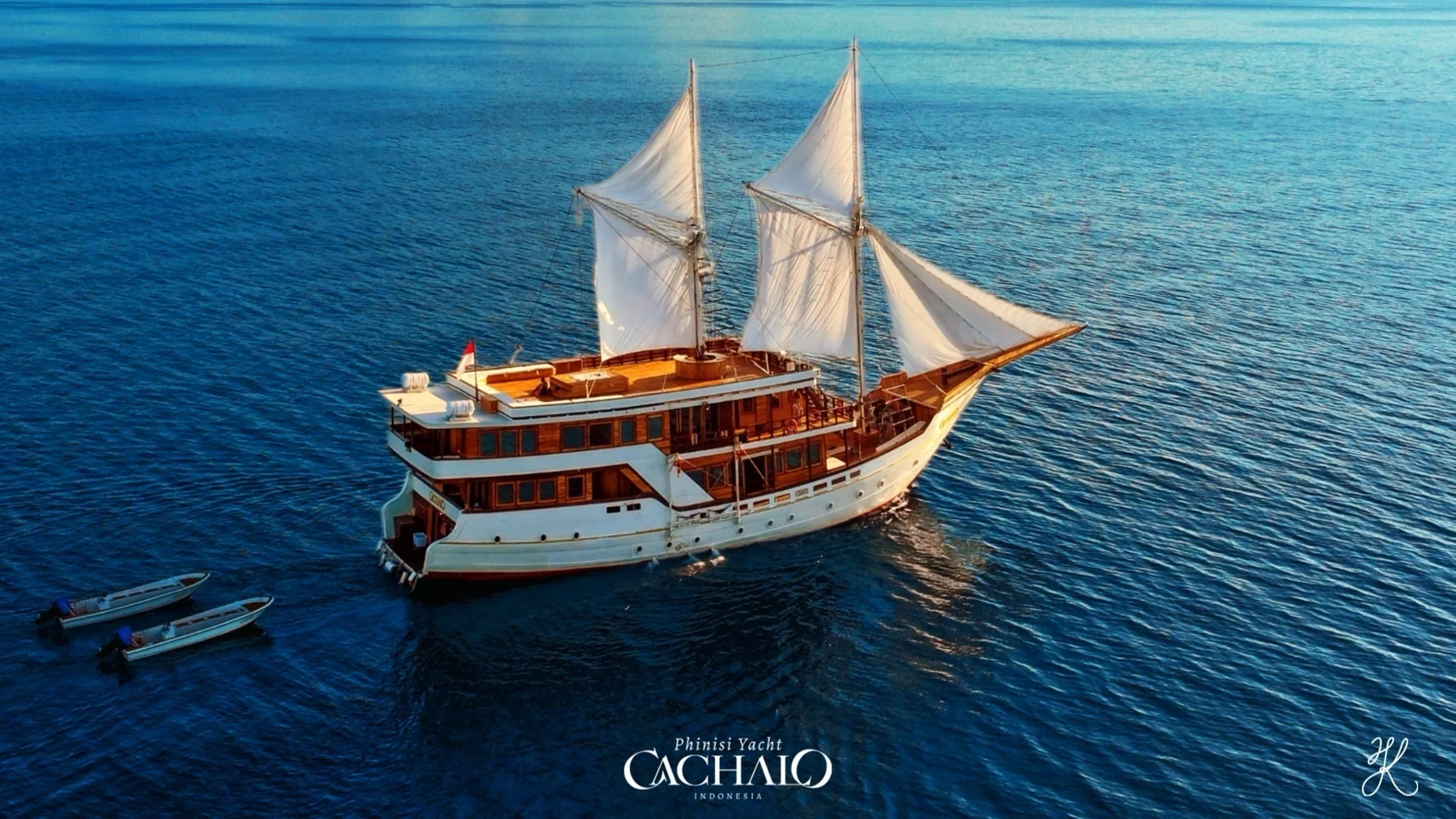
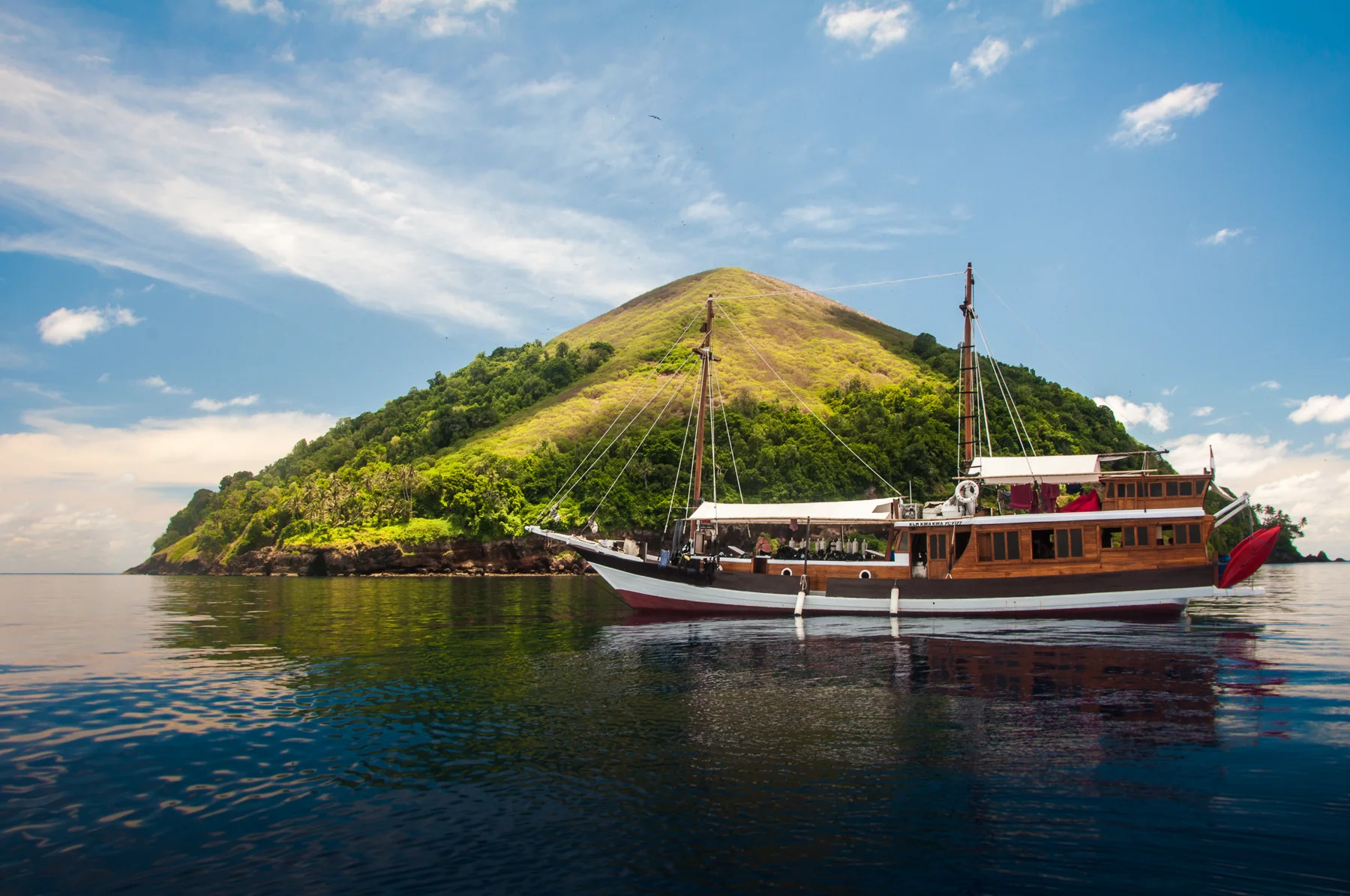
The MARI liveaboard is a beautiful traditional Indonesian phinisi that offers year-round diving trips in Raja Ampat and the Banda Sea. The concept is to keep a small number of guests relative to its size to provide more space and comfort for everyone on board.
Discover the MARI Liveaboard
MARI was built by traditional boat builders in South Sulawesi. They made it for their own diving expeditions in Indonesian waters, from Sumatra to Papua. To ensure her durability and strength in the water, the builders used ironwood. In 2016, the 30m vessel underwent a complete refurbishment to provide modern furnishings and ample onboard space.
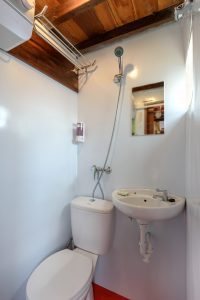
MARI takes up to 14 guests, which works for non-divers and families as well as divers. There are 7 cabins, 3 deluxe and 4 superior, all with individually controlled AC, storage space and private bathrooms. They sit on the main deck and are bright and well ventilated.
The common areas include an open-air lounge and bar plus 2 sun decks with loungers. A trained chef now cooks on board, and meals are served at the al-fresco dining table.
Diving Experience
MARI has new and reliable technical equipment, a seasoned captain and crew, 3 experienced dive masters, and an English-speaking cruise director to ensure a safe and enjoyable diving experience for divers of all levels
Moreover, the liveaboard explores the best of Indonesia’s dive sites, moving around Raja Ampat and the Banda Sea. This allows divers to explore one of the most diverse marine environments in the world. The MARI’s spacious dive deck, gear storage, individual rinse tanks, large dive tender, and the recent addition of Nitrox ensure a comfortable and convenient dive liveaboard experience.
Where you’ll sleep
The Cabins
Cabins aboard Mari liveaboard
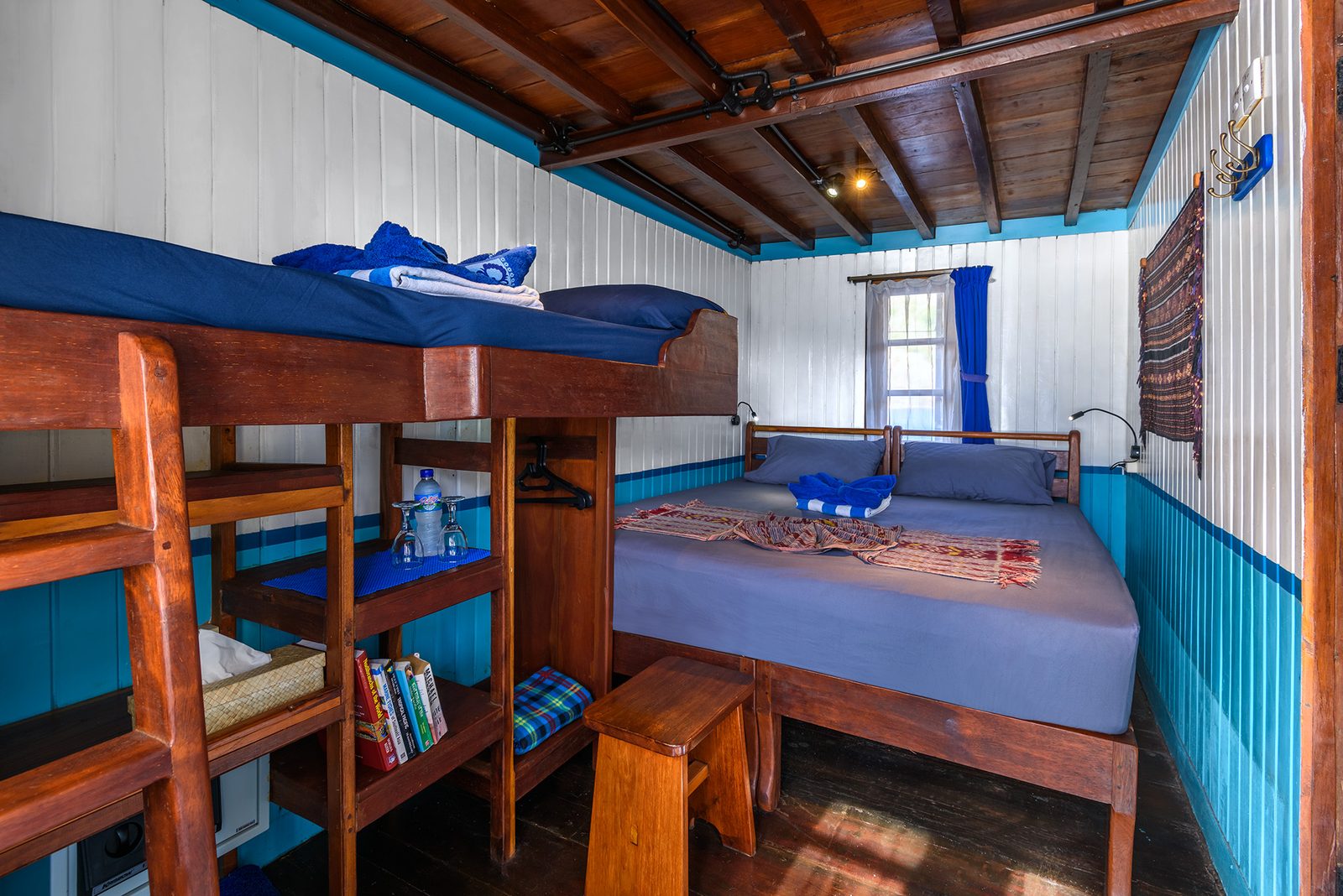
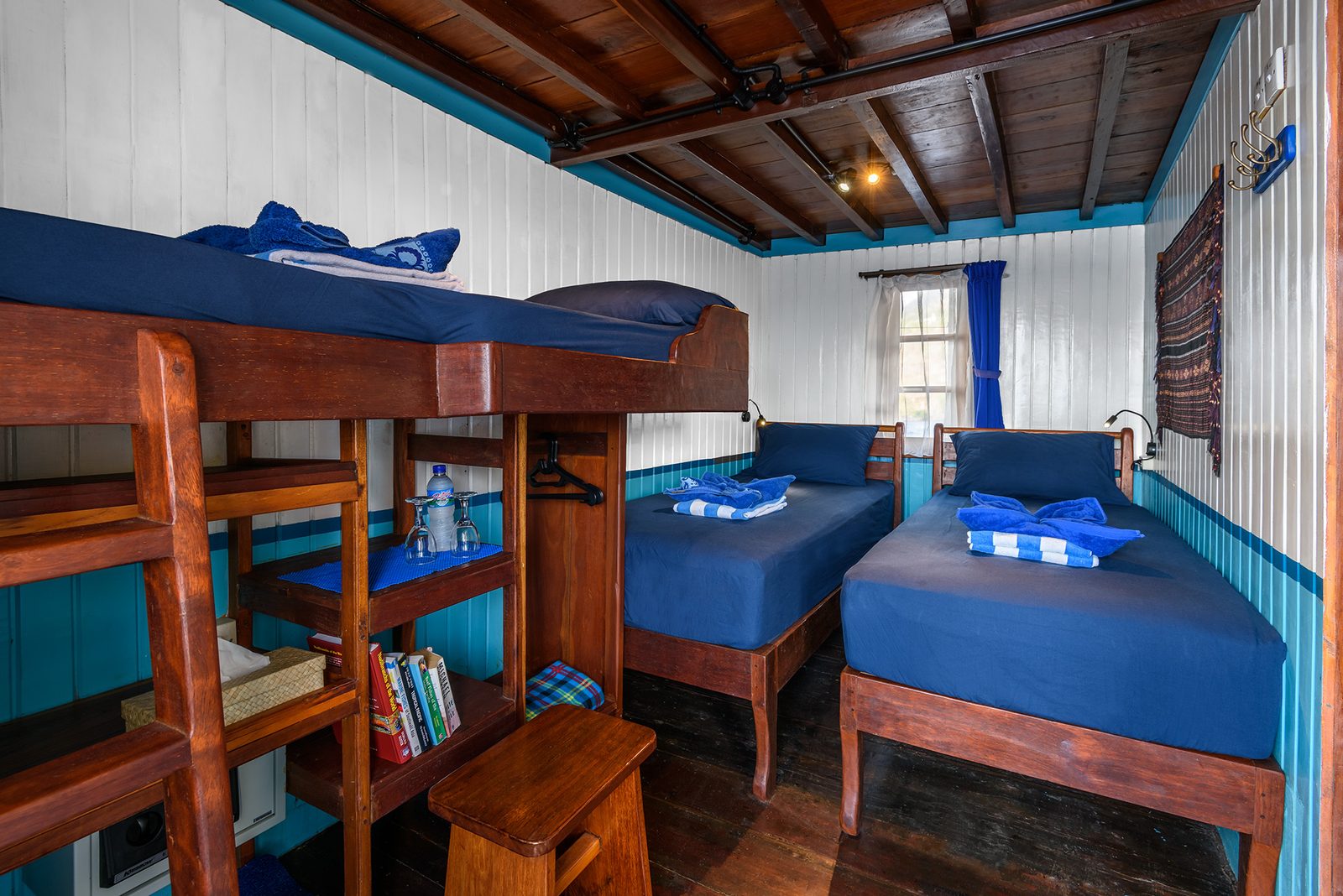
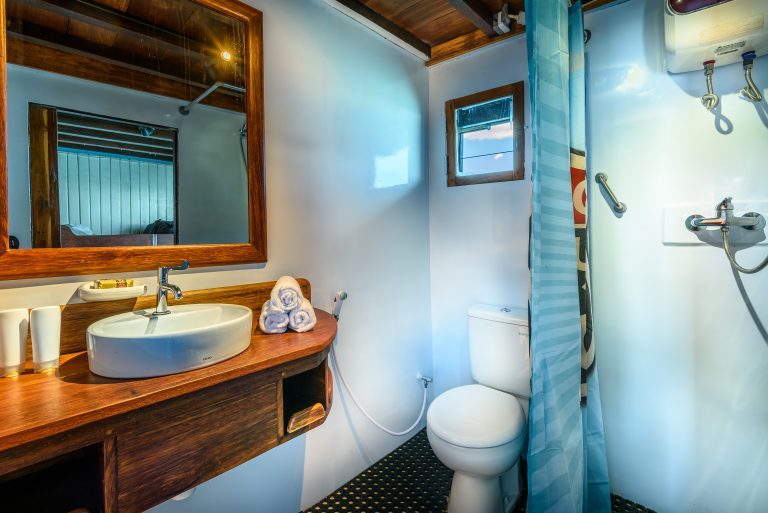
Deluxe Cabins
2 guests
Situated on the main deck, bright and well-ventilated. Features individually controlled AC, storage space, and private bathroom. Available as double or twin configuration.
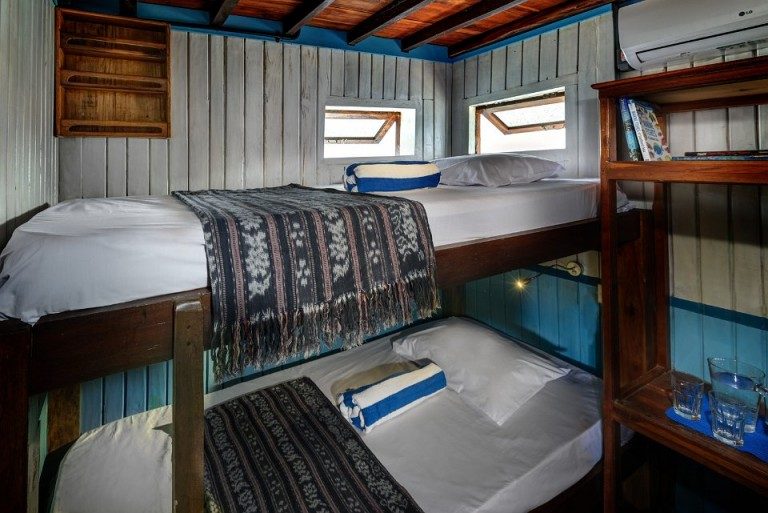
Superior Cabins
2 guests
Situated on the main deck, bright and well-ventilated. Features individually controlled AC, storage space, and private bathroom.
Destination
Itineraries
Itineraries aboard Mari liveaboard
Komodo Full Park
Day 1 | LABUAN BAJO, EMBARKATION (1 check dive + 1 dive)
The crew welcomes guests in Labuan Bajo. After cabin orientation and the Cruise Director's safety briefing, equipment is set up and we head to the sheltered northeast area of the park — calm, accessible waters ideal for settling in before Komodo's stronger current zones.Sebayur Kecil — Check dive. Coral bommies inhabited by nudibranchs, octopus and crustaceans. Schools of bumphead parrotfish and fusiliers, leaf scorpionfish, stonefish and morays. Calm waters and good visibility. No current.Sabolan Besar or Sebayur Besar — Large schools of reef fish, turtles, cuttlefish, giant sea fans and healthy coral life in the shallows. A relaxed afternoon dive close to the embarkation area.Mari departs overnight toward the north.
Day 2 | NORTH KOMODO (3 to 4 dives)
An early morning start to hit the north's most celebrated sites at the right tidal moment. All headline north sites are morning dives — timed to the rising tide by the Cruise Director. Batu Bolong — A coral-covered pinnacle rising from deep water. Anthias clouds, Napoleon wrasse, grey reef sharks and giant trevallies dominate the slopes. One of the most fish-dense sites in Indonesia.Crystal Rock — Active cleaning stations and exceptional visibility. Eagle rays, reef sharks and Napoleon wrasse in numbers. Castle Rock — Grey reef sharks, tuna, giant trevallies and barracuda in schools dense enough to block the light. Gili Lawa Laut — A current-fed pinnacle with strong fish density. Reef sharks and schooling pelagics in the blue water. Mari departs overnight toward the south.
Day 3 | SOUTH KOMODO — NUSA KODE (3 day dives + 1 night dive)
We move into the cooler, plankton-rich waters of the southern park. Nusa Kode is reserved for experienced divers — strong currents, potentially cold water, and macro life without equal anywhere in the park. Manta Alley — One of Indonesia's most reliable manta aggregation sites. Oceanic manta rays circle cleaning stations in surge-swept channels. Cannibal Rock — A legendary macro site. Rhinopias, pygmy seahorses, frogfish and flamboyant cuttlefish on a single rock draped in soft corals. Yellow Wall of Texas — A vertical wall draped in yellow soft corals and sea apples. Among the most colorful dives in the park. Night dive in Horseshoe Bay — Spanish dancers, decorator crabs and torpedo rays across the bottom. Mari departs overnight toward central Komodo.
Day 4 | CENTRAL KOMODO (2 to 3 dives + Komodo dragon trek + Pink Beach)
Komodo Dragon Trek — A ranger-guided walk across dry savannah terrain in search of Varanus komodoensis, the world's largest lizard. Pink Beach (Pantai Merah) — A coral slope with reef sharks and anthias clouds, with the option of a beach visit between dives. Makassar Reef (Manta Point) — Sandy feeding lanes where manta rays glide above divers on incoming tides. The park's primary manta site.
Day 5 | CENTRAL KOMODO (3 dives + Padar Island hike)
Padar Island hike — At sunrise or sunset, at the Cruise Director's discretion. One of Indonesia's most photographed panoramas — three crescent bays in different shades of sand, ringed by dry volcanic ridgelines. Tatawa Besar — An elegant drift dive over pristine coral gardens. Schooling fish, Napoleon wrasse and outstanding visibility. Tatawa Kecil — Vibrant reef with colorful soft corals and swim-throughs. Siaba Besar — Sheltered and unhurried. Green and hawksbill turtles rest on coral bommies while frogfish, seahorses and nudibranchs reward patient macro searching.
Day 6 | NORTH KOMODO (2 dives) + CENTRAL KOMODO (1 to 2 dives)
A return to the north in the morning for The Cauldron, before heading back through central Komodo for the afternoon. The Cauldron (Shotgun) — An exhilarating channel drift through a narrow passage, with occasional manta sightings on the exit. Pengah Besar — A stronger current site with reef sharks and pelagic movement along the reef edge. Siaba Kecil (Mandarin Point) — A structured dusk dive for mandarin fish courtship behavior — one of the most spectacular scenes in Asian diving.
Day 7 | BANTA ISLAND (2/3 dives)
Remote and wind-swept, Banta benefits from strong tidal exchange without extreme exposure, with healthy reefs frequently visited by pelagics. GPS Point — A gently sloping reef transitioning into deeper contour. Grey reef sharks, turtles and large schools of fusiliers and snappers. Star Wars — Ridges, gullies and bommies rising from depth. Current lines attract giant trevallies and occasional eagle rays. Tondok Rasa (East Banta Reef) — A more protected coral slope. Dense anthias clouds over branching coral formations, with sweetlips and reef fish schools.
Day 8 | CENTRAL KOMODO, DISEMBARKATION DAY (2 morning dives)
Two final morning dives before returning to Labuan Bajo. Batu Bolong — A second visit on a morning rising tide. Tatawa Besar or Sebayur Kecil — At the Cruise Director's discretion. Equipment is rinsed and stowed after the second dive, respecting recommended no-fly intervals before departure. Mari returns to Labuan Bajo. Please prepare to leave the boat between approximately 06:00 and 12:00, depending on your onward travel schedule. Transfers to Komodo Airport (LBJ) or your hotel can be arranged on request.
Included
- Airport or hotel transfers on both embarkation and disembarkation days: on the day of embarkation, guests arriving by flight will be welcomed at the airport and transferred directly to the vessel. Guests already staying locally will be picked up from their hotel. At the end of the cruise, transfers will be arranged either to the airport or to a hotel, according to onward travel arrangements.
- Accommodation in a twin or double occupancy cabin
- Full-board accommodation aboard a fully crewed vessel
- Services of certified dive guides
- Complimentary coffee, tea, filtered drinking water, and snacks
- Diving program as outlined in the itinerary (up to 3–4 dives daily)
- 12L / 80 cu ft tank, weights, and weight belt
- Selected land excursions included in the itinerary
- Bathroom amenities including soap, shampoo, and conditioner
- Fresh bath towels provided throughout the cruise
- Complimentary use of stand-up paddleboard
- Complimentary internet access onboard (up to 1 GB)
Not included
- International & domestic flights, visa fees, airport taxes
- Soft drinks, beer, wine, and liquor
- Dive courses, training, and certifications
- Mandatory diving insurance
- Laundry service and satellite phone usage
- Crew gratuities
- Park & Port Fees (subject to change): US$157 per person
- Fuel Surcharge (subject to change): US$168 per person
Best of Komodo & Whale Sharks
Day 1 | — BADAS, SUMBAWA BESAR
The crew will transfer guests from the airport to MARI. After boarding, cabin allocation and ship orientation take place before MARI sets sail. A warm welcome briefing by our Cruise Director covers safety procedures and what to expect from the days ahead. Guests can familiarize themselves with the vessel and set up their equipment.
Check Dive — A shallow, controlled dive to verify equipment and buoyancy before the expedition begins in earnest.
Day 2 | — MOYO ISLAND (2 morning dives + waterfall visit + 1 afternoon dive)
Angel Reef — Healthy coral slopes with turtles and reef sharks. Tanjung Pasir — Coral bommies and macro life. Between dives, guests visit Mata Jitu Waterfall, accessible by tender and short jungle walk. Stone Wall — A vertical coral wall on the eastern face of Moyo dropping to over 60m (197ft), draped in soft corals and sea fans with reliable reef shark sightings.
Day 3 | — TELUK SALEH (2 whale shark sessions)
Early morning arrival in Teluk Saleh. Working closely with local fishermen, we search for the resident whale sharks that gather beneath traditional bagan platforms. Encounters alternate between snorkeling and diving depending on positioning and depth. Afternoon navigation toward Sangeang.
Day 4 | — SANGEANG VOLCANO (3 day dives)
Bubble Reef — Volcanic vents release shimmering streams of bubbles across black sand slopes. Nudibranchs, frogfish, mimic octopus. Hot Rocks — Soft corals and anthias contrasting against dark substrate. Bonto — Rare macro life including rhinopias and blue-ring octopus.
Day 5 | BANTA ISLAND (3 dives)
Remote and wind-swept, Banta lies between Sangeang and Komodo and benefits from strong tidal exchange without always requiring extreme exposure. Its reefs are healthy, vibrant, and often visited by pelagics when conditions align. GPS Point - A gently sloping reef transitioning into deeper contour. Grey reef sharks patrol the outer edge, turtles cruise over hard coral terraces, and large schools of fusiliers and snappers gather mid-water. Star Wars - Named for its dramatic topography, this site features ridges, gullies and bommies rising from depth. Current lines attract giant trevallies and occasional eagle rays. Tondok Rasa (East Banta Reef) - A more protected coral slope. Dense anthias clouds hover over branching coral formations, while sweetlips and reef fish schools move across the reef face.
Day 6 | — CENTRAL KOMODO (2 to 3 dives + Komodo dragon trek + beach visit)
Morning: Komodo Dragon Trek. Pink Beach (Pantai Merah) — Hard coral slopes with reef sharks and anthias clouds. Makassar Reef (Manta Point) — Sandy feeding lanes, mantas on incoming tides. Siaba Kecil (Mandarin Point) — Dusk dive for mandarin fish courtship behavior.
Day 7 | — NORTH KOMODO (3 to 4 dives)
Castle Rock — Grey reef sharks, tuna, giant trevallies, barracuda schools. Crystal Rock — Exceptional visibility; grey reef sharks, napoleon wrasse. The Cauldron (Shotgun) — Channel drift; occasional manta sightings. Gili Lawa Laut — Current-fed pinnacle; reef sharks and pelagics.
Day 8 | — CENTRAL KOMODO (3 to 4 dives + Padar Island hike)
Batu Bolong — Anthias clouds, napoleon wrasse, grey reef sharks, giant trevallies. Tatawa Besar — Elegant drift over pristine coral gardens. Tatawa Kecil — Colorful soft corals and schooling fish. Siaba Besar — Turtles, frogfish, seahorses, nudibranchs. Padar Island hike at sunrise or sunset, at the Cruise Director's discretion.
Day 9 | — CENTRAL KOMODO (2 morning dives)
Sebayur Kecil — White tip reef sharks, green turtles, sweetlips, fusiliers. Pengah Besar — Stronger current, reef sharks and pelagic movement. Equipment rinsed and stowed after the second dive; no-fly interval observed. Overnight navigation toward Labuan Bajo.
Day 10 | — LABUAN BAJO
Disembarkation after breakfast in Labuan Bajo. Transfer to Komodo Airport or to your hotel is included.
Included
- Airport or hotel transfers on both embarkation and disembarkation days: on the day of embarkation, guests arriving by flight will be welcomed at the airport and transferred directly to the vessel. Guests already staying locally will be picked up from their hotel. At the end of the cruise, transfers will be arranged either to the airport or to a hotel, according to onward travel arrangements.
- Accommodation in a twin or double occupancy cabin
- Full-board accommodation aboard a fully crewed vessel
- Services of certified dive guides
- Complimentary coffee, tea, filtered drinking water, and snacks
- Diving program as outlined in the itinerary (up to 3–4 dives daily)
- 12L / 80 cu ft tank, weights, and weight belt
- Selected land excursions included in the itinerary
- Bathroom amenities including soap, shampoo, and conditioner
- Fresh bath towels provided throughout the cruise
- Complimentary use of stand-up paddleboard
- Internet access onboard (up to 1 GB)
Not included
- International & domestic flights, visa fees, airport taxes
- Soft drinks, beer, wine, and liquor
- Dive courses, training, and certifications
- Mandatory diving insurance
- Laundry service and satellite phone usage
- Crew gratuities
- Park & Port Fees (subject to change): US$157 per person
- Fuel Surcharge (subject to change): US$168 per person
- Whale Shark Excursion (Teluk Saleh): US$45 per person
Raja Ampat: Central Region & Misool
Day 1 | SORONG / SOUTHERN PASSAGE (1 check dive)
Guests are welcomed aboard KLM Mari at Sorong harbour following a short transfer from the airport or hotel. After a full safety briefing and cabin orientation, Mari sets course south toward Misool. Dive sites: Matam — Check dive. A gentle reef slope offering excellent visibility, healthy coral formations and abundant reef fish. An ideal setting to fine-tune equipment and buoyancy before the expedition begins in earnest. Hawksbill turtles, schools of fusiliers and sweetlips are common sightings. Mari departs on her overnight crossing toward the Daram Islands, southern Misool.
Day 2 | DARAM ISLANDS, SOUTHERN MISOOL (3 dives + night dive)
By morning, the dramatic limestone islands of southern Misool emerge on the horizon. Protected through local conservation initiatives for over two decades, the reefs here support remarkable fish biomass and some of the most spectacular soft coral growth in the Coral Triangle. Dive sites: Andiamo — A series of coral-covered ridges draped in soft corals and sea fans. Currents attract large schools of fusiliers and snappers, with reef sharks regularly patrolling the deeper water beyond the reef edge. Candy Store — A site that distills Misool's reputation for fish abundance. Strong currents deliver nutrient-rich water supporting dense schools of barracuda, giant trevallies and tuna above a reef blanketed in vibrant soft corals. Yillet Kecil — A well-balanced reef system of coral bommies and hard coral gardens with sheltered sections ideal for photography. Macro subjects including pygmy seahorses, nudibranchs and cryptic reef creatures are well represented. Yillet Jetty — Night dive. Walking sharks hunt across the seabed as octopus, cuttlefish, decorator crabs and nocturnal reef creatures become active beneath the lights.
Day 3 | THE HEART OF MISOOL (3 dives + night dive)
The reefs that have made Misool famous worldwide. Nutrient-rich waters attract everything from sought-after macro subjects to manta rays and large pelagic fish. Dive sites: Magic Mountain — Misool's most iconic dive site. A submerged seamount that functions as a cleaning station for both reef and oceanic manta rays, with multiple individuals frequently encountered circling above the reef. Barracuda, giant trevallies and tuna cruise the surrounding blue water. Four Kings — A collection of submerged pinnacles covered in soft corals and sea fans. Converging currents create ideal conditions for large schools of fusiliers, snappers and surgeonfish, with reef sharks as regular visitors. Warna Berwarna — Meaning "many colours," this site offers one of Misool's most concentrated displays of coral diversity. Brilliant soft corals in pink, orange and purple blanket the reef above a dense community of reef fish. Harapan Jetty — Night dive. A macro-rich jetty dive where patient observers may discover bobtail squid, pipefish, juvenile reef fish and crustaceans.
Day 4 | FARONDI (3 dives + afternoon lagoon excursion)
The dramatic limestone landscapes of Farondi reveal another side of Misool. Above the surface, towering karst cliffs conceal hidden lagoons and narrow waterways. Below, ancient geological formations create some of Raja Ampat's most singular dive sites. Dive sites: Goa Farondi — A dive through caverns, tunnels and natural swim-throughs carved into limestone. Sunlight filtering through rock openings creates an extraordinary atmosphere for photography. Farondi Wall — A vertical reef wall covered in sea fans, black corals and soft corals, with excellent opportunities for pygmy seahorses, leaf scorpionfish and other cryptic species. Nudi Rock — One of Misool's premier macro sites, supporting a remarkable diversity of nudibranchs and small marine creatures alongside healthy coral growth and schooling reef fish. Afternoon excursion through Farondi's hidden lagoons and limestone caves by tender.
Day 5 | FIABACET & TOMOLOL (3 dives + night dive + cultural visit)
Dive sites: Fiabacet — Multiple coral-covered pinnacles rising from deep water and attracting immense schools of fusiliers, jacks and snappers. Reef sharks are frequently encountered hunting in the currents. Often considered among the finest dive sites in Raja Ampat. Tank Rock — A dramatic reef structure known for both fish action and exceptional coral growth. Barracuda, trevallies and surgeonfish gather around the site's exposed sections. Whale Rock — Steep walls, overhangs and flourishing coral gardens. Napoleon wrasse, turtles and reef sharks are common visitors. Nudi Rock — Night dive. Octopus, crustaceans, flatworms and walking sharks become active across the reef after dark. Guests visit the ancient rock paintings of Tomolol in the afternoon — cultural markings believed to have been created centuries ago by the region's earliest inhabitants, set among towering limestone cliffs and narrow waterways.
Day 6 | NORTHERN MISOOL (3 dives)
Our final day in Misool is spent on some of the region's most iconic reefs before Mari begins her overnight crossing north. Dive sites: Boo Windows — One of Raja Ampat's most photographed dive sites. Natural limestone "windows" carved through the island frame a reef of swim-throughs, overhangs and coral-covered ridges blanketed in soft corals and sea fans, with clouds of anthias throughout. Boo West — A continuation of the Boo reef system with vibrant hard and soft corals, turtles, schooling fish and regular reef shark sightings. The interplay of light through limestone formations creates excellent underwater scenery. Romeo — A colorful ridge of sea fans and soft corals with anthias swarming above the reef and schools of fusiliers streaming through the current. An ideal final dive before leaving Misool behind. Mari departs on her overnight crossing toward Central Raja Ampat.
Day 7 | FAM ISLANDS (3 dives + night dive)
After the dramatic limestone seascape of Misool, the Fam Islands offer a different face of Raja Ampat. Emerald islands rise above turquoise lagoons, and below the surface some of the most pristine hard coral gardens in the archipelago await. Dive sites: Melissa's Garden — Named by Raja Ampat dive pioneer Max Amer, widely considered one of the most beautiful shallow coral gardens in Indonesia. Vast fields of pristine hard corals stretch in every direction, with grey reef sharks, turtles and Napoleon wrasse cruising above a reef of exceptional health. Outstanding for wide-angle photography and unhurried exploration. Keruo Channel — A classic Raja Ampat drift dive through a narrow channel lined with colorful corals. Schools of fusiliers, surgeonfish and snappers gather in the flow while reef sharks patrol the deeper sections. My Reef — A fish-rich reef system with colorful coral formations, sea fans and excellent visibility. Schools of sweetlips and fusiliers regularly gather around the coral bommies. Rufas Lagoon — Night dive. A sheltered lagoon enclosed by limestone cliffs, offering opportunities to encounter crustaceans, juvenile fish, sleeping turtles and nocturnal reef life.
Day 8 | PIAYNEMO & PENEMU (3 dives + Piaynemo viewpoint)
Dive sites: Barracuda Rock — A submerged pinnacle where converging currents attract dense schools of barracuda, giant trevallies and tuna. Soft corals and sea fans cover the reef while pelagic fish patrol the surrounding blue water. Galaxy — Named for the immense clouds of fish that envelope the reef, with healthy corals, schooling fish and occasional shark encounters. Batu Rufas — Set among the spectacular limestone formations of the Fam region, combining coral gardens, dramatic topography and strong macro photography opportunities. Land excursion — Piaynemo Viewpoint. A climb to one of the most iconic viewpoints in Indonesia, looking out over countless limestone islets scattered through brilliant turquoise water.
Day 9 | DAMPIER STRAIT — MANTA ENCOUNTERS, ARBOREK & ICONIC SITES (3 dives + night dive)
We enter the legendary Dampier Strait — the narrow passage through which enormous volumes of nutrient-rich water from the Indonesian Throughflow are funneled. A full day taking in the Strait's most celebrated sites, from manta cleaning stations to record-breaking reef fish diversity. Dive sites: Manta Sandy — One of the region's most reliable manta cleaning stations. Reef mantas gather above coral bommies where cleaner wrasse remove parasites, with several individuals frequently observed simultaneously. Accessible for all experience levels. Blue Magic — A submerged seamount drawing oceanic manta rays, giant trevallies, tuna, barracuda and occasional eagle rays. One of the most anticipated dives in the Dampier Strait. Cape Kri — Raja Ampat's most celebrated dive site. Renowned ichthyologist Dr. Gerald Allen established a world record fish count here during a single dive. Barracuda, sweetlips, snapper, trevallies and reef sharks share a reef of staggering diversity. Arborek Jetty — Night dive. Walking sharks emerge to hunt while octopus, cuttlefish and countless nocturnal creatures become active beneath the lights of the village. Guests may also have the opportunity to visit Arborek village and experience its Papuan community.
Day 10 | KRI, MANSUAR & MIOSKON (2 dives)
A final morning at two of the reefs surrounding Kri and Mansuar — widely recognized among marine biologists as some of the richest coral reef ecosystems on Earth, where sharks are sighted on most dives and every descent reveals schooling fish in numbers few destinations can rival. Equipment is rinsed and stowed after the second dive, respecting recommended no-fly intervals before departure. Mari begins her return navigation to Sorong. Dive sites: Sawandarek Jetty — Massive schools of fish gather beneath the jetty while turtles, sweetlips and wobbegong sharks are frequently encountered nearby. Outstanding for wide-angle photography and relaxed fish observation. Mioskon — A V-shaped reef surrounding Mioskon Island in the eastern Dampier Strait, with dense coral gardens teeming with snappers, Napoleon wrasse, groupers and the endemic wobbegong shark. Known for Pontoh's pygmy seahorse sightings.
Day 11 | DISEMBARKATION SORONG
Following breakfast, guests disembark in Sorong with memories of one of the world's great marine expeditions — from the pristine reefs of Misool and the ancient rock art of Tomolol to the manta rays of Magic Mountain and the incomparable biodiversity of Kri and Mansuar. Please prepare to leave the boat between approximately 05:00 and 11:00, depending on your onward travel schedule. Complimentary transfers are provided to Sorong Airport or your hotel.
Included
- Airport or hotel transfers on both embarkation and disembarkation days: on the day of embarkation, guests arriving by flight will be welcomed at the airport and transferred directly to the vessel. Guests already staying locally will be picked up from their hotel. At the end of the cruise, transfers will be arranged either to the airport or to a hotel, according to onward travel arrangements.
- Accommodation in a twin or double occupancy cabin
- Full-board accommodation aboard a fully crewed vessel
- Services of certified dive guides
- Complimentary coffee, tea, filtered drinking water, and snacks
- Diving program as outlined in the itinerary (up to 3–4 dives daily)
- 12L / 80 cu ft tank, weights, and weight belt
- Selected land excursions included in the itinerary
- Bathroom amenities including soap, shampoo, and conditioner
- Fresh bath towels provided throughout the cruise
- Complimentary use of stand-up paddleboard
- Complimentary internet access onboard (up to 1 GB)
Not included
- International & domestic flights, visa fees, airport taxes
- Soft drinks, beer, wine, and liquor
- Dive courses, training, and certifications
- Mandatory diving insurance
- Laundry service and satellite phone usage
- Crew gratuities
- Park & Port Fees (subject to change): US$157 per person
- Fuel Surcharge (subject to change): US$168 per person
Bali, Komodo & Whale Sharks
Day 1 | SERANGAN, BALI
The crew will transfer guests from their hotel to MARI at Serangan harbour. After boarding, cabin allocation and ship orientation take place before MARI sets sail east along Bali's coast. A warm welcome briefing by our Cruise Director covers safety procedures and what to expect from the days ahead. Guests can familiarize themselves with the vessel and set up their equipment. Check Dive — A shallow, controlled dive at a sheltered site en route toward the Gili Islands, to verify equipment and buoyancy before the expedition begins in earnest. MARI departs overnight toward the Gili Islands.
Day 2 | GILI TRAWANGAN, LOMBOK (2 dives)
Shark Point — A current-swept reef on Gili Trawangan's north-west tip. White tip and black tip reef sharks patrol the bommies alongside eagle rays and schools of trevally and snapper. Halik Reef — Barrel sponges and gorgonian fans line the reef from the shallows to 40m (131ft). A relaxed drift through coral ridges and canyons with reef sharks, giant trevally and cuttlefish.
Day 3 | MOYO ISLAND (2 morning dives + waterfall visit + 1 afternoon dive)
Angel Reef — Healthy coral slopes with turtles and reef sharks. Tanjung Pasir — Coral bommies and macro life. Between dives, guests visit Mata Jitu Waterfall, accessible by tender and short jungle walk. Panjang Reef — Exposed drift along Moyo's outer wall. Tuna, trevally and pelagics concentrate along the current line. Dived as an afternoon drift before overnight navigation toward Teluk Saleh.
Day 4 | TELUK SALEH (2 whale shark sessions)
Early morning arrival in Teluk Saleh. Working closely with local fishermen, we search for the resident whale sharks that gather beneath traditional bagan platforms. Encounters alternate between snorkeling and diving depending on guest's preference. A defining highlight of the expedition. Afternoon navigation toward Satonda Island.
Day 5 | SATONDA ISLAND (2 day dives + 1 night dive + crater lake)
A dormant volcanic island with a hypersaline crater lake at its centre and a flying fox colony that lifts from the forest canopy at dusk in a single wave — one of the quieter dramatic moments on any Indonesian liveaboard crossing. West Wall — Dense soft-coral wall with chromis clouds, reef fish schools and occasional reef mantas on the southern face. South Reef — Hard coral gardens at a reliable manta cleaning station. Topside: short hike to the crater rim overlooking the hypersaline lake. Night Dive — Satonda's reef transforms after dark. Clown frogfish, arrow crabs and banded boxer shrimp populate the bottom in conditions ideal for macro photographers.
Day 6 | SANGEANG VOLCANO (3 to 4 day dives)
An active volcano dominates the skyline. Bubble Reef — Volcanic vents release shimmering streams of bubbles across black sand slopes. Nudibranchs, frogfish, mimic octopus. Hot Rocks — Soft corals and anthias contrasting against dark substrate. Bonto — Rare macro life including rhinopias and blue-ring octopus.
Day 7 | BANTA ISLAND (3 dives)
Remote and wind-swept, Banta lies between Sangeang and Komodo and benefits from strong tidal exchange without always requiring extreme exposure. Its reefs are healthy, vibrant, and often visited by pelagics when conditions align. GPS Point — A gently sloping reef transitioning into deeper contour. Grey reef sharks patrol the outer edge, turtles cruise over hard coral terraces, and large schools of fusiliers and snappers gather mid-water. Star Wars — Named for its dramatic topography, this site features ridges, gullies and bommies rising from depth. Current lines attract giant trevallies and occasional eagle rays. Tondok Rasa (East Banta Reef) — A more protected coral slope. Dense anthias clouds hover over branching coral formations, while sweetlips and reef fish schools move across the reef face.
Day 8 | CENTRAL KOMODO (2 to 3 dives + Komodo dragon trek + beach visit)
An introduction to Komodo National Park, with two of its most iconic above-water experiences. Morning: Komodo Dragon Trek — ranger-guided walk across dry savannah terrain in search of Varanus komodoensis, the world's largest lizard. Pink Beach (Pantai Merah) — Hard coral slopes with reef sharks and anthias clouds. Opportunity for beach visit between dives. Makassar Reef (Manta Point) — Sandy feeding lanes where mantas glide above divers on incoming tides. Siaba Kecil (Mandarin Point) — Calm reef; structured dusk dive for mandarin fish courtship behavior.
Day 9 | NORTH KOMODO (3 to 4 dives)
High-voltage diving. Castle Rock — Grey reef sharks, tuna, giant trevallies and barracuda schools in numbers thick enough to block the light. Crystal Rock — Submerged pinnacle rising from depth with exceptional visibility. Grey reef sharks, napoleon wrasse and dense fish schools congregate around the structure. The Cauldron (Shotgun) — Exhilarating channel drift; occasional manta sightings. Gili Lawa Laut — Current-fed pinnacle with strong fish density; reef sharks and schooling pelagics in the blue.
Day 10 | CENTRAL KOMODO (2 to 3 dives + Padar Island hike)
Returning through Central Komodo. Batu Bolong — Coral-covered pinnacle rising from deep water. Anthias clouds, napoleon wrasse, grey reef sharks and giant trevallies dominate the slopes. Tatawa Besar — Elegant drift dive over pristine coral gardens. Tatawa Kecil — Vibrant reef with colorful soft corals and schooling fish; ideal for extended bottom time. Padar Island hike at sunrise or sunset, at the Cruise Director's discretion. One of Indonesia's most photographed panoramas — three crescent bays in different shades of sand, ringed by dry volcanic ridgelines. A short, steep climb that earns its reward.
Day 11 | CENTRAL KOMODO (2 morning dives)
Sebayur Kecil — Gently sloping reef with excellent hard coral coverage. White tip reef sharks, green turtles, sweetlips and schooling fusiliers. Pengah Besar — Stronger current site with reef sharks and pelagic movement along the reef edge. Equipment is rinsed and stowed following the second dive, respecting recommended no-fly intervals. Overnight navigation toward Labuan Bajo.
Day 12 | LABUAN BAJO
Disembarkation after breakfast in Labuan Bajo.
Included
- Airport or hotel transfers on both embarkation and disembarkation days: on the day of embarkation, guests arriving by flight will be welcomed at the airport and transferred directly to the vessel. Guests already staying locally will be picked up from their hotel. At the end of the cruise, transfers will be arranged either to the airport or to a hotel, according to onward travel arrangements.
- Accommodation in a twin or double occupancy cabin
- Full-board accommodation aboard a fully crewed vessel
- Services of certified dive guides
- Complimentary coffee, tea, filtered drinking water, and snacks
- Diving program as outlined in the itinerary (up to 3–4 dives daily)
- 12L / 80 cu ft tank, weights, and weight belt
- Selected land excursions included in the itinerary
- Bathroom amenities including soap, shampoo, and conditioner
- Fresh bath towels provided throughout the cruise
- Complimentary use of stand-up paddleboard
- Complimentary internet access onboard (up to 1 GB)
Not included
- International & domestic flights, visa fees, airport taxes
- Soft drinks, beer, wine, and liquor
- Dive courses, training, and certifications
- Mandatory diving insurance
- Laundry service and satellite phone usage
- Crew gratuities
- Park & Port Fees (subject to change): US$157 per person
- Fuel Surcharge (subject to change): US$168 per person
- Whale Shark Excursion (Teluk Saleh): US$45 per person
Flores, Komodo, Bali & Whale Sharks
Day 1 | MAUMERE
The crew will transfer guests from the airport to MARI. After boarding, cabin allocation and ship orientation take place before MARI sets sail. A warm welcome briefing by our Cruise Director covers safety procedures and what to expect from the days ahead. Guests can familiarize themselves with the vessel and set up their equipment. Check Dive — A shallow, controlled dive to verify equipment and buoyancy before the expedition begins in earnest.
Day 2 | PALUE (2 morning dives + overnight navigation)
North of Flores, the volcanic island of Palue rises sharply from the sea. Steep underwater walls draped in gorgonians and soft corals create dramatic vertical landscapes. With patience and keen observation, pygmy seahorses and rare nudibranch species may reveal themselves. Equipment is secured following the second dive. MARI departs early afternoon for the overnight crossing toward Komodo National Park.
Day 3 | CENTRAL KOMODO (2 to 3 dives + Komodo dragon trek + beach visit)
An introduction to Komodo National Park, with two of its most iconic above-water experiences. Morning: Komodo Dragon Trek — ranger-guided walk across dry savannah terrain in search of Varanus komodoensis, the world's largest lizard. Pink Beach (Pantai Merah) — Hard coral slopes with reef sharks and anthias clouds. Opportunity for beach visit between dives. Makassar Reef (Manta Point) — Sandy feeding lanes where mantas glide above divers on incoming tides. Siaba Kecil (Mandarin Point) — Calm reef; structured dusk dive for mandarin fish courtship behavior.
Day 4 | NORTH KOMODO (3 to 4 dives)
High-voltage diving. Castle Rock — Grey reef sharks, tuna, giant trevallies and barracuda schools in numbers thick enough to block the light. Crystal Rock — Submerged pinnacle rising from depth with exceptional visibility. Grey reef sharks, napoleon wrasse and dense fish schools congregate around the structure. The Cauldron (Shotgun) — Exhilarating channel drift; occasional manta sightings. Gili Lawa Laut — Current-fed pinnacle with strong fish density; reef sharks and schooling pelagics in the blue.
Day 5 | CENTRAL KOMODO (2 to 3 dives + Padar Island hike)
Returning through Central Komodo. Batu Bolong — Coral-covered pinnacle rising from deep water. Anthias clouds, napoleon wrasse, grey reef sharks and giant trevallies dominate the slopes. Tatawa Besar — Elegant drift dive over pristine coral gardens. Tatawa Kecil — Vibrant reef with colorful soft corals and schooling fish; ideal for extended bottom time. Padar Island hike at sunrise or sunset, at the Cruise Director's discretion. One of Indonesia's most photographed panoramas — three crescent bays in different shades of sand, ringed by dry volcanic ridgelines. A short, steep climb that earns its reward.
Day 6 | BANTA ISLAND (3 dives)
Remote and wind-swept, Banta lies between Sangeang and Komodo and benefits from strong tidal exchange without always requiring extreme exposure. Its reefs are healthy, vibrant, and often visited by pelagics when conditions align. GPS Point — A gently sloping reef transitioning into deeper contour. Grey reef sharks patrol the outer edge, turtles cruise over hard coral terraces, and large schools of fusiliers and snappers gather mid-water. Star Wars — Named for its dramatic topography, this site features ridges, gullies and bommies rising from depth. Current lines attract giant trevallies and occasional eagle rays. Tondok Rasa (East Banta Reef) — A more protected coral slope. Dense anthias clouds hover over branching coral formations, while sweetlips and reef fish schools move across the reef face.
Day 7 | SANGEANG VOLCANO (3 day dives)
An active volcano dominates the skyline. Bubble Reef — Volcanic vents release shimmering streams of bubbles across black sand slopes. Nudibranchs, frogfish, mimic octopus. Hot Rocks — Soft corals and anthias contrasting against dark substrate. Bonto — Rare macro life including rhinopias and blue-ring octopus.
Day 8 | MOYO ISLAND (2 morning dives + waterfall visit + 1 afternoon dive)
Angel Reef — Healthy coral slopes with turtles and reef sharks. Tanjung Pasir — Coral bommies and macro life. Between dives, guests visit Mata Jitu Waterfall, accessible by tender and short jungle walk. Panjang Reef — Exposed drift along Moyo's outer wall. Tuna, trevally and pelagics concentrate along the current line. Dived as an afternoon drift before overnight navigation toward Teluk Saleh.
Day 9 | TELUK SALEH (2 whale shark sessions)
Early morning arrival in Teluk Saleh. Working closely with local fishermen, we search for the resident whale sharks that gather beneath traditional bagan platforms. Encounters alternate between snorkeling and diving depending on positioning and depth. A defining highlight of the expedition. Afternoon navigation toward Satonda Island.
Day 10 | SATONDA ISLAND (2 day dives + crater lake)
DAY 10 — SATONDA ISLAND (2 day dives + 1 night dive + crater lake) A dormant volcanic island with a hypersaline crater lake at its centre and a flying fox colony that lifts from the forest canopy at dusk in a single wave — one of the quieter dramatic moments on any Indonesian liveaboard crossing. West Wall — Dense soft-coral wall with chromis clouds, reef fish schools and occasional reef mantas on the southern face. South Reef — Hard coral gardens at a reliable manta cleaning station. Topside: short hike to the crater rim overlooking the hypersaline lake.. MARI departs after the night dive for the overnight crossing toward the Gili Islands.
Day 11 | GILI TRAWANGAN, LOMBOK (2 morning dives)
The coral gardens of Lombok's Gili Islands offer a composed final morning underwater before the crossing to Bali. Shark Point — A current-swept reef on Gili Trawangan's north-west tip. White tip and black tip reef sharks patrol the bommies alongside eagle rays and schools of trevally and snapper. Halik Reef — Barrel sponges and gorgonian fans line the reef from the shallows to 40m (131ft). A relaxed drift through coral ridges and canyons — a fitting final dive before Bali. Equipment is rinsed and stowed following the second dive, respecting recommended no-fly intervals. Overnight navigation toward Serangan, Bali.
Day 12 | SERANGAN, BALI
Disembarkation after breakfast at Serangan harbour.
Included
- Airport or hotel transfers on both embarkation and disembarkation days: on the day of embarkation, guests arriving by flight will be welcomed at the airport and transferred directly to the vessel. Guests already staying locally will be picked up from their hotel. At the end of the cruise, transfers will be arranged either to the airport or to a hotel, according to onward travel arrangements.
- Accommodation in a twin or double occupancy cabin
- Full-board accommodation aboard a fully crewed vessel
- Services of certified dive guides
- Complimentary coffee, tea, filtered drinking water, and snacks
- Diving program as outlined in the itinerary (up to 3–4 dives daily)
- 12L / 80 cu ft tank, weights, and weight belt
- Selected land excursions included in the itinerary
- Bathroom amenities including soap, shampoo, and conditioner
- Fresh bath towels provided throughout the cruise
- Complimentary use of stand-up paddleboard
- Complimentary internet access onboard (up to 1 GB)
Not included
- International & domestic flights, visa fees, airport taxes
- Soft drinks, beer, wine, and liquor
- Dive courses, training, and certifications
- Mandatory diving insurance
- Laundry service and satellite phone usage
- Crew gratuities
- Equipment rental
- Park & Port Fees (subject to change): US$157 per person
- Fuel Surcharge (subject to change): US$168 per person
- Whale Shark Excursion (Teluk Saleh): US$45 per person
Raja Ampat: Central Region & Misool
Day 1 | SORONG / SOUTHERN PASSAGE (1 check dive)
Guests are welcomed aboard KLM Mari at Sorong harbour following a short transfer from the airport or hotel. After a full safety briefing and cabin orientation, Mari sets course south toward Misool. Dive sites: Matam — Check dive. A gentle reef slope offering excellent visibility, healthy coral formations and abundant reef fish. An ideal setting to fine-tune equipment and buoyancy before the expedition begins in earnest. Hawksbill turtles, schools of fusiliers and sweetlips are common sightings. Mari departs on her overnight crossing toward the Daram Islands, southern Misool.
Day 2 | DARAM ISLANDS, SOUTHERN MISOOL (3 dives + night dive)
By morning, the dramatic limestone islands of southern Misool emerge on the horizon. Protected through local conservation initiatives for over two decades, the reefs here support remarkable fish biomass and some of the most spectacular soft coral growth in the Coral Triangle. Dive sites: Andiamo — A series of coral-covered ridges draped in soft corals and sea fans. Currents attract large schools of fusiliers and snappers, with reef sharks regularly patrolling the deeper water beyond the reef edge. Candy Store — A site that distills Misool's reputation for fish abundance. Strong currents deliver nutrient-rich water supporting dense schools of barracuda, giant trevallies and tuna above a reef blanketed in vibrant soft corals. Yillet Kecil — A well-balanced reef system of coral bommies and hard coral gardens with sheltered sections ideal for photography. Macro subjects including pygmy seahorses, nudibranchs and cryptic reef creatures are well represented. Yillet Jetty — Night dive. Walking sharks hunt across the seabed as octopus, cuttlefish, decorator crabs and nocturnal reef creatures become active beneath the lights.
Day 3 | THE HEART OF MISOOL (3 dives + night dive)
The reefs that have made Misool famous worldwide. Nutrient-rich waters attract everything from sought-after macro subjects to manta rays and large pelagic fish. Dive sites: Magic Mountain — Misool's most iconic dive site. A submerged seamount that functions as a cleaning station for both reef and oceanic manta rays, with multiple individuals frequently encountered circling above the reef. Barracuda, giant trevallies and tuna cruise the surrounding blue water. Four Kings — A collection of submerged pinnacles covered in soft corals and sea fans. Converging currents create ideal conditions for large schools of fusiliers, snappers and surgeonfish, with reef sharks as regular visitors. Warna Berwarna — Meaning "many colours," this site offers one of Misool's most concentrated displays of coral diversity. Brilliant soft corals in pink, orange and purple blanket the reef above a dense community of reef fish. Harapan Jetty — Night dive. A macro-rich jetty dive where patient observers may discover bobtail squid, pipefish, juvenile reef fish and crustaceans.
Day 4 | FARONDI (3 dives + afternoon lagoon excursion)
The dramatic limestone landscapes of Farondi reveal another side of Misool. Above the surface, towering karst cliffs conceal hidden lagoons and narrow waterways. Below, ancient geological formations create some of Raja Ampat's most singular dive sites. Dive sites: Goa Farondi — A dive through caverns, tunnels and natural swim-throughs carved into limestone. Sunlight filtering through rock openings creates an extraordinary atmosphere for photography. Farondi Wall — A vertical reef wall covered in sea fans, black corals and soft corals, with excellent opportunities for pygmy seahorses, leaf scorpionfish and other cryptic species. Nudi Rock — One of Misool's premier macro sites, supporting a remarkable diversity of nudibranchs and small marine creatures alongside healthy coral growth and schooling reef fish. Afternoon excursion through Farondi's hidden lagoons and limestone caves by tender.
Day 5 | FIABACET & TOMOLOL (3 dives + night dive + cultural visit)
Few places better illustrate Raja Ampat's extraordinary biodiversity than the reefs surrounding Fiabacet. Combined with a visit to the ancient rock art sites of Tomolol, today offers a fascinating blend of natural and cultural discovery. Dive sites: Fiabacet — Multiple coral-covered pinnacles rising from deep water and attracting immense schools of fusiliers, jacks and snappers. Reef sharks are frequently encountered hunting in the currents. Often considered among the finest dive sites in Raja Ampat. Tank Rock — A dramatic reef structure known for both fish action and exceptional coral growth. Barracuda, trevallies and surgeonfish gather around the site's exposed sections. Whale Rock — Steep walls, overhangs and flourishing coral gardens. Napoleon wrasse, turtles and reef sharks are common visitors. Nudi Rock — Night dive. Octopus, crustaceans, flatworms and walking sharks become active across the reef after dark. Guests visit the ancient rock paintings of Tomolol in the afternoon — cultural markings believed to have been created centuries ago by the region's earliest inhabitants, set among towering limestone cliffs and narrow waterways.
Day 6 | NORTHERN MISOOL (3 dives)
Our final day in Misool is spent on some of the region's most iconic reefs before Mari begins her overnight crossing north. Dive sites: Boo Windows — One of Raja Ampat's most photographed dive sites. Natural limestone "windows" carved through the island frame a reef of swim-throughs, overhangs and coral-covered ridges blanketed in soft corals and sea fans, with clouds of anthias throughout. Boo West — A continuation of the Boo reef system with vibrant hard and soft corals, turtles, schooling fish and regular reef shark sightings. The interplay of light through limestone formations creates excellent underwater scenery. Romeo — A colorful ridge of sea fans and soft corals with anthias swarming above the reef and schools of fusiliers streaming through the current. An ideal final dive before leaving Misool behind. Mari departs on her overnight crossing toward Central Raja Ampat.
Day 7 | FAM ISLANDS (3 dives + night dive)
After the dramatic limestone seascape of Misool, the Fam Islands offer a different face of Raja Ampat. Emerald islands rise above turquoise lagoons, and below the surface some of the most pristine hard coral gardens in the archipelago await. Dive sites: Melissa's Garden — Named by Raja Ampat dive pioneer Max Amer, widely considered one of the most beautiful shallow coral gardens in Indonesia. Vast fields of pristine hard corals stretch in every direction, with grey reef sharks, turtles and Napoleon wrasse cruising above a reef of exceptional health. Outstanding for wide-angle photography and unhurried exploration. Keruo Channel — A classic Raja Ampat drift dive through a narrow channel lined with colorful corals. Schools of fusiliers, surgeonfish and snappers gather in the flow while reef sharks patrol the deeper sections. My Reef — A fish-rich reef system with colorful coral formations, sea fans and excellent visibility. Schools of sweetlips and fusiliers regularly gather around the coral bommies. Rufas Lagoon — Night dive. A sheltered lagoon enclosed by limestone cliffs, offering opportunities to encounter crustaceans, juvenile fish, sleeping turtles and nocturnal reef life.
Day 8 | PIAYNEMO & PENEMU (3 dives + Piaynemo viewpoint)
Dive sites: Barracuda Rock — A submerged pinnacle where converging currents attract dense schools of barracuda, giant trevallies and tuna. Soft corals and sea fans cover the reef while pelagic fish patrol the surrounding blue water. Galaxy — Named for the immense clouds of fish that envelope the reef, with healthy corals, schooling fish and occasional shark encounters. Batu Rufas — Set among the spectacular limestone formations of the Fam region, combining coral gardens, dramatic topography and strong macro photography opportunities. Land excursion — Piaynemo Viewpoint. A climb to one of the most iconic viewpoints in Indonesia, looking out over countless limestone islets scattered through brilliant turquoise water.
Day 9 | DAMPIER STRAIT — ARBOREK & MANTA SANDY (3 dives + night dive)
We enter the legendary Dampier Strait — the narrow passage between Gam and Waigeo to the north and Batanta to the south, through which enormous volumes of nutrient-rich water from the Indonesian Throughflow are funneled. The currents this creates sustain Raja Ampat's extraordinary marine biodiversity. Dive sites: Manta Sandy — One of the region's most reliable manta cleaning stations. Reef mantas gather above coral bommies where cleaner wrasse remove parasites, with several individuals frequently observed simultaneously. Accessible for all experience levels. Arborek Jetty — Beneath Arborek's wooden jetty, strong currents have created a remarkable ecosystem of vibrant soft corals covering the pilings, with resident schools of batfish, jacks and snapper. One of Raja Ampat's most iconic dives. Citrus Ridge — A lively reef covered in colorful soft corals with swarming anthias. Wobbegong sharks rest beneath coral ledges while fusiliers stream through the current. Arborek Jetty — Night dive. Walking sharks emerge to hunt while octopus, cuttlefish and countless nocturnal creatures become active beneath the lights of the village. Guests may also have the opportunity to visit Arborek village and experience its Papuan community.
Day 10 | DAMPIER STRAIT (3 dives)
A full day dedicated to the most celebrated dive sites in Raja Ampat, with the nutrient-rich waters of the Dampier Strait delivering exceptional fish biomass and the promise of surprise encounters on every dive. Dive sites: Blue Magic — A submerged seamount drawing oceanic manta rays, giant trevallies, tuna, barracuda and occasional eagle rays. One of the most anticipated dives in the Dampier Strait. Sardine Reef — A current-swept pinnacle where fusiliers, surgeonfish and snappers swirl in immense schools while grey reef sharks patrol the edges. The sheer volume of fish is difficult to convey without seeing it. Cape Kri — Raja Ampat's most celebrated dive site. Renowned ichthyologist Dr. Gerald Allen established a world record fish count here during a single dive. Barracuda, sweetlips, snapper, trevallies and reef sharks share a reef of staggering diversity.
Day 11 | KRI, MANSUAR & MIOSKON (2 dives)
A final morning at two of the reefs surrounding Kri and Mansuar — widely recognized among marine biologists as some of the richest coral reef ecosystems on Earth, where sharks are sighted on most dives and every descent reveals schooling fish in numbers few destinations can rival. Equipment is rinsed and stowed after the second dive, respecting recommended no-fly intervals before departure. Mari begins her return navigation to Sorong. Dive sites: Sawandarek Jetty — Massive schools of fish gather beneath the jetty while turtles, sweetlips and wobbegong sharks are frequently encountered nearby. Outstanding for wide-angle photography and relaxed fish observation. Mioskon — A V-shaped reef surrounding Mioskon Island in the eastern Dampier Strait, with dense coral gardens teeming with snappers, Napoleon wrasse, groupers and the endemic wobbegong shark. Known for Pontoh's pygmy seahorse sightings.
Day 12 | DISEMBARKATION SORONG
Following breakfast, guests disembark in Sorong with memories of one of the world's great marine expeditions — from the pristine reefs of Misool and the ancient rock art of Tomolol to the manta rays of Magic Mountain and the incomparable biodiversity of Kri and Mansuar. Please prepare to leave the boat between approximately 05:00 and 11:00, depending on your onward travel schedule. Complimentary transfers are provided to Sorong Airport or your hotel.
Included
- Airport or hotel transfers on both embarkation and disembarkation days: on the day of embarkation, guests arriving by flight will be welcomed at the airport and transferred directly to the vessel. Guests already staying locally will be picked up from their hotel. At the end of the cruise, transfers will be arranged either to the airport or to a hotel, according to onward travel arrangements.
- Accommodation in a twin or double occupancy cabin
- Full-board accommodation aboard a fully crewed vessel
- Services of certified dive guides
- Complimentary coffee, tea, filtered drinking water, and snacks
- Diving program as outlined in the itinerary (up to 3–4 dives daily)
- 12L / 80 cu ft tank, weights, and weight belt
- Selected land excursions included in the itinerary
- Bathroom amenities including soap, shampoo, and conditioner
- Fresh bath towels provided throughout the cruise
- Complimentary use of stand-up paddleboard
- Complimentary internet access onboard (up to 1 GB)
Not included
- International & domestic flights, visa fees, airport taxes
- Soft drinks, beer, wine, and liquor
- Dive courses, training, and certifications
- Mandatory diving insurance
- Laundry service and satellite phone usage
- Crew gratuities
- Park & Port Fees (subject to change): US$157 per person
- Fuel Surcharge (subject to change): US$168 per person
Ambon, Banda Sea & Alor Expedition
Day 1 | AMBON BAY, EMBARKATION (1 check dive)
Guests are welcomed aboard KLM Mari at Ambon harbour. After a full safety briefing and cabin orientation, we open the expedition in the black sand slopes of Ambon Bay — one of Asia's finest muck diving destinations, and a vivid counterpoint to the pelagic and reef diving that lies ahead. Laha — Check dive. Black sand slopes and rubble fields teeming with macro subjects. Ambon scorpionfish, frogfish in multiple species, ghost pipefish, thorny seahorses and nudibranchs are common sightings. The endemic psychedelic frogfish — first described to science from this location — is the site's most celebrated resident. Mari departs overnight toward Nusa Laut.
Day 2 | NUSA LAUT (3 dives)
Nusa Laut is a small island east of Ambon whose diving stands as one of the most compelling arguments for community-led marine conservation in Indonesia. Decades of strict local protection have produced reef health and fish biomass that grow visibly year on year. In season, the island's current-swept walls offer early hammerhead encounters. Akon — A wall and slope dive on Nusa Laut's southern shore. Schools of jacks move in sweeping formations above excellent hard coral coverage, with reef sharks patrolling the deeper sections. Ameth — A current-swept reef on Nusa Laut's southeastern coast and one of the Banda Sea's most reliable early-season hammerhead sites. Solitary and small groups of scalloped hammerheads cruise the outer wall edge, with turtles, Napoleon wrasse and dense schooling fish filling the shallower sections. Nusa Laut East Wall — A less-visited aspect of the island facing the open Seram Sea, where the wall drops steeply into blue water. Tuna, eagle rays and lone hammerheads pass through on the current.
Mari departs mid-afternoon toward Banda Neira
Day 3 | BANDA NEIRA (3 dives + land excursion)
Once the world's only source of nutmeg, Banda is a small volcanic archipelago with a long colonial history.
Gunung Api Wall — A wall beneath the volcano with hard coral gardens and schooling reef fish.
Batu Kapal — A rocky formation with soft corals and swimthroughs.
Mandarin Point — Dusk dive. A structured dusk dive for mandarinfish courting above the rubble.
Land excursion: Fort Belgica, a 17th-century Dutch fortress above the harbor, and the nutmeg plantations.
Mari repositions to Hatta
Day 4 | HATTA, AI AND RUN (3 dives)
A day among the outer Banda islands, with steep walls and clear water.
Karang Hatta — A reef and wall off Hatta with healthy hard coral and reef fish.
Tanjung Buton — A point dive with current and pelagic fish.
Run — A reef off Run Island with coral gardens and schooling fish.
Mari departs overnight toward Manuk (66 NM, about 13 hours).
Day 5 | MANUK ISLAND (3 dives)
A solitary active volcano in the deep open ocean. Sulphurous smoke drifts from the peak as guests descend. Manuk is known throughout Indonesia as the Island of Sea Snakes — dozens of banded sea kraits and olive sea snakes inhabit the reef at every depth, utterly indifferent to divers. Thousands of seabirds nest and soar above the waterline. Hammerhead sharks remain possible on every dive. Manuk Ridge — A volcanic ridge with dramatic topography, steep drop-offs and thriving coral gardens, and a high concentration of sea snakes woven through the reef structure. Grey reef sharks patrol the deeper sections while trevallies and tuna cruise the blue beyond. Palm Point — A good location for hammerhead and mobula ray sightings in addition to the sea snake encounters found throughout Manuk's reef system.
Mari departs overnight toward Serua
Day 6 | SERUA (3 dives)
Serua is a remote volcanic island rising sharply from the deep Banda Sea and one of the most emblematic hammerhead destinations in Indonesia. Nutrient-rich upwelling currents that sweep its walls attract schooling scalloped hammerheads in numbers that can rival anything in the region during peak season. Jackpot — Serua's most celebrated site and one of the Banda Sea's most consistent hammerhead aggregation points. Strong, nutrient-rich currents sweep the reef. Hammerheads, silvertips and mobula rays concentrate here during favorable conditions. Serua Wall — A vertical drop-off swept by strong current, with immense gorgonian sea fans, black coral formations and barrel sponges lining the upper sections. Schools of bigeye trevallies and dogtooth tuna patrol the wall's exposed face while hammerheads cruise the deeper water beyond the reef edge. Kekah's Corner — A sloping wall of corals with occasional barrel sponges off the tiny adjacent island of Kekah. A steady nutrient-rich current turns most dives into a pleasant drift, with hammerheads possible in the blue water beyond. Mari departs overnight toward Damar.
Day 7 | DAMAR — NUS LEUR — TERBANG (3 dives)
The approach to the Forgotten Islands proper. Damar is a volcanic island with a hard coral garden prized for afternoon and night diving, while the smaller islands of Nus Leur and Terbang Utara and Terbang Selatan to its south offer some of the most dramatic wall diving in the outer arc. Nus Leur — A small atoll with a steep sloping reef. Napoleon wrasse cruise the deeper sections while a beautiful shallow coral garden makes for a memorable safety stop and end-of-dive drift. Terbang Utara (North Terbang) — A dramatic wall with large overhangs dripping with soft corals. Deep water on all sides attracts pelagic species including dogtooth tuna, schooling barracuda and trevally, with oceanic whitetip sharks patrolling the blue on productive dives. Terbang Selatan (South Terbang) — Equally dramatic seascapes with slightly milder currents than the northern island. Rugged underwater terrain with sheer drop-offs and vibrant coral slopes, frequented by eagle rays, surgeonfish and bumphead parrotfish.
Mari departs overnight toward Nyata
Day 8 | ROMANG, NYATA (3 dives)
Romang is a small volcanic island located to the east of Wetar, surrounded by several smaller islands and unspoiled coral reefs. Remote, with excellent visibility and diverse marine life, it is one of the least-dived destinations on the entire Forgotten Islands route. Nyata — One of the most pristine reefs on the route, with very healthy hard coral formations in the shallows and incredible fish action attracted to the dive site. Steep reef to wall transitions with Napoleon wrasse, schooling jacks and barracuda throughout.
Day 9 | WETAR & REONG (2 dives)
Not many people can say they have dived Wetar Island. Swift drift dives between Wetar and the small limestone island of Reong pass walls of extraordinary color and density. The contrast between Wetar's volcanic terrain and Reong's limestone structure offers two distinct diving environments in a single day. Tanjung Nunukae — Wetar's star dive site. A large ridge where shallows form a plateau that narrows as it deepens, dropping off abruptly into a wall swathed in gigantic sea fans, cup corals and impressive sponges. Mobula and manta rays have both been encountered here. Currents are generally moderate to strong. Reong North — A current-swept channel wall between Wetar and Reong where mantas and mobula rays circle cleaning stations. Eagle rays and bumphead parrotfish are common along the ridge pinnacles. Reong Wall — The limestone island's outer wall: reef sharks, barracuda and trevallies patrol consistently, with impressive wall and overhang structure throughout.
Day 10 | ALOR NORTH COAST, PURA AND APURI (3 dives)
Alor is a favourite destination for returning divers, offering a range of habitats in a single day — dramatic walls, healthy pinnacles, world-class muck diving and some of the highest anemone density recorded anywhere in Indonesia. Water temperatures can drop significantly in the Alor/Pantar Strait due to cold upwellings. Boardroom — A majestic wall on the northern side of Pura Island dropping to 50m (164ft), with caves filled with glassfish and schooling jacks and snappers hanging at the entrances. Clown Valley — Also known as Apuri or Anemone Valley. An extraordinary concentration of anemones sheltering countless anemonefish — considered to have the highest density of anemones in the world. Babylon — A rich reef wall dropping to 28m (92ft), bustling with numerous species of reef fish and colorful corals. Sandy ledges with schooling fish and soft corals throughout.
Day 11 | ALOR, KALABAHI BAY (3 dives)
Mucky Mosque — A black sand slope in Kalabahi Bay. Nudibranchs, ghost pipefish and rhinopias are possible. Pertamina Jetty — Muck diving under a fuel jetty with macro life among the pilings. Babylon — A reef wall dropping to 28m (92ft), with sandy ledges, soft corals and schooling fish.
Mari departs toward Pantar
Day 12 | LEMBATA / KAWULA (2 morning dives)
Two final morning dives in the Lembata or Kawula area before the overnight crossing to Maumere. Equipment is rinsed and stowed after the second dive, respecting recommended no-fly intervals before departure. Mari departs overnight toward Maumere.
Day 13 | DISEMBARKATION MAUMERE
Following breakfast, guests disembark in Maumere at the conclusion of one of Indonesia's most ambitious expedition crossings — from the legendary critter diving of Ambon Bay through the pelagic drama of the Banda Sea inner arc, down the volcanic spine of the Forgotten Islands, and into the rich reef diversity of Alor and the Flores Sea. Please prepare to leave the boat between approximately 10:00 and 12:00. Transfers to Frans Seda Airport (MOF) or your hotel can be arranged on request.
Included
- Airport or hotel transfers on both embarkation and disembarkation days: on the day of embarkation, guests arriving by flight will be welcomed at the airport and transferred directly to the vessel. Guests already staying locally will be picked up from their hotel. At the end of the cruise, transfers will be arranged either to the airport or to a hotel, according to onward travel arrangements.
- Accommodation in a twin or double occupancy cabin
- Full-board accommodation aboard a fully crewed vessel
- Services of certified dive guides
- Complimentary coffee, tea, filtered drinking water, and snacks
- Diving program as outlined in the itinerary (up to 3–4 dives daily)
- 12L / 80 cu ft tank, weights, and weight belt
- Selected land excursions included in the itinerary
- Bathroom amenities including soap, shampoo, and conditioner
- Fresh bath towels provided throughout the cruise
- Complimentary use of stand-up paddleboard
- Complimentary internet access onboard (up to 1 GB)
Not included
- International & domestic flights, visa fees, airport taxes
- Soft drinks, beer, wine, and liquor
- Dive courses, training, and certifications
- Mandatory diving insurance
- Laundry service and satellite phone usage
- Crew gratuities
- Park & Port Fees (subject to change): US$224 per person
- Fuel Surcharge (subject to change): US$280 per person
Raja Ampat, Misool & Banda Sea
Day 1 | SORONG, EMBARKATION (1 check dive)
Guests are welcomed aboard KLM Mari at Sorong harbour following a short transfer from the airport or hotel. After a full safety briefing and cabin orientation, Mari sets course south toward Misool. Dive sites: Matam — Check dive. A gentle reef slope offering excellent visibility, healthy coral formations and abundant reef fish. An ideal setting to fine-tune equipment and buoyancy before the expedition begins in earnest. Hawksbill turtles, schools of fusiliers and sweetlips are common sightings. Mari departs on her overnight crossing toward northern Misool.
Day 2 | NORTHERN MISOOL — BOO & BEYOND (4 dives)
Entering Misool from the north, Mari arrives at some of the archipelago's most iconic reef structures. Four dives to make the most of the extraordinary diversity on offer as the expedition opens in earnest. Dive sites: Boo Windows — One of Raja Ampat's most photographed dive sites. Natural limestone "windows" carved through the island frame a reef of swim-throughs, overhangs and coral-covered ridges blanketed in soft corals and sea fans, with clouds of anthias throughout. Boo West — A continuation of the Boo reef system with vibrant hard and soft corals, turtles, schooling fish and regular reef shark sightings. The interplay of light through limestone formations creates exceptional underwater scenery. Romeo — A colorful ridge of sea fans and soft corals with anthias swarming above the reef and schools of fusiliers streaming through the current. Dunia Kecil — A compact rock on the western side of the Wayil Channel, small enough to circumnavigate in a single dive. The top section is filled with wonderful soft corals while the walls are covered in large sea fans, home to several species of pygmy seahorse.
Day 3 | FIABACET & TOMOLOL (3 dives + night dive + cultural visit)
Dive sites: Fiabacet — Multiple coral-covered pinnacles rising from deep water and attracting immense schools of fusiliers, jacks and snappers. Reef sharks are frequently encountered hunting in the currents. Often considered among the finest dive sites in Raja Ampat. Tank Rock — A dramatic reef structure known for both fish action and exceptional coral growth. Barracuda, trevallies and surgeonfish gather around the site's exposed sections. Whale Rock — Steep walls, overhangs and flourishing coral gardens. Napoleon wrasse, turtles and reef sharks are common visitors. Nudi Rock — Night dive. Octopus, crustaceans, flatworms and walking sharks become active across the reef after dark. Guests visit the ancient rock paintings of Tomolol in the afternoon — cultural markings believed to have been created centuries ago by the region's earliest inhabitants, set among towering limestone cliffs and narrow waterways.
Day 4 | FARONDI (3 dives + afternoon lagoon excursion)
The dramatic limestone landscapes of Farondi reveal another side of Misool. Above the surface, towering karst cliffs conceal hidden lagoons and narrow waterways. Below, ancient geological formations create some of Raja Ampat's most singular dive sites. Dive sites: Goa Farondi — A dive through caverns, tunnels and natural swim-throughs carved into limestone. Sunlight filtering through rock openings creates an extraordinary atmosphere for photography. Farondi Wall — A vertical reef wall covered in sea fans, black corals and soft corals, with excellent opportunities for pygmy seahorses, leaf scorpionfish and other cryptic species. Nudi Rock — One of Misool's premier macro sites, supporting a remarkable diversity of nudibranchs and small marine creatures alongside healthy coral growth and schooling reef fish. Afternoon excursion through Farondi's hidden lagoons and limestone caves by tender.
Day 5 | THE HEART OF MISOOL (3 dives + night dive)
The reefs that have made Misool famous worldwide. Nutrient-rich waters attract everything from sought-after macro subjects to manta rays and large pelagic fish. Dive sites: Magic Mountain — Misool's most iconic dive site. A submerged seamount that functions as a cleaning station for both reef and oceanic manta rays, with multiple individuals frequently encountered circling above the reef. Barracuda, giant trevallies and tuna cruise the surrounding blue water. Four Kings — A collection of submerged pinnacles covered in soft corals and sea fans. Converging currents create ideal conditions for large schools of fusiliers, snappers and surgeonfish, with reef sharks as regular visitors. Warna Berwarna — Meaning "many colours," this site offers one of Misool's most concentrated displays of coral diversity. Brilliant soft corals in pink, orange and purple blanket the reef above a dense community of reef fish. Harapan Jetty — Night dive. A macro-rich jetty dive where patient observers may discover bobtail squid, pipefish, juvenile reef fish and crustaceans.
Day 6 | DARAM ISLANDS, SOUTHERN MISOOL (3 dives)
Our final day in Misool explores the Daram reefs — among the most pristine and least-visited in the archipelago, a fitting finale before Mari turns east toward the open ocean. Dive sites: Andiamo — A series of coral-covered ridges draped in soft corals and sea fans. Currents attract large schools of fusiliers and snappers, with reef sharks regularly patrolling the deeper water beyond the reef edge. Candy Store — Strong currents deliver nutrient-rich water supporting dense schools of barracuda, giant trevallies and tuna above a reef blanketed in vibrant soft corals. Yillet Kecil — A well-balanced reef system of coral bommies and hard coral gardens with sheltered sections ideal for photography. Macro subjects including pygmy seahorses, nudibranchs and cryptic reef creatures are well represented. Mari departs at approximately 11:30 on her overnight crossing toward Koon Island, across the open Seram Sea.
Day 7 | PULAU KOON (3 dives)
After an overnight crossing of the Seram Sea, Mari arrives at Koon Island by early morning. Koon is a small island off the southeastern tip of Seram — neither Banda nor Raja Ampat, as divers who know it well say — a natural aggregation point where tidal currents concentrate extraordinary fish biomass at the island's eastern tip. It is the bridge between the coral gardens of Misool and the open volcanic waters of the Banda Sea. Dive sites: Too Many Fish — The site's name is a statement of fact. A fast tidal current sweeps across a coral-covered slope and concentrates vast schools of fusiliers, surgeonfish, snapper and batfish in numbers that are difficult to process. Giant trevallies, dogtooth tuna and reef sharks hunt actively through the schools. A resident school of over 150 batfish shelters in the calm inshore shallows. Leopard sharks rest in overhangs along the northern wall. Macro life — hairy shrimp, pygmy seahorses, robust ghost pipefish — fills every quiet corner. Few dive sites anywhere deliver this range in one location. Mari departs overnight toward Banda Neira.
Day 8 | BANDA NEIRA & GUNUNG API (2 dives + land excursion + mandarinfish dusk dive)
The Banda Islands are among the most historically charged places in Indonesia. Once the world's only source of nutmeg, these tiny volcanic islands were fought over by European colonial powers for two centuries — the Dutch, British and Portuguese all vying for control of a spice trade that shaped the modern world. Today the Banda Islands have returned to their quiet volcanic beauty, and the diving is extraordinary. Gunung Api, the active volcano that dominates the harbor of Banda Neira, last erupted in 1988. Its lava flows, reclaimed by reef over three decades, have produced some of the most pristine hard coral growth in the Banda Sea — a remarkable example of nature's resilience. Dive sites: Lava Flow — Gunung Api's 1988 eruption sent rivers of molten rock into the sea, destroying the reef entirely. What has grown back over the past three decades is astonishing: a mosaic of delicate table corals, hard coral gardens and dense reef fish life on a volcanic slope unlike anything else in Indonesia. Schools of fusiliers and surgeonfish swarm across the new reef while reef sharks patrol the deeper sections. Land excursion: In the afternoon, guests come ashore at Banda Neira for a walking tour of one of Indonesia's most fascinating islands. Fort Belgica, a well-preserved 17th-century Dutch fortress perched above the harbor, offers sweeping views of the volcano and the archipelago. The tour continues through colonial-era streets to the maritime museum, where the history of the nutmeg trade is laid out in extraordinary detail, and through working nutmeg plantations still cultivated using techniques unchanged in centuries. The afternoon concludes at the jetty bar — one of the quieter pleasures of the Banda Islands, watching the harbor from the water's edge with Gunung Api as backdrop. Mandarinfish — Dusk dive at 17:00 along the Banda Neira harbor walls. Each evening as the light fades, mandarinfish emerge briefly from the coral rubble to perform their vivid, fleeting mating display — an encounter as intimate and memorable as any in the Banda Sea, and a compelling counterpoint to the day's wide-angle diving.
Day 9 | HATTA & KARANG HATTA (3 dives)
Hatta Island lies in the outer arc of the Banda group, flanked by the 6,000m-deep Banda Trench. The open-ocean character of the diving here is distinct from the volcanic inner islands — deep walls, pristine coral plateaus swept by productive currents, and the ever-present possibility of hammerhead sharks cruising in from the deep. Dive sites: Karang Hatta — A coral plateau just off Hatta Island, quietly protected from fishing for decades and showing it. Sweeping curtains of red-toothed triggerfish and schools of fusiliers pack the reef in numbers that rival the best fish-density diving in the region. Young silky sharks, Napoleon wrasse and solitary hammerheads regularly patrol the outer edge. An outstanding wide-angle dive from a reef that rewards those who look carefully at both the spectacle above and the macro life below. Hatta Wall — A deep wall along the island's outer face drops into the Banda Trench with barrel sponges, large gorgonian sea fans and dense reef fish life covering the upper sections. The proximity of deep water makes pelagic encounters a reliable feature — hammerheads, eagle rays and occasional thresher sharks have all been documented here on productive dives. The outer reef of Pulau Ai.)
Day 10 | SUANGGI (3 dives)
Suanggi is a small, uninhabited rocky outcrop rising from the open Banda Sea, its sheer walls plunging into the abyss and its position in the open ocean making it one of the most reliably spectacular pelagic diving destinations in Indonesia. The currents that sweep past Suanggi carry nutrient-rich water from the deep Banda Sea — and with it, the fish and sharks that define this diving. During the peak season from September to November, schooling scalloped hammerhead sharks are the defining encounter, arriving in numbers from the deep to cruise the current-swept walls. Outside peak season, the pelagic action — barracuda, mobula rays, trevallies, dogtooth tuna — remains exceptional.Dive sites:Suanggi North Wall — Drop in on the up-current side and drift along the wall, keeping one eye on the reef and the other trained on the blue water beyond. Large schools of blackfin barracuda form shimmering vortexes while giant trevallies and dogtooth tuna patrol the edges. Schooling hammerheads cruise past in the deeper water during favorable conditions, with squadrons of mobula rays an additional highlight on productive days.Suanggi Plateau — A submerged plateau on the island's sheltered side where the current eases and the reef reveals a different character — coral bommies, large gorgonian fans and an abundance of reef fish moving in calmer water. An ideal second dive after the adrenaline of the north wall.Suanggi South Point — The southern tip of the island where two current streams converge, creating a focal point for pelagic life. Barracuda, jacks and tuna gather at the convergence while the wall below offers excellent coral growth and the possibility of additional hammerhead sightings from a different angle.Mari departs overnight toward Nusa Laut.
Day 11 | NUSA LAUT (3 dives)
Nusa Laut is a small island east of Ambon whose diving stands as one of the most compelling arguments for community-led marine conservation in Indonesia. Decades of strict local protection have produced reef health and fish biomass that grow visibly year on year — an inspiring contrast to the open-ocean pelagic drama of the previous days, and a fitting final chapter before the crossing to Ambon. Dive sites: Akon — A wall and slope dive on Nusa Laut's southern shore. Schools of jacks move in sweeping formations above excellent hard coral coverage, with reef sharks patrolling the deeper sections and a variety of reef fish in numbers that speak directly to the effectiveness of the community's no-take protection. Ameth — The reef system on Nusa Laut's southeastern coast combines clean walls, healthy hard and soft corals and a relaxed character distinct from the island's more current-exposed sites. Turtles are regular visitors and macro life rewards patient divers who slow down between the schooling fish. Nusa Laut East Wall — A less-visited aspect of the island facing the open Seram Sea, where the wall drops steeply into blue water and occasional pelagics — tuna, eagle rays and lone hammerheads — pass through on the current. A reminder, on the final dive day before Ambon, of the oceanic scale of this crossing. Mari departs in the late afternoon on her final crossing toward Ambon, arriving in the early hours of the morning.
Day 12 | AMBON BAY (2 dives)
Ambon Bay is one of the finest muck diving destinations in Asia — second only to Lembeh among Indonesia's critter-hunting grounds. The black sand slopes and rubble fields of Laha on the bay's northern shore are home to an astonishing cast of rare and cryptic creatures, including the psychedelic frogfish found nowhere else on Earth. After the wide-angle spectacle of the Banda Sea, Ambon offers a compelling final chapter: slow down, look carefully, and discover a different kind of extraordinary. Dive sites: Laha — The signature muck diving site of Ambon Bay. Black sand slopes and rubble fields teem with macro subjects that reward patient, unhurried diving. Ambon scorpionfish, frogfish in multiple species, ghost pipefish, thorny seahorses and nudibranchs are common sightings. The endemic psychedelic frogfish — first described to science from this exact location — is the site's most celebrated resident. Rhino City — Named after the Rhinopias scorpionfish that make this site famous. A sandy slope west of Laha hosting an enormous variety of critters. Red, lacy and the rare green Rhinopias have all been documented here, often in the same dive. Consistently saved by local guides as the highlight of the Ambon sequence and a fitting final dive for any expedition crossing that began in the coral gardens of Misool. Following the dives, Mari returns to the Ambon harbour for the final night aboard.
Day 13 | DISEMBARKATION AMBON
Following breakfast, guests disembark in Ambon at the conclusion of one of Indonesia's great maritime crossings — from the legendary soft coral reefs of Misool, through the extraordinary fish aggregations of Koon, into the volcanic drama and Spice Islands history of the Banda Islands, and finally into the world-class critter diving of Ambon Bay. Please prepare to leave the boat between approximately 06:00 and 12:00, depending on your onward travel schedule. Complimentary transfers are provided to Pattimura Airport.
Included
- Airport or hotel transfers on both embarkation and disembarkation days: on the day of embarkation, guests arriving by flight will be welcomed at the airport and transferred directly to the vessel. Guests already staying locally will be picked up from their hotel. At the end of the cruise, transfers will be arranged either to the airport or to a hotel, according to onward travel arrangements.
- Accommodation in a twin or double occupancy cabin
- Full-board accommodation aboard a fully crewed vessel
- Services of certified dive guides
- Complimentary coffee, tea, filtered drinking water, and snacks
- Diving program as outlined in the itinerary (up to 3–4 dives daily)
- 12L / 80 cu ft tank, weights, and weight belt
- Selected land excursions included in the itinerary
- Bathroom amenities including soap, shampoo, and conditioner
- Fresh bath towels provided throughout the cruise
- Complimentary use of stand-up paddleboard
- Complimentary internet access onboard (up to 1 GB)
Not included
- International & domestic flights, visa fees, airport taxes
- Soft drinks, beer, wine, and liquor
- Dive courses, training, and certifications
- Mandatory diving insurance
- Laundry service and satellite phone usage
- Crew gratuities
- Park & Port Fees (subject to change): US$224 per person
- Fuel Surcharge (subject to change): US$280 per person
Triton Bay, Misool-Raja Ampat
Day 1 | KAIMANA, EMBARKATION (1 check dive)
Guests are welcomed aboard KLM Mari at Kaimana harbour following a short transfer from Utarom Airport or their hotel. After a full safety briefing and cabin orientation, Mari sets course south into the Kaimana Marine Protected Area. A relaxed check dive allows guests to fine-tune equipment and buoyancy before the expedition begins in earnest. Mari departs overnight toward Namatota Island.
Day 2 | NAMATOTA ISLAND (3 dives + topside excursion)
Namatota Island sits at the northwestern entrance to Triton Bay, approximately 16 nautical miles from Kaimana. The bagans — traditional fishing platforms where fishermen lower large nets at night to catch baitfish — attract some of the most remarkable wildlife encounters in West Papua. Working closely with the local fishermen, we search for the resident whale sharks that gather beneath these platforms at first light. Encounters alternate between snorkeling and diving depending on positioning and depth. A defining highlight of the expedition. Dive sites: Namatote Wall — Located off the southern tip of Namatota Island, this wall dive rewards patient divers with an overwhelming density of macro life. Nudibranchs, gobies, shrimp and cryptic reef creatures inhabit every surface, making it one of the finest critter dives in the region despite — or because of — the shifting currents that limit visibility. Open Sky — A natural vertical "skylight" in the limestone drops into a pocket cave carpeted with glassfish, often patrolled by scorpionfish weaving through the silver shimmer. Soft corals glow around the opening while schools of batfish cruise the blue water beyond. On the sandy patches between the boulders, leopard sharks are occasionally found resting in perfect stillness. The limestone cliffs of Namatota are adorned with ancient red ochre rock paintings — handprints, fish, turtles and human figures first recorded by Dutch merchant Johannes Keyts in 1678 and dated to approximately 12,000–5,000 BC. Viewed from the tender along the cliff face, they offer a remarkable glimpse into the human history of this remote coast.
Day 3 | SARUENUS ISLAND — IRIS STRAIT (3 dives + night dive)
Saruenus Island lies in the northern reach of the Iris Strait — the passage between Triton Bay and Aiduma Island where nutrient-rich currents create some of the most vibrant coral ecosystems in West Papua. The endemic Triton Bay Walking Shark (Hemiscyllium henryi), described scientifically in 2008 and found nowhere else on Earth, is one of the signature species of these reefs. Dive sites: Little Komodo — A soft-coral-smothered site on the southern tip of Saruenus Island where boulders breach the surface and are blanketed in colorful soft corals, anthias, fusiliers and damselfish. Deeper down, schools of sweetlips and snapper hang out in black coral bushes alongside wobbegong and giant grouper. When the current runs, a gentle drift leads into The Aquarium. The Aquarium — On the east side of Saruenus, sheltered from the main current, this site lives up to its name. Shallow boulders are smothered in soft corals with schooling fish prolific above. The sweet spot at the southern end is best dived in the morning when sunrays penetrate the water and illuminate the reef in extraordinary light. An ideal site for reflection shots and wide-angle photography. Saruenus — Night dive. The sandy areas and coral rubble of the Saruenus reef come alive after dark. The Triton Bay Walking Shark emerges to hunt across the seabed, alongside crustaceans, cephalopods and nocturnal reef fish among the coral bommies.
Day 4 | SARUENUS / NORTHERN IRIS STRAIT (3 dives)
A final morning exploring the northern Iris Strait reefs before Mari departs northwest toward the Momon Headland. Dive sites:Bo's Rainbow, Pintu Arus, and additional Saruenus sub-sites. Mari departs in the afternoon on her overnight crossing toward Momon.
Day 5 | MOMON HEADLAND (3 dives + Kiti Kiti waterfall excursion)
The Momon Headland features dramatic underwater topography with steep walls dropping into deep channels and vibrant soft coral gardens. The headland's exposed position attracts pelagic species including manta rays, eagle rays and schooling fish aggregations alongside healthy hard coral formations. Dive sites: Momon Reef — A hard coral seamount hosting large schools of Big Eye Trevally, batfish, Napoleon wrasse, barracuda and Giant Trevally. Momon Wall — Steep walls and soft coral gardens with pelagic action and manta ray sightings. Momon Pinnacle — The Kiti Kiti waterfall, which plunges from the rainforest directly into the sea at the base of the Kumawa Mountains, is visited by tender between dives. Guests swim or snorkel where the freshwater meets the ocean — a rare natural phenomenon accessible only by boat and one of the most memorable surface intervals on any Indonesian liveaboard crossing.
Day 6 | PULAU PISANG (3 dives)
The Pisang Archipelago lies off the coast of Fak Fak, a remote cluster of islands largely unknown to mainstream dive tourism. Pristine coral reefs, seamount discoveries, manta fly-pasts, macro life and excellent coral formations define the area. Dive sites: T-Bone Reef — A ridge-and-pinnacle system with rich coral growth and schooling fish. Manta rays are occasional visitors to the exposed reef sections. The Dome — A distinctive reef structure with overhangs, swim-throughs and coral formations that change character with each dive. Black Cave — A cavern and swim-through dive offering dramatic light effects and shelter for resting sharks and reef fish. Mari departs overnight toward southern Misool.
Day 7 | DARAM ISLANDS, SOUTHERN MISOOL (3 dives + night dive)
By morning, the dramatic limestone islands of southern Misool emerge on the horizon. Entering Misool from the south, the Daram reefs mark the first taste of what is widely considered among Indonesia's most pristine marine environments, protected through local conservation initiatives for over two decades. Dive sites: Andiamo — A series of coral-covered ridges draped in soft corals and sea fans. Currents attract large schools of fusiliers and snappers, with reef sharks regularly patrolling the deeper water beyond the reef edge. Candy Store — Strong currents deliver nutrient-rich water supporting dense schools of barracuda, giant trevallies and tuna above a reef blanketed in vibrant soft corals. Yillet Kecil — A well-balanced reef system of coral bommies and hard coral gardens with sheltered sections ideal for photography. Macro subjects including pygmy seahorses, nudibranchs and cryptic reef creatures are well represented. Yillet Jetty — Night dive. Walking sharks hunt across the seabed as octopus, cuttlefish, decorator crabs and nocturnal reef creatures become active beneath the lights.
Day 8 | THE HEART OF MISOOL (3 dives + night dive)
The reefs that have made Misool famous worldwide. Nutrient-rich waters attract everything from sought-after macro subjects to manta rays and large pelagic fish. Dive sites: Magic Mountain — Misool's most iconic dive site. A submerged seamount that functions as a cleaning station for both reef and oceanic manta rays, with multiple individuals frequently encountered circling above the reef. Barracuda, giant trevallies and tuna cruise the surrounding blue water. Four Kings — A collection of submerged pinnacles covered in soft corals and sea fans. Converging currents create ideal conditions for large schools of fusiliers, snappers and surgeonfish, with reef sharks as regular visitors. Warna Berwarna — Meaning "many colours," this site offers one of Misool's most concentrated displays of coral diversity. Brilliant soft corals in pink, orange and purple blanket the reef above a dense community of reef fish. Harapan Jetty — Night dive. A macro-rich jetty dive where patient observers may discover bobtail squid, pipefish, juvenile reef fish and crustaceans.
Day 9 | FARONDI (3 dives + afternoon lagoon excursion)
The dramatic limestone landscapes of Farondi reveal another side of Misool. Above the surface, towering karst cliffs conceal hidden lagoons and narrow waterways. Below, ancient geological formations create some of Raja Ampat's most singular dive sites. Dive sites: Goa Farondi — A dive through caverns, tunnels and natural swim-throughs carved into limestone. Sunlight filtering through rock openings creates an extraordinary atmosphere for photography. Farondi Wall — A vertical reef wall covered in sea fans, black corals and soft corals, with excellent opportunities for pygmy seahorses, leaf scorpionfish and other cryptic species. Nudi Rock — One of Misool's premier macro sites, supporting a remarkable diversity of nudibranchs and small marine creatures alongside healthy coral growth and schooling reef fish. Afternoon excursion through Farondi's hidden lagoons and limestone caves by tender.
Day 10 | FIABACET & TOMOLOL (3 dives + night dive + cultural visit)
Dive sites: Fiabacet — Multiple coral-covered pinnacles rising from deep water and attracting immense schools of fusiliers, jacks and snappers. Reef sharks are frequently encountered hunting in the currents. Often considered among the finest dive sites in Raja Ampat. Tank Rock — A dramatic reef structure known for both fish action and exceptional coral growth. Barracuda, trevallies and surgeonfish gather around the site's exposed sections. Whale Rock — Steep walls, overhangs and flourishing coral gardens. Napoleon wrasse, turtles and reef sharks are common visitors. Nudi Rock — Night dive. Octopus, crustaceans, flatworms and walking sharks become active across the reef after dark. Guests visit the ancient rock paintings of Tomolol in the afternoon — cultural markings believed to have been created centuries ago by the region's earliest inhabitants, set among towering limestone cliffs and narrow waterways.
Day 11 | NORTHERN MISOOL — BOO & BEYOND (4 dives)
A full day on the iconic northern Misool reefs, with four dives to make the most of the extraordinary diversity on offer before Mari sets course for Sorong. Dive sites: Boo Windows — One of Raja Ampat's most photographed dive sites. Natural limestone "windows" carved through the island frame a reef of swim-throughs, overhangs and coral-covered ridges blanketed in soft corals and sea fans, with clouds of anthias throughout. Boo West — A continuation of the Boo reef system with vibrant hard and soft corals, turtles, schooling fish and regular reef shark sightings. Romeo — A colorful ridge of sea fans and soft corals with anthias swarming above the reef and schools of fusiliers streaming through the current. Dunia Kecil — A compact rock on the western side of the Wayil Channel, small enough to circumnavigate in a single dive. The top section is filled with wonderful soft corals while the walls are covered in large sea fans, home to several species of pygmy seahorse.
Day 12 | NORTHERN MISOOL — FINAL MORNING (2 dives)
A final two morning dives among the northern Misool reefs before Mari makes her passage north. Equipment is rinsed and stowed after the second dive, respecting recommended no-fly intervals before departure. Mari departs on her overnight crossing to Sorong. Dive sites: Two sites in the Wayil / northern Misool area depending on overnight position.
Day 13 | DISEMBARKATION SORONG
Following breakfast, guests disembark in Sorong at the conclusion of one of Indonesia's great marine crossings — from the endemic species and whale sharks of Triton Bay and the untouched seamounts of Momon, through the remote Pisang Archipelago and into the legendary reefs of Misool. Please prepare to leave the boat between approximately 08:00 and 12:00, depending on your onward travel schedule. Complimentary transfers are provided to Sorong Airport or your hotel.
Included
- Airport or hotel transfers on both embarkation and disembarkation days: on the day of embarkation, guests arriving by flight will be welcomed at the airport and transferred directly to the vessel. Guests already staying locally will be picked up from their hotel. At the end of the cruise, transfers will be arranged either to the airport or to a hotel, according to onward travel arrangements.
- Accommodation in a twin or double occupancy cabin
- Full-board accommodation aboard a fully crewed vessel
- Services of certified dive guides
- Complimentary coffee, tea, filtered drinking water, and snacks
- Diving program as outlined in the itinerary (up to 3–4 dives daily)
- 12L / 80 cu ft tank, weights, and weight belt
- Selected land excursions included in the itinerary
- Bathroom amenities including soap, shampoo, and conditioner
- Fresh bath towels provided throughout the cruise
- Complimentary use of stand-up paddleboard
- Complimentary internet access onboard (up to 1 GB)
Not included
- International & domestic flights, visa fees, airport taxes
- Soft drinks, beer, wine, and liquor
- Dive courses, training, and certifications
- Mandatory diving insurance
- Laundry service and satellite phone usage
- Crew gratuities
- Park & Port Fees (subject to change): US$224 per person
- Fuel Surcharge (subject to change): US$280 per person
Triton Bay, The Ring of Fire & The Forgotten Islands
Day 1 | Kaimana - Aiduma
After a short transfer in the morning to the harbour from Kaimana Utarom Airport or your hotel, you will be welcomed onboard the KLM Mari liveaboard. A boat and tour briefing will follow, then you will set up your scuba gear and check in to your cabin. Lunch, dinner and snacks such as fruit, candy bars or ice cream will be served as Mari cruises out to a check-up dive near Kaimana, and we sail towards our first destination - Aiduma Island.
Day 2 | Triton Bay - Aiduma
Known for its breathtaking underwater landscapes, Aiduma offers diverse dive sites that appeal to all divers. Here, you can encounter everything from stunning coral reefs to rugged rock formations. Marine highlights include the potential for encounters with larger pelagic species, schooling fish, and a variety of critters hiding among the coral, including mantis shrimp and ghost pipefish.
Day 3 | Triton Bay - Whale Shark Bagans
This area is famous for its encounters with whale sharks, often seen feeding near the bagans (traditional fishing platforms). Divers can snorkel or dive with these gentle giants, experiencing one of the most sought-after encounters in the diving world. The water is also rich in biodiversity, with corals hosting myriad reef fish and macro life.
Day 4 | /5: Wirmaf - Pulau Bui/Uran/Kirkaf
These islands provide fantastic diving opportunities, with diverse habitats ranging from coral gardens to deeper wall dives. The rich biodiversity offers encounters with schooling fish and pelagic species. The vertical walls are adorned with colorful sponges and barrel corals, creating a stunning backdrop for underwater photography. Known for its nutrient-rich waters, Kirkaf is a hotspot for seeing larger pelagic species and has fantastic drift diving opportunities, where divers can enjoy the thrill of being carried through schools of fish and vibrant coral structures.
Day 6 | Pulau Kur
Known for its untouched dive sites, Pulau Kur offers spectacular coral gardens and underwater topographies with caves and swim-throughs. Expect to encounter abundant fish life, including schools of grunts and snappers, and the chance of seeing larger species like manta rays soaring through the water during their feeding. Macro enthusiasts will love exploring nooks and crannies for rare nudibranchs and shrimps.
Day 7 | Kepulauan Tiga Saudara
This uninhabited island chain is prized for its pristine dive sites rich in biodiversity. Divers can explore colorful coral reefs teeming with life, including surgeonfish, angelfish, and various types of coral. Pelagic species like tunas and even occasional dolphin pods may be seen in the blue water around these islands. Night diving can unveil a completely different cast of creatures, such as sleeping parrotfish and dancing bioluminescent organisms.
Day 8 | Manuk
Pulau Manuk is another volcanic island where we dive while the sulphurous smoke is swirling around the peak. The occasional smell of sulfur and sight of smoke rising from this active volcano give you a sense that you are in the land of the lost. Keep your fingers crossed for Hammerhead sharks. Manuk is also known as "The Island of Sea Snakes" and/or "The Island of the Birds." Thousands of seabirds inhabit the island, from frigate birds to boobies; it’s a spectacle you will enjoy. Underwater sea snakes are present by the dozens: black and white banded snakes, but also green ones, completely oblivious of the divers.
Day 9 | Serua
The island of Serua or Seroa - is home to the Volcano Serua. The diving around this volcanic island rising from the deep Banda Sea far in the open ocean is filled with adrenaline as we are on the search for Hammerhead Sharks. Shallow reef tops give way to sloping reefs and walls that plunge into the deep. At Pulau Kekah, abundant corals, giant sponges, and schooling fish such as Trevally, Surgeonfish, and fusiliers fill the water around the island. But always keep your eye out in the blue water for schooling Hammerhead sharks. Sea snakes can also be seen on most dives. The currents here can be strong and exciting. We will have 3-4 dives this day. If time and conditions permit, we will return to Serua for a night dive. Overnight we continue North to Manuk Island.
Day 10 | Karang Nildesperandum
This site is characterized by its unique topography, featuring hard coral ridges and mini walls that attract diverse marine life. It is an extensive submerged reef with a relatively shallow reef top and walls that drop into the depths. There are impressive schools of fish, predatory action, and the chance to further encounter Hammerhead sharks. Visibility is normally very good, and the reef is healthy with large sponges and beautiful coral. If the weather and sea conditions allow, there is an option to dive at Dusborgh reef. At the end of an action-filled dive day, we turn further north and sail towards Pulau Nila during the night.
Day 11 | Pulau Dai
Famous for its crystal-clear waters and thriving coral gardens, Pulau Dai is home to healthy reef systems hosting clownfish, anemones, and butterflyfish. Divers can explore underwater tunnels and caverns, often frequented by larger pelagic species like barracuda and jacks, with the possibility of spotting sea turtles resting on the seafloor.
Day 12 | Dawera
Known for its vibrant coral reefs, towering underwater seamounts, and diverse marine species, Dawera offers sightings of schools of fusiliers, snapper, and occasional reef sharks. The dive sites feature steep walls adorned with soft corals and an impressive variety of macro life, including nudibranchs and small crustaceans.
Day 13 | Saumlaki
Prepare to leave the boat between 5-11 am, after a continental breakfast (or possibly lunch, depending on your post-cruise schedule). Say good-bye to your fellow guests and wish the boat crew farewell, before a complimentary transfer will take you to either Kaimana Int. Airport or your hotel.
Sample itineraries are for guidance only. Actual itineraries may differ slightly due to factors such as weather, wildlife, logistics, and local regulations.
Included
- Airport or hotel transfers on both embarkation and disembarkation days: on the day of embarkation, guests arriving by flight will be welcomed at the airport and transferred directly to the vessel. Guests already staying locally will be picked up from their hotel. At the end of the cruise, transfers will be arranged either to the airport or to a hotel, according to onward travel arrangements.
- Accommodation in a twin or double occupancy stateroom
- Full-board accommodation aboard a fully crewed vessel
- Services of certified dive guides
- Complimentary coffee, tea, filtered drinking water, and snacks
- Diving program as outlined in the itinerary (up to 3–4 dives daily)
- 12L / 80 cu ft tank, weights, and weight belt
- Selected land excursions included in the itinerary
- Bathroom amenities including soap, shampoo, and conditioner
- Fresh bath towels provided throughout the cruise
- Complimentary use of stand-up paddleboard
- Complimentary internet access onboard (up to 1 GB)
Not included
- International & domestic flights, visa fees, airport taxes
- Soft drinks, beer, wine, and liquor
- Dive courses, training, and certifications
- Mandatory diving insurance
- Laundry service and satellite phone usage
- Crew gratuities
Availability
Upcoming departures
· 13 days, 12 nights
Raja Ampat, Misool & Banda Sea
Dive requirement: OWD or equivalent · min. 30 logged dives
Rp 63,500,000 / person
Excluding obligatory fees
· 13 days, 12 nights
Triton Bay, Misool-Raja Ampat
Dive requirement: OWD or equivalent · min. 30 logged dives
Rp 76,250,000 / person
Excluding obligatory fees
· 11 days, 10 nights
Raja Ampat: Central Region & Misool
Dive requirement: OWD or equivalent · min. 30 logged dives
Rp 60,000,000 / person
Excluding obligatory fees
· 12 days, 11 nights
Raja Ampat: Central Region & Misool
Dive requirement: OWD or equivalent · min. 30 logged dives
Rp 62,100,000 / person
Excluding obligatory fees
· 12 days, 11 nights
Raja Ampat: Central Region & Misool
Dive requirement: OWD or equivalent · min. 30 logged dives
Rp 77,650,000 / person
Excluding obligatory fees
Showing 5 of 18 departures
More Raja Ampat dive trips: compare dates and prices on every boat
Information and Booking Request
Any question, special request or custom itinerary, we reply within 24hrs.
Explore more