
Nusa Lembongan
Nusa Lembongan is a small island off Bali’s southeast coast, a thirty to forty minute speedboat hop from Sanur, where the pace drops, the cliffs glow at sunset, and the channel out front holds some of the best manta and mola diving in Indonesia. It is the easy half of the Nusa islands, small enough to lap on a scooter, calm enough to do nothing, and close enough to fold into almost any Bali trip.
Lembongan reads like the Bali of a couple of decades ago. No high rises, no traffic to speak of, suspension bridges instead of motorways, and a working seaweed farming village still going about its day between the beach bars. It sits in a cluster of three islands, and understanding how they fit together is the key to planning a good few days here. Here is what the island is really about.
The Three Nusa Islands, and How They Fit Together
People say “the Nusas” because Lembongan rarely travels alone. Three islands sit a short boat ride southeast of Bali, and each has a different character.
Nusa Lembongan is the most developed of the three and the natural base, in the gentlest sense of the word. This is where the boats land, where most of the accommodation and beach warungs are, and where you base yourself. It is flat enough and small enough to explore by scooter in a morning.
Nusa Ceningan is the tiny middle island, joined to Lembongan by the bright Yellow Bridge, a narrow suspension footbridge you cross on foot or by scooter. Ceningan is rougher and quieter, home to the Blue Lagoon cliff and the cliff jump spot, plus a scatter of secret beaches and the seaweed channels between the two islands.
Nusa Penida is the big one, a short channel away, dramatic and far less tamed. The cliffs of Kelingking Beach, Broken Beach, Angel’s Billabong and the manta cleaning stations offshore. Most divers and day trippers cross to Penida for the headline sights, and many travellers see all three on one trip. Our Nusa Penida land tour day trip and the combined snorkelling and land tour are the simplest way to take in Penida’s clifftops and viewpoints in a day from Bali or from your Lembongan base.
A useful way to think about it is that Lembongan is where you sleep and slow down, Ceningan is the short adventure next door, and Penida is the big day out.
A Morning Around the Island
Lembongan is small, and that is the point. You can see most of it in a relaxed loop, and renting a scooter is the standard way to do it. The roads are quiet, but they are also steep and rough in places, so take it easy.
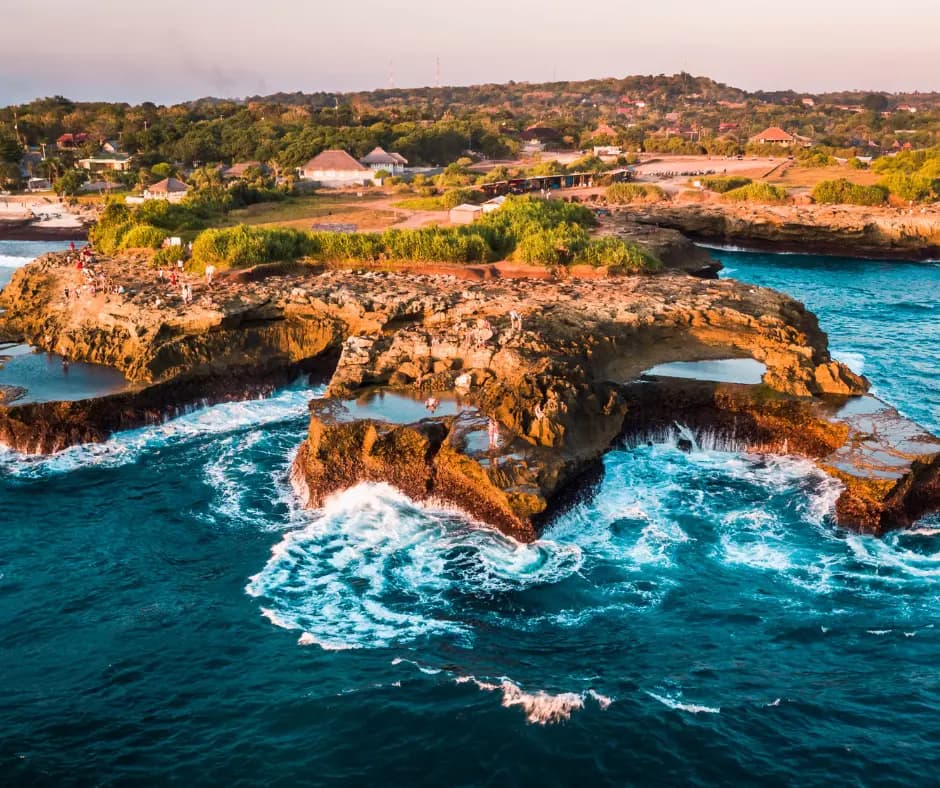
Devil’s Tear is the island’s signature stop. Waves funnel into a rocky cove on the southwest coast and explode upward against the cliffs, sending spray high into the air. It is at its most dramatic with a decent swell and best in the late afternoon when the light comes in low. There is a clifftop path with benches and a couple of warungs for a drink while you watch.


Dream Beach sits right beside it, a pocket of white sand below the cliffs with strong surf and a relaxed beach club feel. It is a place to sunbathe and watch the sets roll in rather than a calm swimming beach. Just along is Sandy Bay, in the same mould.
Mushroom Bay on the north coast is the calmer counterpoint with a sheltered curve of sand, gentle water, and a good spot for a swim and lunch. Jungut Batu, the main beach and the original village, runs along the north shore with most of the boat moorings, surf breaks and sunset bars.
For something quieter, the mangrove forest at the island’s northern tip is worth an hour. You can take a guided kayak or a slow outrigger through the channels, with the still water and the bird life making a complete change of mood from the cliffs and surf.


Crossing to Ceningan and the Blue Lagoon
The Yellow Bridge is one of those small things that makes Lembongan feel like an adventure. It is a narrow, slightly rickety suspension bridge over the channel that separates Lembongan from Ceningan, crossable on foot or carefully by scooter. Below it sit the seaweed plots that gave both islands their living for decades.

Over on Ceningan, the Blue Lagoon is the draw with a deep, vivid inlet framed by cliffs, with a famous (and genuinely serious) cliff jump platform for those who want it. Even if you do not jump, the colour of the water and the cliff scenery are worth the ride. Ceningan also hides a few secret beaches down steep paths, and the island as a whole is rougher, emptier and slower than Lembongan, which is exactly its appeal.
The Seaweed Island
Long before the surfers and divers arrived, Lembongan and Ceningan lived on seaweed farming. At low tide you can still see the neat underwater plots staked out in the shallows between the two islands, and in the villages you will pass seaweed drying in the sun by the roadside. The trade has shrunk as tourism has grown, but it is still part of daily life and it shapes the look of the place, the channels, the low tide flats, the small boats.
It is a good reminder that Lembongan is a real, lived-in island and not a resort strip. The village around Jungut Batu still runs on fishing, farming and family compounds, with temples and offerings exactly as on the Bali mainland. A little of that context makes a scooter loop a lot more interesting.
Surfing and the Watersports Menu
Lembongan has a genuine surf scene, concentrated off Jungut Batu where three reef breaks sit close together such as Shipwrecks, Lacerations, and Playgrounds. They are reef breaks, so they suit confident intermediate and advanced surfers more than total beginners, but you can find lessons and board rental in the village, and the waves are usually less crowded than Bali’s south.

Beyond surfing, the calm bays make easy work of stand up paddleboarding, kayaking through the mangroves, and snorkelling straight off the boats. If you would rather see the coastline and the channel by sea, a private boat trip across to Nusa Penida lets you string together the snorkel stops, the cliffs and the quiet bays at your own pace rather than on a fixed schedule.
Diving and Snorkelling
This is where Lembongan punches above its size. The channel between the Nusa islands and the open Indian Ocean pushes cool, plankton rich water past the reefs, and that water brings the two things divers come for which is manta rays and the mola, the giant ocean sunfish. Basing yourself on Lembongan does not limit where you dive, the same dive sites and snorkelling spots around Nusa Penida are just as accessible from Lembongan or Ceningan as they are from Penida itself, so wherever you sleep, the whole channel is on the table.
Manta rays are the year round headliner. Manta Point and Manta Bay off the south coast of Nusa Penida are cleaning and feeding stations where reef mantas gather, often several at once, gliding slowly over the divers and snorkellers below. They are reliable enough that you can plan a trip around them. Our snorkelling trip with manta rays in Nusa Penida puts non divers right above them, and the full day Nusa Penida snorkelling and land tour pairs the mantas with the clifftop sights.
Mola mola are the seasonal prize. Roughly July to October, these strange, disc shaped giants rise from deep water to be cleaned on the reefs, and sites like Crystal Bay and Blue Corner come alive with them. This is cold, current prone, deep diving and it is firmly for experienced divers, but few encounters in Indonesia compare.
The diving here is current diving, and that is the honest caveat. The same flow that brings the big animals can run fast and unpredictable, especially around Crystal Bay, Blue Corner and Ceningan Wall. These are not beginner sites in big conditions, and a good local operator who reads the tides is the difference between a brilliant dive and a scary one. For divers who want certified guides who know the channel, we run scuba diving day trips to Nusa Penida from Bali.
That said, there is gentle water too. Mangrove Point off Lembongan’s north tip is an easy, pretty drift over hard coral and reef fish, fine for newer divers and excellent for snorkellers straight off the boat. It is the best place on the island to get comfortable before tackling the bigger Penida sites.
Getting There and Getting Around
Lembongan is one of the easiest islands in Indonesia to reach. Fast boats run from Sanur on Bali’s southeast coast, taking about 30 to 45 minutes, with several departures a day. Sanur is roughly 30 to 45 minutes by car from Ngurah Rai airport (DPS), so you can land in Bali and be on the island the same day. We arrange the airport transfer, the boat and the pickup on the other side so the connection is clean.
On the island, the standard way to get around is a scooter, and for short hops you will also see open sided trucks and the occasional small car and driver. Distances are tiny, nowhere on Lembongan is more than a short ride away, and Ceningan is a bridge crossing. If you would rather not ride, walking plus the odd lift covers the main beaches, and your accommodation can usually sort a driver for the day.
Best Time to Visit
The best window is the dry season, May to September, with warm, sunny days, light winds and the calmest seas, which matters here because the crossing and the dive sites are exposed. These months also line up with the mola mola season (roughly July to October), so divers chasing the sunfish should aim for that overlap.
The wet season (October to April) brings short, heavy afternoon showers rather than all day rain, lower prices and fewer people. The sea can be choppier and the odd crossing or dive gets cancelled, but the mantas are around all year and the island is greener and quieter. Water sits at a warm 26 to 28 degrees most of the year, dropping noticeably at the cold water dive sites when the mola are in.
How Long to Stay, and Where It Fits
Two to three nights is the sweet spot for Lembongan itself with enough to loop the island, cross to Ceningan, take a boat or dive day, and still have a slow afternoon at Mushroom Bay. Add a night or two if you want a proper Nusa Penida day out as well, since Penida’s sights are spread out and deserve their own day. The islands pair naturally with Bali (it is the same trip, really) and slot easily before or after Komodo, Lombok or the Gilis for a longer eastern Indonesia run.
Frequently Asked Questions
Two to three nights is ideal for Lembongan and Ceningan with a scooter loop, the Yellow Bridge and Blue Lagoon, a beach day at Mushroom Bay, and a boat or dive trip. Add a night or two if you also want a full Nusa Penida day out, since Penida’s clifftop sights are spread out and worth their own day.
The dry season, May to September, has the best weather, calmest seas and clearest water. If you are diving for the mola mola, target July to October. The wet season is quieter and cheaper with short afternoon showers and choppier crossings, but the mantas are there year round.
Fast boats run from Sanur in southeast Bali and take about 30 to 45 minutes, with several departures a day. Sanur is roughly 30 to 45 minutes from Denpasar airport, so you can land and reach the island the same day. We arrange the transfer, boat and pickup end to end.
Scooter is the standard way, and distances are tiny. You will also find open trucks and the occasional car and driver, and you can cross to Ceningan over the Yellow Bridge on foot or by scooter. If you would rather not ride, the main beaches are walkable with the odd lift.
Lembongan is the most developed island and where most people stay. Ceningan is the tiny island next door, joined by the Yellow Bridge, home to the Blue Lagoon and cliff jump. Penida is the big, rugged island a short channel away with the famous cliffs (Kelingking, Broken Beach) and the manta and mola dive sites, all just as reachable from a Lembongan base.
Yes. Manta Point and Manta Bay off Nusa Penida, a short boat ride from Lembongan, have reef mantas year round, and you can see them diving or snorkelling. The mola mola, the giant ocean sunfish, show up seasonally from roughly July to October at deeper, colder sites for experienced divers.
Some of it. Mangrove Point off Lembongan is a gentle drift that suits newer divers and snorkellers, and it is a good place to learn. The headline Penida sites like Crystal Bay, Blue Corner and Manta Point can have strong, unpredictable currents and are better for experienced divers with a guide who knows the tides.
Almost everyone does. Lembongan is a 30 to 40 minute hop from Bali, so it is really part of the same trip, an easy two or three night add on for a slower pace and the diving. It also fits before or after Komodo, Lombok or the Gilis for a longer eastern Indonesia itinerary.
Your adventure starts here
Plan your trip to Nusa Lembongan
Tell us what you want to see and we'll craft the perfect itinerary, usually within 24 hours.
Plan My Trip →Enquire About This Destination
Any question, special request or custom itinerary, we reply within 24hrs.