Bali
Bali is Indonesia’s most famous island and a destination in its own right. Temples and ceremonies, rice terraces and volcanoes, surf beaches and quiet coves, world-class food, and a dive scene tucked along its calmer coasts. It is also the gateway to the rest of the archipelago, which is why most Indonesia trips start here.
Bali rewards the traveller who looks past the busy south. Spend a few days in Ubud’s hills, drive east to the quiet coast around Amed, climb a volcano at dawn, and you get a very different island from the one in the brochures. Here is what Bali is really about, and how we put a trip together.
The island of the gods
Bali is the one Hindu island in the world’s largest Muslim country, and that shapes daily life everywhere you look. Small palm-leaf offerings (canang sari) appear on doorsteps and dashboards each morning. Temples sit at the heart of every village, and the calendar runs on a cycle of ceremonies most visitors never fully untangle: Galungan and Kuningan, temple anniversaries, and Nyepi, the day of silence when the whole island stops, the airport closes, and no one leaves the house.
The big temples are worth the trip. Besakih, the Mother Temple, climbs the slopes of Mount Agung. Lempuyang, the Gate of Heaven, frames the volcano between two stone halves. Tirta Empul is a holy spring where Balinese come to bathe and purify. Tanah Lot and Uluwatu sit dramatically over the sea, and Uluwatu’s clifftop Kecak fire dance at sunset is one of the few “must-do” shows that earns the label.
You can go deeper than temple-hopping. Our cultural tours and private day trips with a local guide get you into the villages and the artisan trades: silver in Celuk, stone and wood carving in Mas and Batubulan, painting around Ubud and Batuan. A guide also reads the etiquette for you, which matters at a working temple during a ceremony.
To understand what you are seeing, our journal digs into the culture: a short introduction to Balinese Hinduism, the Galungan festival, the Nyepi day of silence and its Ogoh-Ogoh parades, and the beautifully preserved traditional village of Penglipuran.
Ubud and the cultural heartland
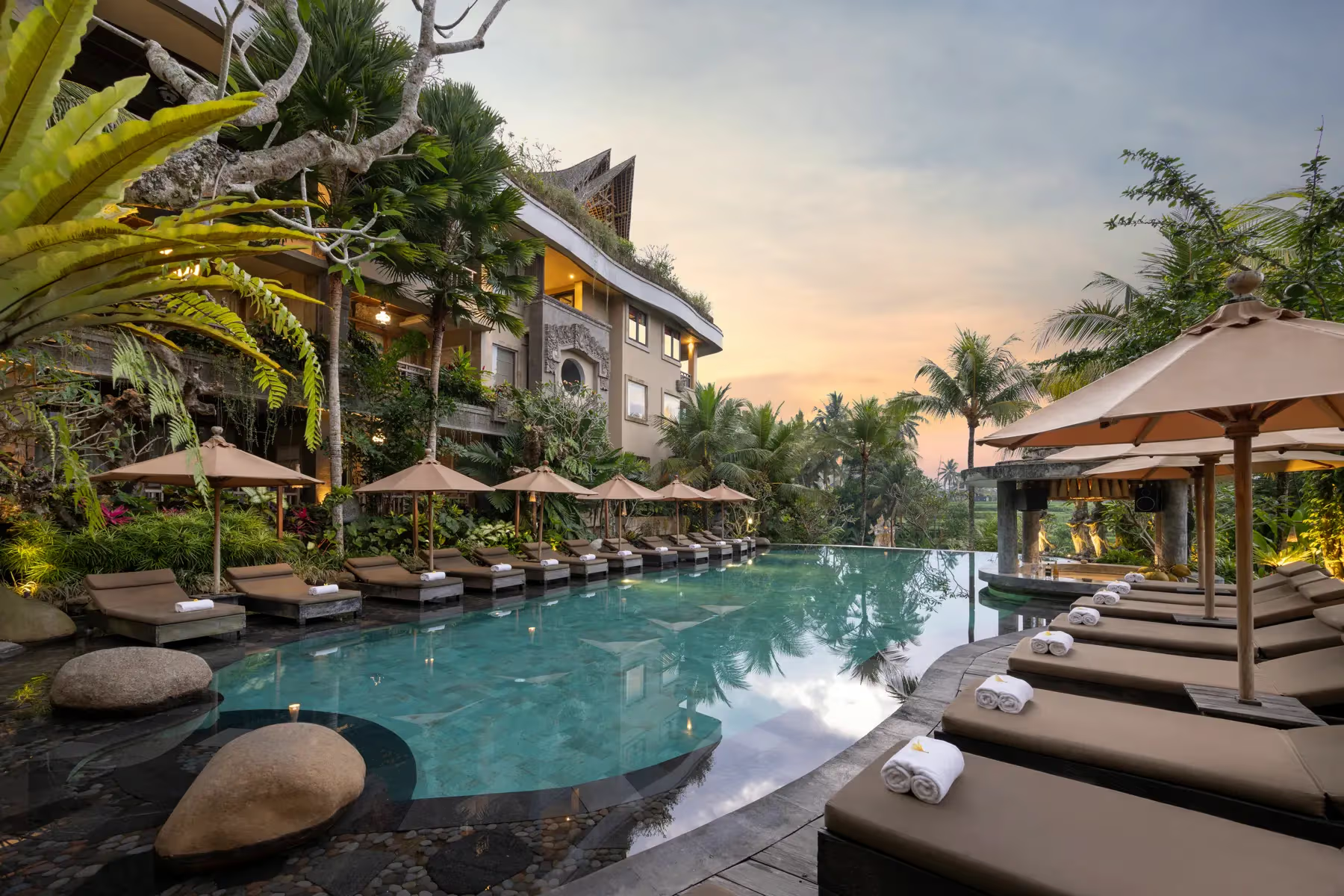
Ubud is Bali’s cultural centre, inland and green, and it makes the best base for a first trip. The Tegallalang rice terraces show off the centuries-old subak irrigation system that still feeds the island. The Sacred Monkey Forest and Goa Gajah (the Elephant Cave) sit within easy reach, along with a string of waterfalls like Tibumana, Tukad Cepung and Sekumpul in the north.
It is also where Bali’s adventure menu opens up. We run an e-bike tour through the rice fields around Ubud and a quieter one across the Jatiluwih terraces, white-water rafting on the Ayung River through jungle gorges, and canyoning for anyone who wants to scramble, jump and abseil through the waterfalls rather than just photograph them.
Volcanoes, lakes and the highlands
Bali’s spine is volcanic, and the high country is cooler, greener and far less crowded than the coast. The classic outing is a pre-dawn climb up a volcano to watch the sun come up over the caldera. We guide treks up Mount Agung, the island’s highest and most sacred peak, and the shorter, gentler Mount Abang above Lake Batur for those who want the sunrise without the full summit push. For a bird’s-eye view with no legwork, there is paragliding off the south coast cliffs.
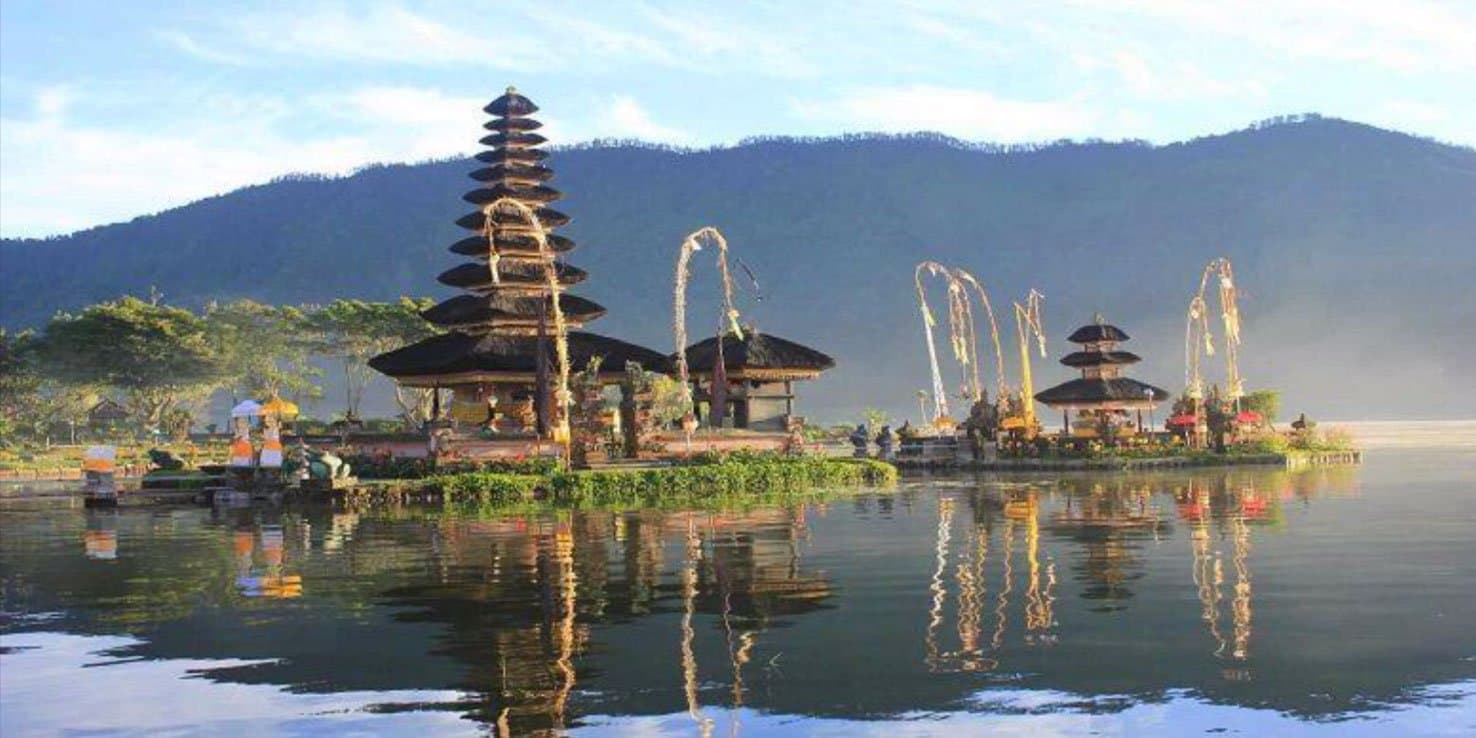
The lake country around Bedugul and Munduk is Bali at its most pastoral: misty mornings, the lakeside temple of Ulun Danu Beratan, clove and coffee plantations, and trails between waterfalls. It is an easy add to a northbound itinerary and a good antidote to the heat of the coast.
Scuba diving in Bali
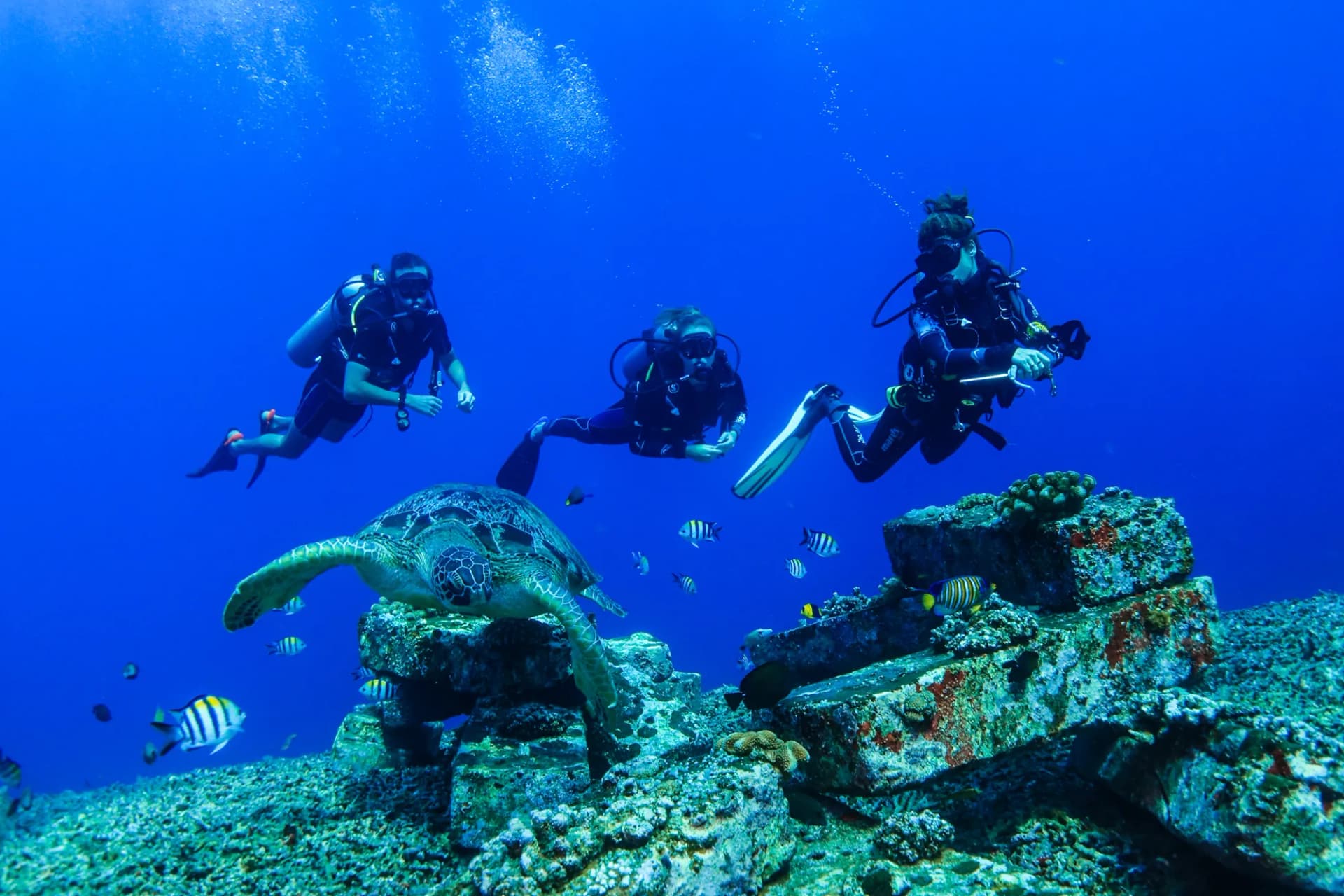
Diving is not the headline reason to come to Bali, but it is genuinely good, very accessible, and easy to fold into a wider trip. The action is on the calm coasts, away from the surf and crowds of the south.
Top dive areas
- Tulamben is home to the USAT Liberty wreck, one of the most accessible wreck dives in the world. The WWII cargo ship lies from 5 to 30 metres, coral-encrusted and busy with fish, and works for everyone from snorkellers to night divers.
- Amed has easy walls and slopes like Jemeluk Bay, with sea fans, turtles and the odd reef shark, plus excellent macro on the black sand.
- Menjangan Island, in the northwest national park, offers Bali’s clearest water and pretty wall dives.
- Secret Bay and Seraya are muck-diving and macro hunting grounds: frogfish, harlequin shrimp, mimic octopus and other rare critters.
For the big stuff, divers add nearby Nusa Penida, where you can dive or snorkel with manta rays year round and, between roughly July and October, the strange ocean sunfish (mola mola).
Bali is also one of the best places in Indonesia to learn: warm water, gentle sites, fair prices and serious dive shops. We run Open Water courses in Amed and Tulamben and freediving courses in Tulamben. Divers who want to go deeper into the region can step up to a multi-day Bali dive safari.
Beaches and surf
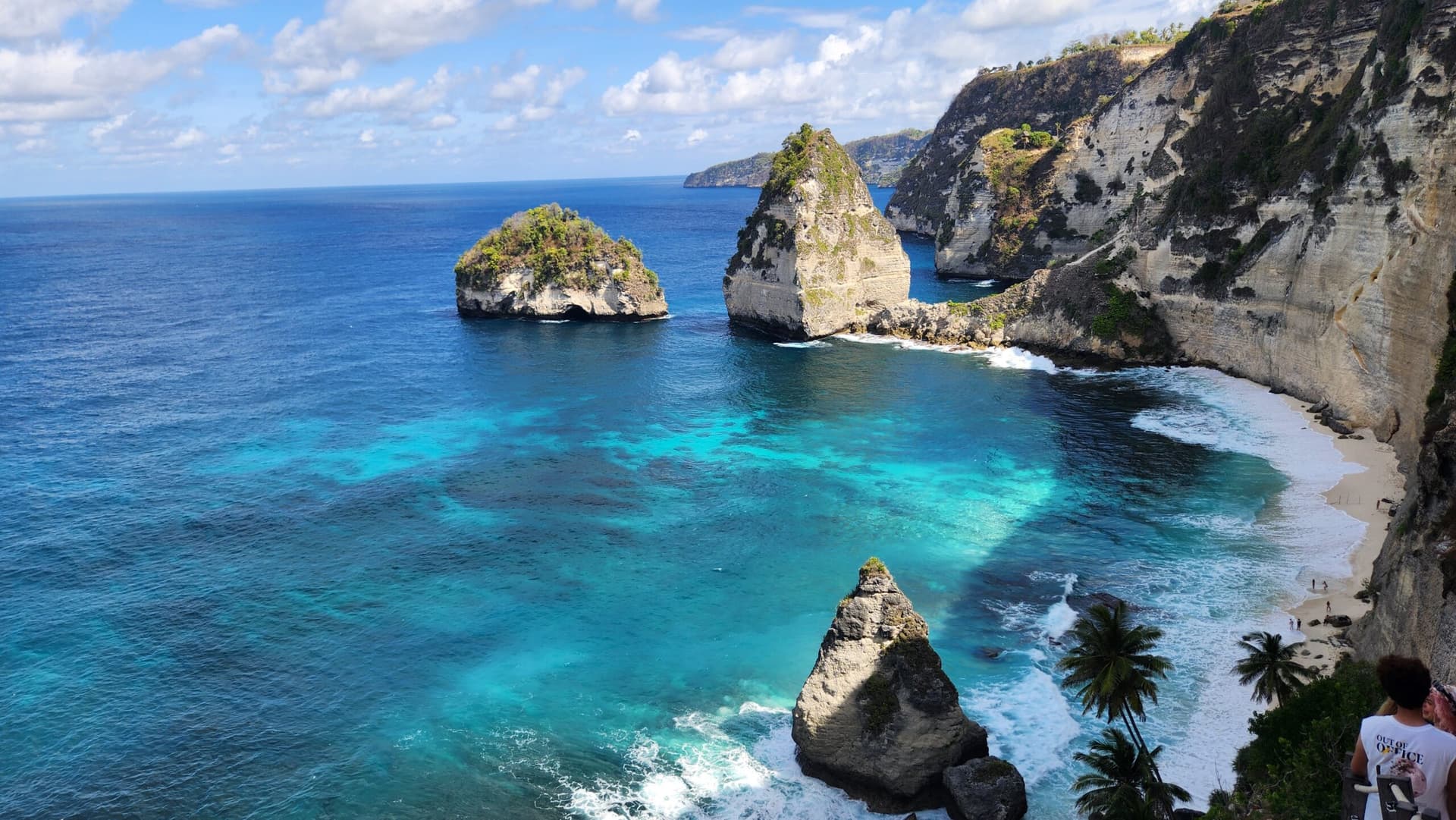
Bali built its reputation on the sea, and the coast changes character as you go round the island. The Bukit peninsula in the south has the dramatic stuff: white sand under limestone cliffs at Padang Padang, Bingin and Balangan, and the world-class surf breaks of Uluwatu and Padang Padang that draw surfers from everywhere. Canggu and Medewi further up the coast suit intermediate surfers and the cafe-and-sunset crowd.
For swimming and calm water, the east and southeast are better. Sanur has a gentle, family-friendly beach and a long seafront path. Amed and the far northeast are quiet, black-sand fishing coast with the volcano behind them, ideal if you want to slow right down. We can put you on a private sunset cruise or, for something different, horse riding along Saba Beach.
Bali, region by region
A quick orientation, because “Bali” means very different things depending on where you base yourself.
- South (Kuta, Seminyak, Canggu, Bukit): beaches, surf, nightlife, restaurants and the airport. Busiest part of the island.
- Ubud and the centre: culture, rice terraces, jungle, waterfalls and most of the adventure activities. The best all-round first base.
- East (Amed, Tulamben, Sidemen, Candidasa): quiet coast, diving, the Agung foothills and rural valleys. Where to go to escape the crowds.
- North (Lovina, Munduk, Singaraja): lakes, highlands, waterfalls, dolphins off Lovina and a slower pace.
- West (Menjangan, Pemuteran, West Bali National Park): the island’s wild corner, best diving and least development.
- The Nusa islands (Penida, Lembongan, Ceningan): a short boat hop southeast, with the mantas, the clifftop viewpoints and a more rugged feel.
Food and everyday life
Balinese food is worth planning around. Look for babi guling (suckling pig), bebek and ayam betutu (slow-cooked duck or chicken in spices), and nasi campur, a plate of rice with a bit of everything. The best of it is in warungs, not hotels. Ubud and Seminyak also have a serious modern dining and cafe scene if you want it.
The best way to take the island home is to cook it. We run hands-on Balinese cooking classes in the Sidemen valley and in Amed, usually starting with a market visit and ending with a long lunch.
A springboard for the rest of Indonesia
Bali is the main international hub for eastern Indonesia, so it is the natural launch pad for a bigger adventure. From here you can run a dive safari up to the Gili Islands or Nusa Penida, fly on to Komodo for the dragons and the mantas, or cross to Java for the volcanoes: the sunrise over Mount Bromo and the blue fire and acid lake of Ijen. If Bali is your first week, the second can look completely different.
Best time to visit
Bali is a year-round destination, but the dry season (April to October) has the best weather for surfing, trekking, diving and everything outdoors, with the clearest skies and water. April to May and September to October are the sweet spot: good conditions without the July to August peak crowds and prices.
The wet season (November to March) brings warm afternoon downpours rather than all-day rain, lower prices, fewer people and a very green island. It is a fine time for culture, spas and diving, and the macro life on the black sand is good all year. Water sits at a warm 27 to 29 degrees.
Getting there and getting around
International flights land at Ngurah Rai (Denpasar, DPS) in the south. From there, distances feel short on the map but the roads are slow, so it pays to think in driving hours: Ubud is about 1.5 hours from the airport, Amed and the east 2.5 to 3 hours, the north and west longer.
We arrange private transfers and an English- or French-speaking driver-guide, which is by far the easiest way to see the island. Renting a scooter is common for getting around a single area but not ideal for covering the whole island. We build the route around your interests and pace so you are not backtracking across Bali’s traffic.
Frequently asked questions
Five to seven days covers the highlights: a couple of days around Ubud for culture and rice terraces, a few on the coast, and a volcano sunrise or day trip. Ten days lets you add the quiet east, the north, or the Nusa islands without rushing. Many travellers use Bali as week one and add Komodo, the Gilis or Java for week two.
Culture and landscape first: Hindu temples and ceremonies, the rice terraces around Ubud, volcanoes, waterfalls, beaches and surf, food, and one of Asia’s best wellness and spa scenes. The diving is a strong bonus on the calmer coasts, not the main event.
The south (Kuta, Seminyak, Canggu) is busy and built up. The rest of the island is not. Base yourself in Ubud, the east around Amed, or the north and you get a much quieter, more authentic Bali. We plan routes specifically to keep you away from the crush.
The dry season, April to October, is best for outdoor activities, with April to May and September to October giving the best mix of weather and smaller crowds. The wet season is quieter and cheaper, with short afternoon rain.
For a single area, a scooter or short taxi rides work. For seeing the island, a private driver-guide is far less stressful given the traffic and distances, and you learn a lot more along the way. We include this in our itineraries.
Yes to both. Amed, Tulamben (the USAT Liberty wreck) and Menjangan offer easy, accessible diving, and Bali’s calm, warm, affordable conditions make it one of the best places in Indonesia to take an Open Water course. For mantas and mola mola, add nearby Nusa Penida.
Not off Bali’s main coast, but nearby Nusa Penida has mantas year round and mola mola roughly July to October. It is an easy day trip or overnight from the mainland.
Fly into Denpasar (DPS), the main international gateway for eastern Indonesia. From there we arrange transfers and your driver-guide. Bali also connects by short flights to Komodo, Java and the rest of the archipelago.
Your adventure starts here
Plan your trip to Bali
Tell us what you want to see and we'll craft the perfect itinerary, usually within 24 hours.
Plan My Trip →Enquire About This Destination
Any question, special request or custom itinerary, we reply within 24hrs.