Banda Sea
The Banda Sea is one of Indonesia’s most remote dive regions, a string of tiny volcanic islands in the middle of the Maluku archipelago that you reach almost entirely by liveaboard. It is famous for two things above all: hammerhead sharks moving in schools at the height of the season, and a colonial history out of all proportion to its size, because these specks of land were once the only place on earth where nutmeg grew.
Most people who come here come to dive, and the diving is the reason the Banda Sea sits on serious divers’ lists. But the islands themselves are worth understanding before you go, because the history you can still walk through on Banda Neira is part of what makes this trip different from any other in the country. Here is what the Banda Sea is really about, above and below the surface, and how a trip comes together.
The Spice Islands: why these tiny islands mattered
For three hundred years, the small Banda Islands were among the most fought-over places on the planet. They were the world’s only source of nutmeg and mace, two spices that in Europe were worth more than their weight in gold. Arab, Chinese, Javanese and Malay traders had been buying Banda nutmeg for centuries before the Portuguese arrived in the early 1500s, followed by the Dutch, who wanted a monopoly and took it by force.
The Dutch East India Company (VOC) seized control of the Bandas in 1621 under Jan Pieterszoon Coen, in one of the more brutal episodes of the colonial spice era. The original Bandanese population was almost entirely killed, enslaved or driven out, and the islands were reorganised into nutmeg plantations worked under Dutch control. That history is grim, and it is also the reason a cluster of islands this small carries forts, cannons and grand merchant houses you would expect on a far larger place.
There is one footnote that surprises most visitors. In 1667, under the Treaty of Breda, the Dutch traded a faraway island to the English to keep tiny Run, one of the Banda Islands, and its nutmeg. The island the English got in return was Manhattan. At the time, the Dutch thought they had the better end of the deal.
Banda Neira and the islands above water
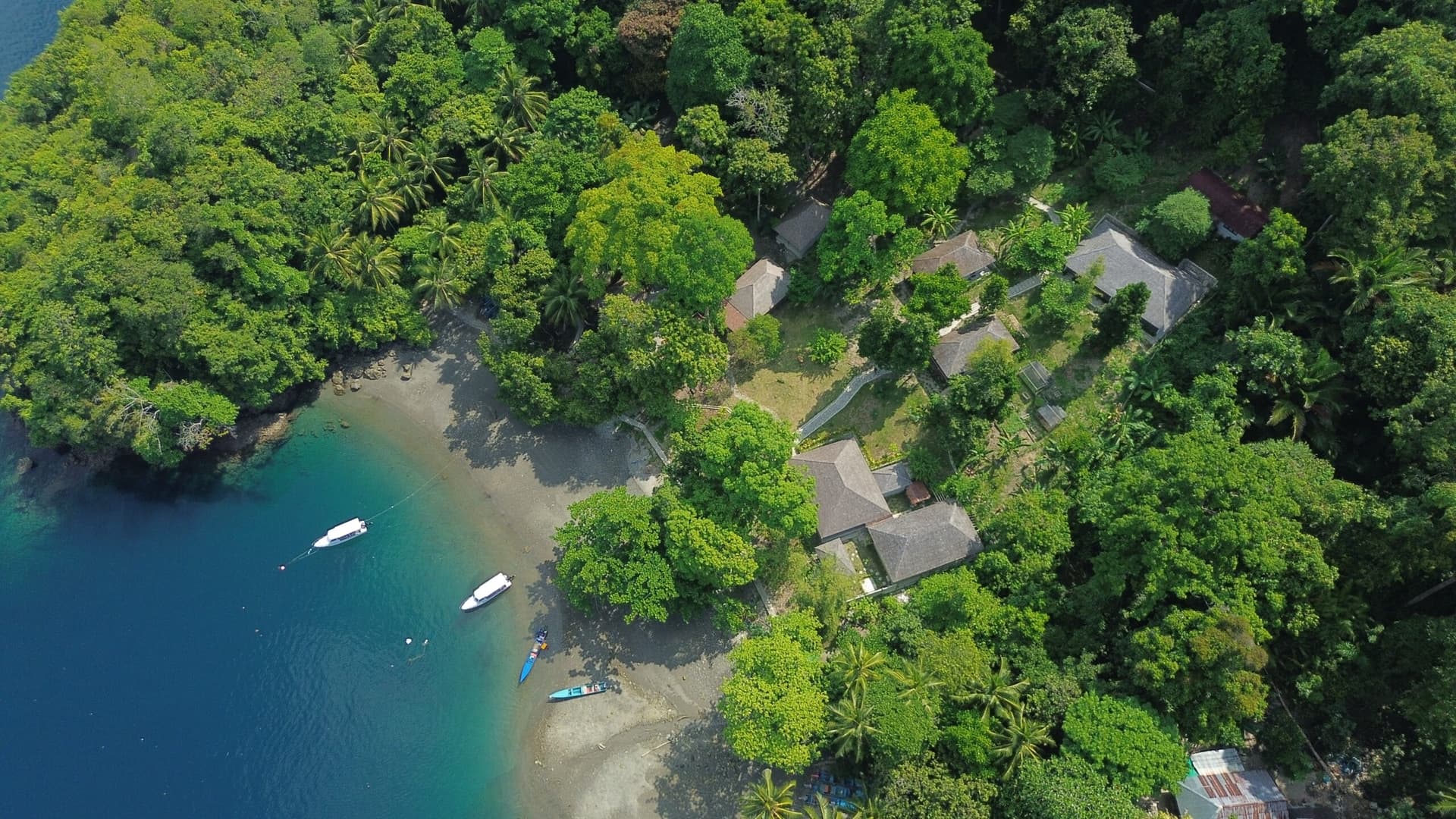
Banda Neira is the main island you’ll visit on a Banda Sea diving liveaboard itinerary. It is small, exceptionally quiet, and walking through the colonial streets gives you a direct, tangible feel for what early merchant life was like in this isolated archipelago. We dig into the full story in our guide to the history of Banda Neira and the spice trade.


What you can see on land:
- Fort Belgica sits above the main town. It’s a Dutch star-shaped fortress from 1611, well maintained. From the top, you get a good view of the harbour and Gunung Api volcano directly across. Short hike, and it’s the best photo spot in the region.
- Fort Nassau is below it, older (1609) and more weathered, with vines and roots reclaiming it. It’s a good reminder of the early days of European expansion in Asia.
- The VOC Old Town has colonial-era merchant houses, an old Dutch church with graves carved into the floors, and a couple of small museums on the spice wars.
- Nutmeg and almond groves on nearby Banda Besar let you walk under century-old kanari trees that shade the nutmeg trees below. The system hasn’t changed since the plantation era.
- Gunung Api is active, 600+ metres high, right next to town. Last erupted in 1988. The lava flow runs directly into the sea and creates one of the best dive sites. Some itineraries offer a pre-dawn climb (steep, 2 to 3 hours) for sunrise at the top.
If your itinerary gives you a morning on Banda Neira, take it. The history here is the whole reason the islands exist in the form they do.
Ambon, the gateway
Almost every Banda Sea trip starts and ends in Ambon, the capital of Maluku province, a few hundred kilometres north. You fly into Pattimura International Airport (AMQ) on a domestic connection from Jakarta or Bali, overnight in town, then board the liveaboard.
Ambon is worth a day if your schedule allows it. The bay is steeped in WWII and colonial history, and the city is also a serious muck-diving destination in its own right, with Ambon Bay famous among critter hunters for psychedelic frogfish, rhinopias and rare cephalopods on the black sand. Some liveaboard routes build a check-out dive or two in Ambon Bay before heading south, which is a strong start to any trip.
Diving the Banda Sea
This is why most people make the journey. The Banda Sea is open ocean dotted with seamounts and volcanic islands, far from any port, so the reefs are healthy and the water is clear and blue. It is not a beginner’s region. Many sites have current, the diving is remote, and you need to be comfortable in open water. For experienced divers it is one of the best routes in the country.
Hammerhead season
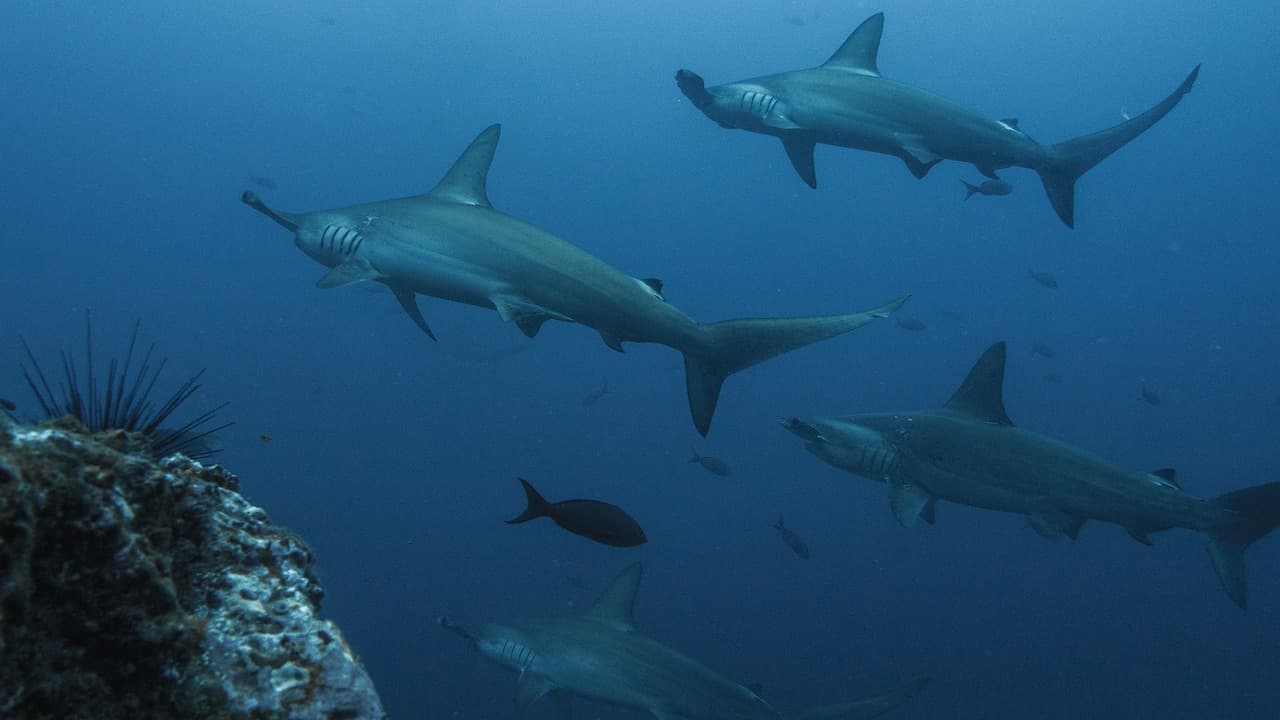
The Banda Sea’s signature is schooling scalloped hammerhead sharks. They gather around the remote southern seamounts and islands, Nil Desperandum, Suanggi, Serua and Manuk. This is a seasonal event, not a year-round guarantee, and it lines up with the crossing routes liveaboards run between roughly October to November and again around March to April. When it happens, you sit in the blue at depth and watch the schools pass. It is one of the few places in Indonesia you can reliably try for it.
The volcano dive: lava-flow corals
Off Banda Neira, the 1988 lava flow from Gunung Api ran into the sea and, in the decades since, has been colonised by some of the fastest growing hard coral in the world. The result is a slope of dense, healthy staghorn and table coral over old lava, unusually shallow and easy, and a genuinely unusual thing to dive with a reef built on a lava flow younger than many of the divers swimming over it.
Macro and the weird stuff
Between the big animal sites, the Banda Sea delivers world class macro. The region is known for mandarinfish, seahorses, rhinopias, cuttlefish and frogfish, plus the muck diving up in Ambon Bay that bookends most trips. Manuk, a remote volcanic cone in the open sea, is the standout for one strange reason: it is wrapped in large numbers of sea snakes (sea kraits), which carpet the reef and are harmless to divers. Few places on earth have so many in one spot.
Walls, pinnacles, and reef sharks
Most liveaboards hit several reef sites in addition to the famous seamounts.
- Karang Hatta sits on the edge of a deep trench. Strong drops and clear water make this a solid drift dive. Reef sharks work the current alongside schools of pelagic fish.
- Koon is on the eastern edge. It’s known for the sheer amount of fish life. Fusiliers, surgeonfish, and jacks move along the wall in huge numbers, with big groupers and trevally hunting below.
- Batu Kapal (“ship rock”) has deep pinnacles covered in massive sea fans. It’s a good spot to watch for grey reef sharks while picking through crevices for macro life.
- Pombo / Boi, an easier, gentler site near Ambon with sponges and soft coral, good for working up to the bigger sites, with occasional dolphins and even dugong sightings.
The trip itself
The Banda Sea is essentially a liveaboard-only region, and the route is a crossing rather than a loop. Our Banda Sea diving liveaboard runs the classic Ambon to Banda circuit, taking in Banda Neira, the volcano dive, Manuk’s sea snakes and the hammerhead seamounts, with a morning ashore for the forts when the schedule allows. Trips run during the two crossing windows when the conditions and the sharks line up, so dates are limited and they book out early.


How the Banda Sea fits a bigger trip
Because the Banda Sea only runs in two short seasons and sits well off the main routes, most divers pair it with the region’s other heavy hitters rather than treating it as a standalone week. The same Ambon and Maluku gateway also feeds the long crossings to and from Raja Ampat, and many serious divers string the two together when the calendar allows. Our Raja Ampat liveaboard and Raja Ampat dive safari cover that region.
If you would rather build a wider Indonesia diving trip around more accessible regions first, Komodo is the natural counterpoint that includes manta rays, dragons, and big current diving on a Komodo liveaboard or a shorter 3-day Komodo cruise. And almost everyone routes through Bali on the way in, which makes an easy few days of warm-up diving, culture and rest before or after a hard crossing.
Best time to visit
The Banda Sea diving season is short and tied to the crossing windows: roughly March to April and September to November. These are the months when the seas settle enough for the open-water passages, the visibility is at its best, and the hammerhead aggregations are most likely. Outside these windows the region is largely inaccessible to liveaboards, so the season effectively chooses your dates for you.
Water sits at a warm 27 to 29 degrees, but bring exposure protection for the longer, deeper hammerhead dives in the blue, where you can get cold hanging in the current.
Getting there and getting around
Getting to the Banda Sea takes effort, and that is part of why it stays uncrowded. The route is:
- Fly into Ambon (Pattimura, AMQ) on a domestic flight from Jakarta or Bali. There are no international flights direct to Maluku.
- Overnight in Ambon, usually the night before embarkation. A day here adds the muck diving in Ambon Bay if your schedule allows.
- Board the liveaboard. From here, everything is by boat. There are no road transfers, no island-hopping by ferry on the dive route, and very limited infrastructure once you leave Ambon. The boat is your hotel, restaurant and dive platform for the whole trip.
Because the region is remote and the seasons are narrow, this is a trip to plan well ahead. We handle the domestic flights, the Ambon overnight and the liveaboard booking as one package so the logistics are not on you.
Frequently asked questions
Plan on a liveaboard of roughly 8 to 12 nights, plus a night in Ambon either side and your international travel. The Banda Sea is a crossing, not a day-trip region, so the boat time is the trip. Many divers add Raja Ampat or Komodo before or after to make the long journey to eastern Indonesia worthwhile.
The two short seasons are around March to April and September to November. These are the only windows when liveaboards run the open-water crossings, the visibility is best, and the schooling hammerheads are most likely. Outside these months the region is largely closed to liveaboards.
No, and anyone who guarantees it is overselling. The schooling hammerheads are a seasonal, wild aggregation, so timing your trip to the right window gives you a strong chance, not a certainty. The Banda Sea is one of the few places in Indonesia where it happens reliably enough to plan around.
Not really. It is a remote, open ocean region with current, deeper dives and long crossings, best suited to experienced divers who are comfortable in blue water and drift conditions. If you are newer, build up in Bali or Komodo first and come back for the Banda Sea once you have the dives logged.
Fly into Ambon (Pattimura International Airport, AMQ) on a domestic connection from Jakarta or Bali, overnight in town, then board the liveaboard. Everything after Ambon is by boat. There is no way to dive the region independently from land.
The land history is the main draw. On Banda Neira you can walk the star-shaped Fort Belgica, the older Fort Nassau, the colonial VOC town and the old nutmeg groves, and fit travellers can climb the Gunung Api volcano for sunrise. Most liveaboards build in a morning ashore so you do not miss it.
Yes, and many divers do. Ambon is also a gateway for the long crossings to and from Raja Ampat, so the two pair naturally when the seasons line up. Komodo and Bali make easier add-ons on the way through. We build these combinations as one trip.
They were once the world’s only source of nutmeg and mace, which made them among the most valuable and fought-over islands on earth during the colonial spice trade. The Dutch took control in 1621 and even traded Manhattan to the English in 1667 to keep one of these islands. The forts and merchant houses you can still see on Banda Neira date from that era.
Your adventure starts here
Plan your trip to Banda Sea
Tell us what you want to see and we'll craft the perfect itinerary, usually within 24 hours.
Plan My Trip →Enquire About This Destination
Any question, special request or custom itinerary, we reply within 24hrs.