Komodo
Komodo National Park is two trips stacked on top of each other: the best place on Earth to see Komodo dragons roaming wild, and one of the planet’s great diving and snorkeling destinations, where strong currents and rich coral reefs draw mantas, sharks and walls of fish into fast, clear water. Most people come for one and leave converted to both.
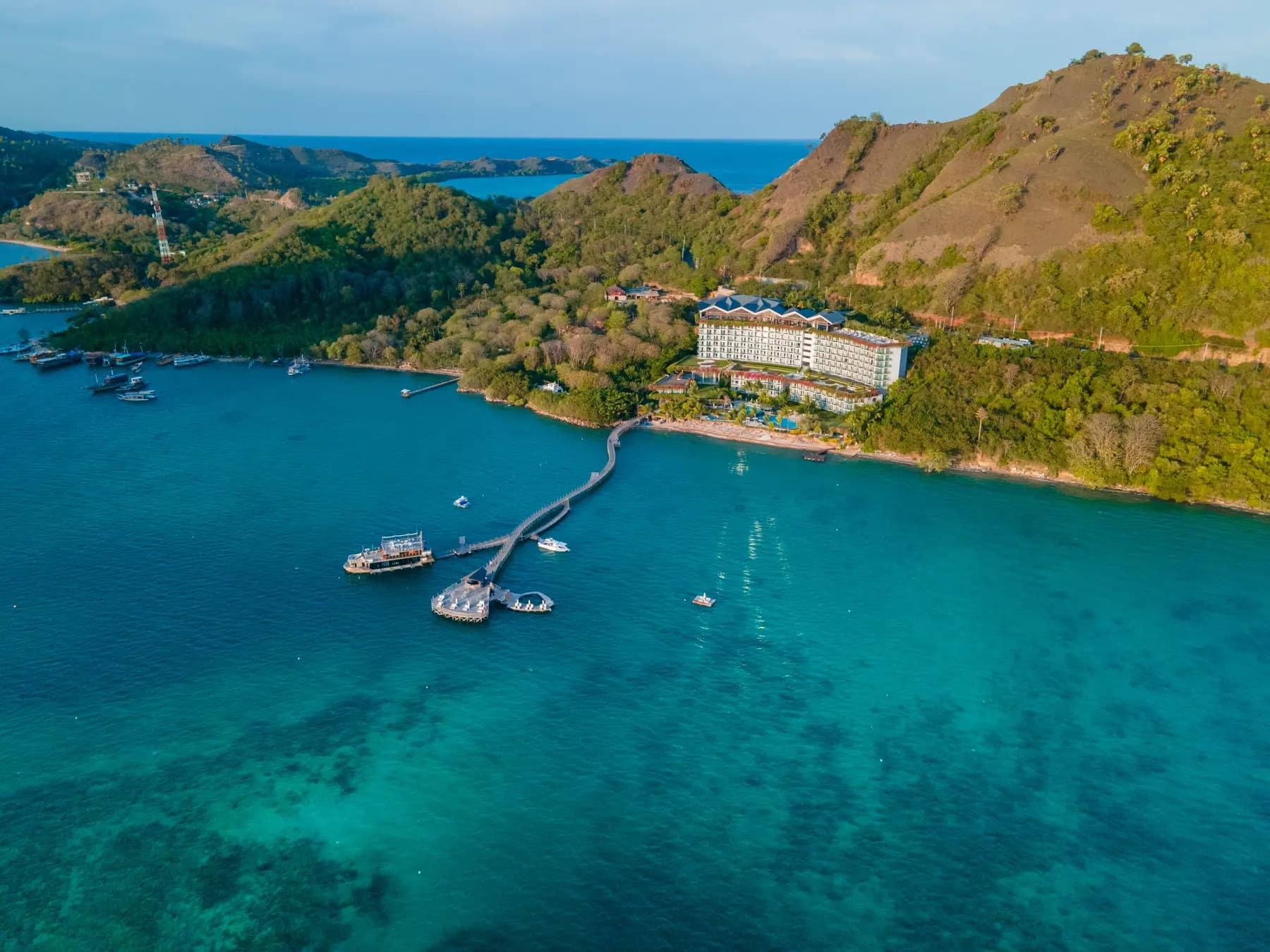
The park sits off the western tip of Flores, reached from the harbour town of Labuan Bajo. It is not one island but a cluster of 29, three of them large (Komodo, Rinca and Padar) and the rest scattered like stepping stones across a stretch of sea that happens to be one of the most productive in the Coral Triangle. Above the surface you get dragons, savanna hills, pink sand and a sunset bat exodus. Below it you get some of the best diving and snorkeling in Indonesia. Here is how the place actually works, and how we put a trip together.
The dragons
The Komodo dragon, the largest lizard alive, exists in the wild nowhere else on Earth outside this small cluster of islands. The park was set up in 1980 specifically to protect it, and it is now a UNESCO World Heritage Site. A full-grown male can reach 3 metres and carries a serious set of tools: powerful legs, heavy claws, a venomous bite and a sense of smell that picks up carrion from kilometres away. They hunt deer, wild boar and even water buffalo, and they swim well enough to cross between islands.
You see them on foot, on a guided trek with a ranger, on either Komodo Island or Rinca Island. Rinca is the smaller of the two and holds over a thousand dragons in a tighter area, so sightings tend to be more reliable and the trek is shorter, which makes it the practical choice for most day visitors. Komodo Island is larger, less crowded and home to the park’s largest village, Komodo, and the indigenous Ata Modo community, whose guides usually lead the walks. Either way you are in open savanna and dry forest, often with deer and wild boar in plain sight, plus monkeys and birds. Treat it as a wildlife walk, not a zoo: the rangers set the pace and the distance, and they know where the animals tend to be.
Learn more about Komodo dragons: Discover the Enigmatic World of the Komodo Dragon | Why Do Komodo Dragons Look Like They Are Drugged?
The shortest way to meet a dragon is our Komodo National Park day trip, which pairs a trek with the park’s other headline stops by speedboat.
Above the water: the islands and the landscape
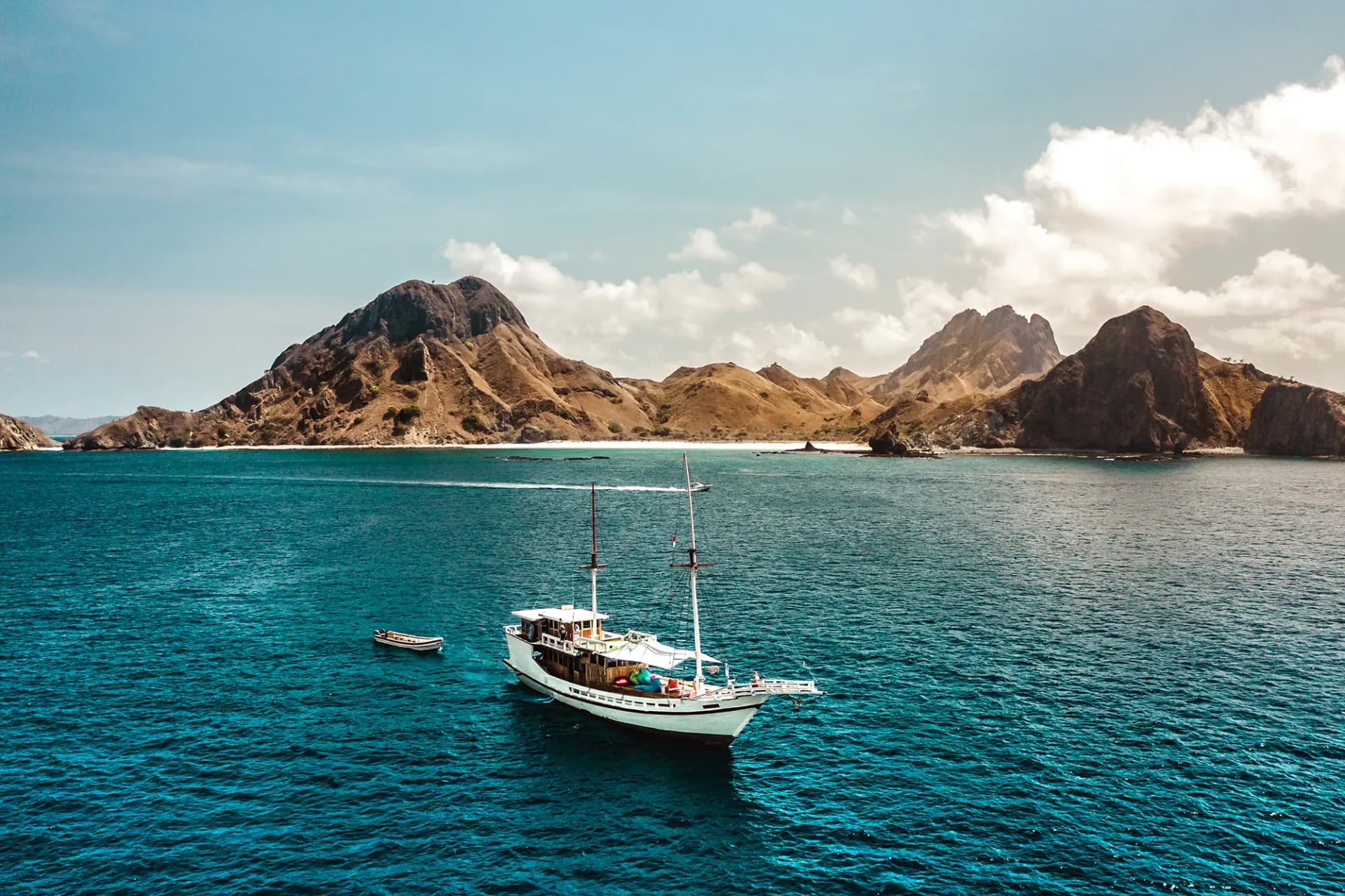
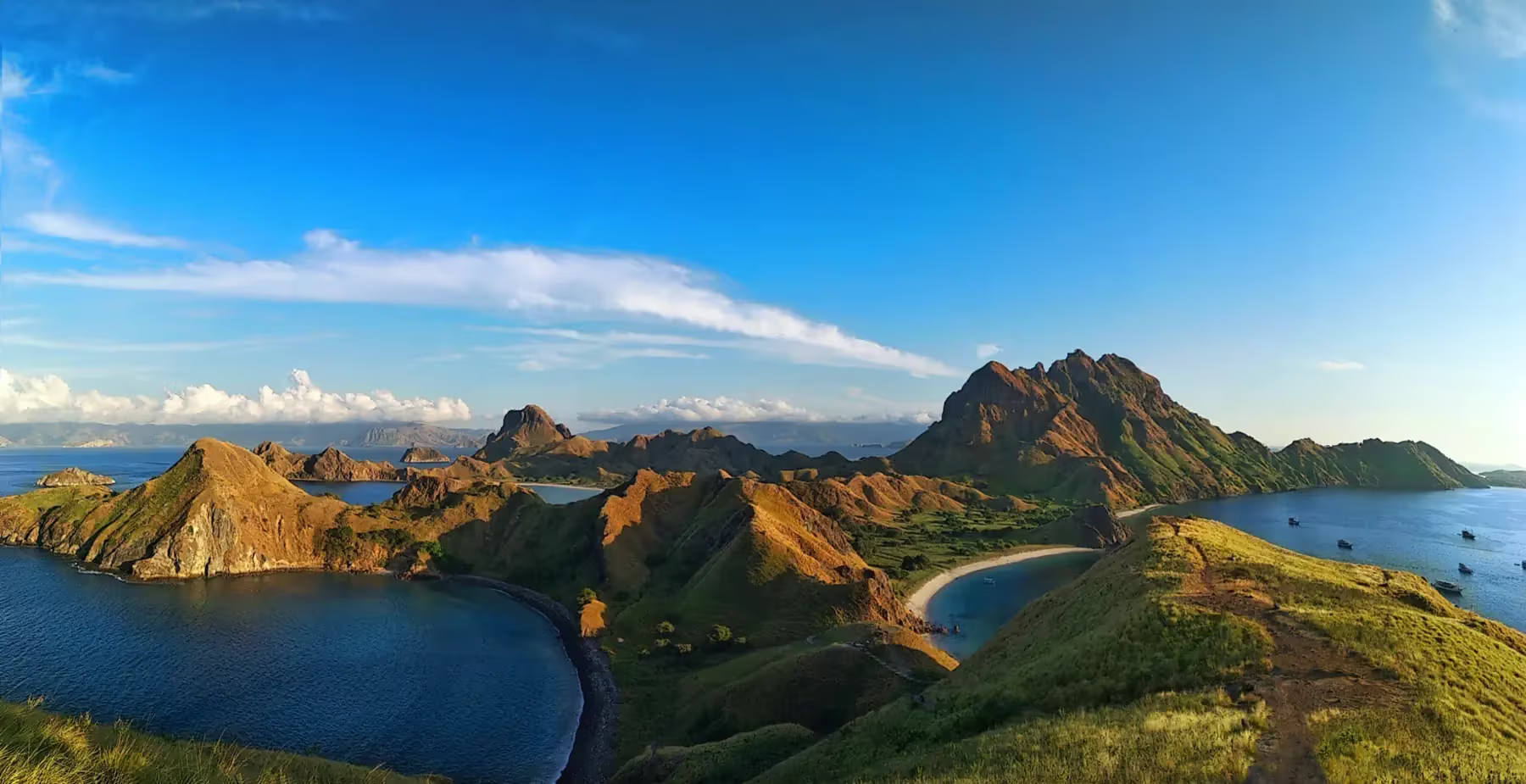
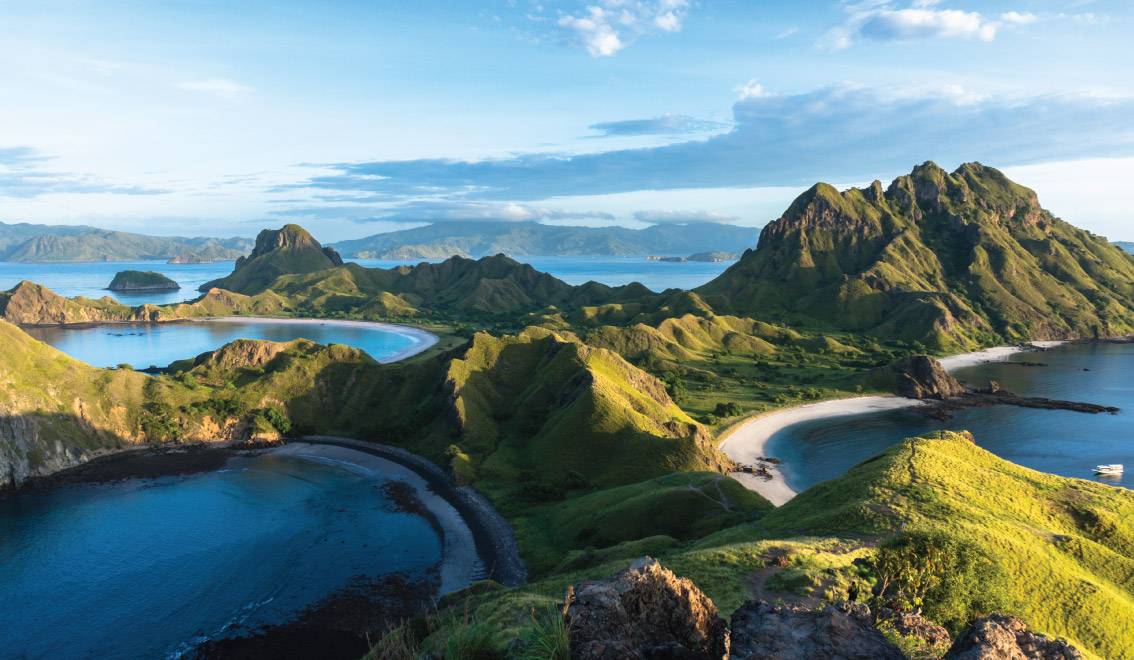
Padar Island is the view you have already seen. A 45-minute climb up a ridge opens onto three curved bays fanning out below, each with a different colour of sand, and from the top you can pick out a pink beach in the distance. It is the single most photographed spot in the park and worth getting up early for, before the heat and the crowds.
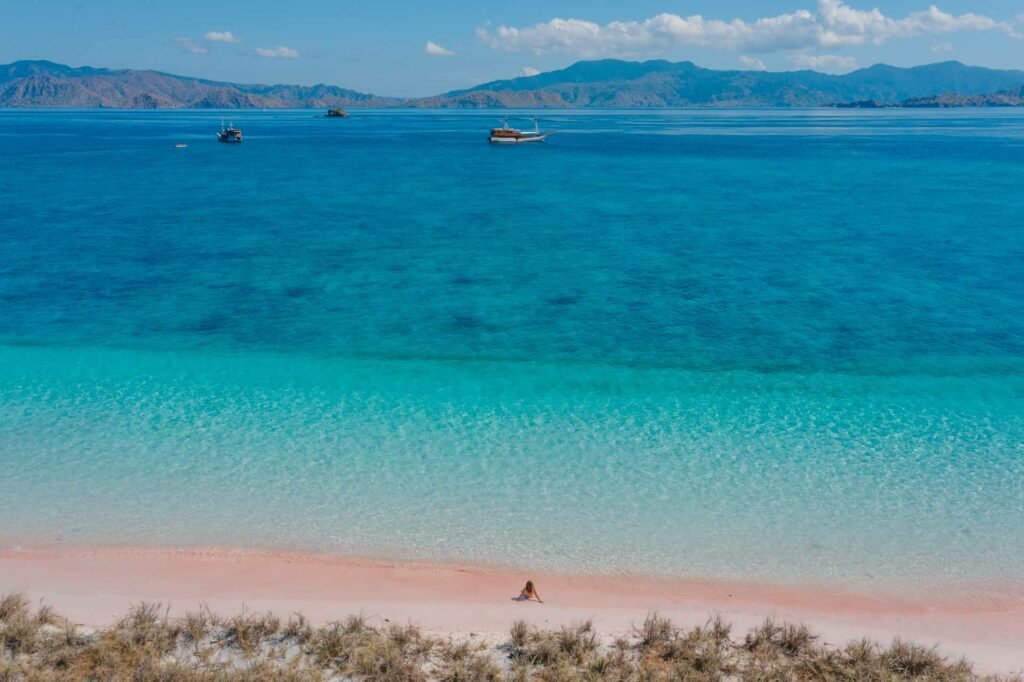
Pink Beach is exactly that: sand tinted rose by fragments of red coral mixed into the white. The hue has faded at the most-visited stretch near Komodo Island because people kept pocketing the coral, so the deepest colour now sits at the quieter far end. It is a good swimming and snorkelling stop, with reef close to shore.
Kalong Island delivers the park’s strangest sunset. As the light drops, thousands of giant fruit bats lift off the mangroves at once and stream across the sky toward Flores to feed. It starts with a few, then the whole orange sky fills with them. Most liveaboards and overnight trips time the evening to catch it from the deck.
The dragons get the headlines, but the landscape is what people photograph. Komodo is dry savanna country, golden hills and pale beaches, very different from the lush green of most of Indonesia, and the light at either end of the day is the reason half of these islands look the way they do on a postcard.
Then there is the snorkelling, which is excellent and does not require a tank. Manta Point lets you swim above giant manta rays as they feed and cruise the shallows, and Siaba Besar and Siaba Kecil, the “turtle city”, hold reefs full of green turtles grazing on seagrass. These are the stops that turn a sightseeing trip into something people talk about for years.
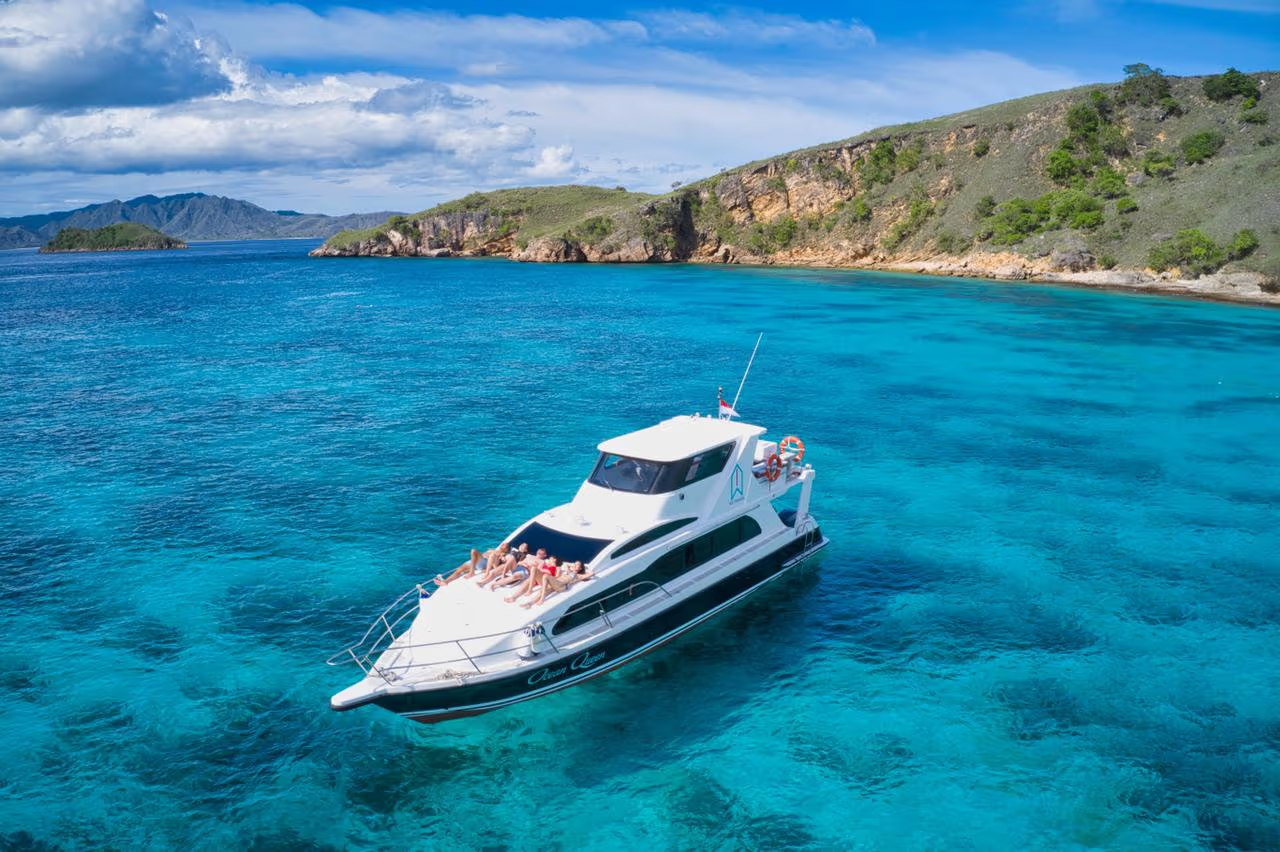
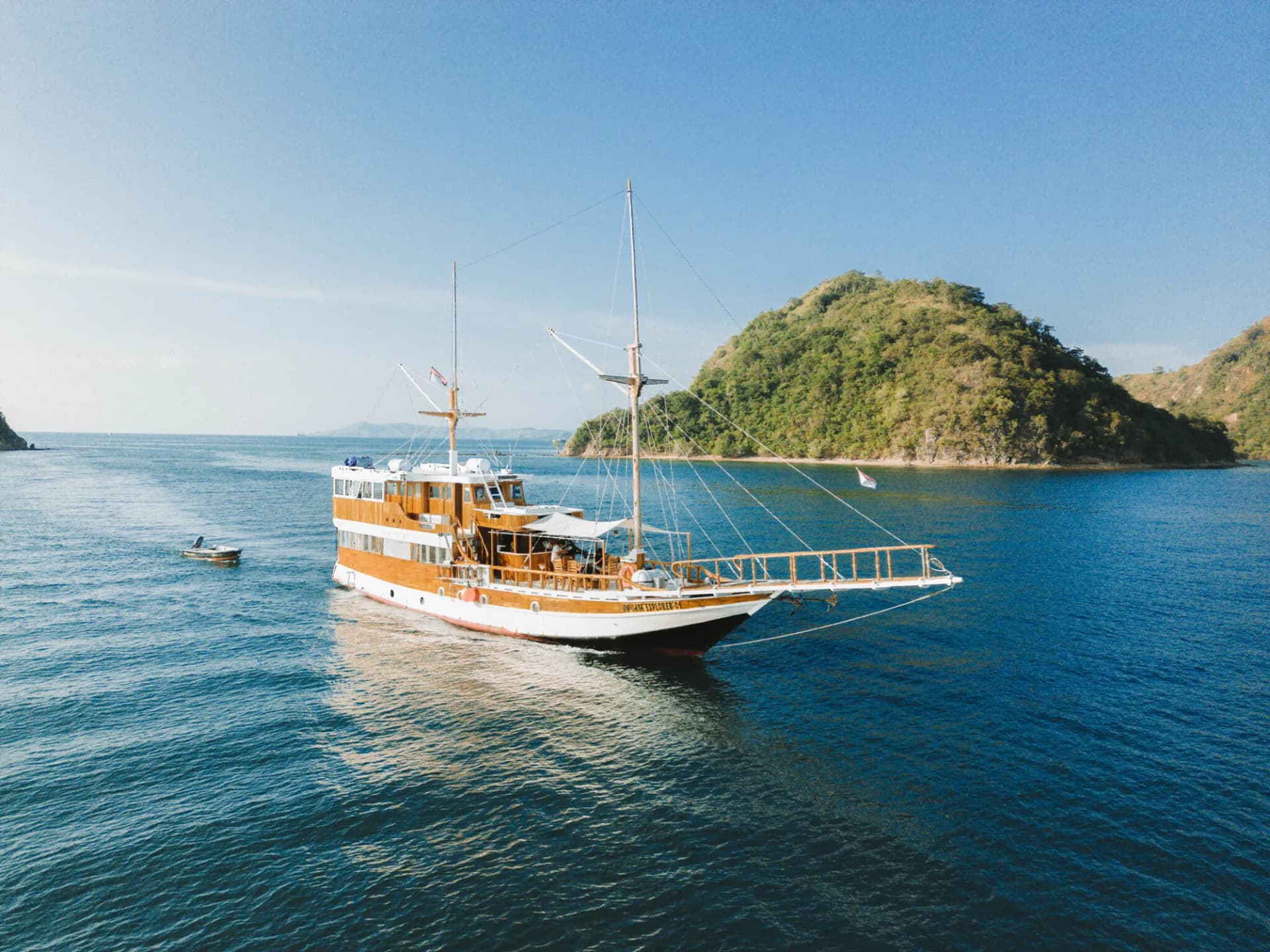
A typical day on the water threads several of these together: a dragon trek, the Padar climb, a snorkel with mantas or turtles, a pink-sand swim, and the bats at dusk. Our Komodo National Park day trip covers the highlights at speed, while a 3-day liveaboard cruise gives the islands room to breathe and reaches the spots day boats rush past.
Scuba diving in Komodo
This is where Komodo earns its reputation. The diving here is genuinely world-class, and for most divers it is the reason to make the trip in the first place.
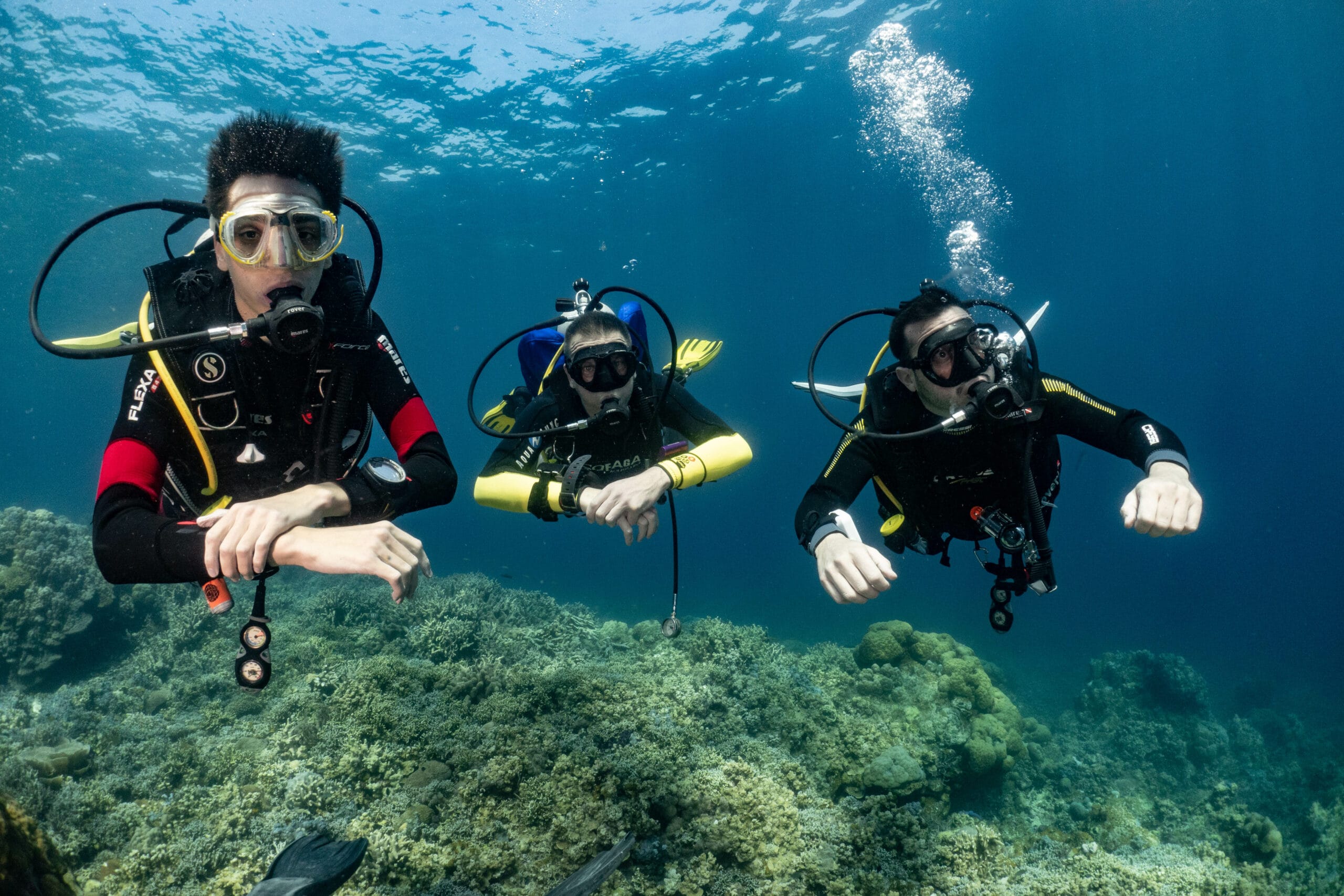
The park splits cleanly in two, and that split is the whole appeal. The north is warm, clear and current-driven, with mantas, big schools and reef sharks stacking up in the flow around submerged pinnacles. The south is cooler and nutrient-rich, with rich coral ecosystems fed by colder water from the Indian Ocean: a slower, macro-heavy world of critters and muck. A few days here can run the full range, from adrenaline drift dives to patient camera work over black sand.
Top dive sites
- Castle Rock and Crystal Rock (north): submerged pinnacles swept by current and swarmed with trevally, snapper and grey reef sharks. The action is in the blue as much as on the reef. Advanced.
- Batu Bolong: a small rock with a vertical reef of untouched coral and dense fish life, dropping into deep water on both sides. The current can be fierce, so you dive the sheltered side and time it carefully. One of the prettiest sites in the park.
- Manta Alley (south): mantas queuing at cleaning stations through a channel between rocks, sometimes a dozen or more circling at once.
- Siaba Besar / Turtle Point: gentle, shallow, turtle-rich and easy, good for all levels and a fine warm-up dive.
- Langkoi Rock: remote and advanced, a southern site for big pelagics and sharks when conditions allow.
Go deeper into the sites: The 5 Best Dive Sites in Komodo | Best Time to Dive Komodo
What you will see: reef and oceanic mantas, grey and whitetip reef sharks, turtles on most dives, dogtooth tuna and giant trevally hanging in the current, and a southern macro list that runs to frogfish, nudibranchs, Coleman shrimp and mobula rays.
Conditions and level: Komodo is a current destination, and that is not a detail. The famous northern pinnacles suit Advanced divers comfortable with drift and a reef hook. Calmer sites like Siaba and the bays are fine for Open Water divers, and you can build up across a trip. The southern sites can be cold, so bring a 5mm wetsuit. If you are newer, this is a place to dive with a good operator and be honest about your experience.
How to dive it: most divers base in Labuan Bajo and run scuba diving day trips into the park, which are flexible and cover the northern sites well. To reach the southern and remote sites and dive more per day, a liveaboard is the way to do it. If you are not yet certified, you can also learn to dive in Komodo.
Komodo National Park fees
Entry to the park carries a set of fees: a national park entrance fee, ranger and conservation charges, and sometimes a local government tax. The amount depends on your nationality and what you are doing (diving and trekking are priced separately). The rates change periodically, so we confirm the current figures and build them into your quote. Full details on Komodo National Park fees →
Komodo Park Fees Calculator
Estimated government fees only. Excludes boat, tour, and operator charges.
- Marine park ticketIDR 250,000 × 2 people × 1 dayIDR 500,000€25 / $30
- Harbour feeIDR 25,000 × 2 × 1 day (estimate, varies by boat size)IDR 50,000€3 / $3
- Diving surchargeIDR 25,000 × 2 divers × 1 dayIDR 50,000€3 / $3
Indicative currency conversions at 1 EUR = IDR 20,000 and 1 USD = IDR 17,000, rounded to the nearest 5. Real rates fluctuate.
Estimates only. Operators may bundle some of these fees into your tour price; ask for a full breakdown before booking. A consolidated bundled-ticket structure for 2026 is being discussed by park authorities; this calculator reflects the last officially-published itemised rates.
Best time to visit
The diving runs year round, but the rest of the experience has a clearer season.
The dry season, roughly April to December, is the prime window: sunny, settled seas, and the best conditions for dragon treks, the Padar climb and island days. July and August are the busiest because of school holidays, so the shoulder months of April to May and September to October give you the same weather with fewer boats.
Mantas are a slight exception. They are around much of the year, but the strongest numbers come with the cooler, plankton-rich water of the rainy season, December to March, when Manta Point is at its best. Sightings stay decent through about June and thin out from July to September. Note that navigation in some areas of the park can be more challenging during December to March, as weather and sea conditions vary more during this period. The southern dive sites need settled weather, while the north dives well most of the year.
How to get there and get around
Fly into Komodo Airport (LBJ) at Labuan Bajo. It is well connected: direct from Bali in about 1h15, or via Jakarta. From the harbour, everything moves by boat, whether a speedboat day trip or a multi-day liveaboard.
There is a sea route too. You can reach Labuan Bajo by ferry from Sape in Sumbawa, or by long-haul boat from Bali, but the Bali crossing can take around 36 hours over rough water and we only suggest it for travellers who actively want the slow adventure. For nearly everyone, flying in is the sensible move.
Inside the park you do not self-drive anything: you join a chartered day boat or liveaboard, and rangers guide the land treks. We arrange the boat, the permits, the park fees and an English- or French-speaking guide, and build the route so you are not doubling back across open water or queuing at Padar with every other boat in the bay.
Labuan Bajo and Flores
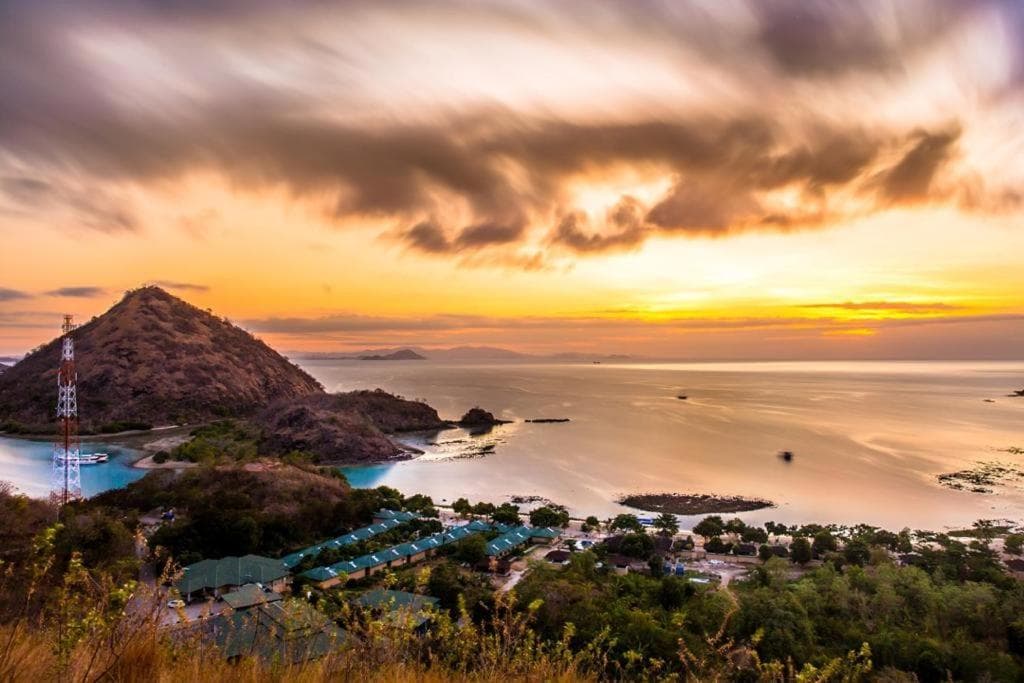
Everything starts in Labuan Bajo, the fishing-and-tourism town at the western end of Flores that serves as the gateway and harbour. It has grown fast: a working waterfront, hillside warungs with sunset views over the bay, dive shops, and enough cafes and bars to make the night before a liveaboard a pleasant one. It is small enough to walk, and most trips spend at least a night here on either side of the water.
It is also a mistake to fly in, do the park, and fly straight out. Flores behind it is one of Indonesia’s most rewarding and least-rushed islands, and adding a few days inland turns a boat trip into a proper journey. The road east climbs through hill country to Ruteng and the traditional Manggarai villages, including the famous spider-web rice fields. Push further and you reach Waerebo, a remote village of cone-roofed houses high in the mountains, reached on foot, one of the most atmospheric overnight stays in the country. Keep going and you hit Kelimutu, the volcano with three crater lakes that change colour independently of each other, best seen at sunrise.
For travellers who want the land as well as the sea, we run a day trip around Labuan Bajo and Flores for caves, waterfalls and villages close to town, a 3-day Flores tour to Waerebo and Ruteng for the highland villages, and a full 7-day Flores overland running Labuan Bajo to Waerebo to Riung to Kelimutu for those who want the whole island.
Frequently asked questions
Three to four days is the sweet spot: a night in Labuan Bajo, then either day trips or a short liveaboard covering the dragons, Padar, the snorkelling and the dive sites. Two days can work for a quick highlights run. Divers who want the southern and remote sites should plan a longer liveaboard, and anyone adding Flores overland should budget several days more.
The dry season, April to December, is best for dragon treks, island hikes and settled seas, with April to May and September to October giving good weather without the July to August crowds. Diving runs all year, and mantas peak in the cooler, plankton-rich months of December to March.
Yes, and most people do. Dragon treks on Komodo or Rinca, the Padar viewpoint and Pink Beach pair naturally with the diving and snorkelling in a single itinerary.
For the signature northern pinnacles (Castle Rock, Crystal Rock, Batu Bolong), yes: they have strong current and suit Advanced divers comfortable with drift. Calmer sites like Siaba Besar are fine for Open Water divers, and you can build up across a trip. If you are not certified, you can learn here.
Day boats from Labuan Bajo are flexible and good value for the northern sites and the main island stops. A liveaboard reaches the southern and remote sites, dives more per day, catches the Kalong Island bats at dusk, and is the way to see the most.
Fly into Labuan Bajo (LBJ) on Flores, direct from Bali in about 75 minutes or via Jakarta. From the harbour you join a day boat or liveaboard. A ferry route exists but the Bali sea crossing is long and rough, so flying is the practical choice.
Very much so. The dragons, the Padar viewpoint, Pink Beach, the bat exodus at Kalong and the snorkelling at Manta Point and Siaba make a full trip on their own. Non-divers get the same islands and a snorkel-led version of the marine life.
If you have the time, yes. The island behind Labuan Bajo has the highland villages around Ruteng, the remote stilt-village of Waerebo, and the colour-changing crater lakes of Kelimutu. It turns a boat trip into a proper Indonesian journey.
Your adventure starts here
Plan your trip to Komodo
Tell us what you want to see and we'll craft the perfect itinerary, usually within 24 hours.
Plan My Trip →Enquire About This Destination
Any question, special request or custom itinerary, we reply within 24hrs.