Java
Java sits at the cultural and geographical heart of Indonesia. A chain of active volcanoes running the length of the island, the great Buddhist and Hindu temples of Borobudur and Prambanan, the royal city of Yogyakarta, and some of the most dramatic sunrise hikes in Asia. It is an adventure and culture island, not a beach and dive one, and that is exactly why it pairs so well with Bali.
Most travellers stick to the industrial ports and main routes. The real Java is higher up, where active craters vent steam above fields of grey ash, and centuries old court traditions still shape daily life. Here is what Java is really about, region by region, and how we build a trip around it.
An Island of Volcanoes


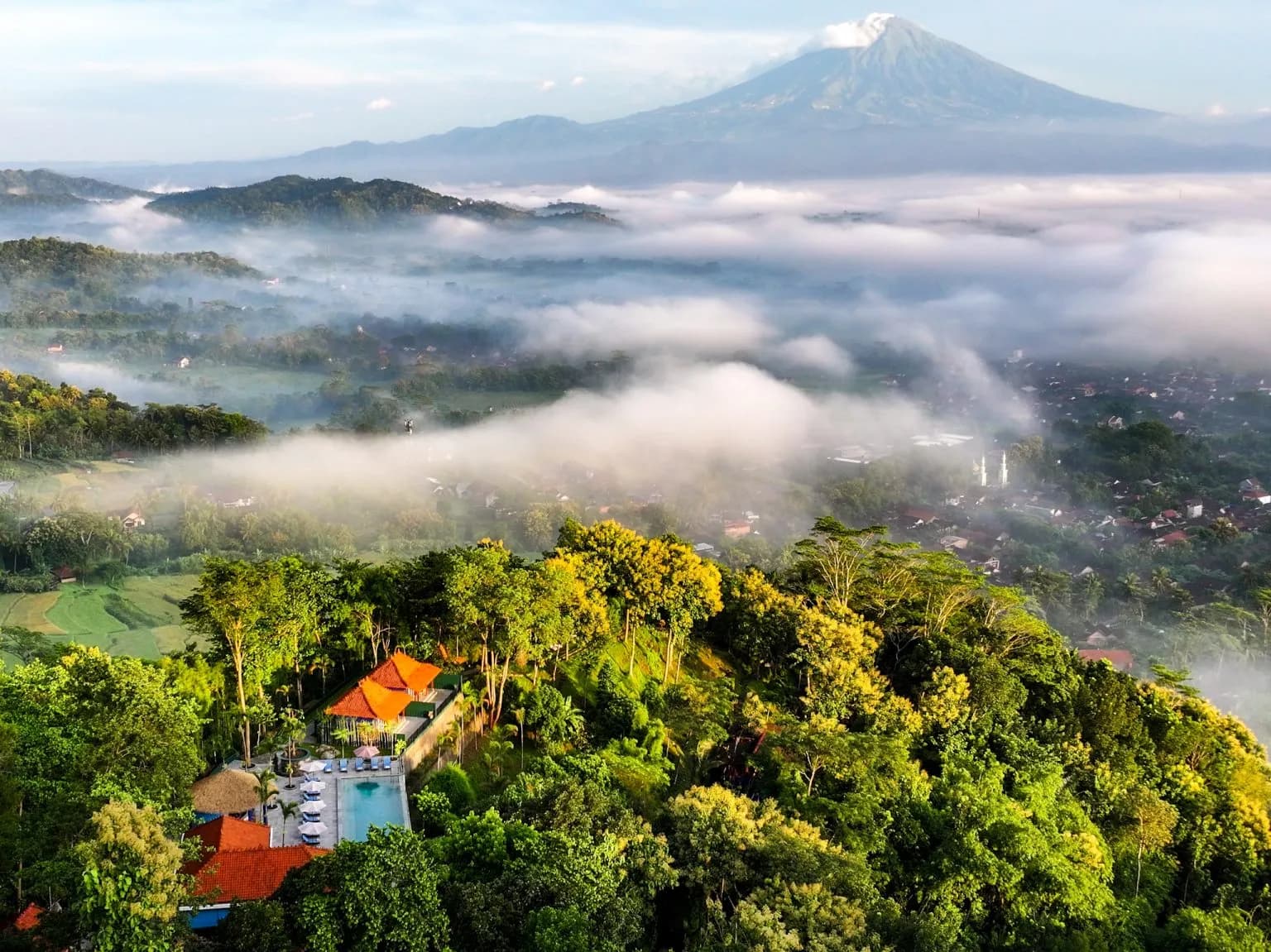
Java holds more than thirty active volcanic cones, sitting on a highly volatile segment of the Pacific Ring of Fire. The eastern end has the most dramatic geothermal landscapes, which is why trekking itineraries focus there.
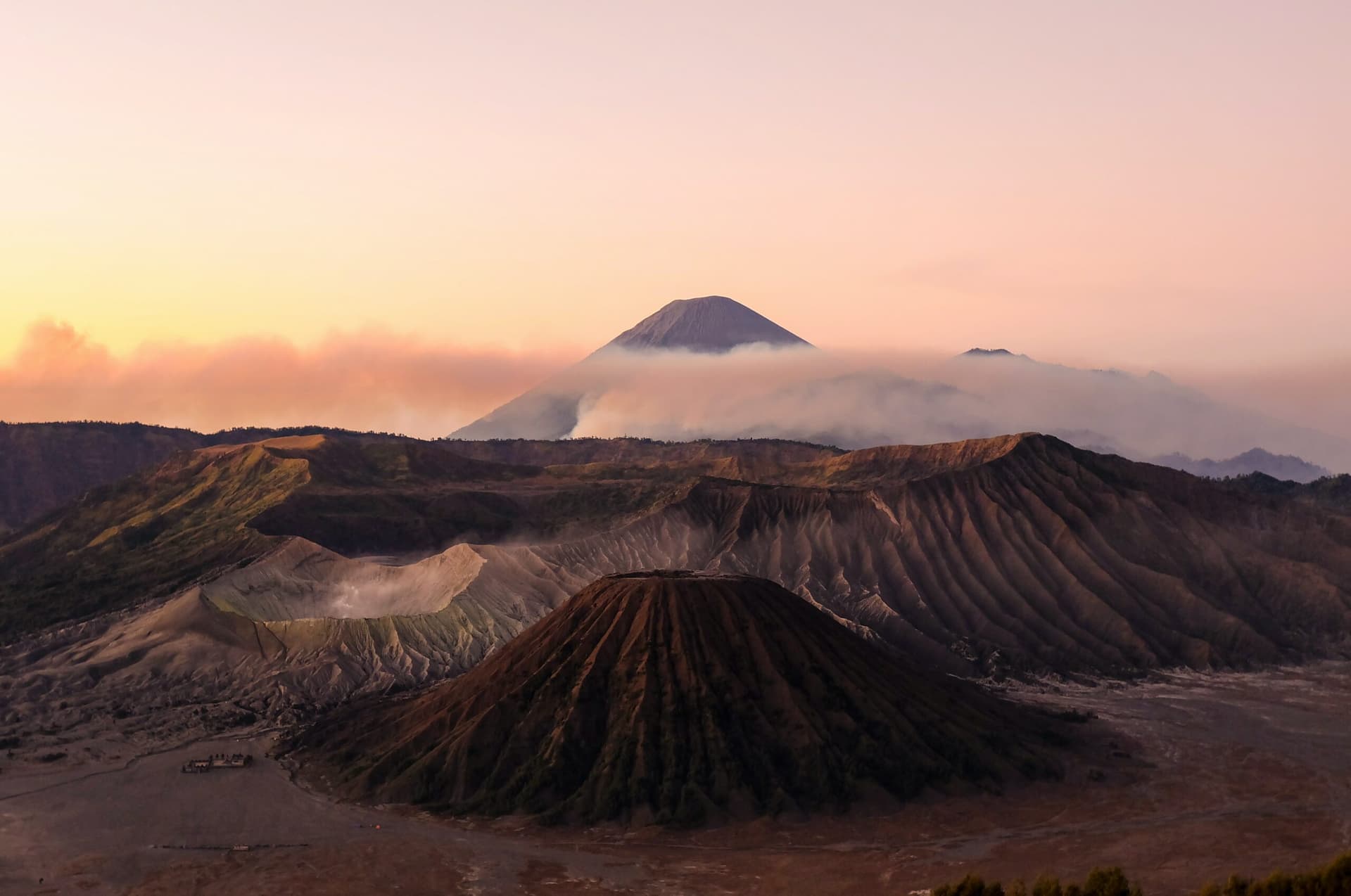
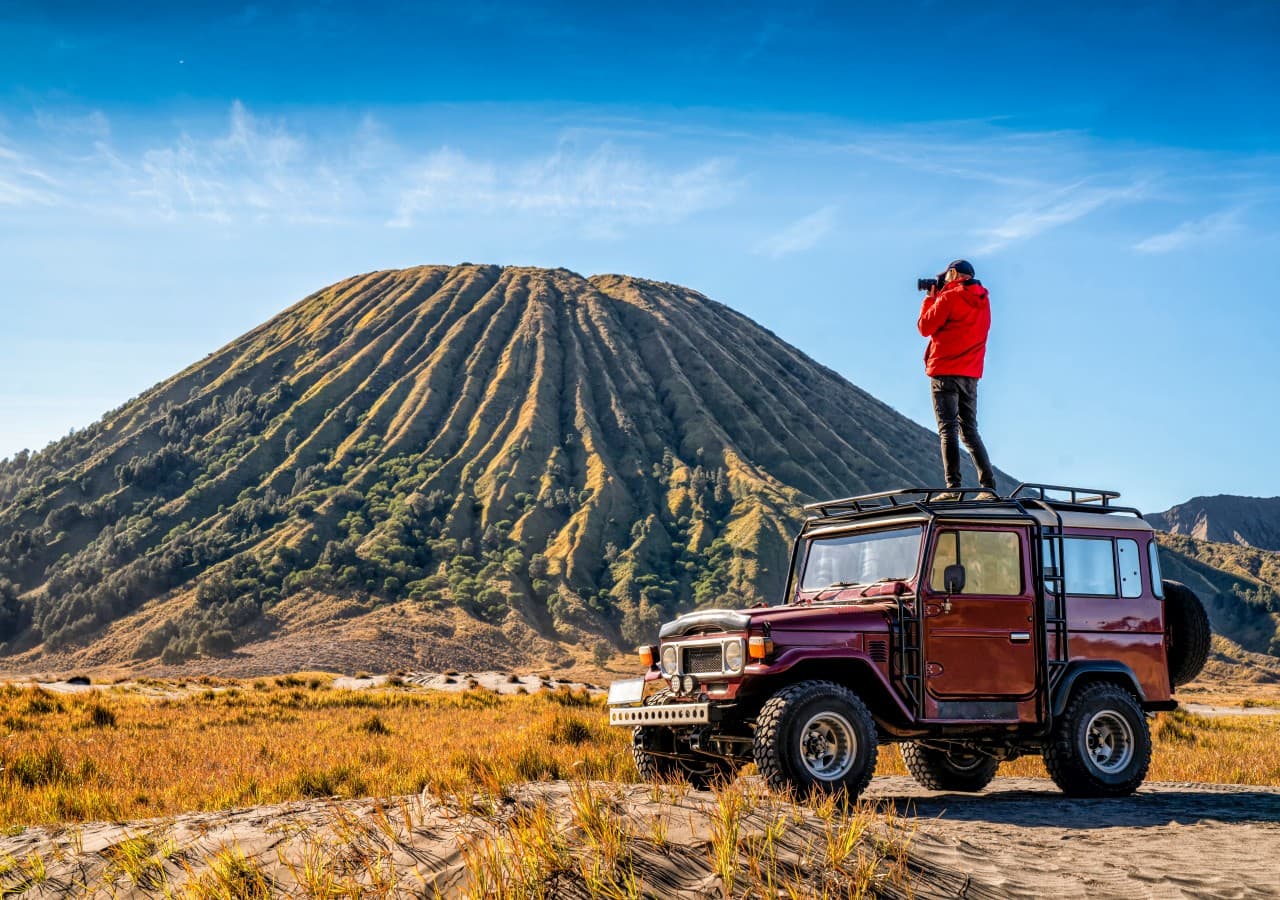
Mount Bromo is the one everyone pictures with a low, smoking cone sitting inside the vast Tengger caldera, a sea of volcanic sand with the jagged peak of Semeru smoking on the horizon behind it. The classic outing is a pre-dawn drive up to a viewpoint to watch the sun rise over the whole caldera, then a walk or a jeep ride across the sand sea to the crater rim itself. It is one of the great sunrise hikes in Southeast Asia, and it earns the early start.
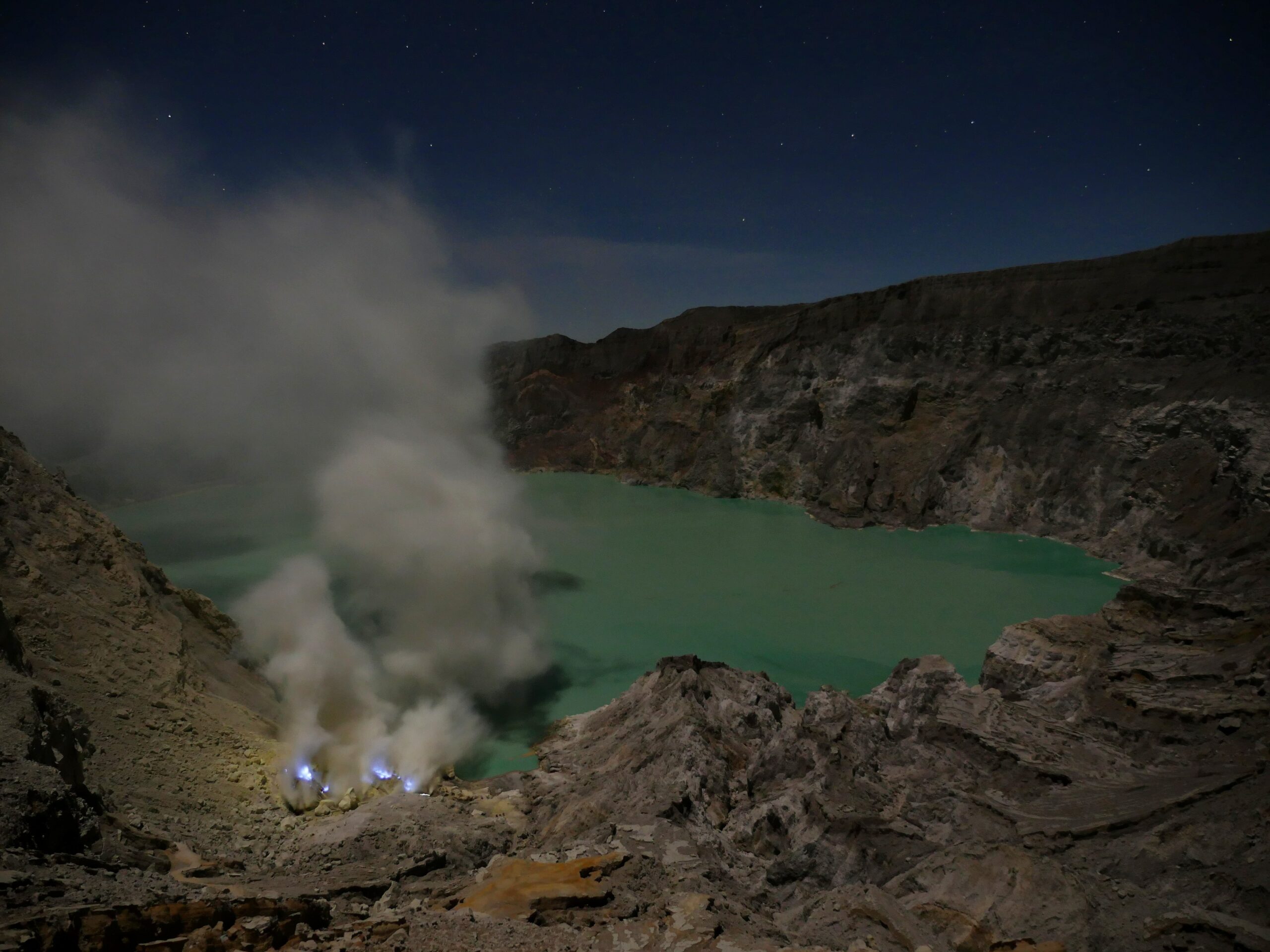
Ijen is stranger and, for many, the highlight of the whole island. The hike up the cone is done in the dark to see the electric blue flames where sulphuric gas ignites as it escapes the vents, a sight you can only catch before dawn. At first light the same crater reveals a turquoise acid lake, the largest of its kind in the world, and the sulphur miners who still carry loads of yellow rock up out of the crater by hand. We run a focused 3-day Mount Bromo and Ijen blue fire adventure that links the two while the weather windows are good.
The eastern volcanoes are best treated as a dedicated two-to-three-day loop, usually run out of Surabaya or done as the eastern leg of a longer Java crossing.
Yogyakarta: Temples and Artisan Culture


Yogyakarta (known locally as Jogja or Yogya) is the cultural core of Java. It’s still governed by a historic sultanate that runs it as an autonomous region, and that sovereignty has preserved centuries of artistic traditions that include hand-drawn batik, gamelan orchestration, wayang shadow puppetry, and silversmithing. You can walk into working studios for any of these.
Two major monuments sit within an hour of the city.
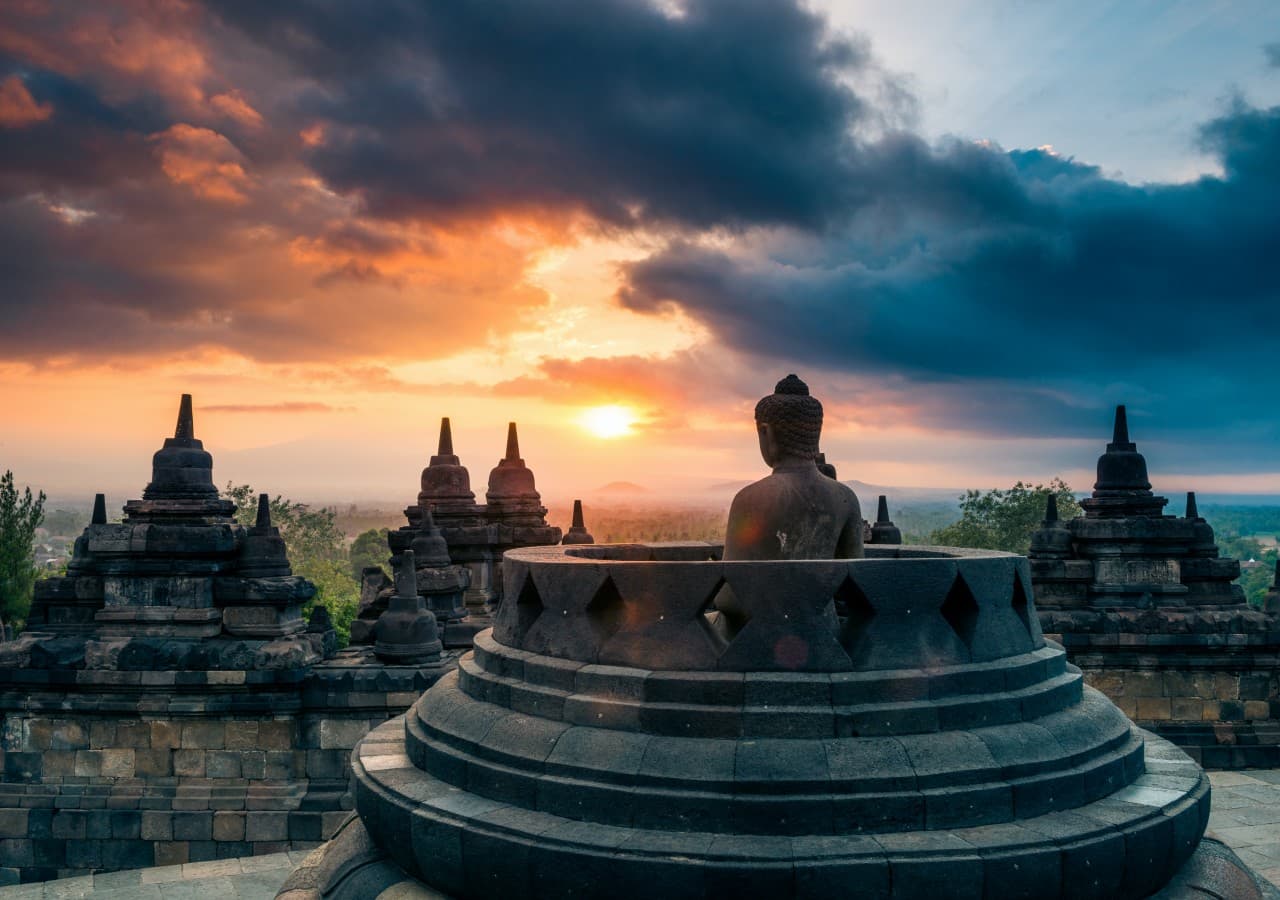
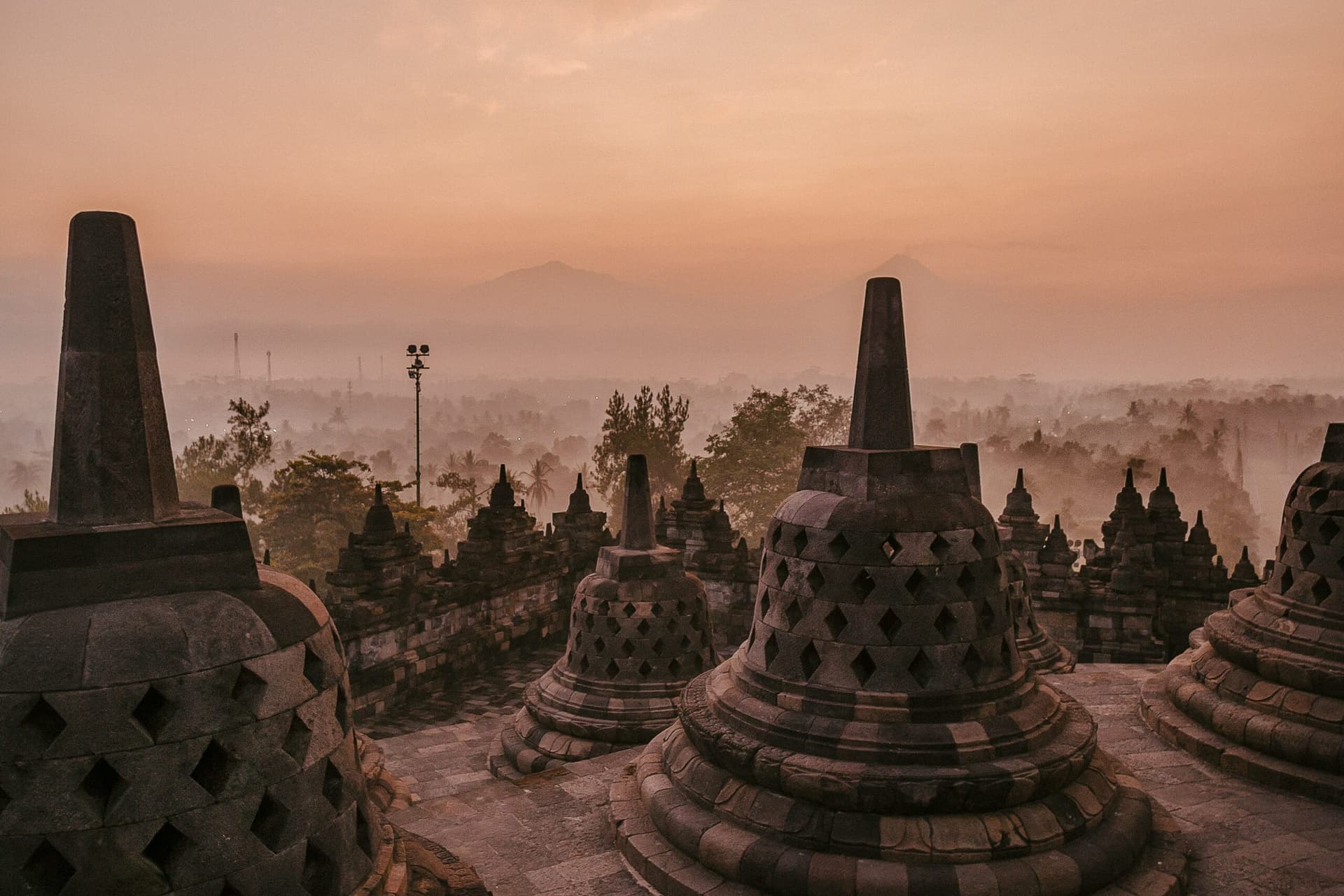
- Borobudur is the largest Buddhist temple in the world, a ninth century stone mountain of stacked terraces carved with more than two thousand relief panels. Climbing it at sunrise, with the mist sitting in the valley and the volcanoes ringed behind it, is the signature Java experience.
- Prambanan is the Hindu counterpart, a soaring cluster of pointed temples dedicated to Shiva, Vishnu and Brahma, built around the same era a short drive away.
Seeing both in a day or two is what draws most people to Yogya. For what to do once the temples are done, read our local guide to Yogyakarta: the five regions, the food, the workshops and where to stay.
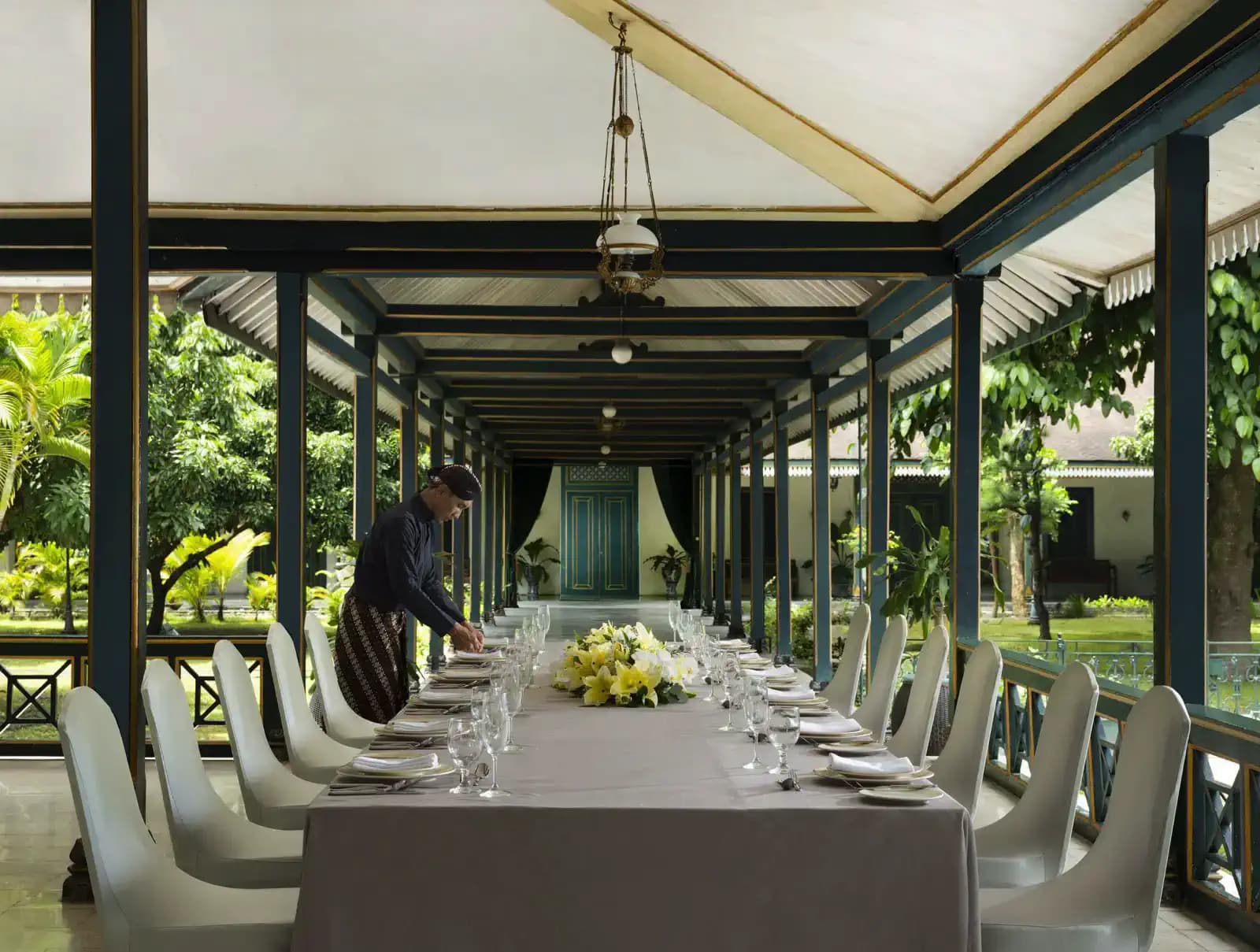
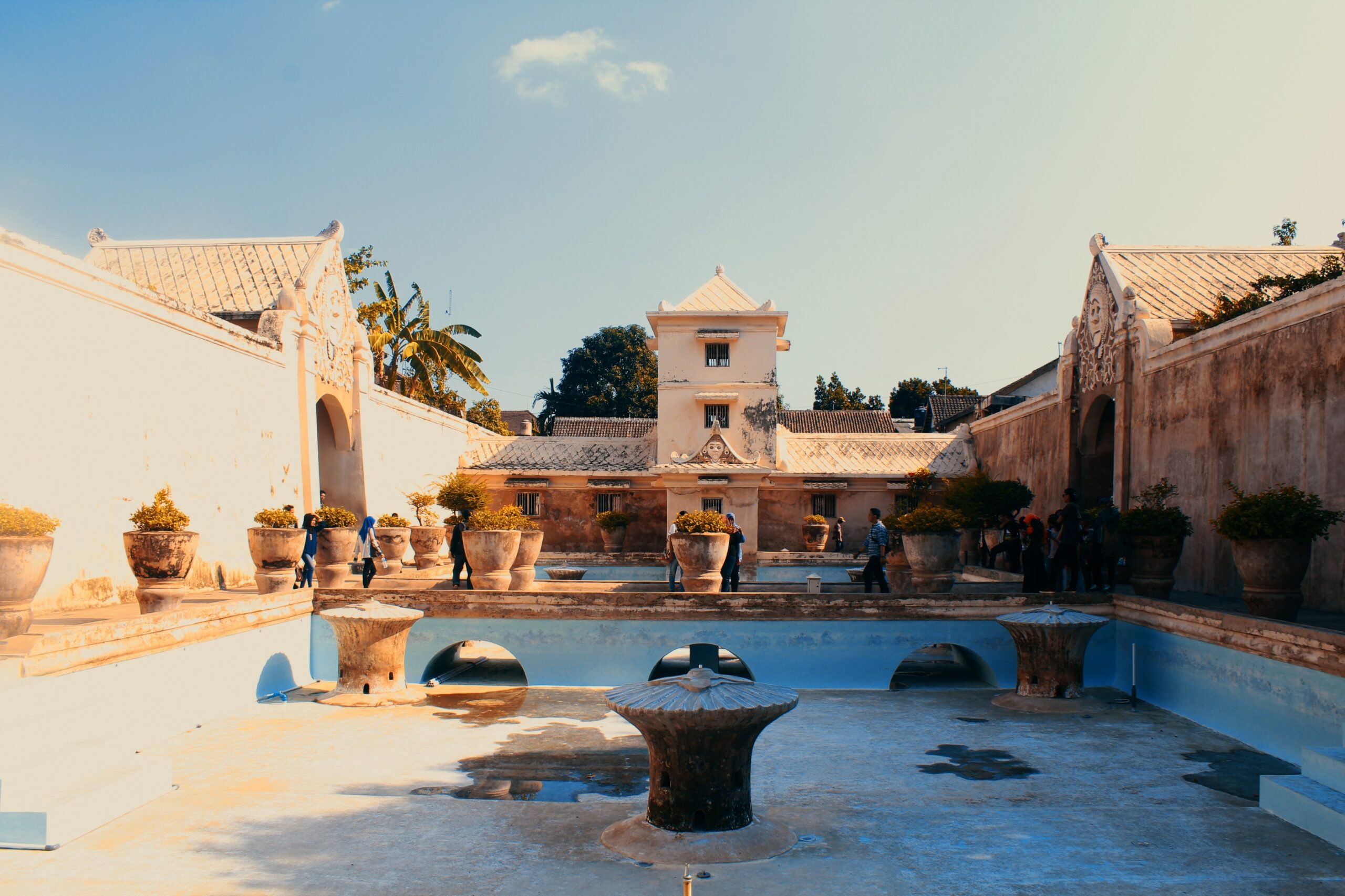
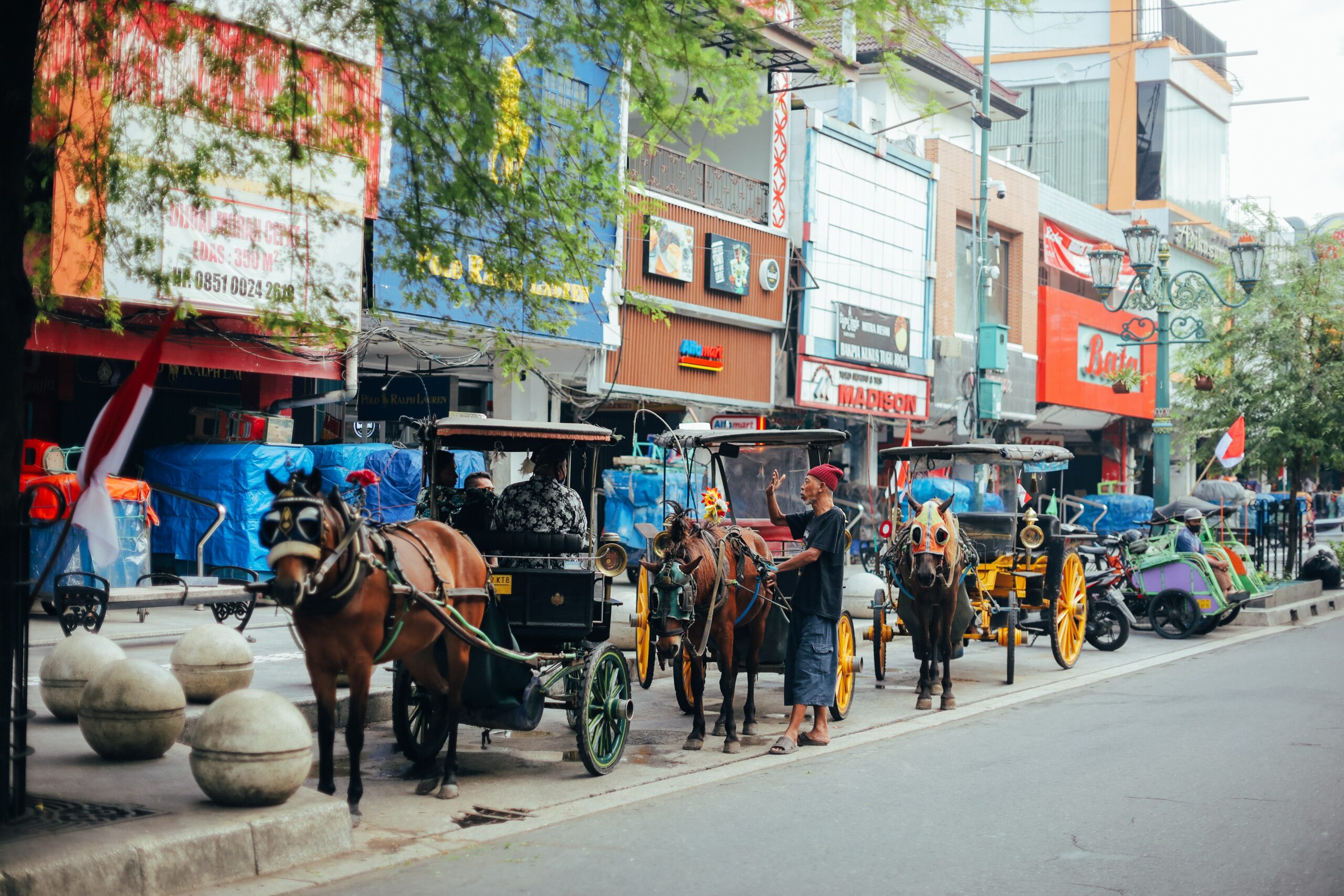
There is plenty more in the city itself. The Kraton, the sultan’s palace, is a sprawling, low-slung complex with traditional Javanese joglo pavilions and royal museum collections. Taman Sari, the historic royal pleasure park, has restored stone bathing pools, a subterranean mosque, and arched aqueducts. The Kotagede neighbourhood is quieter, defined by traditional wooden houses and active silversmithing workshops. Malioboro is the main shopping street, the place for batik, silver from nearby Kotagede, and local food.
To avoid temple fatigue and pace things properly, our Best of Yogyakarta in 3 Days tour gives the monuments dedicated morning excursions, leaving afternoons free to explore the city’s living artisan culture. For travelers crossing the full island, our 5-day Java Adventure links Yogyakarta’s temple plains to the eastern volcanic zones of Bromo and Ijen on an optimized route with no backtracking.
Central Java: Dieng, Semarang and Karimunjawa
North of Yogyakarta, the landscape shifts. The lowland royal cities give way to cooler volcanic plateaus, historic trading ports, and isolated marine parks.
On the northern coast, Semarang displays layers of migration and trade. Kota Lama is the old Dutch colonial quarter, marked by the domed architecture of the 1753 Blenduk Church and preserved brick warehouses. Lawang Sewu is a sprawling, multi-doored colonial administrative complex that’s become locally famous for its architecture and ghost stories. Sam Poo Kong is a massive, brightly painted Chinese temple complex built to honor Admiral Zheng He, who landed here in the fifteenth century.
Higher up, the Dieng Plateau is a cool, misty highland of ancient Hindu temples, sulphur coloured crater lakes like Telaga Warna, and the steaming Sikidang crater. It feels a world away from the lowland heat. Off the north coast, the Karimunjawa islands are Central Java’s quiet beach and snorkel escape. This small archipelago has white sand beaches, coconut groves, and shallow fringing reefs. It’s the right stop for travelers who want to slow down after the volcanoes and temples.
West Java: Bandung, Tea Country and Bogor
West Java is the green, mountainous, Sundanese half of the island. It’s cooler than the center and east, and less visited by foreign travelers.
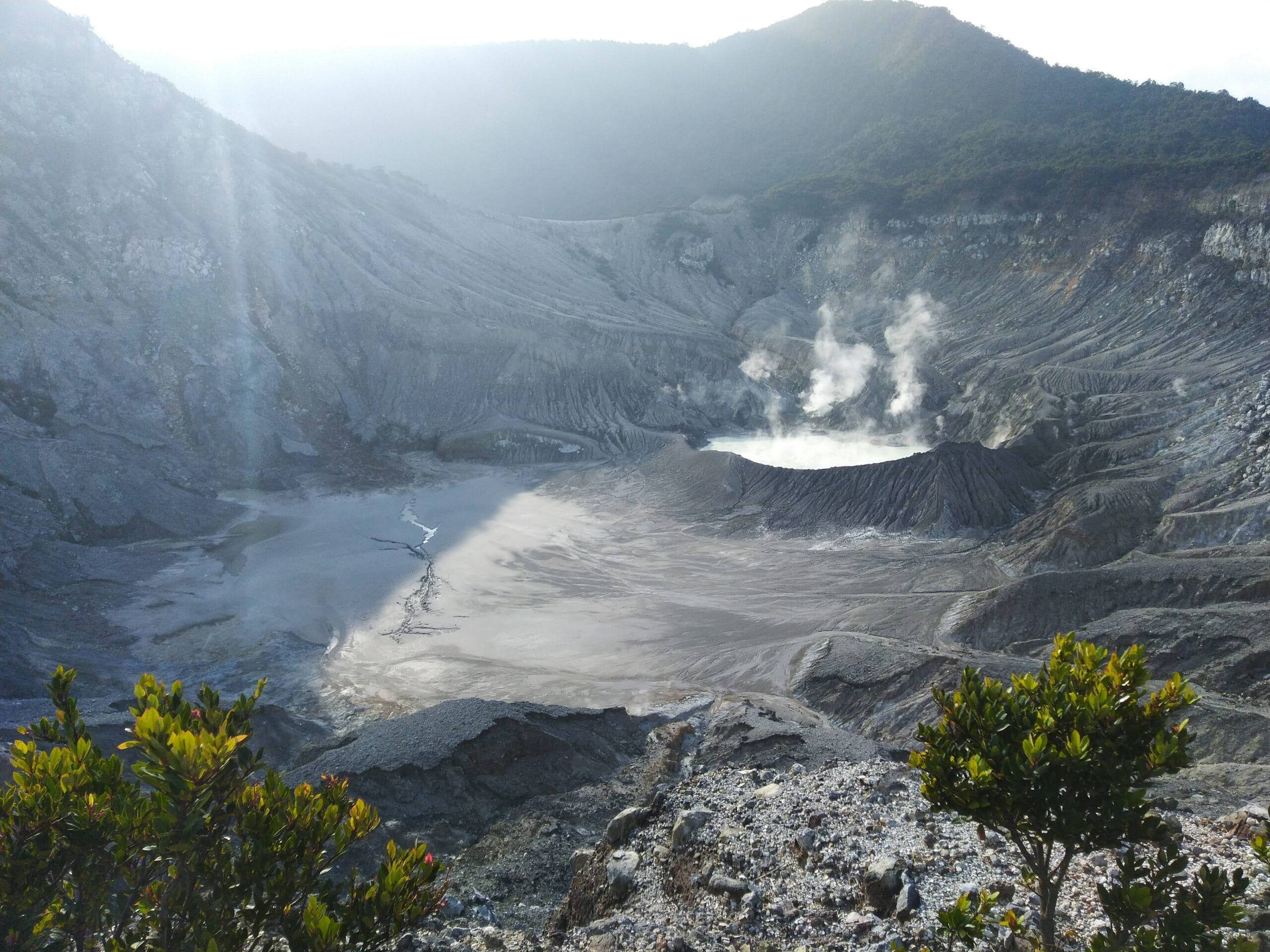
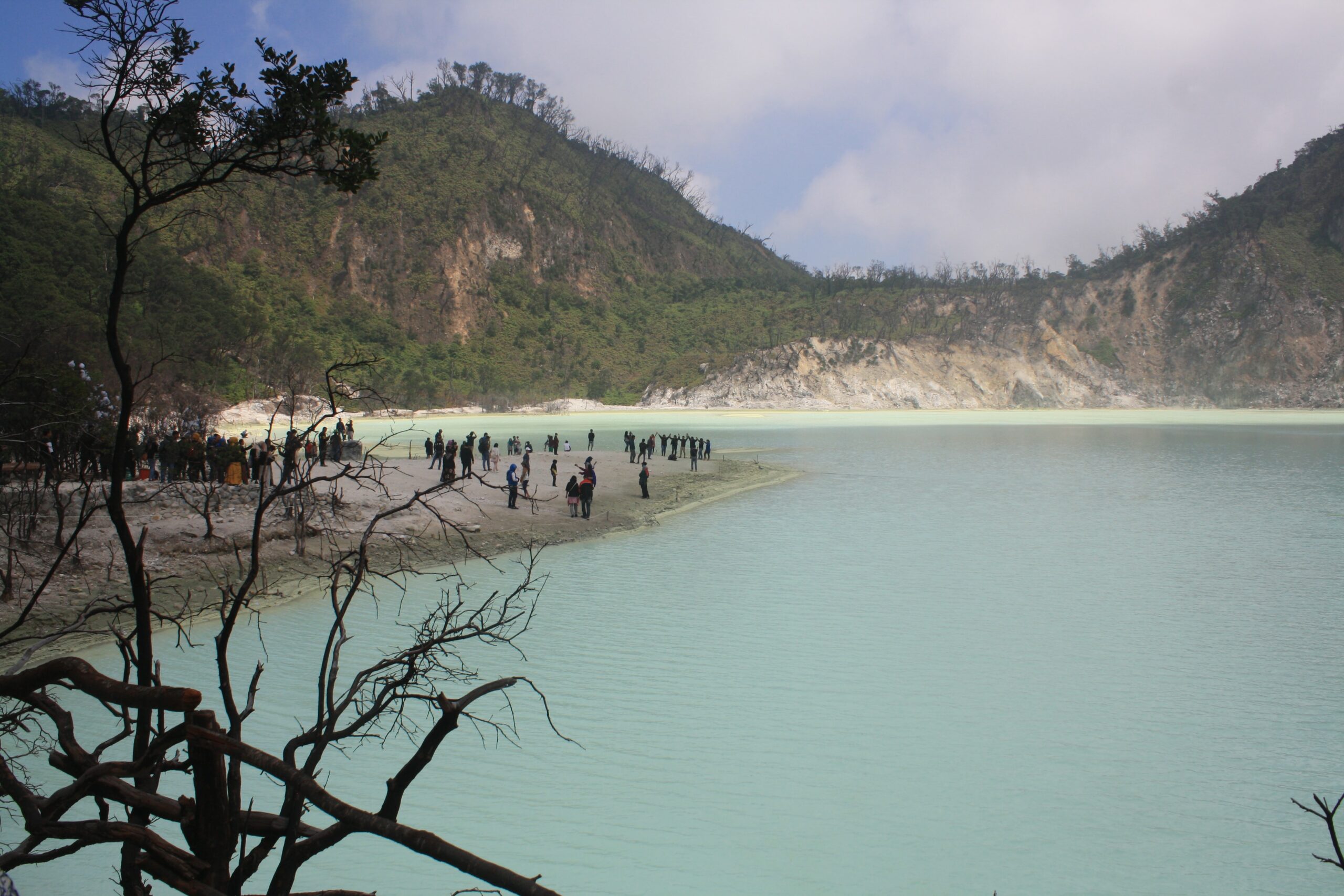
Bandung sits in an elevated basin rimmed by active volcanic peaks. Two crater sites are worth the drive. Tangkuban Perahu is a massive crater north of the city, where you can walk along the rim past active mud pots and steam vents. Kawah Putih, south of the city in the Ciwidey highlands, is a striking crater lake of highly acidic, milky-turquoise water set against white, sulphur-bleached earth and skeletal trees. The Preanger tea estates wrap around the mountain ridges in expansive terraced plantations that date back to the Dutch colonial era.
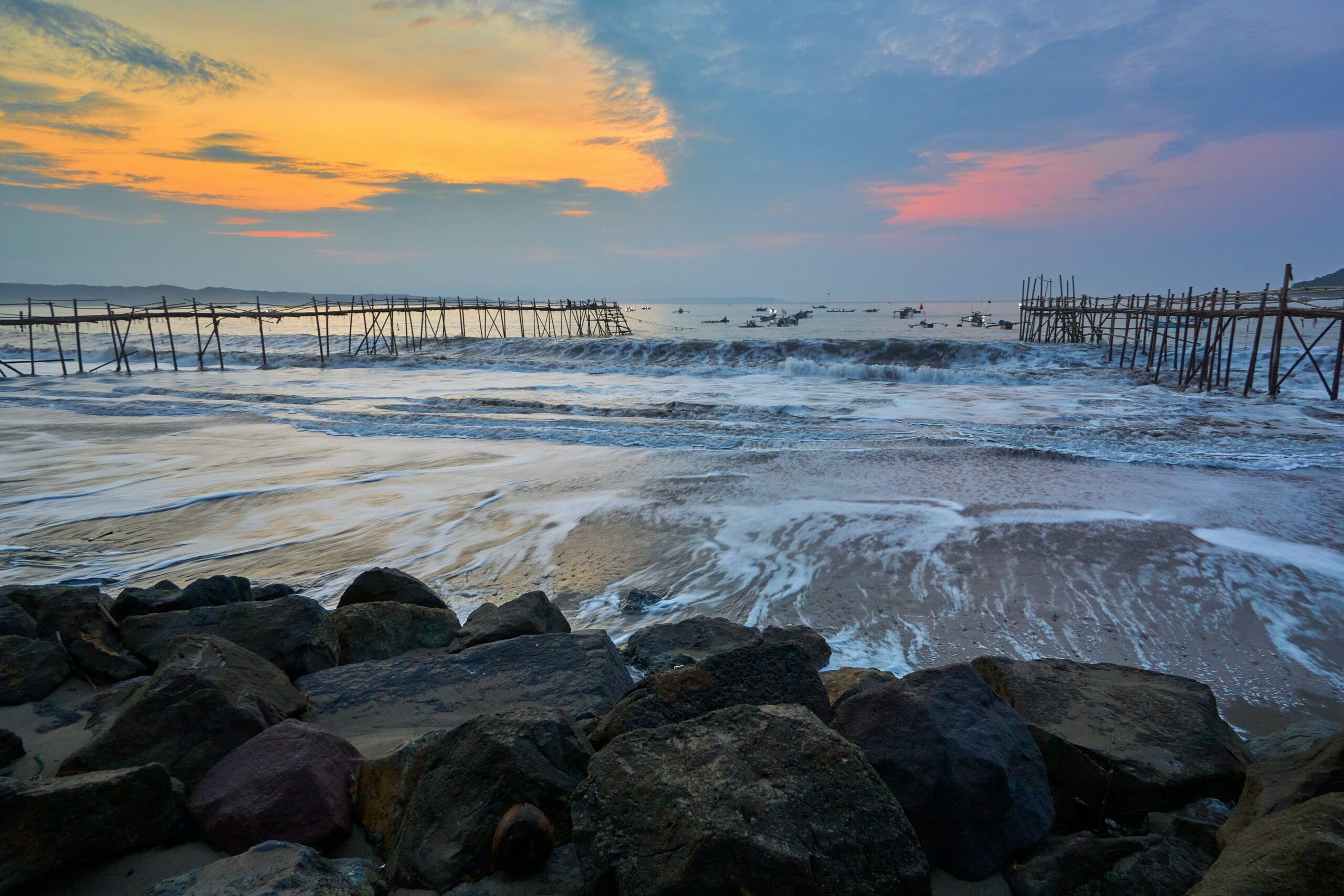
Bogor, an easy run from Jakarta, has the historic Bogor Botanical Gardens and the tea plantations of the Puncak Pass. Families often head to Taman Safari in the same hills. Further out, Sukabumi has the Situ Gunung suspension bridge strung high across a forested gorge in Gede Pangrango park. On the south coast, Pangandaran pairs a long beach with a small national park where you can spot wildlife on foot.
Jakarta: The Gateway
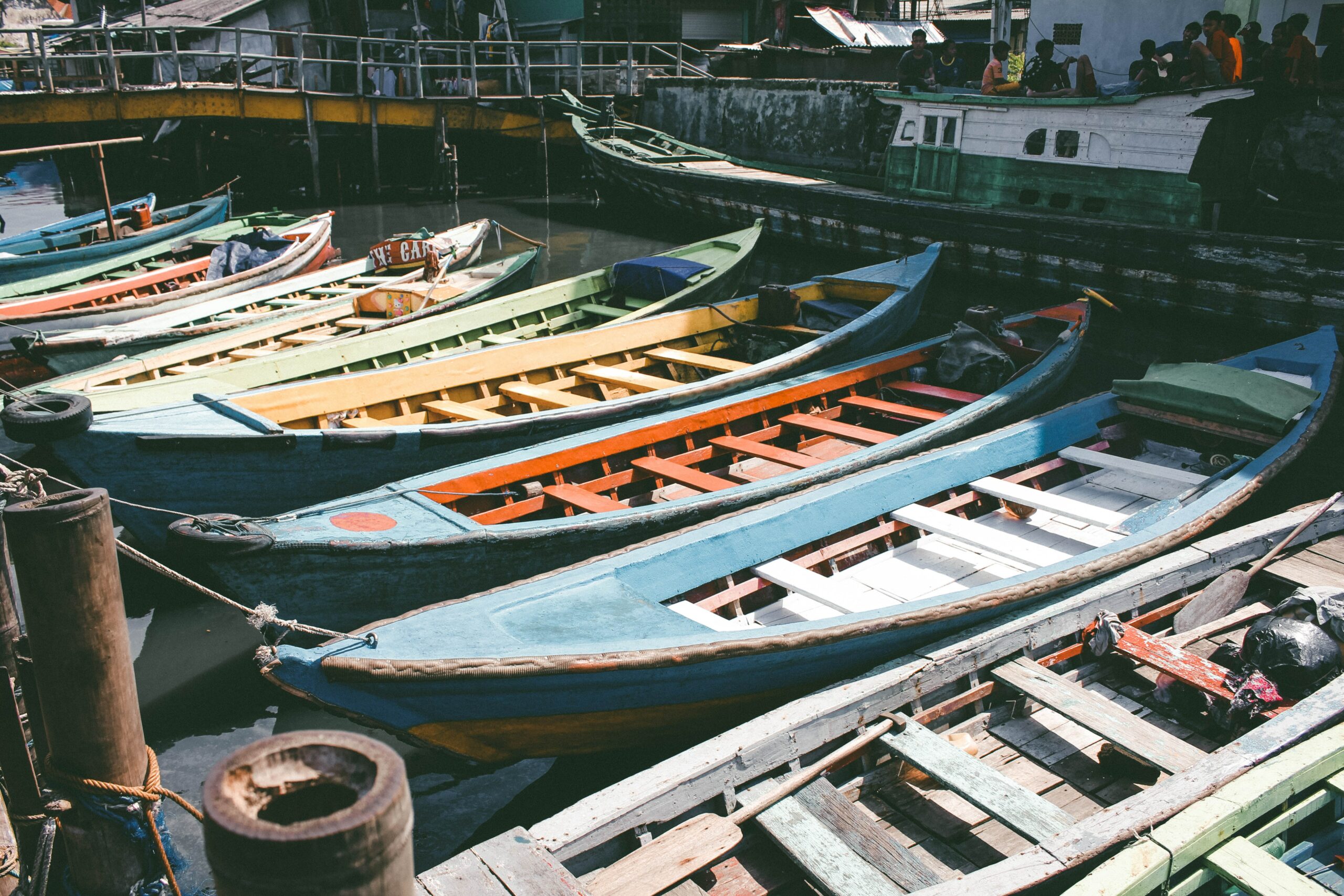
Jakarta, on the northwest coast, is Indonesia’s capital and largest metropolitan area. It functions mainly as a transit hub rather than a traditional sightseeing destination, acting as the primary entry point via Soekarno Hatta International Airport (CGK).
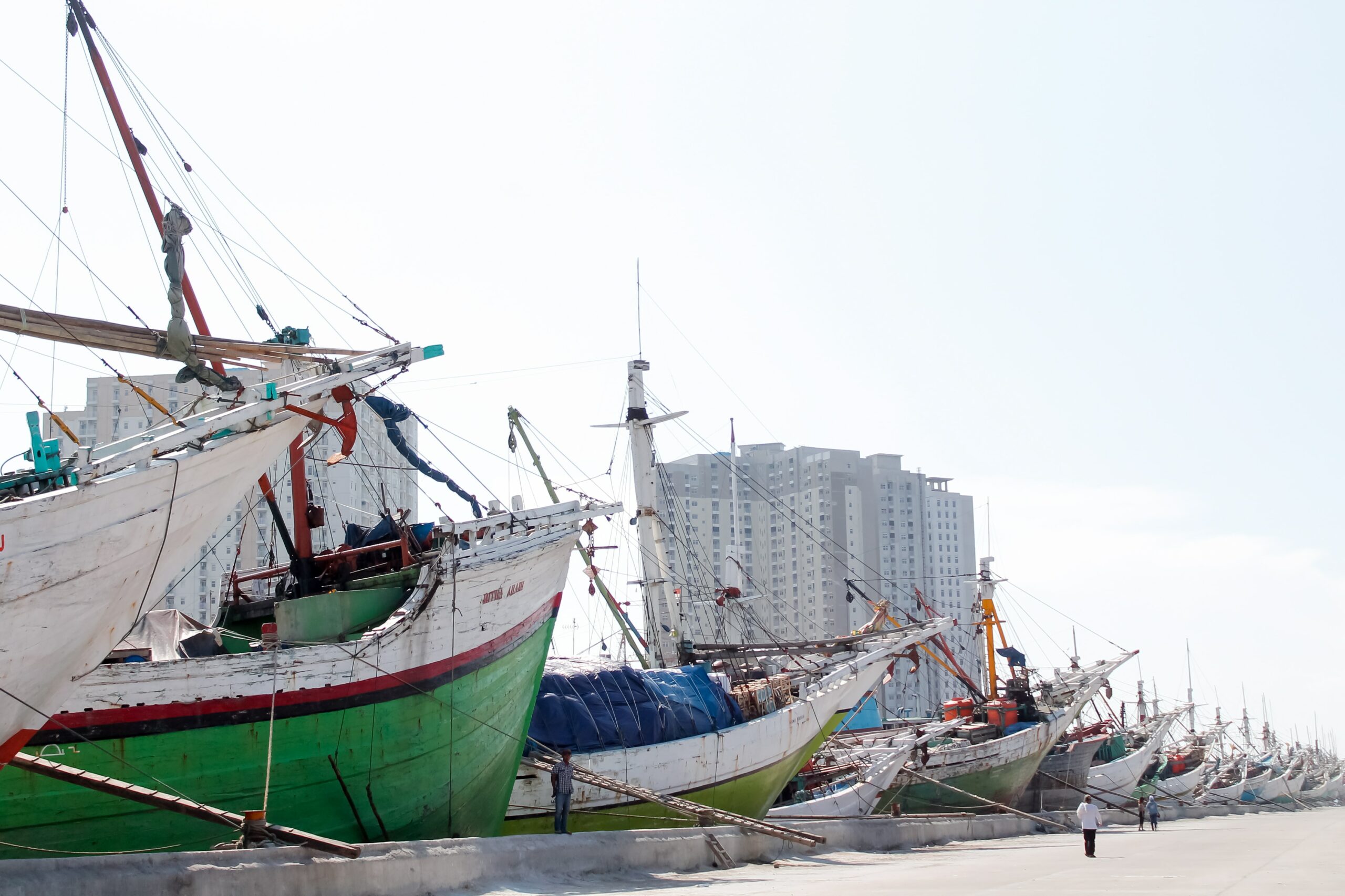
For those with spare time, there’s historic ground to cover. Kota Tua is the heart of old Dutch Batavia, centered around Fatahillah Square with restored eighteenth-century architecture and colonial museums. Sunda Kelapa is the old port where traditional wooden Bugis pinisi schooners still dock to unload timber by hand. Istiqlal Mosque (the largest in Southeast Asia) and the neo-Gothic Jakarta Cathedral sit directly across the street from each other, symbolizing national religious harmony.
There’s also the National Monument (Monas) and the museums and miniature park of Taman Mini. Most travellers spend a night here on arrival and move on quickly to Yogya or Surabaya by train or short flight.
Food on Java
Javanese food is its own world, and it shifts as you cross the island. Central Java, around Yogya and Solo, leans sweet. Gudeg, young jackfruit stewed for hours in palm sugar and coconut, is the dish to try, usually served with rice, egg and chicken. Nasi liwet, rice cooked in coconut milk with side dishes, is the Solo classic. In the Sundanese west the cooking is fresher and more herbal, built around grilled fish, raw vegetables (lalapan) and fiery sambal. Street food staples like sate, bakso (meatball soup) and soto (turmeric chicken soup) are everywhere and best eaten from a warung. Yogya’s Malioboro and the night warungs are the easy way in.
Getting around Java
Java has Indonesia’s best train network, and it’s genuinely the nicest way to travel the island. The line runs the full length, linking Jakarta, Bandung, Yogyakarta, Solo, Semarang, and Surabaya, with comfortable executive carriages and scenery through rice fields and past volcanoes. For the volcano leg in the east, a private vehicle and driver-guide is the practical choice. Bromo and Ijen sit on rough mountain roads with early morning schedules that public transport doesn’t serve well. We build Java itineraries around a mix of train for the long hauls and private transport with a local guide for the sights.
Diving on Java
Java is not a diving destination, and we would not send you here for it. The reef life and visibility that draw divers to Indonesia are east and north of Bali. If diving is the point of your trip, pair Java’s volcanoes and temples with the diving in Bali (the USAT Liberty wreck at Tulamben, the mantas of nearby Nusa Penida) or fly on to Komodo or Raja Ampat. Java is the land-and-culture half of that kind of trip, not the underwater half. The one exception worth a note is Karimunjawa off the central north coast, which has easy snorkelling and a handful of relaxed reef dives if you happen to be in the area.
Combining Java with Bali and beyond
Because Java’s eastern volcanic border sits directly across the narrow Bali Strait, the two islands form a classic two-week Indonesian overland route. Volcanoes and temples on Java, then culture, beaches and diving on Bali. The eastern volcano loop in particular is an easy add-on from Bali, a few days across the water before you settle into the island.
From Bali you can carry on to Komodo for the dragons and the mantas, or further east to Raja Ampat. Java works best as the adventurous, active opening or closing chapter of a longer Indonesian journey rather than a standalone beach holiday.
Best time to visit
Java is visitable year-round, but seasons shape your experience. The dry season (April to October) is when to come for volcanoes. May through September offers the clearest morning skies, which matter for sunrise views over the Tengger Caldera and safe footing along steep Ijen trails.
The wet season (November to March) brings afternoon downpours, lower prices, and fewer people. Temples and cities in Yogyakarta, Borobudur, and Prambanan are fine to visit anytime. But the volcanoes are weather sensitive. Persistent rain and low cloud cover can obscure viewpoints and temporarily close steep mountain trails for safety. Dry season timing matters more on Java than most Indonesian islands.
Getting there
International flights arrive into Jakarta (Soekarno-Hatta, CGK) in the west or Surabaya (Juanda, SUB) in the east, and there are direct flights from Bali to both. Yogyakarta (YIA) has its own airport with domestic and some regional connections, which makes it easy to fly straight to the temples. A common pattern is to fly into one end of the island and out of the other, or to cross from Bali by short flight or by the ferry across the Bali strait near Ijen, so you are not doubling back. We arrange the flights, transfers and your driver-guide around whichever route fits your trip.
Frequently asked questions
Three days is the bare minimum, enough to focus on one area: either Yogyakarta with Borobudur and Prambanan, or the eastern volcanoes of Bromo and Ijen. Five days lets you link the two on a single overland route, the popular way to do it. Beyond that, the longer the better. Java is a vast island with far more to discover than most travellers expect, from Central and West Java (Dieng, Bandung, the tea country) to its slower, lesser-seen corners. The more time you give it, the more it rewards you.
Volcanoes and temples above all. The Bromo sunrise and the Ijen blue fire in the east, and Borobudur and Prambanan, the great Buddhist and Hindu monuments, near Yogyakarta in the centre. Add the royal culture of Yogya, Dutch colonial cities, highland tea country and distinctive Javanese food. It is an adventure-and-culture island rather than a beach-and-dive one.
The dry season, April to October, with May to September the most reliable window for the volcanoes. Clear skies are essential for the Bromo sunrise and the Ijen hike. The temples and cities are fine year-round, but cloud and rain in the wet season (November to March) can spoil the mountain sunrises.
Fly into Jakarta in the west or Surabaya in the east, both with direct flights from Bali, or straight to Yogyakarta for the temples. Java has Indonesia’s best train network, which is the comfortable way to cover the long distances between cities. For the volcanoes in the east, a private vehicle and driver-guide handles the rough mountain roads and pre-dawn starts. We arrange the mix for you.
No, Java is a land destination. For diving, pair it with Bali (the Tulamben wreck, the mantas of Nusa Penida), Komodo or Raja Ampat. The one mild exception is Karimunjawa off the central north coast, which has easy snorkelling and a few relaxed reef dives.
Ijen is a volcano in East Java with an electric-blue flame at its vents, where escaping sulphuric gas ignites. It is only visible in the dark, so the hike starts in the small hours. At dawn the same crater shows a turquoise acid lake and working sulphur miners. The hike is steep but achievable for anyone reasonably fit, and a guide and gas mask are sensible given the fumes.
Yes, that is the classic route. Java sits just across the strait from Bali at its eastern end, so the two pair into a natural two-week trip: volcanoes and temples on Java, then culture, beaches and diving on Bali. The eastern volcano loop is an easy add-on from Bali if you do not want to cross the whole island.
Yes, with the right pace. Yogyakarta with the temples, the trains, the tea country and a gentle Bromo sunrise all work well for families and first-timers. The Ijen night hike is more demanding and better suited to active travellers and teens. We build the itinerary around your group so the harder hikes are optional rather than the whole trip.
Your adventure starts here
Plan your trip to Java
Tell us what you want to see and we'll craft the perfect itinerary, usually within 24 hours.
Plan My Trip →Enquire About This Destination
Any question, special request or custom itinerary, we reply within 24hrs.
Tours & Activities in Java
5 Days Adventure in Java: Yogyakarta, Mount Bromo & Kawah Ijen
3 Days Adventure to Mount Bromo & Ijen’s Blue Fire