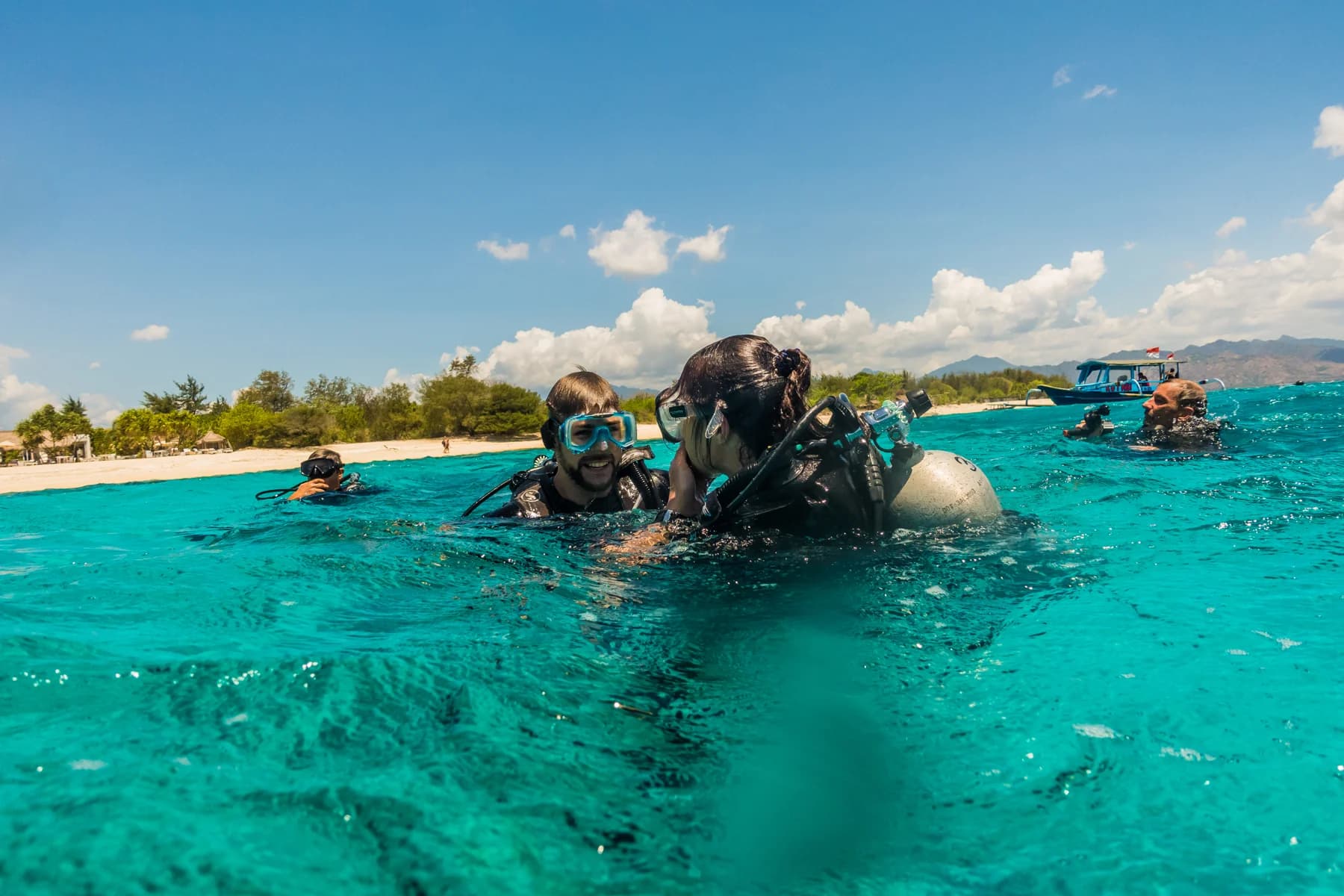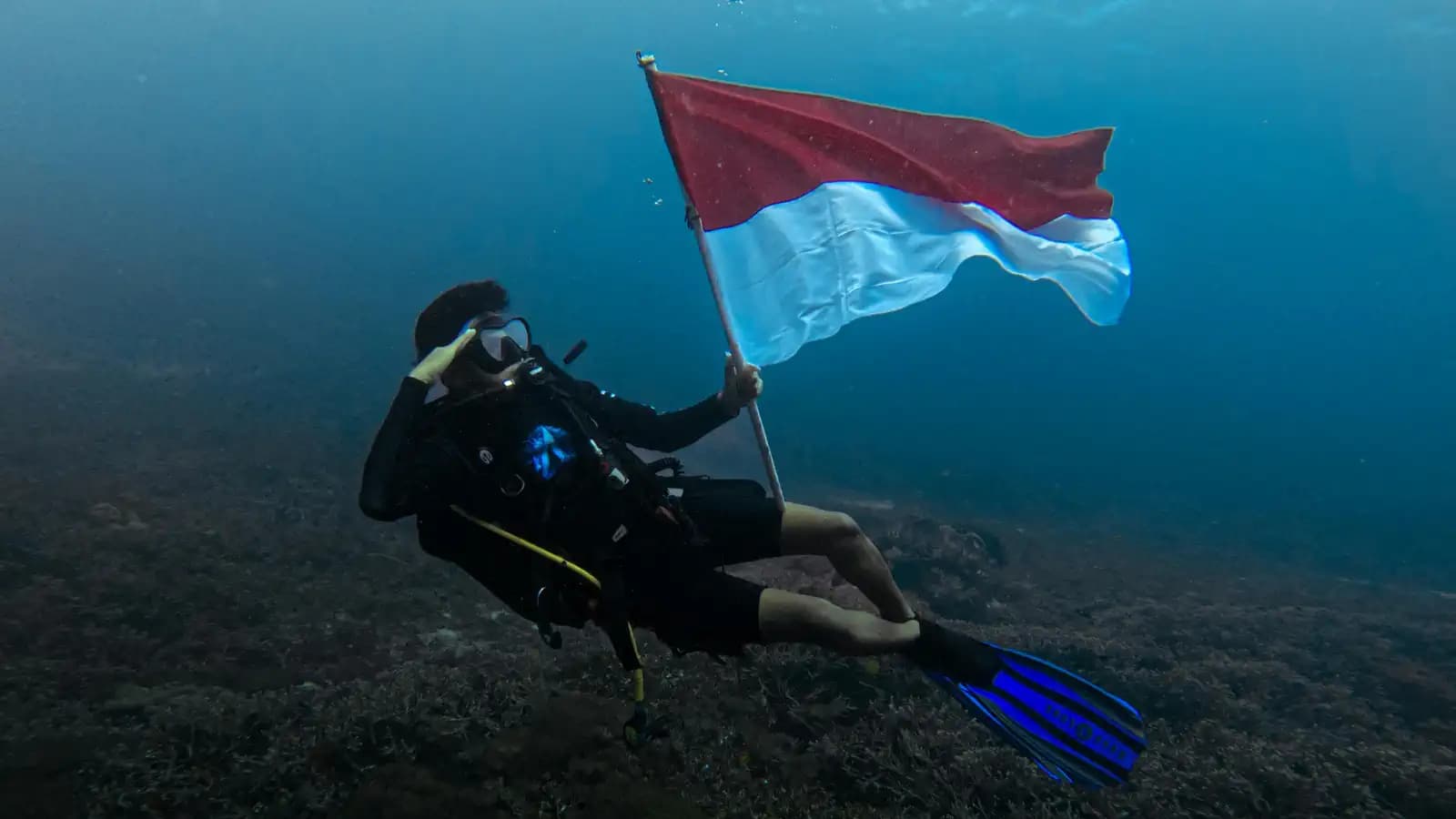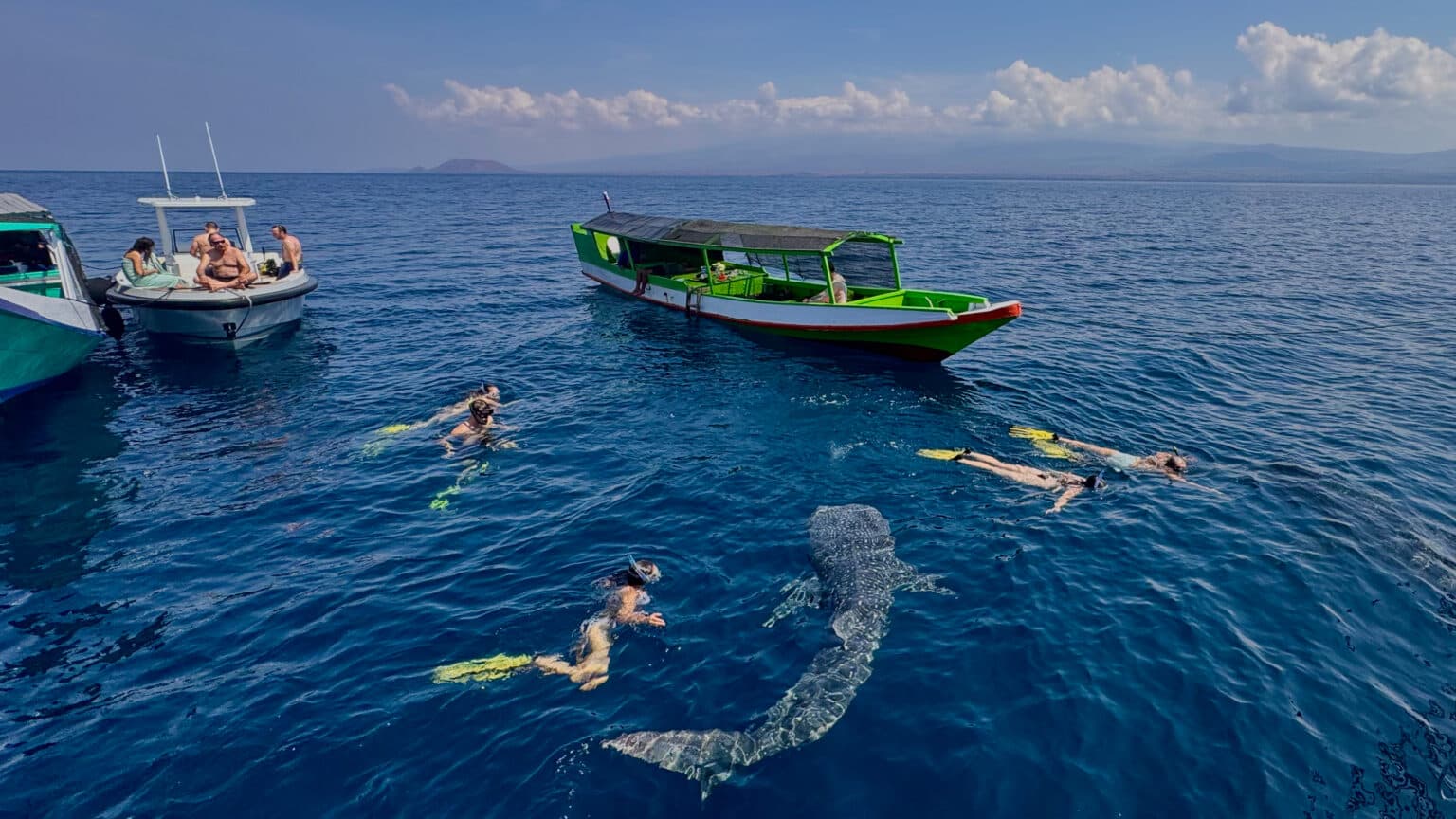
Most people who’ve snorkeled at Manta Point in Nusa Penida describe the same thing: you slip off the boat, look down, and there are three or four manta rays gliding beneath you, unhurried, the span of their wings wider than you expected. No tanks, no certification, no training needed. Just a mask and fins.
Indonesia has the highest concentration of manta rays in the world, and while divers have known this for decades, it’s worth saying clearly: many of the best encounters happen at the surface, or close to it. You don’t need to be a diver to have a genuinely extraordinary morning with these animals.
What you’re actually looking at
The mantas found across most of Indonesia’s island chain are reef manta rays (Mobula alfredi). They reach wingspans of around 5-7 meters and weigh up to two tons, which sounds alarming until you watch one. They’re filter feeders – mouth open, cruising through plankton-rich water with no interest in you whatsoever, except occasional curiosity. They’ll sometimes circle back for a second look, turn sideways to watch you with one eye, then move on.
The underside of each manta has a unique spot pattern, like a fingerprint. Researchers at the Manta Trust have been photo-ID-ing individuals across Indonesia for years. Some of the mantas at Nusa Penida’s cleaning stations have been documented for over a decade.
Where to go
Nusa Penida (Bali area)
Manta Point is the most accessible manta site in Indonesia. It’s a cleaning station on the southwest coast of Nusa Penida, about 40 minutes by speedboat from Sanur. The station starts at just 4 meters depth, so snorkelers sit right above the action. Divers can drop to 15-25 meters and watch from below as mantas queue up to be cleaned by wrasse.
Sightings here are almost year-round, with April through October being the most reliable. Currents can make the surface choppy – the boat ride in particular – but the water at the site is usually calm enough once you’re in.
Nusa Penida is easy to combine with a Bali trip. Most people go as a day trip from Sanur or stay a few nights on the island. We run a private snorkeling trip to Manta Point from Sanur – half day, small group, no certification needed.

Komodo National Park
Komodo has a handful of manta sites, including areas like Torpedo Point in the south. The mantas here tend to be larger, with more oceanic individuals passing through alongside the resident reef mantas. Currents are stronger than Nusa Penida, so snorkeling is trickier – this is better suited to divers with some experience. The best window is April to November.
The upside of Komodo is the context: you’re already island-hopping past Komodo dragons, pink beaches, and some of the richest reefs in the world. Mantas are one highlight among many. You can take in the full picture on a 3-day liveaboard cruise through the park, or focus purely on the diving with a day trip from Labuan Bajo.
Raja Ampat
Sites like Manta Sandy in the north of Raja Ampat are world-class for sheer numbers. The mantas here gather at cleaning stations in relatively shallow water, and conditions are often calmer than in Komodo. The trade-off is access – Raja Ampat is remote, and most people visit on a liveaboard. The manta sites are consistently productive from October through April.

Maratua and Derawan Islands (East Kalimantan)
Less visited than the three above, Maratua has multiple cleaning stations, including Manta Avenue and Manta Run. These sites are rarely crowded. Mantas here are habituated to divers and snorkelers, and the shallow depth of several stations makes them good for non-divers. Typically paired with Derawan Island for the sea turtle population there.
Snorkeling vs diving
At cleaning stations, snorkelers often have better encounters than divers. Mantas come to the surface to be cleaned, and a snorkeler floating above produces fewer bubbles and less disturbance. At Manta Point in Nusa Penida this is particularly true – the cleaning station is shallow enough that divers kneeling on the bottom can actually create a downcurrent that disrupts the mantas’ approach.
If you’re a diver, the advantage is being able to stay longer and position yourself differently. You can watch the cleaning behavior from below, hover mid-water as mantas pass overhead, or follow a slow current drift alongside them.
Freediving is worth considering if you’re comfortable in the water. Mantas react very differently to a freediver than to a scuba diver – the silence makes them far more likely to approach and linger.
When to go
There’s no single answer for all of Indonesia, since the islands span 5,000 km and the seasons vary:
- Nusa Penida: Most reliable April-October. Sightings year-round but calmer conditions and higher numbers in the dry season.
- Komodo: April-November, peak around June-September.
- Raja Ampat: The North/central sites peak October-April. Year-round possible.
- Maratua: April-November generally, but sightings at the cleaning stations happen most months.
What to know before you go
Manta rays are protected in Indonesian waters. No touching, no riding, no feeding. Reputable operators follow the Manta Trust guidelines – groups are kept small, no flash photography, and encounters end when the mantas leave. If a guide or operator doesn’t follow these basics, find a different one.
Good buoyancy makes a real difference. At cleaning stations, the main thing that disrupts encounters is divers or snorkelers drifting too close and spooking the animals. Stay horizontal, move slowly, and keep a few meters distance.
For non-divers, Nusa Penida is the obvious starting point. For divers wanting to plan a dedicated manta trip, our Komodo diving liveaboard and Raja Ampat trips give the most consistent results across multiple dives.