The mola mola season at Nusa Penida is about to open. Cold water is already pushing up through the Lombok Strait, and from June the ocean sunfish start drifting in to the cleaning stations off Bali’s southeast coast. If seeing a fish the size of a small car is on your list, this is the window.
Mola mola appear at Nusa Penida and a few East Bali sites between May and October, brought shallow by the cold upwellings of the Lombok Strait. Most show up at cleaning stations around 20 to 30 metres. The most reliable spots are Crystal Bay and Blue Corner at Nusa Penida, with Gili Biaha and Gili Tepekong near Candidasa as a Bali-side alternative. Sightings peak from July to September.
What is a mola mola?
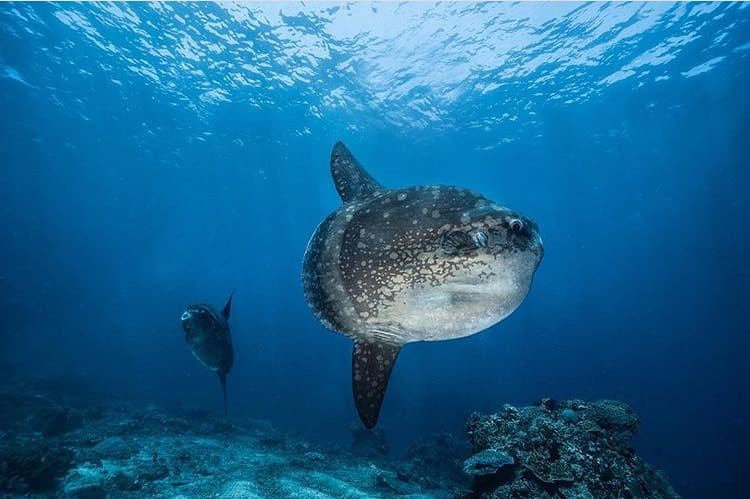
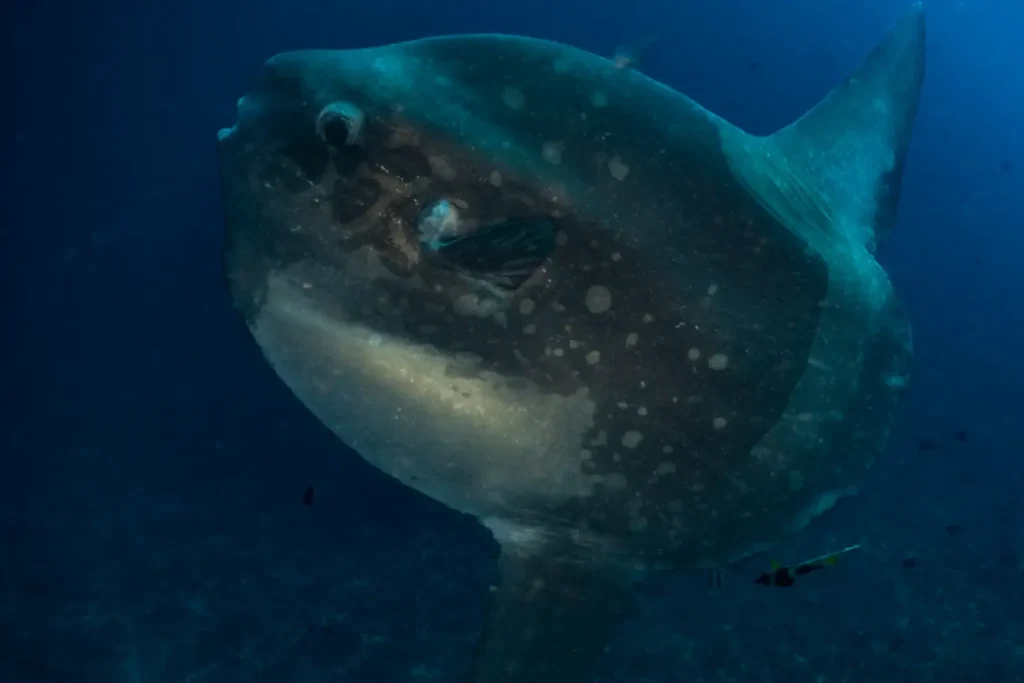
The ocean sunfish is the heaviest bony fish in the sea. It can grow to three metres across and looks like a giant head that forgot to grow a body, drifting more than swimming. They spend most of their lives deep and alone, which is why an encounter feels rare. One detail most guides skip: the giant sunfish you see at Nusa Penida are mostly Mola alexandrini, the bump-head sunfish, rather than the classic Mola mola, as the research in the Nusa Penida marine protected area has shown. At the cleaning stations they rise from the deep, hold still while small reef fish pick the parasites off their skin, then slide back into the blue. Watching one hang motionless a few metres away is a dive you do not forget.
When to see mola mola in Bali
Nusa Penida, the rugged island off Bali’s southeast coast, is where most divers in Indonesia come to find them. Cold upwellings rise through the Lombok Strait from May through October and push the sunfish closer to the surface. The core window is July to September. The colder the water, the better your odds, and when divers are reading 18 to 20 degrees at depth, sightings climb. It is worth asking your operator for recent temperature readings before you commit to dates.
Month by month
| Month | Odds | Conditions |
| January to April | Off-season | Occasional deep sightings. Cleaning stations rarely active. |
| May | Early season | First sightings, hit or miss. Some operators start dedicated dives. |
| June | Building | Sightings increasing. A good time to book ahead. |
| July | Core window | Reliable sightings. Water around 22 to 24 degrees. |
| August | Peak | The best month, coldest water, and the busiest. Book early. |
| September | Peak | Second best, a little quieter than August. |
| October | Tail end | Sightings continue but less predictable. |
| November to December | Off-season | Rare. The wet season begins. |
Where to dive
| Site | Location | Odds | Level | Notes |
| Crystal Bay | Nusa Penida, south | Highest | Advanced | Most reliable. Busy, with shifting currents. |
| Blue Corner | Nusa Penida, north | High | Advanced to expert | Strong drift. Mantas and reef sharks too. |
| Ped / SD Point | Nusa Penida, north | Lower | Advanced | A quieter secondary option, worth requesting. |
| Gili Biaha / Gili Tepekong | Candidasa, East Bali | Moderate | Advanced | Same upwelling, no Penida crossing, less boat traffic. |
Crystal Bay
Crystal Bay is the benchmark. Its topography funnels the cold upwelling straight onto a large cleaning station, and on a good day several sunfish circle at 20 to 30 metres. It earns its name, but it also earns its reputation for current, which can be strong and shifting. This is not a beginner site. Dive it with an experienced guide.
Blue Corner
One of Nusa Penida’s most current-driven dives, and a regular for sunfish at depth. You need to be comfortable in moving water here. The reward is a wall draped in sea fans, reef sharks, and mantas riding the incoming current alongside the molas.
Ped and SD Point
The north coast sees fewer sightings than Crystal Bay, but it does happen, and these sites are quieter than the main circuit. Worth asking for if you have already done Crystal Bay and want a calmer dive.
Gili Biaha and Gili Tepekong
The Lombok Strait upwelling reaches the Bali side too, so these sites near Candidasa see sunfish during the same May to October window. Sightings are less frequent than at Crystal Bay, but the topography is dramatic, the boat traffic is minimal, and you skip the crossing to Penida. These East Bali sites also feature on our Bali dive safaris.
Plan your trip with Ocean Earth Travels
There are two ways to do it, and we arrange both.
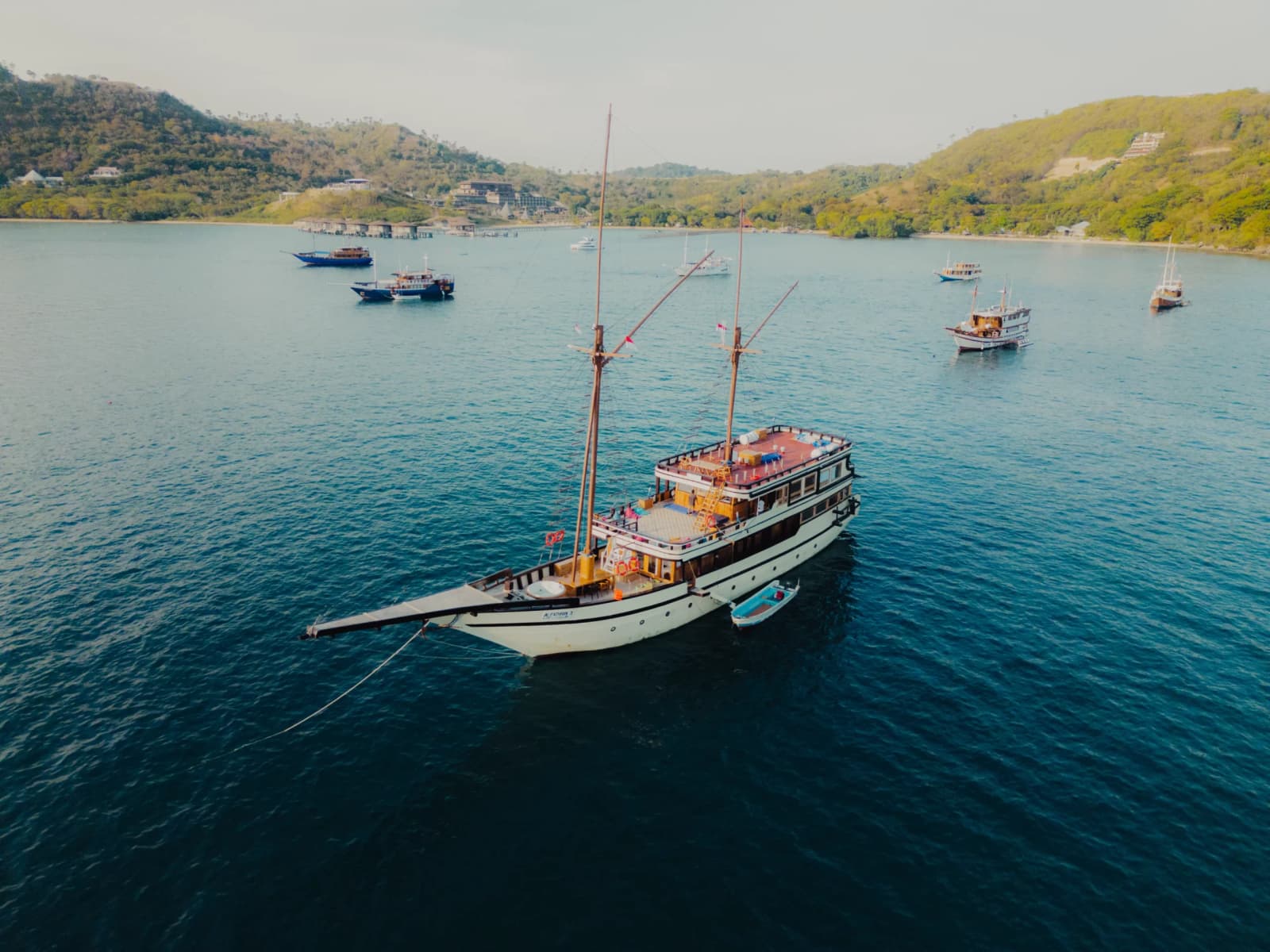
Stay on the island. Basing yourself on Nusa Penida or Nusa Lembongan gets you on the early dives before the day-trip boats arrive, and the flexibility to add dives when conditions line up. Most divers pair the trip with the resident mantas at Manta Point. This is the approach the serious sunfish hunters take. We handle the accommodation, dive operators, guides and logistics. You show up and dive.
Day trip from Bali. Fast boats from Sanur reach the Penida sites in about 45 minutes, so you can dive Crystal Bay in the morning and be back in Bali by the afternoon, on our Nusa Penida diving day trip from Bali. The trade-off is an earlier start and more time on the boat.
If you want the best odds and the better operators, the season fills up fast for July and August, so June and early July is the time to lock in your dates. Tell us when you want to go and your experience level, and we will match you with the right operator and take care of the rest.
Frequently asked questions
When is the best time to see mola mola in Bali?
July to September is the core window, when the water is coldest and sightings are most reliable. May and June bring early, less predictable encounters, and October is the tail end. For the best odds, aim for July or August.
Are sightings guaranteed?
No. They are likely in peak season but never guaranteed, which is why dedicated trips include several dives across a few days to improve your chances. The fish moves on its own schedule. Crystal Bay and Blue Corner are worth diving even outside the season for the reef and the current alone.
How deep do mola mola appear?
Cleaning stations sit between 20 and 40 metres. When the upwelling is strong they rise toward the shallower end; in warmer conditions they stay deeper.
What certification do I need?
Advanced Open Water as a minimum, plus logged dives in current. Sites like Crystal Bay and Blue Corner run strong currents.
Can I see them from Bali itself, without going to Nusa Penida?
Yes. The same Lombok Strait upwelling reaches Bali’s east coast, and Gili Biaha and Gili Tepekong near Candidasa are the best spots to find sunfish on the Bali side.
What is the water temperature?
The surface stays a warm 26 to 28 degrees year round, but during cold upwellings the water at depth can drop to 18 to 22 degrees. Those cold days are exactly when your chances are best.
Should I stay on Nusa Penida or day trip from Bali?
Stay on the island if the sunfish are your main goal: shorter boat rides, earlier dives and more sleep. Day trips from Sanur work too and take about 45 minutes by speedboat, with the trade-off of an earlier start.
What else will I see?
Plenty. Manta rays at Manta Point year round, reef sharks at Blue Corner, and turtles across most Penida sites. The supporting cast is a big part of why Penida is worth the trip.
Ready to plan your trip? Browse all our diving in Indonesia, or build your own trip and tell us your dates and experience level. We will sort the operator, the guides, and the logistics. Spots fill fast for July and August.