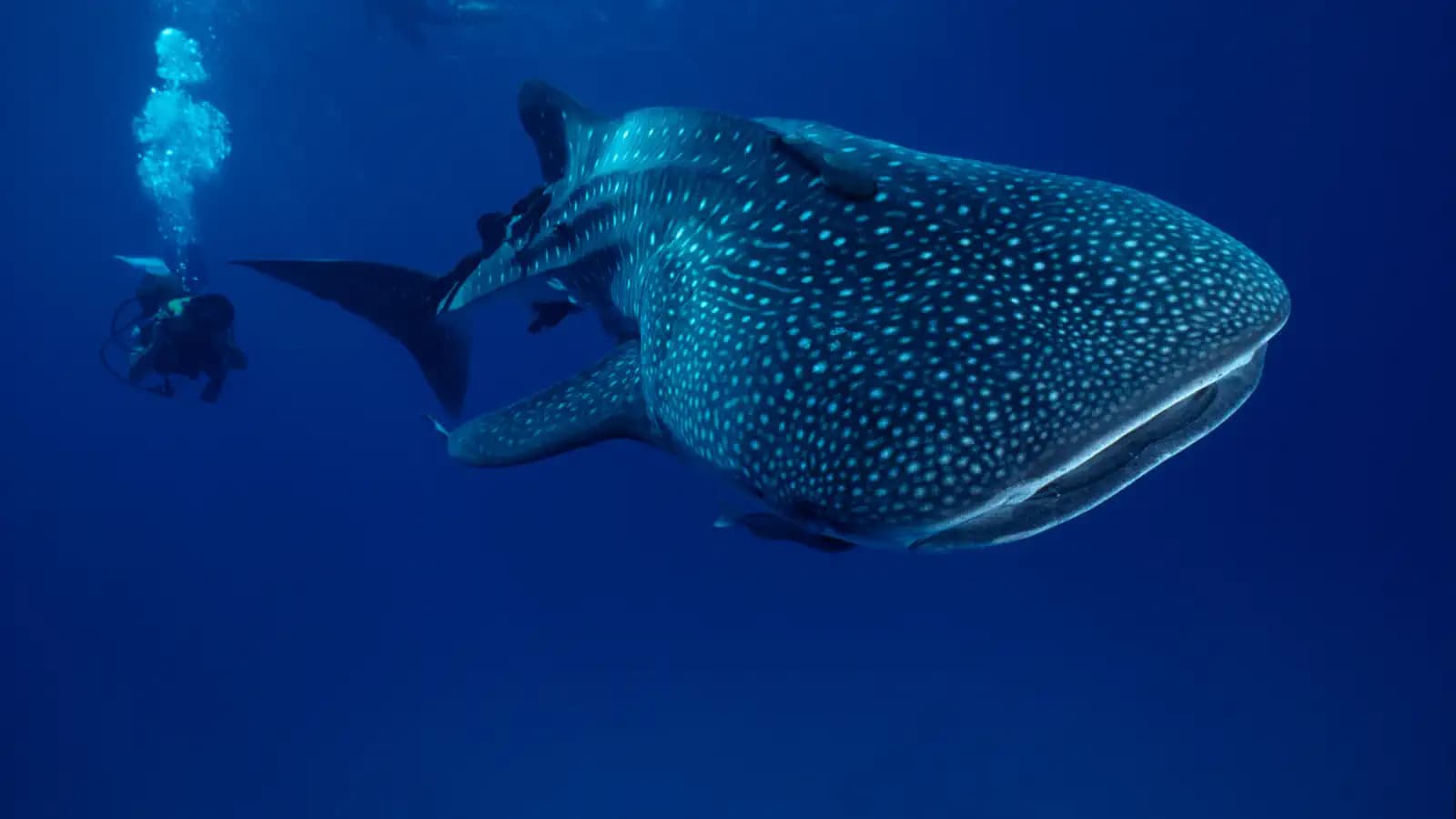
Saleh Bay, off the north coast of Sumbawa, is one of the most reliable places in Indonesia to swim with whale sharks, and one of the few places on Earth where scientists now think they might actually be born.
We’ve been running trips out to the bagans here for years, so this is the version we’d tell a friend: what’s really happening in the water, what the new science says, and how to see it without adding to the problem.
Why whale sharks come to Saleh Bay: the bagan connection
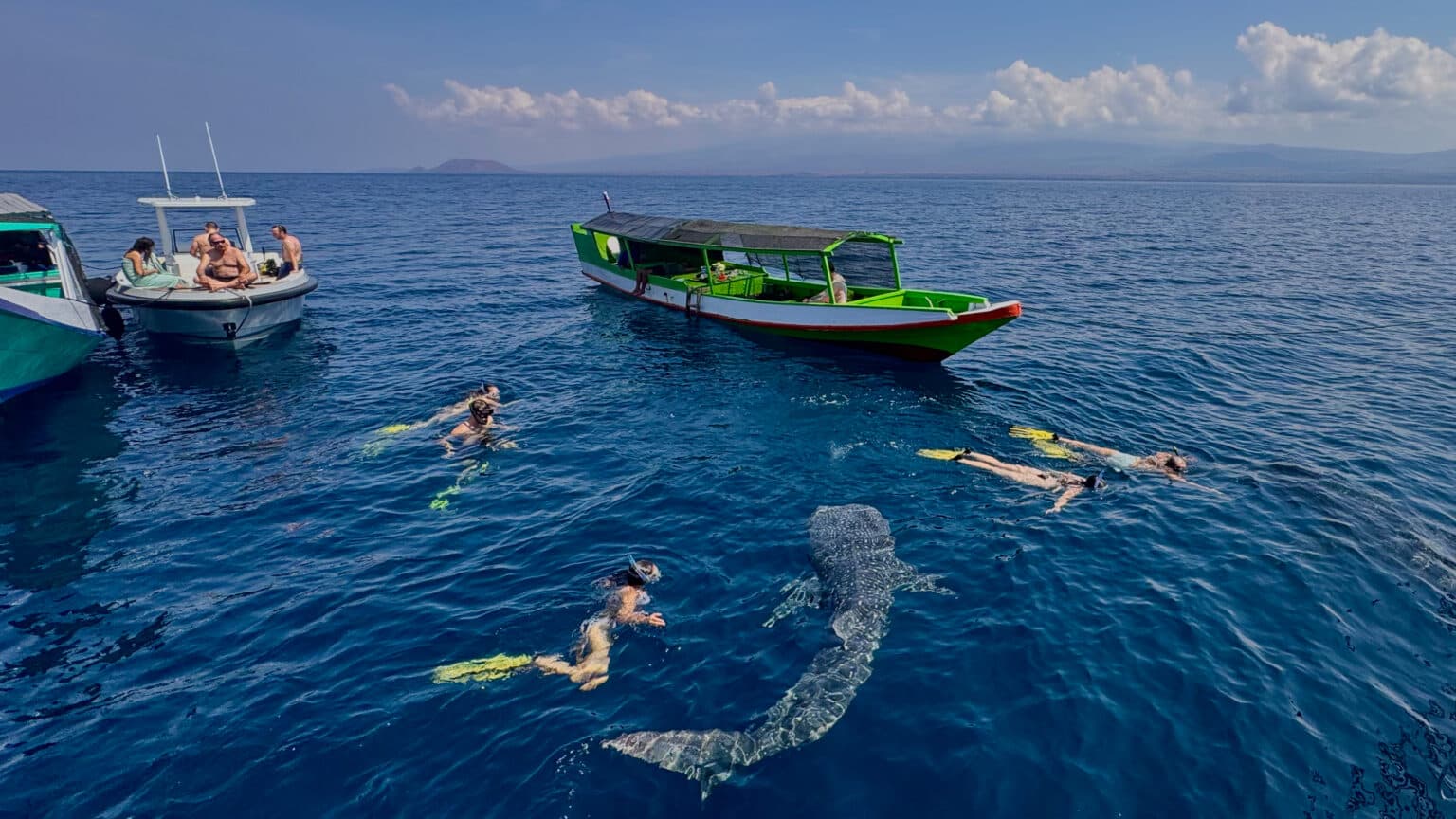
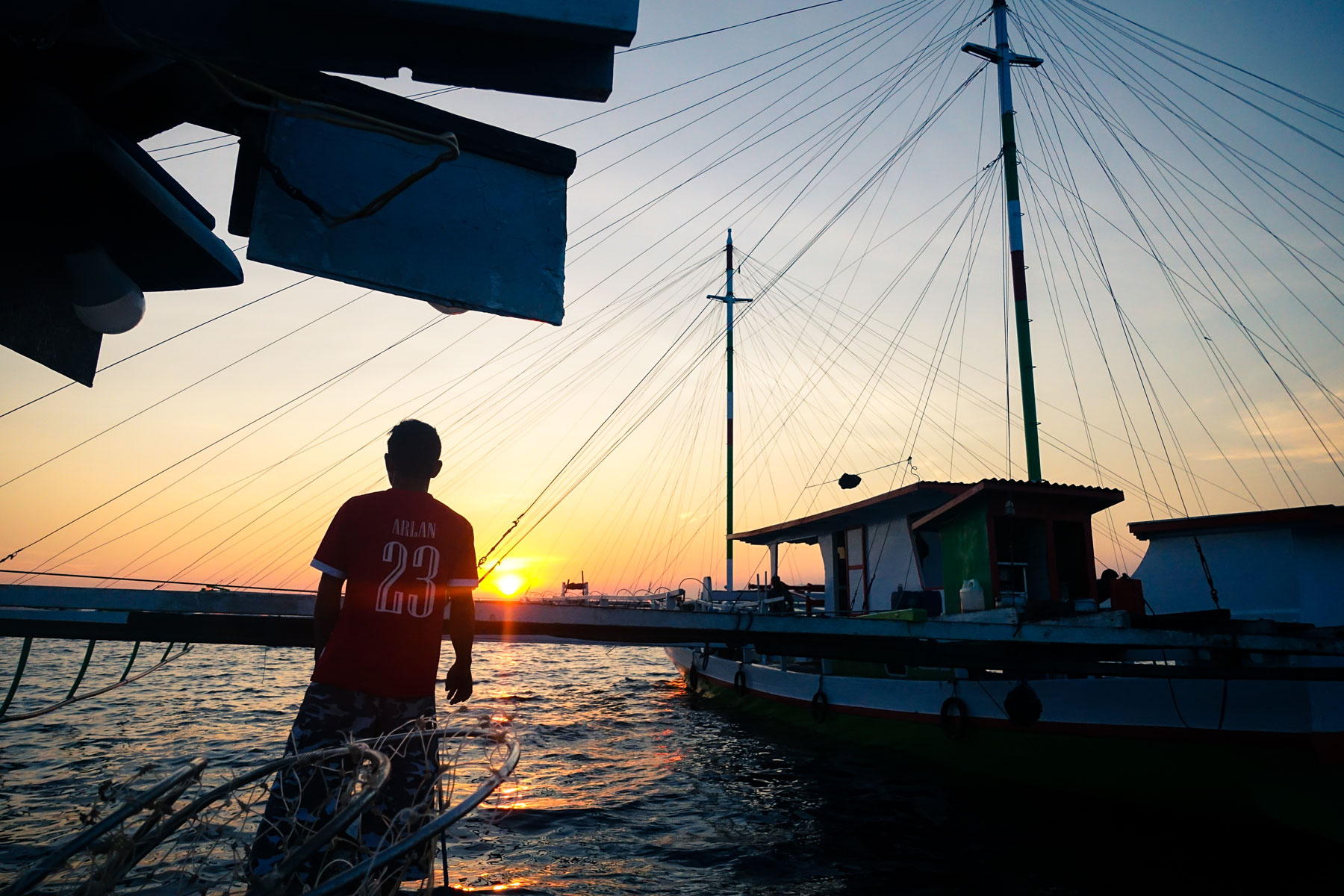
The whale sharks here don’t gather at random. They follow the bagan, the traditional floating fishing platforms anchored throughout the bay. Fishermen use bright lights overnight to draw in small baitfish and shrimp, and when they haul their nets each morning, some of that catch escapes or spills back into the water. Whale sharks come in to feed on it, sucking baitfish straight off the outside of the net before moving into deeper water to feed on plankton and small shrimp through the rest of the day.
This isn’t a new behavior invented for tourism. Fishermen documented whale sharks feeding around their bagan going back to 1992, long before anyone thought to bring visitors out to see it. It’s also why the sharks are called Pakek Torok, “the deaf shark,” locally: early fishermen tried to scare them away from the nets and the sharks simply ignored them and kept feeding.
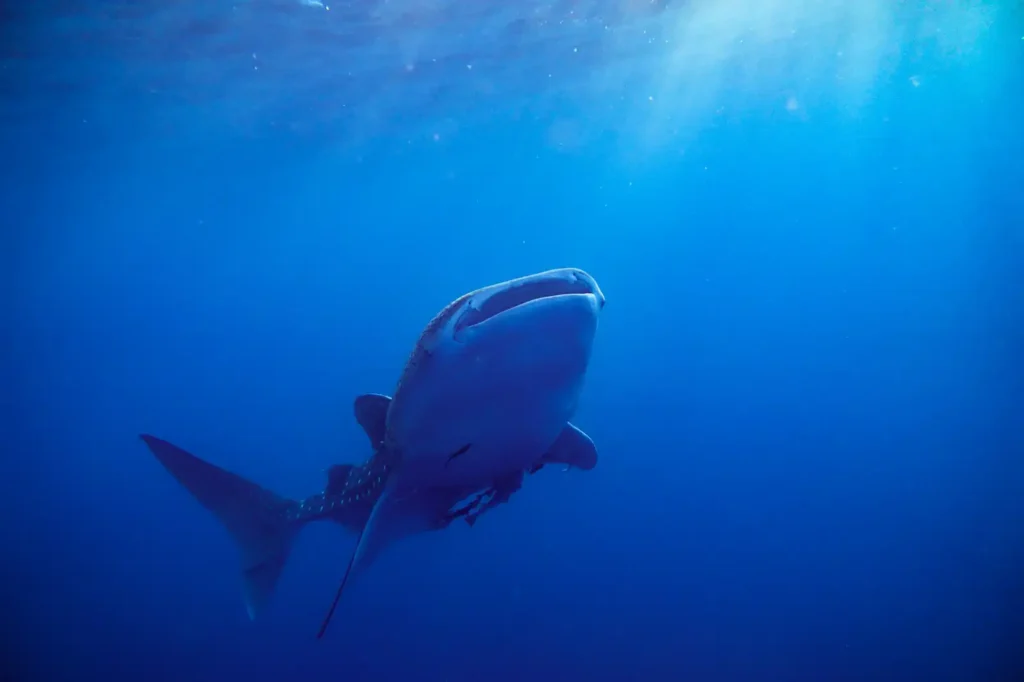
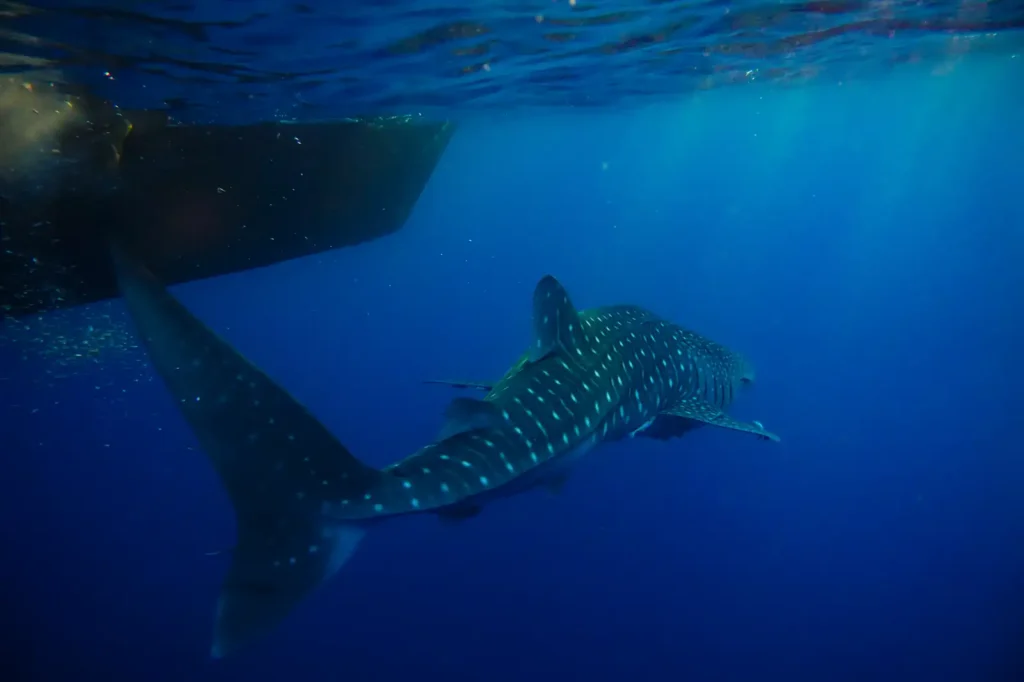
Where it gets more complicated is tourism’s effect on that natural pattern. As trips out here have grown busier, especially in peak season, some operators supplement what the bagan naturally provides with a bit of extra bait to make an encounter more likely for their guests. We think that’s worth saying plainly rather than pretending every sighting is 100% spontaneous. It’s a smaller-scale version of what falls out of the nets anyway, not the kind of large-scale provisioning you’d see somewhere like Oslob in the Philippines, but it’s still a fair question to ask your operator: does today’s encounter depend on the bagan’s normal activity, or extra feeding? A guide who’s straight with you about it is usually a guide who’s straight with you about everything else too.
One thing worth correcting here: Saleh Bay itself is not shallow. It’s a deep, sheltered inlet, roughly 70 meters in parts. What makes the encounters accessible is that the feeding activity happens right at the surface, in the top few meters, directly around the bagan platforms, not that the whole bay is shallow.
A discovery that’s rewriting whale shark science
In September 2024, fishermen on one of these bagan pulled in a whale shark pup barely four months old and about 140 centimeters long, small enough to fit in a styrofoam cooler box. It was the first newborn whale shark ever recorded in Indonesia. They measured it, photographed it, and released it. Four more similarly young sharks turned up around the bay that same month.
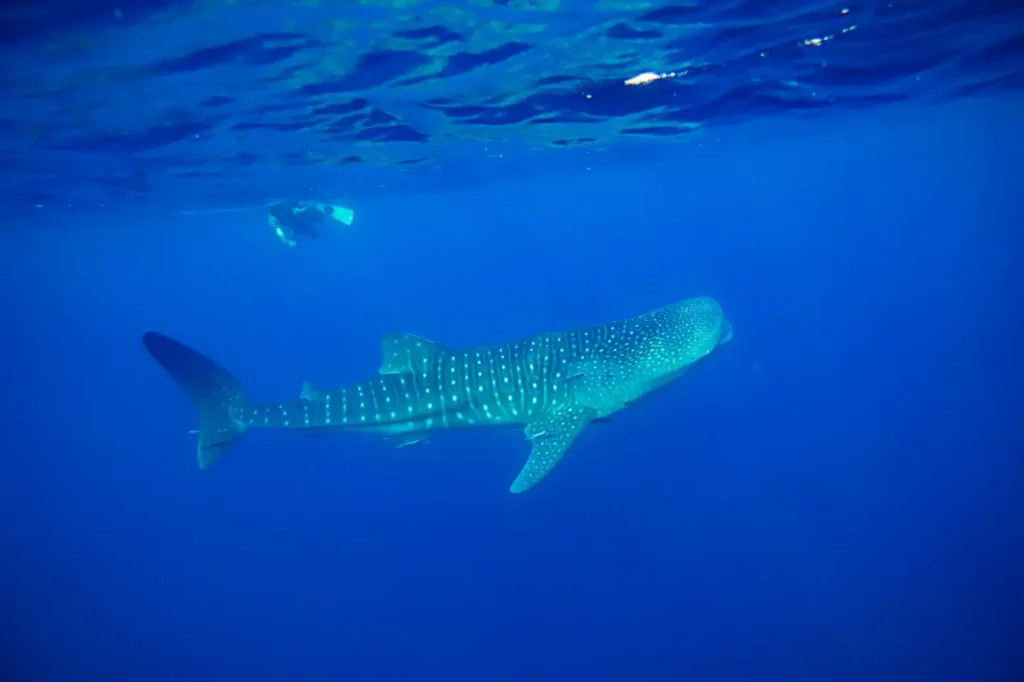
That matters because almost nothing is known about where or how whale sharks give birth. Only one pregnant female has ever been examined by scientists, caught off Taiwan in 1995, and no confirmed whale shark birthing ground has ever been documented anywhere. Globally, whale sharks under 1.5 meters (newborn size) have only been recorded 33 times in the scientific literature. Five of those sightings happened in Saleh Bay within a single month.
Why the bay may function as a nursery
This builds on a decade of satellite tagging led by Konservasi Indonesia, the Elasmobranch Institute Indonesia, and Conservation International. Since 2015, researchers have tagged more than 70 whale sharks across four sites in Indonesia, tracking each tag for an average of over 400 days (the longest ran 990 days). Published in Frontiers in Marine Science in April 2026, the study found that while most whale shark sites worldwide are seasonal gathering points, Saleh Bay and Cenderawasih Bay in West Papua are two of the only places on the planet where whale sharks stay year-round. As the lead researcher put it, the bay functions less like a stopover and more like home.
That’s also the likely explanation for why almost everyone who visits sees juveniles rather than fully grown adults (which can reach 12+ meters). At bagan sites like this, young sharks appear to stay and feed for years, using the bay to grow before eventually moving out into the open ocean as adults. Combined with the 2024 neonate sightings, that year-round juvenile presence is the strongest evidence yet that Saleh Bay functions as a nursery. Researchers are careful to call it a strong candidate for a birthing ground too, not a confirmed one; that part of the story is still being written.
It’s why Saleh Bay has been designated an Important Shark and Ray Area, and why Konservasi Indonesia is now working with the Indonesian government to establish it as the country’s first whale shark-focused marine protected area.
You can read the full research paper here: Integrating behavioral movement and environmental preferences to map critical habitat of whale sharks using long-term satellite tracking in the Indo-Pacific Ocean, Frontiers in Marine Science, 2026.
A small fishing village, and a choice that mattered
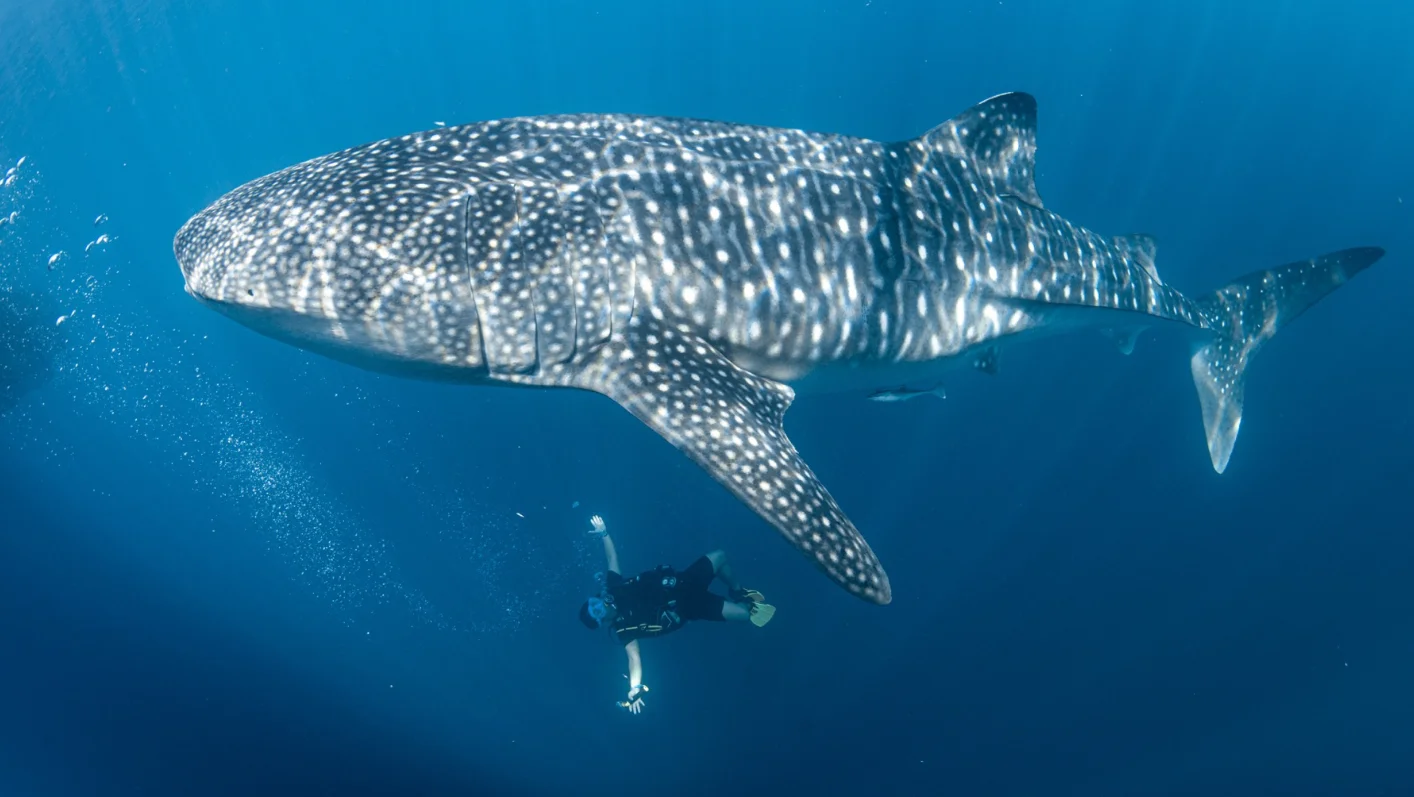
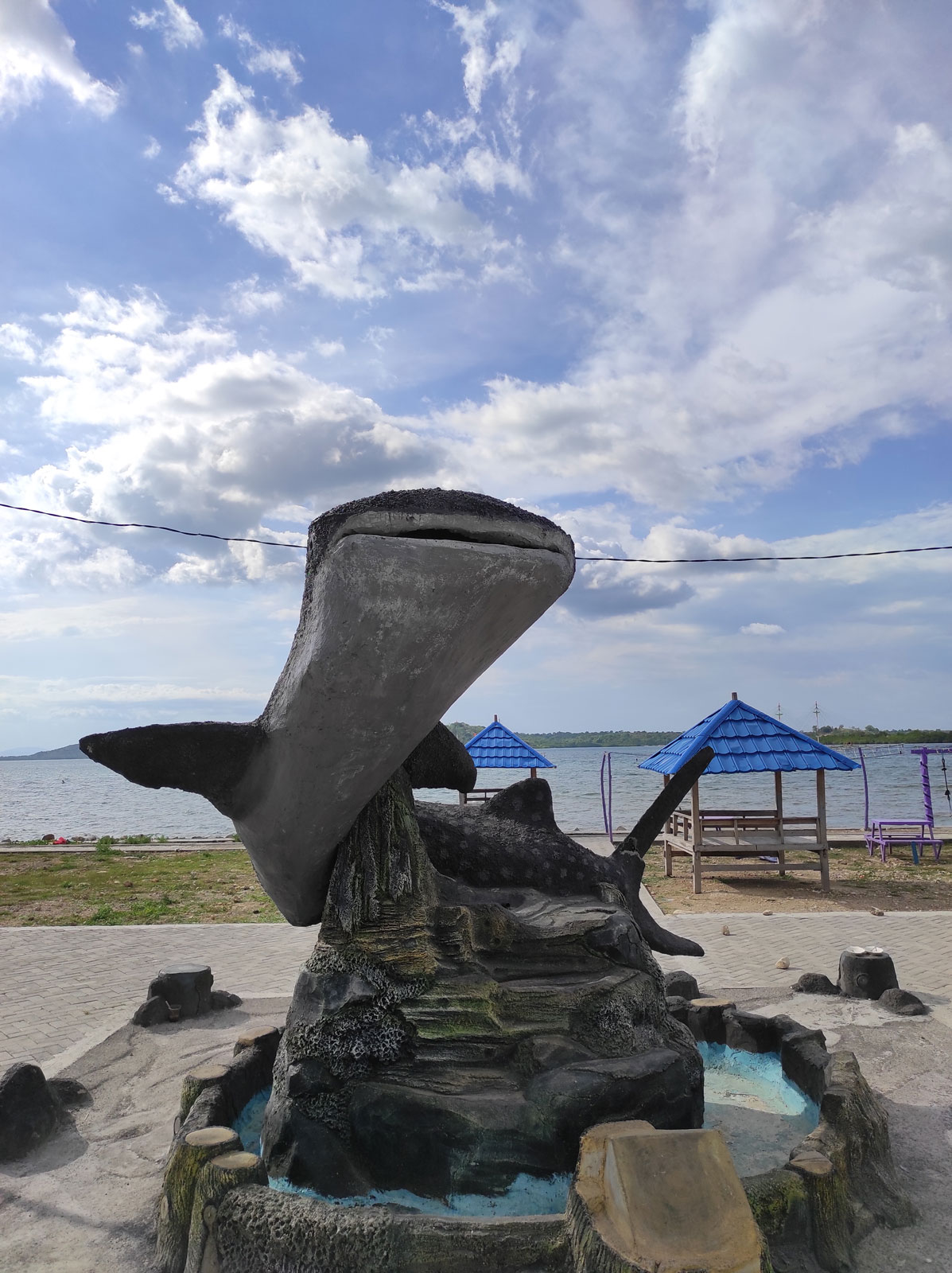
Labuan Jambu, the village closest to the whale shark grounds, sits in Sumbawa’s Tarano subdistrict. Fishing is still the backbone of life here, supplemented by small farms and, increasingly, tourism. It isn’t a wealthy place, and the bay itself is under real pressure: researchers have flagged pollution and runoff from land-based corn farming and coastal aquaculture, and Indonesia has recorded a number of whale shark strandings in recent years, likely tied to water quality and fishing gear.
Against that backdrop, what happened in 2024 stands out. When that first pup turned up in the net, the fishermen didn’t sell it or stay quiet. They reported it to researchers they’d been working alongside for years, and other fishermen kept doing the same over the following weeks. That’s what turned a handful of odd sightings into a scientific discovery, and it’s the kind of decision that’s easy to admire and easy to forget wasn’t guaranteed. A struggling fishing community had every reason to keep it to themselves.
By 2025, that relationship had become more organized. The West Nusa Tenggara Fisheries Department officially recognized KAWAN Teluk Saleh, a youth-led conservation group. It’s headed by a local named Chen, who’s been watching whale sharks from small boats since he was 12 and now runs whale shark tours himself. Fellow member Isnardi “Ardi” Hidayat, who returned to the village after years working elsewhere, leads community education and waste management, talking regularly with fishermen, tourists, and schoolchildren about protecting the bay. A whale shark learning center opened in the village in February 2025 to support that work. The logic is simple: tourism only keeps paying off if the sharks and the bay stay healthy.
What you should know before you visit
Saleh Bay hasn’t had decades to build the kind of tourism management that Komodo or Raja Ampat have. Regulation is still developing. During dry season (May through October), when most visitors come, it’s common to see five or six boats clustered around one active bagan, and enforcement of distance and no-touch rules varies between operators.
This isn’t a crisis, and Saleh Bay is nowhere near becoming a cautionary tale like Oslob. But it’s a destination still figuring out its guardrails, and what visitors choose, including who they book with, genuinely shapes what it becomes over the next few years.

How to visit responsibly
Avoid the busiest weeks of high season. July and August are the busiest months, especially weekends, and also when sightings tend to peak, so you’re trading crowds for slightly better odds. If solitude matters more to you than maximum odds, May, June, September, or October give you strong conditions with noticeably fewer boats.
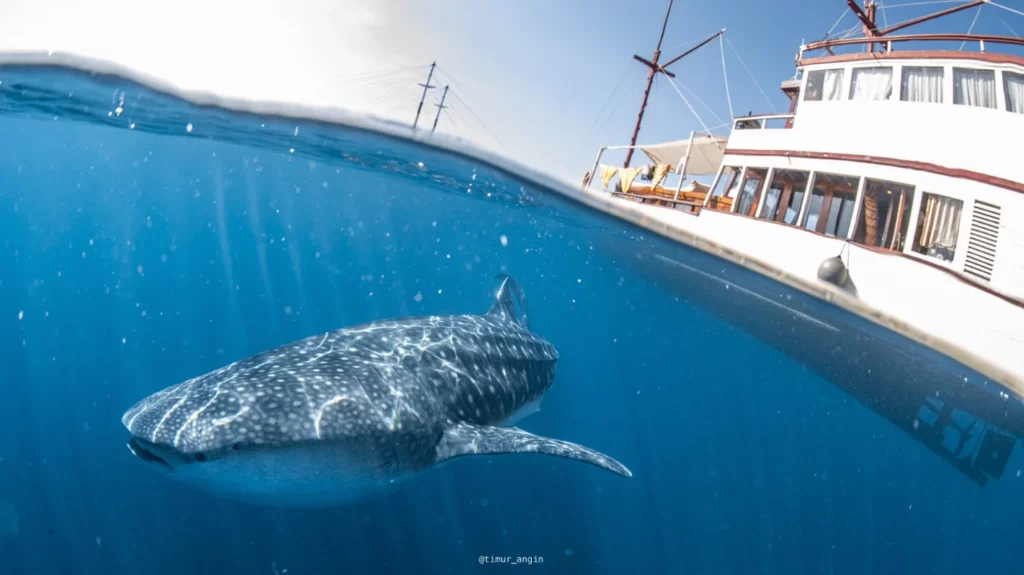
Choose your operator on purpose. Ask whether they keep a 3-meter minimum distance from sharks, enforce no-touch and no-flash rules, cap the number of swimmers in the water at once, and whether encounters rely on natural bagan activity or extra feeding. Guides trained through KAWAN or Konservasi Indonesia’s programs will answer easily and explain why the rules exist.
Spend your money where it helps. Book local guides, stay in homestays in Labuan Jambu or on nearby Moyo Island rather than resort chains, eat at local warung. This isn’t a wealthy village, and tourism income staying local is a big part of why the sharks are being protected instead of exploited.
Watch our video about whale shark encounters in Saleh Bay
How to get there, and where to stay
Fly into Sultan Muhammad Kaharuddin III Airport in Sumbawa Besar (SWQ), then it’s roughly a 3-hour drive to Labuan Jambu village. From there, a traditional fishing boat (a begoq) takes you out to the bagans, usually a 2-hour ride starting around 4 AM to catch peak morning activity.
If you want to turn it into more than a day trip, Moyo Island sits just off the coast and pairs naturally with the whale shark trip. It’s a protected nature reserve with its own reef right off the beach, the Mata Jitu waterfall inland, and a much quieter pace than Labuan Jambu itself. We work with two properties there: Moyo Island Resort, a small beachfront spot with private balconies from $25/night, and Maleo Moyo, which runs its own dive center alongside the accommodation if you want to add diving to the trip.
Prefer to see Saleh Bay as part of a longer trip? Several liveaboards on the Lombok-Komodo route include it as a dedicated whale shark stop, sailing overnight to reach it. Live dates for these boats are on our Komodo boat trips page.
Book the trip
We run a half-day whale shark snorkeling trip out of Labuan Jambu, departing 4 AM, with snorkeling gear, breakfast, and free GoPro documentation included: Whaleshark Snorkeling Trip in Sumbawa. Open group trips run from $40 per person; private trips scale up to 10 people.
Want a bit more time in the water and on the islands around it? We also run a 3-day whale shark encounter, and a 4-day Lombok to Komodo liveaboard that includes Saleh Bay as a stop.
Or tell us what you have in mind and we’ll build the itinerary around it: https://www.oceanearthtravels.com/create-your-own-trip/
You’d be visiting a place in the middle of a genuine scientific story. A small fishing community had every reason to keep what they found to themselves. Yet they chose to call scientists instead. That choice is still paying off.
Frequently asked questions
Scientists consider it one of the strongest candidates in the world. A decade of satellite tagging shows whale sharks live in the bay year-round as juveniles, and five newborn whale sharks were sighted there in 2024, the first ever recorded in Indonesia. It’s a strong candidate for a birthing ground too, though that part isn’t confirmed yet. Read the full study in Frontiers in Marine Science.
Bagans use bright lights overnight to catch small baitfish. Whale sharks feed on fish that escape or spill from the nets, a natural behavior documented since 1992, long before tourism arrived in the bay. Some operators supplement this with a small amount of extra feeding to improve the odds of an encounter; ask your operator directly if that matters to you.
No. The bay itself is deep, around 70 meters in parts. Whale shark encounters happen at the surface directly around the bagan platforms, not because the bay as a whole is shallow.
Whale sharks are present year-round, with sightings peaking in August and September. July and August are also the busiest months for visitors. For strong conditions with fewer crowds, aim for May, June, September, or October.
Fly to Sumbawa Besar (SWQ), drive around 3 hours to Labuan Jambu village, then take a traditional boat about 2 hours out to the bagans. Many liveaboard cruises also include Saleh Bay as part of a longer Komodo or Lombok itinerary.
Not yet at the level of Komodo or Raja Ampat. A marine protected area is currently being established, but standards still vary between operators. Booking with a guide trained through local conservation groups is the best way to ensure a responsible visit.
Learn more about whale sharks
Want to know more? We also have a blog post about fun facts about whale sharks that covers their biology, behaviour, and conservation status.