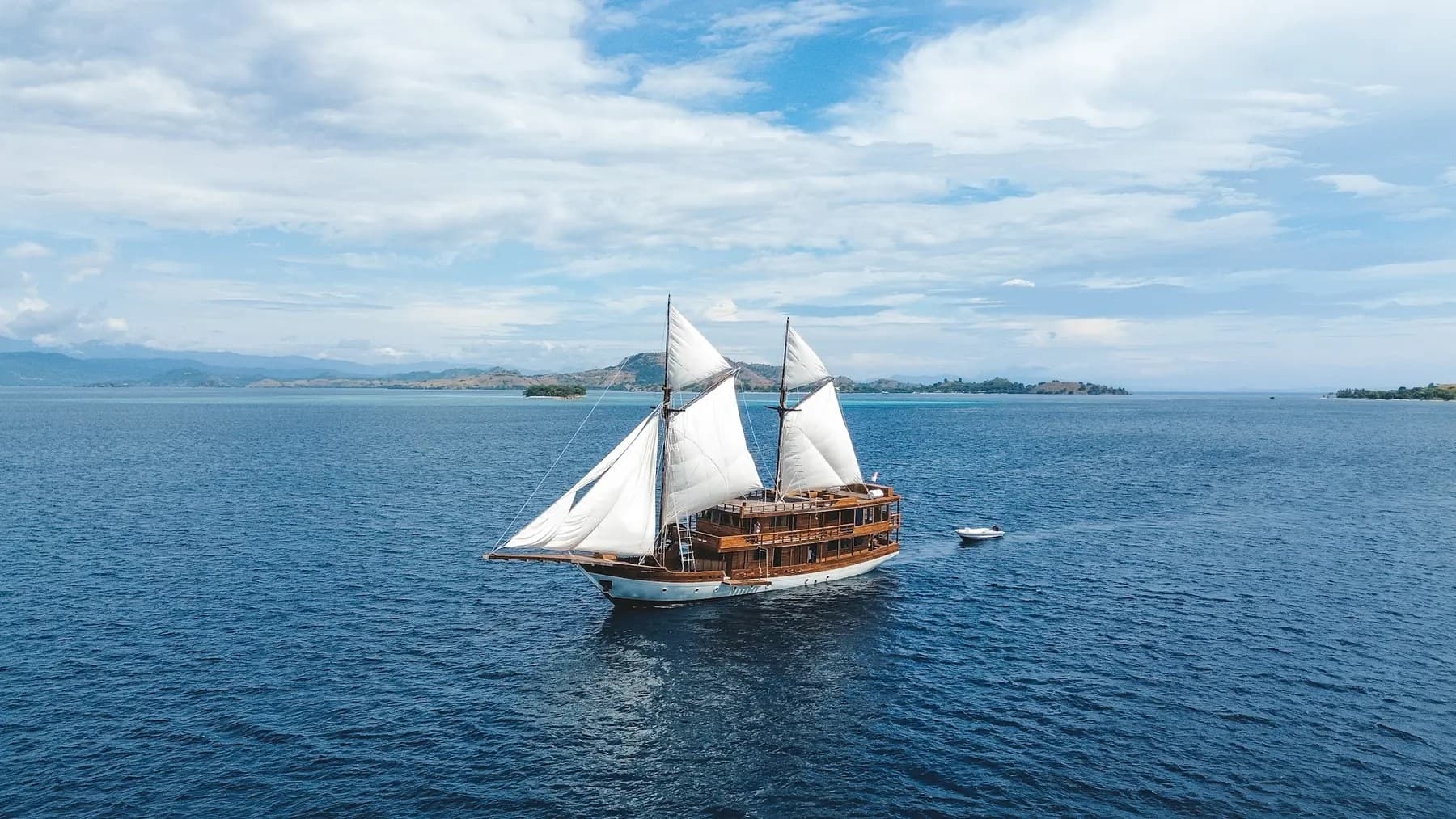
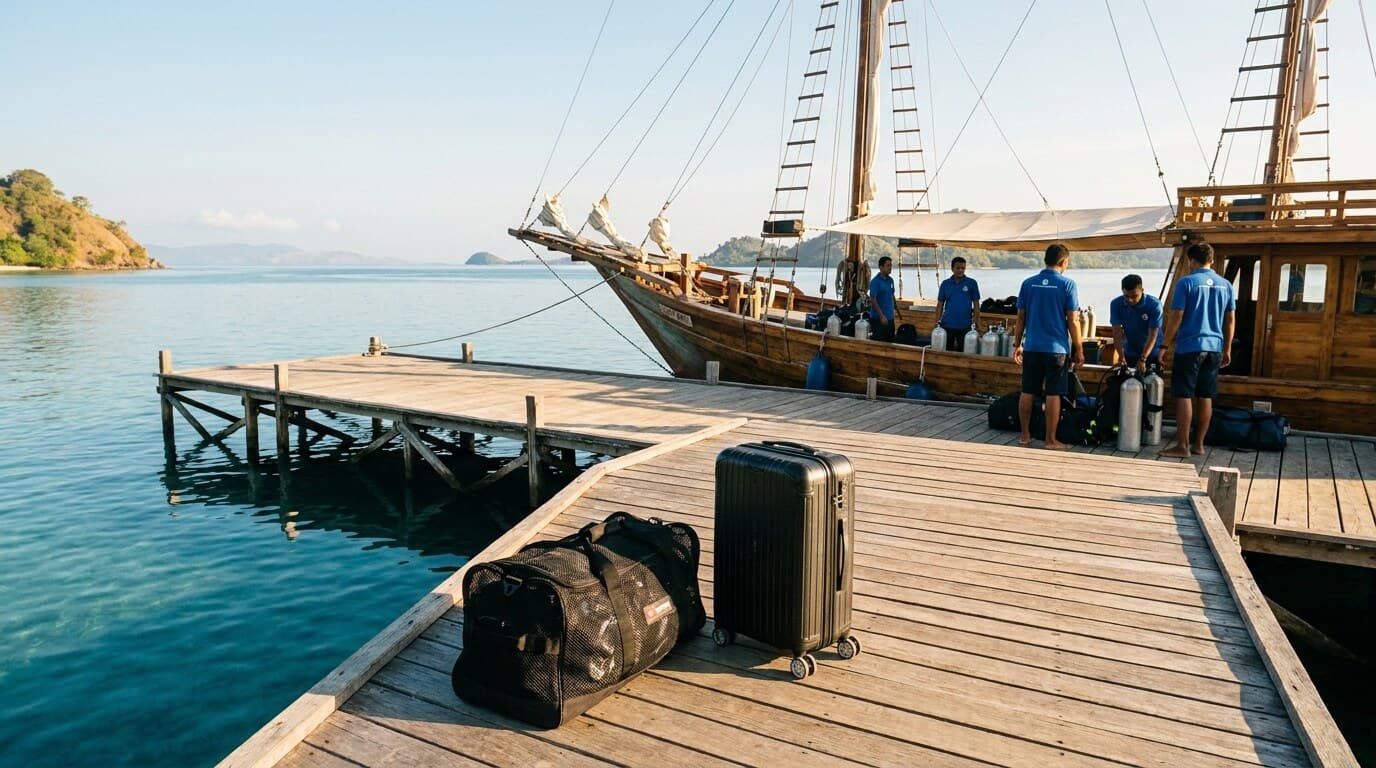
Going on a liveaboard for the first time, or trying to do it smarter this time? This liveaboard packing list covers everything you need: dive gear, documents, comfort essentials, and what most people bring that they should not. It is based on real experience running dive trips in Indonesia, where boats range from compact wooden schooners to luxury catamaran vessels. When you’ve picked your dates, our dive liveaboard trip finder lists every scheduled departure with live places.
Dive Gear: What to Bring, What to Skip
Most liveaboards rent dive gear, included or not depending on your package. But if you have your own gear, bring it: it gives you the best diving comfort. Just be mindful of where you will be diving and the conditions there.
In Indonesia, the diving conditions are more or less the same all year long. Water temperatures range from 26 to 30 degrees Celsius, with some rare cases of temperature dropping below in some seasons and areas.
So no need for you to pack a super thick wetsuit, or even a dry suit. A 3mm shorty or long wetsuit is usually enough for most trips. If you get cold easily, you can bring a 5mm wetsuit for extra warmth.
If you are used to diving in cold water and use 2 first stages on 2 valves, you might want to modify your regulator setup to a single first stage on a single valve. Water is warm, and the risk of freezing is extremely low.
Don’t bother bringing heavy tools or spare parts. Most liveaboards have everything you need on board for little fixes, and, worst-case scenario, they will lend you spare equipment if needed.

Essential Dive Gear to Pack (or rent on board)
- Fins (open-heel or full-foot)
- Dive mask and snorkel (bring a spare mask strap can be a lifesaver)
- BCD
- Regulator (single first stage setup)
- Dive computer (mandatory, can usually be rented on the boat)
- Dive light

Extra dive gear to consider
- A SMB (Surface Marker Buoy) can be a lifesaver in case of an emergency or if you lose your group
- Underwater camera or action camera + strobes / video lights
- A small save-a-dive kit adapted to your gear (extra mask straps, spare fin strap, bungees, zip ties, mouth piece, etc..)
- Extra batteries and charger for your dive light, camera and accessories
Gear You Do Not Need
- Extra thick wetsuit or drysuit
- Multiple regulators (the boat provides backups)
- Weights – these are provided by the boat

Documents and Essentials
- Passport (valid for 6+ months)
- Dive certification card (PADI, SSI, NAUI, etc.) + logbook
- Travel and diving insurance
- Emergency contact info (printed or in phone)
Toiletries and Health
Liveaboards have limited freshwater. Showers are short and infrequent. Pack smart.
- Seasickness medication if you are sensitive (tablets or patches; many boats rock)
- Sunscreen – reef-safe, high SPF (you sit in the sun between dives)
- Aloe vera gel (for sunburns and jellyfish stings)
- Deodorant
- Shampoo and body wash (small bottles)
- Toothbrush and toothpaste
- Prescription medications (bring extras; boats have limited medical stock)
- Antacids and anti-diarrhea tablets (change of water, food, activity)
Clothing: Less is More
Deck space is tight. Bring 3-4 days of clothes maximum. Everything dries quickly in the sun and heat.
- Lightweight, quick-dry shorts (2 pairs)
- Breathable t-shirts (2-3, they dry fast)
- One long-sleeve shirt (sun protection on deck)
- Lightweight jacket or fleece (windy nights, air conditioning on the boat)
- Flip-flops and one pair of comfortable shoes for land excursions
- Swim shorts for the beach / dock
- Sleepwear (light cotton)
Comfort and Extras

- Earplugs (engine noise, roommates, boat motion)
- Headphones (noise-cancelling if possible to block engine noise and other boat sounds)
- Sleeping mask (for your afternoon naps, cabins can be bright)
- Toiletries bag (organizes your cabin corner)
- Phone charger and waterproof phone case
- E-reader or book (downtime between dives)
- Dry bag (keeps stuff dry for island excursions)
- Insect repellent (some destinations, evening mosquitoes)
What Most People Overpack (and Regret)
- Heavy luggage (you will curse stairs and boat transfers)
- More than 3-4 outfits (you cannot rotate enough)
- Full-size towels (cabins are tiny, towels are provided; bring a lightweight microfiber towel)
- Fancy shoes (you won’t wear shoes or flip-flops on board anyway)
- Hairdryer (cabins lack outlets; your hair dries in the sun anyway)
- Makeup beyond sunscreen (sweat washes it off)
- Bulky camera rigs (unless underwater photography is your focus)
Pro Tips
- Luggage weight: Airlines charge for overweight bags. Pack one cabin-size bag and one checked bag max. You will move it multiple times.
- Seasickness is common. Bring medication before you board. Waiting until you are nauseous is too late. Dramamine or Bonine work for most people.
- Saltwater dries everything fast. Do not pack heavy fabrics. Cotton and polyester dry in the sun within 2 hours.
- Cabins are tiny. Vertical storage rules. Use packing cubes and roll clothes instead of folding.
- Boat life is wet. Bring a dry bag for your phone and valuables. Deck spray happens.
- You will be cold at night. Even in tropical water, nighttime on the boat requires a light layer. Air conditioning is strong in cabins.
- Leave the fancy stuff home. No one wears jewelry on a liveaboard. Keep it simple.

Frequently Asked Questions
Do I need to bring my own BCD and regulator?
Not unless you prefer your own. Most liveaboards provide quality equipment. If you are particular about fit or comfort, yes, bring your own. Just check with the operator first about weight limits and cabin space.
What if I get seasick?
Seasickness medication (Dramamine, Bonine, scopolamine patches) is essential. Take it before you board, not after you feel sick. Ginger candies and wristbands help. Most people adjust after the first dive day.
Can I do laundry on a liveaboard?
Most boats have no washing machines. Crew may hand-rinse items for a small fee. Plan for minimal laundry and pack accordingly. Quick-dry fabrics are your friend.
Is freshwater limited?
Yes. Showers are timed or rationed. Take short showers. Saltwater rinses work fine for most purposes. Bring dry-shampoo if you want to stretch between washes.
Do I need travel insurance?
Absolutely. Dive-specific travel insurance covers decompression sickness and emergency evacuation. Standard travel insurance may not. DAN World and DAN Europe are the go-to providers for divers. Check your cover before you book.
What about electronics?
Bring a multi-port charger and waterproof case for your phone. Cameras and laptops are nice but not essential. The boat is about diving, not email.
Ready to Book Your Liveaboard?
Pack smart, bring the essentials, and leave the excess at home. Liveaboard diving is rewarding for your wallet and your dive log. Browse our full range of scuba diving packages, or jump straight to a liveaboard route: Komodo, Raja Ampat, or the Banda Sea. Questions about specific destinations or boat types? Our team can help you plan.
Contact Ocean Earth Travels to book your next liveaboard adventure.