Sometime around mid-year, the air in Bali shifts. The heavy humidity clears out, replaced by steady wind pushing up from Australia. Balinese call it Angin Sasih Karo, the wind of the second season. For most people it just means better beach weather. For farmers, it signals the harvest is done and the fields are dry enough to work.
This is when kites start flying, and it’s nothing like kite flying anywhere else. In the West it’s casual, something you do on a windy afternoon. In Bali, it’s tied to gratitude and obligation. The kites, layangan, are sent up as a message to Bhatara Bayu, the god of wind, and to the broader divine forces, thanking them for a good harvest and asking for balance through the next cycle. People spend weeks building these things because the village decided this still matters. It’s work that needs doing.
The flying season builds gradually. Smaller village groups start in June, but the main Bali kite festival events happen in July. This year, the Bali Kite Federation is organizing two official festivals:
- July 18–19 (8am to 6pm) at Padang Galak Beach in Sanur: Yadnya Cakra Fest Layangan Bali – where the biggest kites gather and you’ll see the full intensity of the tradition. The black volcanic sand and open coastline catch the Angin Sasih Karo at full force, the kind of steady, uninterrupted wind you need to keep something the size of a small boat aloft for hours.
- July 23–26 (10am to 9pm) at Mertasari Beach: the international competition follows shortly after, bringing kites and teams from across the region.

The Three Traditional Kite Forms
Every kite you see at Padang Galak follows one of three established designs. Each has a specific shape, carries its own symbolic weight, and flies differently depending on the wind.
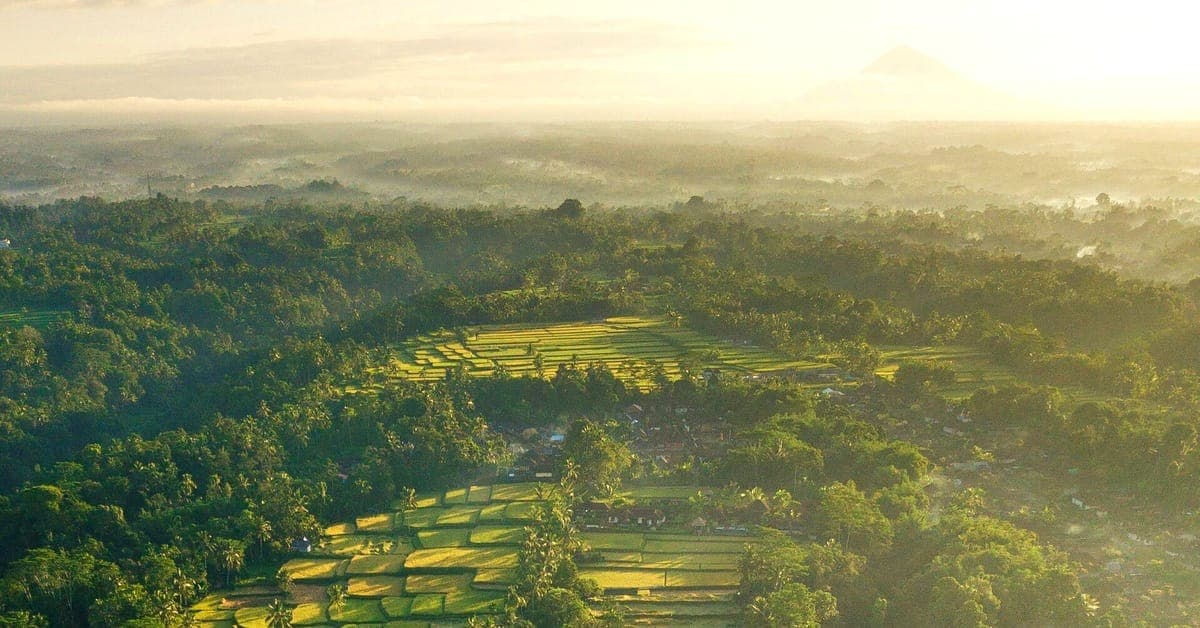
The designs connect to how Balinese people understand the world. The Subak, the irrigation system that UNESCO recognizes as a masterpiece of landscape engineering, works the same way these kites do, balancing forces to keep things stable. Below ground, the Subak distributes water to keep the rice terraces alive. Above ground, the kites balance wind to carry a message skyward.
Bebean (The Fish)
Shaped like a wide, flat fish, the Bebean is the most common kite you’ll see. It moves smoothly through the air, the motion steady and undulating. Symbolically, it’s an offering to the ocean and to the water deities, acknowledging that the sea feeds the island. The broad shape gives it stability, so it’s the kite most village teams fly when they want predictable, controlled flight.
Janggan (The Dragon)
This is the showstopper. The Jangan has a carved head at the top, representing Basuki, a serpent from Hindu mythology believed to stabilize the earth, and a tail that can stretch a hundred meters or more behind it. That massive tail creates drag that takes serious skill to manage. Flying a Jangan is about reading how the tail moves and adjusting constantly. The kite pulls hard through the sky, demanding attention from the ground crew the whole time it’s aloft.
Pecukan (The Leaf)
The smallest and most sensitive of the three, the Pecukan responds to every shift in wind. Flying one requires constant active control, making it more difficult than it looks. Symbolically, it represents the fragility of human life and the need to stay balanced even when everything around you is shifting. It’s the kite experienced flyers choose when they want a real challenge.
| Kite Form | What It Represents | How It Flies | Typical Size |
|---|---|---|---|
| Bebean | Ocean abundance, gratitude to water | Smooth, stable, predictable | 4–10m wide |
| Jangan | Earth’s stability (Basuki the serpent) | Strong pull, requires active management | 3–5m wingspan, 50–120m tail |
| Pecukan | Human fragility, the need for balance | Volatile, demands constant adjustment | 3–6m wide |
Building a Kite for the Festival
A kite doesn’t get built by one person. It’s a banjar project, the neighborhood community working together over weeks to make something that will fly for a few hours and then maybe never fly again.

Bamboo Selection & Preparation
The work starts weeks before the festival with bamboo selection. Experienced builders choose stalks at a specific maturity: too young and they won’t hold tension, too old and they snap. Tradition says you should harvest during certain phases of the lunar calendar, though the practical reason is that mature bamboo is stronger and resists insects better.
Once the bamboo is chosen, craftsmen spend days shaving it down by hand to exact tolerances. The two wings have to match perfectly in weight and flexibility, or the kite won’t fly straight. We’re talking differences of grams mattering here. Once the frame is lashed together with rope, they stretch and stitch cotton fabric over it, usually in red, white, and black, traditional colors used for generations.
The Melaspas Blessing
At this point, it’s just bamboo and cloth. It stays inert until the Melaspas ceremony, a blessing performed by a Hindu priest the night before the festival. Holy water, specific food and flower offerings, chanting. The ritual is meant to clear negative energy and infuse the kite with prana, life force. After that happens, the kite is treated like something sacred. You don’t step over it, you don’t store it carelessly, you handle it with respect.
Transport to the Beach
Getting it to Padang Galak is its own logistics problem. An 8-meter-wide kite doesn’t fit in a car. At dawn on festival day, a crew of men from the banjar loads it onto a truck or carries it down the road by hand. Local traffic slows down to let them pass. People understand what’s happening.
| Stage | When | What Happens |
|---|---|---|
| Bamboo selection | Weeks before | Mature bamboo harvested for strength and flexibility |
| Shaving & lashing | Weeks 2–3 | Bamboo shaved by hand to exact tolerances, lashed into frame |
| Fabric & painting | Week 1 | Cotton cloth stretched and stitched over frame |
| Melaspas blessing | Night before festival | Priest performs purification ritual, kite receives prana |
| Transport to beach | 5:00am, festival day | Banjar coordinates truck or hand-carry to Padang Galak |
| Setup | 8:00am, festival day | Team reassembles components, lays out tail, prepares for launch |
What Happens at Padang Galak
The Sound & Energy
On July 18–19, 2026, Padang Galak is loud in a way that feels alive. Each banjar brings a gamelan orchestra (drums, gongs, cymbals) playing the whole time. It’s traditional music that was historically played before warriors went into battle, and you can feel that energy. It pumps up the teams flying the kites and shows off a little to the other villages. That’s part of it.

The Launch
The launch is where things get real. One person holds the massive kite frame up while a bunch of young guys sprint down the beach gripping a thick rope. When the wind catches, it happens fast. The rope gets tight enough to cut your hands if you’re not careful, which is why teams anchor it to wooden stakes in the sand or just hold it with their bodies. It takes real coordination and strength, and you can see the focus in their faces.

Competitive Flying
Once a kite is up, it stays up for hours if the wind cooperates. The teams manage it from the ground, feeling out how the wind shifts, making small adjustments. If two kites get close to each other, things get interesting. Some strings are coated with abrasive material, and the goal in competitive flying is to cut the other kite’s line and watch it drift away. That’s where the real skill shows.
What Ngayah Actually Means
Everything you’re watching – from the months building the kite, the training, the gamelan music, the launch – nobody gets paid for it. It’s called ngayah, a Balinese practice where people volunteer time and energy for the good of their community or for the gods. The materials cost money. The work takes months. The physical effort is real. But people do it because they believe it matters, not because they’re getting a paycheck.
The festival is people from the same neighborhood doing something together that they’ve been doing for generations, and you’re just there to watch them do it.

The Humming Sound
When the wind is strong and the afternoon heats up, you’ll hear something over the gamelan and the crowd. It’s a deep hum, almost a vibration you feel in your chest as much as hear. That sound comes from the guangan, a curved bamboo bow with a thin ribbon of palm leaf or plastic strung tight across it, mounted on the head of the Bebean and Jangan kites.
As the wind rushes past, the ribbon vibrates and the whole kite becomes like a string instrument. Balinese belief holds that the sound wards off negative spirits and clears the airspace above the island. Whether you believe that or not, the sound is real, and it’s one of the things that makes the festival unmistakable. Once you’ve heard it, you don’t forget it.
This is still happening while luxury resorts are being built down the coast and tour buses are filling up the beaches. The Bali kite festival doesn’t change to fit tourism. It stays exactly what it is, a tradition rooted in agriculture and the seasons, performed by people from the same villages year after year.
Safety & Respect
When you’re at Padang Galak, a few basic things keep everyone safe and keep the practice moving smoothly.
- Stay out of the launch zone. When a team sprints down the beach with a kite, they can’t stop mid-run. If you’re in their path, step clear fast.
- The ropes are dangerous. The thick cords holding the kites down are under serious tension. Don’t cross over them, don’t stand under them, don’t stand right next to an active rope. If one snaps, it moves fast and can hurt someone. Just keep your distance.
- Don’t step over the kite. If a kite is resting on the sand, don’t step over it. In Balinese culture, passing your body over something sacred is disrespectful. It’s a simple rule that shows you understand what’s happening there.
- Give the kites space. The bamboo and cloth are delicate and precisely balanced. Stay at least two meters away from a resting kite. Don’t touch it.
- Let the gamelan musicians work. They move around to support the flyers, and they need clear sightlines to the sky. Don’t block them or crowd their space.
Practical stuff for the day
- Arrive by mid-morning (around 10am) when the winds get steady
- Wear closed-toe shoes; the volcanic sand gets hot and shifts under your feet
- High-SPF sunscreen and reapply it
- Expect traffic getting out of Sanur at the end of the day; leave early or be patient
If watching a centuries-old tradition unfold on the sand has you curious about the rest of the island, our team can help build a Bali itinerary around it, from the beaches of Sanur to diving further afield. Get in touch and we’ll put together a trip around your dates.
Frequently Asked Questions
When does the Bali kite festival happen?
The main events run July 18–19 (Yadnya Cakra Fest Layangan Bali at Padang Galak) and July 23–26 (Rare Angon International Kite Festival at Mertasari Beach). Smaller competitions continue along the coast through September and October, wherever the wind cooperates.
What’s the best place to watch?
Padang Galak Beach, just north of Sanur, is where the Yadnya Cakra events happen on July 18–19. It’s wide enough for multiple teams to launch at once, so you get the full view.
Do I have to pay to watch?
No admission fee. It’s a public, community event. Just bring cash for parking if you drive. Local families manage that.
What should I wear?
Keep it modest. Light pants or long shorts work fine. Skip the swimwear, it stands out and doesn’t fit the vibe. A sarong is respectful and appreciated, but not required on the open beach.
Why do the kites make that droning sound?
The kite has a curved bamboo bow attached to it called a guangan. A ribbon inside vibrates when the wind hits it, making a low hum. That sound is believed to ward off negative spirits.
Can I launch a kite?
No. The kites are sacred objects blessed through religious ceremony, and they need trained hands. Only banjar members fly them. But you’re welcome to watch, cheer, take photos, and be part of the energy from a safe distance.