Updated 19 October 2026
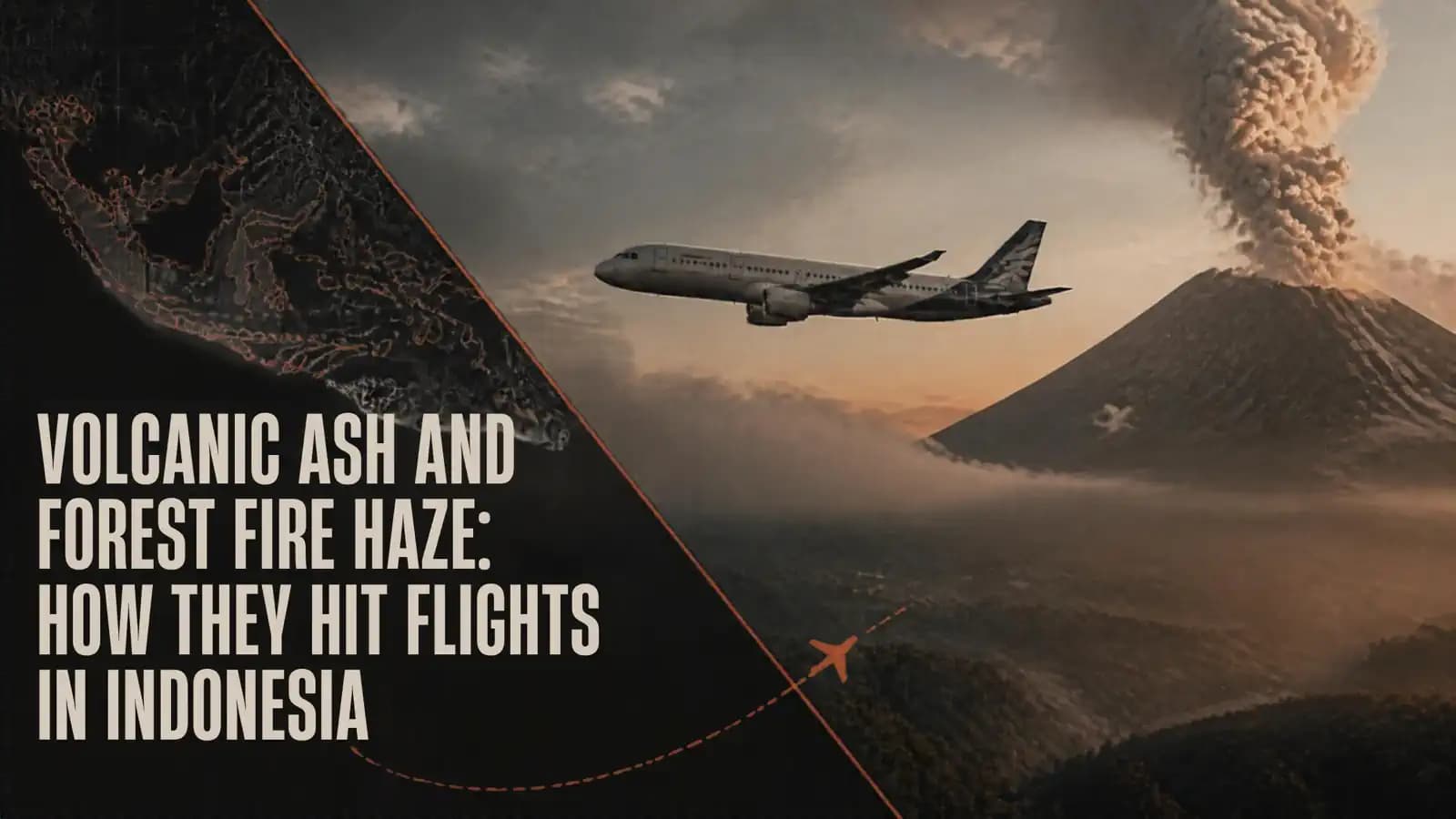
Quick answer: Volcanic ash from Anak Krakatau grounded flights across western Indonesia in September, and the volcano has been back at alert Level III since 9 October. It sits between Java and Sumatra, about 1,100 km west of Bali, so the eruption itself is no danger to visitors. The real risk is to flights, especially anything that connects through Jakarta. Separately, smoke from this season’s forest fires has been closing smaller airports too. If your trip starts with a boat in Komodo, Raja Ampat or the Banda Sea, the single best thing you can do is fly in the day before.
What we saw on 6 September
On the morning of Sunday 6 September, two of our guests were on a long-haul flight into Jakarta when the airport closed. Their plane landed in Medan, in northern Sumatra, and the airline told them to come back the next morning and see. Nobody could say when Jakarta would reopen.
That evening our team and our ticketing partner looked for a route that avoided Jakarta completely. By 22:00 the guests had tickets from Medan to Kuala Lumpur and on to Lombok the next day. They lost one day of their holiday instead of the trip.
The same evening, another guest on the way to an orangutan trip in Borneo was stuck in Malaysia. Our partner in Kalimantan suggested flying from Kuala Lumpur to Bali or Surabaya rather than Jakarta, then on to Pangkalan Bun the next day. They ruled out Semarang because the ash had drifted that far east.
When one hub shuts, Indonesia almost always has another way in. Finding it fast depends on knowing the routes, which is most of what this guide is about.
What is happening at Anak Krakatau now?
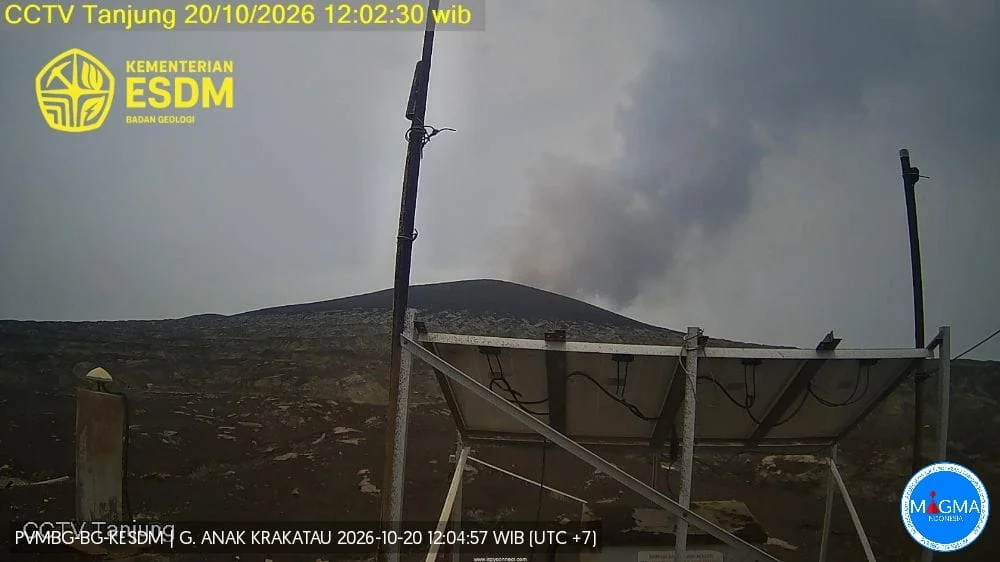
Indonesia’s Geological Agency raised Anak Krakatau from Level II to Level III at 21:00 local time on 9 October 2026. The observatory on the Lampung coast counted 31 eruptions between 5 and 9 October, 26 of them on the 9th (Kompas). It was quiet from 10 to 12 October, then erupted with ash again on 18 October, sending a plume about 500 metres above the summit (MAGMA aviation notice).
This is its second spell at Level III this year, after one that ran from 2 July to 21 September. Visitors may not go within 5 km of the crater, and the agency has asked people on the Banten and Lampung coasts to ignore rumours that the eruption will cause a tsunami.
What do Indonesia’s volcano alert levels mean?
Indonesia’s volcanology centre (PVMBG) uses four levels:
- Normal (Level I): background activity.
- Waspada, or alert (Level II): activity is rising, and small eruptions can happen.
- Siaga, or standby (Level III): a clear increase in activity, or the volcano is erupting.
- Awas, the highest alert (Level IV): an eruption is under way or close.
These levels describe the danger on the ground around the crater. Airlines follow a separate system of aviation ash notices, which is why a Level III volcano can go days without touching a single flight, and then ground hundreds in an afternoon when the wind turns.
Which volcanoes matter for your trip?
| Volcano | Where | Level on 19 Oct 2026 | Why it matters to travellers |
|---|---|---|---|
| Anak Krakatau | Sunda Strait, between Java and Sumatra | III | Flights through Jakarta |
| Semeru | East Java | III | Trips in East Java |
| Merapi | Central Java, near Yogyakarta | III | Yogyakarta trips |
| Lewotobi Laki-laki | East Flores | II | Has closed Labuan Bajo airport and cancelled Bali flights before |
| Rinjani | Lombok | II | Rinjani treks |
| Agung | Bali | I | Closed Bali’s airport in 2017 |
| Batur | Bali | I | Sunrise treks |
Source: MAGMA Indonesia, the official alert page. Levels change, so check it in the week you travel.
Why does volcanic ash ground planes?
Volcanic ash is made of tiny pieces of rock and glass. It melts at around 1,100 °C, well below the roughly 1,400 °C inside a modern jet engine, so it can melt inside the engine and clog it. It also scratches windscreens and blocks the sensors pilots rely on. The US Geological Survey has recorded engines losing power after flying through ash. Whenever a plume crosses a flight path, the authorities close that airspace or the airports beneath it, and reopen only once tests show the air is clear.
What happened in September 2026?
The eruption peaked late on Friday 4 September. A climatologist at Indonesia’s research agency BRIN estimated the ash column at 13 to 17 km (BBC Indonesia), and from Saturday the ash spread over the airspace above Jakarta, Banten, West Java and Lampung.
The transport ministry closed eight airports, including Jakarta’s Soekarno-Hatta and Halim. Soekarno-Hatta, Halim and Bandung reopened at 00:01 on Tuesday 8 September, with the Lampung airports following later (Ministry of Transportation). Over three days, 2,961 flights and about 341,000 passengers were affected (BBC).
Bali’s airport never closed, yet 108 flights there were cancelled or rescheduled between Sunday morning and Monday midday, affecting about 13,000 passengers (Liputan6). The first to go was a Saturday evening flight from Bali to Jakarta (Antara). This is the pattern to remember: an airport can stay open and still lose flights because the planes and crews it depends on are stuck somewhere else.
Has volcanic ash hit Bali and Komodo flights before?
Yes, from other volcanoes:
- Mount Agung, Bali, November 2017. The airport closed on the morning of 27 November and reopened on the afternoon of 29 November (ABC).
- Mount Agung, June 2018. The airport closed for about 12 hours.
- Lewotobi Laki-laki, East Flores, November 2024. Labuan Bajo airport closed, and at least 90 flights to and from Bali were cancelled in one day (Antara).
- Lewotobi Laki-laki, June 2025. Bali flights were cancelled again, which we covered in our June 2025 eruption update.
Closures usually last from a few hours to two or three days, while the knock-on delays can run on for days after that.
Ash isn’t the only thing grounding flights in Indonesia this year. At the end of September we wrote about the forest fires in Borneo, with what our team on the Sekonyer River around Tanjung Puting has seen week by week. The smoke from those fires has been closing airports too.
Can haze from forest fires disrupt flights too?
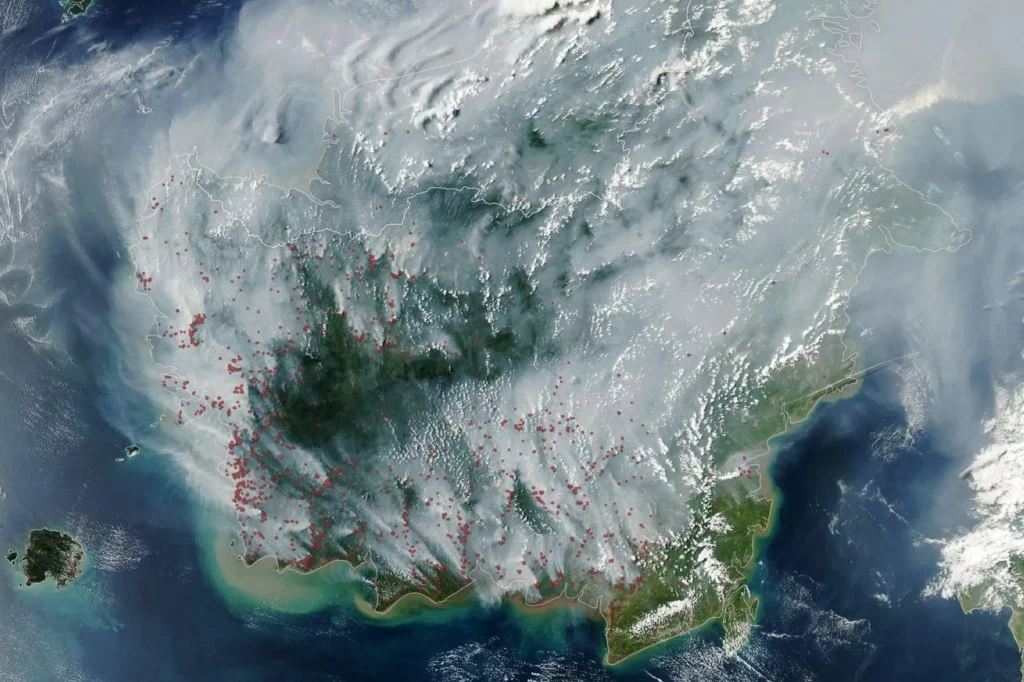
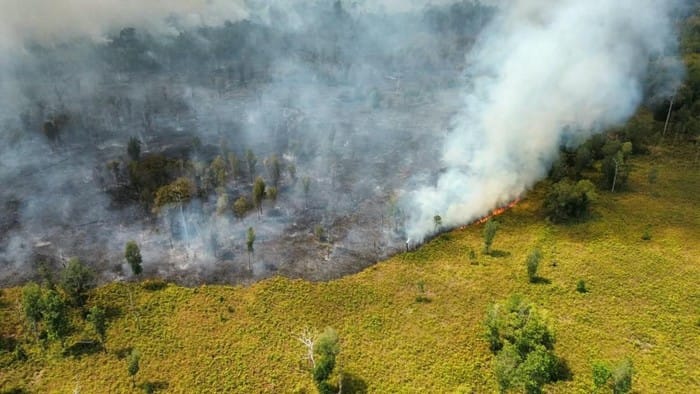
Every dry season, fires on peatland in Borneo and Sumatra send thick smoke over the airports nearby. This haze has nothing to do with the volcanoes, and it stops planes in a different way. It doesn’t harm engines the way ash does, but it hides the runway, and when pilots can’t see far enough they can’t land.
2026 is a bad year for it. Indonesian authorities call it the worst fire season in 11 years, and the smoke has drifted as far as Malaysia and Singapore. We’ve seen the effect first-hand at Pangkalan Bun, the airport for Tanjung Puting in Central Kalimantan:
- On 2 September, one of our guests’ flights from Jakarta couldn’t land in the morning haze and turned back to Semarang. It flew in again later that morning, and they were on the boat by lunch.
- On 28 September, Batik Air cancelled all three of its departures after smoke cut visibility at the airport to 1,200 metres.
Further east, our ticketing partner told us that on 15 October two early-morning flights into Sorong, the gateway to Raja Ampat, turned away to Jayapura and Biak, most likely because of haze or fog around the airport.
Haze is thickest at dawn, so early arrivals are the most exposed. Rain usually ends the fire season in October or November, but this year Indonesia’s weather agency expects El Niño to last into early 2027, so the rains may come late.
What it means for your trip
Komodo (Labuan Bajo)
The boats we book most often collect guests from their Labuan Bajo hotel between about 08:30 and 10:00 on the first morning. The first direct flight from Bali landed at 08:20 on the dates we checked, and flights from Lombok don’t land until after midday. In other words, flying in on the morning of departure leaves you no room for even a short delay. Fly in the day before.
The volcano to watch on this route is Lewotobi in East Flores, not Krakatau. Bali to Labuan Bajo flights don’t pass through Jakarta, so the September ash barely touched them.
Komodo to Lombok, and Lombok trips
Boats sailing from Komodo to Lombok usually arrive at Kayangan Harbour on Lombok’s east coast around midday on the last day. If you have a flight out of Lombok the same day, leave a generous gap, because the drive to the airport and any delay at sea add up. On the Lombok side, keep an eye on Rinjani, which sits at Level II.
Raja Ampat (Sorong)
Most flights from Jakarta to Sorong are overnight red-eyes that land between about 05:20 and 06:35, and the Makassar flights land around 06:00 and 07:00. These are exactly the routes that suffer when Jakarta closes, and early-morning arrivals are also the ones hit by haze and fog at Sorong, as on 15 October. Garuda’s direct flight from Bali lands around midday and avoids Jakarta completely, which makes it a useful option if you’re already in Bali.
Whichever way you come, spend the night before your liveaboard in Sorong. Our Sorong to Waisai ferry guide covers the onward trip for resort stays.
Banda Sea (Ambon)
Ambon flights from Jakarta are mostly overnight too, landing between about 06:00 and 07:15, with one Garuda flight arriving in the afternoon. Any Jakarta closure reaches Ambon the same day, so plan at least one night in Ambon before you board.
Borneo (Pangkalan Bun)
Flights come in from Jakarta, Surabaya and Semarang. In September we saw both a morning diversion and a full day of cancellations because of smoke. If you can, take a later flight or arrive the day before. The good news is that the orangutan feedings at Camp Leakey (14:00) and Tanjung Harapan (15:00) fall well after the morning haze usually lifts.
What happens if you miss your boat?
A liveaboard leaves on schedule with the guests who are on board. In the boat agreements we work with, an official sailing ban from the harbourmaster is grounds for a reschedule or refund, but a cancelled flight usually isn’t, because the boat still sails. Catching up with the boat later is rarely possible.
That is why the spare night matters so much, and why travel insurance is worth buying as soon as you book. Many policies treat an eruption as a “known event” once it’s in the news or an alert has been issued, and won’t cover it after that date. Read what your policy says about delays and missed departures.
How we plan trips around volcanic ash and forest fire haze
When we put a trip together, we build in the spare night before any boat departure and avoid tight same-day connections into Labuan Bajo, Sorong or Ambon. Where we can, we book connections on one ticket, so the airline has to rebook you if a leg is cancelled.
On the day, check your flight with the airline before you leave for the airport. Indonesia’s airport operator, InJourney Airports, answers on 172 or on WhatsApp at 0816 770 172.
If something goes wrong, message us straight away and keep your receipts for your insurer. We’ll work with our ticketing partner to find another route and move your hotels, transfers and guides around it, the same way we did on 6 September.
Planning a trip for the coming months? Send us your dates and we’ll plan the flights and the spare night with you from the start.
Updates
- 19 October 2026: Anak Krakatau remains at Level III. It erupted with ash on 18 October, with a plume about 500 m above the summit.
- 15 October 2026: Two early flights into Sorong turned away to Jayapura and Biak, most likely because of haze or fog around the airport.
- September 2026: Forest fire haze cut flights at Pangkalan Bun on 2 and 28 September.
Frequently asked questions
Yes. Anak Krakatau is about 1,100 km west of Bali, and Bali’s own volcanoes, Agung and Batur, are at Level I (Normal). The risk is flight delays, mostly on routes through Jakarta.
Only if ash drifts across your route or airport. In September 2026 Bali’s airport stayed open, but 108 flights there were still cancelled or rescheduled over two days.
No. The haze comes from forest and peatland fires, mostly in Borneo and Sumatra, and is worst in the dry season. Volcanic ash is a separate problem that comes from eruptions.
Yes. Peatland smoke can cut visibility below what pilots need to land, mostly in Kalimantan and Sumatra. In 2026 it disrupted Pangkalan Bun airport on 2 and 28 September. Early-morning flights are the most exposed.
It’s the second highest of Indonesia’s four alert levels: activity is clearly rising or the volcano is erupting. At Anak Krakatau, nobody may enter a 5 km zone around the crater.
Usually a few hours to three days. Jakarta’s main airport closed for about two days in September 2026, and Bali’s closed for about two and a half days during the 2017 Agung eruption.
We don’t recommend it. Komodo boats usually collect guests between 08:30 and 10:00, and the first Bali flight lands around 08:20. Fly in the day before.
The boat usually sails without you, and a cancelled flight isn’t normally grounds for a refund. A spare night and travel insurance bought early are your best protection.
On MAGMA Indonesia (magma.esdm.go.id), the official site of Indonesia’s volcanology centre, which posts daily reports.