Borneo
Kalimantan is the Indonesian two-thirds of Borneo, the third largest island on the planet, and the easiest place in the world to watch wild orangutans from a slow boat. Most of a trip here happens on the water and under the forest canopy: river cruises on wooden klotok boats, feeding-station visits, Dayak villages, and some of the oldest rainforest on Earth.
Borneo is shared by three countries. Indonesia holds the south and the bulk of it as Kalimantan, Malaysia has Sabah and Sarawak in the north, and tiny Brunei sits on the northwest coast. When people picture “Borneo orangutans,” most are actually picturing Kalimantan, and specifically the river trips out of Central Kalimantan. Here is what the island is really about, and how we put a trip together.
Why come to Kalimantan
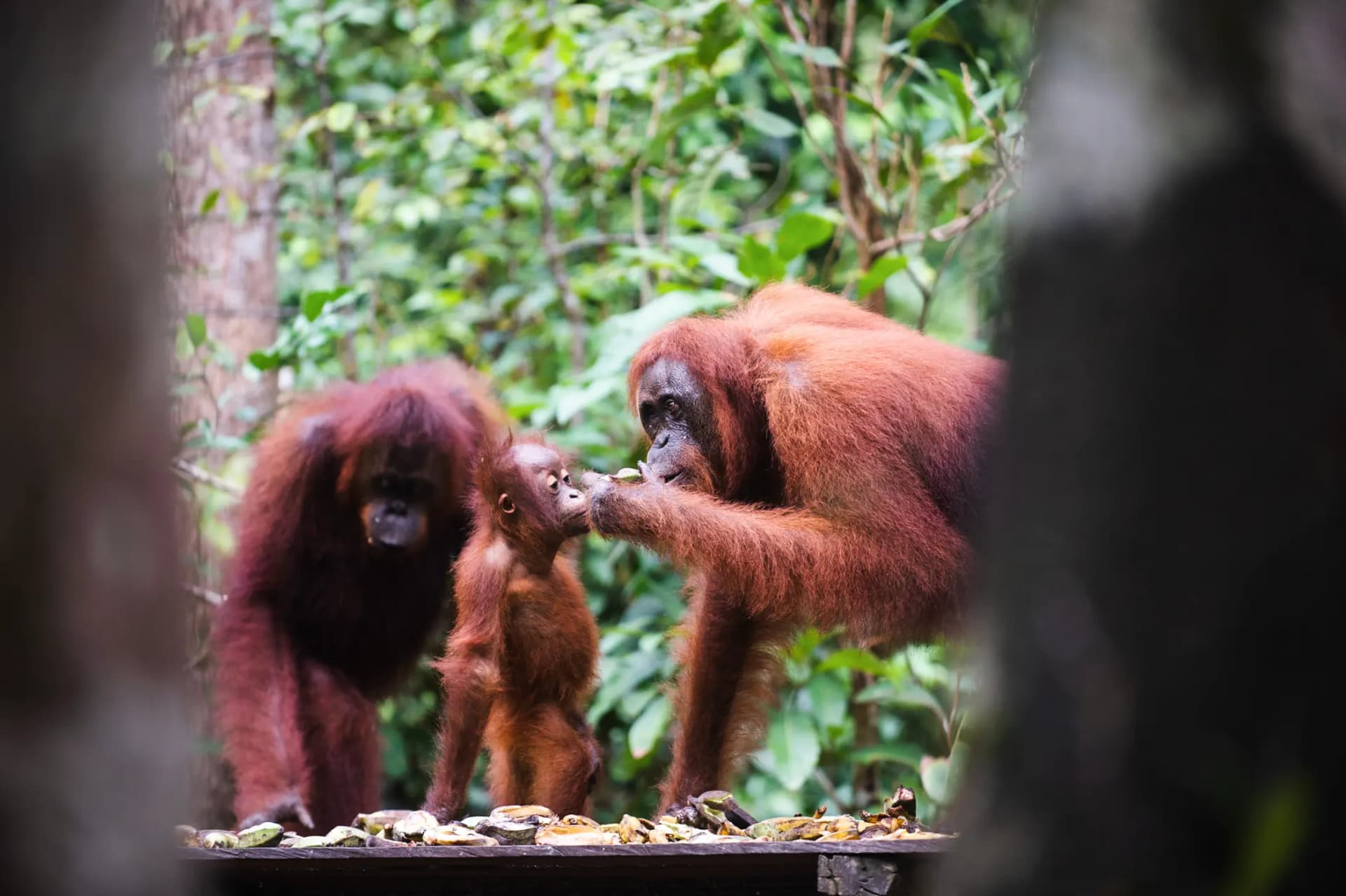
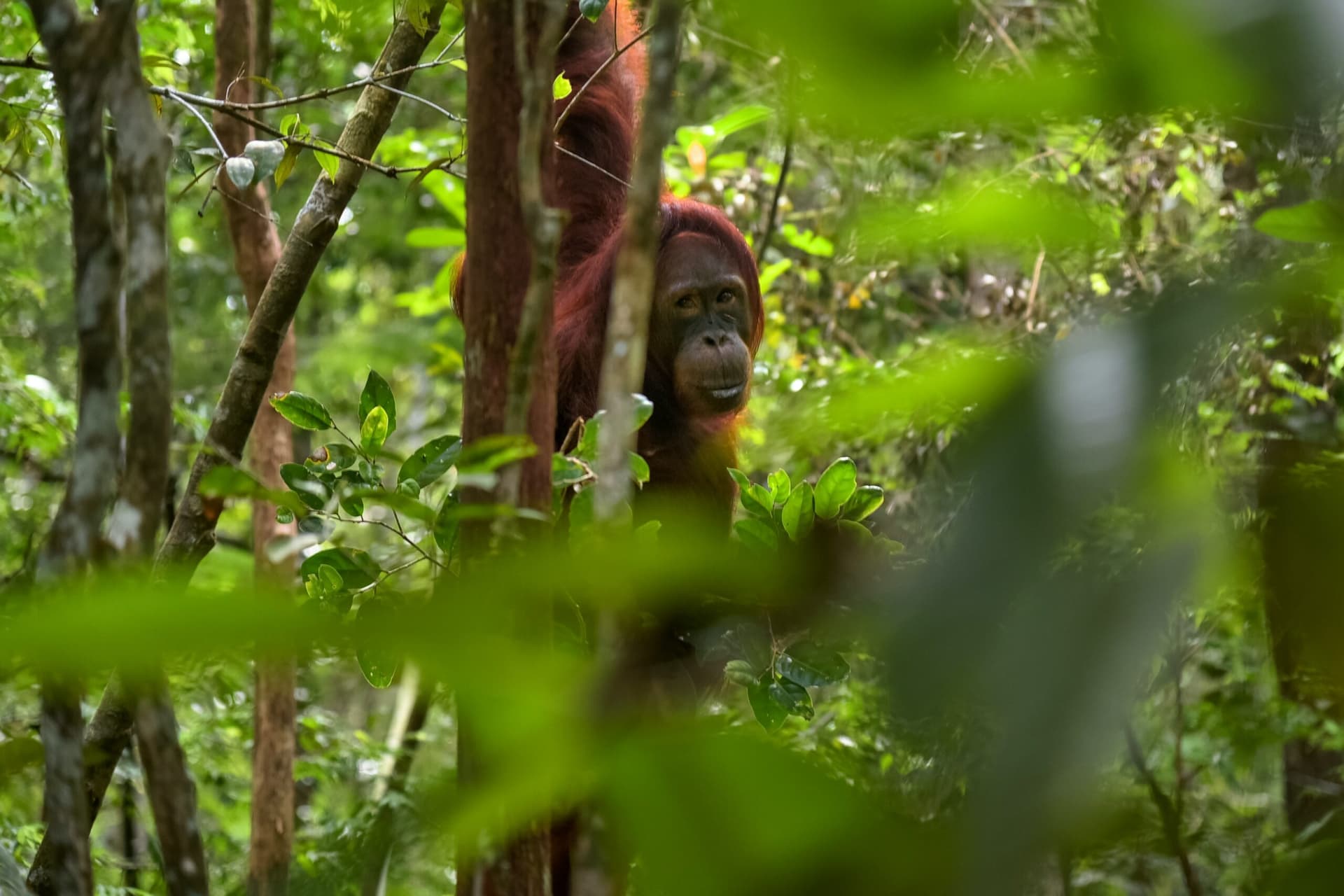
This is a wildlife and wilderness destination first. The headline is the orangutan, found in the wild only on Borneo and Sumatra, and Kalimantan is where you get the classic up-close river experience. But the forest holds far more than that: proboscis monkeys with their odd long noses, gibbons, macaques, hornbills, sun bears, clouded leopards (rarely seen), and thousands of plant species, including the giant rafflesia flower.
The other half of the draw is the river itself. There are few roads into the deep forest, so travel happens by boat. You sleep on the deck of a klotok as it chugs upriver, you wake to mist on the water and the calls of gibbons, and you watch the bank for movement. It is a slow, immersive kind of trip, the opposite of a checklist tour, and it suits travellers who want time in nature over a packed itinerary.
Tanjung Puting and the orangutans
The centre of gravity for most Kalimantan trips is Tanjung Puting National Park in Central Kalimantan, a UNESCO Biosphere Reserve since 1977, reached by a short flight to Pangkalan Bun and then a transfer to the river port at Kumai. This is the most established orangutan-viewing destination in Indonesia, built around Camp Leakey, the research and rehabilitation station founded in the 1970s.
The standard way to see it is a multi-day river cruise on a klotok up the Sekonyer River, stopping at feeding platforms where rangers put out bananas and rehabilitated orangutans come in from the forest. You also pass wild groups in the trees along the bank, proboscis monkeys at dusk, and clouds of fireflies after dark. Nights are spent on the boat, sleeping under a mosquito net on the open deck with the crew cooking onboard. Our Orangutan Tour in Tanjung Puting runs this trip with a guide and a private boat, so the pace is yours rather than a fixed group schedule.
This is the single most reliable wild-orangutan experience in the country. If you only have a few days in Kalimantan and one thing you want to see, this is it.
Rivers, Dayak villages and the deeper forest
Beyond the headline park, Kalimantan opens into much wilder, less-visited country, and this is where the trips get interesting for repeat travellers or anyone who wants to go past the standard route.
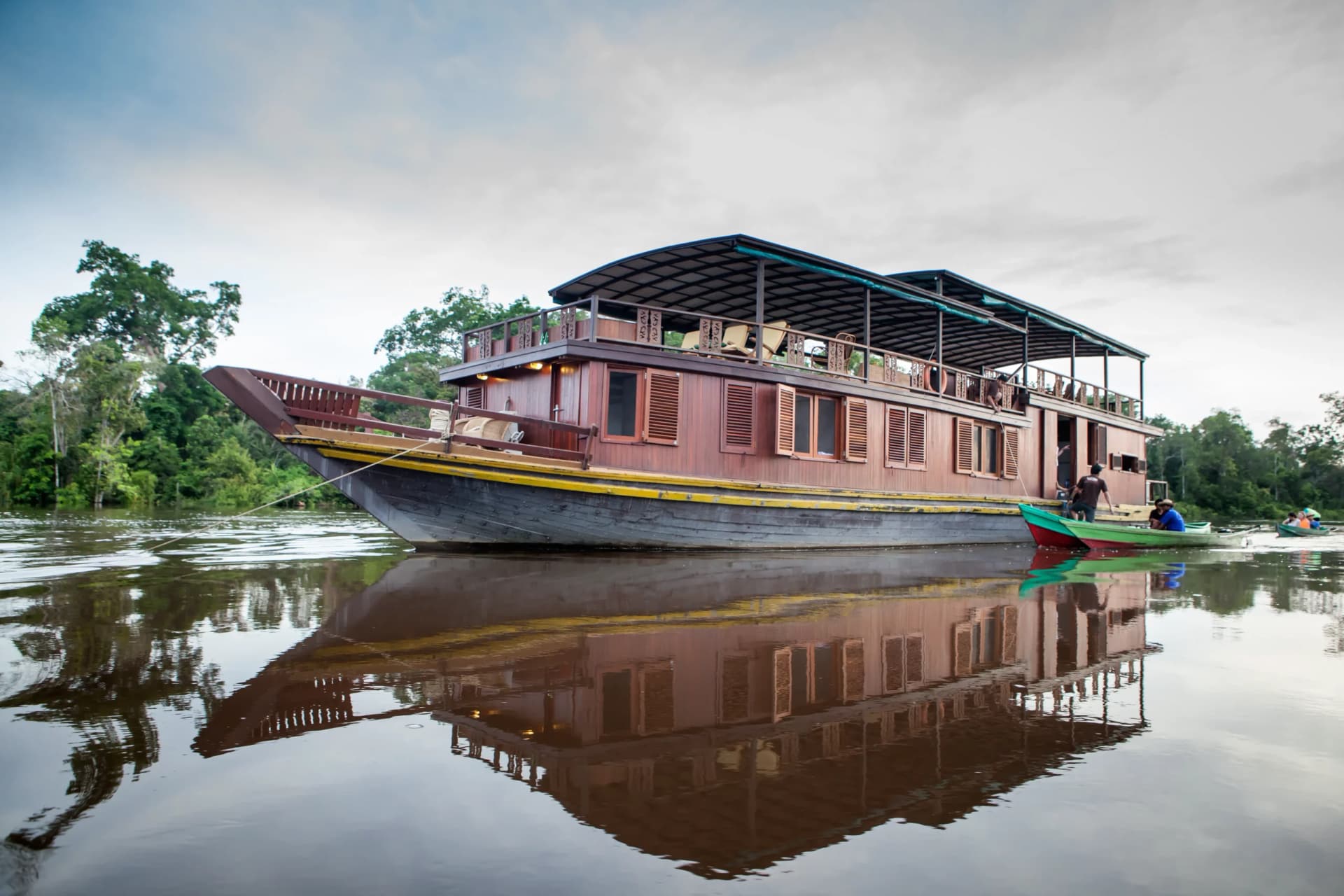
The Rungan and Kahayan rivers around Palangka Raya in Central Kalimantan offer a different kind of cruise: more remote, more focused on culture and on rescued orangutans on protected forest islands. Our Rahai’i Pangun Orangutan and Dayak Village Cruise runs on a comfortable river boat and mixes wildlife with visits to riverside Dayak communities, where you see daily life, traditional longhouses in places, and the relationship between the forest and the people who have always lived in it.
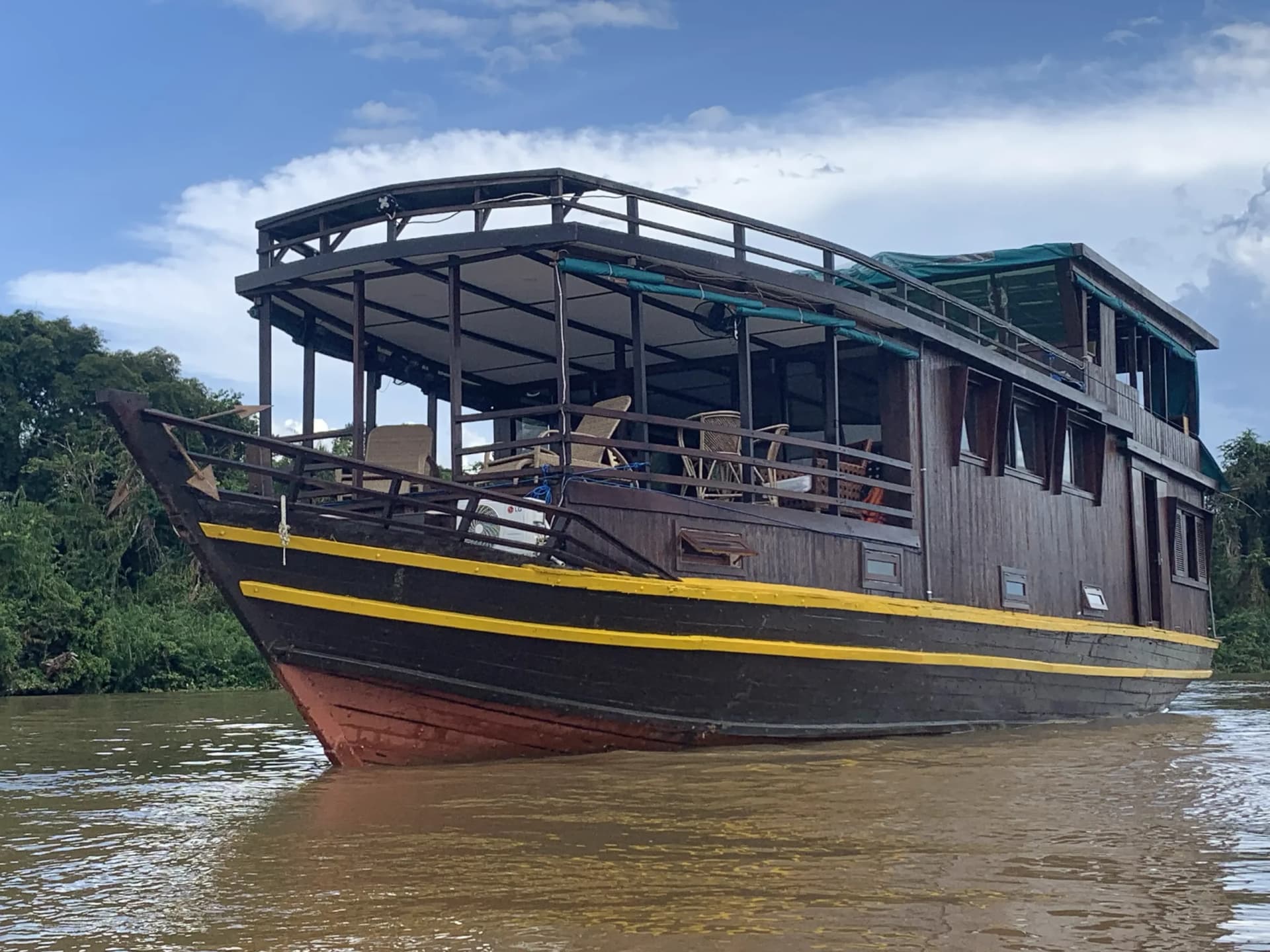
Further into the peat-swamp forest, the Katingan River and Sebangau National Park Adventure goes after one of Kalimantan’s lesser-known corners. Sebangau protects a huge tract of peat-swamp forest with one of the largest remaining wild orangutan populations anywhere, plus gibbons and a long bird list. It is a quieter, more conservation-minded trip than Tanjung Puting, and it suits travellers who want the forest without the boat traffic at the busier feeding stations.
The Dayak are the indigenous peoples of Borneo’s interior, a broad group of distinct tribes with their own languages, longhouse architecture, river-based farming, and a history that includes the famous (and long-past) headhunting traditions. Today a village visit is about meeting people, seeing craft and weaving, and understanding how forest life works, not a staged performance. A good guide makes the difference between a respectful visit and an awkward one, which is why we keep these small and local-led.
The five regions of Kalimantan
Kalimantan splits into five provinces, and they are genuinely different from each other. A quick orientation, because “Borneo” covers an enormous area.
- Central Kalimantan (Kalimantan Tengah): the orangutan heartland. Tanjung Puting, the Sekonyer and Kahayan rivers, Sebangau, and the city of Palangka Raya. This is where most first trips go.
- East Kalimantan (Kalimantan Timur): the Mahakam River, Kutai National Park, and the offshore Derawan Islands archipelago for snorkelling and diving. Also home to Balikpapan, the main eastern gateway, and Indonesia’s new capital, Nusantara, now under construction.
- West Kalimantan (Kalimantan Barat): Pontianak (a city that sits right on the equator), the Kapuas, Indonesia’s longest river, and remote national parks like Betung Kerihun and Danau Sentarum’s lake-and-wetland system.
- South Kalimantan (Kalimantan Selatan): Banjarmasin and its floating markets, where traders still sell fruit and food from boats at dawn, plus the Meratus mountains and bamboo rafting around Loksado.
- North Kalimantan (Kalimantan Utara): the newest and least-visited province, mountainous and forested, bordering Malaysia, with the Kayan Mentarang highlands and strong Dayak culture.
Banjarmasin and the floating markets
If you want a city and culture leg rather than only forest, Banjarmasin in South Kalimantan is the most rewarding. Built on a delta and threaded with canals, it has earned the nickname “city of a thousand rivers.” The reason to come is the floating markets: at Lok Baintan and Muara Kuin, traders gather in narrow wooden boats around dawn to sell produce, snacks and coffee, paddling between each other in a centuries-old morning routine. You go out by boat in the half-light and drift through it. It is one of the more atmospheric mornings in Indonesia, and it photographs beautifully without being staged for tourists.
From Banjarmasin you can also push inland to the Meratus mountains and Loksado for bamboo rafting down the river, rainforest treks and more Dayak villages, a good add for travellers who want some legwork rather than only deck time.
Food in Kalimantan
Kalimantan’s food leans on the river and the forest. Soto Banjar, a fragrant chicken soup with egg, perfumed with clove and cinnamon, is the South Kalimantan signature and worth seeking out. Ketupat Kandangan (rice cakes in a coconut-and-fish broth) and freshwater fish grilled or in spicy sauces show up everywhere along the rivers. In the markets you will find tropical fruit you may not have met before, and onboard a klotok the crew typically cooks simple, fresh Indonesian food, fried fish, tempeh, vegetables and sambal, eaten on deck as the forest goes by.
A note on diving: head to the Derawan Islands
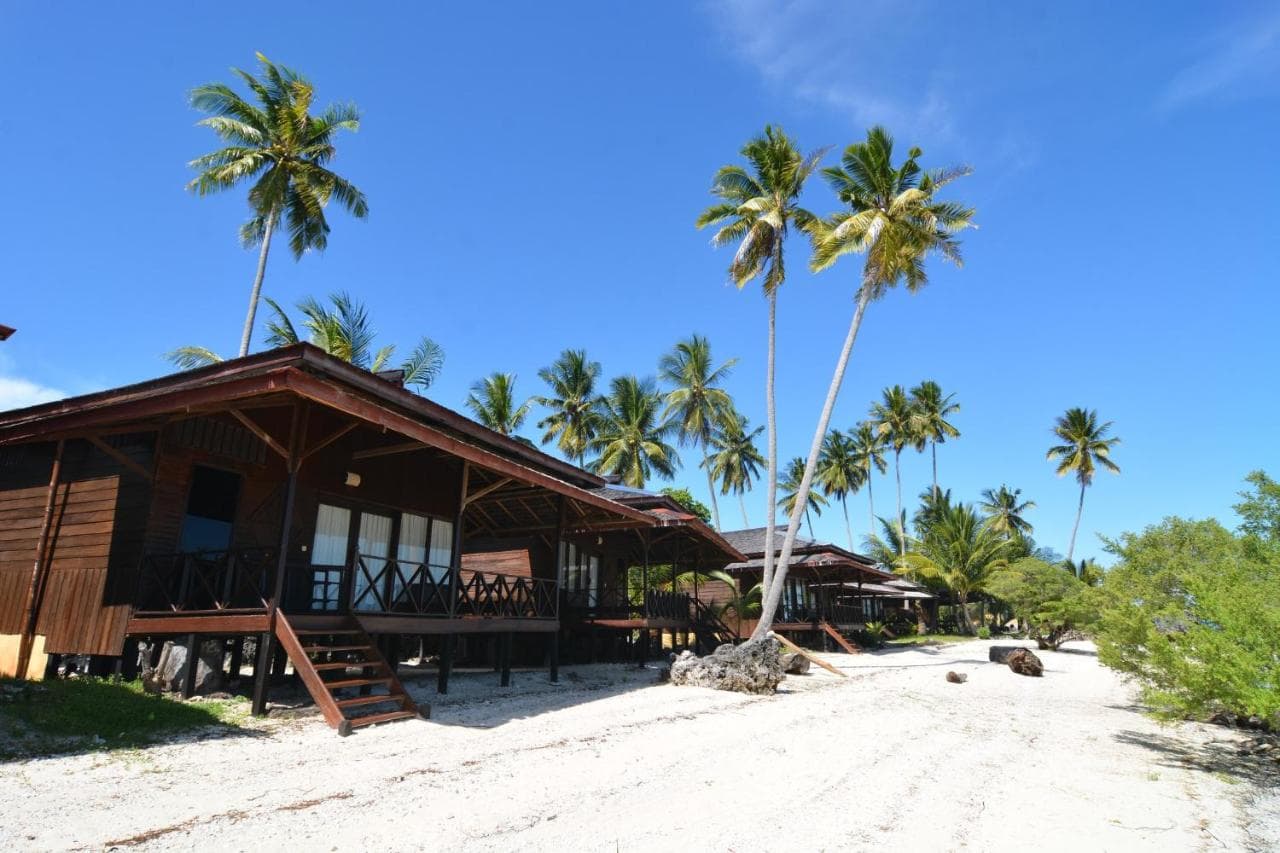
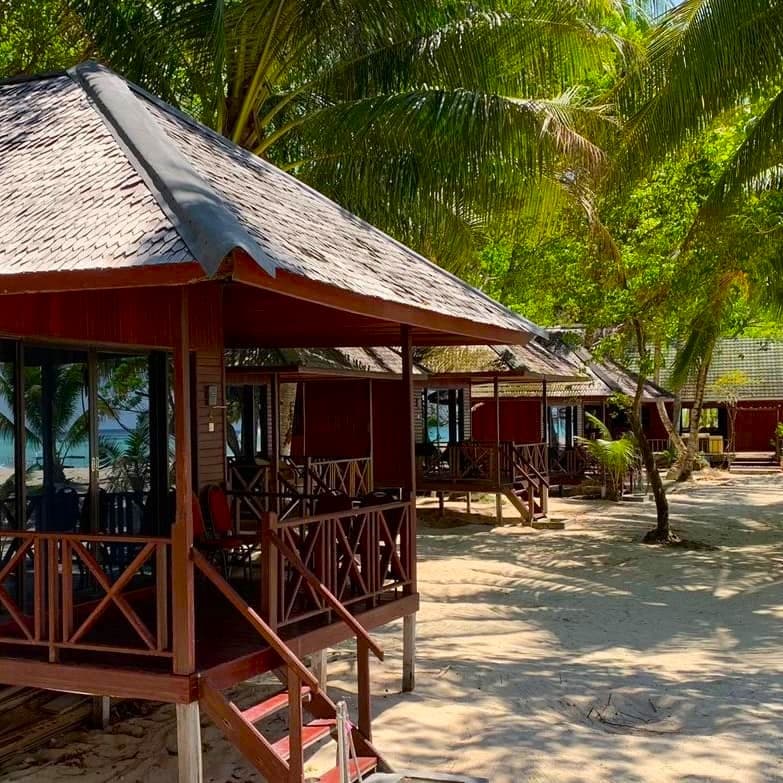
Borneo is not a diving destination in the way Komodo or Raja Ampat are, and the river trips that define Kalimantan have nothing to do with scuba. There is one real exception. Off the northeast coast of East Kalimantan, the Derawan Islands (Derawan, Maratua, Kakaban and Sangalaki) offer genuinely good diving and snorkelling: green turtles in large numbers, manta rays around Sangalaki, schooling barracuda, and the famous stingless jellyfish lake on Kakaban, where you snorkel among thousands of harmless jellyfish in a landlocked marine lake.
If diving is your main reason to travel, the Derawan Islands are the part of Borneo to focus on, and we treat them as their own destination. Talk to us about combining a Kalimantan forest trip with a few days in Derawan, since the two sit on the same island but feel like completely different holidays.
How long you need, and how it fits a bigger trip
A focused Tanjung Puting orangutan cruise works as a tight 3 to 4 day add-on: fly in to Pangkalan Bun, two or three nights on the river, fly out. That is the most common way people do Kalimantan, often bolted onto a wider Indonesia trip.
Give it 5 to 7 days and you can combine the orangutans with a deeper river leg (Sebangau or the Kahayan), or pair Central Kalimantan with Banjarmasin and the floating markets in the south. Add the Derawan Islands and you are looking at 10 days or more for forest plus reef.
Because the main gateways (Pangkalan Bun, Balikpapan, Banjarmasin, Pontianak) connect through Jakarta, Surabaya or Bali, Kalimantan slots neatly into a multi-island itinerary. A classic pairing is the orangutans here followed by the dragons and reefs of Komodo, or Borneo’s forest before a diving week elsewhere in the archipelago.
Best time to visit
Kalimantan is equatorial, so it is warm and humid year round, and it rains in every month. The practical split is between a drier and a wetter stretch.
The drier season, roughly June to September (stretching into October in places), is the most comfortable time for river cruises and forest walks, with lower water and easier wildlife spotting. This is the prime window for Tanjung Puting and the orangutans.
The wetter season, November to March, brings heavier and more frequent rain. Trips still run, the forest is at its lushest, and there are fewer visitors, but expect wet afternoons and higher rivers. Wildlife is present all year, so the choice is mostly about comfort and water levels rather than whether you will see anything.
Getting there and getting around
There is no single “Borneo airport.” You fly to the gateway for the region you want:
- Pangkalan Bun (PKN) for Tanjung Puting and the orangutans, usually via Jakarta, Surabaya or Semarang.
- Balikpapan (BPN) for East Kalimantan, the Mahakam and onward connections to the Derawan Islands.
- Banjarmasin (BDJ) for the floating markets and South Kalimantan.
- Pontianak (PNK) for West Kalimantan and the equator.
Once you arrive, much of the travel is by boat, and roads in the interior are limited and slow. This is a place where a guide and a planned route matter more than usual: the orangutan parks need permits and boat charters arranged in advance, and the rewarding river trips are not the kind of thing you can easily improvise on the ground. We handle the flights, the klotok, the guide and the permits so the trip actually runs.
Frequently asked questions
A focused orangutan river cruise in Tanjung Puting takes 3 to 4 days, including the flights in and out. Give it 5 to 7 days to add a deeper river leg or the Banjarmasin floating markets, and 10 days or more if you want to combine the forest with diving and snorkelling in the Derawan Islands.
The drier season, roughly June to September, is the most comfortable for river cruises and forest walks and is prime time for orangutan spotting. It rains year round here, so the wetter season (November to March) still works, just with heavier afternoon rain, fewer visitors and a greener forest.
The classic place is Tanjung Puting National Park in Central Kalimantan, reached via Pangkalan Bun, where you cruise the Sekonyer River by klotok boat and visit feeding stations including Camp Leakey. Quieter alternatives include the peat-swamp forest of Sebangau National Park and the river islands around Palangka Raya.
A klotok is a traditional wooden river boat. On a multi-day cruise you travel, eat and sleep onboard, with mattresses and mosquito nets laid out on the open deck at night and the crew cooking fresh meals. It is basic but comfortable, and being on the river after dark, with fireflies and forest sounds, is a big part of the appeal.
There is no single Borneo airport. Fly to Pangkalan Bun for the orangutans, Balikpapan for East Kalimantan and the Derawan Islands, Banjarmasin for the floating markets, or Pontianak for the west. These connect through Jakarta, Surabaya, Semarang or Bali, so Kalimantan fits easily into a wider Indonesia trip.
Travellers who want wildlife and wilderness over beaches and nightlife: anyone keen to see wild orangutans, river and forest enthusiasts, families with older children who like nature, photographers, and people who enjoy slow, immersive travel. It is not a beach or party destination.
Not in Kalimantan’s rivers and forests, which are the main reason to come. The exception is the Derawan Islands off East Kalimantan, with turtles, manta rays around Sangalaki, and the stingless jellyfish lake on Kakaban. If diving is your priority, focus on Derawan, which we treat as its own destination, and ask us about pairing it with a forest trip.
Yes, and most people do. The gateways connect through Jakarta, Surabaya or Bali, so the orangutans pair naturally with Komodo for dragons and mantas, or with a diving week elsewhere in the archipelago. The Derawan Islands can be added on within Borneo itself for a forest-and-reef trip.
Your adventure starts here
Plan your trip to Borneo
Tell us what you want to see and we'll craft the perfect itinerary, usually within 24 hours.
Plan My Trip →Enquire About This Destination
Any question, special request or custom itinerary, we reply within 24hrs.
Tours & Activities in Borneo
Rahai’i Pangun Orangutan & Dayak Village Cruise
The Katingan River & Sebangau National Park Adventure