Flores
Planning a trip to Flores? Most travelers book a Komodo liveaboard, spend three nights around the dragons and the reefs, and fly home from Labuan Bajo thinking they’ve seen the island. They’ve seen the westernmost tip. Flores runs 700 kilometers east from Labuan Bajo to Larantuka, and the Trans-Flores Highway that spans it crosses four distinct cultures, the Manggarai, Ngada, Lio, and Sikka, each with their own language, architecture, and weaving. See the Flores dive liveaboard dates for trips east of Komodo.
Flores runs roughly 700 kilometers from Labuan Bajo in the west to the eastern coast near Larantuka, splitting naturally into two halves: the diving and the dragons around Komodo National Park in the west, and a volcanic highland interior running east through Ruteng, Bajawa, and the Kelimutu lakes, crossing four distinct cultures along the way, the Manggarai, Ngada, Lio, and Sikka, each with their own language, architecture, and weaving. Most visitors only see the first half.
Labuan Bajo and The Western Gateway
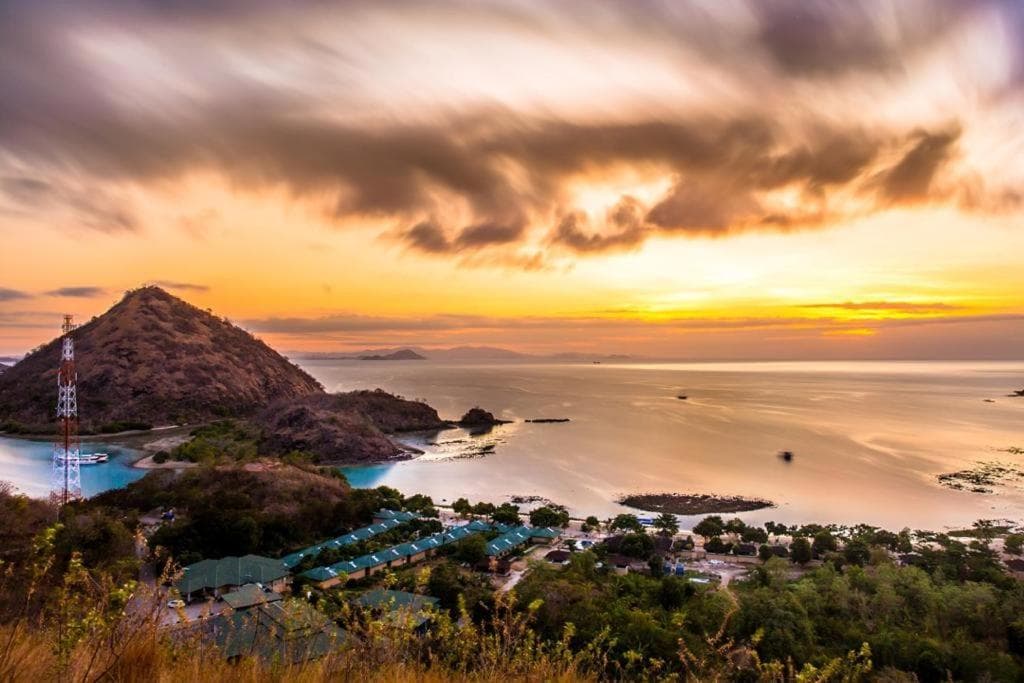
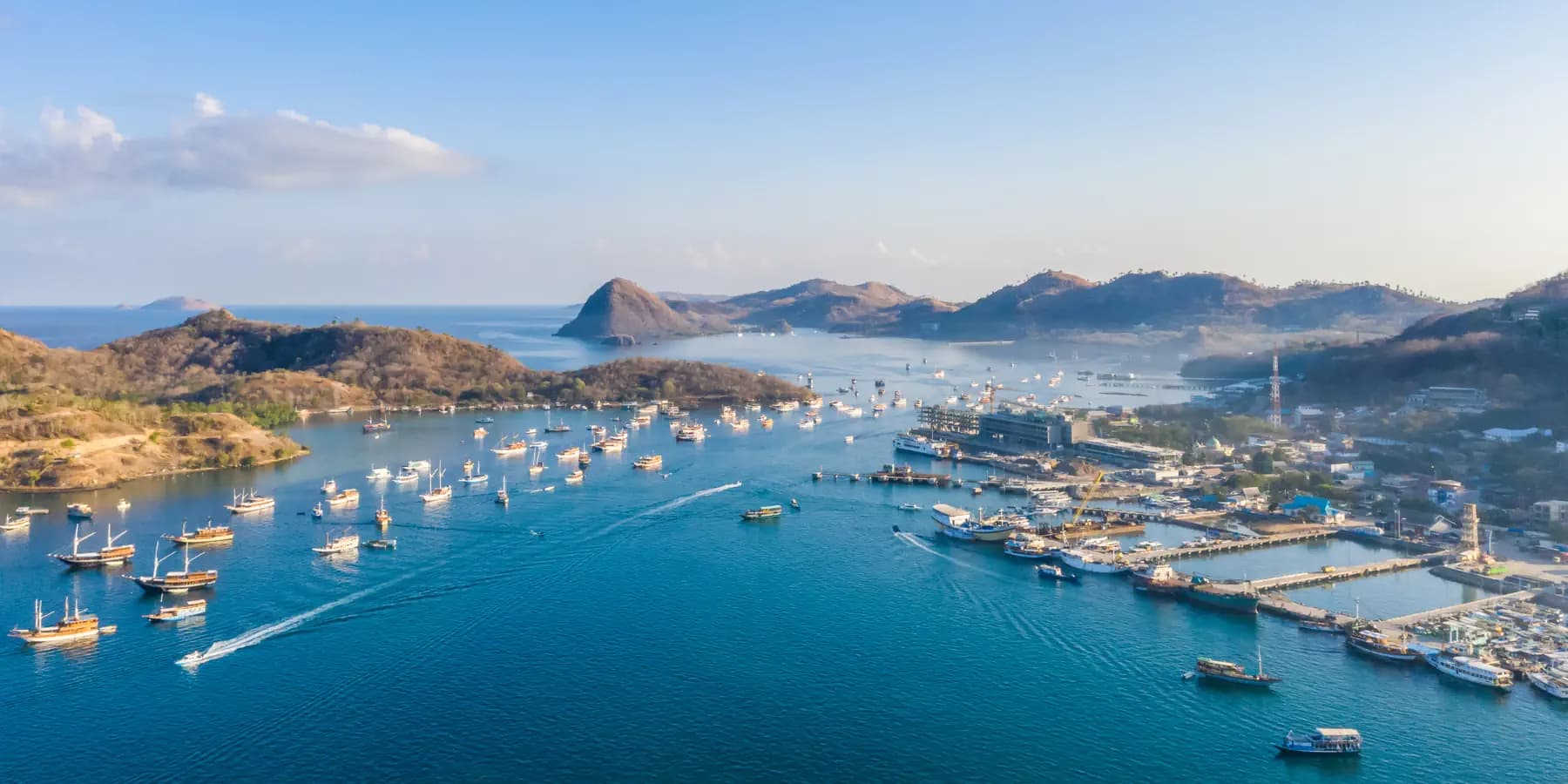
Labuan Bajo sits on the western tip of Flores, a former fishing village that now runs as the tactical base for both Komodo National Park and the overland route east into the highlands. The harbor stacks wooden outriggers next to modern speedboats and liveaboards, the ridge behind it holds a growing lineup of hotels and hilltop bars, and the whole town is small enough to cover on foot. Plan on two or three nights here, and think about them structurally, one land night to arrive, decompress and load up before the boats, and one or two sea facing nights bookending whatever Komodo option you choose.
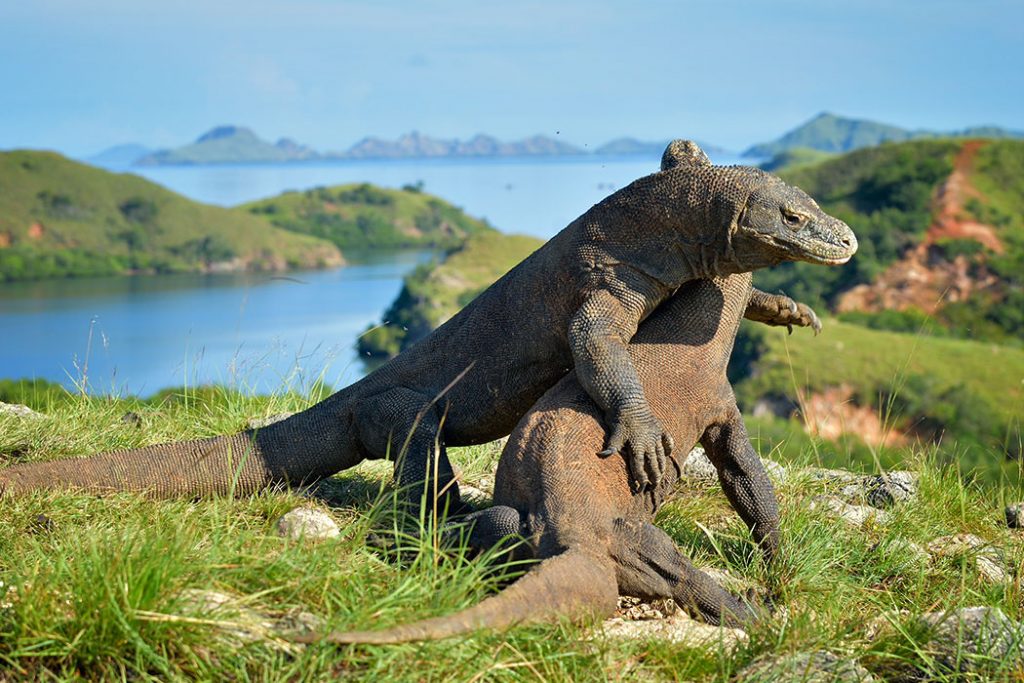
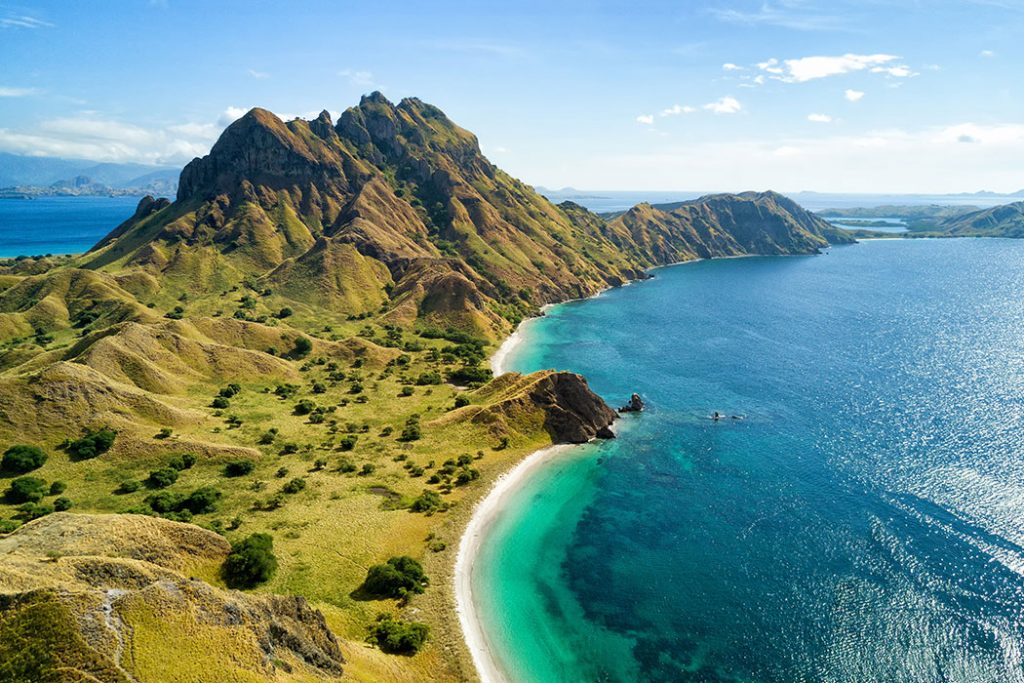
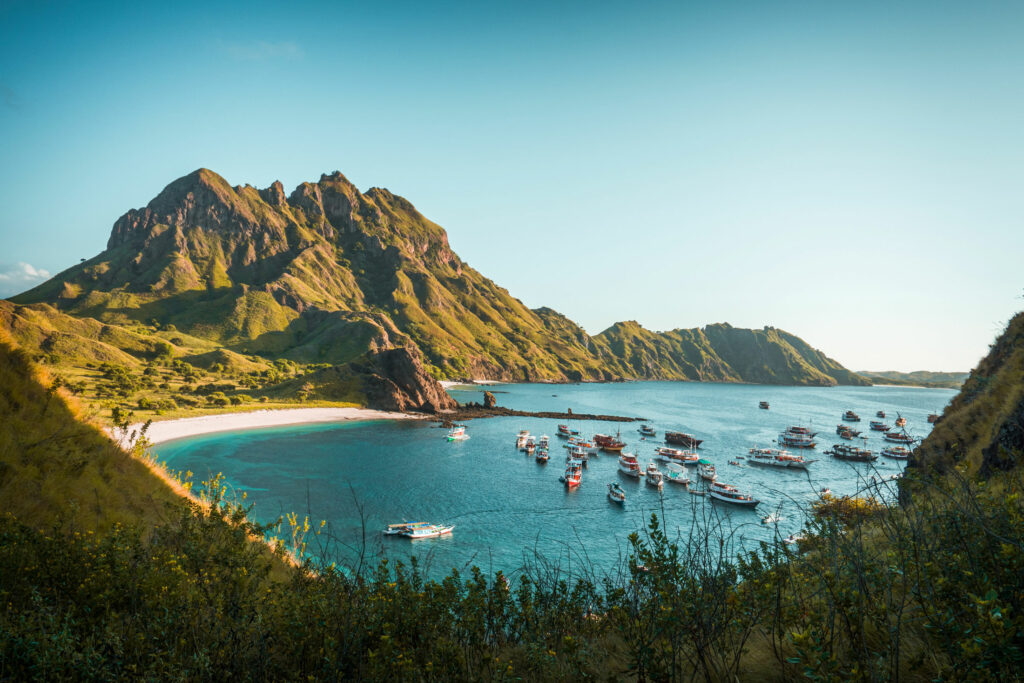
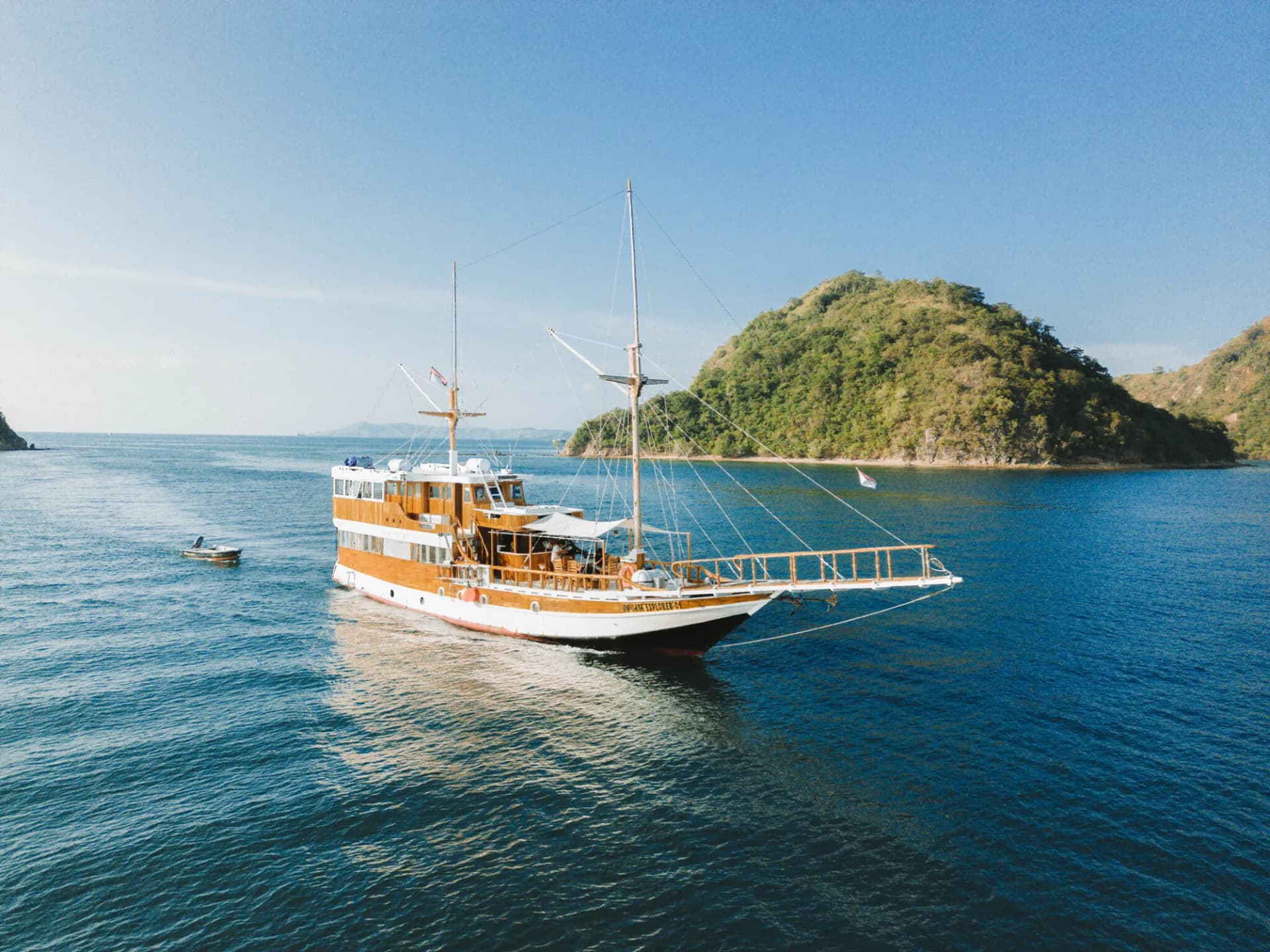
The split that works best for most travelers is a single day trip to Komodo if your window is tight (dragons on Rinca or Komodo Island, a snorkel stop, Pink Beach, back to port by evening), or a 3 day liveaboard through Komodo if you want the quieter corners the day boats never reach. The liveaboard is the one to prioritize if you can spare the nights, it puts you at Manta Point at first light, sleeps you offshore in the archipelago, and returns you to Labuan Bajo in time for a final town night before you fly out or turn back east.
The Trans-Flores Road
This is the part of Flores most visitors skip, and the part that stays with the ones who do it. Travel times are dictated by topography, not distance. The cross island drive is slow, scenic, and cultural, climbing from the coast into highland villages where life still runs on old agricultural and ceremonial calendars. Safe navigation requires measuring journeys in driving hours rather than kilometers. You do it in stages, overnighting along the way, with a driver guide who knows the road and the etiquette for visiting living villages.
As you move east, you pass through distinct ethnic territories, each defined by individual language groups, distinct social hierarchies, and specific architectural styles. The Manggarai in the western highland basins like Ruteng are defined by complex communal land distribution and high altitude agriculture. The Ngada, centered around Bajawa in the central highlands, feature active clan based structures, ancestral altars, and strict spatial alignments in village design. The Lio, settled around the volcanic massifs near Moni, have oral histories and spiritual customs directly integrated with local geology, particularly Mount Kelimutu. The Sikka, distributed across the eastern lowlands and coastal trading ports around Maumere, are known for traditional hand woven ikat textiles and historical European trade links.
Our 7 day Flores tour from Labuan Bajo through Waerebo, Riung, and Kelimutu is the full traverse. The cone roofed village, the offshore islands at Riung, the highland cultures, and the colour changing lakes, end to end. If you want a shorter taste focused on the most striking village, the 3 day Flores tour to Waerebo and Ruteng covers the western highlands without the full cross island commitment.
Waerebo and The Manggarai Highlands
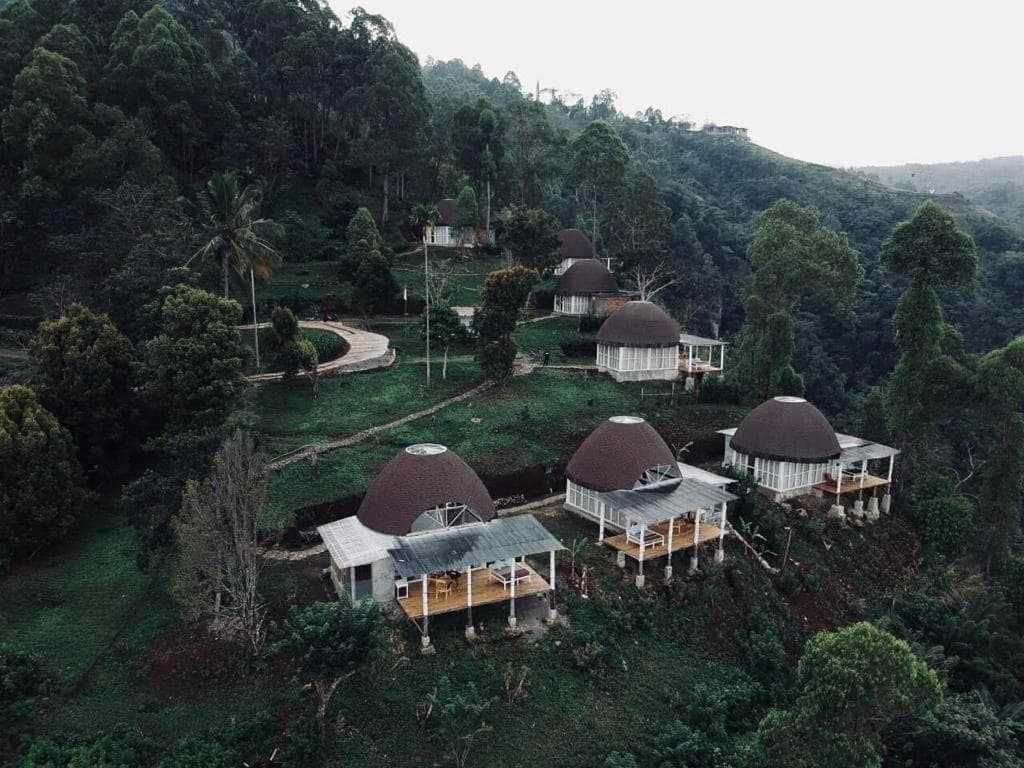
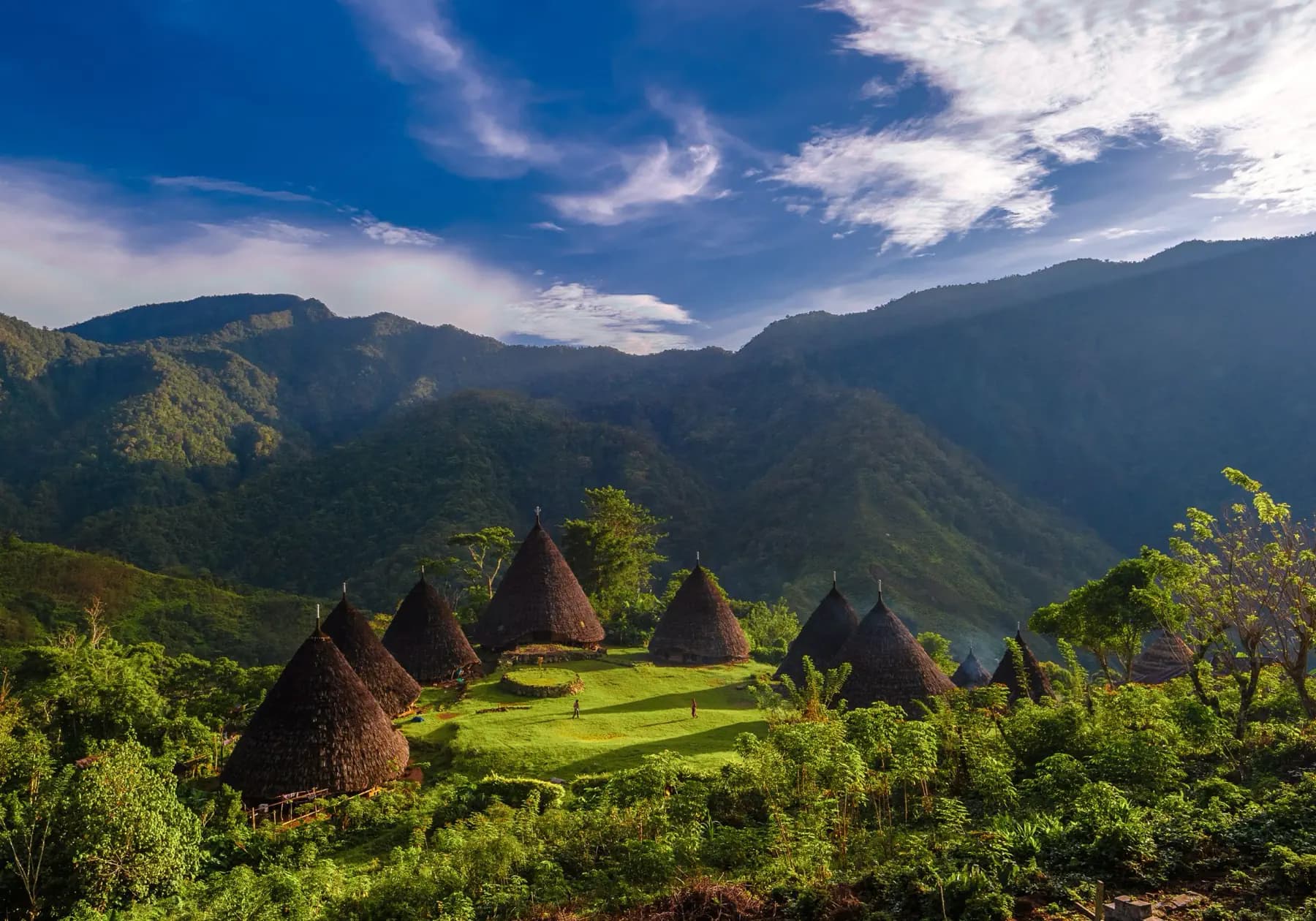
Waerebo is the signature stop and earns it. It is a remote Manggarai village sitting at around 1,200 metres, ringed by forested peaks, with seven distinctive cone shaped houses (mbaru niang) that rise five storeys under a single thatched roof. There is no road in. You park at the trailhead near Denge and walk two to three hours up through cloud forest to reach it, which is part of why the place still feels intact rather than staged. Many travellers stay a night in the village guesthouse to slow down and take it in.
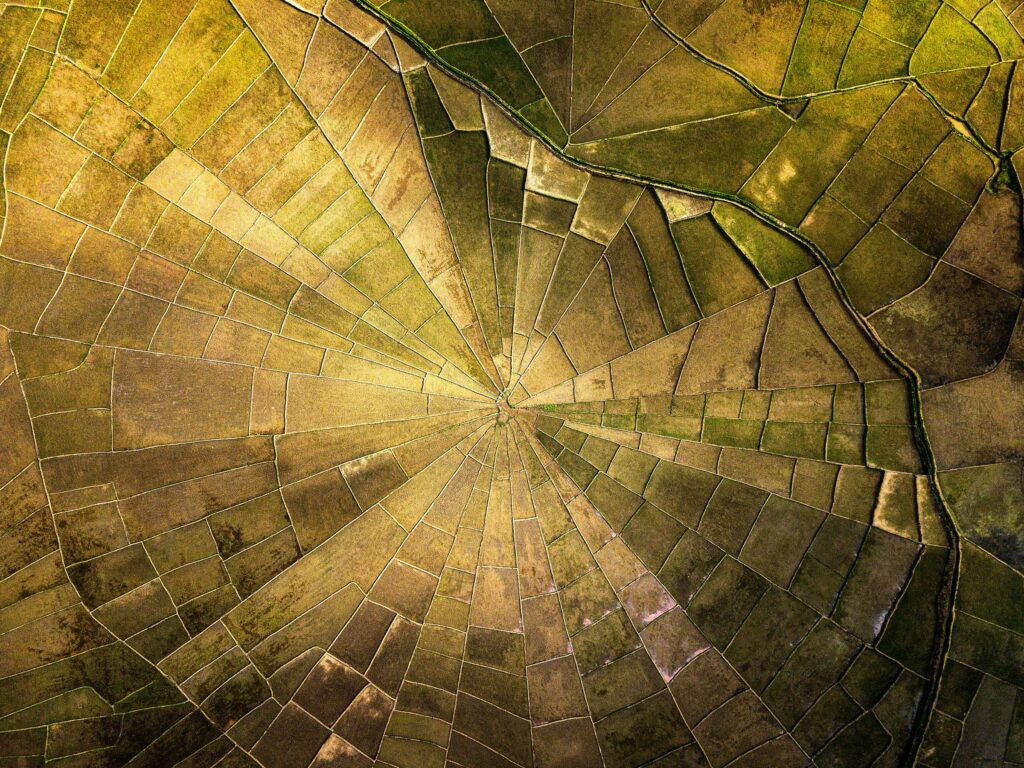
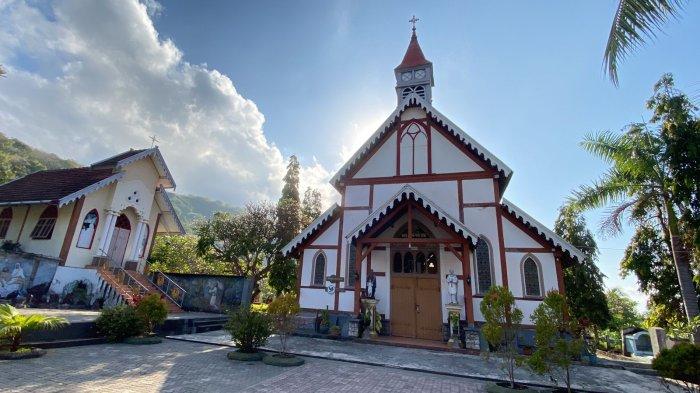
Nearby Ruteng is the Manggarai market town and a common overnight on the way to or from Waerebo. The countryside around it is the home of the famous spider web rice fields (lingko), laid out in radial segments from a central point, best seen from a viewpoint at Cancar. The old church town and the cool highland air make Ruteng a comfortable base after the climb.
Bajawa, Bena, and The Ngada Country
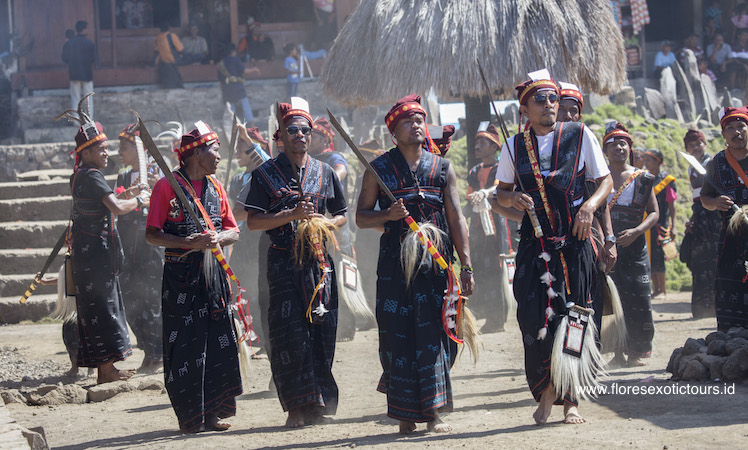
East of Ruteng the road climbs into Ngada territory around Bajawa, a cool highland town under the volcano Inerie. This is one of the strongest cultural regions in Indonesia. Traditional villages like Bena and Luba are built around megalithic stones and carved ancestral totems (ngadhu and bhaga), with thatched houses arranged in ordered rows down a stone paved spine. People live here, you visit as a guest, with a guide who handles the introductions.
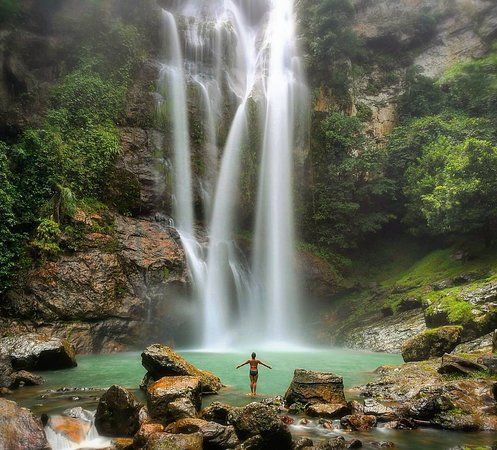
The Bajawa highlands also have hot springs (the river at Malanage runs warm where it meets a cold stream, so you can sit in the mix) and good walking through coffee country. It is a worthwhile night or two between Ruteng and the lakes.
Kelimutu’s Three Coloured Lakes
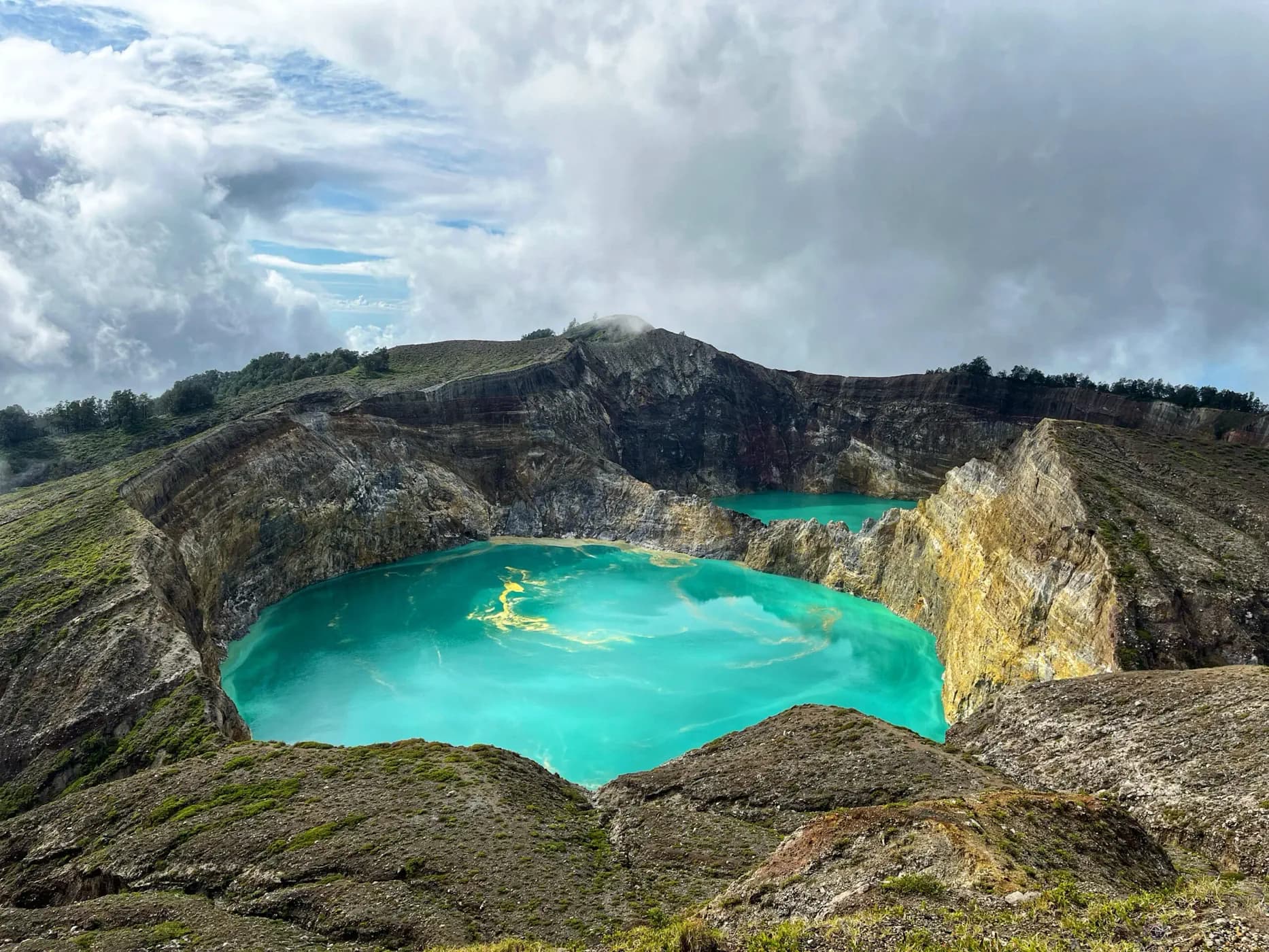
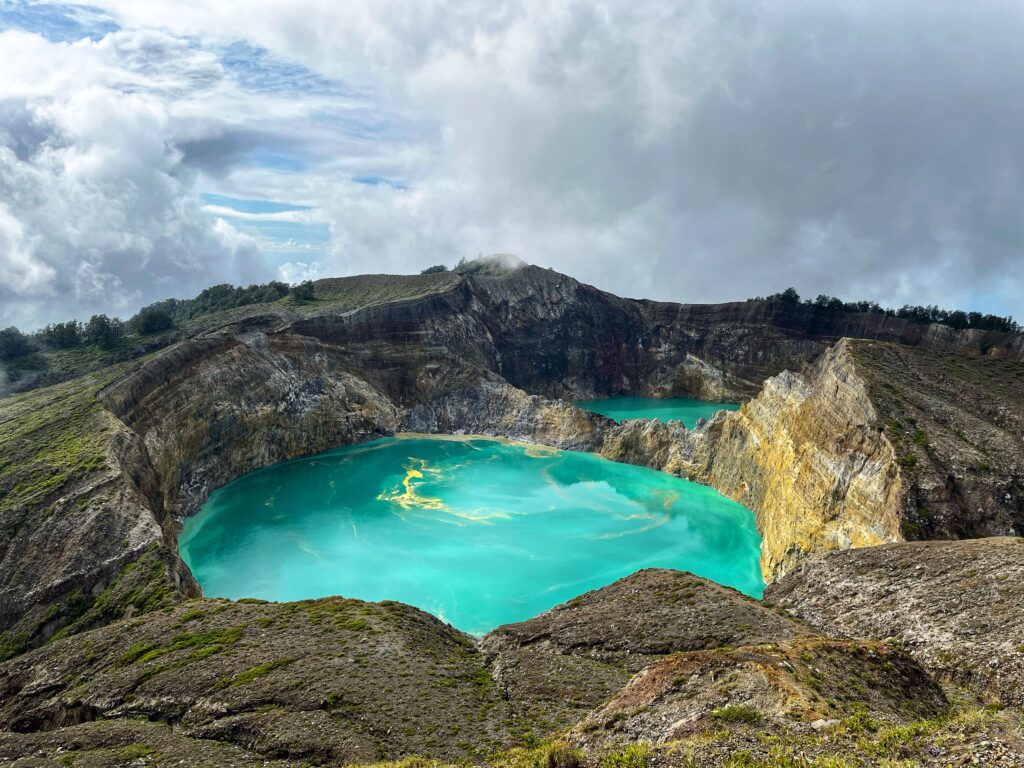
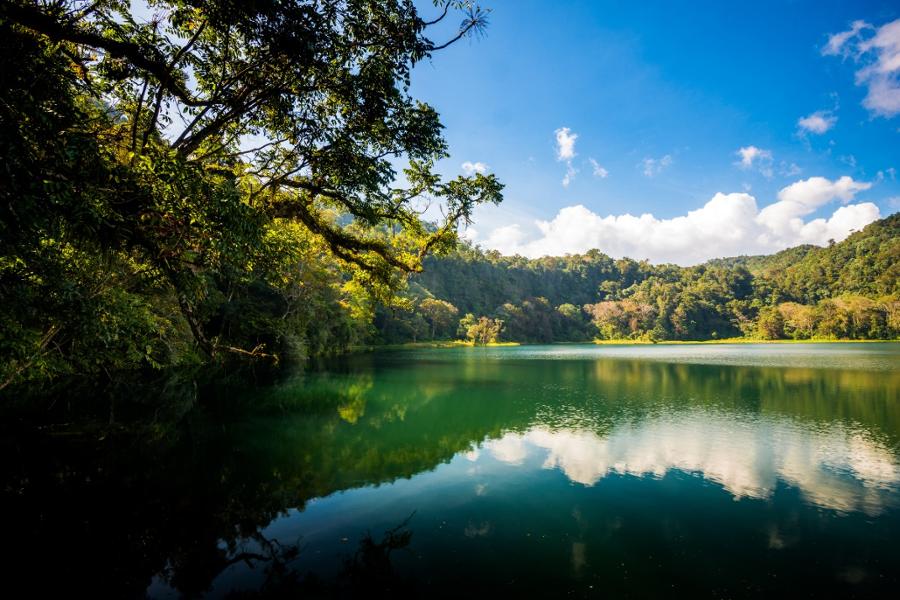
The single most photographed sight on Flores, and for once the reality holds up. Kelimutu is a volcano near the town of Moni with three crater lakes that sit side by side and hold different, shifting colours such as turquoise, green, black, brown, sometimes red, changing over months as the mineral chemistry shifts. Local Lio belief holds that the souls of the dead rest in them, sorted by age and character.
You go up before dawn. The walk from the car park to the summit viewpoint takes around 20 to 30 minutes, and you reach the top in the dark to watch the sun come over the rim and light the lakes. Moni, the village at the base, is the standard overnight, with waterfalls and hot springs nearby and a low-key place to recover. Kelimutu is the climax of the 7 day cross island tour.
Riung and The Seventeen Islands
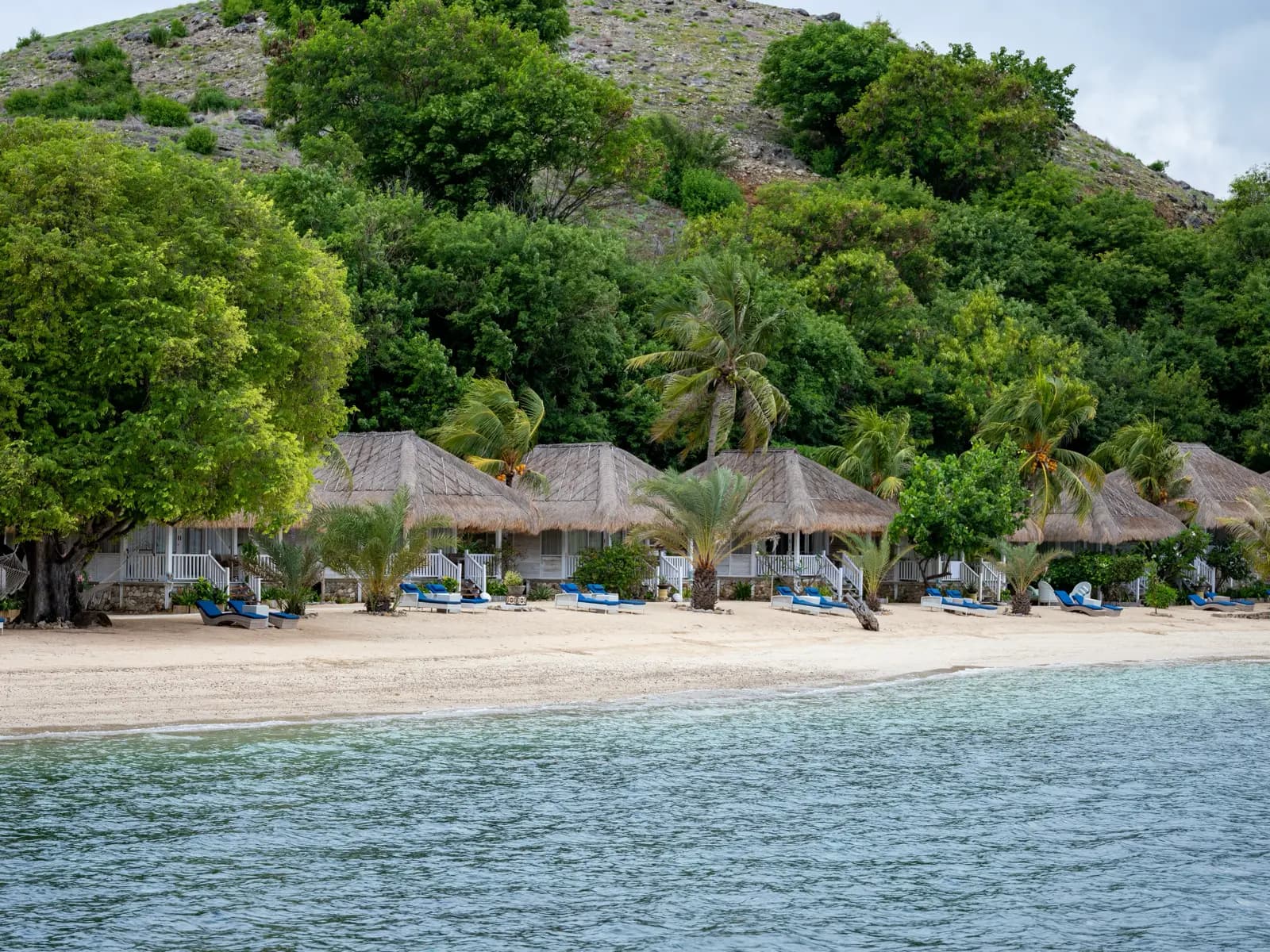
On the north coast, Riung is the quiet counterpoint to busy Labuan Bajo. On the arid northern coast, this small port opens up to a scattering of low lying islands where white sand bars dissolve into exceptionally clear turquoise water. The Seventeen Islands Marine Park is a collection of uninhabited coral cays and limestone islands situated close to shore, offering a quiet contrast to busier southern and western ports.
Day trips use local wooden outriggers for snorkeling over shallow coral reefs and visiting undisturbed sandbars. Lunches typically consist of fresh fish grilled on the beach. At dusk, boats position near the coastal mangrove forests to observe thousands of fruit bats lifting off en masse for nightly foraging. It is an easy, restful break in the middle of a cross island trip rather than a destination in its own right, and it features in the 7 day Flores tour from Labuan Bajo through Waerebo, Riung, and Kelimutu.
Maumere and The Eastern Coast
The far east around Maumere is the least-visited stretch, which is exactly its appeal such as quiet beaches, hill and mountain country, traditional Sikka villages and reefs offshore. Koka Beach, around 45 kilometres west of Maumere, has the soft white sand and twin bays the region is known for. The old Sikka church on the coast, the carved house village of Mau Lo’o, Geliting market and the viewpoint at Nilo Hill above the city fill out a couple of slow days. Maumere has an airport, so it is the natural exit point for anyone who has driven the island west to east and does not want to backtrack.


Getting There and Getting Around
Sequencing matters here more than most travelers realize. Distances are short on the map and long on the clock, direction of travel decides whether you’re chasing daylight or moving with it, and finishing on the water rather than starting on it is what turns a rushed loop into a proper trip.
Most travelers make the same mistake, they fly into Labuan Bajo (LBJ) in the west, then grind east for days, saving nothing for the finale. Better move is to flip it. Fly into Ende in Flores’s centre, it connects via Labuan Bajo. That way you save Komodo, the island’s showstopper, for the end of your trip to rest and unwind after spending days on the road and in the mountains.
Flores looks small on a map. Driving it is another story. The Trans-Flores Highway is paved and scenic, but twisting mountain roads and frequent village stops mean distances take much longer than the kilometres suggest, Labuan Bajo to Ruteng runs four hours, Ruteng to Bajawa another four, Bajawa to Moni (the gateway to Kelimutu) another four to five. Self driving, even with a rental, is a trap, the roads demand focus, and you’ll miss the stops that matter like coffee farmers, weaving villages, roadside warungs run by families for generations. Plus, local protocols around where you can visit and who to talk to are invisible to outsiders.
That’s where we step in. We arrange a private car with an English or French speaking driver guide who knows the road, the villages, and exactly where the day should break. No racing the daylight, no backtracking. You move at the island’s pace, and the finale, Komodo, Labuan Bajo, the diving that lands exactly when it should.
Diving and Snorkelling off Flores
The diving is concentrated in the west, in and around Komodo National Park, and it is genuinely world class. Strong currents feed a lot of life such as manta rays year round at cleaning stations like Karang Makassar, sharks, turtles, and big schools of fish along submerged pinnacles like Batu Bolong, where the rock face drops into deep water covered in hard corals, sea fans, and reef sharks. Castle Rock and Crystal Rock in the exposed northern sector are known for excellent visibility and frequent sightings of grey reef sharks, giant trevally, and passing eagle rays.
The best way to dive Komodo is by boat from Labuan Bajo. We run scuba diving day trips in Komodo for divers short on time, and scuba diving liveaboards in Komodo for those who want the full spread of sites across several days (3 to 7 days), including the more distant reefs that day boats rarely reach. Diving and culture pair well on a Flores trip, dive or snorkel the west and inland for the mountains, lakes and villages.
For nondivers, the same boats snorkel the shallow reefs, and the easy water and beaches at Riung further east suit a relaxed snorkel without the currents.
Best Time to Visit
The dry season, roughly April to October, is the prime window across the island. Clearer roads for the cross island drive, reliable Kelimutu sunrises, and the calmest seas off Komodo. For diving specifically, the manta action is good year round, but the water and visibility are most settled in the dry months.
The wet season, November to March, brings heavier rain that can make the mountain road and the Waerebo trail slippery and the Kelimutu dawn cloudier, so the cross island route is best avoided at the wettest point. The west and the diving stay workable longer than the highlands. If you only have the wet months, we lean the trip towards Labuan Bajo and Komodo and keep the highland section short.
Combining Flores With The Rest of Indonesia
Flores rarely travels alone. Most trips pair it with Komodo (same gateway, so it adds no extra travel) and with Bali, the main hub everyone connects through. Daily flights connect Ngurah Rai International Airport in Bali directly to Labuan Bajo, making the transition straightforward. A common shape is a few days in Bali, a flight to Labuan Bajo for Komodo and the dragons, then either a cross-island drive to the lakes and villages or straight back. A balanced itinerary might begin with a few days in Bali, continue with a Komodo liveaboard cruise, and conclude with a weeklong overland journey across the Trans-Flores Highway to Maumere, where you can catch a return flight west. Adventurous travelers continue east towards Sumba or West Timor and Alor in the same Nusa Tenggara region. We plan the connections, flights, and overnights so the pieces line up.
Lombok is another natural combination, daily direct flights connect Lombok and Labuan Bajo, and a 4 day, 3 night liveaboard cruise runs between the two in either direction, threading Komodo National Park in between rather than flying over it.
Frequently Asked Questions
For the west alone (Labuan Bajo, Komodo, the dragons and a dive or snorkel day) plan three to four days. To add the cross island highlights, Waerebo, the Ngada villages, and Kelimutu’s lakes, you want seven to ten days, since the driving is slow. A three day Waerebo and Ruteng loop is a good short option if you cannot do the full traverse.
The dry season, April to October, is best. Clearer mountain roads, reliable Kelimutu sunrises and calm seas off Komodo. The wet season (November to March) brings rain that can make the Waerebo trail and the highland drive harder, so we keep trips weighted to the west in those months.
If you’re crossing the island, fly into Ende (ENE) in central Flores and make your way west, exiting via Labuan Bajo (LBJ). Labuan Bajo has more reliable, frequent connections than Maumere in the far east, where the active Mount Lewotobi volcano can disrupt flights, so it’s the safer end of the trip to depend on. If you’re only doing the west (Labuan Bajo, Komodo, a dive or snorkel day), just fly into Labuan Bajo directly, usually via Bali. Getting around is by private car with a driver guide, the Trans-Flores road is paved but winding, and self driving is not recommended for visitors.
Yes, and it is the part most people underestimate. The crater lakes of Kelimutu, the cone roofed village of Waerebo, the megalithic Ngada villages around Bajawa and the spider web rice fields near Ruteng are the reason to keep going east past Labuan Bajo.
The diving off western Flores, in Komodo National Park, is world class, manta rays year round, sharks, turtles and strong coral on current fed sites. It is best dived by boat or liveaboard from Labuan Bajo, with sites matched to your experience because of the currents. Non divers can snorkel the same reefs or the calmer water at Riung.
Easily. Komodo is reached from Labuan Bajo, so Flores and Komodo are effectively one trip. Bali is the main hub you connect through, so the standard route is Bali, then Labuan Bajo for Komodo and the dragons, then the cross island drive or back. Lombok combines just as well, daily direct flights link Lombok and Labuan Bajo, and a 4 day liveaboard also runs between the two, so Flores can bookend a Lombok trip either by air or by boat. We arrange all the flights and overnights.
The western base, Labuan Bajo, Komodo by boat and easy snorkelling, suits most ages. The cross island sections involve long mountain drives and, for Waerebo, a real uphill walk, so we tailor the pace and pick which highlights to include based on who is travelling.
Your adventure starts here
Plan your trip to Flores
Tell us what you want to see and we'll craft the perfect itinerary, usually within 24 hours.
Plan My Trip →Enquire About This Destination
Any question, special request or custom itinerary, we reply within 24hrs.
Tours & Activities in Flores
Day Trip Around Labuan Bajo
3 Days Liveaboard Cruise in Komodo