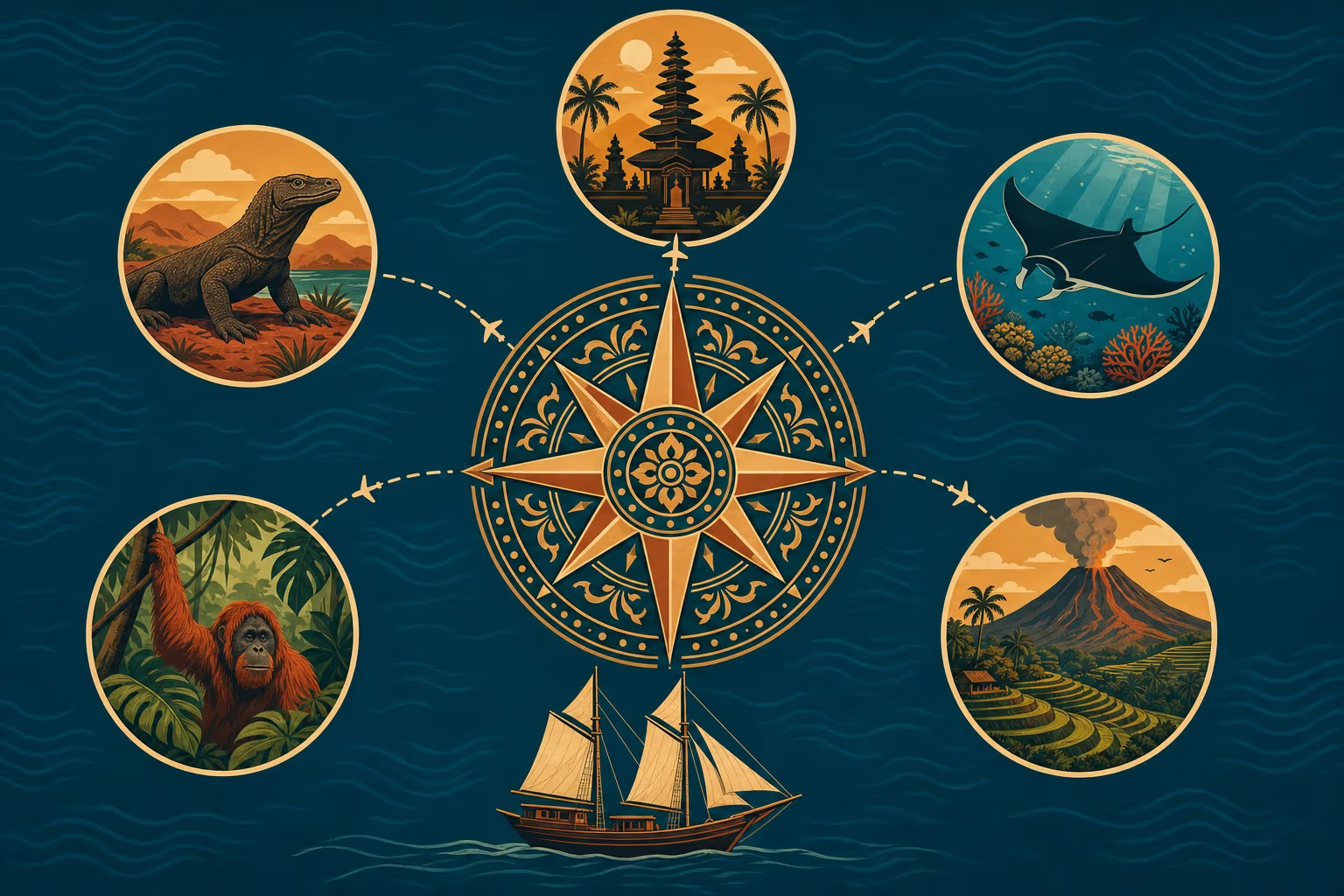
Indonesia’s islands are not only defined by landscapes, reefs, and temples – they are defined by people. The Faces of the Archipelago series shines a light on those whose lives and traditions make each region unique.
In East Bali, that face is Made Joro, a third-generation fisherman. For more than 25 years, he has set out from Amed’s black-sand beaches before sunrise, casting hand lines from his traditional jukong boat. His story embodies the rhythm of Amed fishing – a heritage passed down through families, now meeting the opportunities of modern tourism.
Generations of Amed Fishing
In Amed, fishing binds families to the sea as much as it pays them. Made’s father still goes out daily, his brothers and in-laws fish, and nearly every household in the village is tied to the ocean. “Everybody is fisherman here,” Made says with pride.
These traditions stretch back generations. Before Amed became known for diving and tourism, the sea was its pantry and livelihood. Knowledge of tides, winds, and fish migrations was shared within families, and it carried them through both plentiful and lean seasons.
Life at Sea
Made began fishing at just 15 years old. Today, he still prefers the hand line over nets or rods. “For me, it is better use a hand line,” he explains, describing the direct connection to the fish and the current.
The peak season for Amed fishing is July through September, when mahi mahi and tuna move closer to shore. Fishermen depart in darkness, journey up to two hours offshore, and fish for hours depending on the weather. But the sea is unpredictable. Calm waters by the beach often hide rough waves farther out. “We never know when the wave is coming bigger or smaller,” Made says. Experience and caution are vital, as accidents and boat damage are part of the risks of life at sea.
The Jukung: Bali’s Traditional Fishing Boat
At the heart of Bali’s coastal life is the jukung, the traditional outrigger boat used for centuries. Once carved entirely from wood, many are now fiberglass, making them easier to maintain. In the dry season, sails replace engines, carrying the boats silently across the waves.
“It’s very nice – no loud sound, only the wind and the sail,” Made says, describing the peaceful rhythm of sailing compared to the motor’s hum. For fishermen like him, the jukong is more than a vessel; it is a symbol of continuity and resilience.
Tradition Meets Tourism
In recent decades, Amed has shifted from a fishing village to a destination for snorkeling, diving, and cultural tourism. This has created new opportunities for fishermen like Made.
Instead of only selling fish to restaurants or directly on the beach, Made now takes guests on Amed fishing trips. Visitors join before dawn, learn hand-line techniques, and sometimes bring their catch back to shore to be grilled in local warungs.
“I like fishing with the guests,” he says. “We get fish, we get money, and we share the tradition.” For Made, it’s more than income – it’s a way to keep culture alive and give travelers a glimpse into the rhythms of coastal life.
Why Made’s Story Matters
The Faces of the Archipelago series exists because stories like Made’s are at risk of fading. Amed is one of many Indonesian communities where ancient traditions meet modern tourism. Responsible travel can support families, preserve heritage, and help visitors connect with more than just a destination.
Made’s life represents the balance between continuity and change – a reminder that the archipelago’s richness lies in its people as much as its reefs and volcanoes.
Experience Amed Fishing with Made
🌊 Spend a morning at sea with Made Joro, a fisherman in East Bali who has devoted his life to traditional fishing. Learn his techniques, sail in a jukong, and eat your fresh catch in Amed.
📍 Learn more and book here: Fishing Trip in Amed, Bali
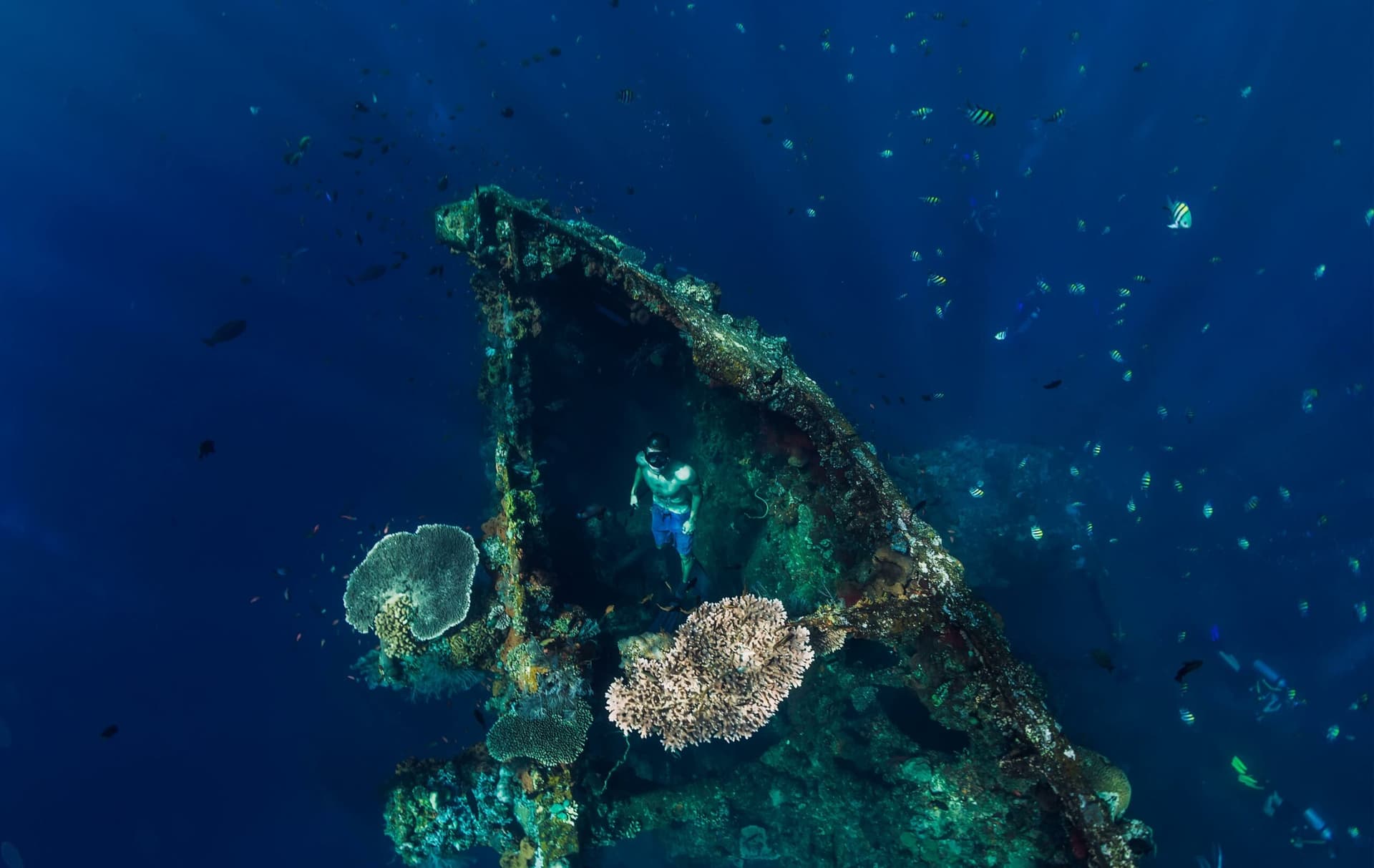
And while you’re in the region, explore more of East Bali: dive the world-famous USAT Liberty wreck in nearby Tulamben, snorkel the reefs, or simply enjoy the slow rhythm of village life.
Faces of the Archipelago is Ocean Earth Travels’ series celebrating the people who make Indonesia’s islands extraordinary. From fishermen to artisans, guides to guardians of tradition – these are the faces behind Indonesia’s magic.