Indonesia’s reefs are a kaleidoscope of life. On one scuba diving trip you might hover beside manta rays; on the next, you could drift past schools of fusiliers or the walls of Raja Ampat alive with color. Yet some of the most extraordinary encounters happen on a smaller, stranger scale – like spotting a frogfish, a master of disguise that looks more like a sponge than a fish.
Meet the frogfish: a lumpy, sedentary predator that looks more like a sponge than a fish. At first, you don’t notice it. Then the “sponge” twitches, a tiny lure waves in the current, and suddenly you’re staring at one of nature’s most bizarre hunters.
Here are five scientifically supported facts about frogfish – each stranger than the last – and why Indonesia is one of the best places in the world to see them.
1. Camouflage and the Living Lure
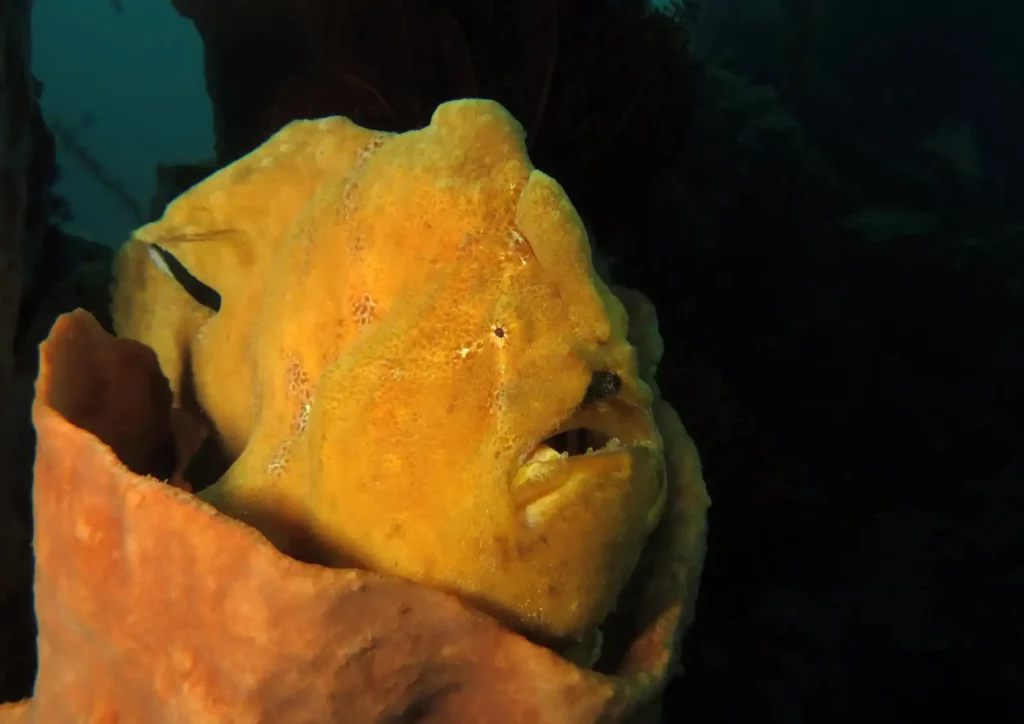
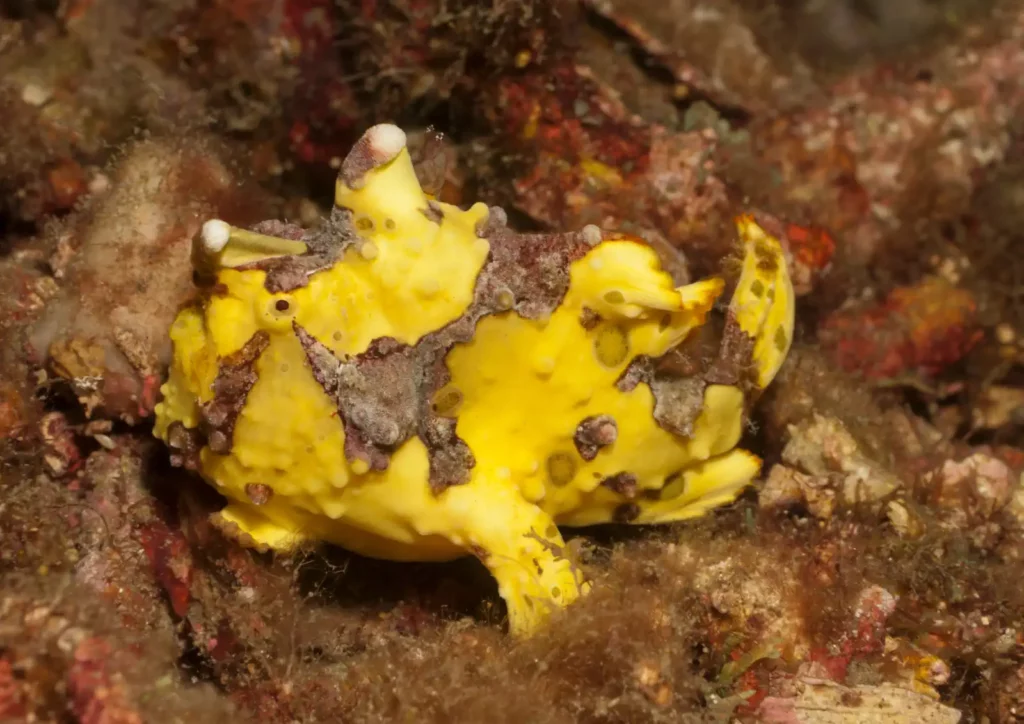
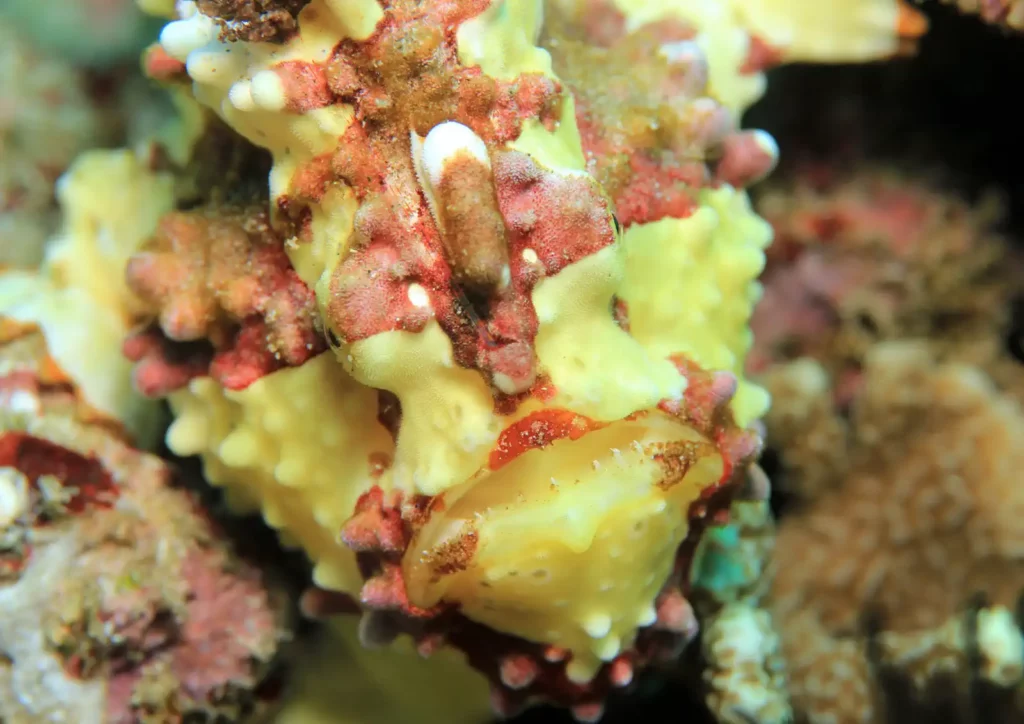
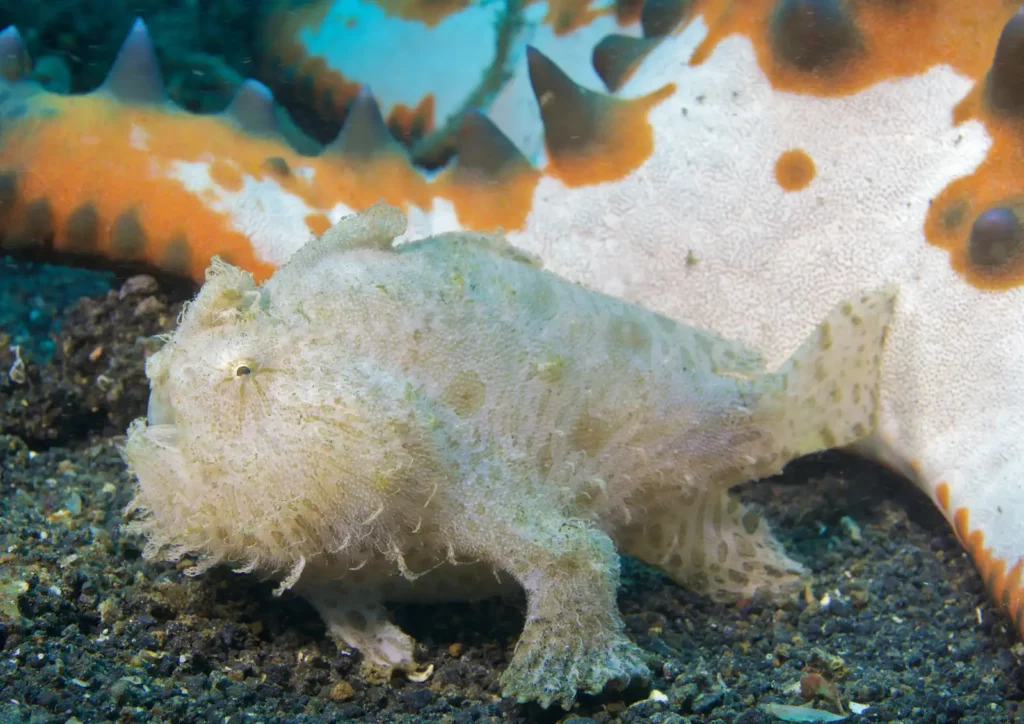
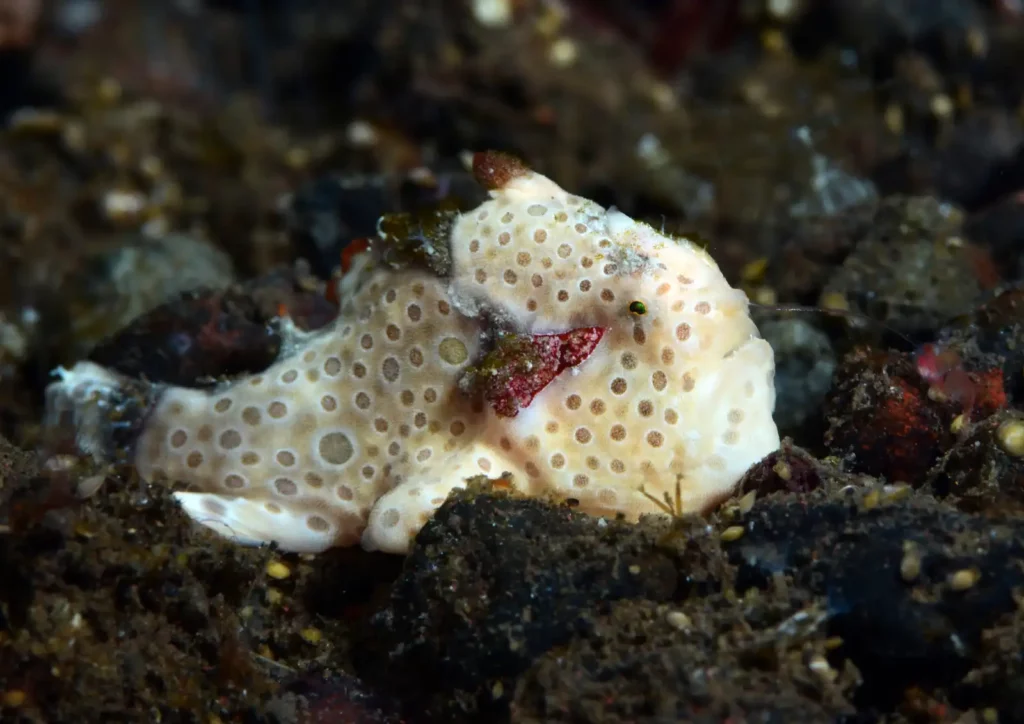
Frogfish are among the best camouflaged animals in the sea. Their skin can change color and texture, sprouting bumps, warts, or hair-like filaments to mimic sponges, coral, or algae (Pietsch & Grobecker, 1987).
But this disguise is not just for hiding – it’s for hunting. The first dorsal spine has evolved into a “fishing rod” (illicium) tipped with a fleshy lure (esca). To passing prey, it looks like a worm or shrimp. When the prey gets close, the frogfish twitches the lure and then strikes. If the lure is lost, it regenerates (Florida Museum of Natural History).
2. The Fastest Strike in the Sea
Don’t let their sedentary looks fool you – frogfish are among the fastest predators alive. They use suction feeding to engulf prey, expanding their mouths up to twelve times their resting volume.
High-speed studies show they can capture prey in just ~6 milliseconds (Higham et al., Journal of Experimental Biology, 2006). That’s faster than a human blink (100–400 ms). Once the prey is inside, throat muscles snap shut to prevent escape.
Divers rarely see this strike – it’s too fast. But many witness frogfish “yawns,” when they stretch their jaws wide, revealing just how enormous that mouth can be.
3. Oversized Meals and Cannibal Appetites
Frogfish are strict carnivores with big appetites. They’ve been documented swallowing prey nearly twice their own body length (Arnold & Pietsch, Environmental Biology of Fishes, 2012). Their jaws and stomachs expand dramatically to accommodate oversized meals, and throat muscles lock prey inside.
Cannibalism is also well documented. A frogfish will swallow another if given the chance – even one of similar size. Sometimes it succeeds; other times both fish perish in the attempt. Either way, it proves that beneath their comical appearance, frogfish are ruthless ambush predators.
4. The Fish That Walks
Watch a frogfish long enough, and you’ll notice something unusual: it doesn’t swim like other reef fish. Instead, it “walks.”
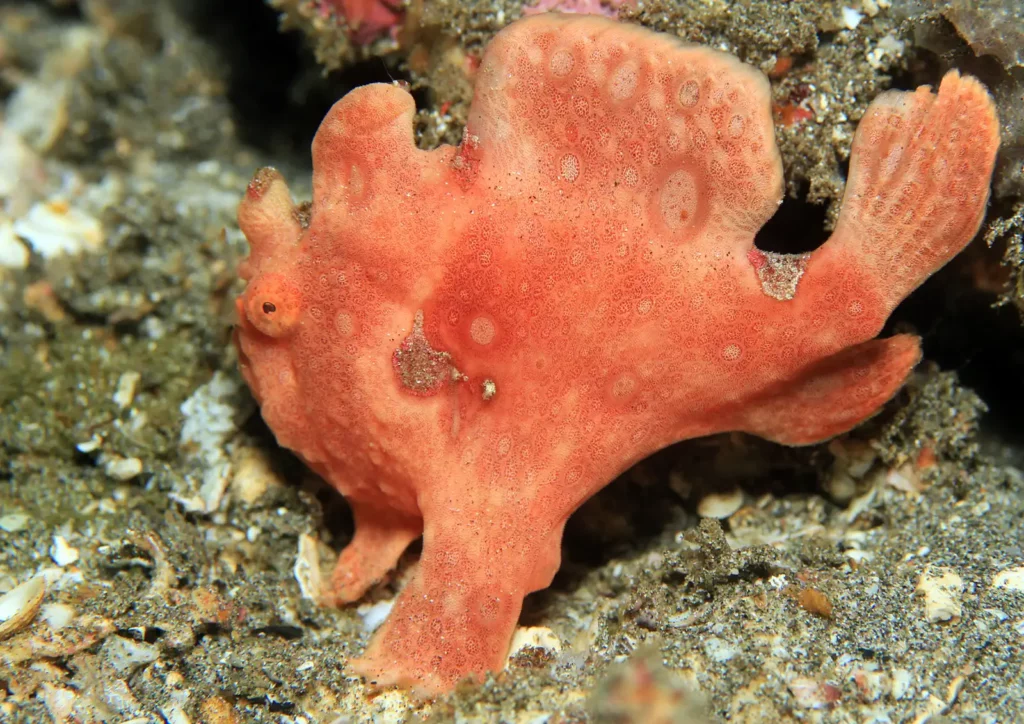
Frogfish pectoral fins are modified into leg-like appendages, complete with joints that resemble elbows. They use them to clamber across sand, rubble, or coral in a manner that looks more like crawling than swimming.
When they do need to move faster, frogfish use a unique form of jet propulsion. By forcefully expelling water through small gill openings behind their pectoral fins, they can push themselves forward in short bursts. This strange locomotion was documented in detail by Fish (1987, Copeia).
For divers in Bali, this makes frogfish easier to observe than many other cryptic creatures. Rather than darting into crevices, they often shuffle or hop along in plain sight, as if unaware – or unconcerned – that they’ve been noticed.
5. Global Oddities, Indonesian Riches
There are around 50 known species of frogfish across 14 genra (FishBase), found in tropical and subtropical seas worldwide. They usually stick to coral reefs, rubble slopes, or seagrass beds, from the shallows down to about 100 meters – well within the range of scuba diving.
But the real hotspot is the Indo-Pacific, especially Indonesia, where diversity peaks. From Bali’s black sands to Lembeh’s muck sites, from Komodo’s reefs to Raja Ampat’s sponges, Indonesia offers some of the best chances anywhere to spot multiple species on a single trip.
Indonesia: A Frogfish Paradise
While frogfish occur across the tropics, Indonesia is arguably the best place in the world to encounter them.
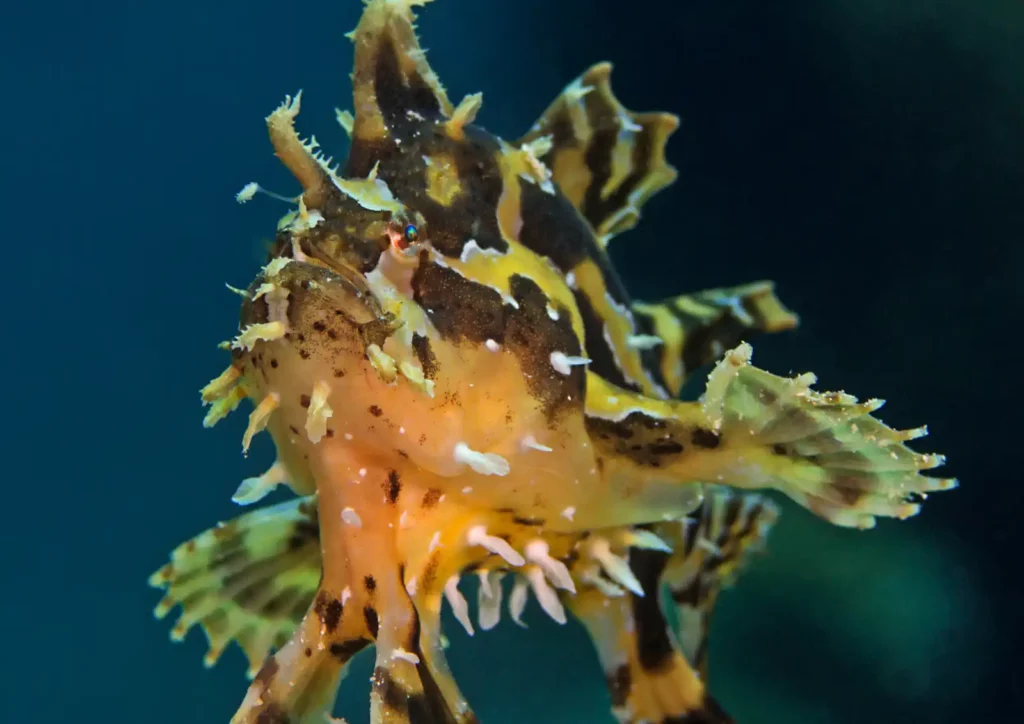
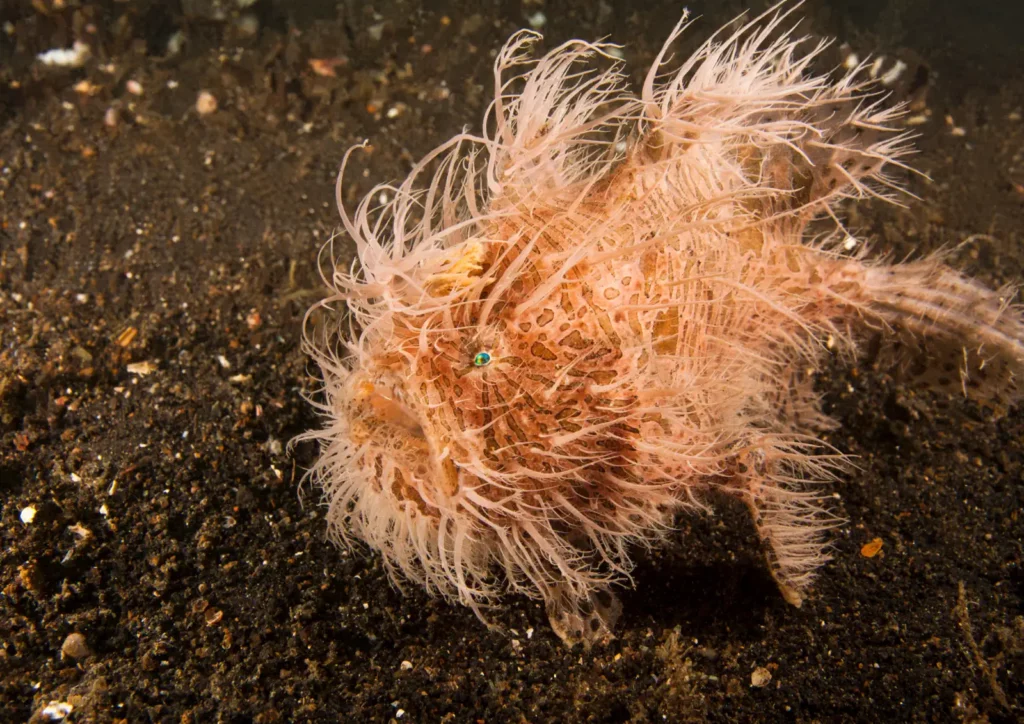
- Lembeh Strait (North Sulawesi): Known as the Frogfish Capital of the World. Divers have recorded up to nine species here, including painted, hairy, warty, and sargassum frogfish (Lembeh Resort, 2021).
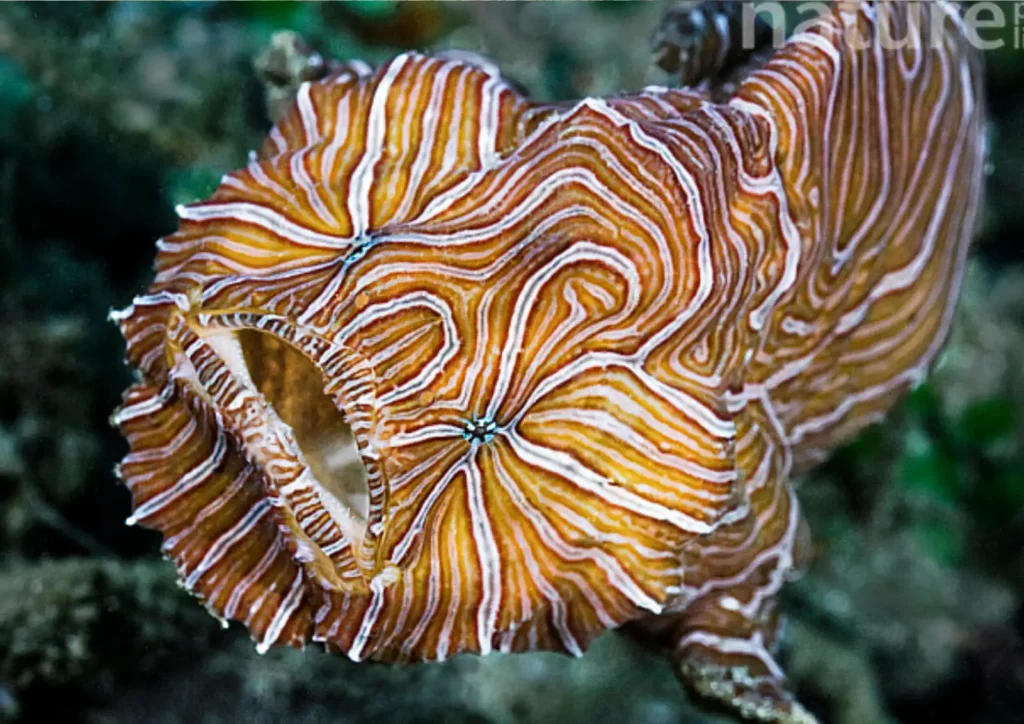
- Ambon Island: The only known home of the rare psychedelic frogfish (Histiophryne psychedelica), first described scientifically in 2009 (Pietsch et al., Copeia, 2009).
- Bali: Volcanic sand sites like Tulamben, Amed, and Puri Jati are hotspots for hairy and painted frogfish, often spotted by macro photographers.
- Komodo: Giant frogfish perch motionless on barrel sponges along reef walls, blending in perfectly with the coral environment.
- Raja Ampat: Frogfish live among sponges and coral outcrops in the richest reef system on earth.
- Alor: Remote muck slopes here host painted and warty frogfish, offering encounters far from the crowds.
From volcanic sand to pristine coral reefs, Indonesia provides habitats for multiple species across the archipelago – sometimes all on a single trip.
Why We Love Them – and Why You Should Come See Them
At Ocean Earth Travels, we arrange scuba diving across Indonesia: liveaboards, multi-day safaris, and day trips. Frogfish may not be the stars of glossy brochures, but for many divers, they’re the most memorable find of all.
They embody what makes Indonesia’s underwater world so remarkable: the thrill of slowing down, looking closer, and discovering extraordinary life hidden in plain sight.
Whether it’s a hairy frogfish in Bali, a giant frogfish in Komodo, or the elusive psychedelic frogfish in Ambon, each sighting is unforgettable. And Indonesia offers more opportunities than anywhere else on earth.
If you want to meet the ocean’s strangest ambush predator – one that walks instead of swims, swallows prey faster than a blink, and vanishes against the reef – Indonesia is the place to do it. And Ocean Earth Travels can take you there.