Some trips are a checklist. This one was closer to a pilgrimage. Christine, an archaeologist, and her husband Valerio came to Central Sulawesi for the things most travellers never reach: ancient stone giants standing in remote valleys, islands with no roads, and burial grounds carved into living cliffs. Over twelve days they crossed one of Indonesia’s wildest and least-visited regions, and they let us share the story.
Central Sulawesi rarely makes the front of a travel brochure. It has no big resorts, no easy beach hops, and getting around takes patience. That is exactly why it rewards the curious. This is Christine and Valerio’s journey, in their words and their photographs, lightly retold.
Island time in the Togean Islands
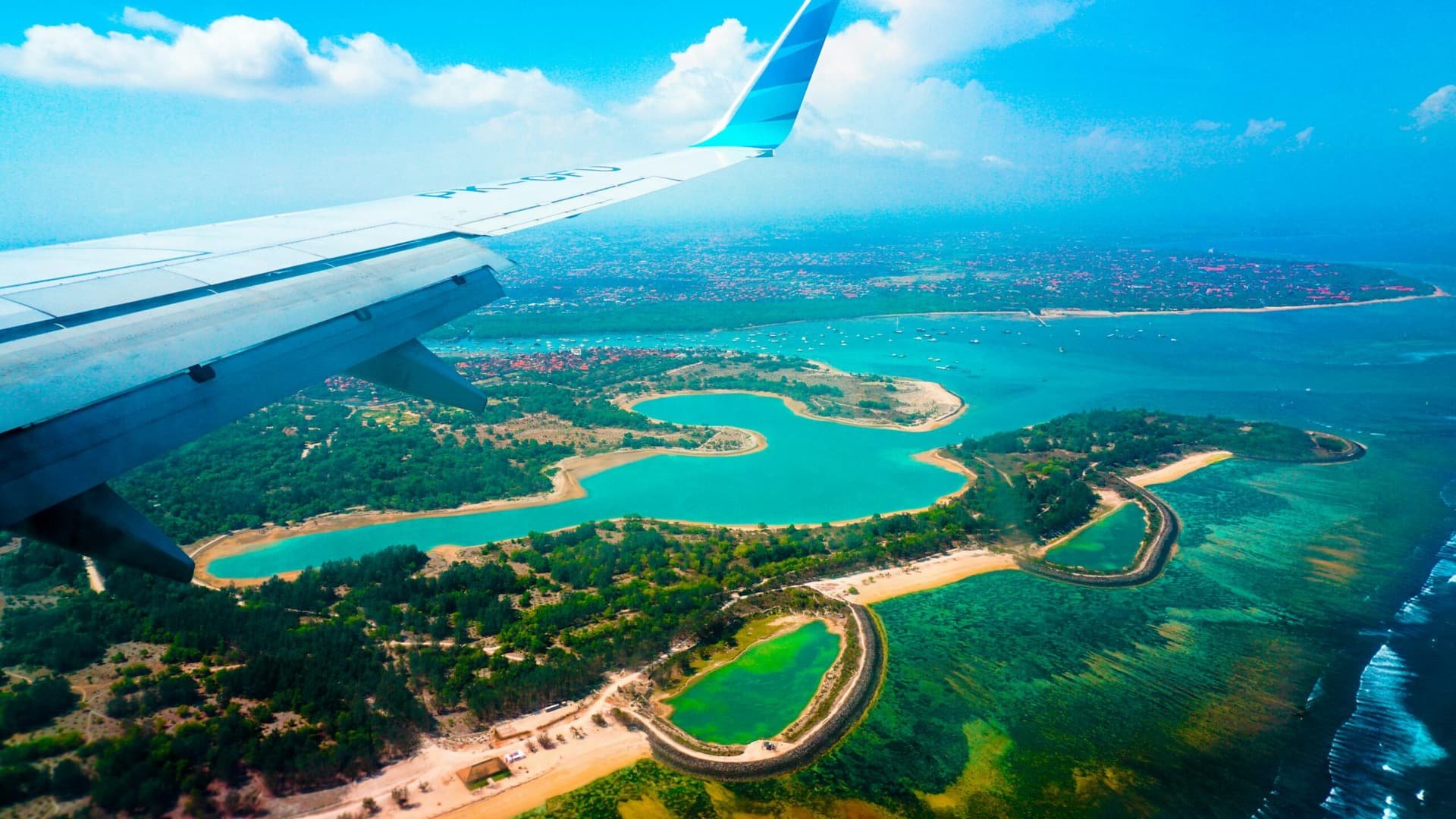
The trip began the way the best ones do, slowly. The Togean Islands sit out in the Gulf of Tomini, reached by a long boat ride and worth every minute of it. Christine and Valerio settled into an over-water cottage for four nights, with a hammock on the deck and the reef a few steps away.
‘It’s beautiful here in the Togean Islands. We’re very happy,’ Christine wrote partway through. The photographs say the rest: turquoise water, empty sand, and the kind of quiet you have to travel a long way to find.

The road to Lake Poso
From the islands the route turned inland, across Central Sulawesi to Lake Poso, one of the deepest and oldest lakes in the country. Along the way they stopped at Saluopa Waterfall, a wide staircase of cascades you can climb step by step through the forest. In a region this size the journey is part of the experience: long drives through hills and villages, a different view around every bend.

Face to face with the Bada Valley megaliths
Then came the part Christine had travelled around the world for. Scattered across the Bada Valley, deep in the Lore Lindu highlands, stand dozens of carved stone figures known as megaliths. No one knows for certain who made them, or exactly how old they are. The largest, Palindo, stands taller than a person and leans slightly, as if caught mid-stride. For an archaeologist, standing beside one of these silent giants was the heart of the whole trip.

They reached the valley after a long drive and a trek of around three hours, guided by Agus, a local naturalist who, in Christine’s words, ‘knows the names of every plant, animal and everything,’ and speaks English, French and Italian besides. ‘I am an archaeologist,’ she had told us before the trip, ‘so I am interested to see as many megalithic statues as possible.’ She was not disappointed.

Tana Toraja, where the living and the dead share the hills
The final chapter took them south into the highlands of Tana Toraja, a culture famous for the way it honours its dead. Here funerals are vast, days-long ceremonies, and the departed are laid to rest in caves and graves cut high into the cliffs, watched over by carved wooden effigies. Christine and Valerio joined a local ceremony, visited the cliff and cave graves, saw the trees where infants are traditionally laid to rest, and found yet another megalithic site for good measure.
Toraja’s funerals are a world unto themselves, joyful, elaborate and nothing like a Western idea of mourning. If they fascinate you the way they did Christine, our guide to Toraja’s unique funeral rituals is the place to start.
It was not all smooth, and that is where the team showed its worth. When a health scare interrupted one morning, their guide Erick and driver Eros had them to a local clinic within the hour and stayed by their side throughout, Erick translating every word with patience and kindness. By the afternoon they were back out exploring. ‘We are so thankful we were with the two of them,’ Christine wrote.

The people who made it
Ask Christine what made the trip and she does not start with the scenery. She starts with the people. ‘Eros, Erick and Agus were all excellent at their jobs and kind, lovely, polite people,’ she wrote. ‘Our new friends.’ Behind the scenes, our coordinator Rachel kept the whole twelve-day chain moving from Bali, adjusting plans on the fly when a boat broke down or a schedule shifted, because on a trip like this something always shifts.

‘The entire experience was absolutely life-changing for me, and I did not want to leave,’ Christine told us at the end. ‘The kind, beautiful, gentle people of Sulawesi will forever be in my heart.’
Why we do this
Watching Christine and Valerio’s messages arrive from the road, one by one, was the best part of my week. This is exactly why we started Ocean Earth Travels. Not to sell a package, but to put people in the hands of guides like Agus, Erick and Eros, and then step back while something real happens. I am proud of this team. They look after our travellers like family, in the easy moments and the hard ones. And I am proud that we get to help people live a journey they will carry with them for the rest of their lives. That part never gets old.
Plan your own Sulawesi
Sulawesi is not for everyone, and that is the point. It is for travellers who would trade a poolside week for ancient statues, cliff graves, jungle wildlife and islands at the end of a long boat ride. If that sounds like you, start with our Sulawesi travel guide, then take a look at our Sulawesi itineraries, from a few days to nearly three weeks:
- 5 days in Toraja
- 7 days in South Sulawesi (Toraja, Lake Tempe, Rammang Rammang)
- 9 days in South Sulawesi (Bira, Toraja, Lake Tempe)
- 12 days: Toraja and the Togian Islands, close to the journey told here
- 18 days: Bira, Lake Tempe, Toraja and the Togian Islands
Every one of these is a starting point, not a fixed menu. We personalise each trip around what you want to do and see, your interests and your background, the time you have, your pace and your budget. Tell us what you have in mind and we will build a trip around it. As for Christine and Valerio, they are already planning the next one: a liveaboard, Raja Ampat, and the orangutans of Borneo. We will be ready.
The journey in pictures


All photos courtesy of Christine and Valerio.