Raja Ampat sits at the very heart of the Coral Triangle, a place divers whisper about with awe. Here, reefs stretch endlessly, mantas glide like kites in the blue, and every dive feels like stepping into an untouched underwater world. It’s no wonder people dream of a Raja Ampat diving liveaboard or a stay at one of the many Raja Ampat dive resorts – these are the two main ways to experience the richest reefs on the planet.
If you’ve set your sights on Raja Ampat, the next big question comes quickly: do you explore it by liveaboard, chasing new sites every day, or settle into a dive resort and soak in one region at a slower pace? We get asked this all the time. The truth is, there’s no one-size-fits-all answer – both are fantastic, but in very different ways.
Diving Experience
Liveaboard Diving in Raja Ampat
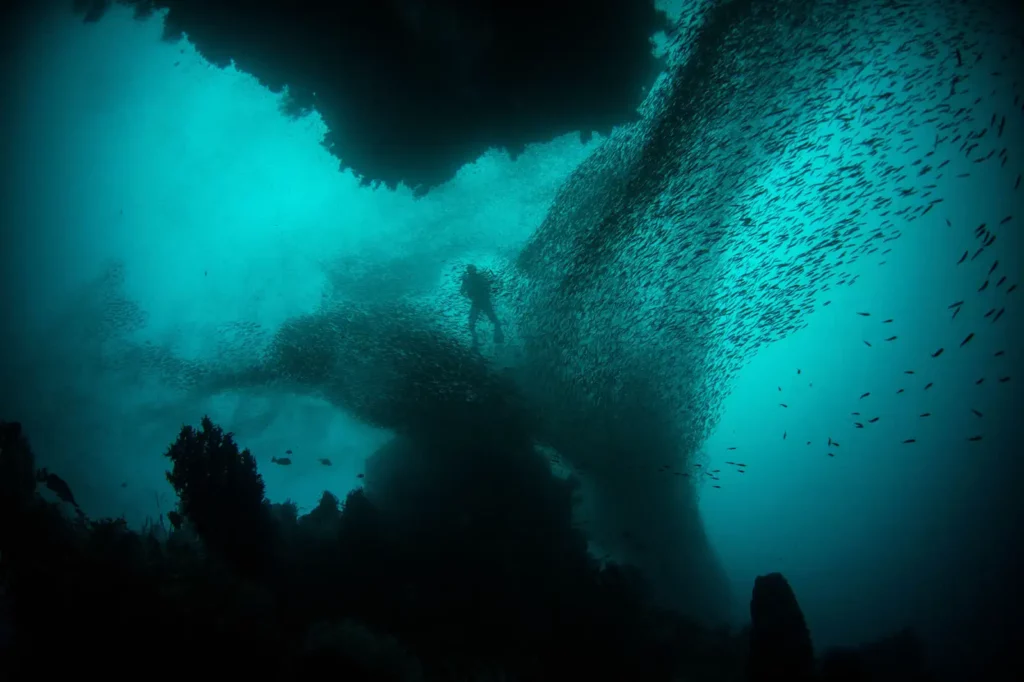
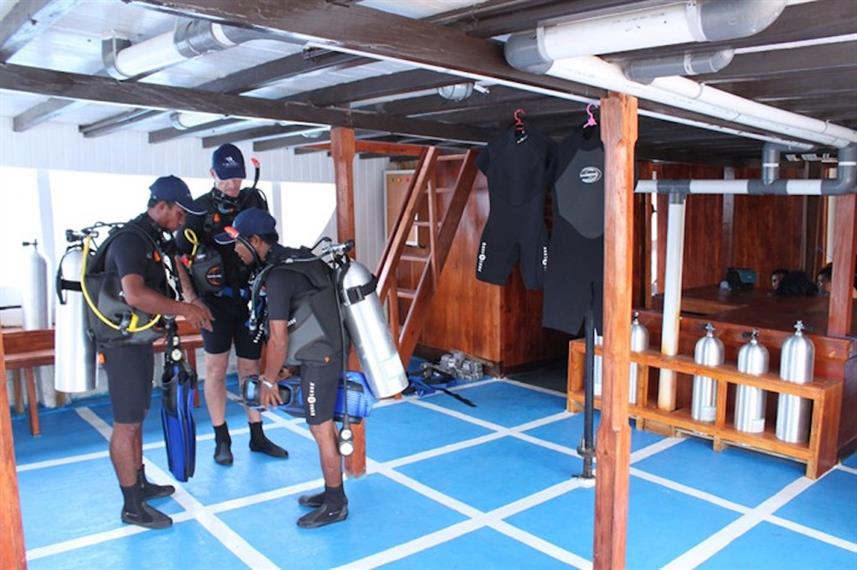
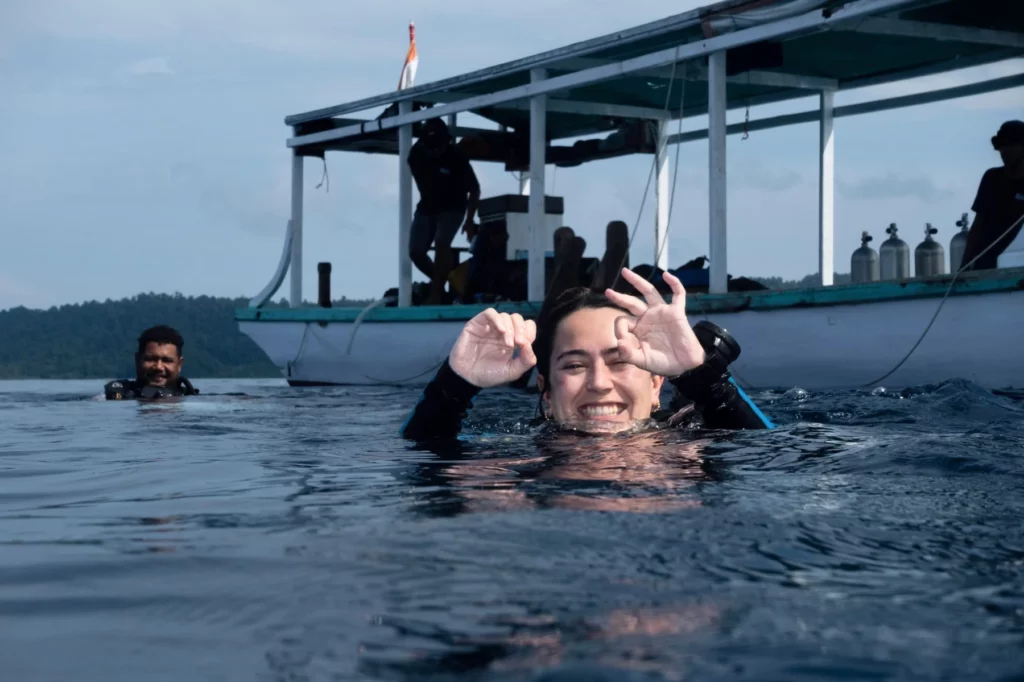
If you want to dive a lot – sunrise dives, drift dives, night dives – then a Raja Ampat diving liveaboard is your best bet. Most boats run three to four dives a day, moving overnight so you wake up right next to a new reef.
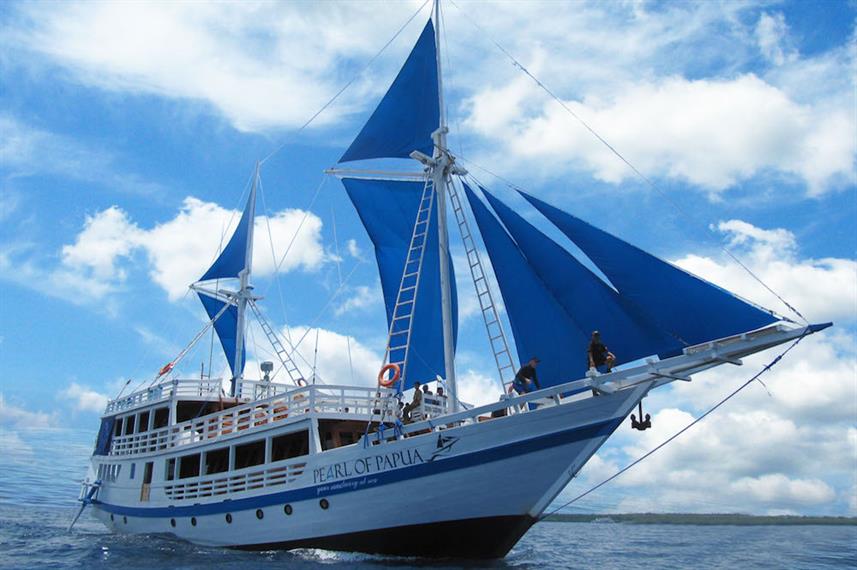
More importantly, liveaboards reach places that resorts can’t. One day you’re gliding through Misool’s soft corals, the next you’re in the north where mantas sweep past Kawe. Boats like Dewi Nusantara, Raja Ampat Explorer, and Pearl of Papua cover serious ground, and they do it well.
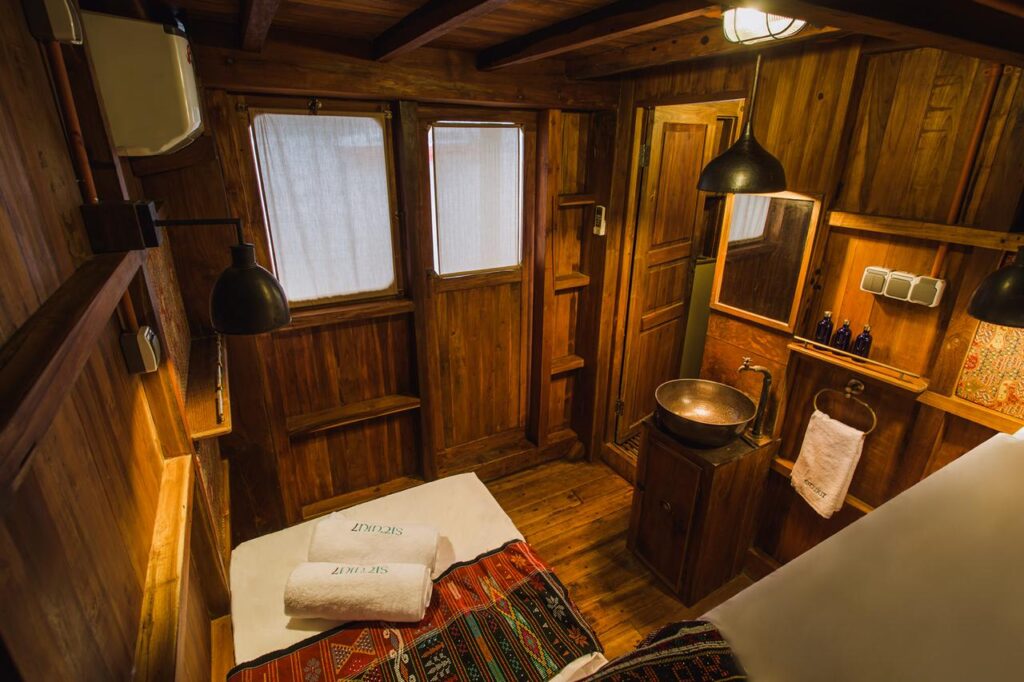
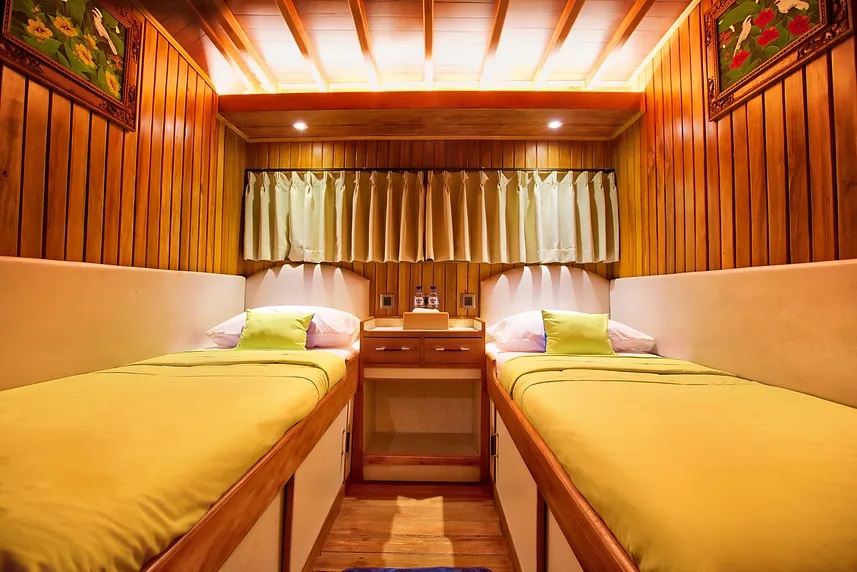
It’s a fully immersive dive lifestyle. You’ll share the boat with a small group of divers, eat together, dive together, and swap stories on deck at night. Cabins are compact, privacy is limited, and seasickness can be an issue for some – but for those who want “dive, eat, sleep, repeat,” it’s hard to beat.
Dive Resort Experience
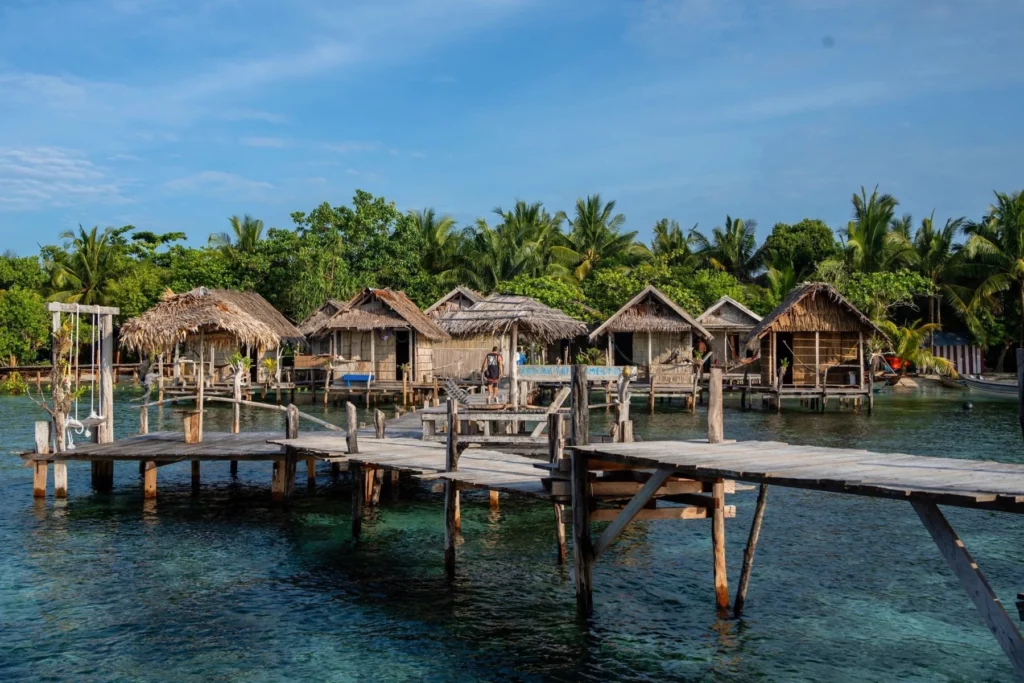
Resorts offer a slower rhythm. Instead of covering every corner of Raja Ampat, you settle into one slice of it and dive that region deeply. Most Raja Ampat dive resorts schedule two to three dives a day, plus the occasional night dive. Some, like Katembe Raja Ampat or Misool Eco Resort, have incredible house reefs where you can dive right off the jetty.
The big plus here is space and comfort. You’ve got a proper bed, hot shower, maybe a hammock or even an over-water villa. If you want to skip a dive and spend the day kayaking or birdwatching, you can. Resorts also work beautifully for mixed groups: while you’re diving, your travel partner can snorkel, read, or just enjoy the beach.
Access to Dive Sites
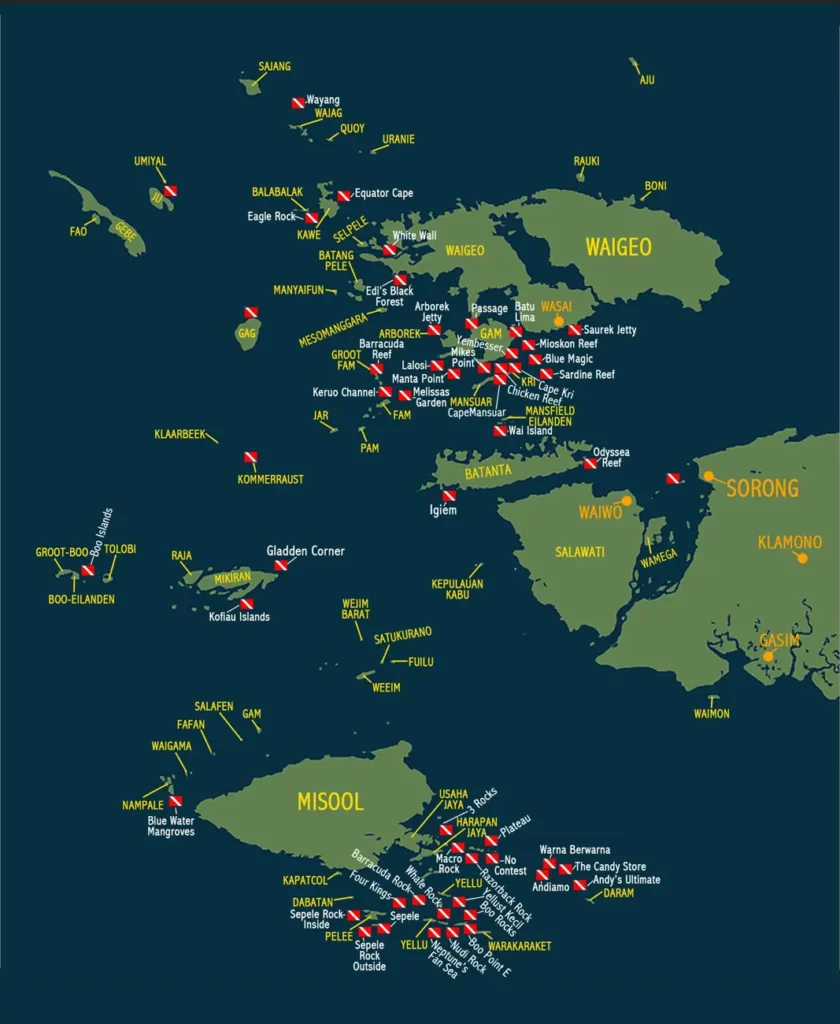
Raja Ampat is massive – more than 40,000 square kilometers of islands and reefs. Resorts, most of which are clustered in the Dampier Strait, focus on the local icons: Cape Kri, Blue Magic, Manta Sandy. They’re all incredible, but you won’t make it to Misool in the south or Wayag in the far north unless you transfer or combine multiple resorts.
Liveaboards, by contrast, roam freely. A single itinerary can link the north, central, and south, sometimes even stretching into Halmahera or the Banda Sea depending on the season. If you want the full sweep of Raja Ampat in one trip, a liveaboard makes it possible.
That said, if you’re the kind of diver who loves to revisit one reef again and again – maybe you’re a photographer chasing the perfect shot – resorts give you that freedom. You can return to the same site day after day without being tied to a fixed itinerary.
Comfort and Lifestyle
Life between dives looks very different depending on where you stay.
On a liveaboard
Your world is the boat. Cabins are smaller than hotel rooms, meals are shared, and the day runs on a dive schedule. It’s simple but social, and high-end boats can be surprisingly plush.
At a resort
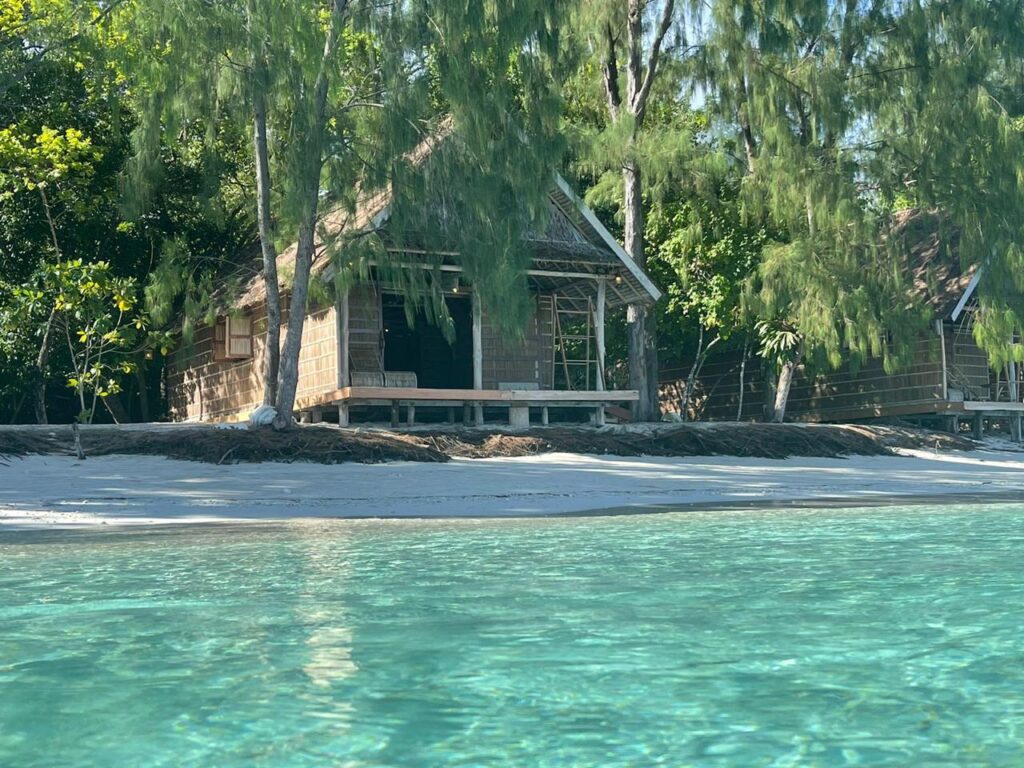
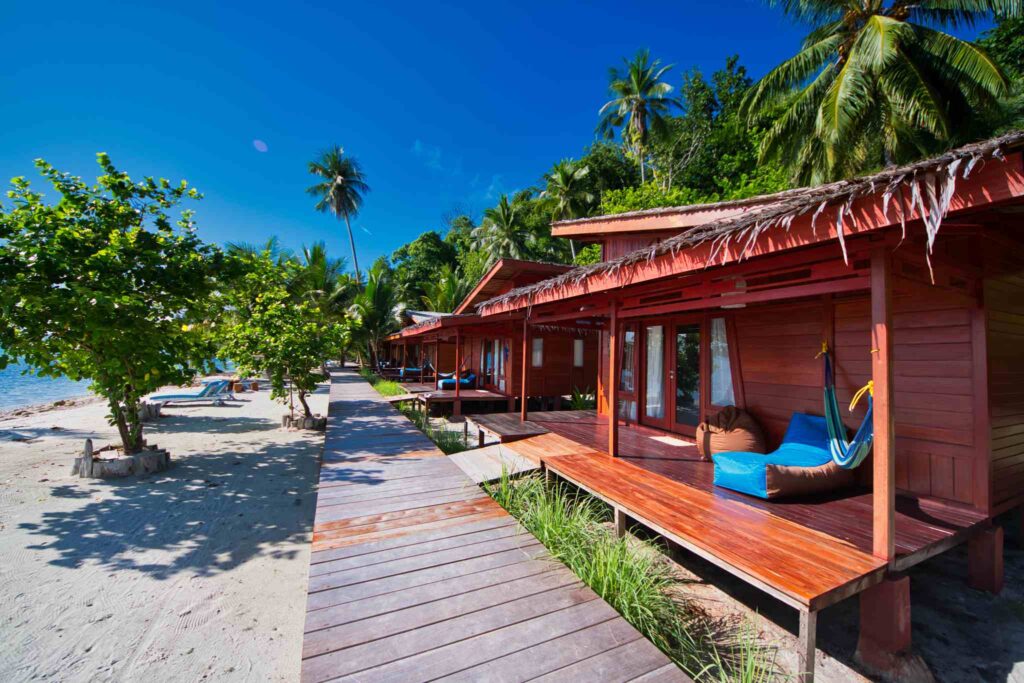
You unpack once and settle in. Bungalows range from rustic eco-lodges to luxury over-water villas. You’ve got space, privacy, and the freedom to take a break whenever you like. No engine noise, no seasickness – just waves on the beach.
Accessibility and Getting There
Both trips start the same: you’ll need to fly to Sorong. From there, it depends on your destination.
For liveaboards, pickup is usually direct from Sorong harbor. You board the boat, settle in, and start your journey. No ferry transfers, no additional steps.
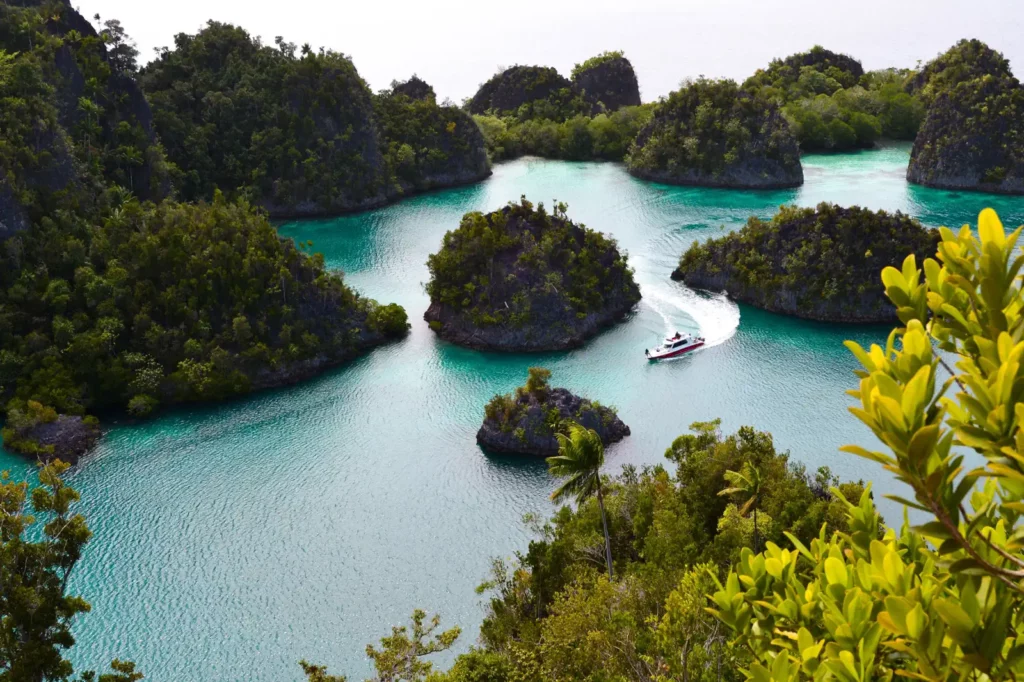
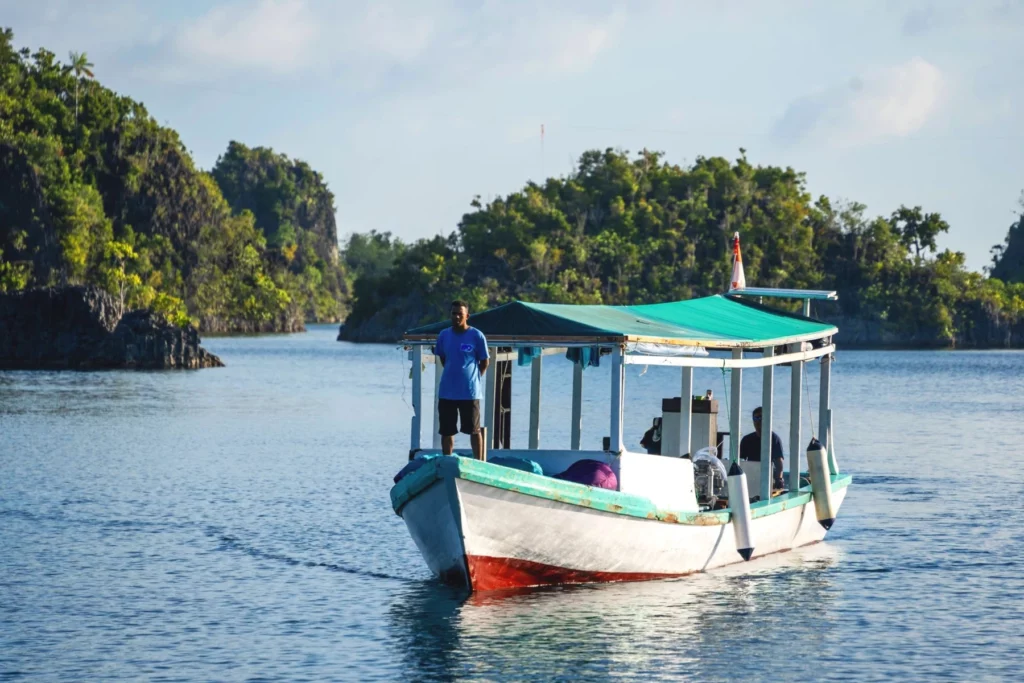
For resorts, the usual route involves a ferry from Sorong to Waisai, followed by a speedboat to your island. The timing depends on the ferry schedule and how far your resort is from Waisai. Some transfers can take a couple of hours. It’s manageable, but requires a bit more planning.
Once you’re at your resort, you’re diving within a set area. Boats usually cover dive sites within a 20–30 km radius. That gives you plenty to see – but again, not the remote southern or western regions. If you want to reach both Misool and Dampier Strait in one trip, you’ll either need a very specific resort combo – or a liveaboard.
Environmental Impact
Sustainability matters in Raja Ampat. This place is home to 75% of the world’s coral species, and it’s still in good shape because of long-term local protections. All visitors pay a Marine Park fee that supports patrols and conservation.
Liveaboards have the advantage of moving between sites, which helps avoid overcrowding. But they burn fuel, generate waste, and rely on supplies brought in from ports. The best ones follow strict protocols – no anchoring on reefs, proper greywater treatment, and plastic-free policies. Some, like La Galigo, also support marine conservation programs.
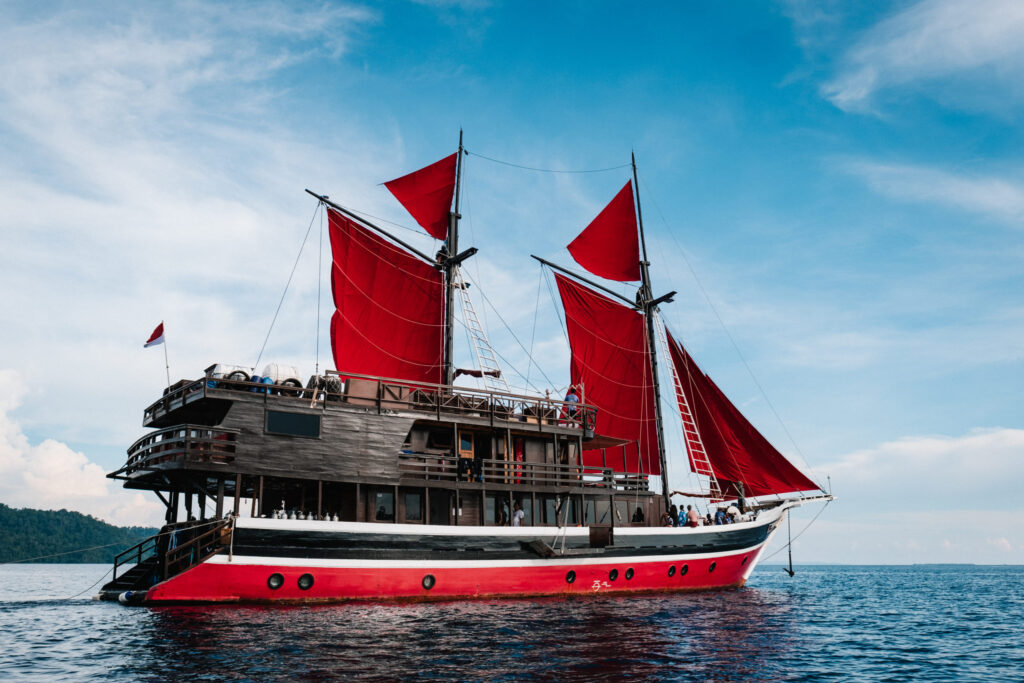
Resorts have a different footprint. They’re built on land, so wastewater management and power supply are critical. Good resorts use solar energy, collect rainwater, and support community programs. Some also run reef restoration efforts or co-manage No-Take Zones with local villages.
There’s also another land-based option worth considering: a Scuba Diving Safari. This is a travel style we offer at Ocean Earth Travels for divers who want to explore Raja Ampat without committing to a boat-based trip. Instead of staying in one place or sailing across the region, you move overland from north to south Raja Ampat, staying in a series of eco-friendly lodges. Along the way, you’ll dive at different locations, meet local communities, and take in both the reefs and the rainforest. It’s a slower, deeper dive into the region – literally and figuratively.
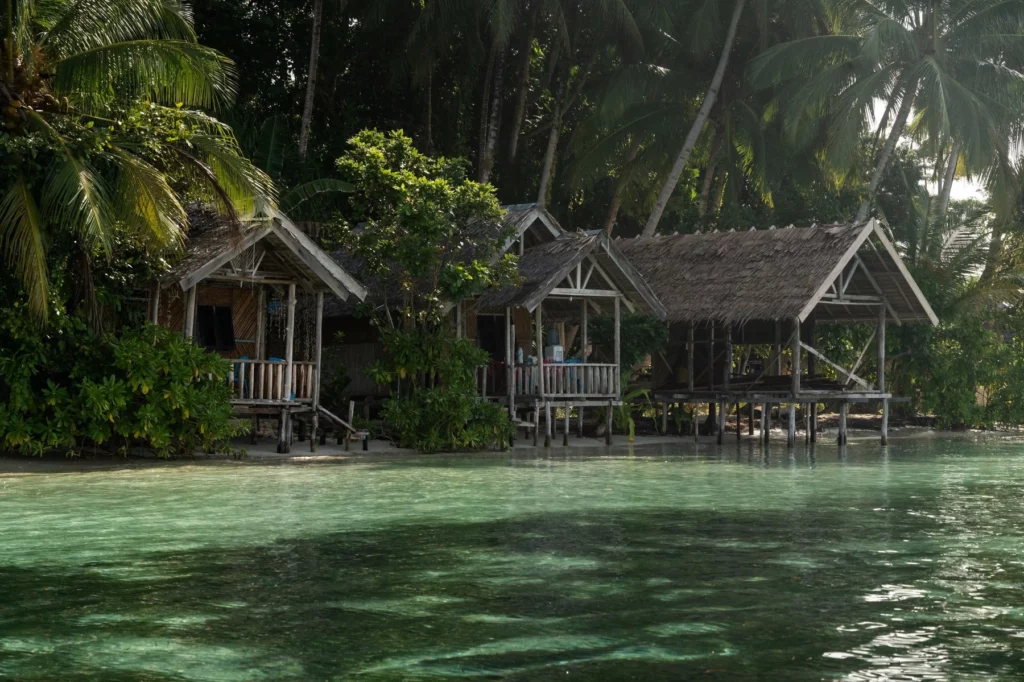
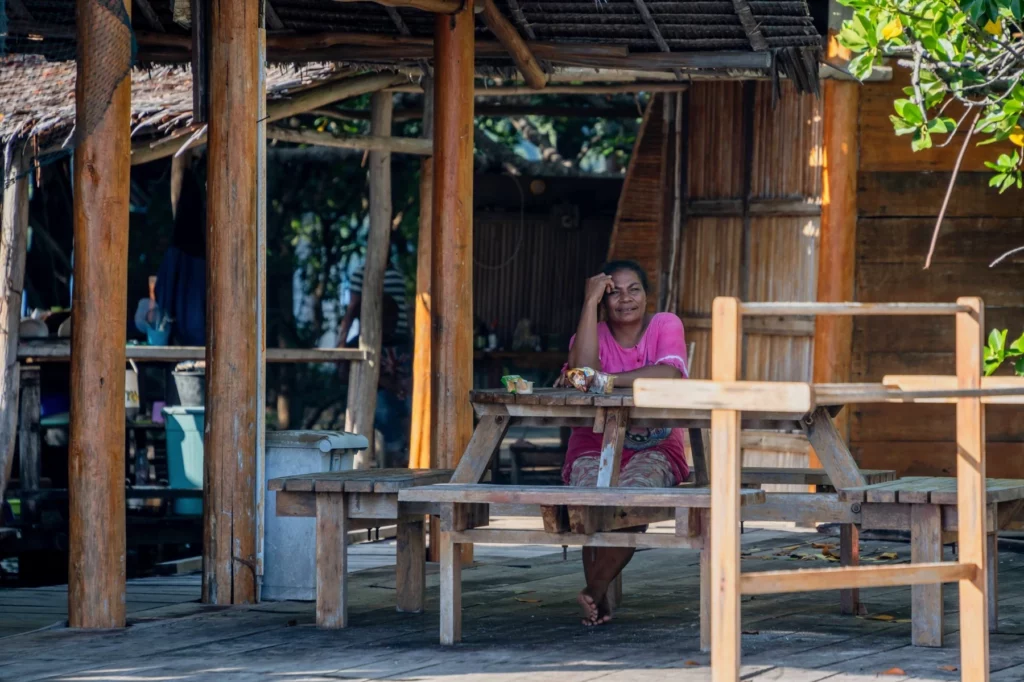
Learn more about our Scuba Diving Safari in Raja Ampat and see if this unique overland dive trip fits your style.
The takeaway here? Choose responsible operators. At Ocean Earth Travels, we only work with partners who follow the rules, support the community, and genuinely care about Raja Ampat. We keep things honest and transparent – so your trip not only feels good, but does good too.
Liveaboard vs Resort: Key Differences at a Glance
| ⛵️ Liveaboard | 🏖️ Dive Resort | |
| Dive Frequency | Up to 4 dives a day, often including night dives. | Typically 2–3 dives a day, with flexibility through packages |
| Dive Sites Access | Cover multiple regions in one trip – Dampier Strait, Misool, and even Wayag. | Centered around Dampier Strait’s iconic sites such as Cape Kri and Blue Magic |
| Comfort | Compact cabins, shared dining, and a social, dive-focused rhythm. | Spacious bungalows or villas with privacy, hammocks, and land-based comforts. |
| Price Range | From mid-range options like Pearl of Papua (USD 370/night) to luxury vessels like Dewi Nusantara | From eco-lodges to high-end stays like Misool Resort (starting USD 210/night) |
| Best For | Avid divers who want maximum dives and variety in one trip. | Travelers who value comfort, flexibility, and a slower pace with time to relax. |
Still not sure? Our team of dive travel experts is here to help
Ocean Earth Travels specializes in dive travel across Indonesia. We work with a curated list of liveaboards and resorts in Raja Ampat that we trust and know well. Whether you’re after a luxury cabin on a schooner or a beach bungalow with your own hammock, we’ll help you find the trip that fits.
Explore our Raja Ampat liveaboards or check out our partner dive resorts in Raja Ampat
We’re happy to help you compare routes, check availability, and put together the kind of itinerary that gets you excited to pack your fins. Fill in the form below and our team will get back to you with the best options for you.