Sumbawa
Sumbawa is the big, dry island between Lombok and Komodo that most travellers fly over. It has the surf at Lakey Peak and the forest and waterfalls of Moyo Island. Young whale sharks live in Saleh Bay all year, and Mount Tambora’s 1815 eruption cooled the planet for a year. Few tourists make it here, and the island is better for it.
Sumbawa does not fit in a day trip. It is long and lightly developed, and its regions feel like different islands. The west is green, with surf. The middle is dry savannah around Tambora, and the east has busy market towns. This guide covers what each part is good for, when to go and how we put a trip together.
The island, west to east
Sumbawa belongs to West Nusa Tenggara province, with Lombok, and is divided into four regencies and the city of Bima. Distances are real, so it helps to think of it as a chain of regions rather than one place.
West Sumbawa is the green corner where most people arrive by ferry from Lombok. It has the long beaches at Maluk and Kertasari, the small island of Kenawa and the Bukit Mantar viewpoint. The southwest coast has the reef breaks.
Sumbawa Besar, in the Sumbawa regency, is the main town of the west. It is a working town with markets and Sumbawan food. Its landmark is the Dalam Loka, the sultan’s palace, built of wood around 1885 and raised on 99 pillars. Most visitors use it as the base for Moyo Island and Saleh Bay.
Dompu, in the centre, is surf country. Lakey Beach is here, and so are the southern approaches to Tambora and the Doro Ncanga savannah.
Bima, in the east, is the largest town and the gateway to the Wawo and Sambori hill villages, Satonda Island and the crossing towards Komodo.
You will not see all of it in one trip, and you should not try. We build a route around the two or three things you came for.
Moyo Island
Moyo lies off the north coast, a short boat ride from the Sumbawa Besar area. Most of the island has been a protected reserve since 1986, so it stays quiet. It has white-sand beaches, dry forest with deer, macaques and wild pigs, and the Mata Jitu waterfall, a set of terraced turquoise pools you can swim in.
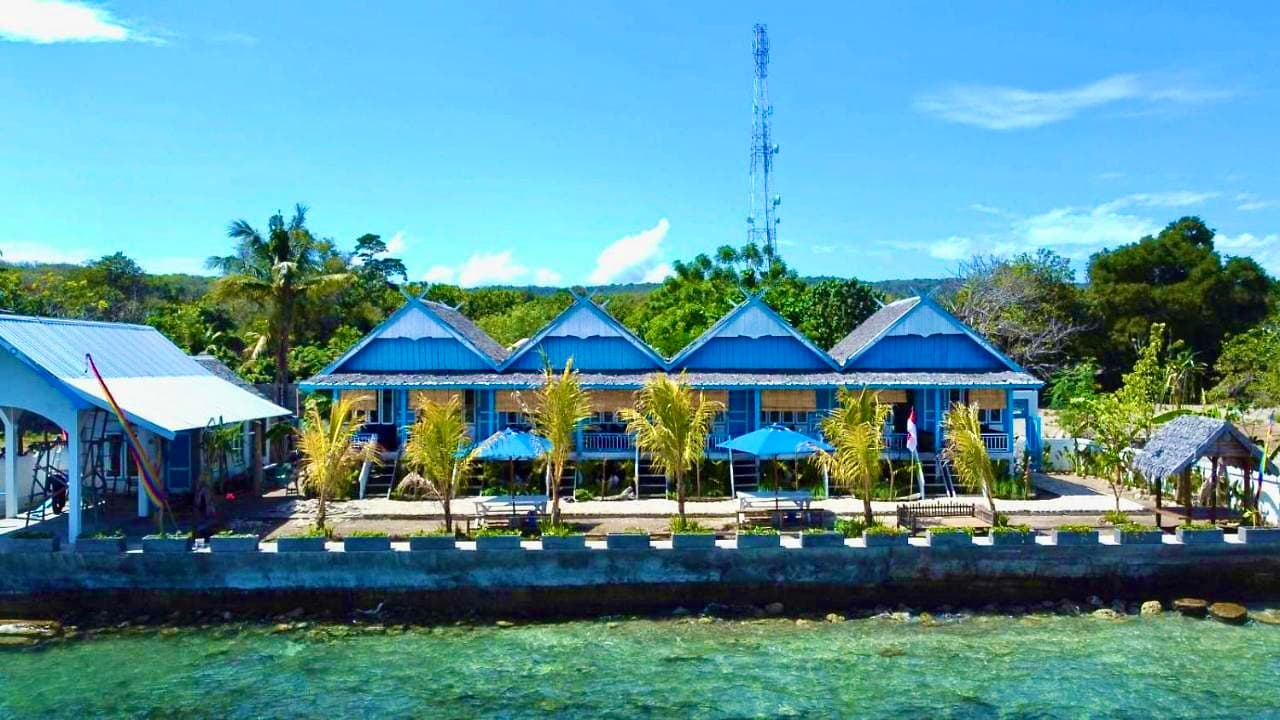
You can do Moyo as a day trip or stay a night or two. There are only a few places to stay, from village homestays to the Moyo Island resort. The snorkelling and diving off the coast are good, with reef sharks, eagle rays and healthy coral. We usually pair Moyo with a morning in Saleh Bay.
Whale sharks in Saleh Bay
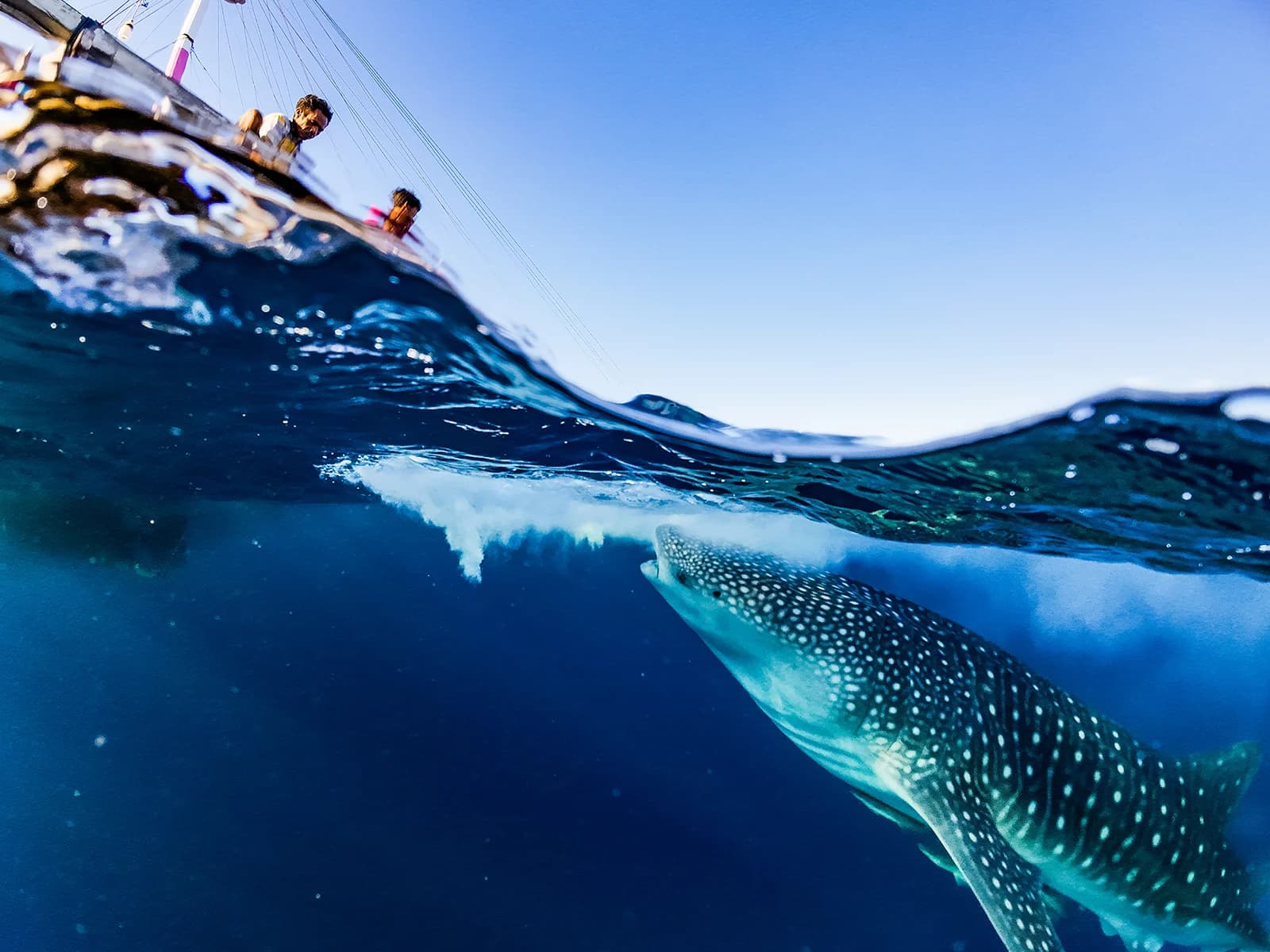
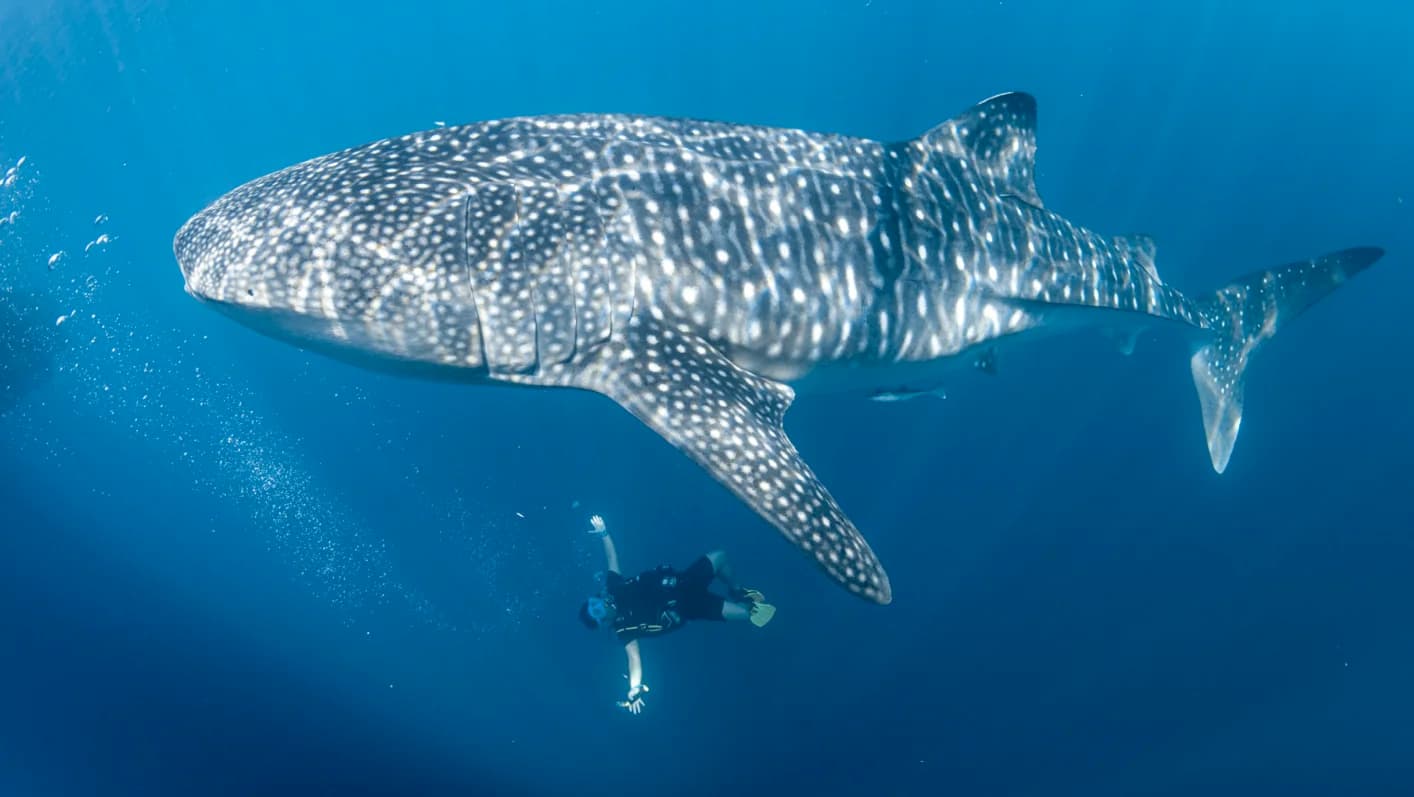
Saleh Bay is the large, deep bay that cuts into Sumbawa’s north coast. Whale sharks live here all year, which is rare. Tagging research published in 2026 found that Saleh Bay and Cenderawasih Bay in Papua are two of the only places in the world where whale sharks stay year round rather than passing through. Most of those you meet are juveniles, and five newborn sharks were recorded in the bay in a single month in 2024.
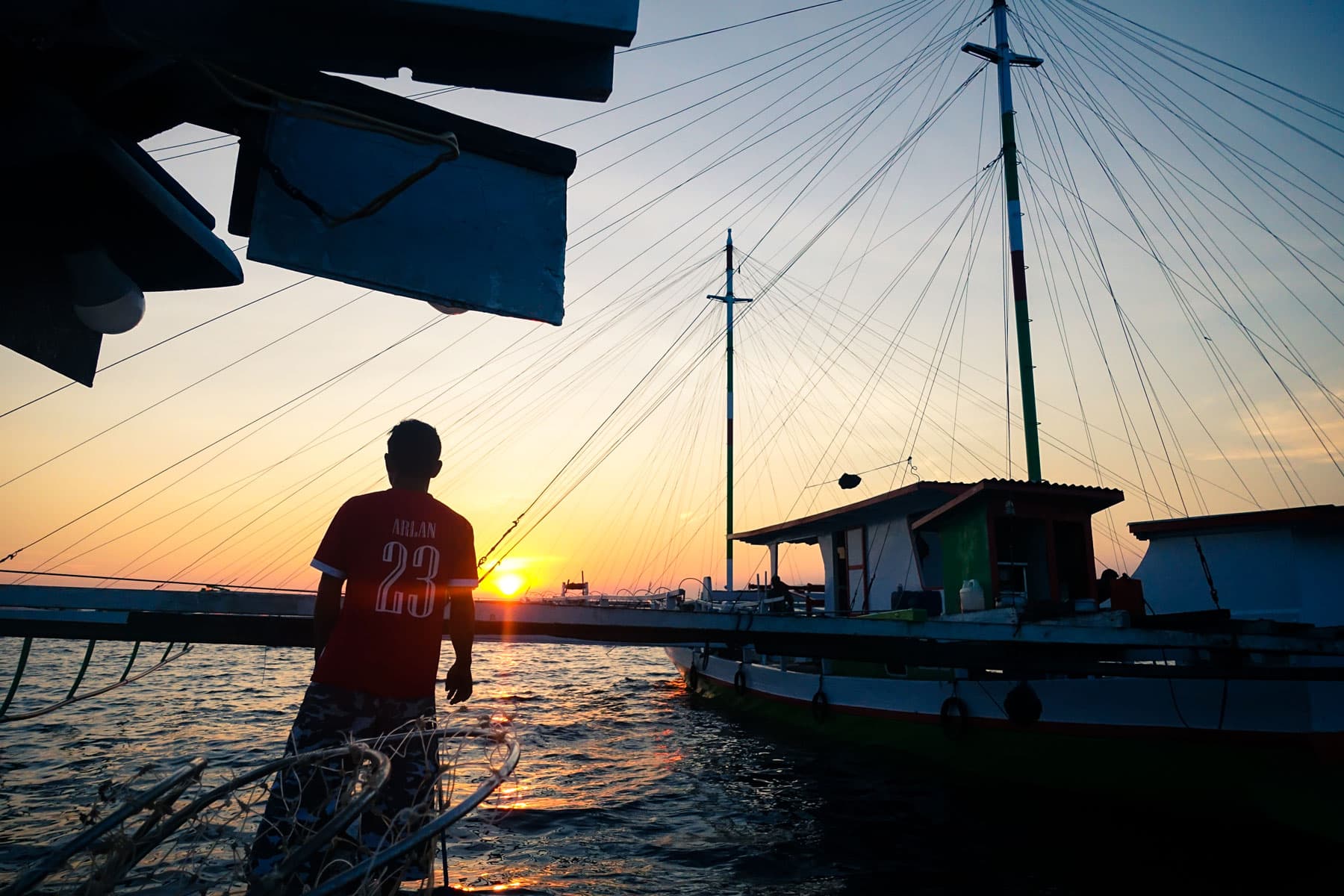
The sharks feed around the bagan, the fishing platforms anchored across the bay. Fishermen light them overnight to draw in baitfish, and when the nets come up at dawn the whale sharks come in to feed on what spills out. That is why boats leave Labuan Jambu, the nearest village, at about 4am, and you are in the water around 6am. You only need to be able to snorkel.
No wild animal is a certainty and we will not pretend otherwise, but the odds here are as good as anywhere in Indonesia. July and August bring the most boats, sometimes five or six around one platform. May, June, September and October give you strong odds with fewer people. Some operators add bait to make encounters more likely. Ask about it, and read our view on whale shark tourism in Indonesia before you choose a trip. Our 3 day whale shark trip and the shorter whale shark snorkelling trip both keep to the distance and no-touch rules. The full story, including the science, is in our Saleh Bay guide.
Mount Tambora
Tambora’s 1815 eruption was the largest in recorded history. It threw out about 100 cubic kilometres of rock and ash and killed tens of thousands of people on Sumbawa. It also lowered global temperatures enough to cause the “year without a summer” of 1816, with failed harvests and June snow in Europe and North America.
Before the eruption the mountain stood at about 4,300 metres. Today the summit is about 2,850 metres, and the caldera is 6 to 7 kilometres across. The mountain became a national park in April 2015, on the eruption’s 200th anniversary.
The climb is serious. The classic route starts at Pancasila village on the north side and takes three days and two nights with a local guide and porters. It goes through farmland, then forest, then bare volcanic slope to the rim. A shorter 4WD approach starts from Doro Ncanga in the south. It suits fit hikers who want something off the usual trail. If you want the volcano without the climb, drive out to the Doro Ncanga savannah on its southern slopes, where horses and buffalo graze on open grassland with the mountain behind.
The surf coast
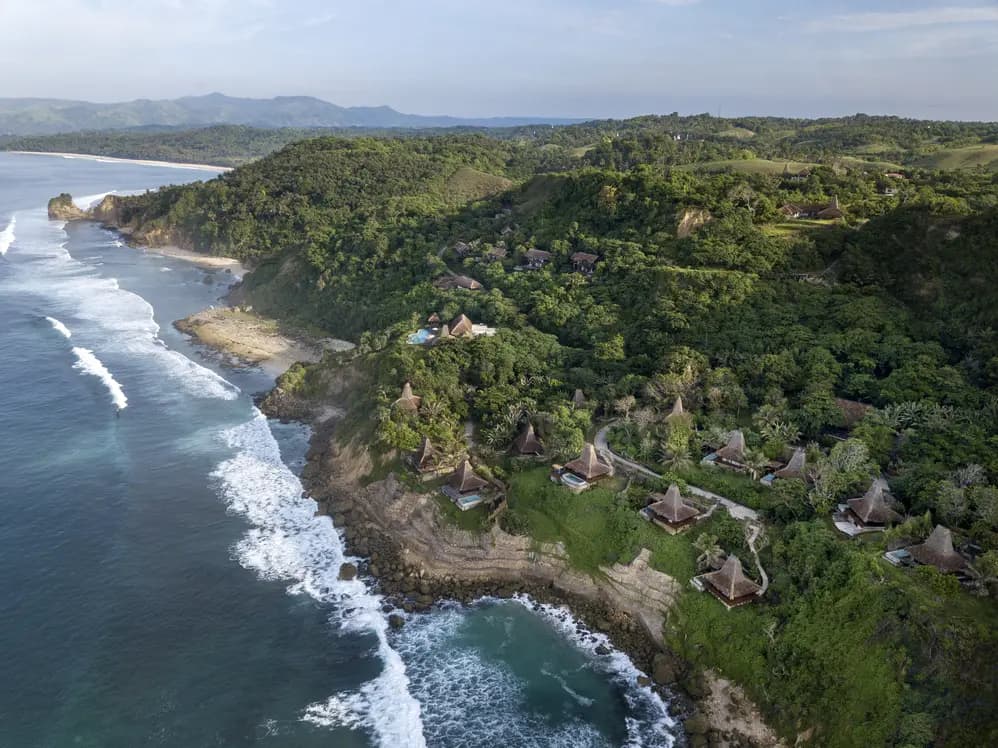
For surfers, Sumbawa mostly means Lakey Peak. Around Lakey Beach in Dompu you have Lakey Peak, Lakey Pipe, Periscopes, Nungas and Cobblestones. They sit close together and work on different swells and tides through the day.
On the southwest coast, Scar Reef, Yo-Yo’s, Supersuck and Tropical add more reef breaks. These are powerful, shallow waves over reef, for intermediate and advanced surfers, not beginners. The trade-off is line-ups far emptier than Bali’s. The prime season is the dry season, roughly April to October, when the southern swell is consistent and the wind blows offshore.
Beaches, islands and savannah
Even if you never surf, the coast is a reason to come. Maluk and Kertasari in the west are long, clean beaches with few people on them. Kenawa Island, off the west coast near the ferry port, is a tiny islet with one hill to climb at sunset and water clear enough to snorkel from the beach. Satonda Island, off the north coast near Tambora, has a saltwater lake in an old crater, ringed by forest and reached by boat.
Inland, the dry grassland around Tambora and Doro Ncanga looks more like East Africa than the green, terraced islands to the west, and it is at its best in late-afternoon light.
Culture and food
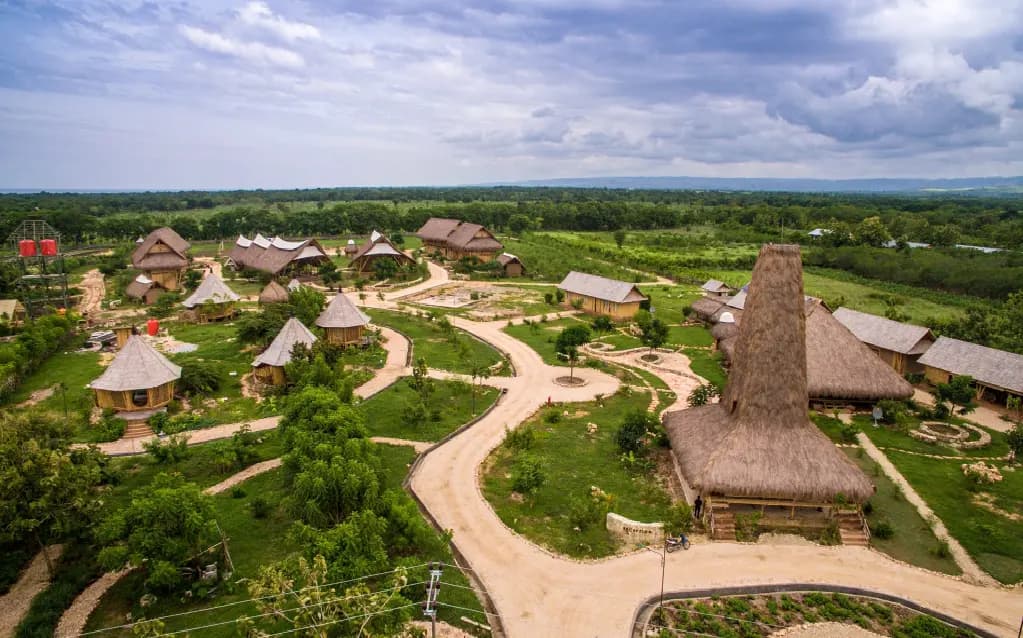
Two main peoples share the island: the Samawa in the west and the Mbojo in the east, around Bima, each with their own language. Sumbawa is more conservative than Bali, and Islam sets the rhythm of village life, so dress modestly away from the beaches. Horse and buffalo racing still take place at festival times, and the hill villages near Bima keep traditional houses and backstrap weaving.
The food is simple and regional. Look for sepat, a sour fish soup from the Sumbawa side, and grilled reef fish straight off the boat. Sumbawa is known across Indonesia for its wild honey and for susu kuda liar, milk from free-ranging mares, sold as a tonic.
Scuba diving in Sumbawa
Diving is not the main reason most people come. But Sumbawa sits on the route between Lombok and Komodo, and both its northern bays and its southwest coast have good diving that few divers see.
- Moyo Island has the easiest diving to reach, with coral gardens and drop-offs off the coast, reef sharks, eagle rays and good macro life.
- Sangeang, an active volcano off the northeast tip, has black sand slopes where gas bubbles up through the reef. It is a regular stop on liveaboards heading to Komodo.
- Satonda and the sheltered northern bays add walls and muck diving for critter hunters.
- Kertasari, on the southwest coast, has a cluster of reefs and small islands dived by small local dive shops. The house reefs around Gili Sarang, such as Champagne Reef and Sarang Garden, are shallow (5 to 18 metres) and calm, with turtles, moray eels and blue-spotted rays. They suit newer divers.
- The islands off Kertasari, Pulau Dua, Mantahari, Bikini Bottom and Anemone Garden, drop to blue-water walls at 15 to 20 metres. Expect eagle rays, reef sharks, trevally and a chance of manta rays passing through between August and December. These outer sites face the Indian Ocean and can have strong current.
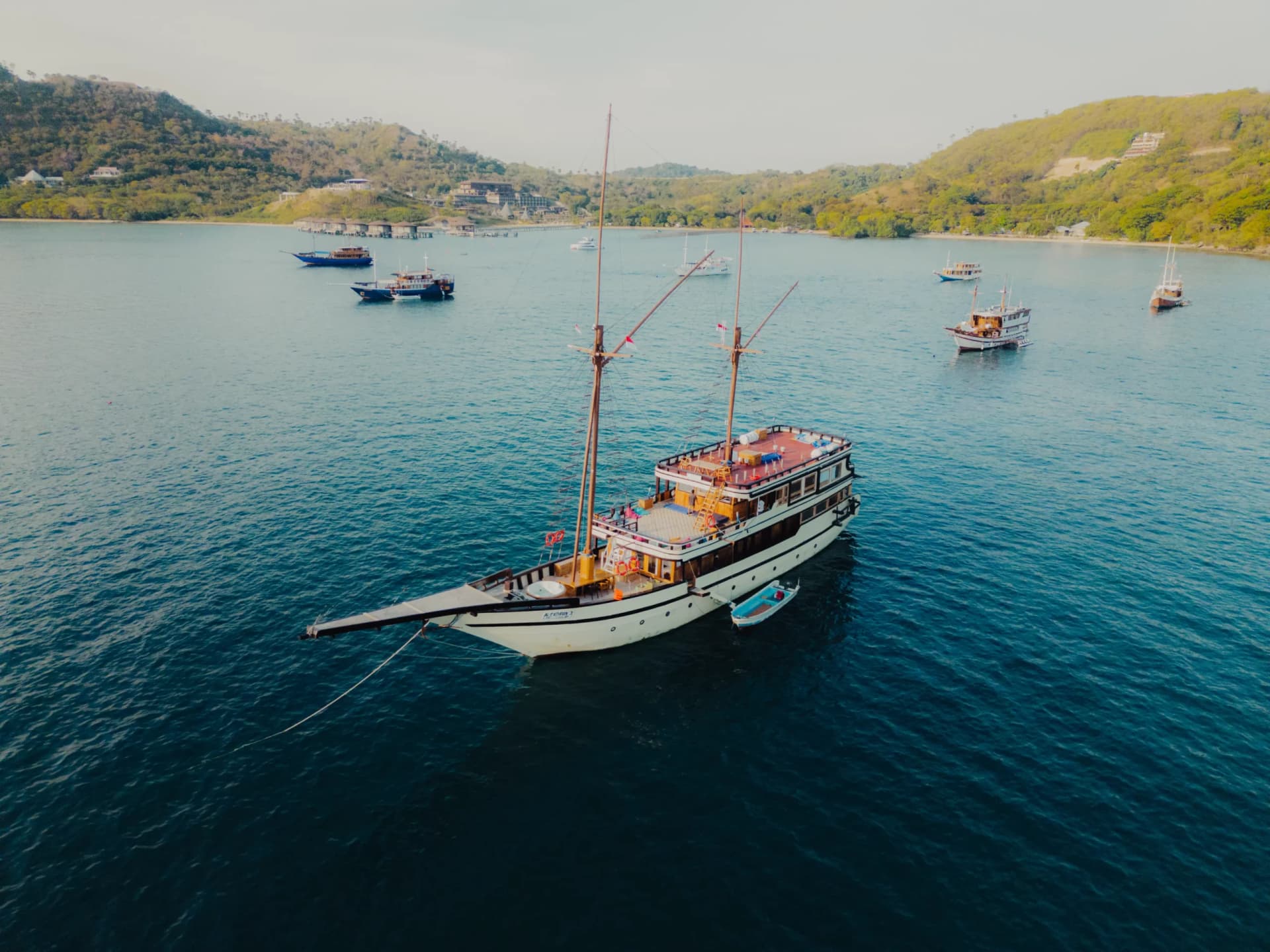
Kertasari is a land-based trip near Taliwang in the far west, the closest part of Sumbawa to the ferry from Lombok, and it pairs well with the surf coast. Most other divers see Sumbawa from a liveaboard on the way through. Our 4 day Lombok to Komodo liveaboard dives these sites on the crossing, and you can continue with a Komodo diving liveaboard or the 3 day Komodo cruise. Conditions are best from April to November, when the sea is calm and visibility is good.
Best time to visit
The dry season, April to October, is the best time for almost everything: consistent surf, the Tambora trek, calm boat crossings to Moyo and Saleh Bay. Diving stays good into November.
The wet season, November to March, turns the savannah green but brings rougher seas and some washed-out roads, so getting around is harder. The whale sharks stay in Saleh Bay all year, but boat days are easier in the dry months.
Getting there and getting around
Sumbawa has two airports. Sumbawa Besar (SWQ) in the west has Wings Air flights from Lombok and Bali. Bima (BMU) in the east has flights from Bali, Lombok and Makassar. Fly into Sumbawa Besar for Moyo and the whale sharks, and into Bima for Tambora and the east. You can also cross from Lombok by ferry, from Kayangan on Lombok’s east coast to Poto Tano on Sumbawa’s west tip. Ferries run around the clock, about one an hour, and the crossing takes about 1.5 to 2 hours.
On the island, distances are long and public transport is thin, so a private driver is the practical way to travel. The main road is decent, and the roads out to the surf coast and the Tambora trailheads are rougher. We arrange the drivers, transfers and boats for Moyo and Saleh Bay so you are not piecing it together on the ground.
Combining Sumbawa with Lombok and Komodo
Few people fly in for Sumbawa alone. To the west, Lombok is a short ferry or flight away, with its Lombok land tour and the secret Gili islands. To the east, Komodo is the natural next stop, either by liveaboard through Sumbawa’s waters or by flying on to Labuan Bajo for a Komodo diving day trip. Sumbawa is the quiet middle of the Lombok to Komodo route.
Frequently asked questions
Three to four days covers a focused trip: Sumbawa Besar as a base, a day on Moyo Island and an early morning with the whale sharks in Saleh Bay. Add days for the surf around Lakey, the Tambora trek (three days on its own) or the drive east. Many travellers fit Sumbawa into a longer Lombok to Komodo itinerary.
Surf, space and wildlife. Lakey Peak and the southwest reef breaks, Moyo Island, the year-round whale sharks of Saleh Bay, and Mount Tambora, site of the largest eruption in recorded history. It is one of the least visited islands in this part of Indonesia.
The dry season, April to October, is best for surf, trekking, beaches and boat trips, and diving stays good into November. The wet season is greener but harder to travel in, with rougher seas and some washed-out roads.
Fly into Sumbawa Besar (SWQ) in the west or Bima (BMU) in the east, mostly via Lombok or Bali, or take the ferry from Kayangan on Lombok to Poto Tano, about 1.5 to 2 hours. Choose Sumbawa Besar for Moyo and the whale sharks, Bima for Tambora and the east.
Yes. Whale sharks live in Saleh Bay all year and feed around the bagan fishing platforms at dawn, so trips leave before sunrise. No wild animal is guaranteed, but the odds are among the best in Indonesia. You only need to be able to snorkel. See our 3 day whale shark trip.
Yes, though it is not the main reason most people come. In the north, the best diving is around Moyo Island and the Sangeang volcano, mostly from liveaboards between Lombok and Komodo. In the southwest, small dive shops at Kertasari run calm house reefs and deeper island walls where manta rays pass between August and December.
Travellers who want somewhere off the usual route: surfers, hikers heading for Tambora, people coming for the whale sharks, and anyone who prefers empty beaches and local life to resorts and nightlife. It is not the easiest island for a first trip to Indonesia.
Yes, that is the usual way to do it. Sumbawa sits between the two, so you can start in Lombok, cross by ferry and continue to Komodo by road and a short flight, or on a liveaboard that dives Sumbawa on the way.
Your adventure starts here
Plan your trip to Sumbawa
Tell us what you want to see and we'll craft the perfect itinerary, usually within 24 hours.
Plan My Trip →Enquire About This Destination
Any question, special request or custom itinerary, we reply within 24hrs.
Tours & Activities in Sumbawa
Whaleshark Snorkeling Trip in Sumbawa
4 Days Lombok to Komodo Liveaboard Cruise