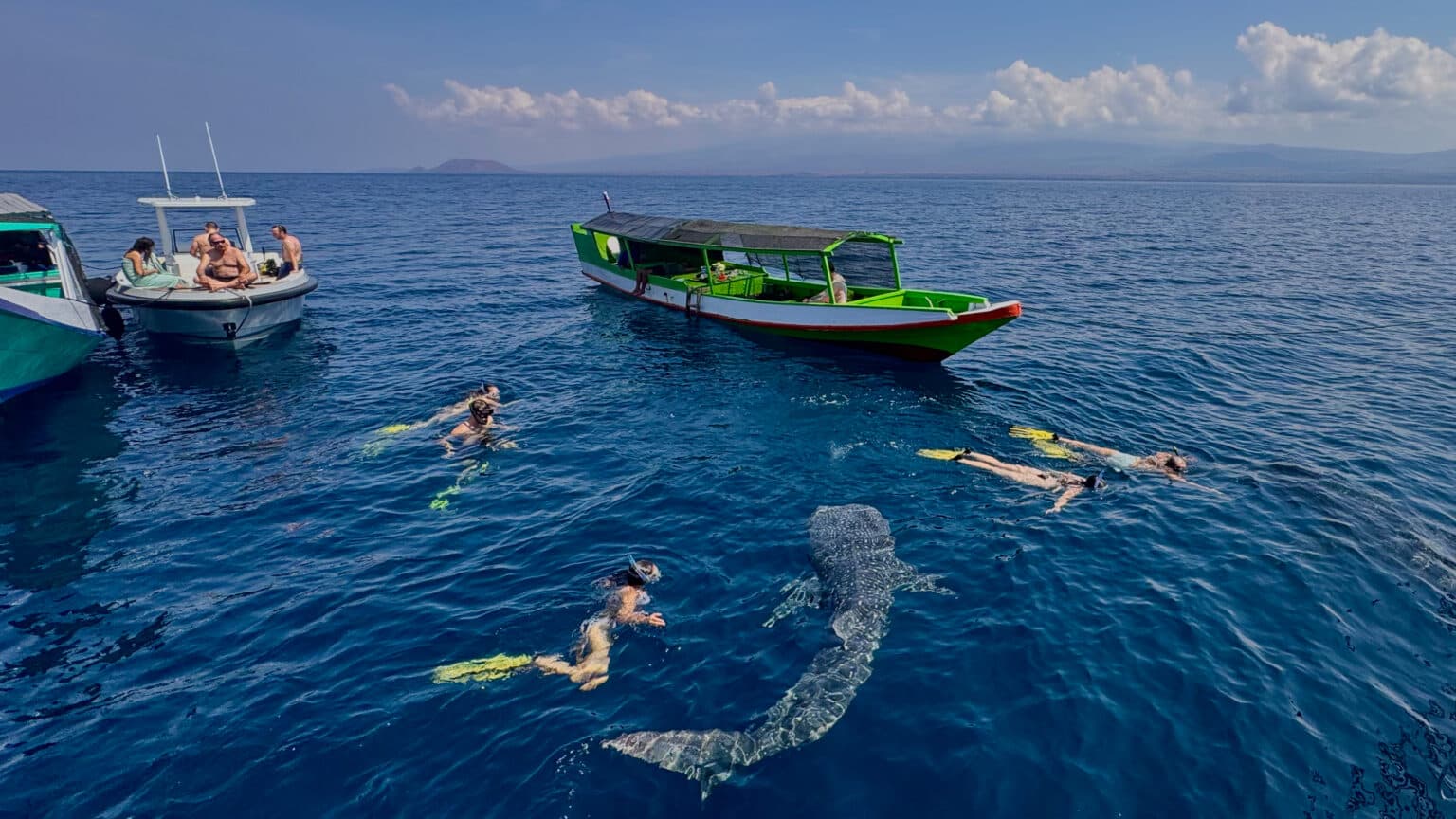
It is a question we get a lot… And the honest answer is longer than a marketing answer.
A traveller from India had read about operators “running unethical practices with the whalesharks” and wanted our policy before going further. A family in the UAE wanted Komodo but were “concerned by the crowd and unethical methods of attracting the manta rays and whale sharks seen online.” A wildlife rehabilitator from South Africa told us she wanted nothing “that exploits animals.”
We didn’t have a page to send them, so I’ve decided to write one.
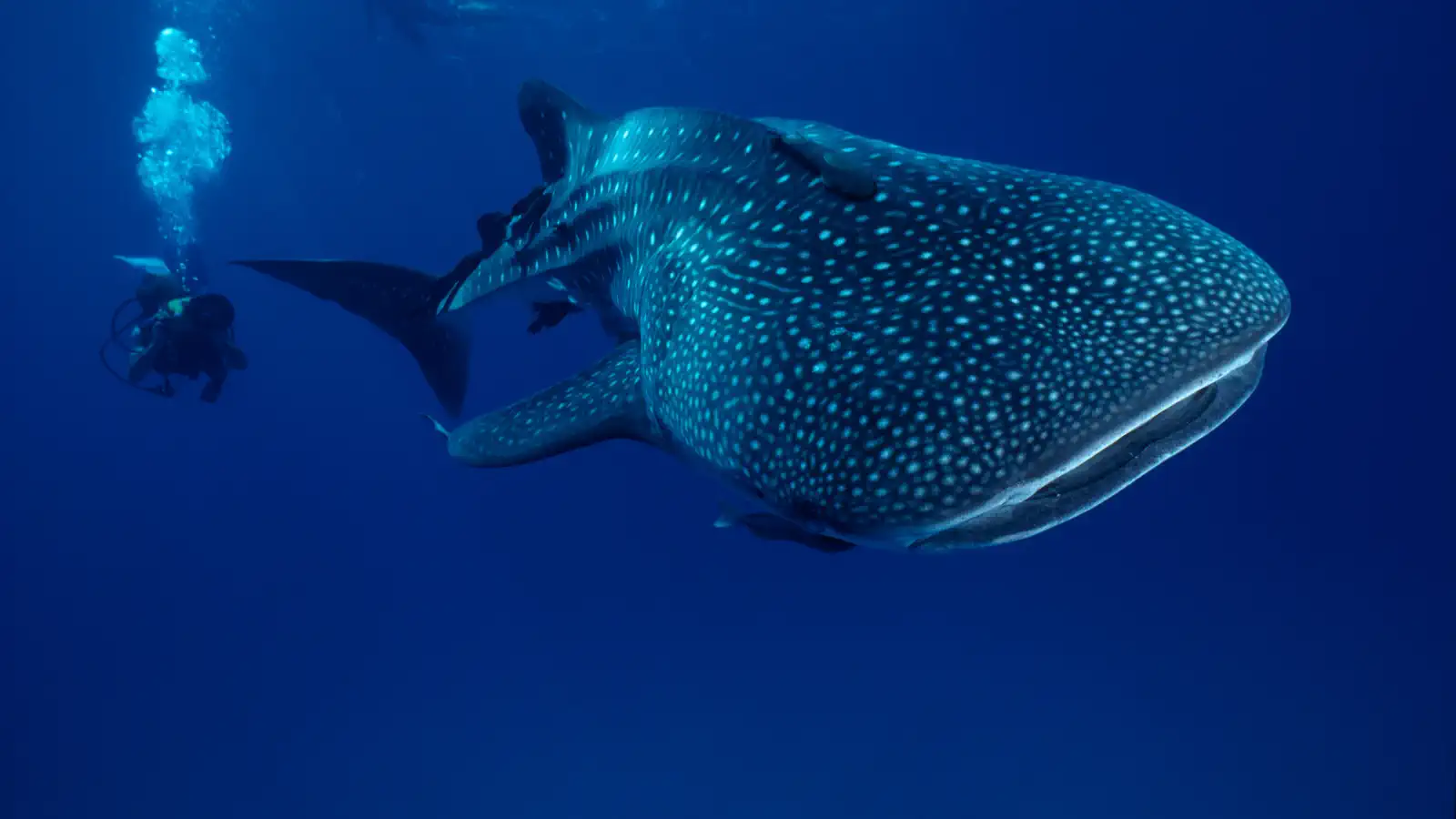
It also covers three places, not one. Saleh Bay, Cenderawasih and Gorontalo get lumped together online, and they’re not the same situation at all.
Not everyone will agree with where I land. That’s fine. I’d rather set out what I actually think, with the evidence behind it, than post something nobody could object to.
Why the sharks are there in the first place
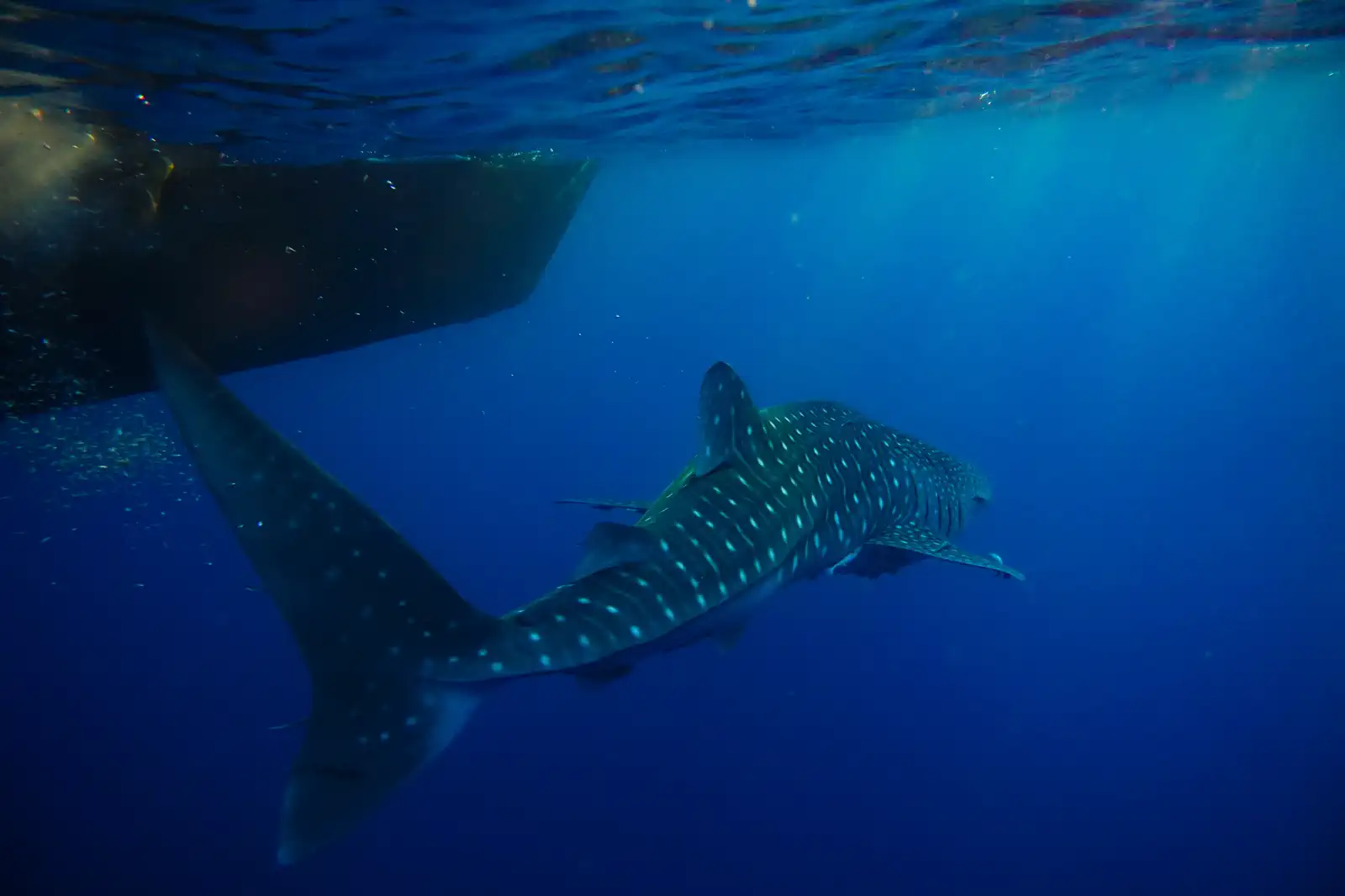
Off Sumbawa and West Papua you’ll see square wooden platforms sitting a few kilometres offshore, rigged with lights and a net slung underneath. These are bagans, lift-net fishing platforms. The design comes from Bugis and Makassar fishermen and it works the same way everywhere: burn lights all night, plankton rises, baitfish follow the plankton, haul the net at dawn.
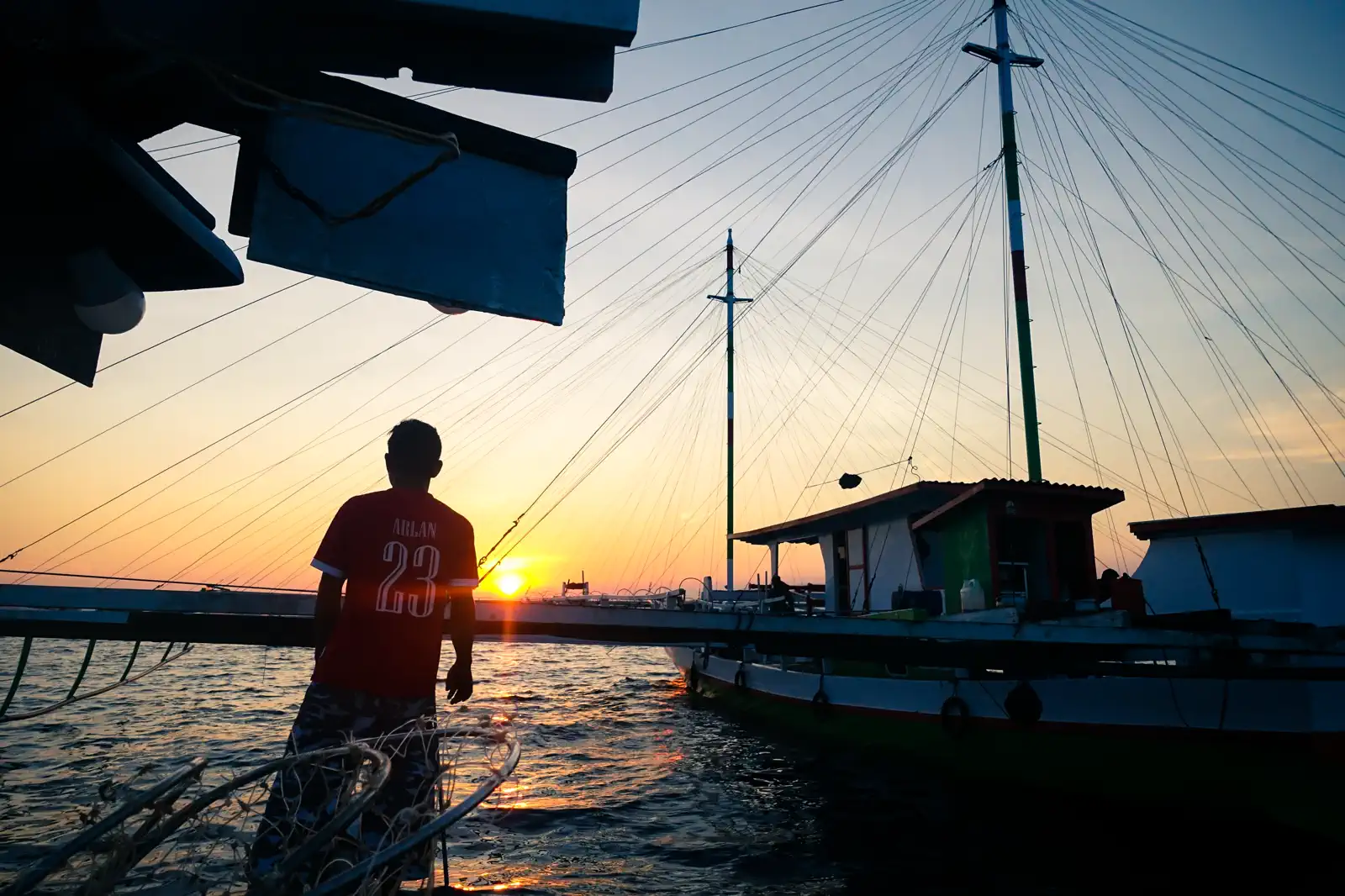
Whale sharks worked out the rest a long time ago. Every net that comes up leaks krill and small fish out of the bottom. A four-metre juvenile parked under a bagan at sunrise isn’t there because a tourist boat is coming. It’s there because breakfast falls out of the net.
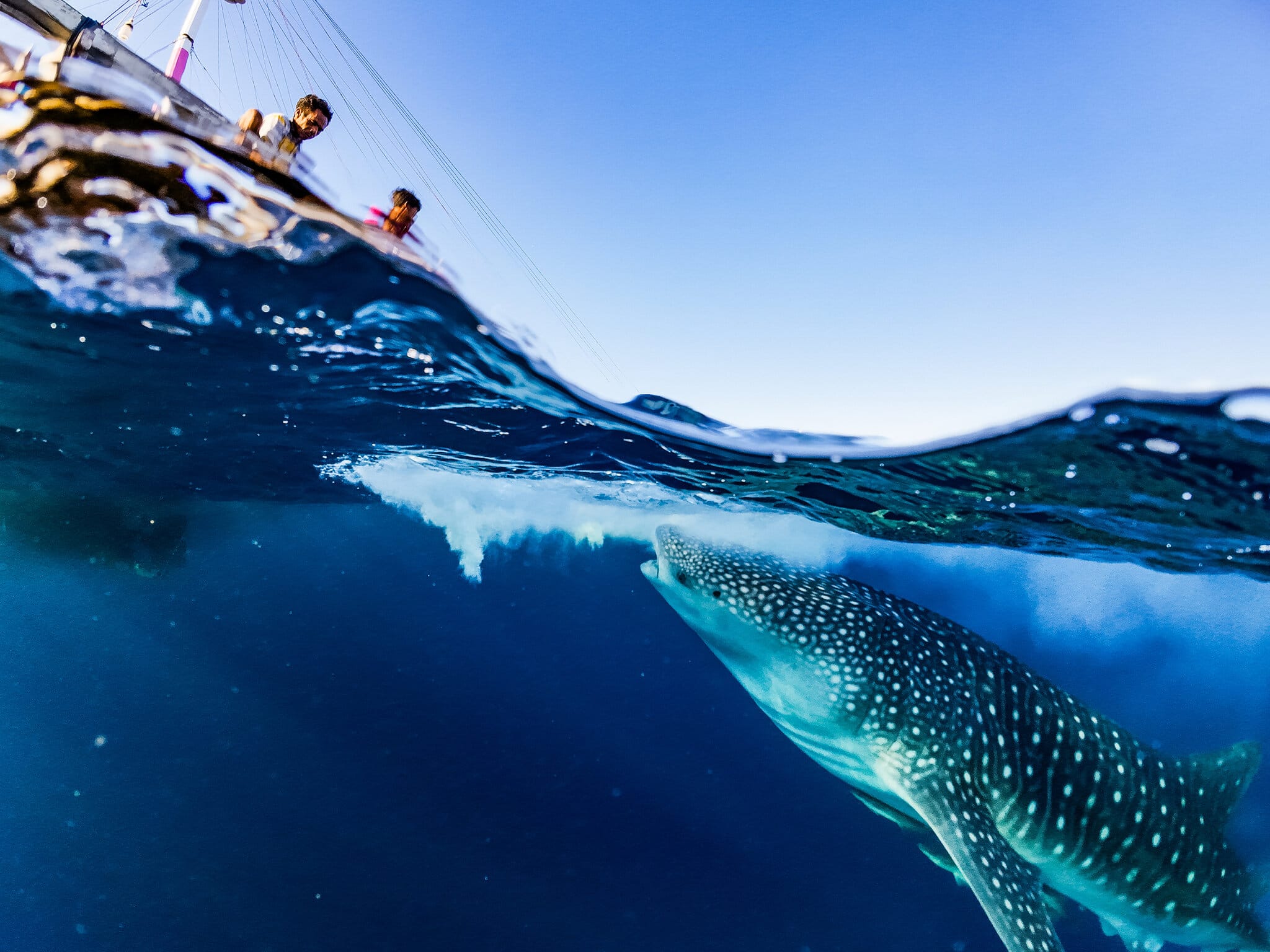
This is the part most of the argument online gets wrong. The sharks didn’t start showing up when people started selling tickets. Fishermen have worked these platforms for decades, and there are records of whale sharks feeding in these bays before the bagans arrived at all.
Are Indonesia’s whale sharks really being fed?
Some of them, some of the time. There’s a second layer on top of the first and I’m not going to pretend there isn’t.
Once a bagan crew knows a whale shark under the platform is worth money, the incentive changes. Hold the shark there until the boats arrive and you get paid. So some crews feed, deliberately, beyond whatever leaks out of the net. When the net comes up with a shark below it, word goes out and the boats come.
Anyone telling you nobody feeds whale sharks in Indonesia is selling you something.
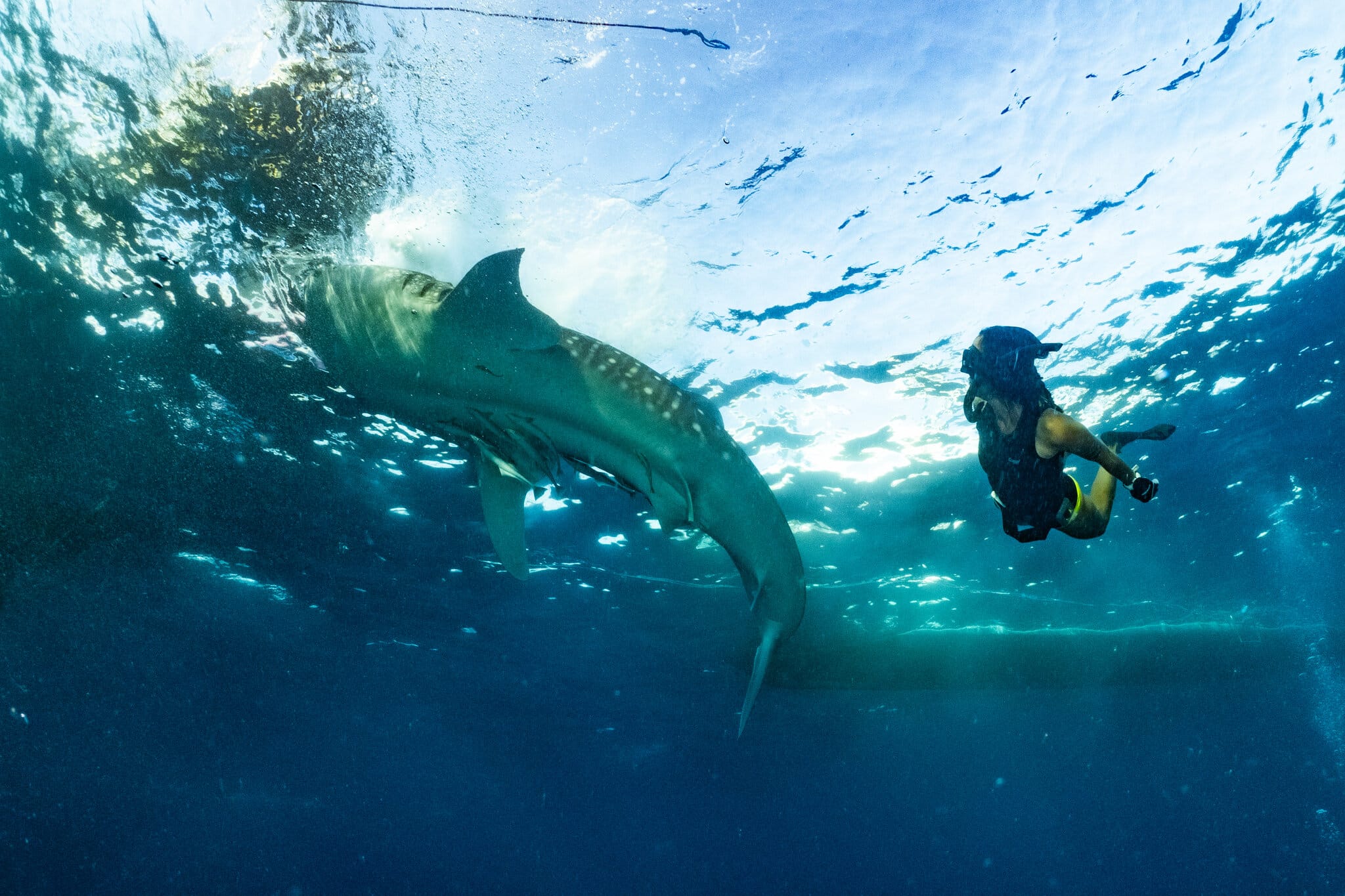
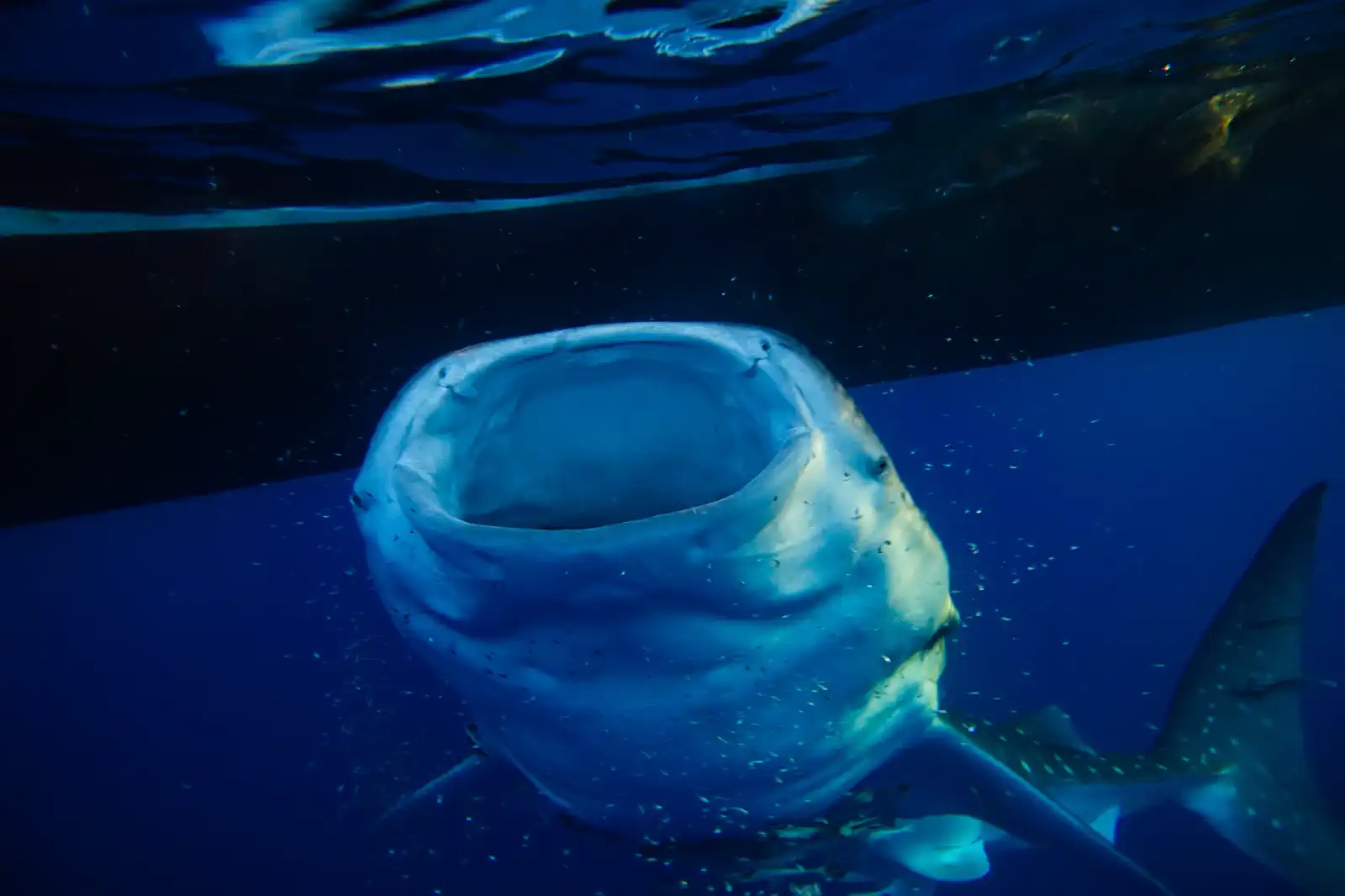
Scale matters, though. In the Bird’s Head Seascape researchers put tourism-related feeding at roughly 60 to 100 days a year. At Oslob in the Philippines, the site everyone reaches for as the cautionary tale, the sharks are fed every day of the year on 250 to 400 kilos of shrimp a morning. Those aren’t the same practice at different addresses.
And feeding does change the animal. This is the study that argues against us, so here it is. Araujo and colleagues, in Scientific Reports in 2020, put depth recorders on juvenile whale sharks at Oslob and compared provisioned days against unprovisioned ones. The fed sharks spent more time at the surface, used the water column differently, and the authors estimated their metabolic rate ran about 7 percent higher when they were working the feeding site.
That’s a real cost and I’m not going to wave it away. What it measures is a site fed every single day. Whether the same holds at sixty days a year, nobody has tested. Anyone who tells you it does, or that it doesn’t, is filling in a blank.
Both sides are looking at half of it
At least one tour company has dropped the Lombok to Komodo boat trip over this, on the grounds that fishermen were feeding the sharks to guarantee sightings. A petition from July 2025 asks an operator to stop baiting at Saleh Bay, and the woman who started it writes that she “could not ignore the shredded shrimp in the water.” A travel blogger who went, and enjoyed his day, still came away uneasy and put it better than most: the experience sits “somewhere underneath a true natural experience, and a zoo. The whales are free, but they are fed. And once an animal is fed it’s not exactly wild any longer.”
All three are describing something that happens. None of them asks the next question, which is what these fishermen were doing before, and what they’ll do if the boats stop coming.
The other camp is no better. Plenty of pages sell these trips while insisting the sharks are entirely wild and nobody has ever put food in the water. That isn’t true either.
There’s a small version of the whole problem sitting on TripAdvisor. One review of the Gorontalo site says the sharks are fed and that a net is strung around them “so they can’t even escape.” Another visitor read that, went, took photos underwater and flew a drone over it, and found no net anywhere. One of them is wrong, and thousands of people have formed a view from whichever they read first.
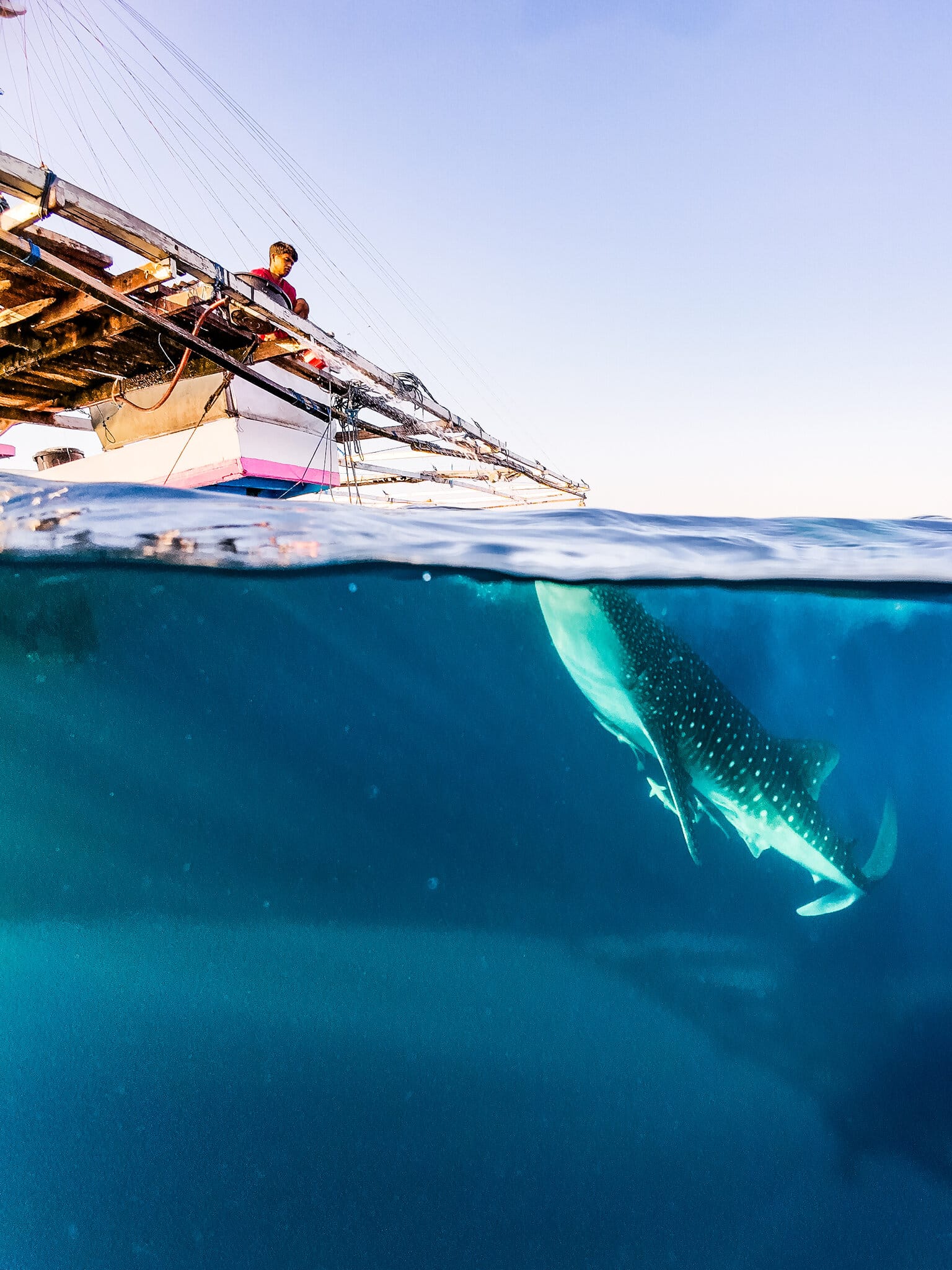
We’re not exempt from any of this. We sell these trips. Read the rest knowing that.
Three places, three different problems
Cenderawasih Bay, West Papua
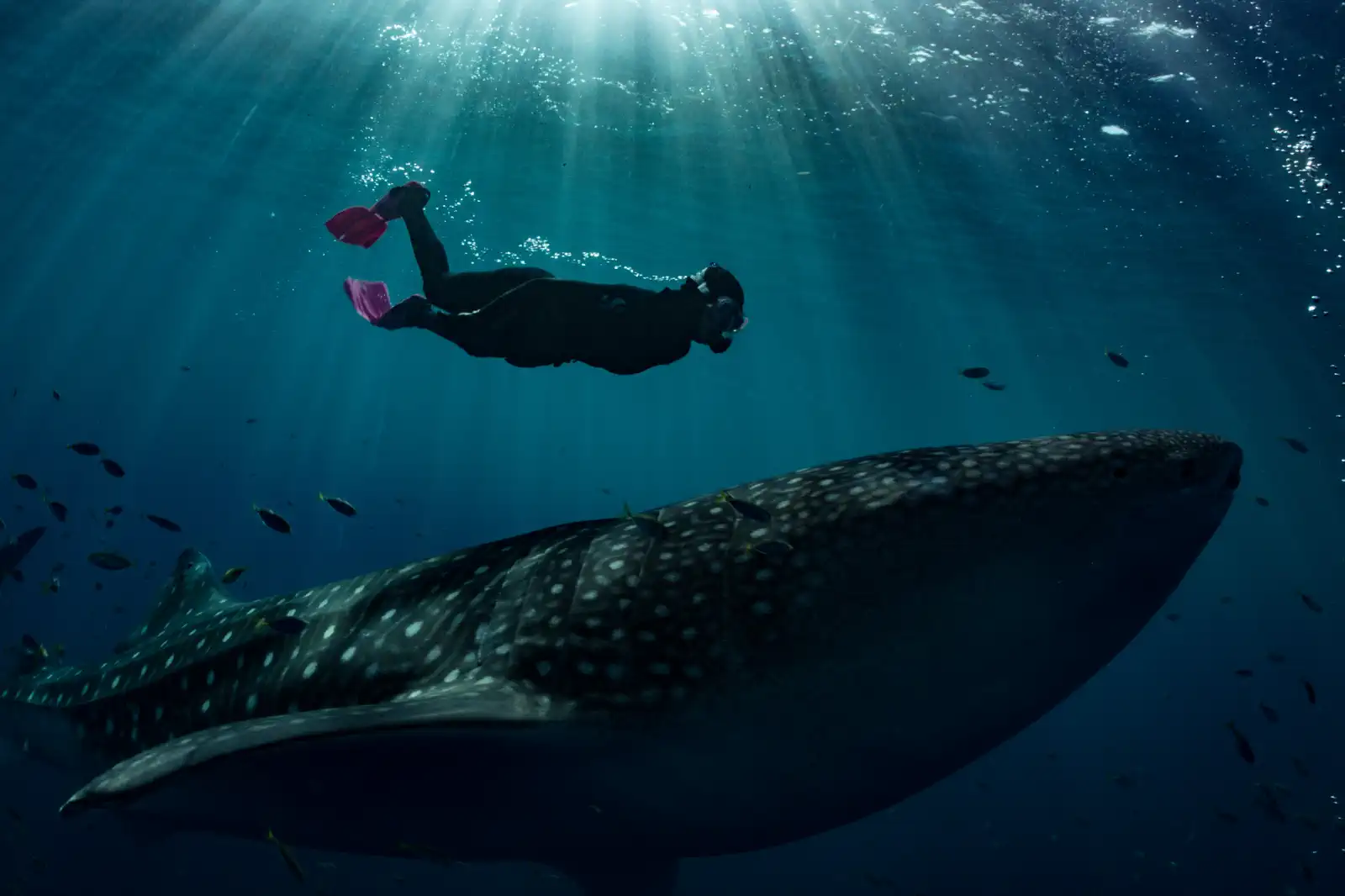
Liveaboard only, which caps the crowd by geography. This is where the longest scientific record exists. Between September 2010 and October 2023 researchers logged 1,118 sightings of 268 individual sharks, almost all of them at bagans, published in Frontiers in Marine Science in August 2025.
The sharks stay. Average residency in Cenderawasih is 77 days, against 38 at Kaimana further west. Every animal identified was an immature juvenile, mostly male, mostly four to five metres.
What threatens them here isn’t the handful of divers. It’s the fishing gear.
Saleh Bay, Sumbawa
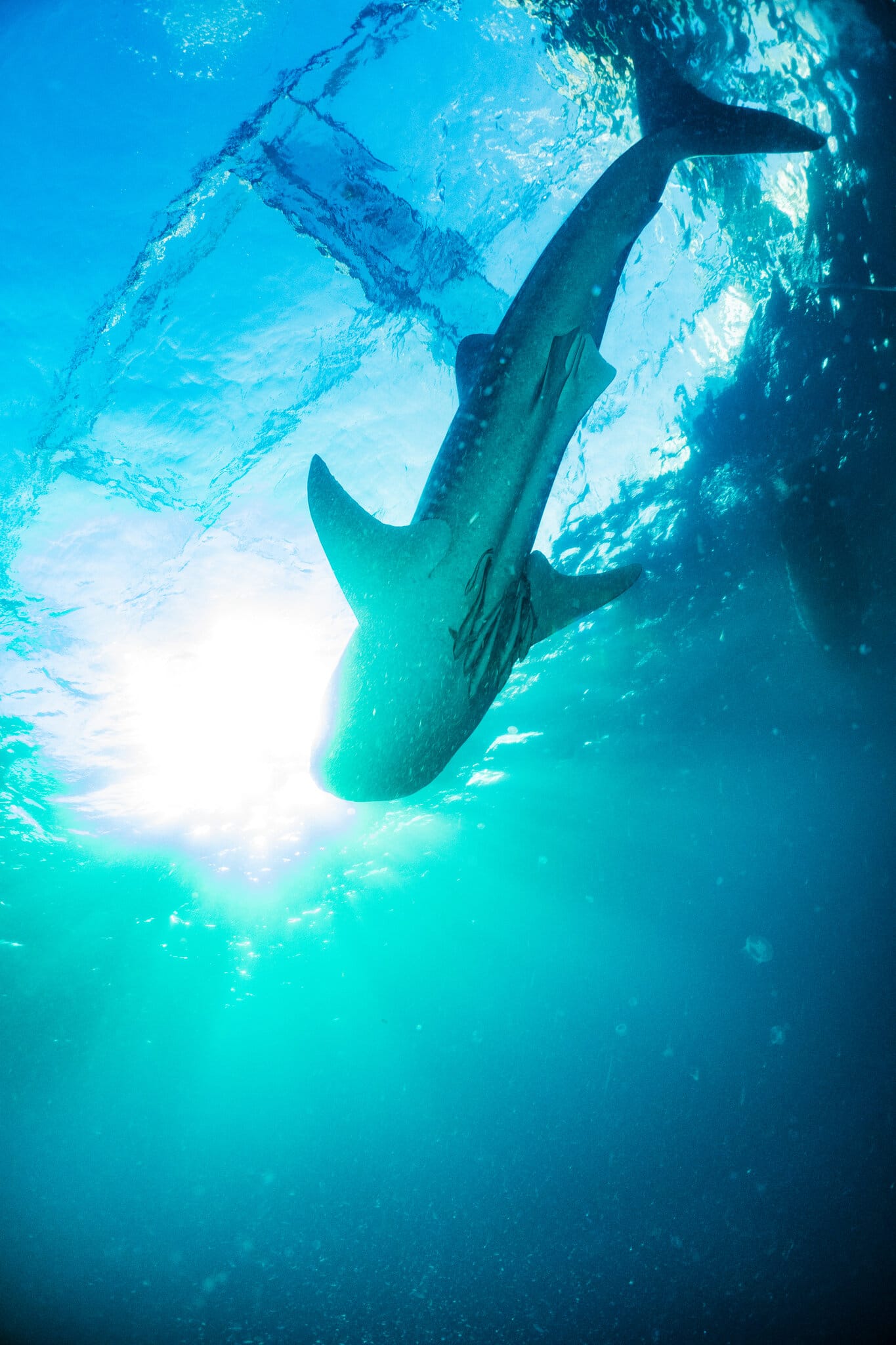
The accessible one. You can sleep in Bali, fly to Sumbawa, and be in the water the next morning. Most of the people we send there go on the Lombok to Komodo liveaboard, which stops in the bay on the way through. That accessibility is the whole problem and the whole opportunity.
It’s also the site with the most going for it right now. Konservasi Indonesia, the Elasmobranch Institute Indonesia and Conservation International satellite-tagged more than 70 whale sharks here and across the region between 2015 and 2025, one of the largest tracking datasets anywhere. The work turned up migration routes, feeding grounds and a nursery nobody had mapped. Indonesia is using that data to create a whale shark marine protected area in Saleh Bay, with no-take zones over the nursery and the juvenile habitat.
Worth sitting with for a second: those tags could only go on because the sharks come to the bagans and stay long enough to be worked with. The science protecting the species exists because of the same relationship the internet is angry about.
The warning from that team isn’t the one you’d expect. Mark Erdmann’s concern isn’t feeding, it’s the number of platforms: “if the bagans continue to expand, we’ll eventually get to a point where there’s not enough food for the whale sharks.”
Gorontalo, North Sulawesi
Different animal, and we don’t sell it.
At Botubarani the sharks come within twenty or thirty metres of the beach and get fed shrimp waste from a nearby processing plant, over a hundred kilos of it on a busy day. There’s no lift-net. Take the shrimp away and there’s no reason for a shark to be there. That’s a feeding station, not a fishery that happens to attract them.
The site is monitored, and 59 individual sharks were catalogued between 2016 and 2024. Its own history is the argument against it. When it reopened in April 2016 the rules banned touching and feeding and capped the zone at five boats. The Jakarta Post went back three months later and found the rules had lasted about a month: visitors buying shrimp heads and feeding by hand, ten boats in the zone at once.
The reason is in the same article and it isn’t villainy. A local fisherman said the boat limit had cut his daily income from 300,000 or 400,000 rupiah to between 50,000 and 100,000. Rules that take food off a family’s table don’t survive, however good they look on paper.
Instead of what?
Here’s the question nobody asks.
Bagan crews in Saleh Bay used to spear these sharks. Not out of cruelty. A five-metre animal in a lift net wrecks the gear, tangles everything, takes an hour to clear, and is also several hundred kilos of meat. The fishermen will tell you so themselves if you ask.
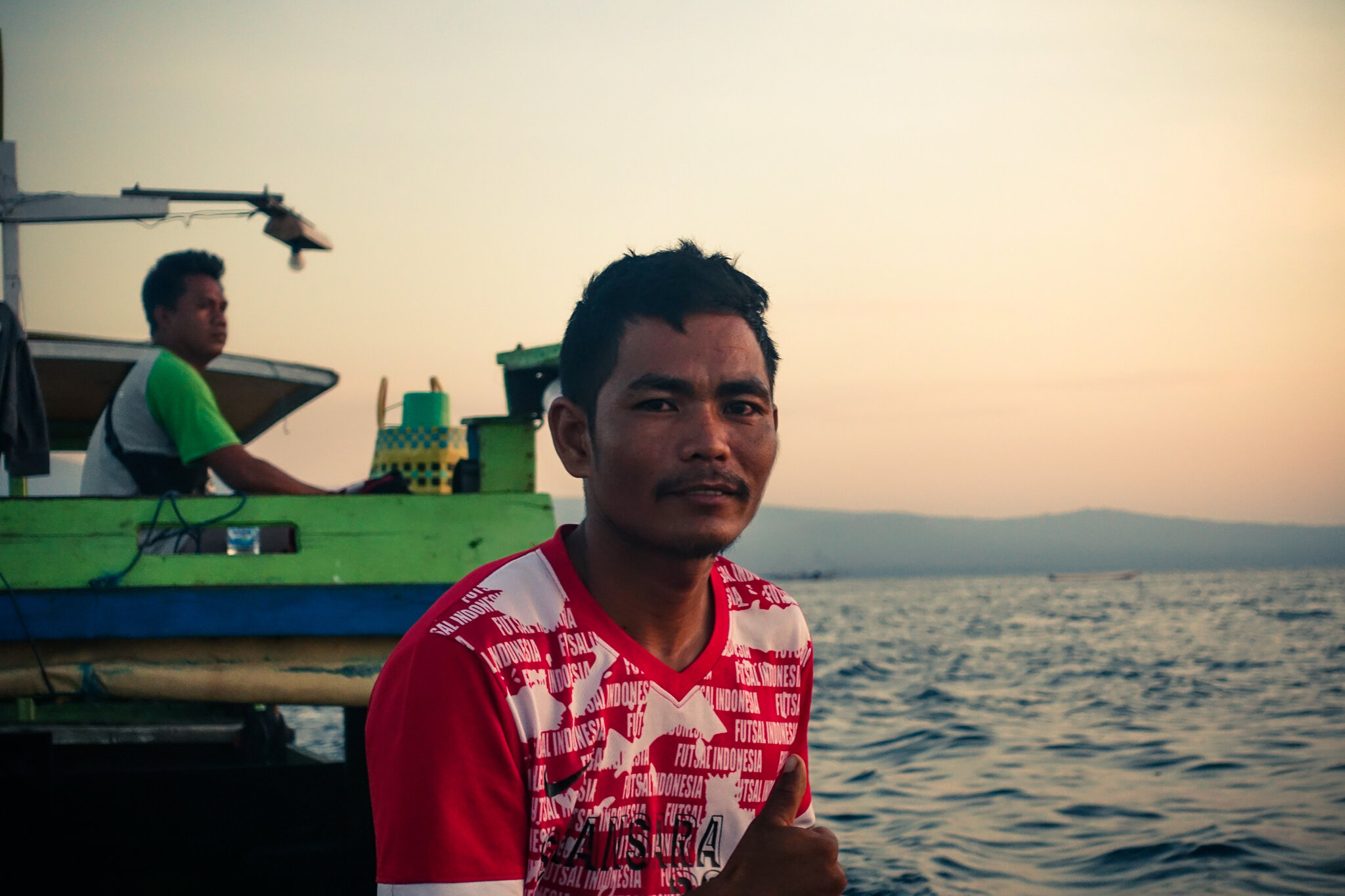
Today those same crews make several times more from a small fee per tourist boat than they ever made fishing that way. The shark under the platform went from a problem to an asset.
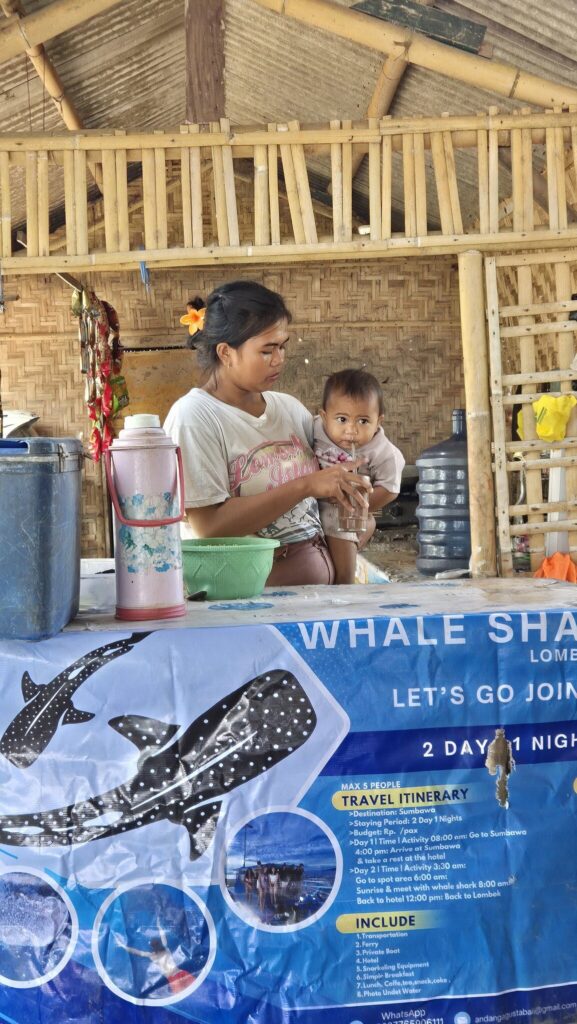
If you want to see the alternative it isn’t hypothetical and it isn’t far. On Lembata, east of Flores, the village of Lamalera hunts from open boats with hand-thrown harpoons. There’s no tourism to speak of. Their word for a whale shark is hiu bodoh, stupid shark, because the animal doesn’t even try to get away when the harpoon comes.
Whale sharks have been fully protected in Indonesia since ministerial decree 18 of 2013. They get hunted anyway, in places where nothing else pays.
So when someone tells me feeding whale sharks is indefensible, my answer is: compared to what? Not compared to Ningaloo, where enough sharks turn up naturally to run tourism without any of this. Compared to the harpoon, which is what these same waters had before.
What actually hurts them
The Frontiers study catalogued injuries on those 268 sharks in Cenderawasih and Kaimana. These numbers are from that region, not from Saleh Bay, and anyone quoting them about Saleh Bay is guessing.
Just under 77 percent carried injuries or scars. Most were minor, abrasions and nicked fins. Boat propellers accounted for 2.4 percent. Predators, 3.4 percent. The largest share by far, around 64 percent, came from other human sources, and the study points at the fishing platforms themselves and entanglement in gear.
The propeller strikes everyone blames on tourist boats are the smallest identified category, and even those couldn’t be pinned on tourism rather than the fishing fleet.
I’m not going to pretend the study clears us. It doesn’t. The authors write that the injury rate from negative interactions “with fisheries and tourism” shows the need for better management. Tourism is named. We’re part of what needs managing.
What I will say is that after more than a decade of work at the most criticised whale shark sites on earth, nobody has yet shown a population declining because of tourism.
What we do, and what we won’t promise
We sell whale shark trips in Saleh Bay. I’m not going to pretend otherwise or stop.
What we will do is tell you which months are which. The season runs April to November, and our practical guide to Saleh Bay covers the logistics. July and August are the busiest months on the water and they are not the months with the most sharks. That’s worth saying plainly, because plenty of pages imply otherwise: you aren’t buying better odds along with the crowd, you’re just buying the crowd. If those are your only possible dates, book them and go knowing you’ll be sharing the water. If your dates move at all, almost any other month in the season is a better trip.
What does move the odds is the moon. Bagans fish on dark nights, because their lamps only beat the natural light when there isn’t much of it. On a bright moon the light spreads across the water, the baitfish scatter and go deep, catches collapse, and plenty of crews don’t go out at all. No net coming up means no krill spilling out of it, and less reason for a shark to be under the platform. Aim for the dark half of the lunar month if you can, and don’t expect much on the three or four nights either side of a full moon.
That last point is also the best evidence I have for everything above. If these sharks turned up for the tourists, the moon wouldn’t matter. It matters because they’re following the fishing.
Ask us and you’ll get the same answer to your face that you’re getting here.
We don’t promise a sighting in any month, at any site. Anyone who does is either lucky or lying.
In the water: no touching, ever. No flash. Stay off the animal’s path and let it come to you. Don’t chase it for a photograph. These are the rules everywhere in Indonesia and they exist because the animal is protected by law, not because your guide is being difficult.
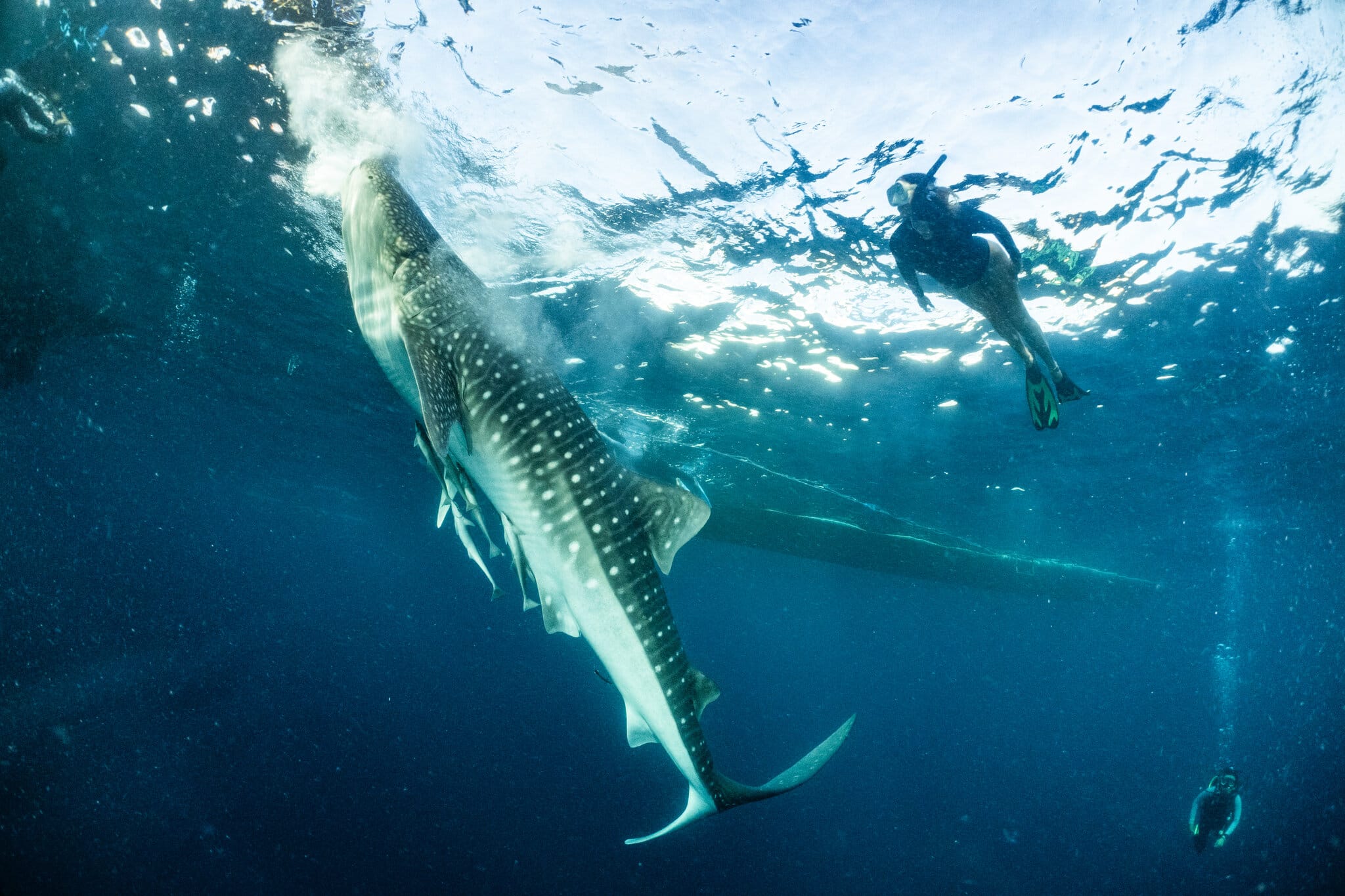
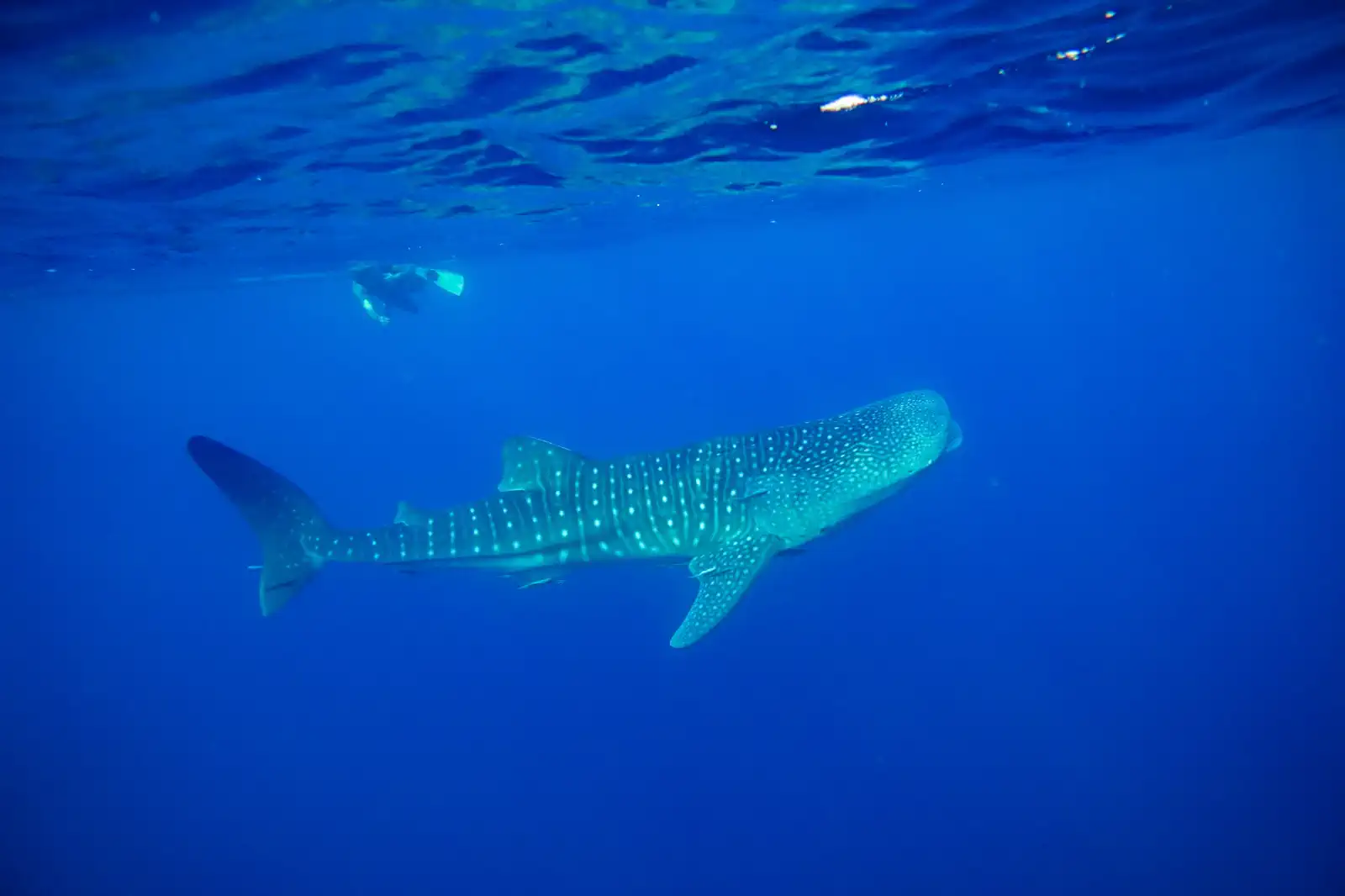
And if what you actually want is a wild encounter with nothing arranged about it, say so. I’ll tell you honestly that Indonesia isn’t the place for a guaranteed one, and where your odds are better.
What we’re watching
The marine protected area at Saleh Bay is the thing to follow. Gorontalo’s rules lasted a month in 2016 because they cost fishermen money and gave nothing back. The Saleh Bay plan is being built with the bagan crews rather than against them, which is the only version of this that has ever held anywhere.
We’ll update this page when we know whether it worked.
Watch it before you decide
Andrew Fraser’s “Inside Asia’s Most Hated Tourist Attraction” came out in August 2026 and it’s the reason this page exists in the shape it does. He filmed the sharks feeding under the platforms, asked the crews what they used to do to them, then went to Lamalera and filmed what happens in a place with no tourism at all. Nineteen minutes.
I don’t agree with him on everything. He lands closer to accepting the feeding than I do, and he says so plainly at the end. But nobody else has put both halves of this on film, and twenty minutes of watching will tell you more than any article about it, this one included.