The Banda Sea has a handful of dive centres, in Ambon and on Banda Neira, and two short seasons. Its best diving, the hammerhead seamounts and the volcanoes out in the basin, is beyond the reach of a day boat, so a liveaboard is the way to see it properly. This guide covers the four trip shapes boats actually run, the two windows when they run them, what you will dive, how to pick a boat from the 60-odd we list, the experience you need and what it costs.
For the sites themselves and the spice-trade history above water, start with the Banda Sea destination page and our Banda Sea diving overview. This page is about the trip: which crossing, which month, which boat.
Why a liveaboard is the best way to dive the Banda Sea
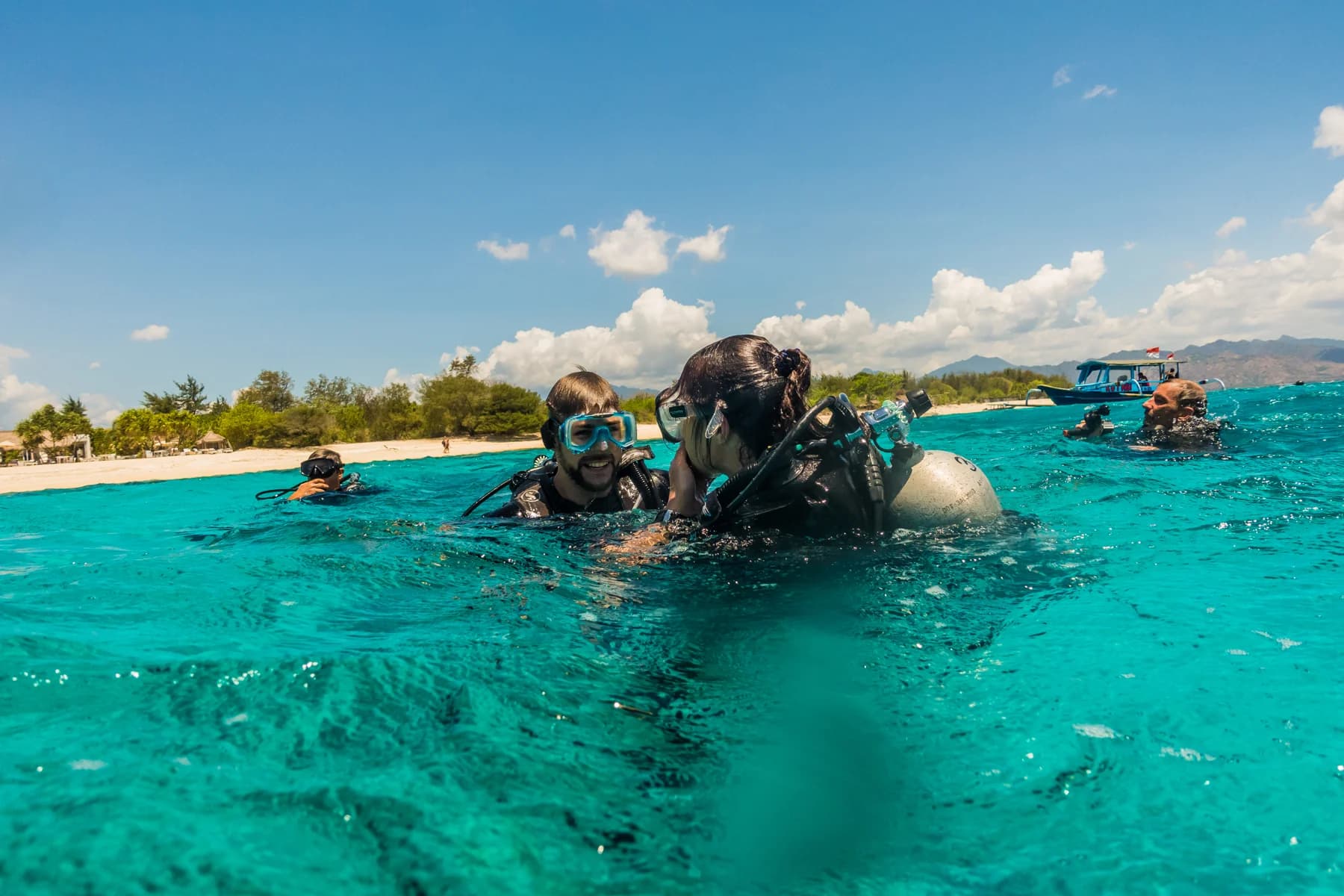
Look at a map and the reason is obvious. The Banda Sea is a deep basin between Ambon in the north, Maluku’s southern arc in the south and Papua in the east, and the dive sites are volcanic cones and seamounts standing alone in open water: Manuk, Suanggi, Nil Desperandum, Serua, the Banda Islands themselves. The nearest one is a night’s sail from Ambon. Ambon has a few dive centres for the muck diving in its bay, and Banda Neira has a couple that dive the lava flow and the walls of Hatta and Ai by day boat, which makes a good land stay. None of them can reach the seamounts and come back the same day.
So the trips that reach them are boat trips, and most are crossings rather than loops. Liveaboards spend the dry season in Komodo and the northwest monsoon in Raja Ampat, and the Banda Sea is what lies between the two. Twice a year the fleet moves through it, and those passages are the trips you can buy.

The four trip shapes
Every itinerary we have sold in the last two years fits one of these four. The ports, lengths and months below come from the operators’ schedules. The exact dates change every year.
1. The Ambon to Banda loop, 7 to 9 nights
Out of Ambon (Tulehu harbour, 40 minutes from the airport), south to the Banda Islands, out to Manuk and the hammerhead seamounts, back to Ambon. This is the shortest way to see the whole region and the one to pick if you have a week. It runs at both ends of the season, September and October and again in March and April. Ambon Bay’s muck diving usually opens or closes the trip.
2. The Banda crossing to or from Raja Ampat, 10 to 12 nights
Ambon, Banda Neira, the seamounts, then east across open water to Koon and Misool and up into Raja Ampat, or the same route in reverse in April when the boats leave Raja Ampat. One way, and each boat does it once a year in each direction. You get the Banda Sea and southern Raja Ampat on one ticket and fly home from Sorong instead of Ambon. Dewi Nusantara and Mermaid I both run versions of it, as 12 to 14 day trips.
3. The Forgotten Islands route from Flores or Alor, 12 to 15 nights
Maumere or Alor to Ambon through the Forgotten Islands, the long chain of reefs and atolls south of Banda that almost nobody dives. This is the crossing boats make in September and October on their way north from Komodo. Tiaré ran it as 13 days in September 2026 and Jelajahi Laut as 15 days the year before. The most remote diving in Indonesia, and the longest time at sea.
4. Halmahera and the northern Maluku crossings, 9 to 10 nights
A few boats link Ambon with Ternate through the Banda Sea’s northern edge and Halmahera, or run Ambon to the Teon, Nila and Serua volcanoes and back. Kurabesi Nusantara does Tulehu to Ternate in nine days in September. Fewer hammerheads, more untouched reef, and the only way to dive Halmahera’s east coast without a charter.
| Trip | Ports | Length | Months | Dives |
|---|---|---|---|---|
| Ambon to Banda loop | Ambon to Ambon | 7 to 9 nights | Sep to Oct, Mar to Apr | 15 to 20 |
| Banda crossing | Ambon to Sorong, or reverse | 10 to 12 nights | Oct to Nov, Apr | 25 to 30 |
| Forgotten Islands | Maumere or Alor to Ambon | 12 to 15 nights | Sep to Oct | 30 to 40 |
| Halmahera crossing | Ambon to Ternate, or reverse | 9 to 10 nights | Sep, Apr | 20 to 25 |

When the boats go, and why only then
Two windows: roughly the second week of September to the end of November, and March to April. They are the shoulders between the two monsoons, when the Banda Sea is calm enough for a wooden boat to cross 200 kilometres of open water and hang at anchor off a seamount. In the southeast monsoon (May to August) the southern seamounts are unworkable, and in the northwest monsoon (December to February) the fleet is in Raja Ampat and the sea state in the Banda basin is worse, not better.
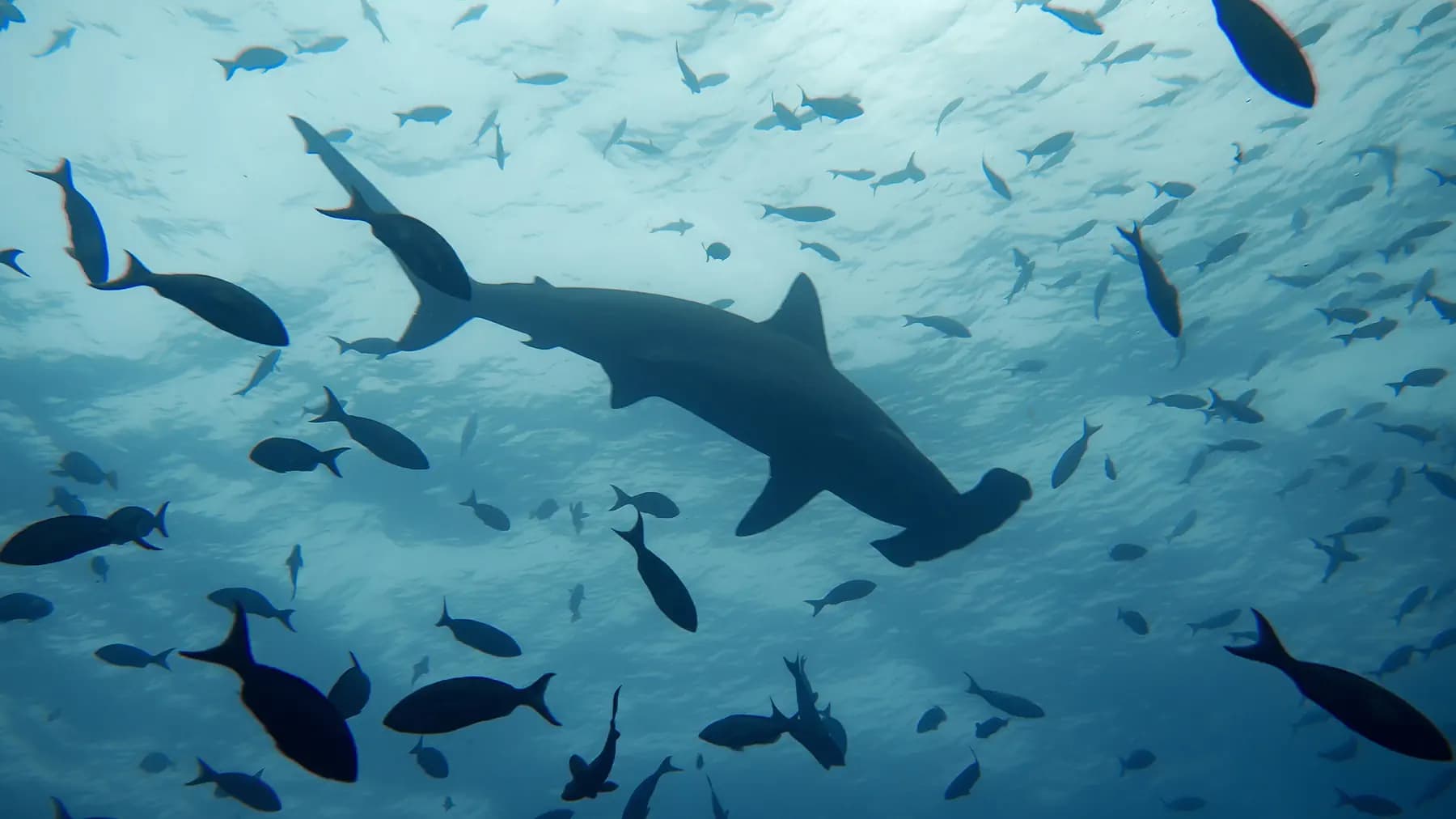
Hammerheads are the reason most divers choose a month. Scalloped hammerheads school off the deep seamounts at Manuk, Suanggi, Nil Desperandum and Serua, and the October and November trips give the best odds, with April a close second. Odds is the word: the schools sit deep and move, and a trip that hangs in the blue three mornings running can see forty animals or four. Boats that run the loop in early September or late April see them less often. Water is 27 to 29 degrees, but the hammerhead dives are long and deep and you will want a 5 mm suit for them.
What you dive

- Manuk. An active volcano an overnight sail from Banda, ringed by sea kraits in numbers found almost nowhere else, with hammerheads in the blue off its slopes. Current, depth and a long swim out. The trip’s signature dive.
- Suanggi, Nil Desperandum and Serua. The other hammerhead seamounts, each a lone cone or reef rising from deep water. You drop, swim into the blue and wait.
- Gunung Api lava flow. The 1988 eruption on Banda Neira’s volcano ran into the sea, and the slope of new lava is now covered in some of the fastest-growing hard coral measured anywhere. Shallow, easy, unlike anything else on the route.
- Banda Neira jetty. Mandarinfish at dusk under the town pier, plus the walls of Hatta and Ai for reef sharks, schooling fusiliers and big gorgonians. The land morning for the forts and the nutmeg groves fits here.
- Karang Hatta and Koon. Drift dives on the crossing days: reef sharks on the edge of the trench at Hatta, and at Koon a wall of jacks, surgeonfish and fusiliers that boats time for the tide.
- Ambon Bay. Muck diving at the start or end, with rhinopias, mimic octopus, flamboyant cuttlefish and the Ambon scorpionfish. Bring the macro lens even on a shark trip.
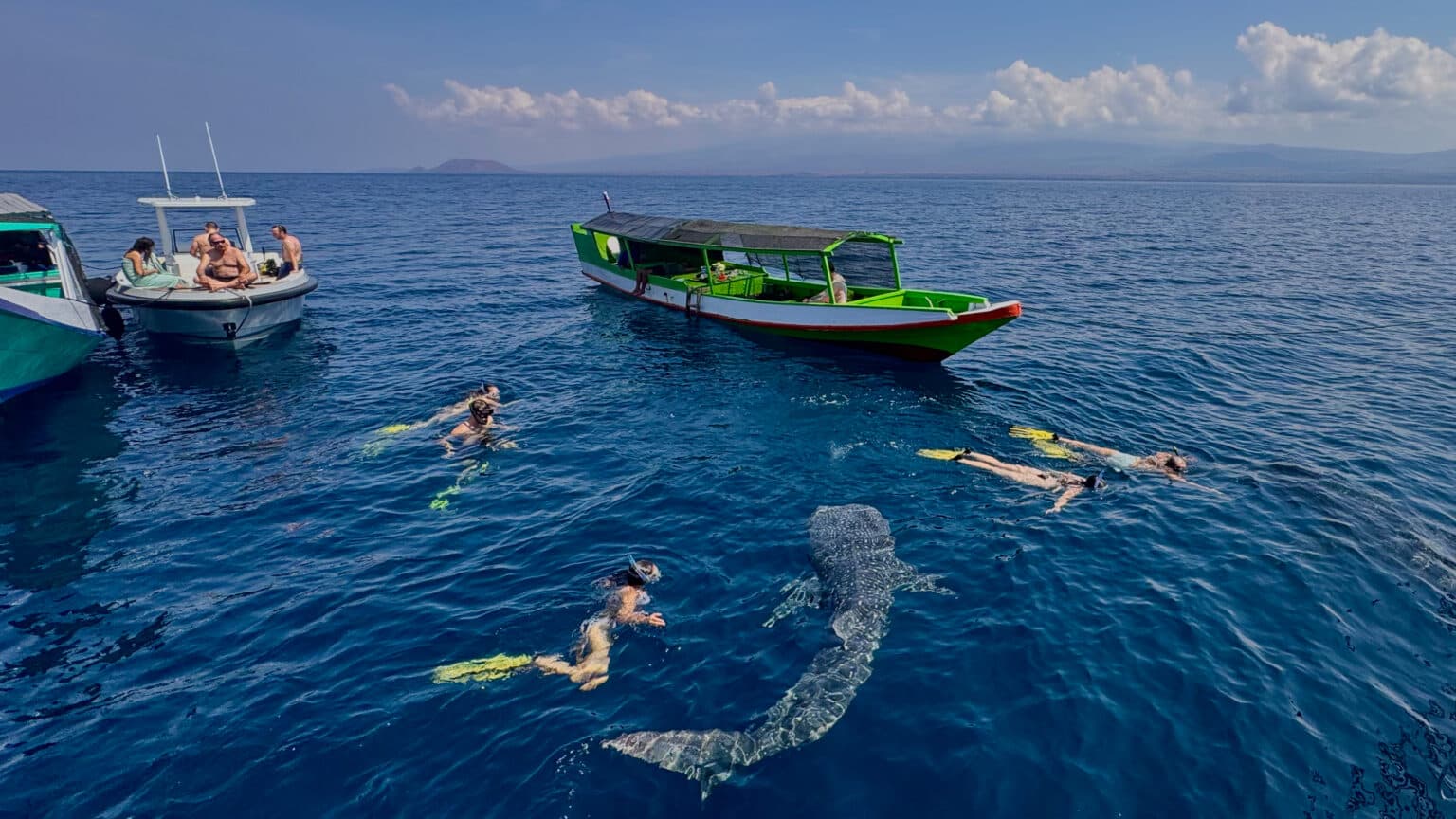
Whales are the bonus. The Banda basin is a migration corridor and boats on the crossings log sperm whales, pilot whales and orcas from the deck most seasons. Nobody can promise them and no itinerary is built around them, but keep a camera on the sun deck during the long passages.
Choosing the boat
We list around 60 liveaboards that include the Banda Sea in their season, from eight-guest phinisis to floating hotels, and you can compare them all on our liveaboard listings. They sort into three tiers, and the price you pay is set more by the tier than by the route. All prices are per person per night in a shared cabin, from our current rate cards.
Budget: about USD 240 to 300 a night (EUR 205 to 260)
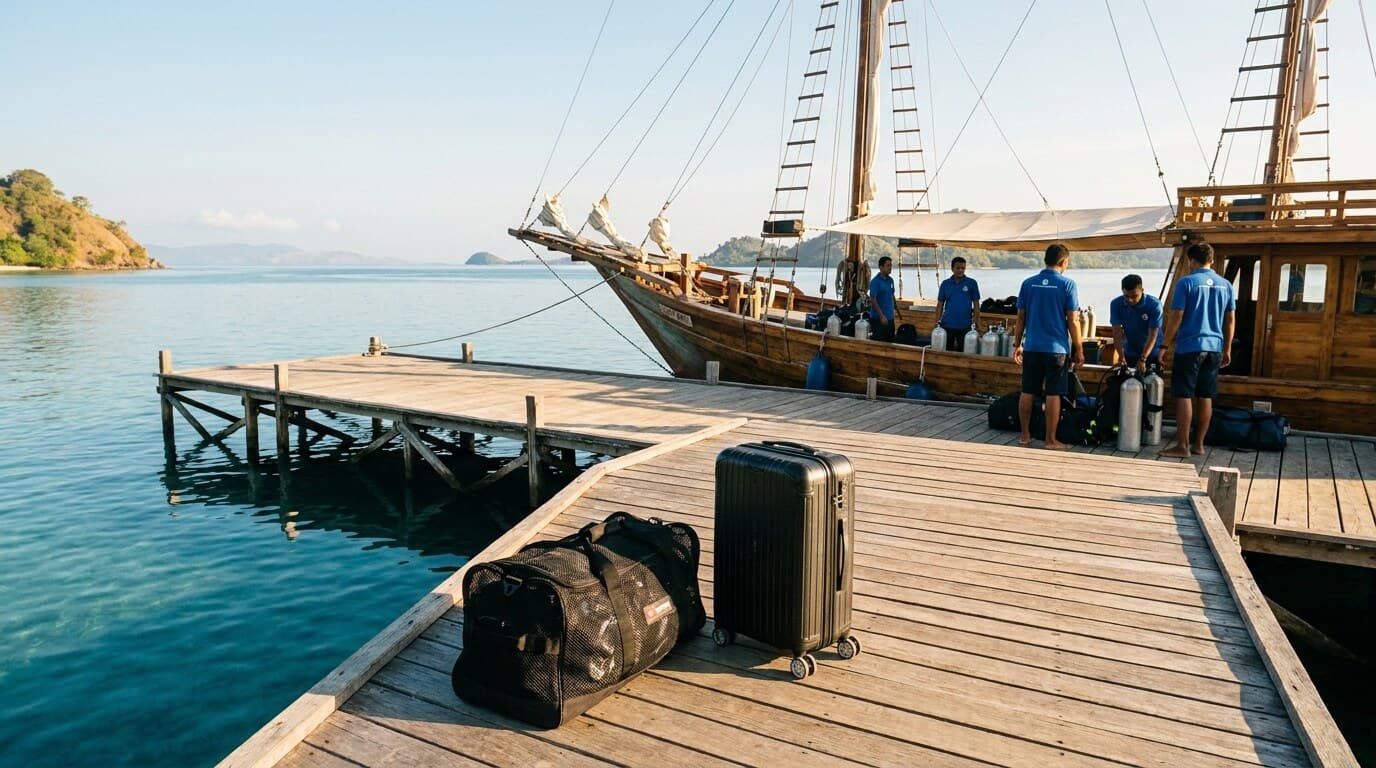
Wooden phinisis with fans or simple air conditioning, shared or basic private bathrooms, air only, small groups. Sea Familia II (14 guests, 5 cabins, from USD 245), Amaya Explorer (16 guests, 8 cabins, from USD 250) and Kurabesi Nusantara (12 divers in 6 air-conditioned en-suite cabins, from USD 265, air only) sit here. What you give up is space and nitrox. What you get is the same seamounts for half the money.

Mid-range: about USD 450 to 650 a night (EUR 390 to 565)
Air-conditioned en-suite cabins, nitrox on most, a camera table and a crew of a dozen or more. The Seven Seas (16 guests, from USD 485), Mermaid I (15 guests, 8 cabins, from USD 516, nitrox at extra cost) and Dancing Wind (20 guests, 8 cabins, from USD 650) are the boats we send most Banda divers on. This is the tier where the crossing-to-Raja-Ampat trips mostly live.

Top end: USD 950 to 3,100 a night (EUR 820 to 2,670)
Private charters and a few very large phinisis. Prana (19 guests in 8 cabins, from USD 947) and Alila Purnama (10 guests in 5 suites, from USD 3,100, nitrox) run Banda crossings for full charters or small groups who want the boat to themselves. The diving is the same. The cabin, the food and the crew ratio are not.

Three things to check whatever the tier: whether nitrox is on board (the hammerhead dives are deep and repetitive), whether the boat carries a tender big enough to hold a group in a current at Manuk, and how many nights the schedule gives the seamounts against the reef days. A cheap boat that spends two dawns at Manuk beats an expensive one that spends one.
The experience you need
This is the one region where operators enforce their minimums. Most boats ask for an Advanced certification and 50 logged dives on the crossings, and some of the smaller phinisis go further: Kurabesi Nusantara asks for 40 dives on its Banda loop and 50 on Banda to Misool. The reason is the seamount dives, which are blue-water descents in current with no reef to hold, followed by a drift back to a tender in open sea. The reef days at Banda Neira, Hatta and Ambon are within reach of any comfortable Open Water diver, so a mixed couple can share a boat if the less experienced partner is happy to sit out Manuk. Say so when you book and we will match the boat to the weaker diver, not the stronger one.
What it costs beyond the cabin
- Marine park and harbour fees. Paid on top of the cabin price, usually in cash on board: between USD 150 and USD 250 per person depending on the boat and the ports it clears. Kurabesi Nusantara charges USD 150 for the Banda Sea. The Liquid Adventures boats collect IDR 4,000,000 to 4,400,000 (about USD 225 to 250). A crossing that ends in Raja Ampat adds the Raja Ampat entry fees, IDR 2,000,000 per international visitor since August 2026.
- Fuel surcharge. The crossings burn a lot of diesel and some operators add a surcharge when fuel rises. It is legitimate but it belongs on the quote, not at the end of the trip. Ask us to confirm it in writing before you pay a deposit.
- Flights. Ambon (AMQ) has direct flights from Jakarta, Makassar and Surabaya. Sorong (SOQ) from Jakarta and Makassar. Maumere (MOF) from Bali. A crossing means an open-jaw ticket, and we build the domestic legs and the night before departure into the booking.
- Rental gear, nitrox and tips. Rental sets run USD 40 to 60 a day. Nitrox is free on some boats and USD 10 to 15 a fill on others. Crews expect a tip of USD 10 to 20 per guest per day.
- The land day. Fort Belgica, the nutmeg groves and the old Dutch houses of Banda Neira cost nothing but a morning. A local guide for the town walk is a few dollars a head and worth it.

Booking a Banda Sea liveaboard: the practical part
Book early. Each boat runs each direction once a year, most carry 12 to 16 guests, and returning guests take the best cabins first, so the crossings fill long before the season. For October and November, book by May. For the March and April window, book by the previous November. Groups who want a whole boat for a Banda crossing should start earliest of all: charter dates on the good boats are often gone a year or more ahead.
Tell us which of the four trip shapes you want and how many dives you have, and we will send you the departures that are still open across the boats we work with, with the fees and any surcharge on the quote. If none fit, tell us your dates and we will hold the next season’s crossing for you when the schedules come out.
Late cabins do come up. A cancellation, or a last spot an operator wants to fill before departure, goes on our liveaboard deals page, usually at a discount. For a region where the crossings sell out, that is often the only way onto a boat at short notice, so it is worth a look if your dates are flexible.
Banda Sea liveaboard questions
October and November, then March and April. Those are the only months the boats cross the Banda Sea, and October and November give the best odds of schooling hammerheads at Manuk and the southern seamounts.
Most boats ask for an Advanced certification and about 50 logged dives on the crossings, some accept 40 on the shorter Ambon to Banda loop. The seamount dives are deep blue-water descents in current. The reef dives at Banda Neira and Ambon are easier.
Seven to nine nights for the Ambon to Banda loop, ten to twelve for the crossing to or from Raja Ampat, and twelve to fifteen for the Forgotten Islands route from Flores or Alor to Ambon.
From about USD 240 a night per person on a budget phinisi to USD 450 to 650 on a mid-range boat, plus USD 150 to 250 in park and harbour fees per person and your flights to Ambon or Sorong.
No. Scalloped hammerheads school off Manuk, Suanggi, Nil Desperandum and Serua in season, and boats plan several dawn dives in the blue to find them, but the schools sit deep and move. October and November trips see them most often.
Partly. Ambon has a few dive centres for the muck diving in the bay, and Banda Neira has a couple that dive the lava flow and the walls of Hatta and Ai by day boat. The hammerhead seamounts, Manuk and the other volcanoes out in the basin are a night’s sail away, so only a liveaboard reaches them.
Six months or more: by May for October and November, and by the previous November for March and April. Groups chartering a whole boat should book a year or more ahead. Late cabins from cancellations sometimes appear on our liveaboard deals page at a discount.
Ambon, from Tulehu harbour, for the loops and the crossings to Raja Ampat. Sorong for the April crossings in reverse, and Maumere or Alor for the Forgotten Islands route north.