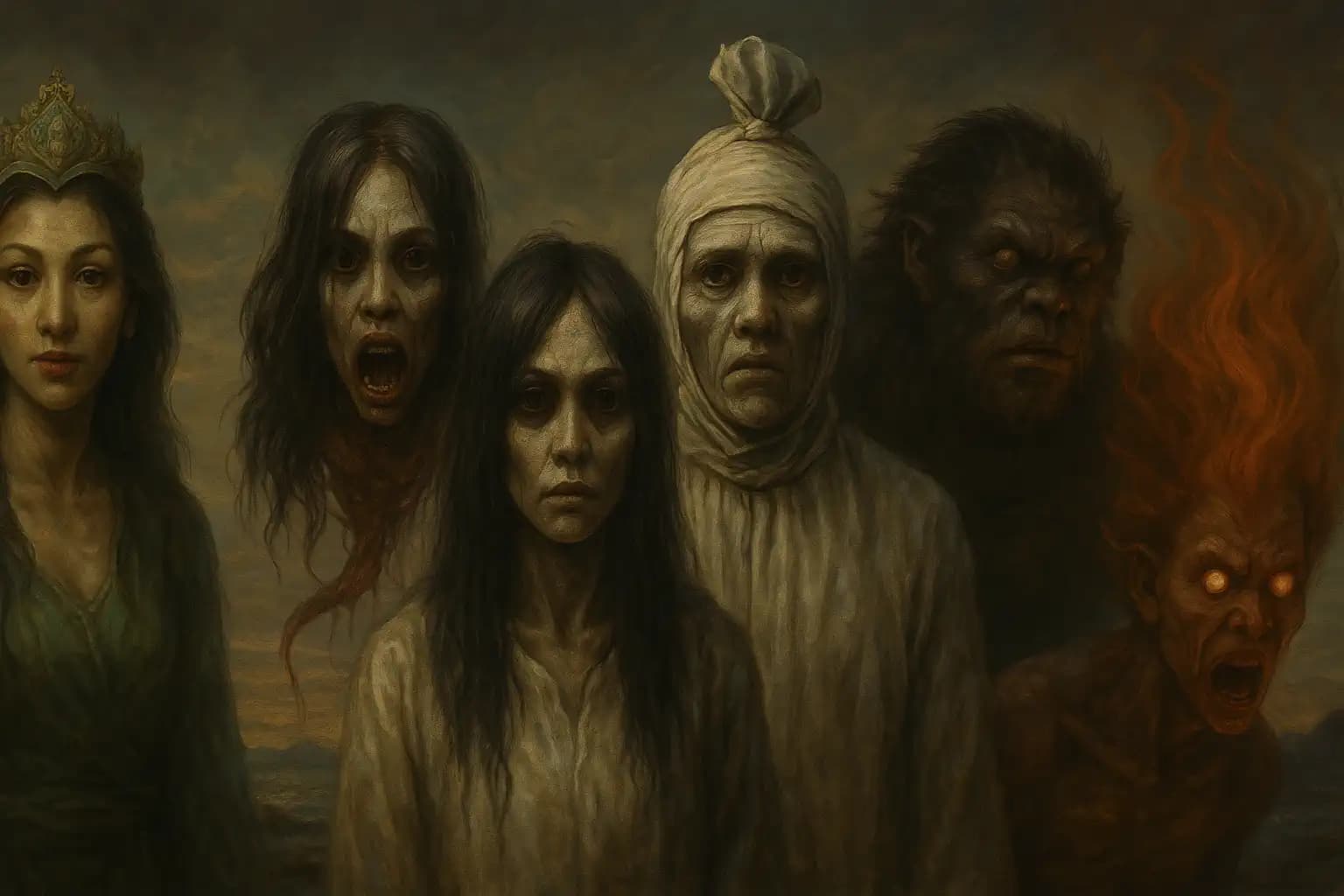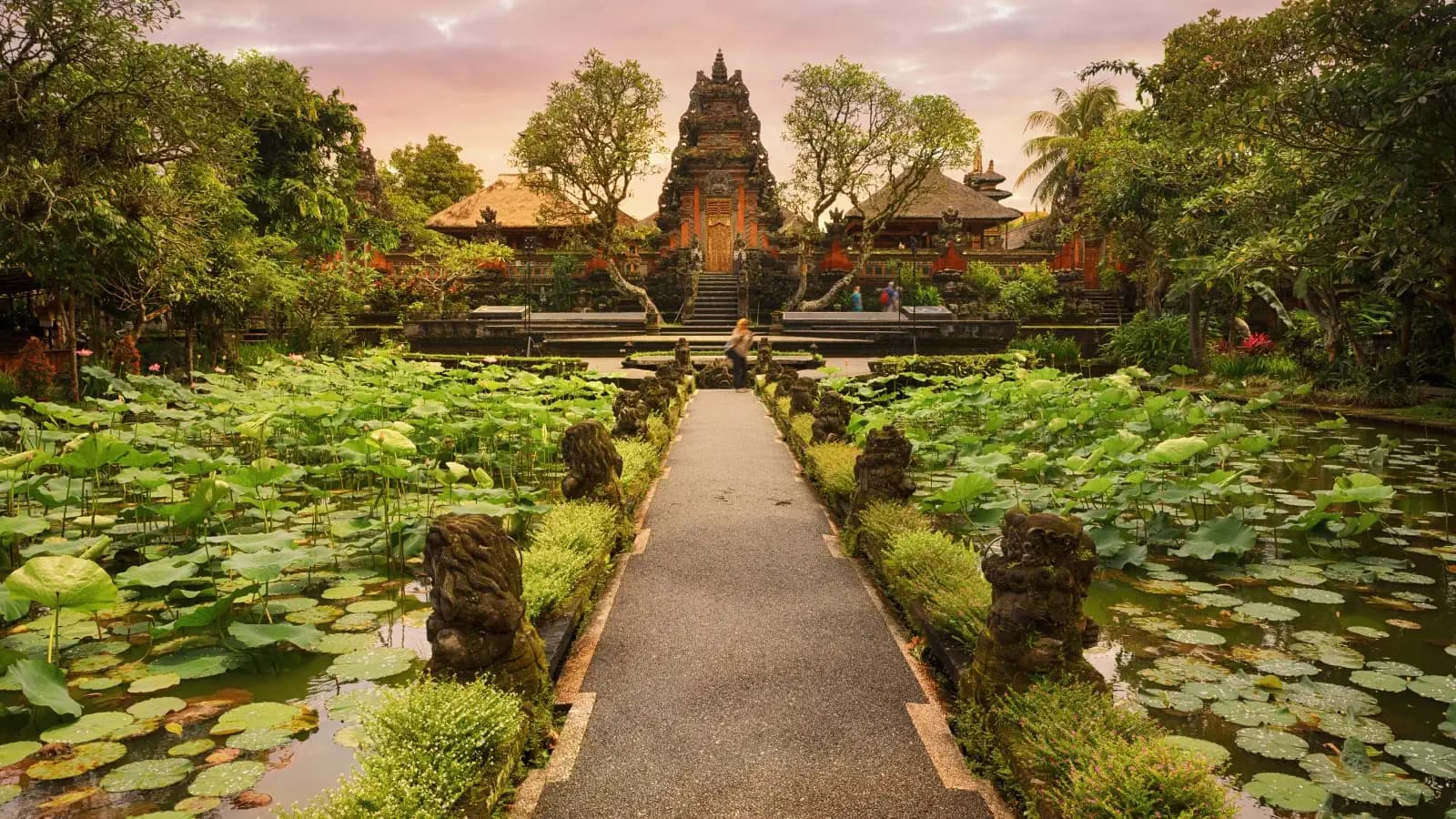
Halloween gives ghosts and monsters one night a year. In Indonesia the spirits stay all year. There is a queen of the jinn inside a volcano, a demon king across the water from Bali, and the souls of the dead in three crater lakes. Every island has a story it tells after dark. Last year we wrote about the ghosts that still haunt the islands. This Halloween we went looking for the places behind Indonesian legends, from Lake Toba in Sumatra to the spice islands of the Banda Sea.
For each one you get the story as local people tell it and the part that turns out to be true. Then comes what you need to know to go there yourself. Some of the true parts are stranger than the legends.
Eight Indonesian legends at a glance
- Lake Toba (Sumatra): a lake born from a broken promise
- Mount Bromo (Java): the volcano that took a child
- Tanah Lot (Bali): a priest’s sash turned sea snake
- Nusa Penida (Bali): home of the demon king Ratu Gede Mecaling
- Segara Anak, Mount Rinjani (Lombok): the palace of Dewi Anjani, queen of the jinn
- Komodo Island (Komodo National Park): the dragon born a twin
- Kelimutu (Flores): three crater lakes for the souls of the dead
- Banda Neira (Banda Sea): a spice island whose real history is darker than any legend
Lake Toba: the fisherman’s broken promise
The legend
The Batak people of North Sumatra tell of Toba, a farmer who went fishing and caught a large golden fish. At home the fish turned into a beautiful woman. She agreed to marry him on one condition: he must never tell anyone where she came from.
They had a son, Samosir. One day the boy ate the lunch he was meant to carry to his father in the fields. Toba lost his temper and shouted that he was nothing but the child of a fish. The mother told the boy to run up the hill. Then the rain came, springs burst out of the ground, and water filled the whole valley. In many versions the hill where Samosir ran became the island that carries his name, and the lake took his father’s.
It is one of the best-known folk tales in Indonesia, and children learn it at school all over the country. The details shift from teller to teller, but the broken promise is always the turning point.
What’s real
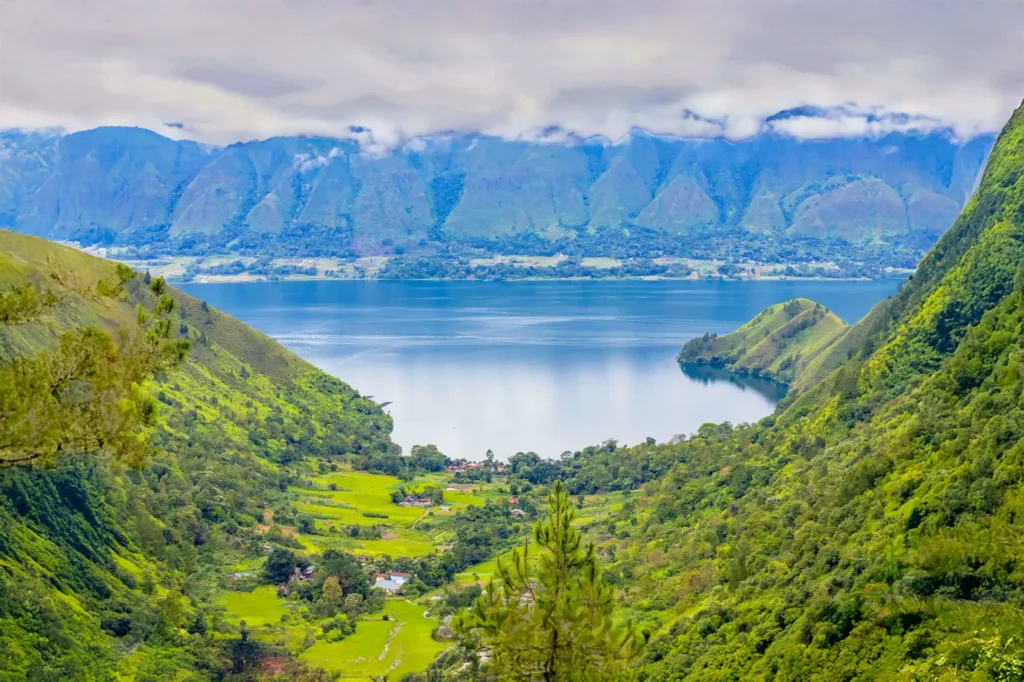
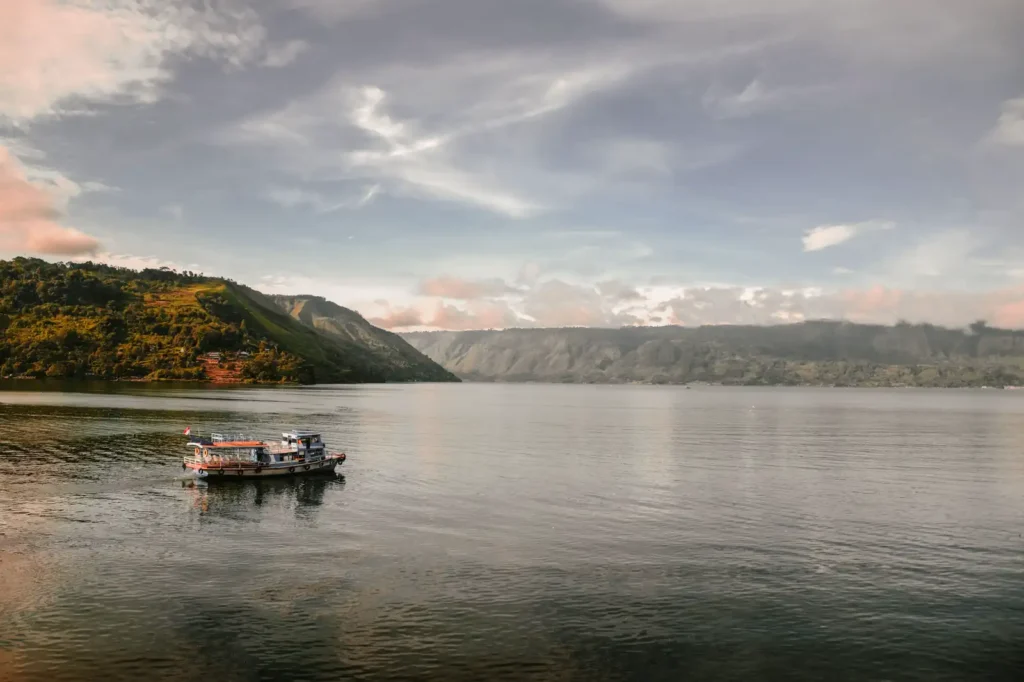
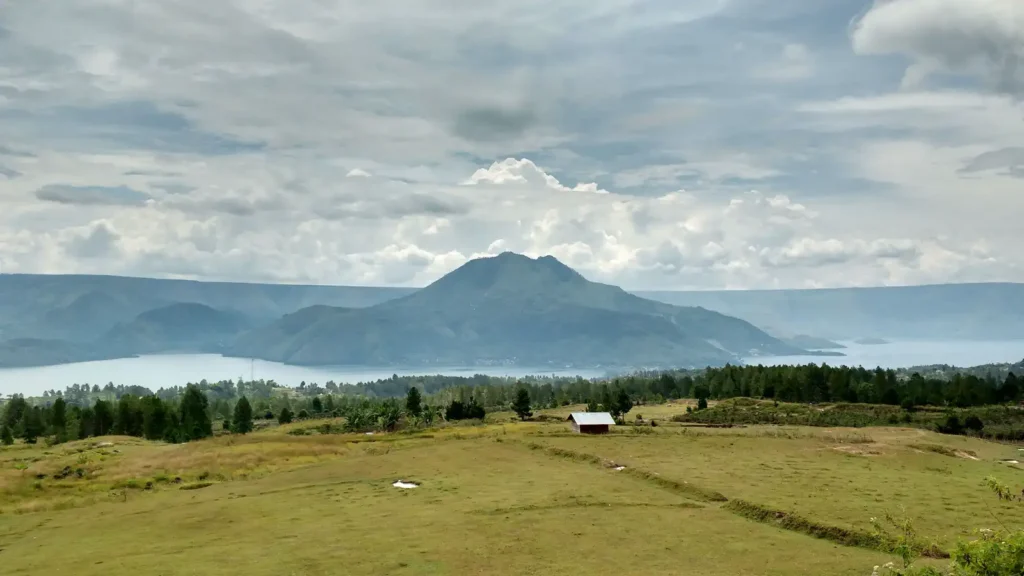
The real story is bigger. Lake Toba fills the caldera of a supervolcano that erupted about 74,000 years ago, the largest known eruption of the last two and a half million years. The ground collapsed into a basin about 100 km long and 30 km wide, and the lake filled it. After the eruption, magma pushed the floor of the caldera back up. That raised block is Samosir, an island almost the size of Singapore. So the island really did rise out of the lake.
Batak villages on Samosir still keep their carved wooden houses with saddle-shaped roofs. At Tomok you can see the stone sarcophagus of King Sidabutar. At Huta Siallagan in Ambarita, the stone chairs where the chief and elders held trials still stand. Guides will tell you, with some relish, what happened to those found guilty.
How to visit
- Getting there: fly to Medan (Kualanamu) and drive about four to five hours to Parapat, or fly to Silangit, close to the lake’s southern shore. A ferry crosses from Parapat to Samosir.
- Best time: June to August is usually the driest stretch, though North Sumatra gets rain in most months.
- How long: two or three nights on Samosir is enough to see the villages and slow down.
- Combine with: the orangutans of Bukit Lawang. Our 2 to 4-day orangutan trek pairs well with Toba on a North Sumatra trip.
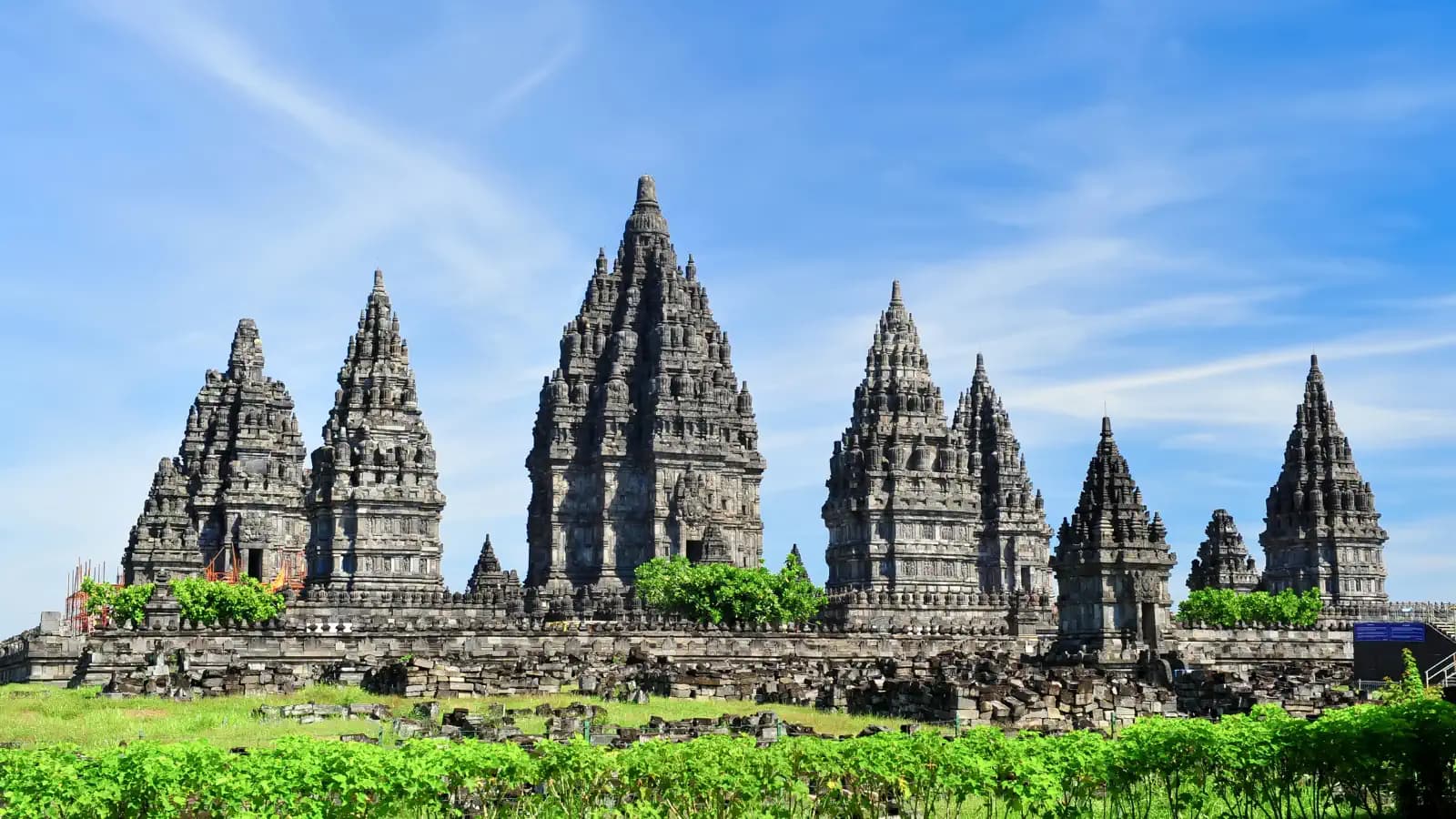
Java has its own share of broken promises, like the story of Roro Jonggrang and the curse of Prambanan. For a legend that people still act out every year, go east to the Tengger highlands.
Mount Bromo: the volcano that took a child
The legend
The Tengger people trace their name to their first couple, Roro Anteng and Joko Seger: “Teng” from her name, “ger” from his. In most tellings she was a noblewoman of the Majapahit kingdom and he was the son of a Brahmin. They settled in the highlands around Bromo but could not have children.
They prayed to the god of the mountain and promised to sacrifice their youngest child in return. The mountain god gave them 25 children, and when the time came they could not keep their word. The volcano erupted and swallowed the youngest, Kesuma. A voice from the crater then asked the Tengger to bring offerings every year. Some versions say Kesuma went into the fire willingly, to save his family.
What’s real
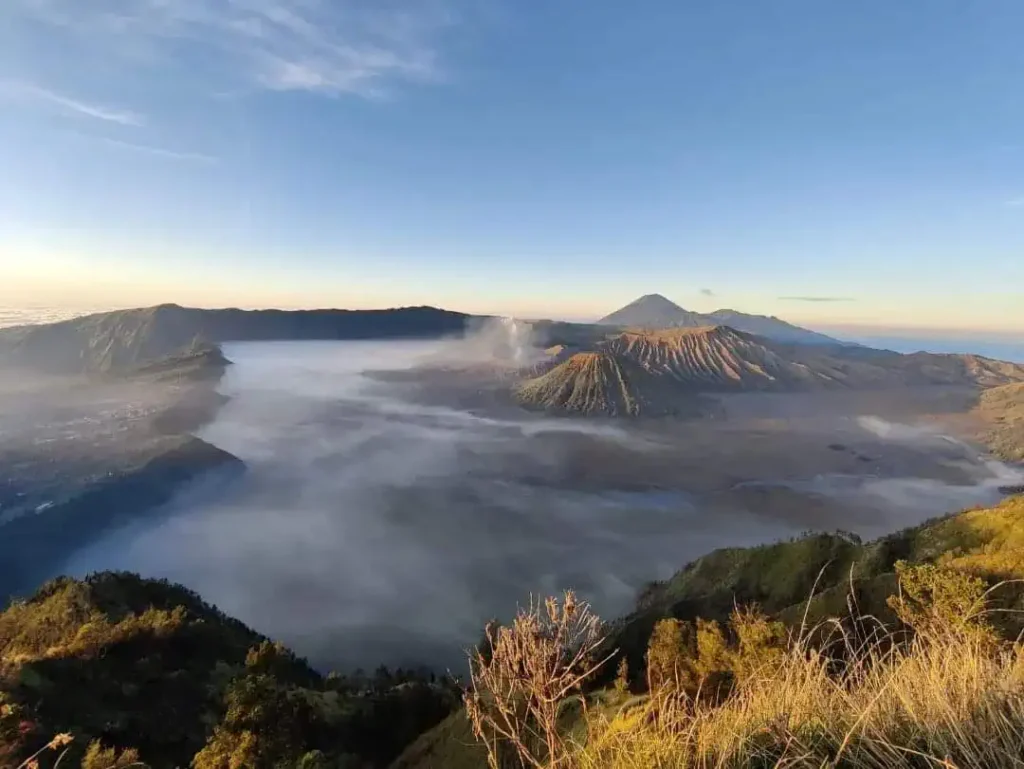
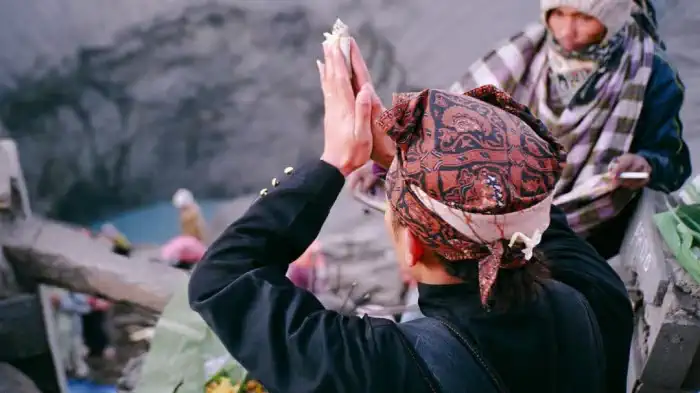
The offerings are real, and so is the date. Every year at Yadnya Kasada, Tengger families climb to the crater rim before dawn and throw vegetables, chickens and money into the crater. Some villagers climb down the slope below the rim to catch what they can. The Tengger calendar sets the date, so it moves. In 2026 the ceremony fell at the end of May, and the park closed to visitors from 30 May to 2 June.
The Tengger are one of the few Hindu communities left on Java. Bromo’s name comes from the Javanese way of saying Brahma, the Hindu creator god. The volcano is active, so when it gets restless the authorities close the crater rim. Our guide to Indonesia’s volcanoes explains why there are so many.
How to visit
- Getting there: fly to Surabaya or Malang, then drive three to four hours up to the village of Cemoro Lawang on the caldera rim.
- Best time: the dry season, roughly April to October, gives the clearest sunrises. If you want to see Kasada, check the date early, and expect the area to close for tourists around the ceremony.
- How long: two nights is comfortable. Most people leave around 3:30 in the morning for the Penanjakan viewpoint, to watch the sun rise over Bromo, Batok and Semeru. Then they cross the sand and climb the steps to the crater.
- Combine with: the blue fire of Kawah Ijen. Our 3-day Bromo and Ijen tour does both, and the 5-day Java tour adds Yogyakarta.
From Ijen it is a short drive to the ferry across to Bali, where the next legend sits on a rock in the sea.
Tanah Lot: the priest and the sea snake
The legend
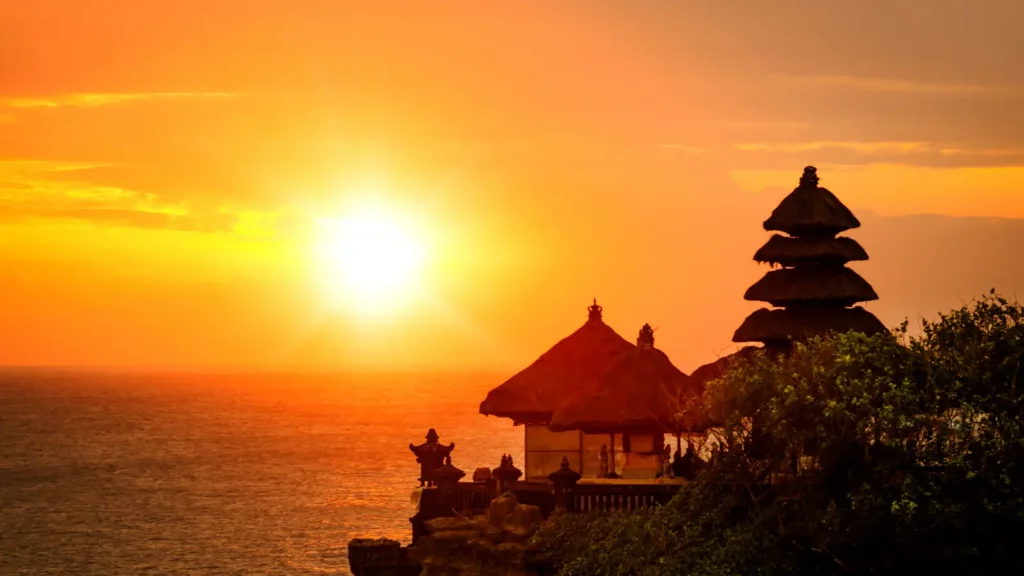
In the 16th century the priest Dang Hyang Nirartha travelled along Bali’s west coast and stopped to rest on this rock. He told local fishermen to build a temple there. To guard it from evil spirits, he took off his sash and turned it into a sea snake.
Villagers in nearby Beraban tell a longer version. Their chief resented the priest and his growing following, and ordered him to leave. Nirartha used his power to push the rock he was meditating on out into the sea, and the temple has stood there ever since. Balinese say it is one of a chain of sea temples along the south-west coast, each built within sight of the next.
What’s real
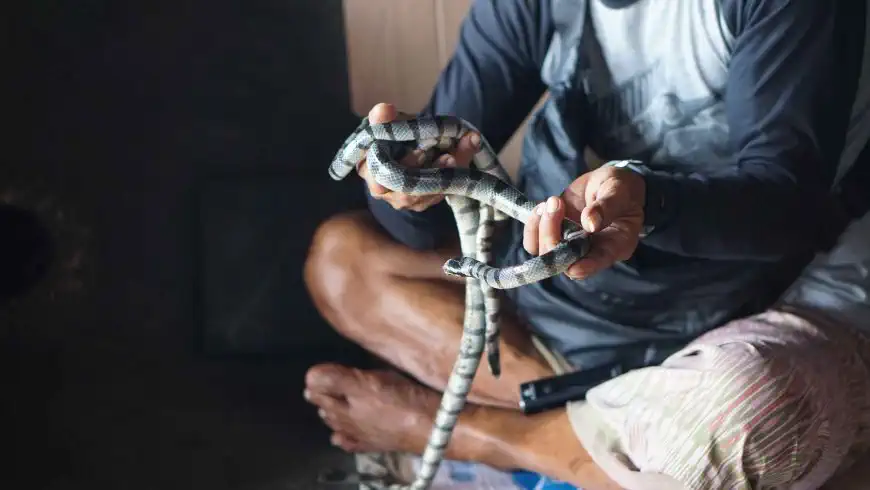
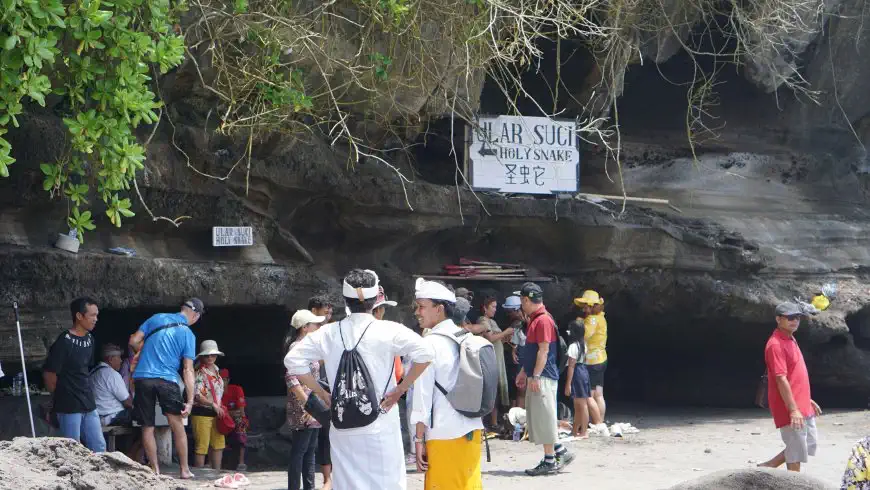
The snakes are real. Banded sea kraits live in the crevices at the foot of the rock, and the priests call them the temple’s guardians. They are venomous but calm, and they rarely bite. A freshwater spring also rises at the base of the rock, right beside the sea, and priests there will bless you with its water.
The rock itself has needed help. The sea wore it down for centuries, and in the 1980s the rock face began to crumble. Japan funded a project to shore it up, and over a third of the rock you see today is artificial.
How to visit
- Getting there: about 30 minutes from Canggu and 45 minutes from Seminyak by car, longer from the airport or Ubud when traffic is heavy.
- Best time: late afternoon, when the sun sets behind the temple. Come at low tide if you want to walk across to the base of the rock. Only Hindus may climb up into the temple.
- How long: an hour or two is enough for the temple itself.
- Combine with: the rice terraces and temples of central Bali. A private day trip with a guide lets you build a west coast day around the sunset.
Look east from Bali’s south coast and you can see a long, flat island across the strait. For centuries the Balinese feared it more than any spirit.
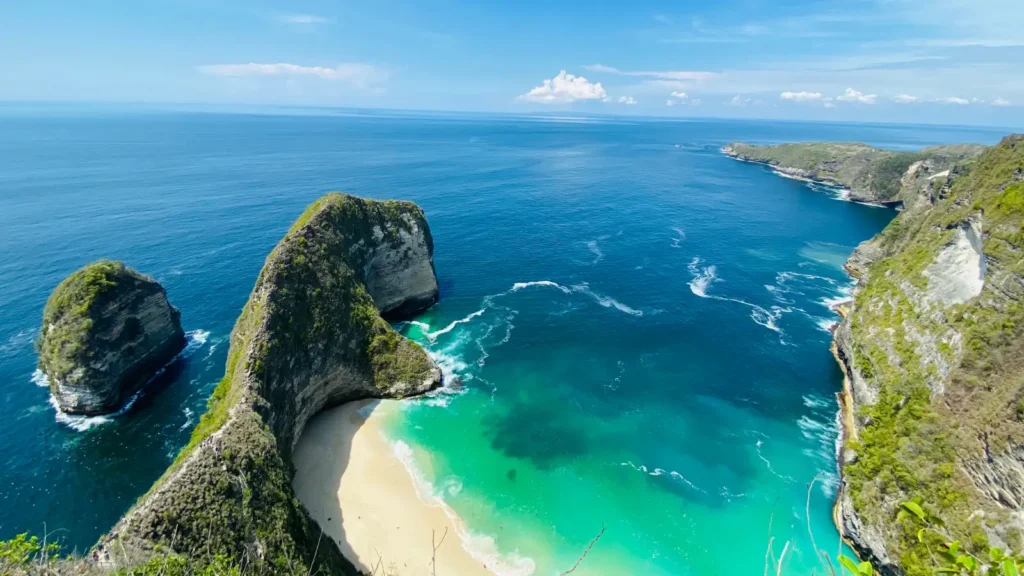
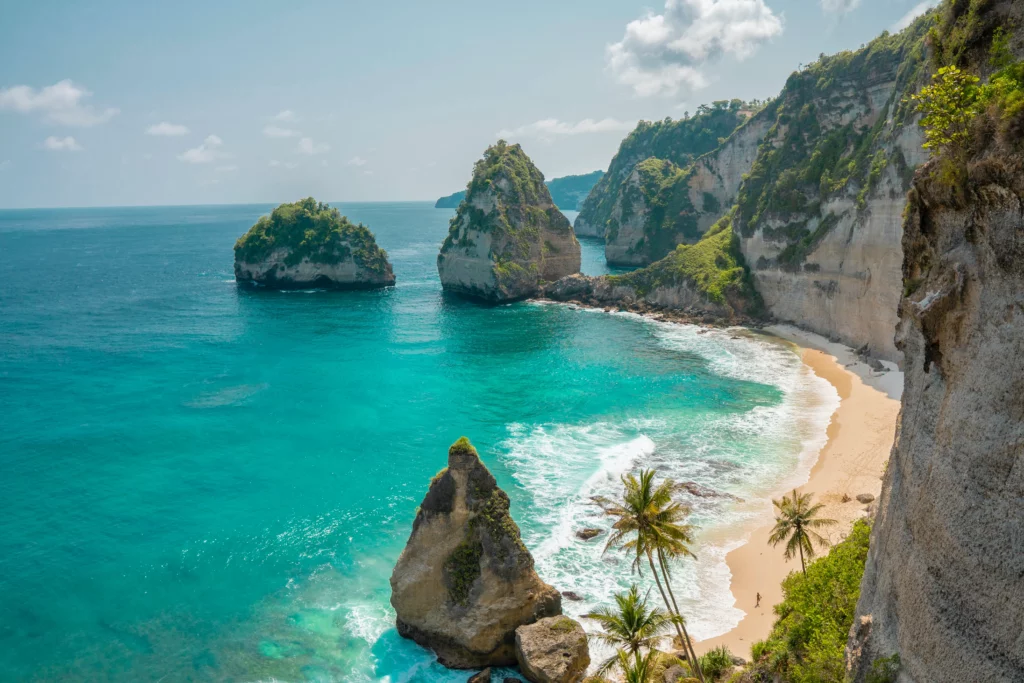
Nusa Penida: the island of the demon king
The legend
Nusa Penida was the home of Ratu Gede Mecaling, a fanged demon king who sent disease and bad luck across the water to Bali. Balinese believe his followers cross the strait during the sixth month of the Balinese calendar, which falls in the wet season, when sickness used to spread.
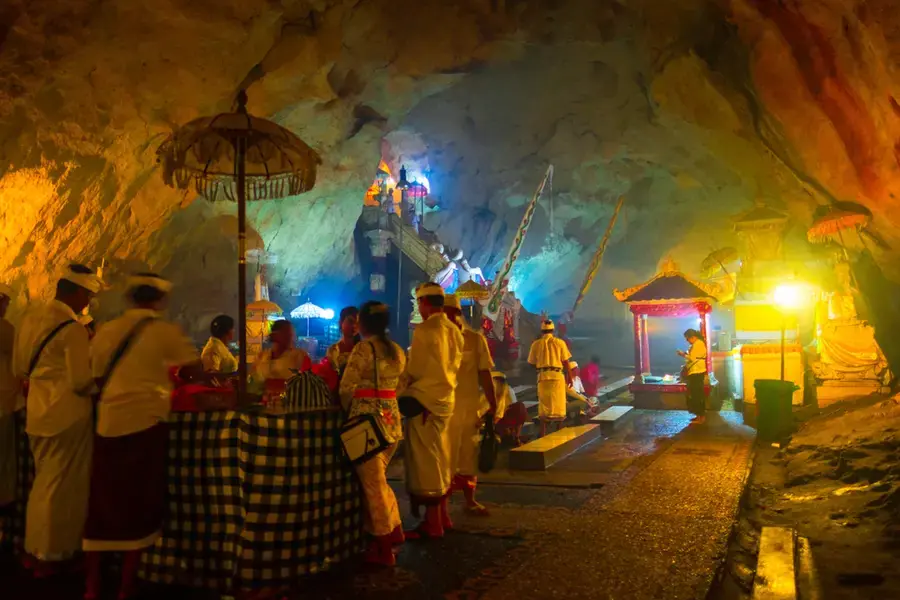
To keep him away, Balinese villages bring out the Barong Landung, giant puppet figures carried in procession from house to house. Many Balinese also cross to his temple, Pura Dalem Ped, to ask for protection. It is one of the most important temples on the island, and a pilgrimage there is something many Balinese try to make at least once.
What’s real
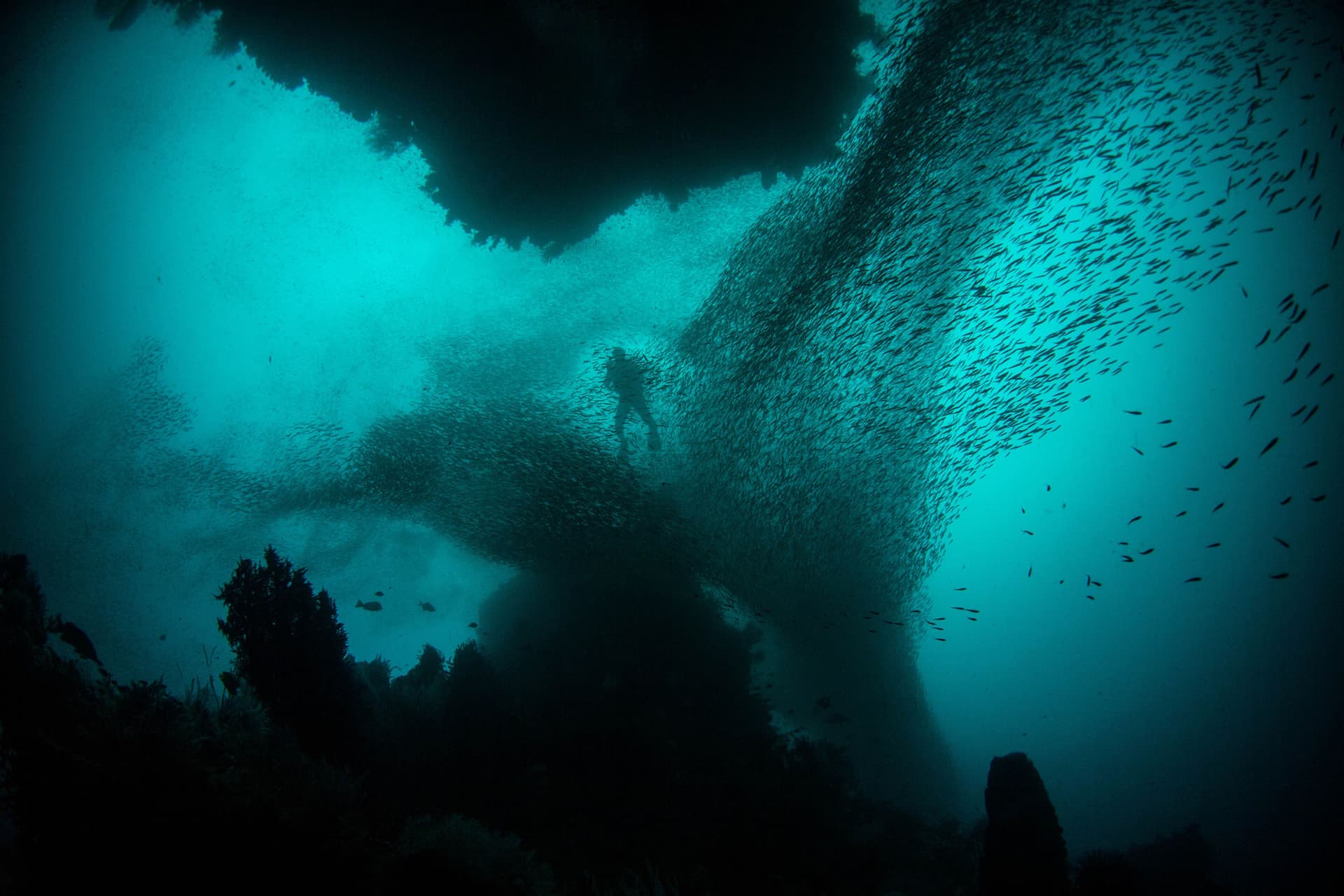
The real danger around Penida is the water. Water from the Lombok Strait pushes strong currents around the island, and cold water rises from the deep. They are also the reason the diving is so good. Reef mantas gather at Manta Point most of the year. In the cold-water months the mola mola, or ocean sunfish, come up from the deep to cleaning stations at 20 to 30 metres. July to September gives the best odds, at Crystal Bay and Blue Corner, but nobody can promise a sighting. Our mola mola guide covers the season and the sites.
How to visit
- Getting there: a fast boat from Sanur takes about 30 to 45 minutes.
- Best time: the dry season, roughly April to October, for calmer seas. Mola season runs from about May to October.
- How long: it works as a day trip from Bali, but two or three nights on the island gives you more dives and fewer crowds.
- Combine with: a day of diving at Nusa Penida from Bali, or our snorkelling and land tour if you’d rather stay near the surface. For more, see our scuba diving section.
East of Penida, across the Lombok Strait, rises Mount Rinjani on Lombok. The Sasak say a queen lives inside it.
Segara Anak, Mount Rinjani: the queen of the jinn
The legend
The Sasak people of Lombok say Mount Rinjani belongs to Dewi Anjani, a queen of the jinn. She rules the mountain from an unseen palace near Segara Anak, the crater lake. Climbers still leave offerings, and locals treat the lake as a sacred place, not just a campsite.
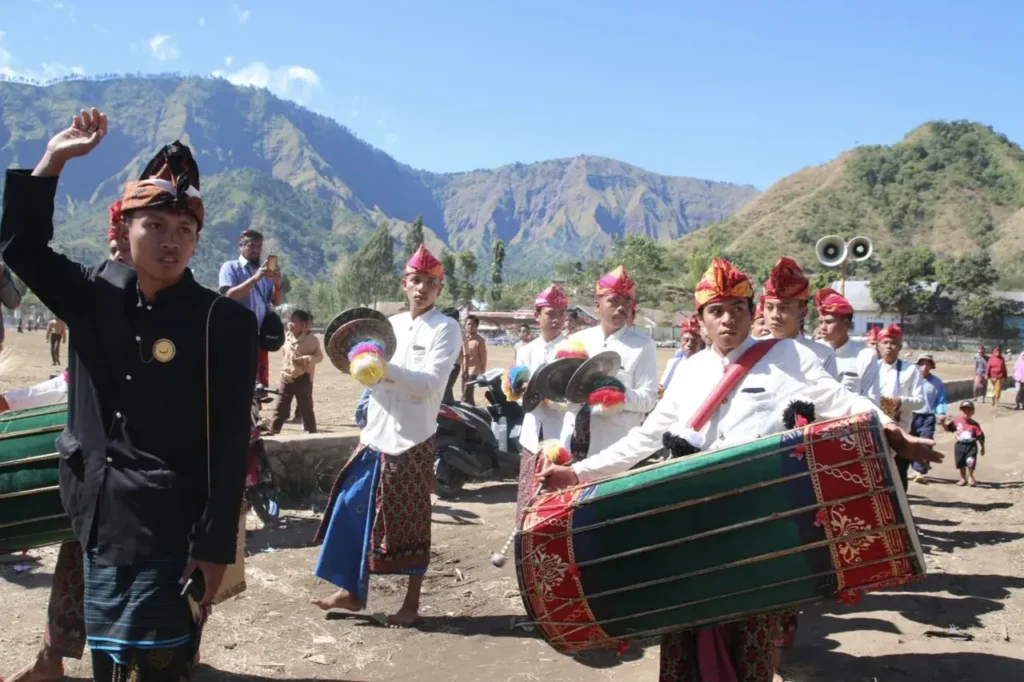
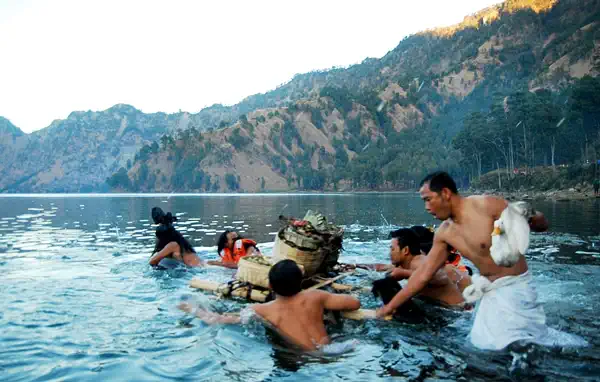
Lombok’s Balinese Hindus have their own ceremony there. At Mulang Pekelem they carry offerings up to the lake, including small pieces of gold, and drop them into the water for the mountain.
What’s real
The lake sits in a hole left by one of the largest eruptions of the last thousand years. In 1257 a volcano called Samalas, Rinjani’s neighbour, blew itself apart. For centuries scientists found its ash in polar ice without knowing where it came from. In 2013 a research team traced it to Samalas. Old Sasak texts written on palm leaves helped: they describe a royal town, Pamatan, buried under fire and ash.
In the middle of the lake a young cone, Gunung Barujari, still smokes. It erupted as recently as 2015 and 2016, when ash closed Lombok’s airport.

How to visit
- Getting there: fly to Lombok. Treks start from Senaru on the northern slopes or Sembalun on the east.
- Best time: the trails are usually closed from January to March. Access can also be limited at other times: in September 2026 the park stopped new online bookings because of fire risk in the dry season. Check the status before you book.
- How long: two days and one night takes you to the crater rim. Reaching the lake takes three days, and the summit at 3,726 metres adds another very early start. It is a hard trek with nights in a tent, not a beginner walk.
- Combine with: a few days on the Gili Islands to rest your legs, or our 4-day liveaboard from Lombok to Komodo, which sails east past Sumbawa to the dragons.
Komodo Island: the dragon born a twin
The legend
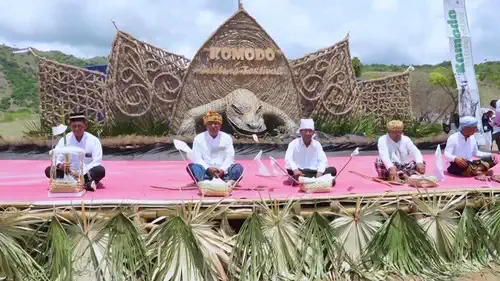
The Ata Modo, the people of Komodo village, tell of Putri Naga, a dragon princess who married a local man, named Majo in many tellings. She gave birth to twins. One was a boy, Si Gerong. The other was a lizard, Ora, and she was taken into the forest to grow up there.
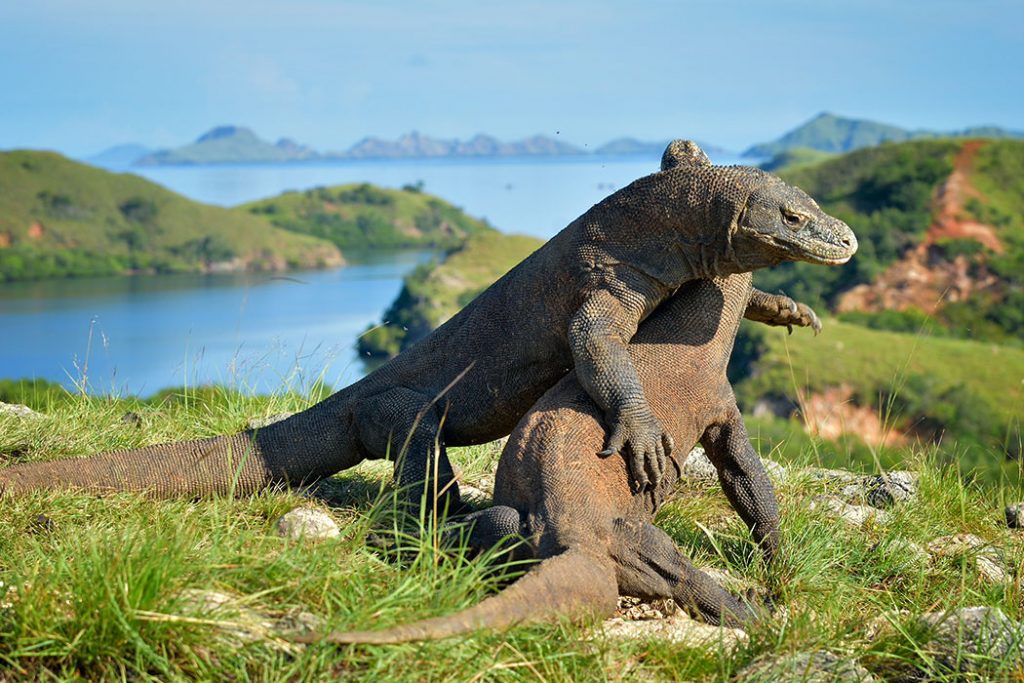
Years later Gerong was hunting and shot a deer. A huge lizard came out of the trees and began to eat it. Gerong raised his spear, and his mother appeared between them to tell him the lizard was his sister. Since then, villagers say, the people of Komodo treat the dragons as family. In some versions the girl hatched from an egg. In the Komodo language the dragons are called sebae, which means twins, and across the region they are known as ora.
What’s real
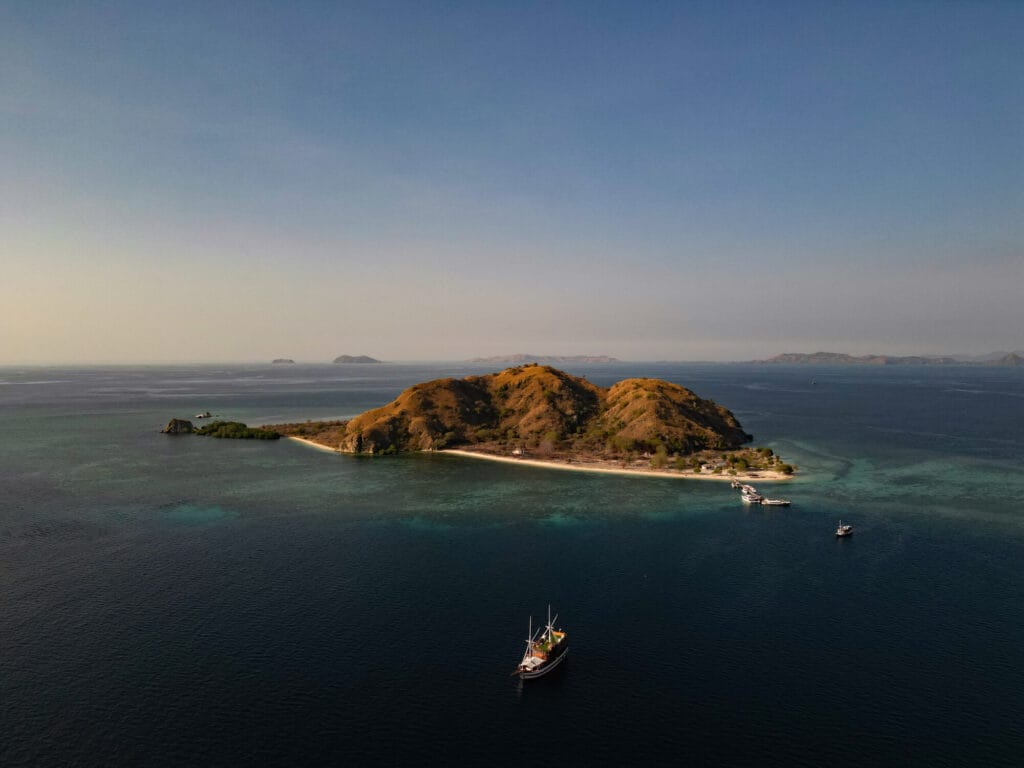
The Komodo dragon is the largest lizard alive, and it lives in the wild only in this corner of Indonesia. For years people believed its bite killed with bacteria. In 2009 a team of scientists found venom glands in its lower jaw, so the twin sister of the legend turns out to be venomous. The IUCN lists the species as Endangered, and the national park is a UNESCO World Heritage Site.
How to visit
- Getting there: fly to Labuan Bajo on Flores, about an hour from Bali. Boats leave from the harbour in town.
- Best time: boats run all year, and the dry season from about April to November brings the calmest seas.
- How long: the best way to see the park is from a boat. Our 3-day Komodo cruise covers the dragons, Pink Beach and the snorkelling. Divers can compare dive liveaboards in Komodo, and non-divers the leisure and snorkelling boats. You walk with a ranger on Komodo or Rinca.
- Combine with: a day on land before or after the boat. Our day trips around Labuan Bajo take in waterfalls, caves and a traditional village. The park fees page lists what you pay at the gate.
From Labuan Bajo the road runs east along Flores for several days, through mountain villages to the island’s most famous legend.
Kelimutu: three lakes for the souls of the dead
The legend
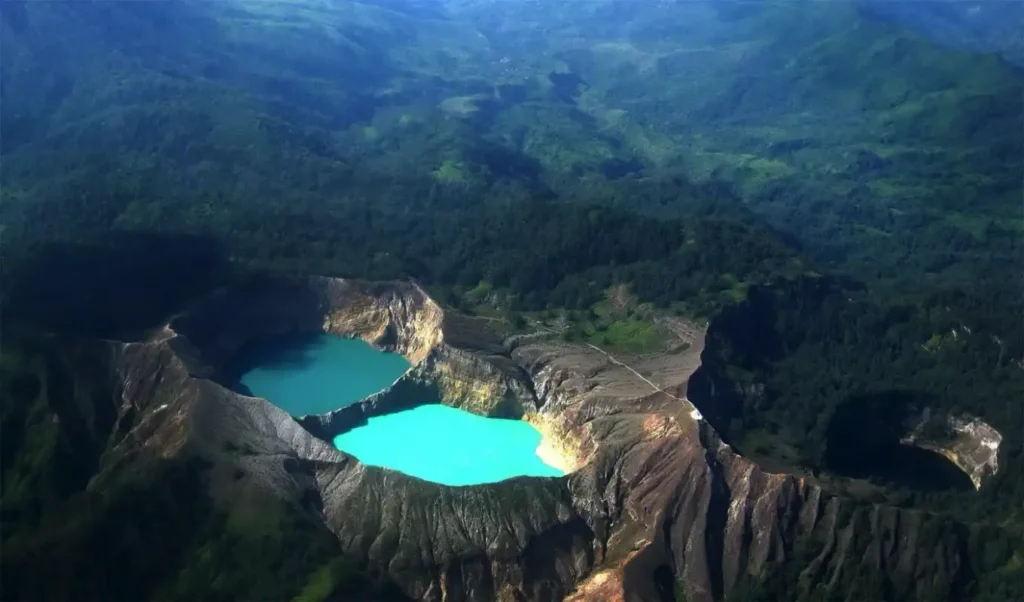
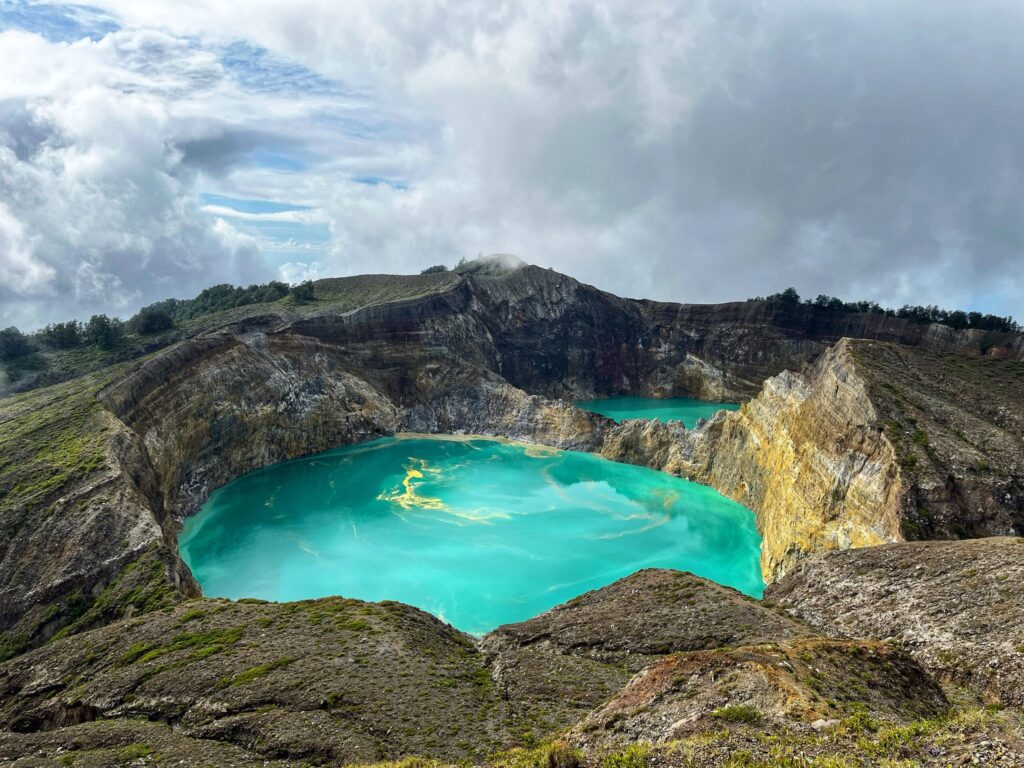
The Lio people around Moni believe that when someone dies, their soul travels up Mount Kelimutu to one of its three crater lakes. Tiwu Ata Mbupu holds the souls of the elders, and Tiwu Nuwa Muri Koo Fai takes the young. Those who did evil in life go to Tiwu Ata Polo.
The dead still get fed. Every year on 14 August, Lio elders hold the Pati Ka Du’a Bapu Ata Mata ceremony at a stone altar near the lakes. They feed the spirits of the ancestors with rice, pork and betel nut, then share a meal and dance.
What’s real
The lakes change colour, sometimes within months: turquoise, green, red-brown, even black. Volcanic gases and dissolved minerals cause it, and each lake changes on its own schedule, even though all three sit on the same mountain. Nobody can tell you which colours you will find.
How to visit
- Getting there: fly to Ende and drive two to three hours to Moni, or come overland from Labuan Bajo. Kelimutu is the last stop on our 7-day Flores tour.
- Best time: the dry season, roughly April to October.
- How long: a morning, with a night in Moni before. When the park reopened after the earthquake of 15 August 2026, the ticket office opened from 07:00 to 12:00 WITA only. That ruled out the classic sunrise climb, and the Tiwu Ata Polo viewpoint stayed closed. Check our Flores earthquake update for the latest before you plan.
- Combine with: the traditional villages around Bajawa and Wae Rebo on the way east.
Flores is also where some dive boats start their longest trip of the year. In September and October a few sail from Maumere through the Forgotten Islands to the Banda Sea, and the last place on this list.
Banda Neira: history darker than any legend
The history
Some places don’t need a legend. For centuries the Banda Islands were the only place on earth where nutmeg grew, and Europe paid fortunes for it. In 1621 the Dutch East India Company, under Jan Pieterszoon Coen, attacked the islands to take the trade for itself. Around 15,000 people lived on the islands before the conquest. Thousands were killed or died of hunger, and many others were enslaved. Coen deported the last 1,000 or so to Batavia, today’s Jakarta.
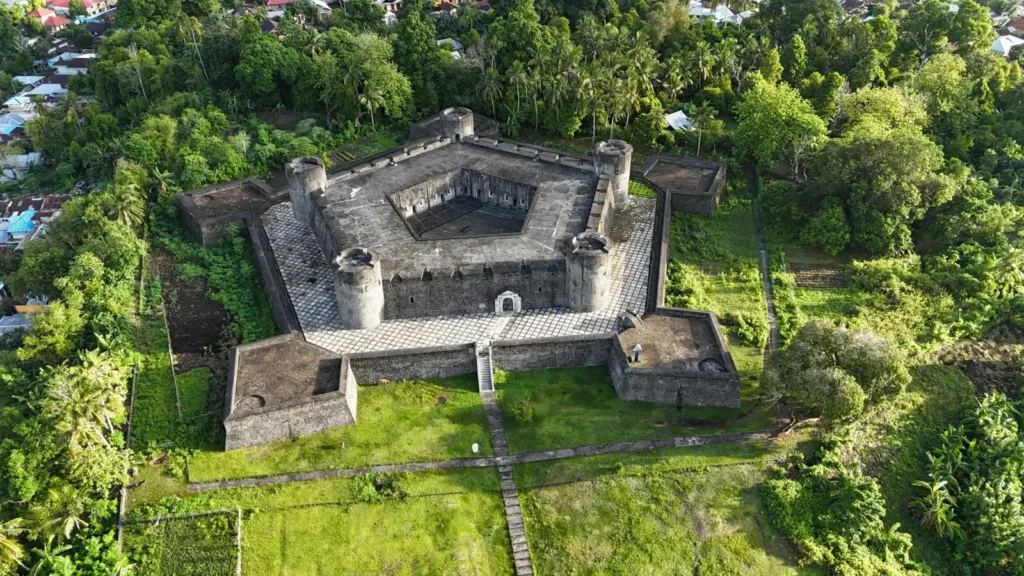
The Dutch brought in slaves and settlers to work the nutmeg groves. Fort Belgica, built in 1611, still stands above the harbour. Our history of Banda Neira tells the whole story.
What’s real
Several hundred Bandanese escaped by boat to the Kei Islands, far to the south-east. Their descendants still live in two villages there, Banda Eli and Banda Elat. They still speak Bandanese, a language that vanished from Banda itself.
The nutmeg also changed the map of the world. In 1667, under the Treaty of Breda, the English gave up their claim to Run, a tiny nutmeg island in the Banda group. In return the Dutch let them keep Manhattan.
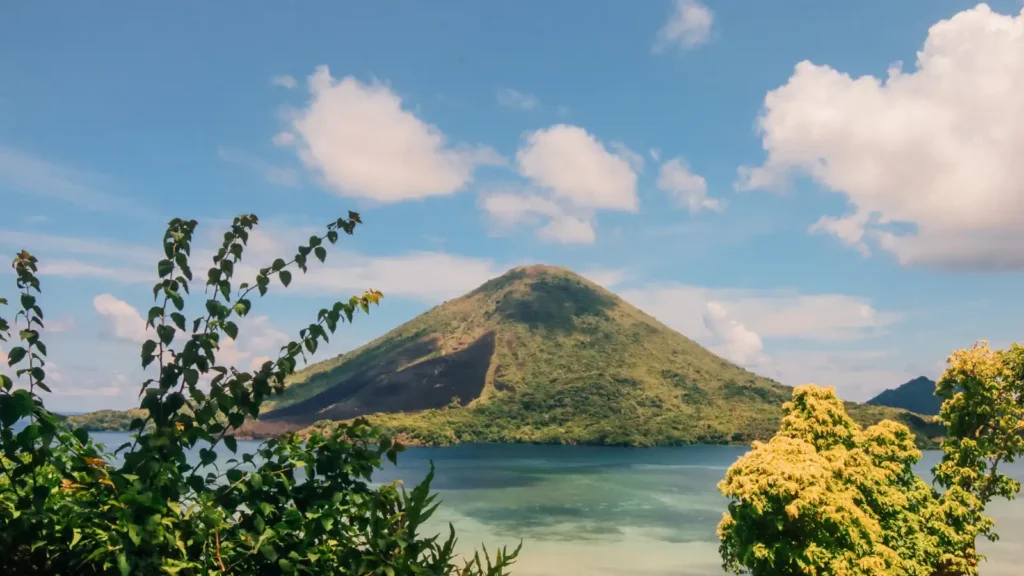
Under the water, Banda is a story of recovery. When Gunung Api erupted in 1988, lava ran into the sea and buried the reef. Within five years, hard corals covered about 60% of the sheltered part of the flow. The site, now called Lava Flow, is one of the best-known dives in the region.
How to visit
- Getting there: fly to Ambon, then join a liveaboard there. Banda Neira also has a couple of dive centres if you’d rather stay on land.
- Best time: two short windows: roughly mid-September to the end of November, and March to April. Scalloped hammerheads school at the seamounts, with the best odds in October and November.
- How long: the classic loop from Ambon runs seven to nine nights. Longer crossings link Banda with Raja Ampat or Flores.
- Combine with: Ambon Bay’s muck diving at the start or end. Compare the Banda Sea liveaboards, and read our Banda Sea liveaboard guide for the routes and boats.
Visiting sacred places with respect
Many of the places behind these Indonesian legends are still sacred. Wear a sarong and sash at Balinese temples, which you can usually borrow at the entrance. Don’t climb on shrines or touch offerings. At Kelimutu and Rinjani, stay on the marked paths. Your guide will tell you what local custom asks of you, and most of these stories sound better when someone from the island tells them.
If you’d like a trip built around one of these places, or several, tell us what you have in mind and we’ll plan the route with you.
Frequently asked questions
The Batak people of North Sumatra tell of a farmer named Toba who married a golden fish that had turned into a woman, and promised never to reveal her origin. When he called their son Samosir “the child of a fish”, she vanished and water flooded the valley to form the lake. Geologically, Lake Toba fills the caldera of a supervolcano that erupted about 74,000 years ago.
The people of Komodo village tell of Putri Naga, a dragon princess who gave birth to twins: a boy, Si Gerong, and a lizard, Ora. When Gerong later raised his spear against a dragon, his mother told him it was his sister. In the Komodo language the dragons are still called sebae, meaning twins.
The Lio people believe the souls of the dead go to the lakes on Mount Kelimutu: Tiwu Ata Mbupu for the elders, Tiwu Nuwa Muri Koo Fai for the young, and Tiwu Ata Polo for those who did evil. Every 14 August they hold a ceremony to feed the spirits of their ancestors.
The Tengger calendar sets the date, so it moves every year. In 2026 it fell at the end of May, and the Bromo area closed to visitors from 30 May to 2 June. Check the date well ahead if you want to plan around it.
In Sasak belief on Lombok, Dewi Anjani is a queen of the jinn who rules Mount Rinjani. Her palace is said to stand near Segara Anak, the crater lake, and climbers still leave offerings to her.
Not when the park reopened after the earthquake of 15 August 2026: the ticket office opened from 07:00 to 12:00 WITA only, and the Tiwu Ata Polo viewpoint stayed closed. Check the latest situation before you plan your visit.
Yes. The demon king belongs to local belief and has nothing to do with safety. The real things to watch on Nusa Penida are steep cliff paths and strong, cold currents, so dive with an experienced operator.