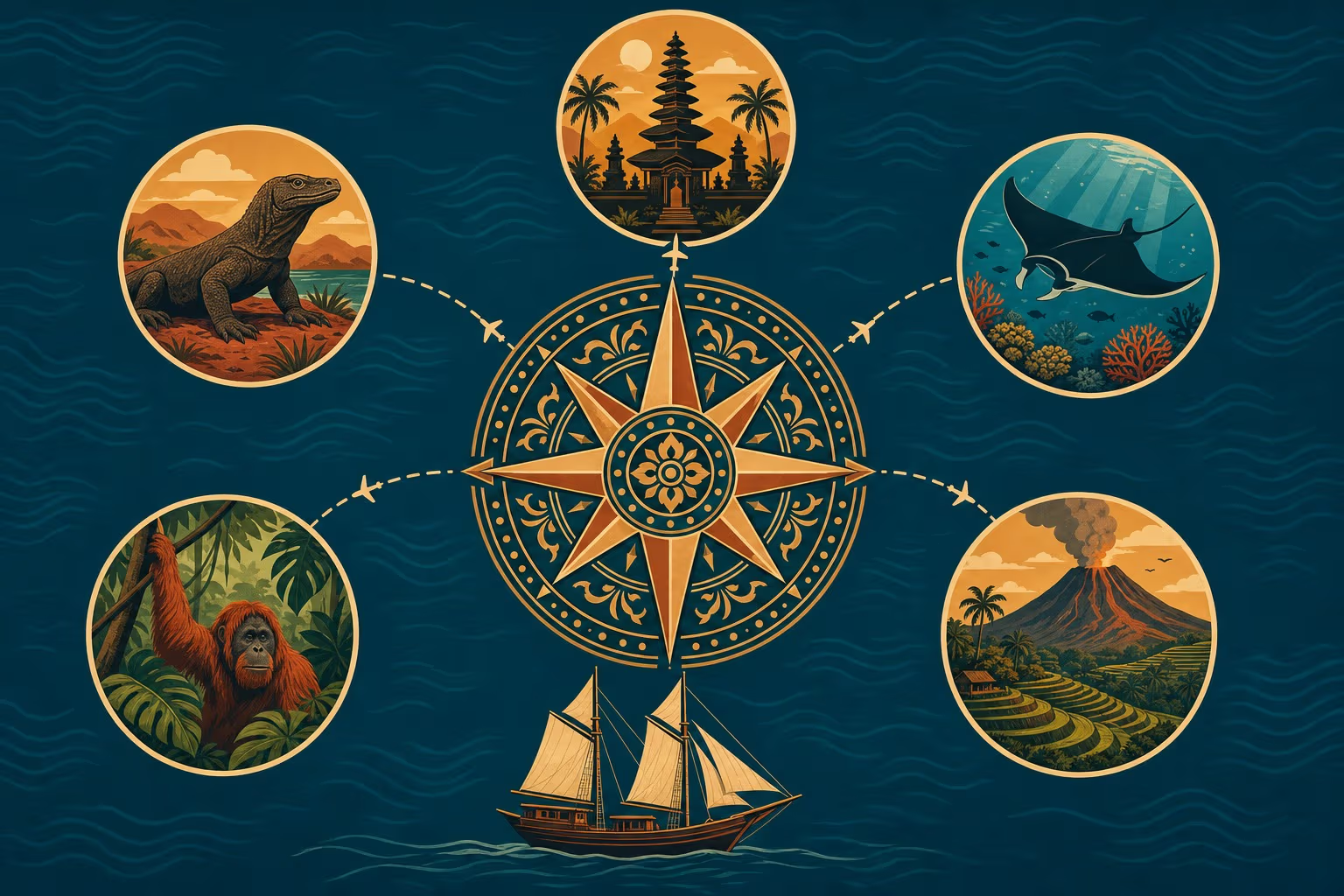
Planning a 2-week trip to Indonesia sounds straightforward until you open a map. The country holds the largest archipelago in the world: over 17,000 islands stretching 5,120 kilometres from east to west, spanning two oceans and bridging two continents. That distance rivals London to New York, and within it sit active volcanoes, ancient temples, orangutans, Komodo dragons, and some of the most biodiverse reefs on the planet.
Two weeks feels generous until you start sketching routes.
This guide is honest about what is and isn’t possible in 14 days. It also shows you how to structure your trip so you actually see the country, not just sprint through the tourist trail everyone else is on.
Can You Really See Indonesia in 2 Weeks?
No, not the whole country, and it’s worth saying that clearly upfront rather than letting people find out the hard way at hour three of a domestic transit day.
Indonesia’s distances are deceptive. Bali to Raja Ampat takes 5-8 hours once you factor in a connection. Jakarta to Labuan Bajo is around 2.5 hours in the air, but that’s before check-in, layovers, and getting to and from the airport on both ends. Even within Bali itself, getting from Ubud down to Uluwatu can easily take 2 hours or more once you hit traffic around Denpasar and Jimbaran. Try to cover four or five regions in two weeks and you’ll lose 3-4 days to transit alone – days that could have been spent diving, not queuing at a gate.
The good news: two weeks is genuinely enough to experience one or two regions in real depth, and depth is where the memorable part of this trip actually lives. Choose a route with logical flight connections, minimize backtracking, and give each destination the time it deserves. Each route below is built around that principle – two, occasionally three, well-paired destinations rather than a checklist. None of them will feel like a blur.
The 7 Best Multi-Destination Indonesia Itineraries for 2 Weeks
1. Bali + Komodo Indonesia Itinerary (Most Popular, Easiest to Execute)
Why it works: Two of the best-known destinations connected by a short direct flight from Bali’s Ngurah Rai Airport (DPS) to Labuan Bajo’s Komodo Airport (LBJ) – typically 1.5 to 2 hours, with direct flights on Lion Air, Batik Air, and Citilink. For two or three nights on the water, see the Komodo boat trips with live dates and prices.
Suggested split:
- Bali: 6-7 nights
- Komodo / Labuan Bajo: 5-6 nights (ideally 3 nights on a liveaboard + 2 nights in Labuan Bajo)
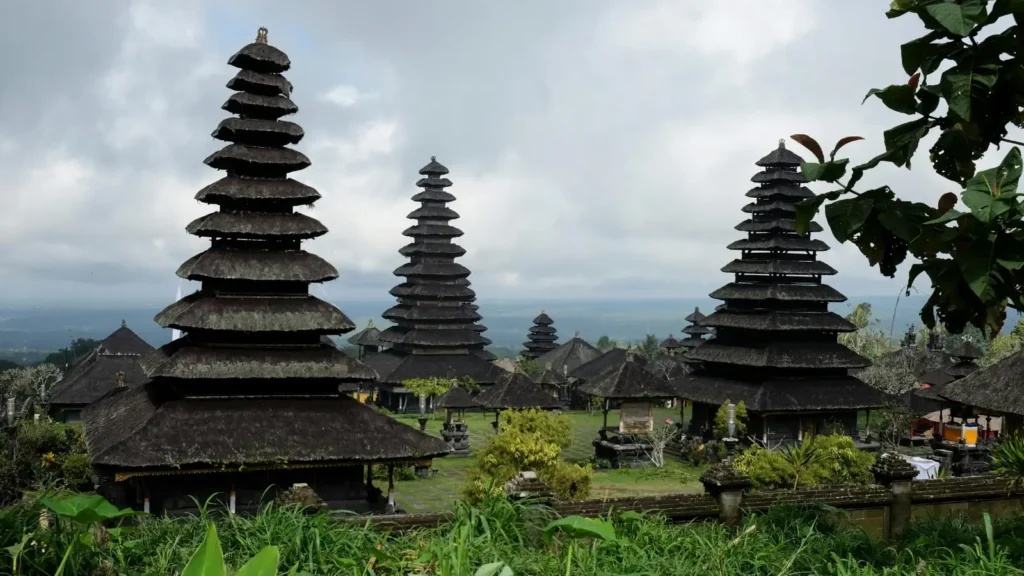
What you’ll see: In Bali, you can cover the rice terraces of Tegallalang, the temples of Uluwatu and Tanah Lot, world-class surf breaks, the cultural hub of Ubud, and some of the best beach clubs in Southeast Asia. A day trip to Nusa Penida adds manta rays at Manta Point and the famous Kelingking cliff.
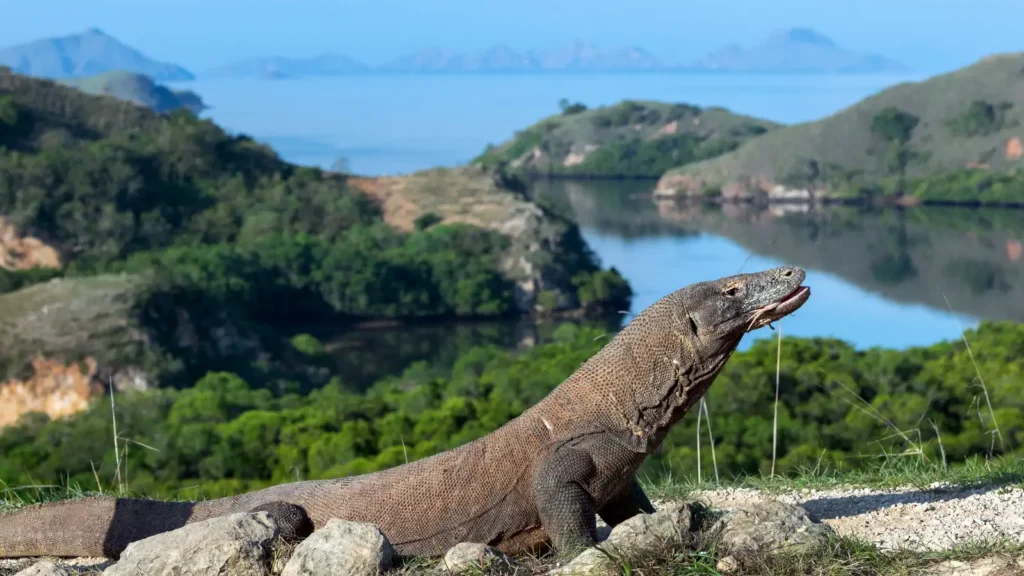
In Komodo, the Komodo dragon is the obvious draw – the world’s largest living lizard, found only on the islands of Komodo, Rinca, and a handful of smaller islands within Komodo National Park. But the underwater world is equally extraordinary. The park sits in the Wallacea biodiversity transition zone, where cold upwellings from the Indian Ocean collide with warmer Pacific currents, producing fast-moving, nutrient-rich waters teeming with manta rays, sharks, and pelagic fish. The best way to experience it is on a liveaboard cruise from Labuan Bajo, ranging from budget 2-night trips to premium 7-night dive safaris.
Best for: First-time visitors to Indonesia, couples, divers and non-divers travelling together.
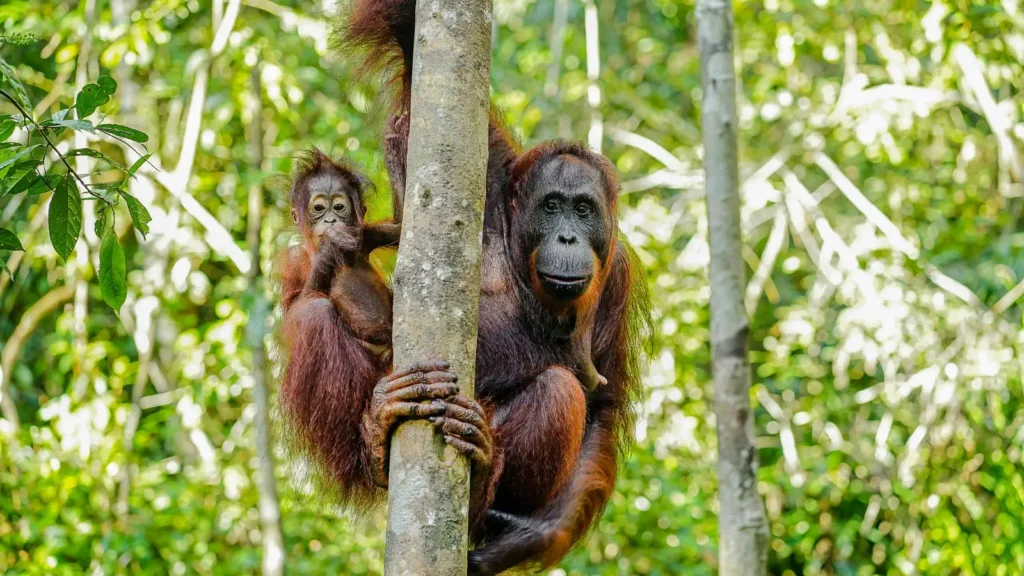
2. Bali + Komodo + Borneo (Dragons, Reefs, and Orangutans)
Why it works: This is the “mega-fauna trifecta” of Indonesia. Add 3-4 nights in Borneo to the Bali + Komodo route and you have Komodo dragons, manta rays, and wild orangutans in a single trip.
Suggested split:
- Bali: 5 nights
- Komodo / Labuan Bajo: 4-5 nights
- Borneo (Pangkalan Bun / Tanjung Puting): 3-4 nights
Routing: Fly Bali → Labuan Bajo, then Labuan Bajo → Bali (or Makassar) → Pangkalan Bun. The final leg home can go via Bali again or via Jakarta.
What you’ll see in Borneo: Tanjung Puting National Park in Central Kalimantan is one of the last remaining habitats of the wild Borneo orangutan (Pongo pygmaeus). A 3-night klotok (traditional wooden river boat) expedition along the Sekonyer River brings you within metres of orangutans at three feeding stations – Camp Leakey, Pondok Tanggui, and Tanjung Harapan – as well as proboscis monkeys, monitor lizards, and hornbills in the rainforest canopy.
UNESCO designated Tanjung Puting a Biosphere Reserve in 1977, and it became a National Park in 1982. The park covers roughly 416,000 hectares of peat swamp forest and tropical rainforest.
Best for: Wildlife enthusiasts, families with older children, travellers who want maximum diversity.
3. Java + Bali (Culture + Nature)
Why it works: This route threads two of Indonesia’s most layered destinations in a west-to-east direction, which is the most logical flight path. It suits travellers who want deep cultural immersion in Java without splitting focus across a third region.
Suggested split:
- Java (Yogyakarta + Bromo): 5-6 nights
- Bali (Ubud + South Bali): 7-8 nights
Routing: Fly into Jakarta or Yogyakarta, exit from Bali (DPS).
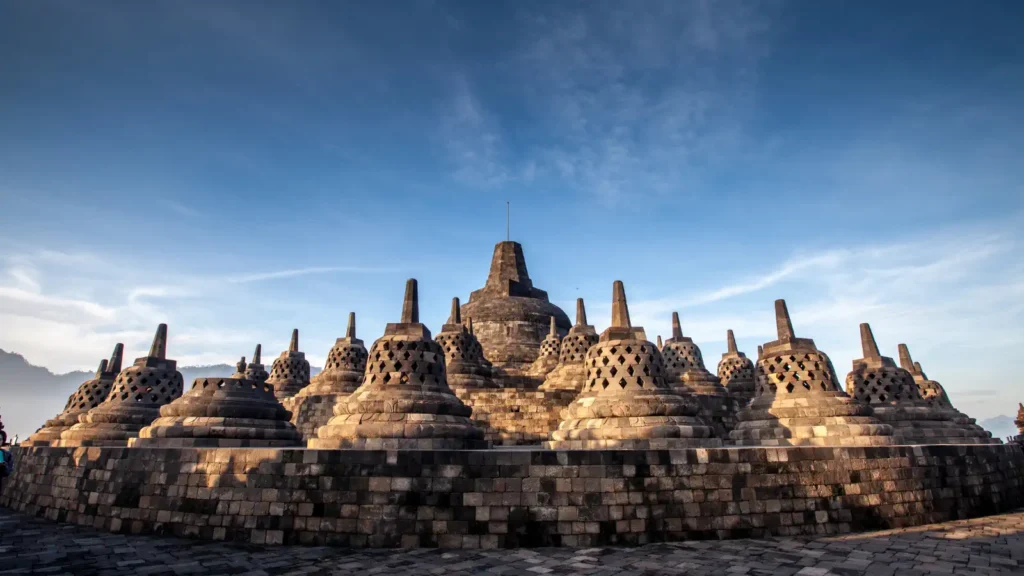
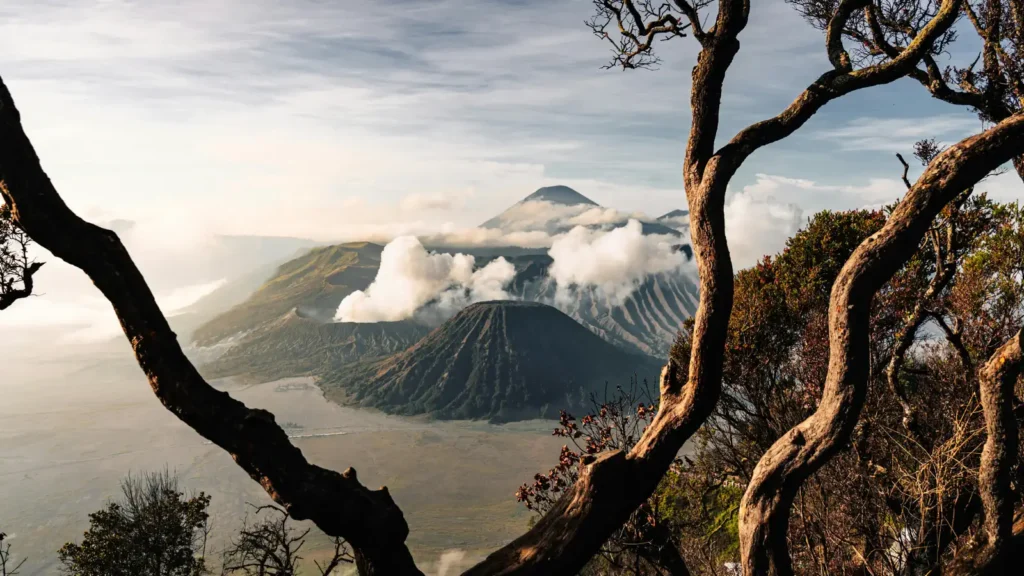
What you’ll see in Java: Yogyakarta is the cultural heartland of Java. Our Yogyakarta guide has the detail on where to base yourself and what to do after the temples. Borobudur – a 9th-century Mahayana Buddhist temple and one of the greatest Buddhist monuments in the world – is a 40-minute drive away. Prambanan, a 9th-century Hindu temple compound, is another 17 kilometres east. Both are UNESCO World Heritage Sites. From Yogyakarta, an overnight train or short flight east takes you to the area around Mount Bromo – an active volcano in the Tengger massif whose ash plain and caldera create one of the most surreal landscapes in Southeast Asia. The classic pre-dawn climb to the crater rim for the sunrise is one of those experiences that justifies a long-haul flight.
With the extra nights freed up in Bali, there’s room to slow down: a few days based in Ubud for rice terraces and temple ceremonies, then a move south to Uluwatu or Seminyak for beach clubs and surf.
Best for: Travellers who want culture as much as nature, history and archaeology lovers, overland adventurers, anyone who’d rather do two destinations properly than three at a sprint.

4. Bali + Lombok (Two Sides of the Same Strait)
Why it works: Bali and Lombok sit right across the Lombok Strait from each other, connected by a direct flight of around 45 minutes from Ngurah Rai Airport (DPS) to Lombok International Airport (LOP) with Wings Air or TransNusa, or a fast boat straight to the Gili Islands – fastest from Padang Bai at around 1.5 to 2 hours, or 3 to 4 hours from Sanur or Serangan. It’s one of the easiest island-hops in Indonesia, and the contrast is bigger than the short distance suggests – Bali’s polish against Lombok’s still-quiet coastline.
Suggested split:
- Bali: 6-7 nights
- Lombok (incl. Gili Islands): 6-7 nights
What you’ll see: In Bali, the usual highlights apply – Ubud’s rice terraces, the cliff temples of Uluwatu, and Nusa Penida’s Manta Point and Kelingking cliff as a day trip. In Lombok, the pace changes. The Gili Islands (Trawangan, Air, and Meno) ban motorised vehicles entirely, so getting around means bicycle, horse cart, or on foot, with warm, shallow snorkelling straight off the beach for turtles and reef fish. On the mainland, Kuta Lombok and Selong Belanak offer some of Indonesia’s best under-the-radar surf beaches, and Mount Rinjani at 3,726 metres is there for travellers who want a proper 2 to 3 day summit trek. Sasak villages like Sade give a window into Lombok’s indigenous culture, distinct from Bali’s Hindu traditions.
Best for: Beach lovers and honeymooners who want variety without complicated logistics, surfers, families wanting a slower second half of the trip, anyone who wants Bali’s infrastructure plus a genuinely undeveloped island escape.
5. Lombok + Komodo (Gili Life Meets Dragon Country)
Why it works: This one used to require a detour through Bali or Jakarta. That’s changed – Lombok International Airport (LOP) now has direct flights to Labuan Bajo’s Komodo Airport (LBJ) with Wings Air, Super Air Jet, and TransNusa, taking around 1 hour 15 minutes. That makes Lombok a legitimate standalone gateway into Komodo National Park, not just a Bali add-on.
Suggested split:
- Lombok (incl. Gili Islands): 5-6 nights
- Komodo / Labuan Bajo: 5-6 nights (ideally 3 nights on a liveaboard + 2-3 nights in Labuan Bajo)
Routing: Fly into Lombok (LOP), fly direct to Labuan Bajo (LBJ), exit via Bali or Jakarta.
What you’ll see: Start with Gili Islands snorkelling, Kuta Lombok’s beaches, and – for the more ambitious – a Rinjani trek, all detailed above. Then it’s straight into Komodo dragons on Komodo and Rinca islands, and a liveaboard through Komodo National Park’s manta-rich, current-swept waters, as covered in itinerary 1.
Bonus – make it three: With a slightly faster pace, this route extends naturally into Bali + Lombok + Komodo. Fly into Bali, take the short hop or fast boat to Lombok for a few days, then continue direct to Labuan Bajo for the liveaboard leg before flying home via Bali or Jakarta. It’s a tighter schedule – expect 4-5 nights Bali, 3-4 nights Lombok, 4-5 nights Komodo – but it strings together Indonesia’s three most complementary short-haul destinations without a single wasted transit day.
Best for: Divers and beach lovers who want to skip Bali’s crowds without skipping ease of access, travellers who want two very different marine environments (calm Gili reefs vs. Komodo’s fast currents and pelagics) in one trip.
6. Sulawesi + Komodo Indonesia Itinerary (For Serious Divers)
Why it works: Most visitors to Indonesia never set foot in Sulawesi. That is exactly why this route belongs on your radar.
Sulawesi is Indonesia’s fourth-largest island and one of its most ecologically distinct – shaped by the Wallacea biogeographical zone, where species from the Asian and Australian realms overlap and diverge. Its waters are home to some of the most acclaimed dive sites on earth.
Suggested split:
- North Sulawesi (Bunaken / Manado): 4-5 nights
- Central Sulawesi (Togean Islands): 3-4 nights
- Flores / Labuan Bajo (Komodo): 4-5 nights
Routing: Fly into Manado (MDC), exit from Labuan Bajo (LBJ). Transit via Makassar or Palu for the Togean leg.
What you’ll see:
Bunaken National Marine Park (North Sulawesi) is famous for its dramatic vertical walls. Some drop over 400 metres, covered in gorgonian sea fans, black corals, and sponges. The park hosts over 390 coral species and more than 2,000 species of fish. Indonesia designated it as one of the country’s first marine protected areas in 1991.
Visibility regularly exceeds 30 metres. Macro life is exceptional too. Pygmy seahorses, ghost pipefish, mimic octopus, and the elusive mandarin fish all live here.
Wakatobi (Southeast Sulawesi) – if you have an extra 2-3 days – ranks among the highest coral diversity destinations in Indonesia outside Raja Ampat, with house reefs so healthy that some dive operators offer snorkelling directly from the beach.
Togean Islands (Central Sulawesi) sit in the Tomini Bay and are one of the few places in the world where all three major reef types – fringing reefs, barrier reefs, and atoll reefs – exist within the same area. The Togeans also host a population of Bajau Laut sea nomads who have traditionally lived on houseboats over the water.
Komodo then adds a completely different character – faster currents, bigger pelagics, manta aggregations.
Best for: Experienced divers, underwater photographers, travellers who want to go well off the standard tourist trail.
7. Sulawesi + Bali (Culture + Relaxation, With Serious Depth)
Why it works: This is the itinerary for people who want a trip that balances genuine cultural immersion with rest – and who are willing to skip the obvious.
Suggested split:
- Sulawesi (Toraja + Bada Valley): 5-6 nights
- Bali (Ubud + South Bali): 6-7 nights
Routing: Fly into Makassar (UPG), connect to Rantepao or drive. Exit from Bali.
What you’ll see:
Tana Toraja (South Sulawesi) is one of the most culturally distinctive places in all of Southeast Asia. The Torajan people practice a uniquely elaborate death culture – funerals are multi-day communal ceremonies involving hundreds of guests, buffalo sacrifices, and the temporary preservation of the deceased until the family can afford a proper send-off, which sometimes takes years. The dead rest in cliff-side tombs carved into limestone rock faces, watched over by tau-tau (effigy figures) placed on exposed balconies. The traditional tongkonan longhouses, with their dramatically sweeping boat-shaped roofs, date back centuries. Toraja remained largely unknown to outsiders until the 1970s and still sees relatively few international visitors compared to Bali.
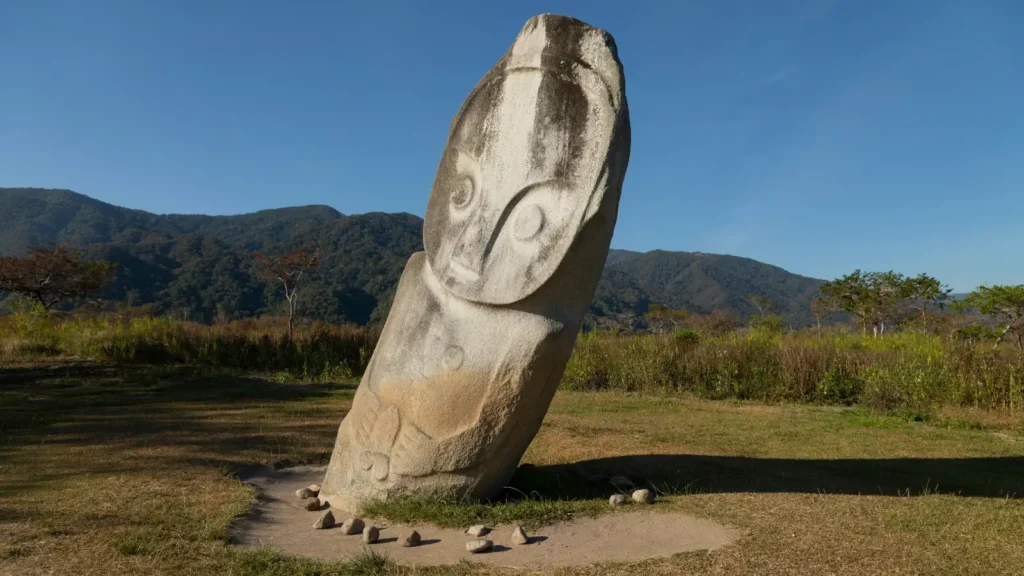
Bada Valley (Central Sulawesi) contains a series of megalithic stone statues – large stone humanoid figures scattered across rice paddies and jungle clearings, some over 4 metres tall – whose origins and purpose remain genuinely unknown to archaeologists. They rank among the most mysterious archaeological sites in Southeast Asia and receive visits from almost no one.
After the intensity of Sulawesi, Bali’s rice paddies, temple ceremonies, and beach clubs feel like a well-earned reset.
Best for: Cultural travellers, archaeology and anthropology enthusiasts, those who want a story no one else has.
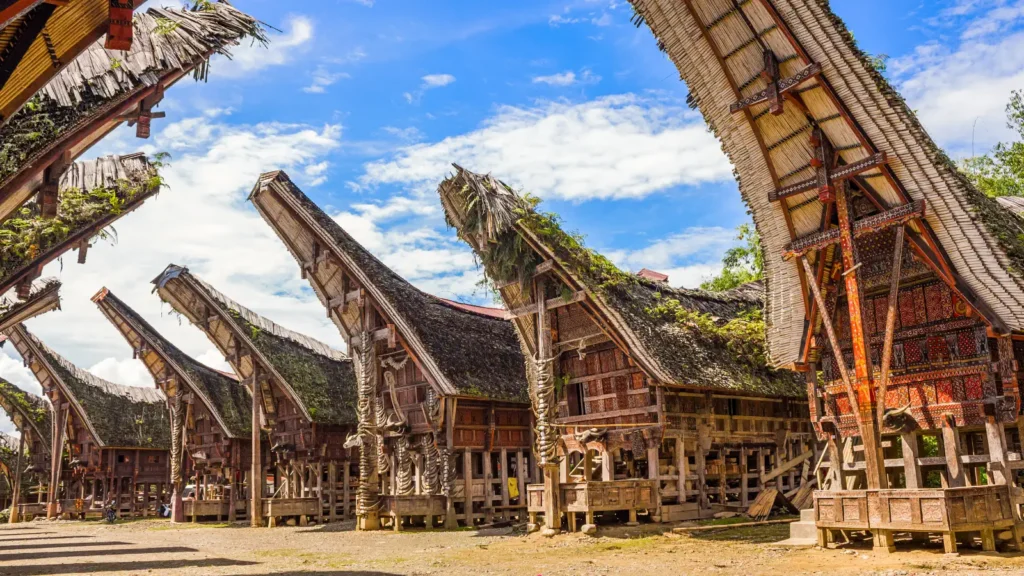
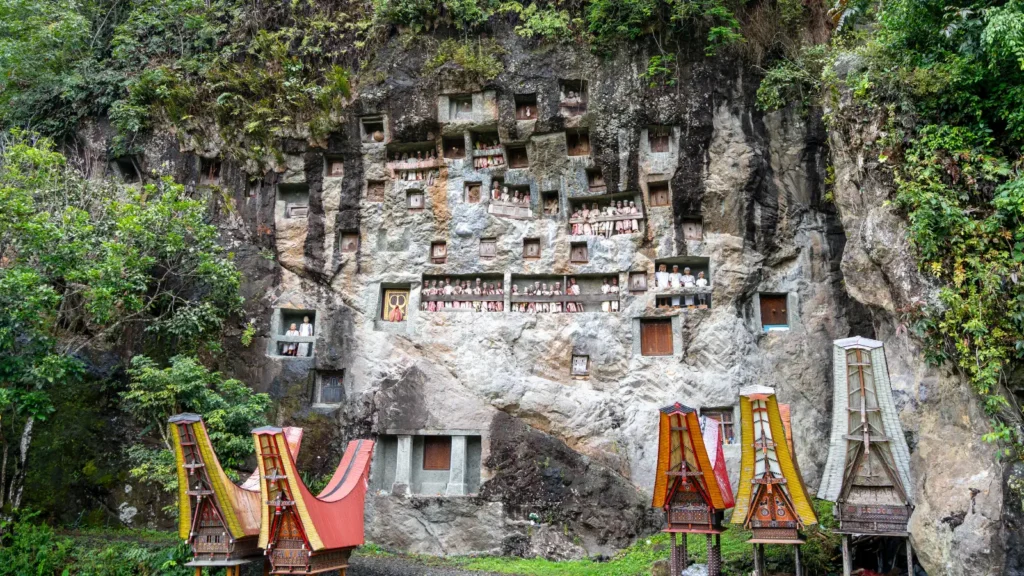
Sulawesi: The Island Most Visitors Skip (And Exactly Why You Shouldn’t)
Most Indonesia travel guides prioritize Komodo, Bali, and Raja Ampat. Sulawesi gets skipped – despite being one of the most ecologically and culturally rich islands in the entire archipelago. Yet this island belongs on any serious Indonesia trip for diving or culture.
Why Sulawesi Remains Under the Radar
This is partly a marketing problem and partly an infrastructure one. The island has no single obvious entry point and its highlights are geographically spread across its four peninsula-like arms. Consequently, getting between them requires internal flights or long overland journeys.
However, that infrastructure challenge is precisely what makes Sulawesi worth visiting. Today, Sulawesi in 2026 is what Bali was in the 1980s – real, unhurried, and largely unspoiled. The dive sites in Bunaken deliver world-class diving without the crowds. The Torajan culture remains genuinely unlike anything else in Southeast Asia. The Togean Islands require effort to reach, which means you’ll share them with almost no one.
If you’re planning a second or third Indonesia trip, Sulawesi should be your answer. Alternatively, if it’s your first trip and you want something no one at home will have done, Sulawesi + Bali or Sulawesi + Komodo is the move.
How Many Days Per Destination?
| Destination | Minimum | Recommended | What Drives the Range |
|---|---|---|---|
| Bali | 4 nights | 7 nights | Size of island, range of regions (Ubud vs South Bali vs North Bali) |
| Komodo / Labuan Bajo | 3 nights | 5-6 nights | Adding a liveaboard adds time but depth |
| Lombok (incl. Gili Islands) | 3 nights | 6-7 nights | Mainland beaches, Gili Islands, and a Rinjani trek all pull in different directions |
| Yogyakarta (Java) | 2 nights | 3-4 nights | Day trips to Borobudur, Prambanan, Bromo |
| Tana Toraja (Sulawesi) | 3 nights | 5 nights | Funeral ceremony timing is unpredictable |
| Bunaken (North Sulawesi) | 3 nights | 5 nights | Dive repetitions needed to see everything |
| Togean Islands | 3 nights | 5 nights | Travel time to reach adds a day each way |
| Borneo / Tanjung Puting | 3 nights | 4 nights | Klotok river boat needs at least 2 full days |
| Raja Ampat | 7 nights | 10-14 nights | Distances between dive sites are significant |
Raja Ampat is the outlier – it is not really a 2-week destination on its own alongside other islands. If Raja Ampat is on your list, give it its own dedicated trip.
Ready to book your trip? Explore our liveaboard options or create a custom itinerary tailored to your pace.
Flight Routing Tips
Book domestic flights early. Indonesian domestic aviation runs on a hub-and-spoke system, mostly through Jakarta (CGK), Bali (DPS), Makassar (UPG), and Surabaya (SUB). Popular routes like Bali → Labuan Bajo or Bali → Manado fill up fast in high season (July-August, December-January). Book 2-3 months ahead.
The most useful connection airports:
- Bali (DPS) – connects to almost everywhere
- Makassar (UPG) – the gateway to Sulawesi and useful transit point to Flores
- Labuan Bajo (LBJ) – Komodo’s airport, direct flights from Bali, Jakarta, and Lombok
- Lombok (LOP) – a growing gateway in its own right, with direct flights to Bali and, as of 2025, direct flights to Labuan Bajo
- Manado (MDC) – for Bunaken and North Sulawesi
- Sorong (SOQ) – the gateway to Raja Ampat
Allow a buffer day. Domestic flights in Indonesia have a higher rate of schedule changes than international carriers. Building one buffer day into a 2-week itinerary can prevent a cascade of missed connections.
Avoid night buses unless you enjoy adventure. Indonesia has some excellent overnight train routes in Java, but overland connections between islands obviously don’t exist. For Sulawesi, Raja Ampat, Lombok, or Komodo, you fly (or, for Lombok’s Gili Islands, take a fast boat).
Raja Ampat: Indonesia’s Most Biodiverse Destination (And Why It’s in a Class of Its Own)
If diving is the reason you’re going to Indonesia, Raja Ampat deserves a separate conversation.
Located at the northwest tip of West Papua, Raja Ampat sits at the centre of the Coral Triangle – the 5.7 million square kilometre marine zone spanning six nations that contains 76% of the world’s known coral species and over 3,000 species of reef fish. Within that already extraordinary region, Raja Ampat is the epicentre.
Scientific surveys by Conservation International and The Nature Conservancy have recorded over 550 coral species, more than 1,500 fish species, 700 species of molluscs, and 17 species of marine mammals in these waters. A single dive site at Cape Kri holds the world record for the most fish species counted on a single dive: 374 species. To put that in context, the entire Caribbean Sea has approximately 62 species of stony coral.
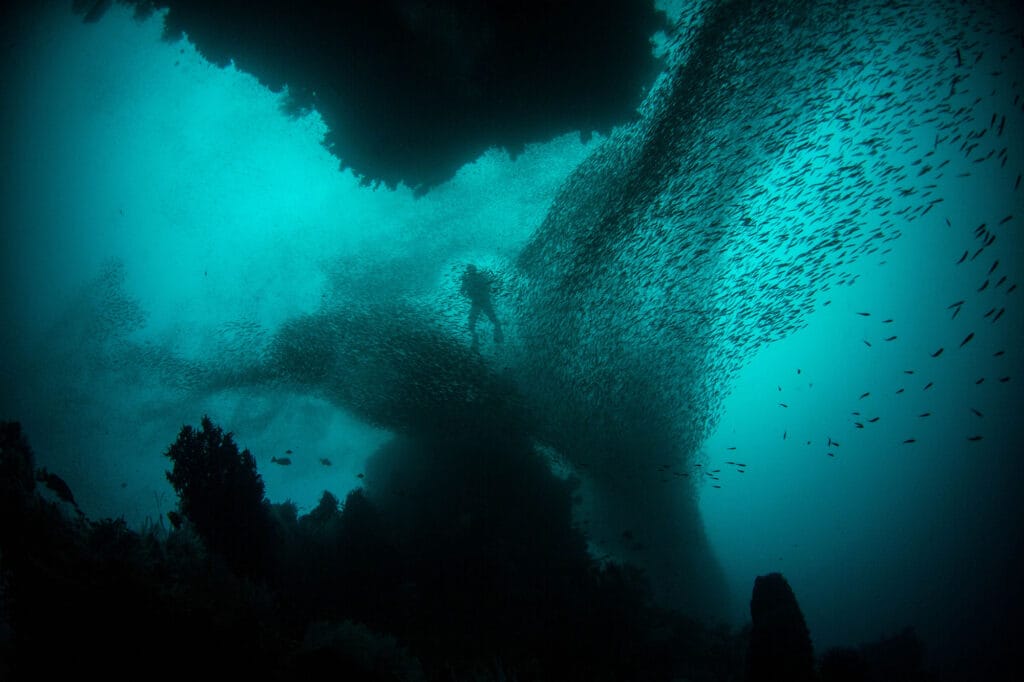
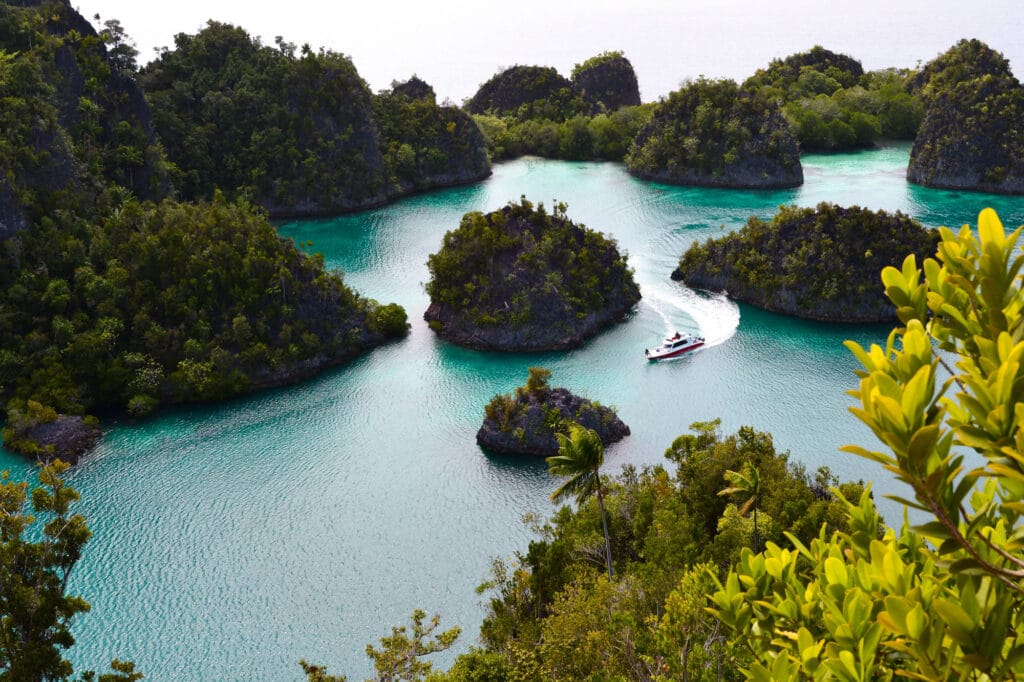
This isn’t marketing. It’s a measurable biological fact: Raja Ampat has the highest documented marine biodiversity on Earth.
The best way to see it is by liveaboard. The distances between dive sites – Misool in the south, Wayag in the north, Dampier Strait in between – are significant, and a liveaboard lets you cover all three zones in 7-10 days. That said, resort-based dive safaris from Sorong or the islands themselves give excellent access to specific areas.
Ocean Earth Travels runs liveaboard itineraries in Raja Ampat year-round. High season runs from October to April (when the northern areas are accessible). The Misool area in the south is best from April to November.
Why Work With a Travel Specialist?
Here is the honest case for using a specialist rather than booking everything yourself.
Access to Hidden Availability
Boat and accommodation availability is opaque. Liveaboard departure dates, cabin categories, and pricing don’t aggregate cleanly onto booking platforms, and a boat showing “fully booked” online can still have a cabin free once you call the operator directly. We work with these boats year-round, so we know who to call and what’s actually open, not just what a booking widget shows.
Smart Routing Saves Days
Routing errors are expensive. We’ve seen itineraries built the other way around, picking the destinations first and figuring out the flights after, lose entire days to a missed connection or a route that backtracks through Jakarta for no reason. We build the routing first, then fit the experiences around it.
Local Knowledge That Google Can’t Provide
On-the-ground knowledge changes everything. Which departure from Labuan Bajo is worth the premium? Which cabin on the boat actually has a sea view, and which one only claims to in the photos? Which hotel in Toraja puts you close enough to reach a funeral ceremony on short notice, since the dates are set by the family, not a calendar? These aren’t things you learn from reviews, they’re things you learn from being there.
Better Rates Through Direct Relationships
Local specialist pricing. We’re based in Bali, not booking Indonesia from an office overseas. We work with operators, dive centres, and guides we know personally, many of them for years, and that relationship shows up in three ways: accurate information, someone accountable if something goes wrong on the ground, and often better rates than what’s published online.
FAQ
No, not the whole country – Indonesia is too vast for that in any single trip. But two weeks is genuinely enough to experience one or two regions in real depth, which is where the best of this trip actually happens. With 17,000 islands and significant distances between them, a 14-day trip covers two destinations well (for example Bali plus Komodo) or three at a faster pace. Trying to fit four or more regions usually means losing 3 to 4 days to airports instead of exploring.
For most first-time visitors, Bali plus Komodo is the most rewarding 2-week option. The flight between them is short (1.5 to 2 hours direct), the contrast between cultural Bali and wild Komodo is striking, and you get the headline experiences (Komodo dragons, manta rays, Ubud, Uluwatu) without complex routing. Bali plus Lombok is a close second for travellers who want a beach-and-island-hopping trip with even simpler logistics – the flight is just 25 minutes.
The dry season from May to October works best for most of western and central Indonesia, including Bali, Lombok, Komodo, Java, and Sulawesi. Raja Ampat in the east has a different pattern, with the best diving conditions from October to April. July and August are peak season everywhere, so book domestic flights and liveaboards 2 to 3 months ahead.
A mid-range 2-week trip for two people, including domestic flights, accommodation, food, and activities (but not international flights), typically falls between USD 3,000 and USD 6,000. Adding a 3-night liveaboard in Komodo or a Raja Ampat charter pushes costs higher. Toraja, Java, and Lombok are noticeably cheaper than Bali or remote dive destinations.
Yes. The Bali plus Komodo route gives you temples and rice terraces alongside world-class diving. For something deeper on the culture side, Java plus Bali combines Borobudur and Mount Bromo with Bali’s temples and beach clubs. If you want serious diving added to a culture-first trip, Lombok plus Komodo or the extended Bali plus Lombok plus Komodo route works well, or swap Bali for Sulawesi (Bunaken or Wakatobi) and pair it with Komodo for a diving-first approach.
In high season (July to August and December to January), yes. Routes like Bali to Labuan Bajo, Bali to Manado, and any flight to Sorong (Raja Ampat) fill up quickly. Book 2 to 3 months ahead to lock in schedules. Outside peak season, 4 to 6 weeks is usually enough.
Plan Your Indonesia Trip With Ocean Earth Travels
We’ve been building custom diving and adventure trips across Indonesia since 2015, from Komodo and Raja Ampat to Sulawesi, Java, Bali, Lombok, and beyond. No set packages, no cookie-cutter routes. Every itinerary starts with what you actually want: a 2-week liveaboard, a multi-island route mixing culture and diving, or something no other agent in Europe would think to suggest.
We work directly with local operators, boat crews, and guides who know these waters. That means better access, better pricing, and trips built around your pace, not a brochure.
Get in touch with us and tell us more about what you want to see or do in Indonesia.
Or explore our: