Blink and you’ll miss it. One moment, there’s nothing but coral. The next, a creature unfurls like a dream and flashes a ripple of light down its body. This isn’t some special effect – it’s a real-life cuttlefish, performing what scientists call cuttlefish hypnosis hunting, and it might be the ocean’s most underrated magician.
Divers across Indonesia, especially in Komodo and Raja Ampat, often get front-row seats to one of the most surreal hunting strategies in nature. No teeth-baring chase. No brute force. Just a hypnotic light show, and a crab that freezes just long enough to become lunch.
So, is it hypnosis? Mind control? Or just some seriously smart biology?
Let’s take a closer look.
Cuttlefish 101: Masters of Disguise
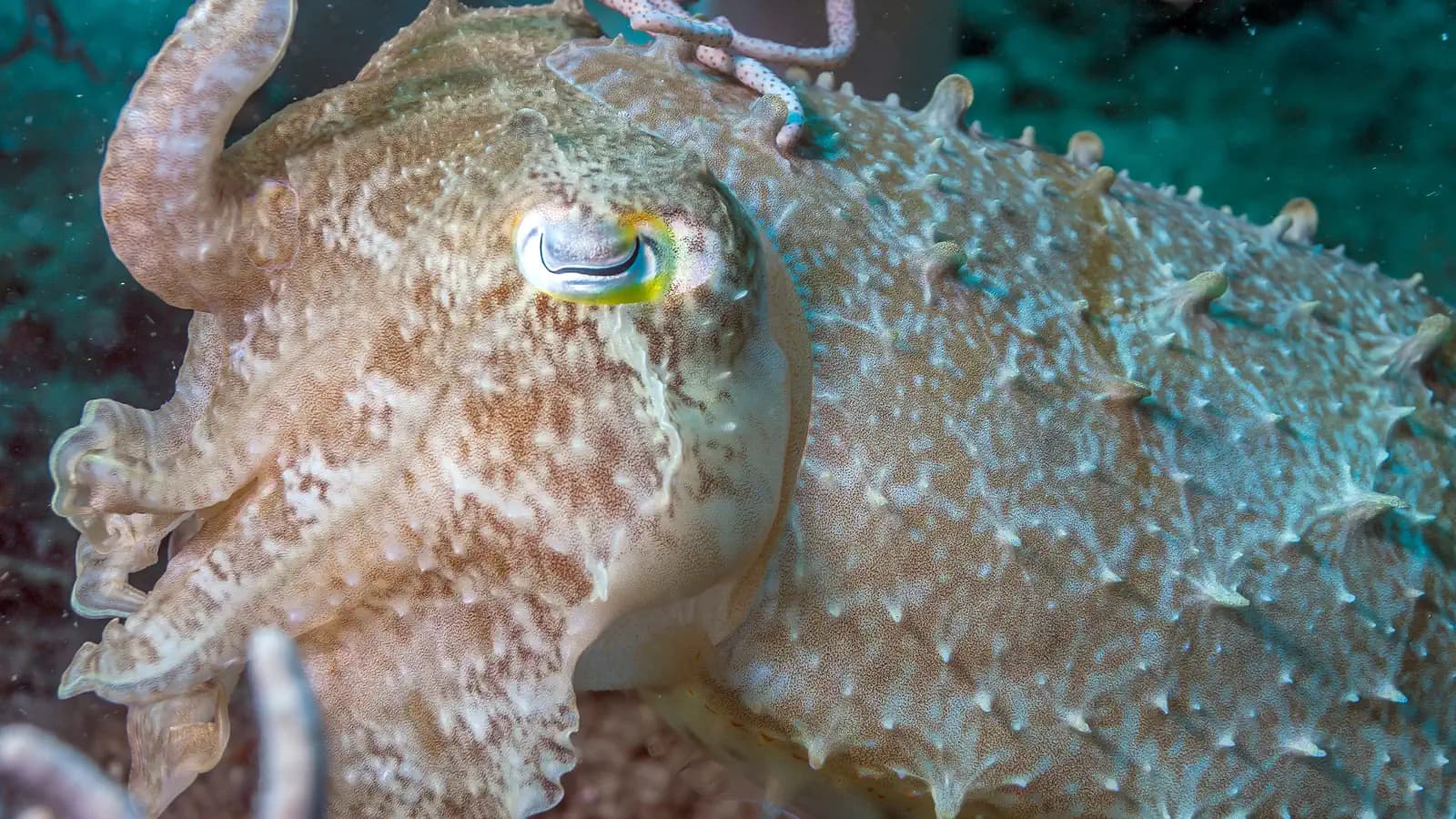
Cuttlefish are part of the cephalopod family, which includes squid and octopus – so right away, you know you’re dealing with a brainy animal. But what sets the cuttlefish apart is its ability to change color and texture in milliseconds, thanks to specialized skin cells called chromatophores and iridophores.
These cells let cuttlefish flash bold colors, mimic complex textures like coral or rock, and even shimmer like a disco ball. It’s all controlled by their nervous system, making them one of the only animals that can literally think their way into a new appearance.
But they don’t just do it for camouflage. Sometimes, it’s a performance.

The Light Show: How Hypnosis Happens
Here’s where things get wild.
When a broadclub cuttlefish spots a crab or shrimp, it doesn’t always sneak up in stealth mode. Instead, it approaches slowly and deliberately – while waves of dark and light stripes pulse down its body. These rhythmic patterns are impossible to ignore.
To the human eye, it looks like a strobe light. But to the crab? It may be visually overwhelmed, disoriented, or even unable to process what’s coming. Scientists call this dynamic dazzle camouflage or motion camouflage. It’s less about putting prey into a trance, and more about confusing their ability to detect a threat.
One 2023 study published in Proceedings of the Royal Society B filmed hundreds of cuttlefish hunting in Raja Ampat. The researchers found that these displays weren’t random – cuttlefish switched between different hunting modes depending on the prey and habitat. They even mimicked coral or seaweed when needed. But when they wanted to go bold, they brought out the stripes.
Source: Santon et al. (2023), “Predatory tactics of the broadclub cuttlefish”, Proc. R. Soc. B.


So… Are They Really Hypnotizing Prey?
Not quite – at least, not in the way we think of hypnosis. There’s no mind control here. What’s really happening is a clever manipulation of the prey’s vision.
Crabs and fish don’t see like we do. Their visual systems are wired differently, and those moving stripes may disrupt their motion detection or make the cuttlefish’s body harder to recognize. In other words, the cuttlefish becomes a moving optical illusion.
It’s not magic. It’s evolution.
But let’s be honest: when you see it happen underwater, it feels like magic.
Where to See It: Diving with Cuttlefish in Indonesia
If you’re scuba diving in Indonesia, there’s a good chance you’ll meet a cuttlefish or two.
They’re common in Komodo, Raja Ampat, Alor, and even around Bali. The broadclub cuttlefish – the species best known for this hypnotic hunting display – is often spotted hovering near the reef, blending in until it’s ready to show off.
And when it does, prepare to be amazed.
Divers often describe the moment as surreal: a creature that shifts from invisible to iridescent in a heartbeat, arms slowly unfurling, skin rippling like a screen saver from another world. If you’re lucky, you’ll even witness the full hunt – the color change, the creeping approach, the flash of tentacles, and the snap of capture.
Want to improve your odds? Join a scuba diving liveaboard in Indonesia. These trips take you to remote dive sites where cuttlefish thrive, and where nature still puts on a nightly show for those who know where to look.

Final Thoughts: No Capes, Just Chromatophores
Cuttlefish don’t roar. They don’t chase. They don’t need to.
With a flash of pattern and a burst of light, they turn biology into illusion – and illusion into survival. Whether it’s truly hypnosis or just a masterclass in deception, one thing’s for sure: the next time you dive into the waters of Indonesia, keep your eyes open and your camera ready.
Because if you blink, you just might miss one of the ocean’s greatest shows.