People come to Ubud expecting a spa weekend and leave having extended their stay twice. I’ve watched it happen more times than I can count. What gets them is usually something small: a ceremony they stumbled into on the way back from dinner, a conversation with a woodcarver on Jalan Hanoman, the way the mist sits over the rice terraces first thing in the morning before anyone else is up.
Ubud is Bali‘s cultural centre. Temples, traditional dance, painting schools, silver workshops, healing traditions and some of the best food on the island are all here. But it has changed a lot. The centre is busy, the Instagram spots have queues, and if you’re not careful you can spend three days in Ubud and barely touch the actual place.
This guide is about how not to do that. Where I’d go, what I’d eat, where I’d stay depending on the kind of trip you want, and the things that are worth your time versus the ones you can skip. And if Ubud is one stop on a longer route through Indonesia, here’s how it fits into two weeks across the archipelago.
The Ubud beyond the centre
The first thing to understand about Ubud is that the centre is only one piece of it.
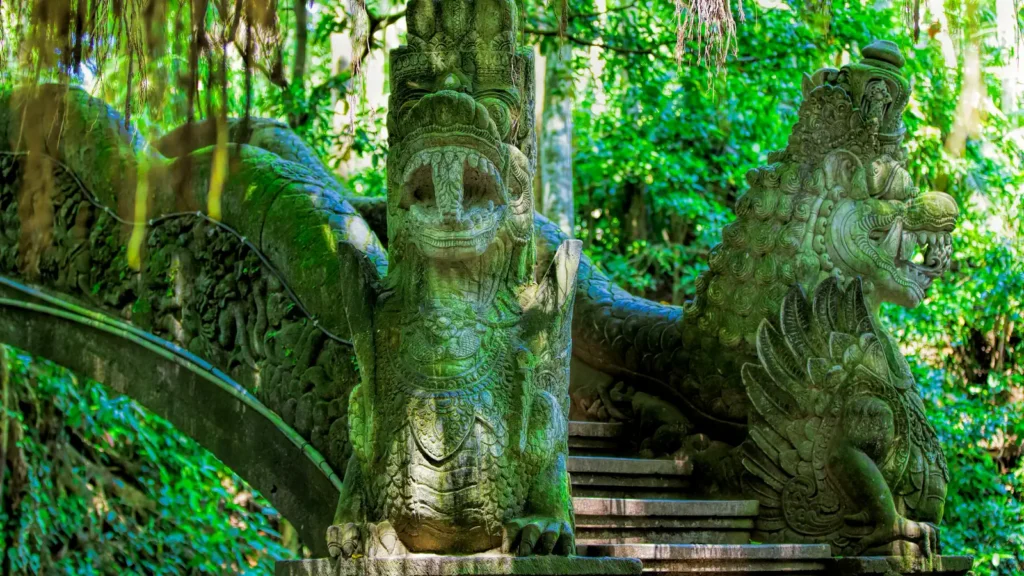
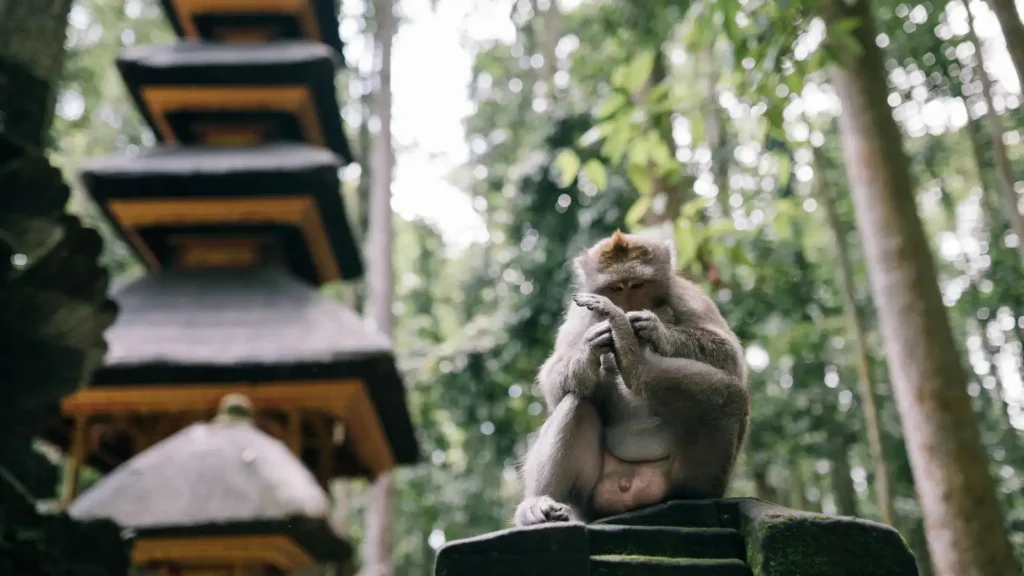
The famous places are worth seeing. The Sacred Monkey Forest is a sacred forest and conservation site run by the village of Padangtegal. Ubud Palace is still one of the town’s main cultural landmarks, with traditional dance performances held there. Tegallalang’s rice terraces are worth seeing too.
But there is another Ubud beyond those stops.
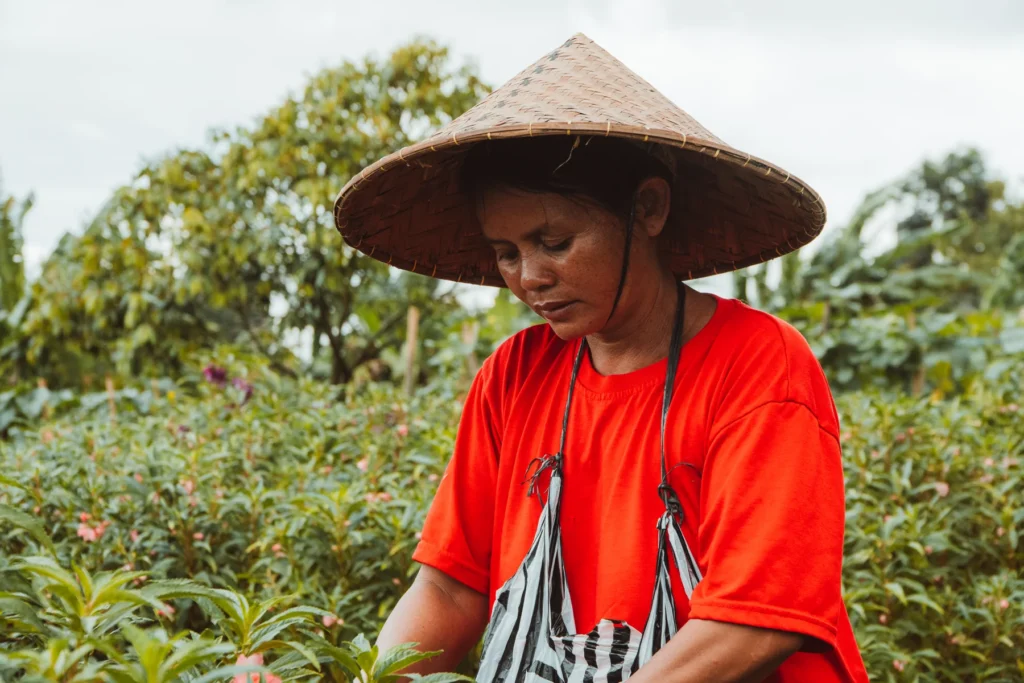
The town spreads into villages, rice fields and river valleys where the things people come to Ubud to experience are still part of everyday life. Mas has a long association with woodcarving. Batuan is known for painting. Celuk is associated with silver and gold work. Around the villages you’ll find family compounds, working artisans, local warungs and temples that are part of living communities rather than attractions built around visitors.
That is the side of Ubud I would leave room for.
Pick your Ubud
Ubud isn’t one place. It’s a town with a walkable centre, surrounded by villages, rice fields, valleys and jungle that each have a completely different feel. Where you base yourself decides which version you get.
Central Ubud
The area around Jalan Raya Ubud, Jalan Hanoman and Jalan Monkey Forest is the easiest place to stay if this is your first visit. Ubud Palace, the market, restaurants, cafés, galleries and many of the town’s main cultural sights are concentrated here.
It is busy, particularly during the day, but you can still find quieter accommodation on the smaller streets. Jalan Goutama and Jalan Dewi Sita are good examples.
Best for first-time visitors, solo travellers and anyone who wants to walk to dinner rather than organise transport every time.
Penestanan
Across the river from the centre, Penestanan has a different feel. It is associated with artists, independent cafés, wellness businesses and rice-field walking routes.
It is a good choice when you want to be close to central Ubud without being right in the middle of it. The downside is transport: some routes into town are steep footpaths, so a scooter, taxi or ride-hailing service becomes more useful.
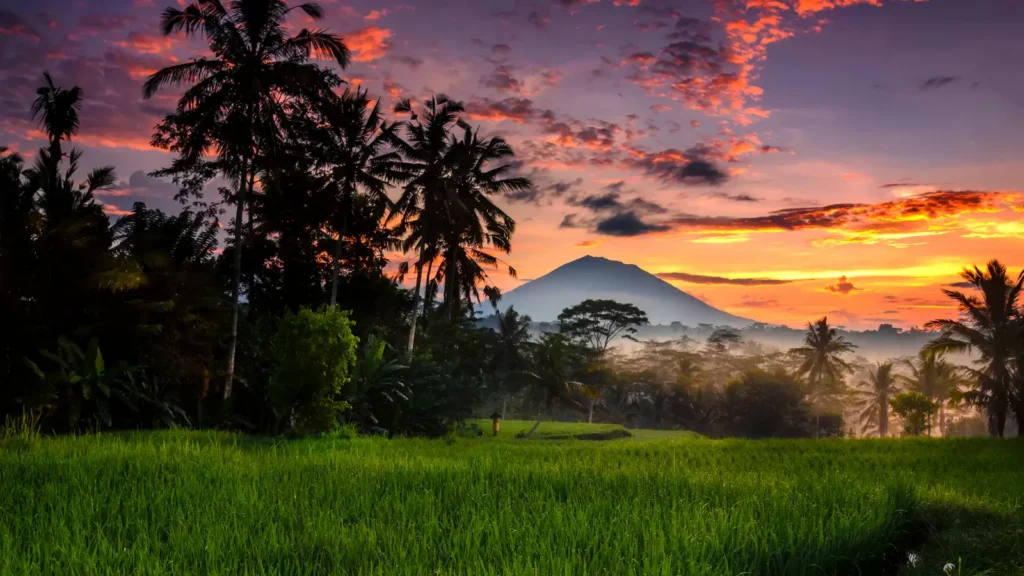
Sayan and Kedewatan
West and northwest of the centre, the landscape opens into river valleys, forest and rice terraces. This is where you’ll find a higher concentration of resorts designed around the landscape itself.
You won’t have the same walkability as central Ubud, but that is generally the point. Stay here when the room, pool and landscape are part of the holiday rather than somewhere you sleep between sightseeing trips. The Ayung River runs through the valley, and you can raft it.
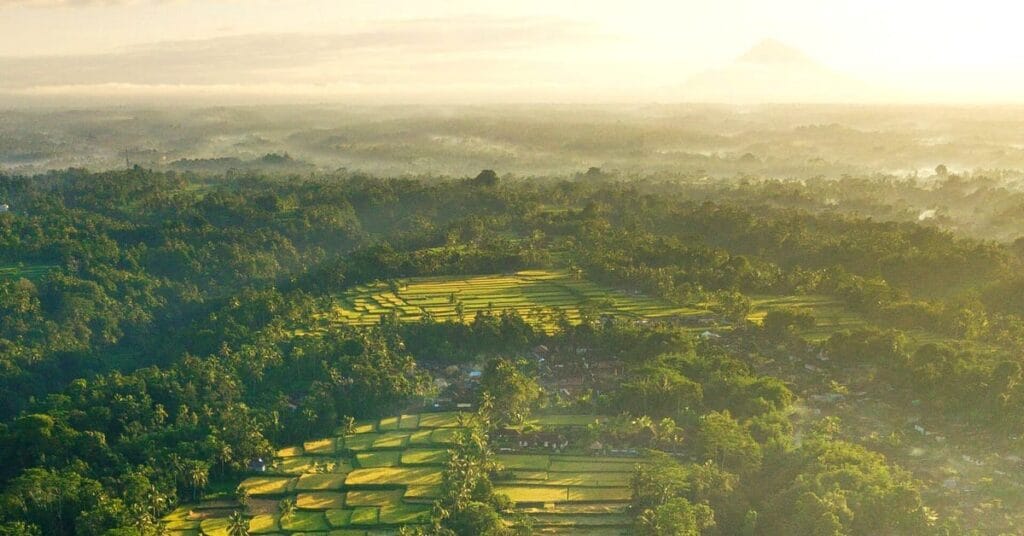
Tegallalang
North of Ubud, Tegallalang is the rice-terrace area most visitors already know. The famous roadside viewpoints can be busy, but the broader area is much more interesting once you get away from the busiest photo stops.
The terraces are part of a wider agricultural landscape shaped by subak, Bali’s traditional irrigation and cooperative farming system.
Mas, Pengosekan and the craft villages
South of the centre, the villages around Mas and Pengosekan are where you can get closer to the craft traditions that helped establish Ubud’s reputation.
Stay here if you want to be close to the workshops. These are working villages, where artisans make things for a living.
Pick the part of Ubud that matches how you want to spend your days. Then work outward from there.
Four hotels we like
Each of these suits a different kind of trip, from village quiet to rice-field views. You can also browse all our hotels and resorts in Bali.
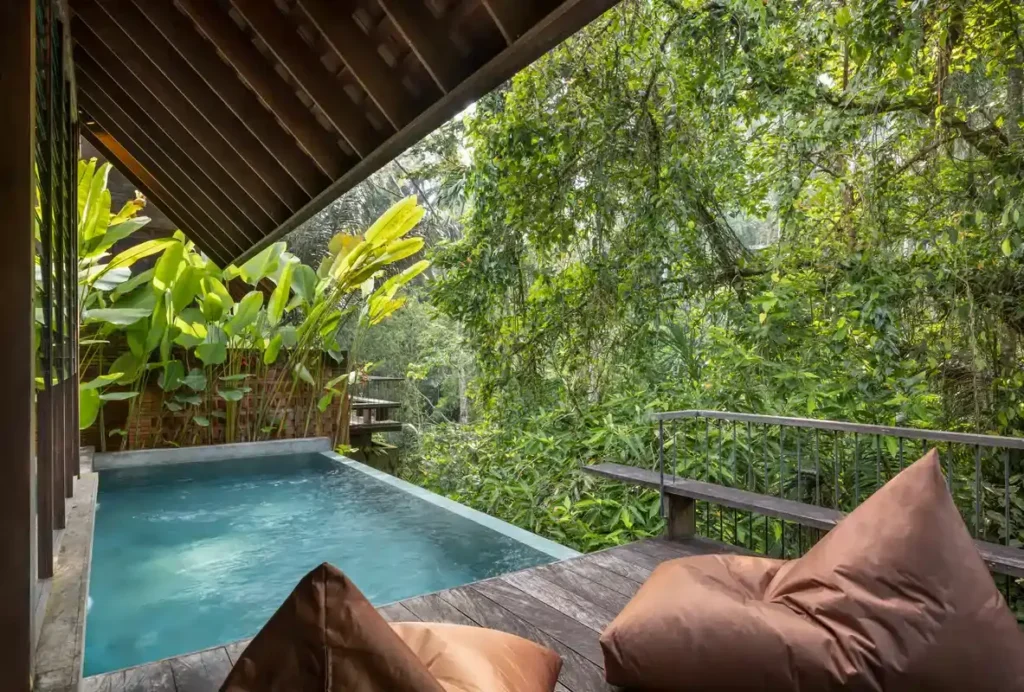
For privacy and private-pool villas: Hideaway Villas Bali – Ubud
Hideaway Villas Bali – Ubud is on Jalan Raya Keliki, in a quieter setting outside the central streets. It has one-, two- and three-bedroom private-pool villas, which suit couples, families and small groups who want space rather than a hotel room.
The property itself is deliberately positioned as a retreat rather than a city-centre hotel, with private pools and a strong emphasis on nature and wellness.
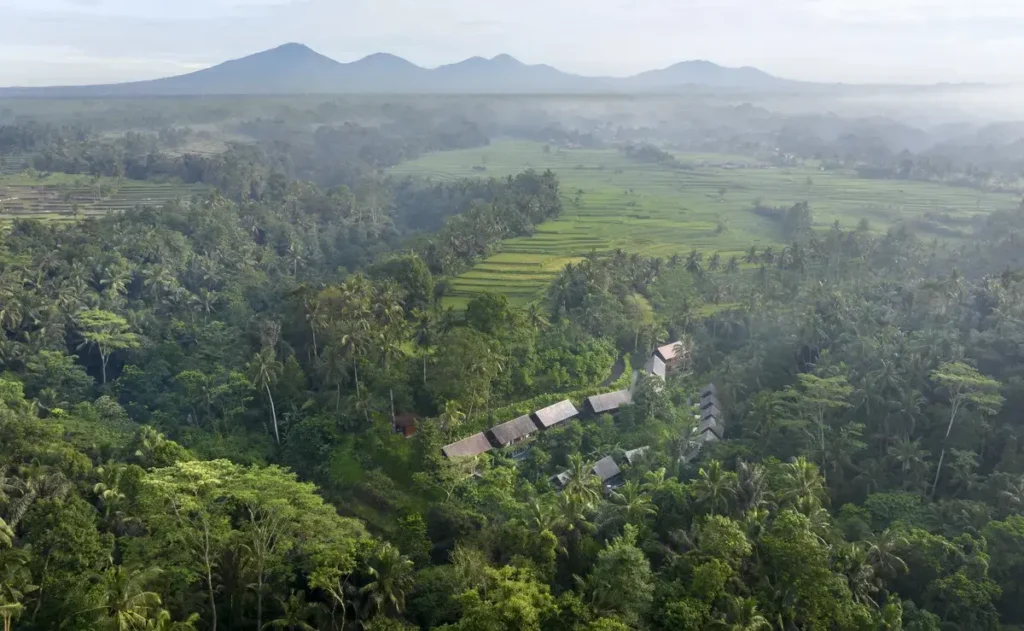
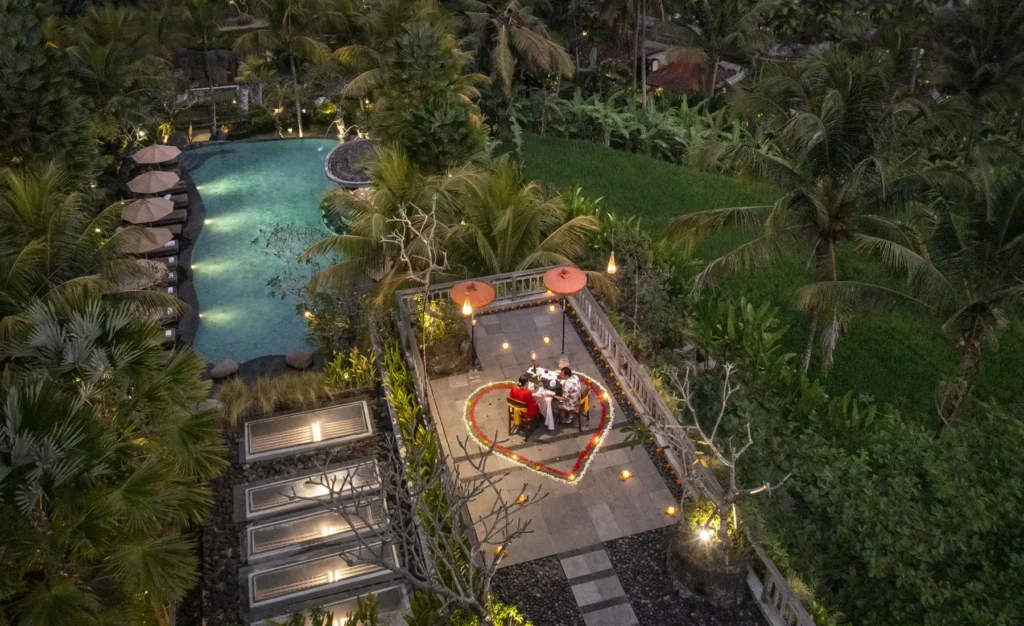
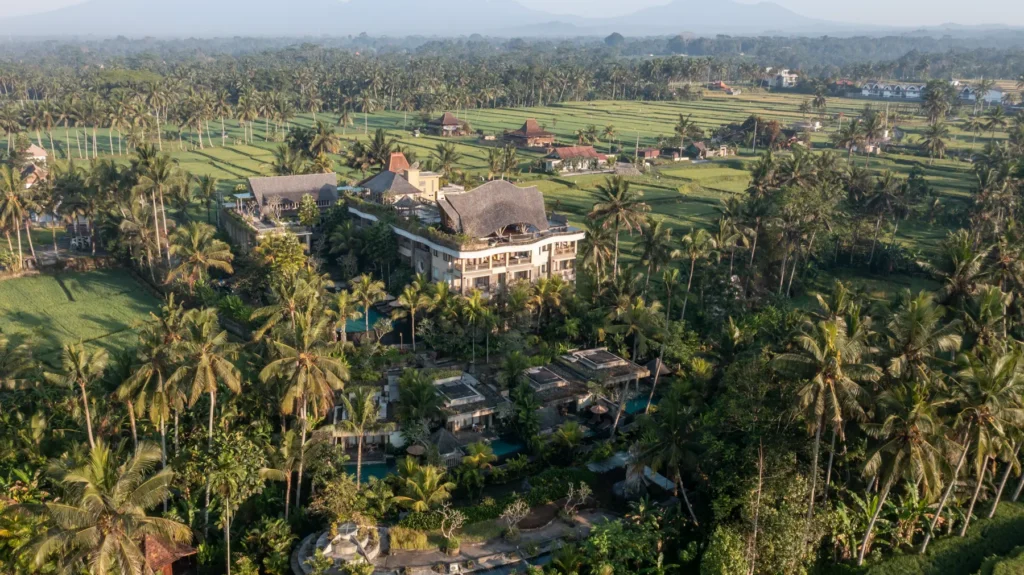
For rice fields and a slower pace: Kuwarasan Ubud
Kuwarasan is in Tegallalang Village, surrounded by rice fields and coconut trees. The resort has 27 suites and villas and is built around wellness, with a spa, restaurant and yoga. Central Ubud is about ten minutes away by car, depending on traffic.
This is the kind of place I’d choose when you want to make the hotel part of the experience and don’t mind using transport to get into town.
For wellness and a village setting: Surya Kembar Villas
Surya Kembar sits in Mas along the Titibatu River, on the family’s ancestral land. It has private villas and suites, yoga facilities, spa treatments, a restaurant and access to Titi Batu’s wider sports and wellness facilities. The property was designed by Balinese artist and villa designer Ida Bagus Oka Genijaya, who is from Mas, Ubud.
This is a particularly good fit for a longer wellness stay, a family trip or anyone who wants to be surrounded by village landscape rather than town traffic.
For rice terraces and quiet: MATHIS Retreat Ubud
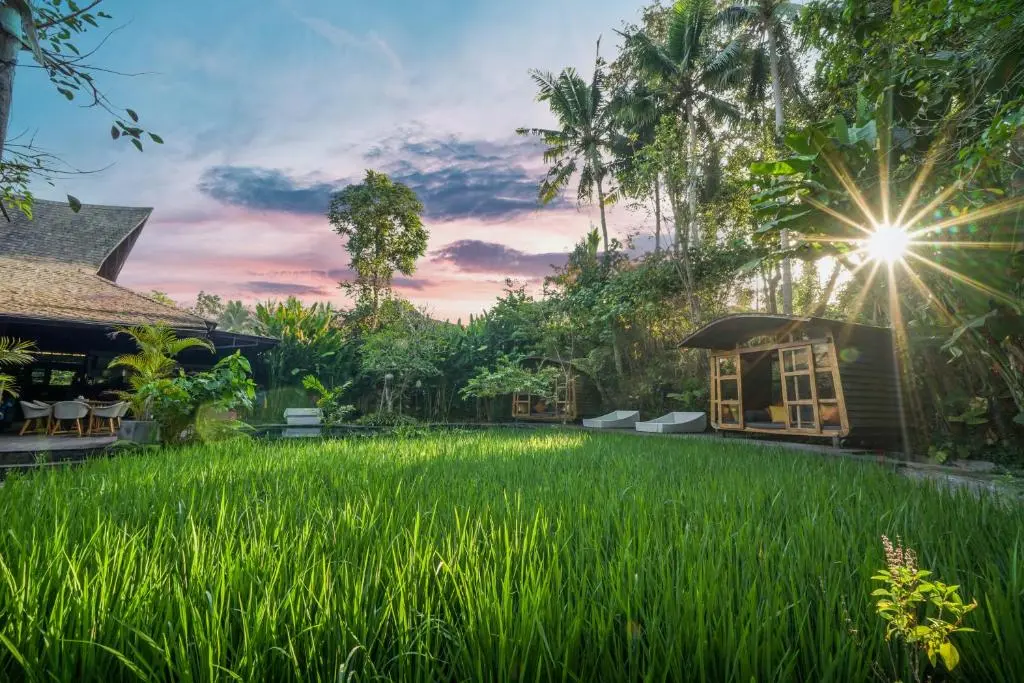
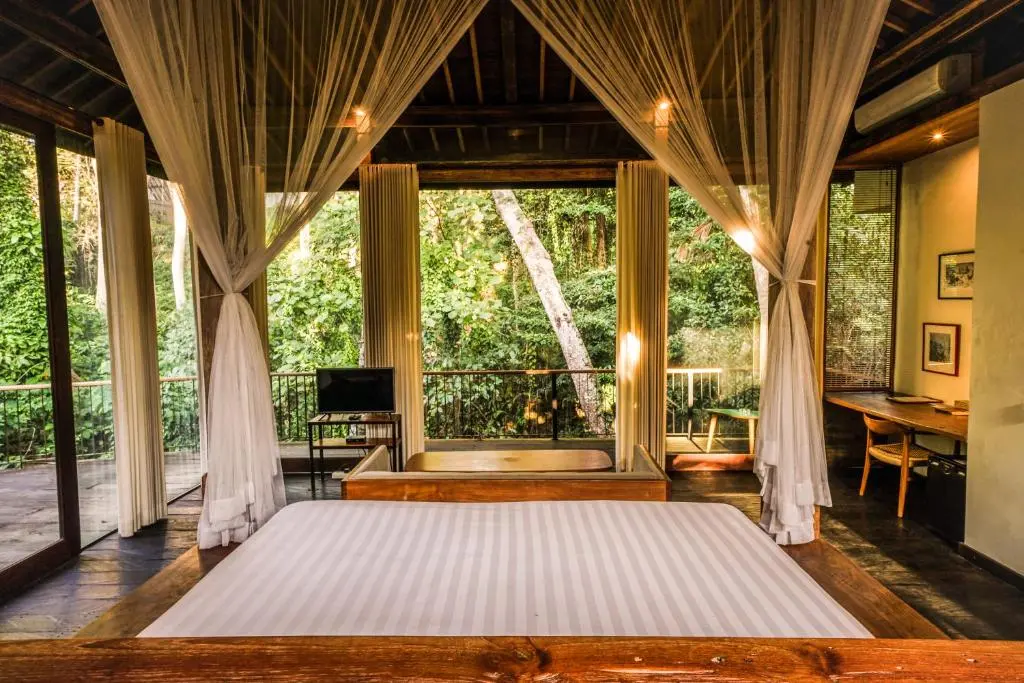
MATHIS Retreat sits directly among Ubud’s rice fields in Kedewatan. The property has 21 rooms and bungalows, a rice-field restaurant, spa and activities including Balinese cooking classes and rice-field walks.
It makes more sense here to think of the hotel as part of the destination. You are not staying in Kedewatan because you want to walk to ten restaurants. You’re staying because you want to wake up surrounded by rice fields and have a quieter base.

Other Ubud stays we book: Capella Ubud, The Kayon Jungle Resort, The Kalyana Ubud Resort and Sankara Resort.
What to do in Ubud
The obvious places still deserve their place on the itinerary. I’d just avoid letting them take up the entire trip.
Culture and history
Ubud Palace
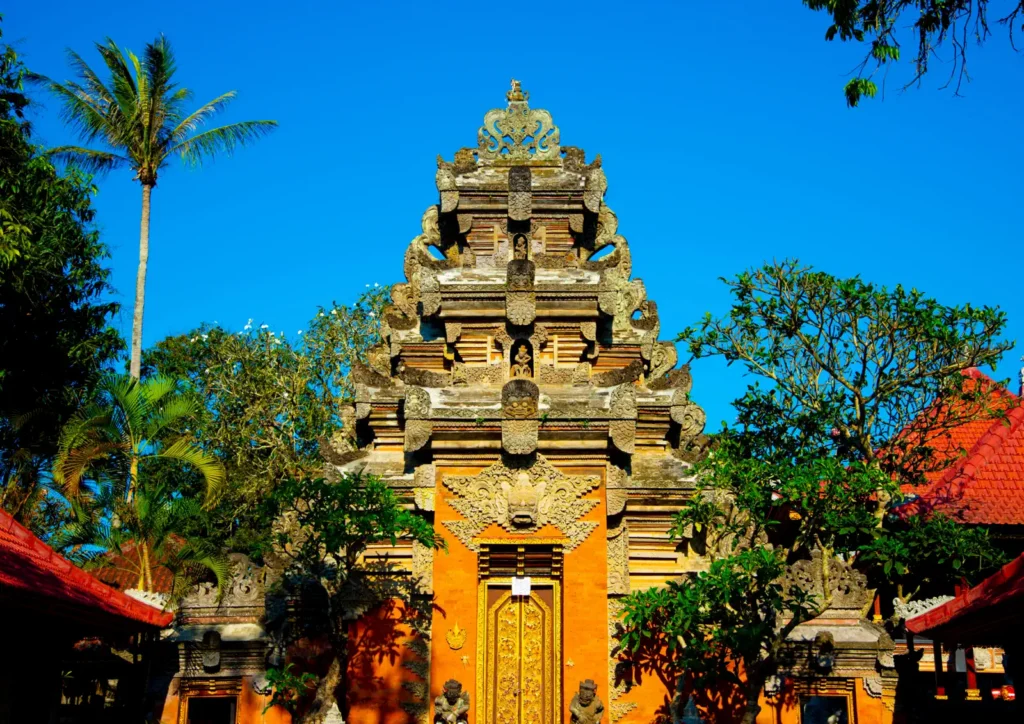
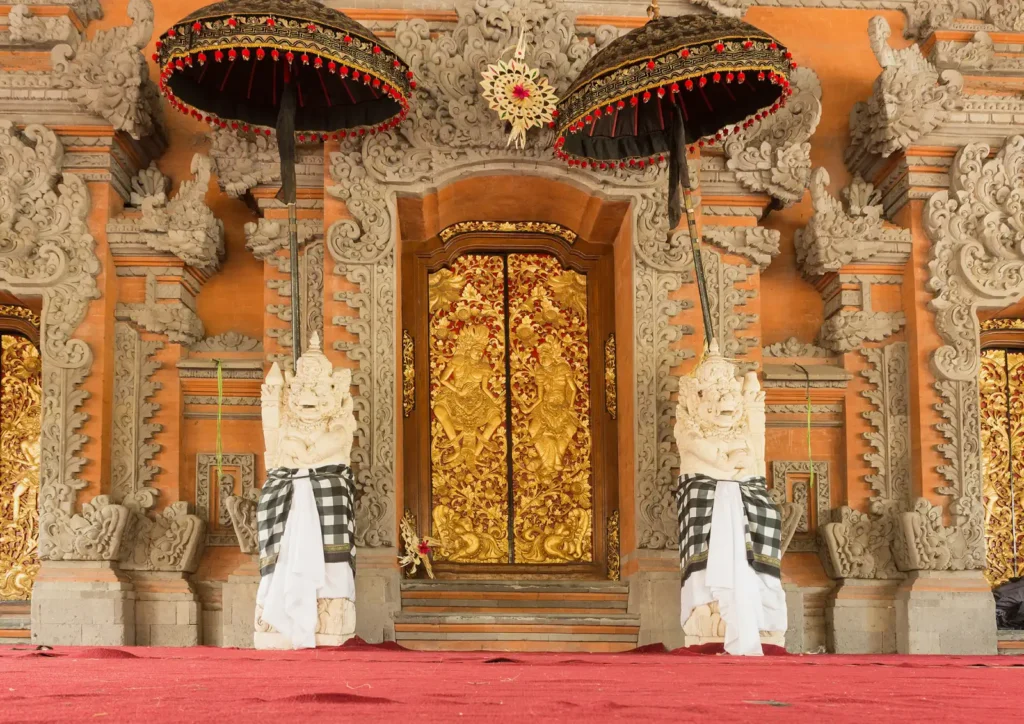
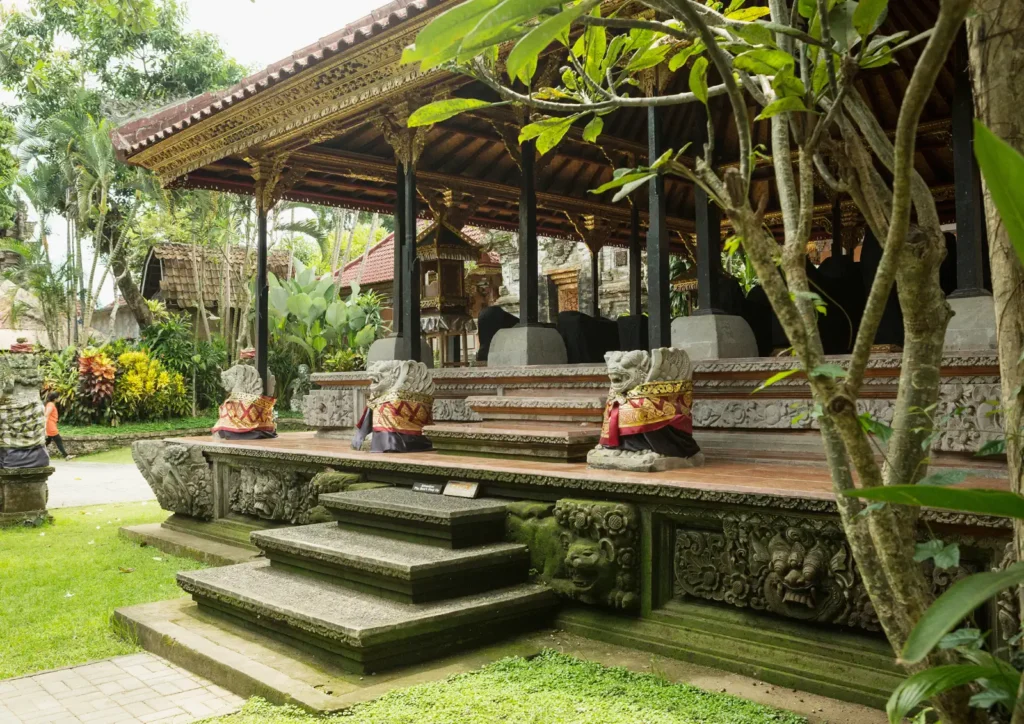
Ubud Palace sits directly in the centre of town and remains one of the easiest places to combine architecture and traditional performance. Traditional Balinese dance performances are held in the palace grounds in the evenings, although schedules can change, so check the programme before you go.
View Ubud Palace on Google Maps
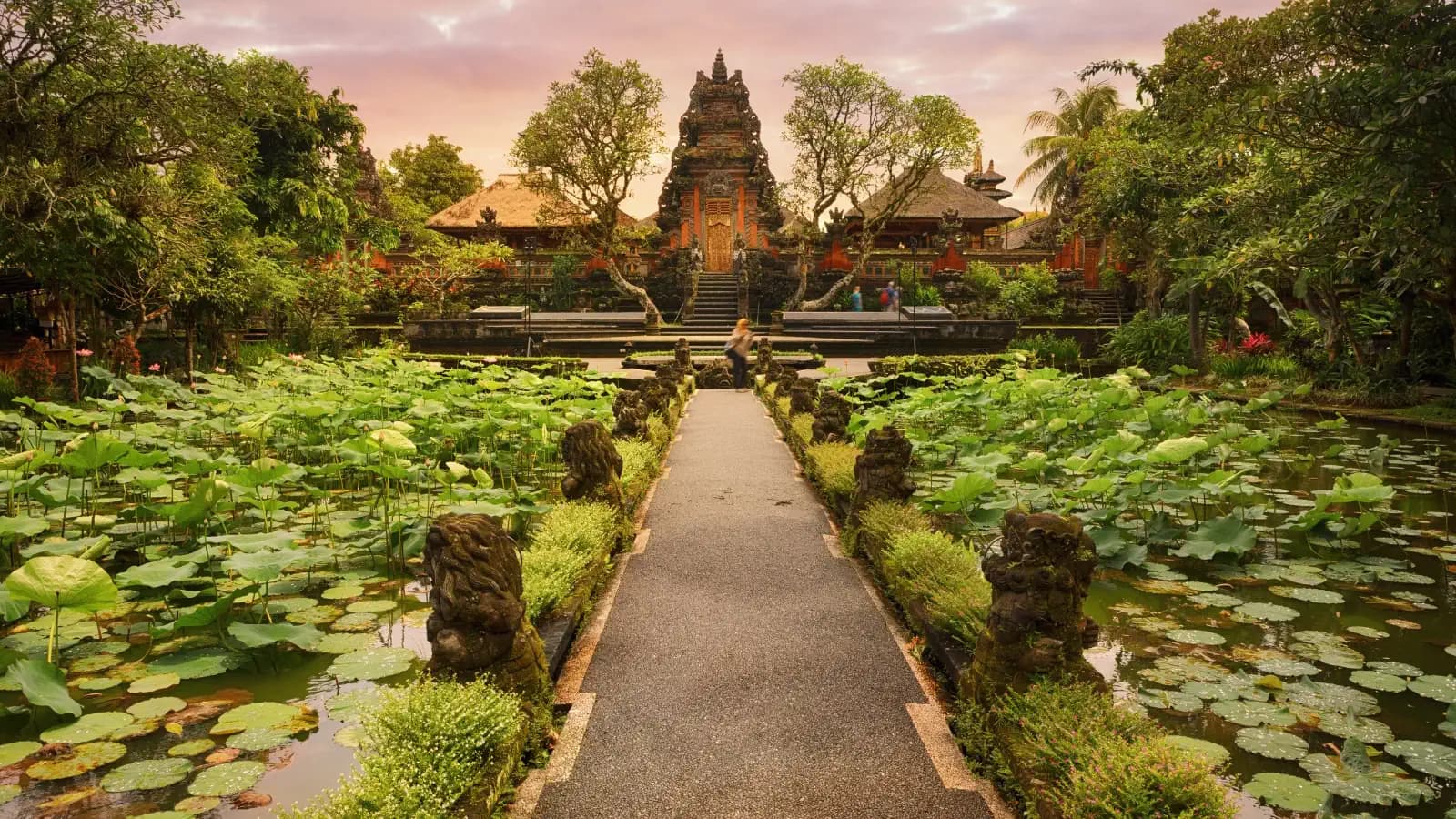
Pura Taman Saraswati
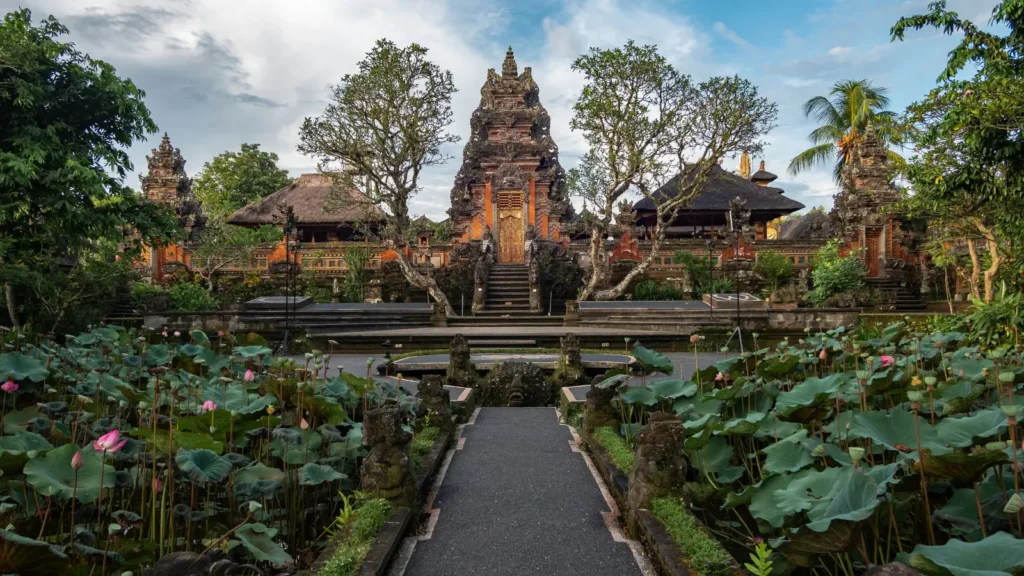
The lotus-filled temple in central Ubud is one of those places that’s easy to pass without really stopping. It is dedicated to Saraswati, the Hindu goddess associated with knowledge and the arts, which makes the setting particularly appropriate for Ubud.
The temple sits beside Jalan Kajeng and is also known as the Ubud Water Palace.
View Pura Taman Saraswati on Google Maps
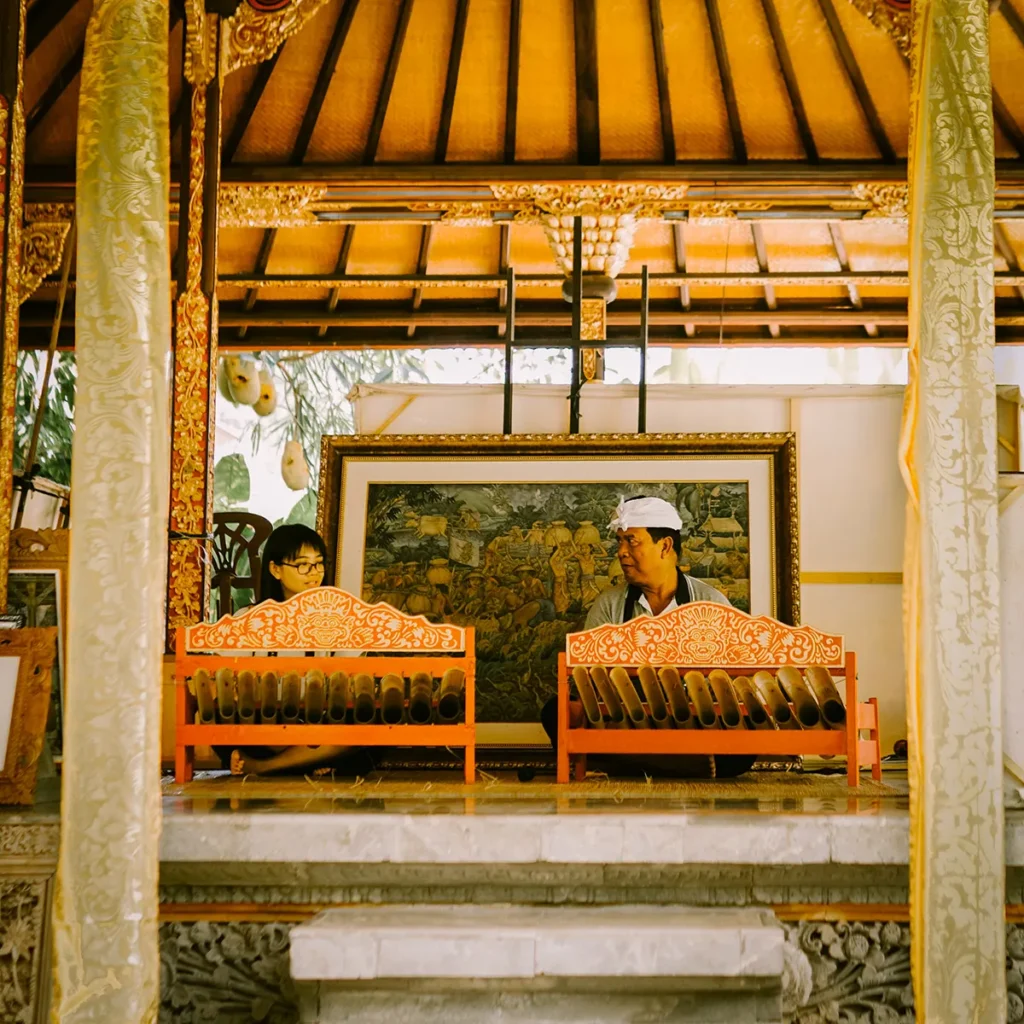
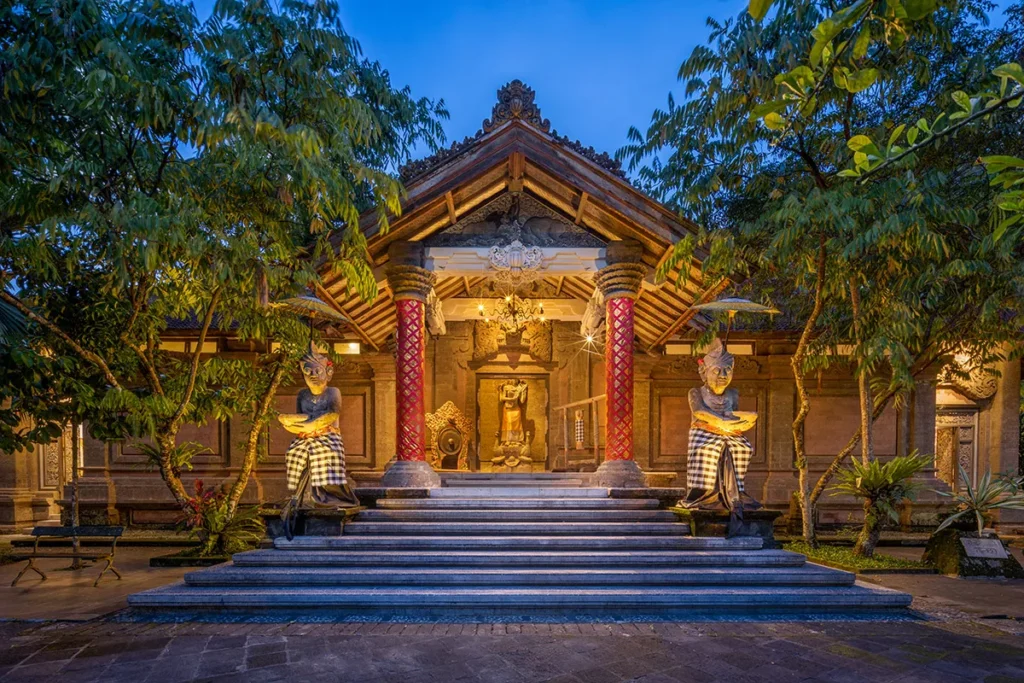
Agung Rai Museum of Art (ARMA)
ARMA was founded by Balinese collector and cultural figure Agung Rai and formally opened in 1996. It holds Balinese, Indonesian and international works and operates as more than a conventional museum, with performing arts, cultural programmes and workshops alongside the permanent collection.
This is the museum I’d choose if you want context for the art you see everywhere else in Ubud.
View ARMA Museum on Google Maps
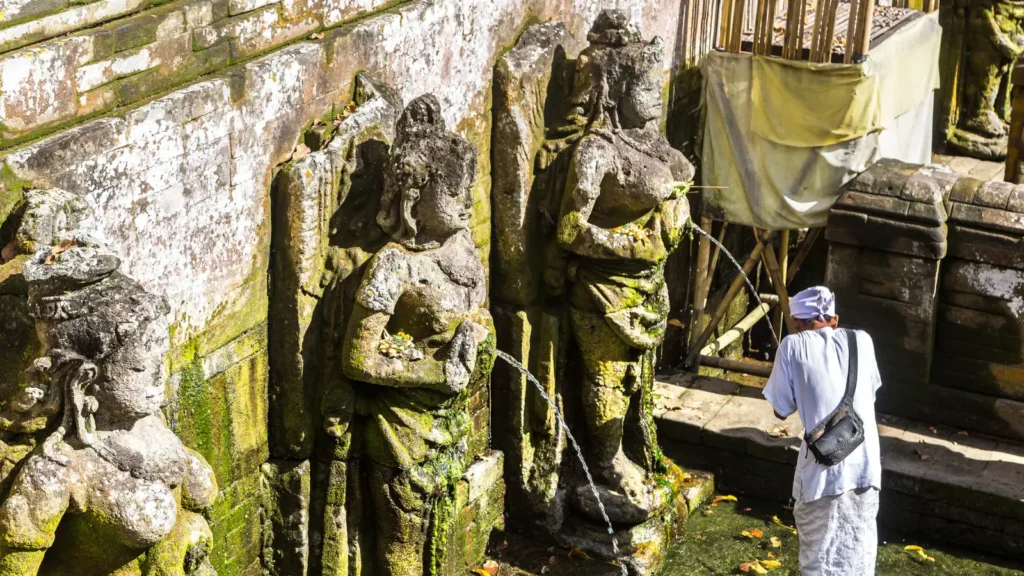
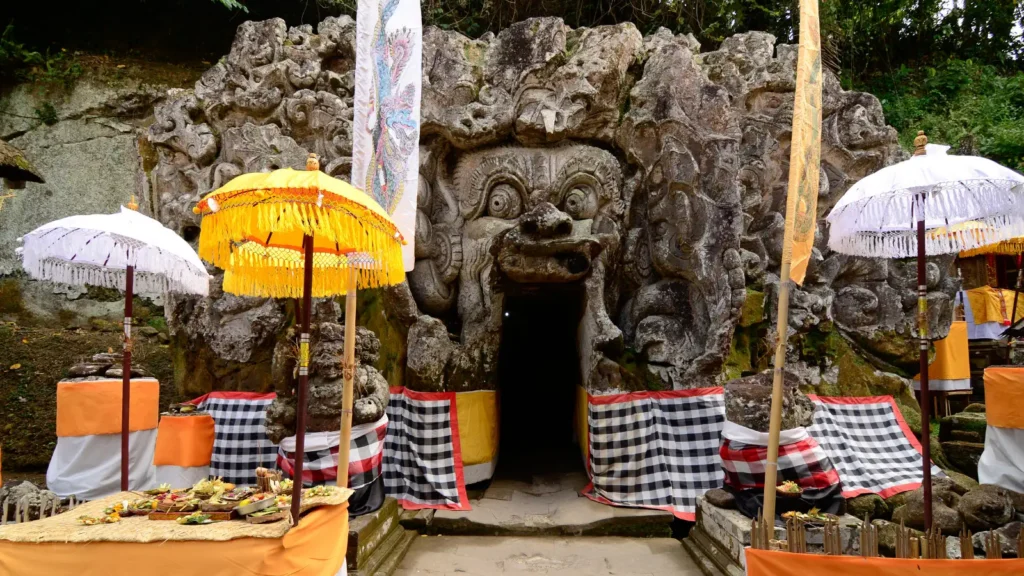
Goa Gajah
Goa Gajah is an archaeological and religious site near Bedulu, just outside Ubud. The site includes the carved cave entrance, bathing pools and other archaeological remains in a green landscape. The complex reflects both Hindu and Buddhist influences and is part of Bali’s cultural heritage.
Go early if you want to experience it without the busiest part of the visitor flow.
Nature
Campuhan Ridge Walk
The Campuhan Ridge is an easy walk close to central Ubud, following the ridge above the meeting of two rivers. It is particularly pleasant early in the morning or later in the afternoon when the heat is lower.
The route is free to access and the landscape changes quickly once you leave the built-up centre. For a longer ride through the villages and rice fields south of Ubud, our e-bike tour around Ubud ends with lunch in a family compound.
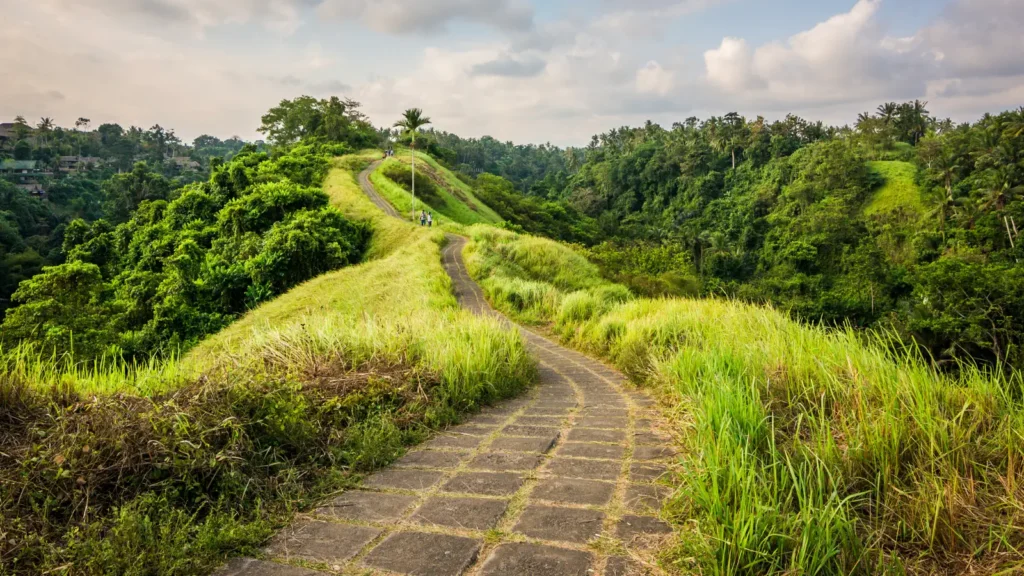
View Campuhan Ridge Walk on Google Maps
Tegenungan Waterfall
Tegenungan is in Kemenuh, south of Ubud, rather than in Ubud proper. It is one of Bali’s better-known waterfalls, with a substantial drop into a bathing area below. Swimming conditions depend on rainfall and water conditions, so check locally rather than assuming the pool is always suitable.
I’d still go early. The waterfall gets much busier later in the morning. For quieter falls, see our five favourite waterfalls in Bali.
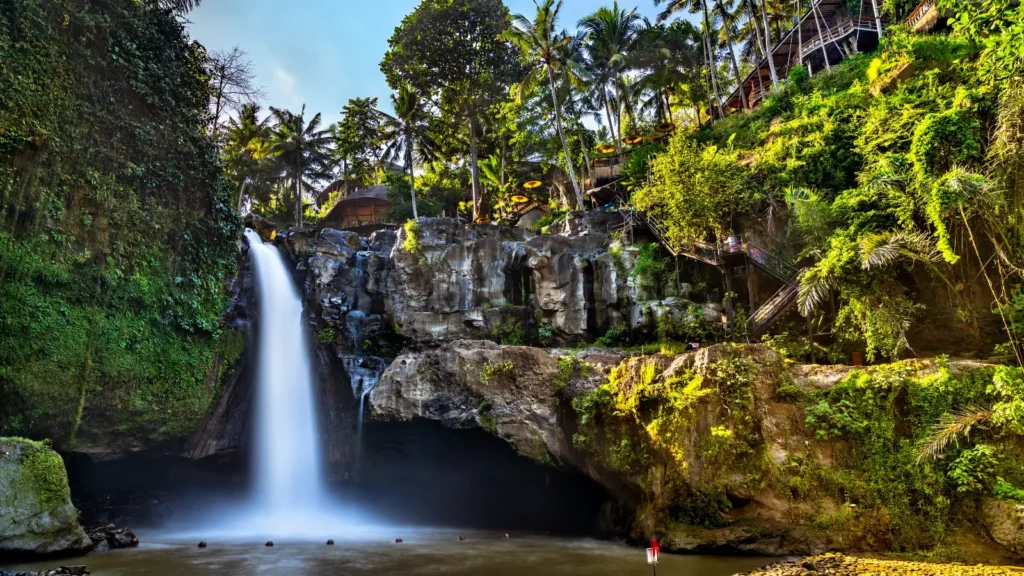
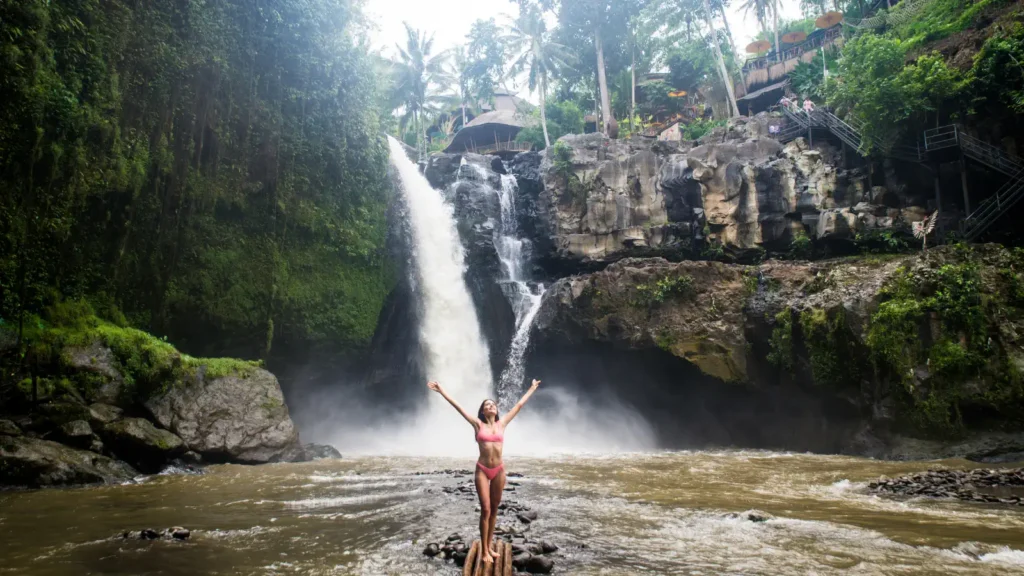
View Tegenungan Waterfall on Google Maps
Tegallalang Rice Terraces
Tegallalang is beautiful, but the roadside viewpoints are not the whole experience. The wider landscape is much more interesting when you walk through it than when you stop for a photograph. If rice terraces are the reason you’re coming, it’s worth seeing Bali’s most beautiful rice fields beyond just the one viewpoint.
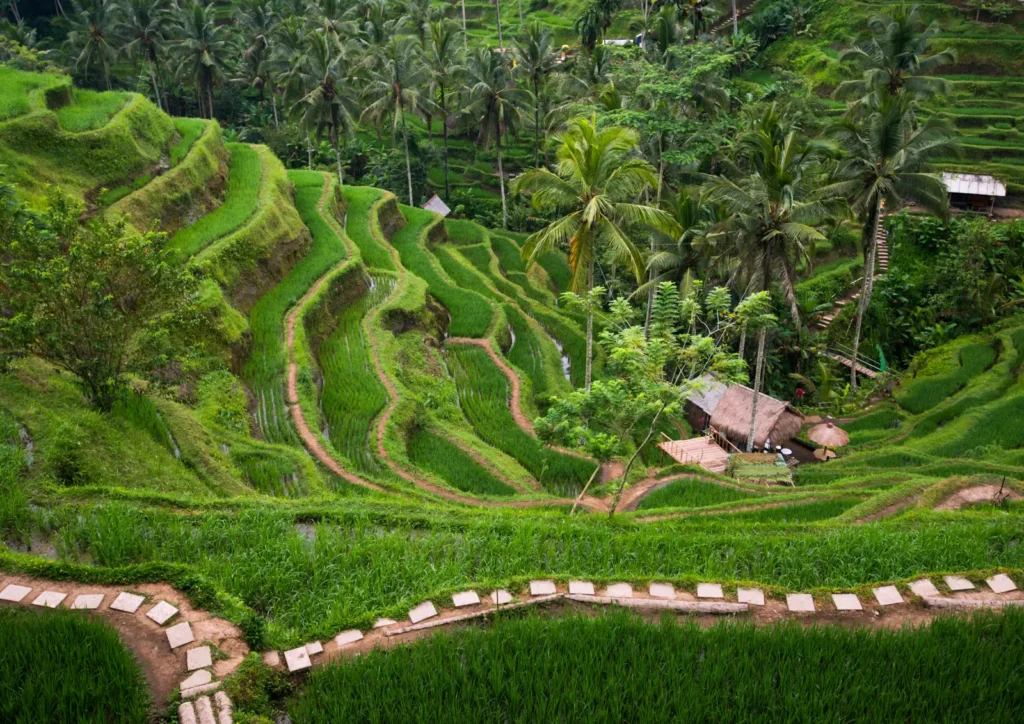
View Tegallalang Rice Terrace on Google Maps
The main viewpoint is on Jalan Raya Tegallalang. For guided walks and treks elsewhere on the island, see our nature and trekking tours in Bali.
Experiences that bring you closer to Ubud
This is the part of the trip I’d make time for if you have more than two or three days. Our cultural tours in Bali cover several of them.
A cooking class with a family
Look for a class held in a Balinese family compound rather than a hotel kitchen, ideally one that starts at a local market and includes the household itself as part of the experience.
The good ones are less about learning a few recipes and more about understanding the ingredients, the kitchen, the offering traditions and how food fits into family life.
The point isn’t that cooking is unusual. It’s that it gives you a way into daily life that sightseeing doesn’t.
Take a craft workshop
The craft villages around Ubud have long-established traditions, and the best experience is to actually make something rather than simply watch.
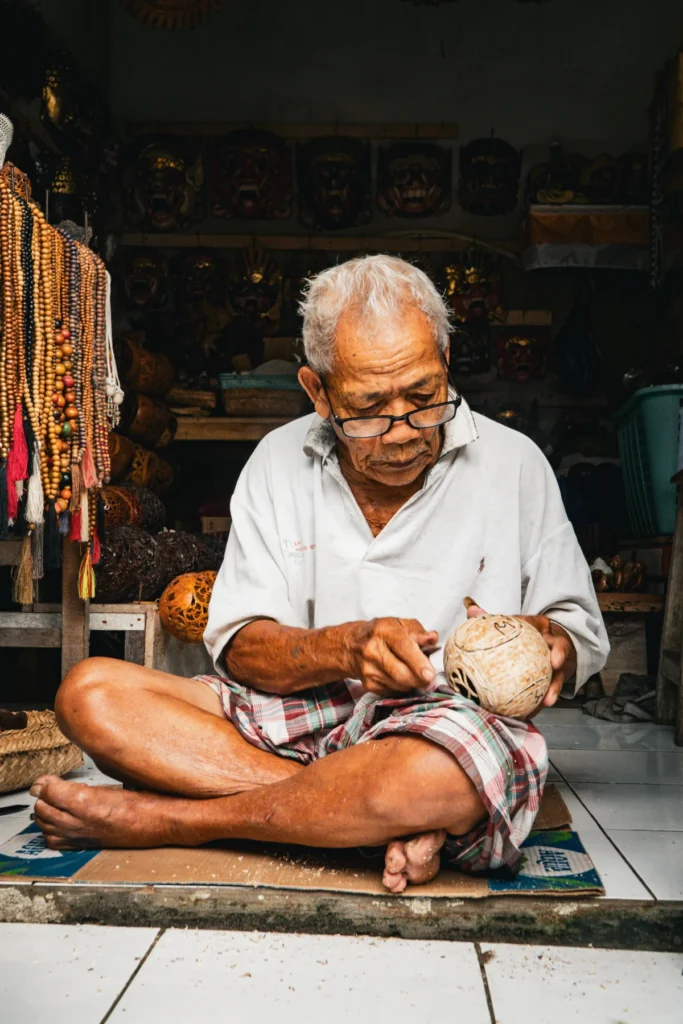
Celuk is the place for silver, Mas for woodcarving, and batik classes run across the Ubud area. Ask your accommodation to recommend a working artisan or small workshop rather than the largest tourist operation.
Go to a temple ceremony
This is where Ubud can feel very different from a normal sightseeing destination.
Ceremonies take place as part of community and religious life, so they should be approached as religious events rather than entertainment. Dress appropriately, follow the rules of the temple, avoid walking into restricted areas and ask before photographing people or ritual activities.
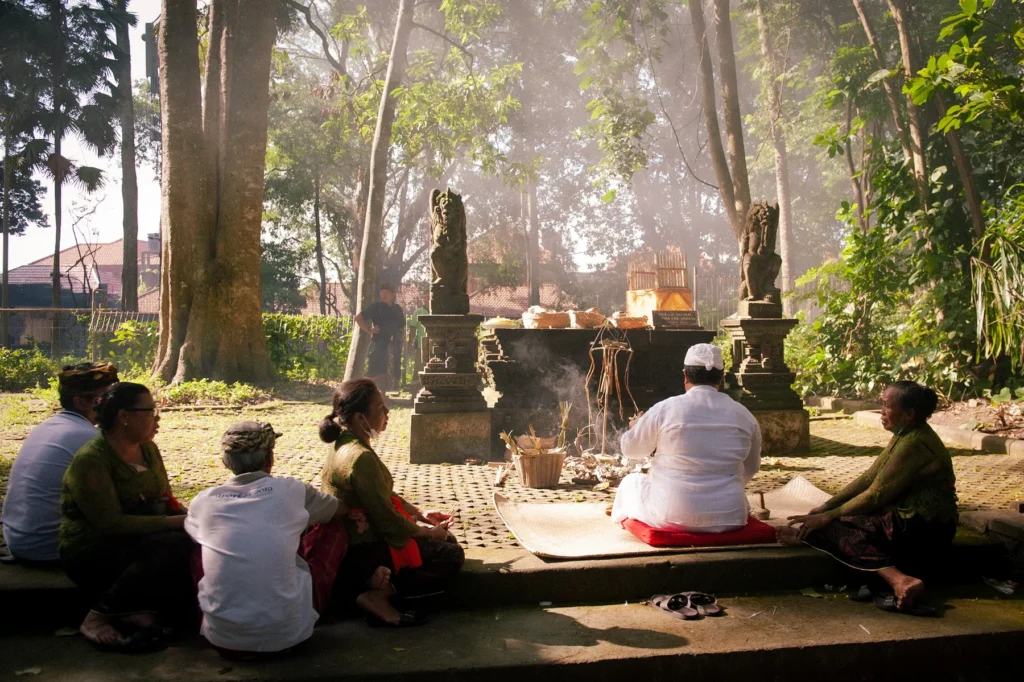
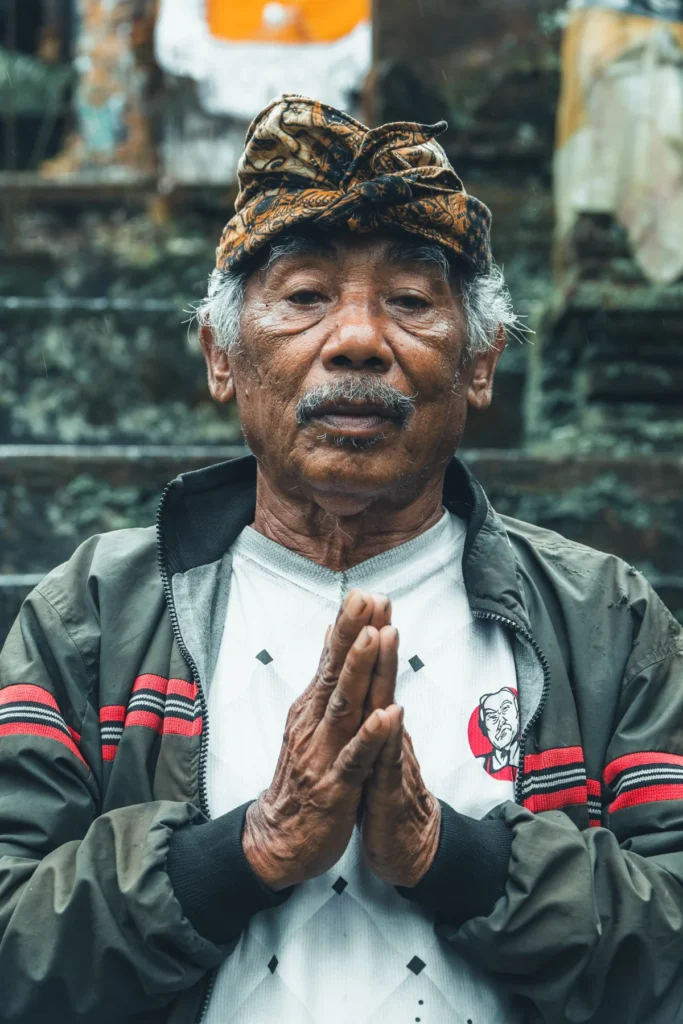
A sarong and sash are commonly required at Balinese temples and can often be rented or provided at the entrance. At Goa Gajah, for example, visitors are specifically advised to wear them. If you want a deeper sense of what a Balinese ceremony actually involves, Bali’s Ogoh-Ogoh tradition is a good place to start.
Visit the craft villages
Give the craft villages south of Ubud a morning of their own.
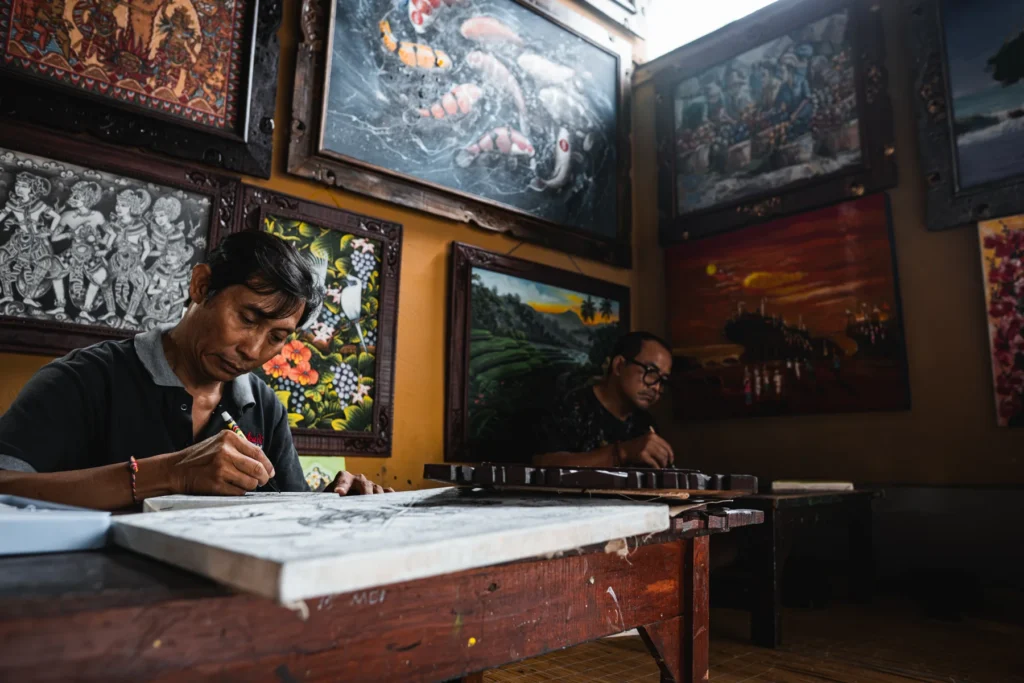
The craft traditions here grew as part of village life. You can see artisans at work, visit workshops and buy directly where appropriate. It also gives you a much better sense of where the objects sold in Ubud’s central shops actually come from.
Watch a traditional dance
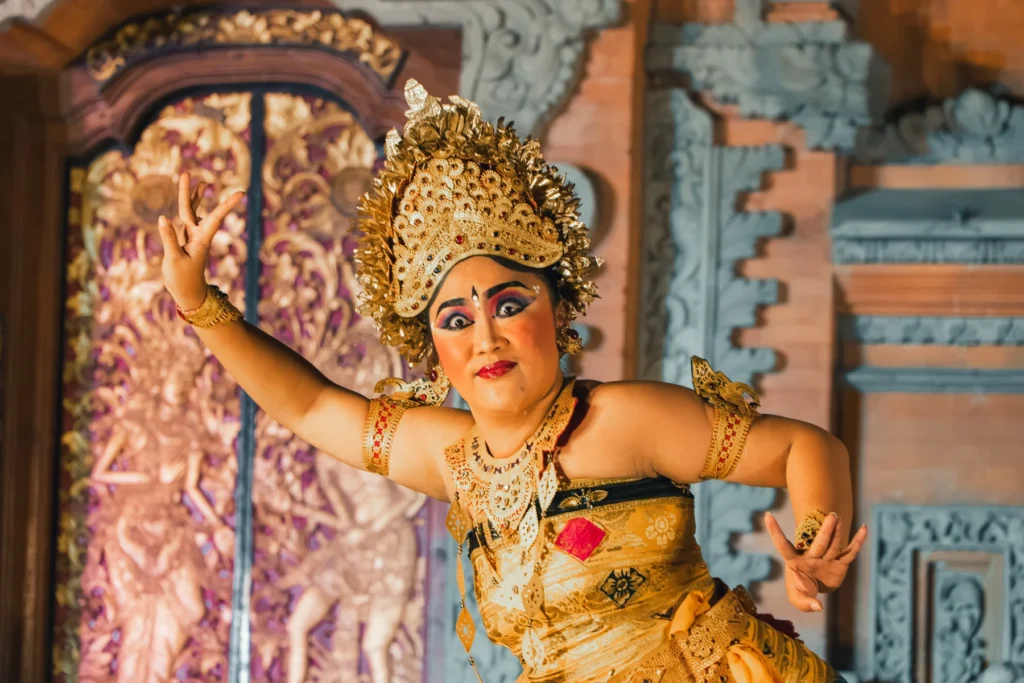
Ubud has traditional dance performances on most days of the week, but the schedule varies between venues. Kecak, Legong, Barong and other dances run at the palace, at temples and in village halls.
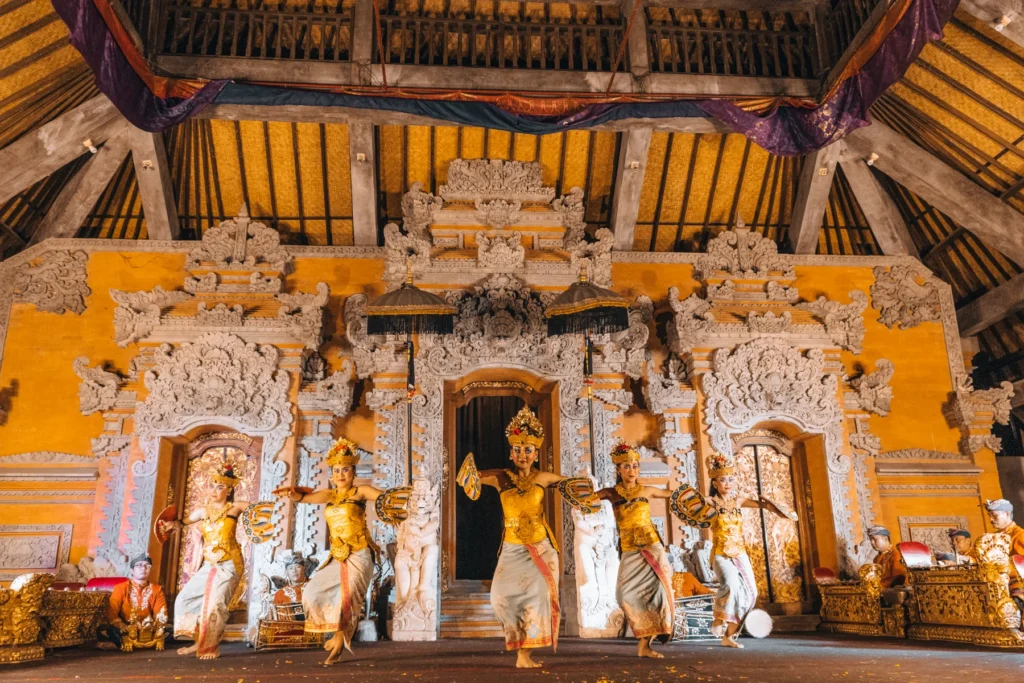
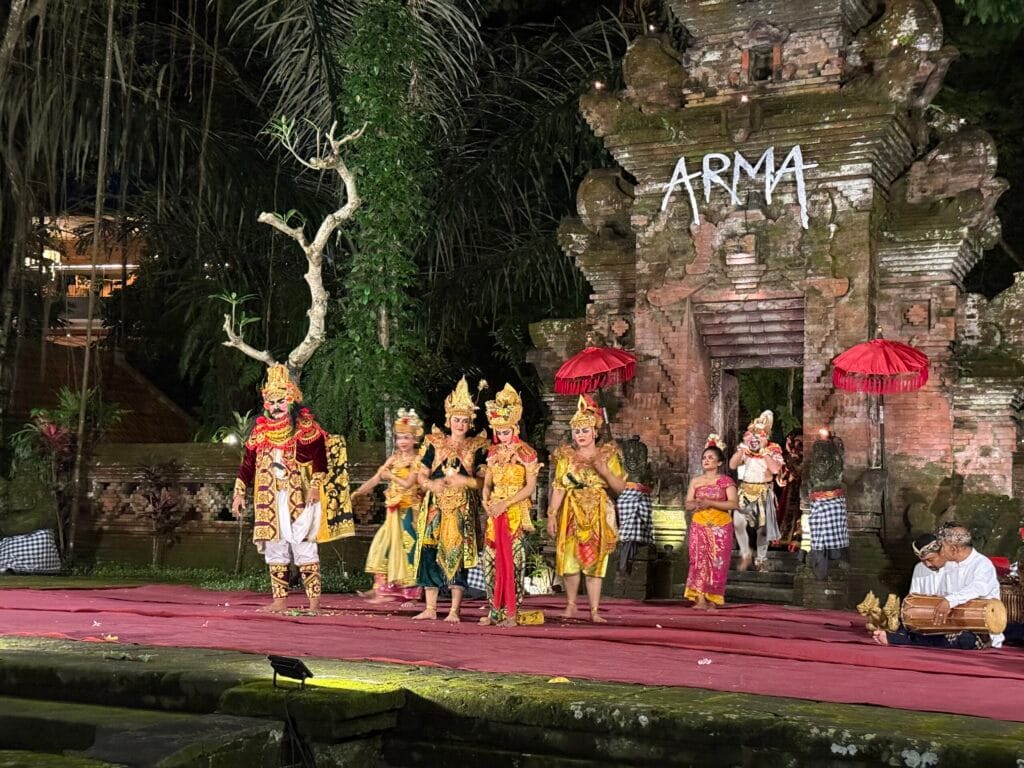
Check the schedule once you’re in town. Old timetables are often out of date.
Yoga and wellness
Ubud has a deep wellness culture, and there is plenty of it beyond the big-name studios.
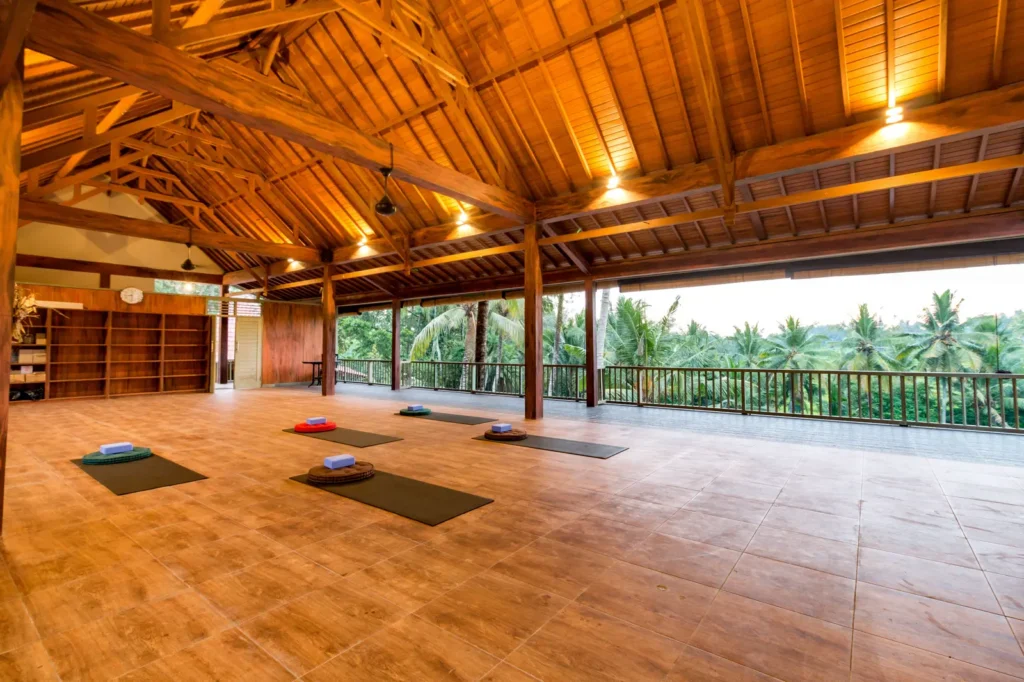
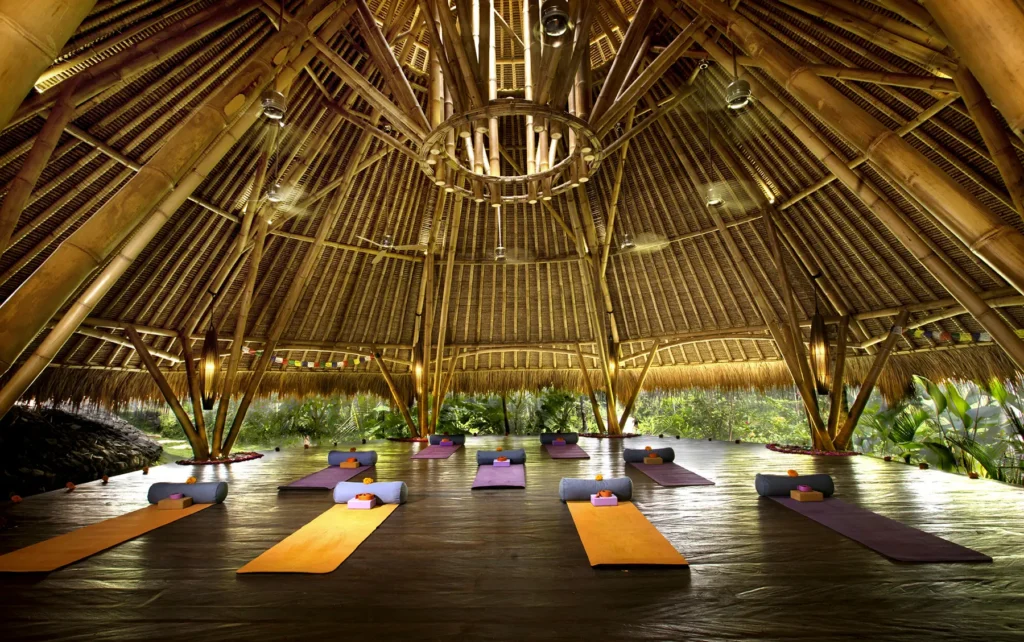
The Yoga Barn remains one of the best-known names in the area, but smaller studios and retreat properties offer classes as well. The important thing is to decide whether you actually want yoga, a broader wellness retreat, spa treatments, meditation or simply a quieter hotel with space to slow down.
Where and how Ubud eats
Ubud’s food scene is one of the best on the island, and I say that as someone who lives in South Bali.
But I would change one thing about the way visitors approach it: don’t make the famous modern restaurants your entire idea of eating here.
Ubud still has family warungs, long-running Balinese restaurants and businesses that grew out of homes rather than hospitality groups.
These are the places I’d prioritise.
For crispy duck and rice-field views: Bebek Tepi Sawah
Bebek Tepi Sawah was founded in Ubud in 1999 by I Nyoman Sumerta, a local Balinese entrepreneur. The restaurant grew from his interest in Balinese food and became known for its crispy duck served with Balinese sambals. The business later expanded beyond the original Ubud restaurant, but its roots remain there.
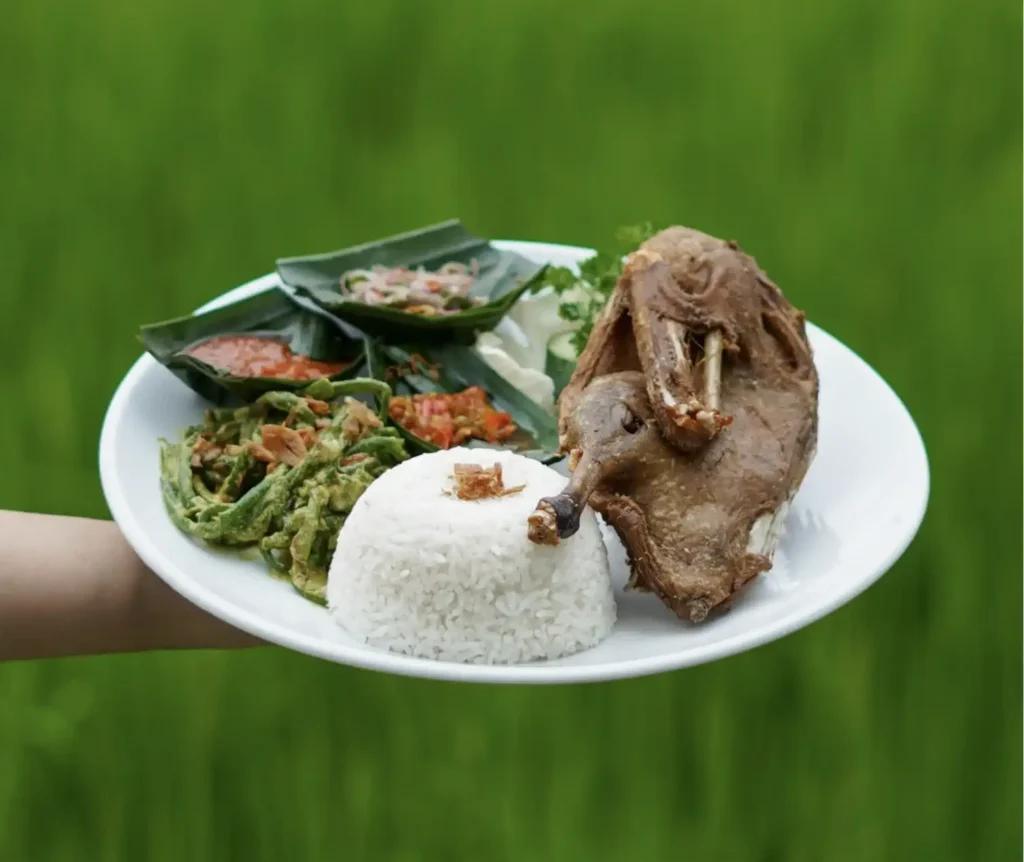
The Ubud restaurant is in Banjar Teges, Peliatan, among the rice fields.
This is the polished choice in the list, but it is still genuinely local in origin.
View Bebek Tepi Sawah on Google Maps
For the most straightforward Balinese lunch: Nasi Ayam Kedewatan Ibu Mangku
This is the one I’d send someone to when they say, “I just want to eat something local.”
The business began with Ibu Mangku in the 1960s and is now run by the second generation of the family. The Ubud branch remains on Jalan Raya Kedewatan.
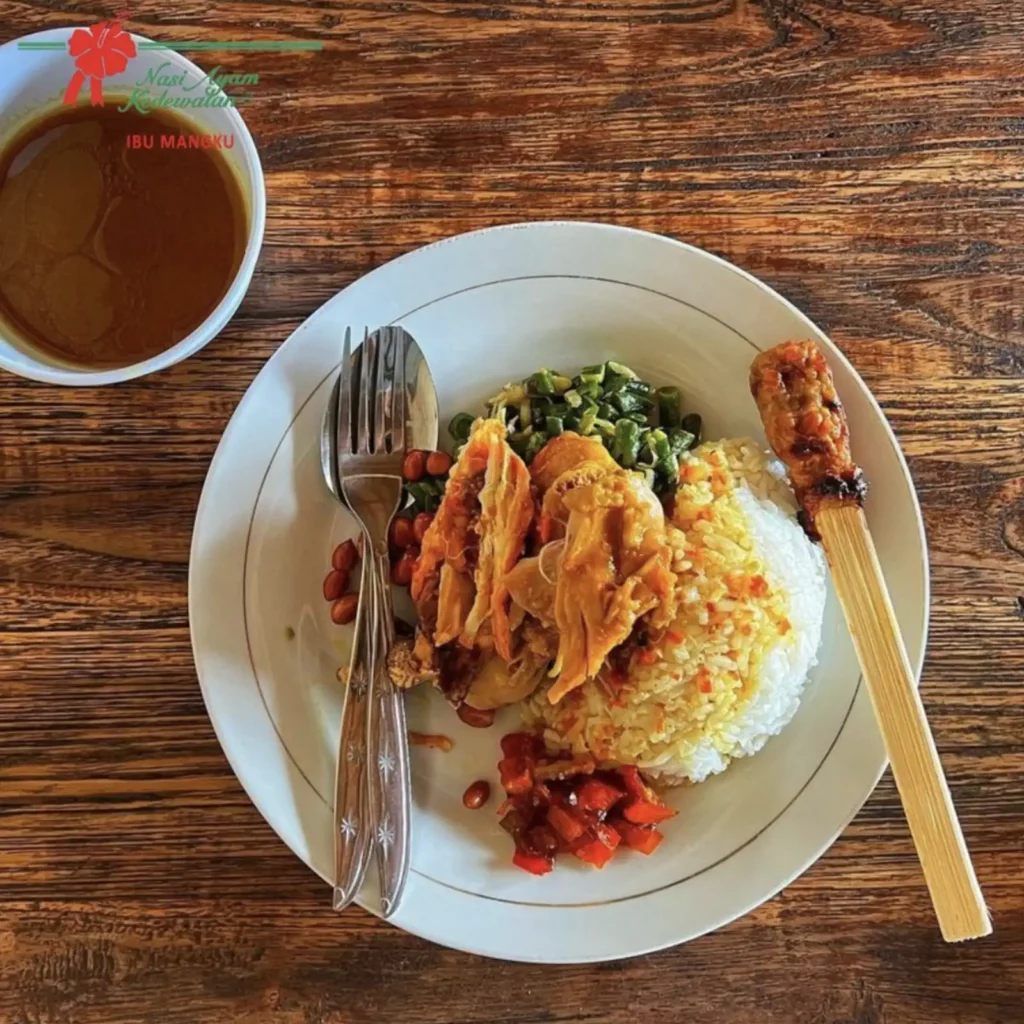
The meal is centred on Balinese nasi ayam, with components such as shredded chicken, betutu, vegetables, sambal and other traditional accompaniments.
It is busy for a reason. Go for lunch and expect the food to be spicy.
View Nasi Ayam Kedewatan Ibu Mangku on Google Maps
For old-school Ubud: Warung Makan Teges
Warung Teges has been serving food in Peliatan since the 1970s. It is on Jalan Cok Rai Pudak and is still a family warung.
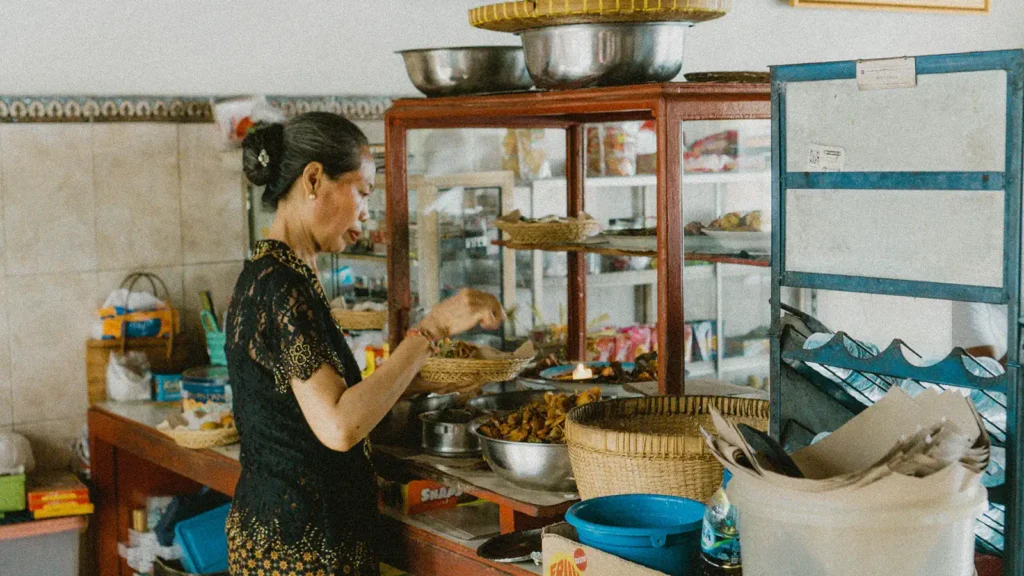
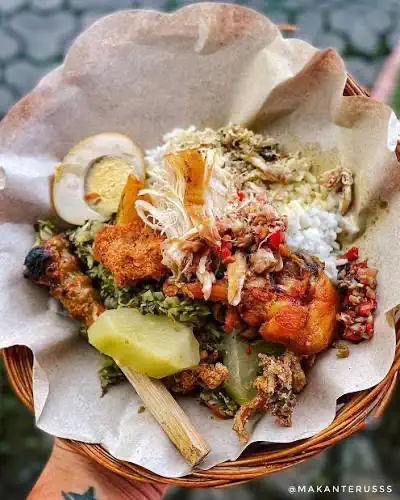
This is proper nasi campur territory: chicken, pork, vegetables, sambal and other Balinese side dishes rather than a large menu designed around tourists.
The setting is part of the appeal. The warung developed from a local Balinese house and the garden area behind the front section is where I’d sit.
View Warung Makan Teges on Google Maps
For plant-based Balinese cooking: Moksa
Moksa is a clear example of a restaurant built and run by local people, not designed around outside investors.
The restaurant was created by Balinese founders Made Runatha and Made Janur Yasa, with Runatha describing the idea explicitly as creating a restaurant founded, staffed and supported by local people.
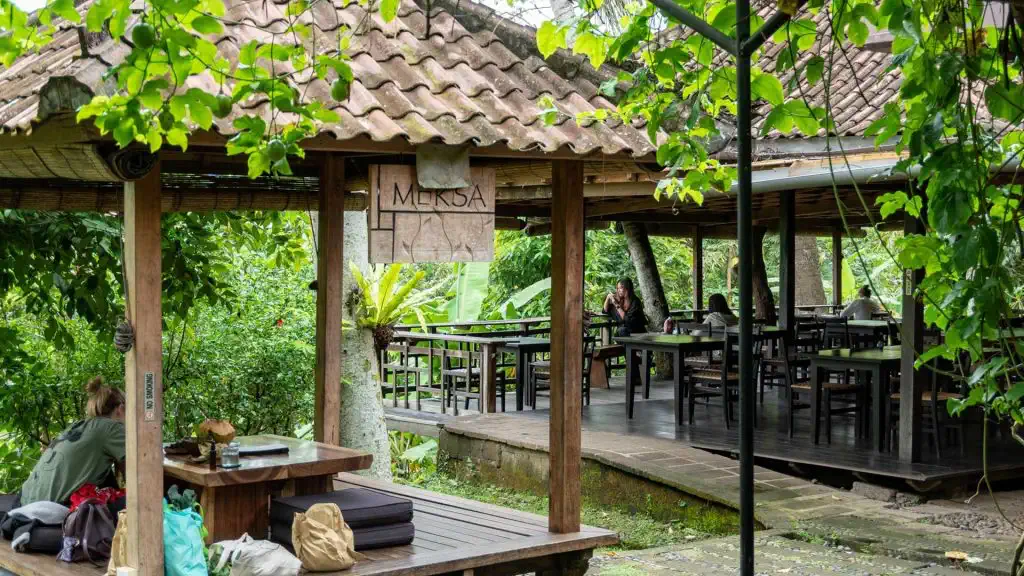
Today Moksa focuses on plant-based food using local produce and operates alongside permaculture gardens, culinary education and community activities.
The menu shows how much Balinese produce can do on its own.
View Moksa Ubud on Google Maps
For ribs and a very local story: Warung Pondok Madu
Sri and her husband Ketut started Warung Pondok Madu in 2016. Sri had been a waitress and Ketut was the cook, and they began with only five tables before moving to a larger location as the business grew. The couple still own it.
The restaurant is on Jalan Jatayu in Tebesaya, Peliatan, and specialises in ribs alongside Indonesian dishes and vegetarian options.
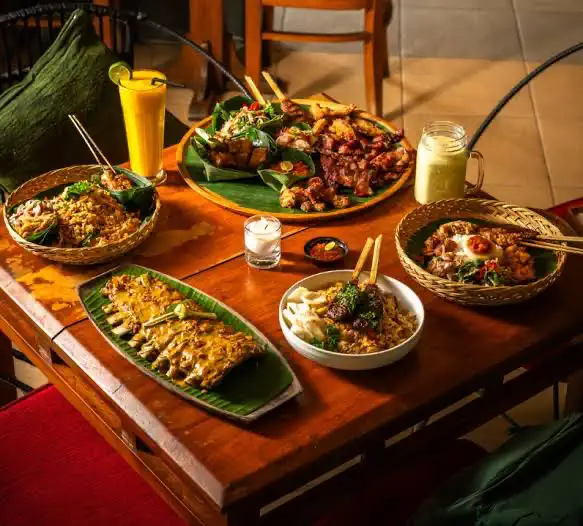
This is a useful stop when you want something less traditionally “Balinese restaurant” and more like a successful neighbourhood warung that grew naturally.
View Warung Pondok Madu on Google Maps
For a long-running Ubud institution: Café Wayan
Café Wayan began as a tiny food stall started by Ibu Wayan in 1980 and opened as Café Wayan in 1986 with six tables.
The restaurant is still on Monkey Forest Road and serves both Indonesian and international dishes, and remains under local family management.
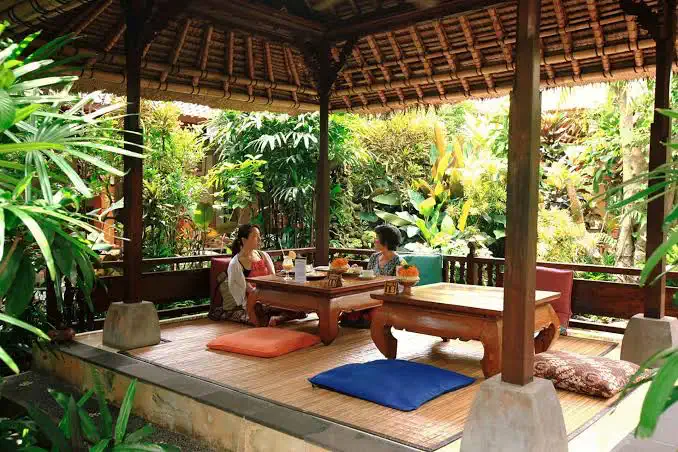
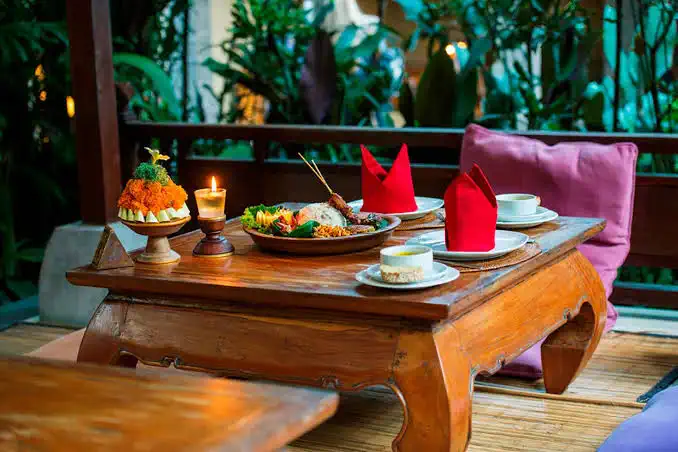
This is a good option when you want the atmosphere of an old Ubud restaurant but don’t necessarily want a purely traditional menu.
View Café Wayan Ubud on Google Maps
For babi guling: Babi Guling Ibu Oka
Ibu Oka is one of Ubud’s best-known local pork specialists, and the business remains family-run. One family runs its three locations around Ubud.
The original Ubud location is on Jalan Suweta. The branches are listed separately, so check that you’re going to the one you want.
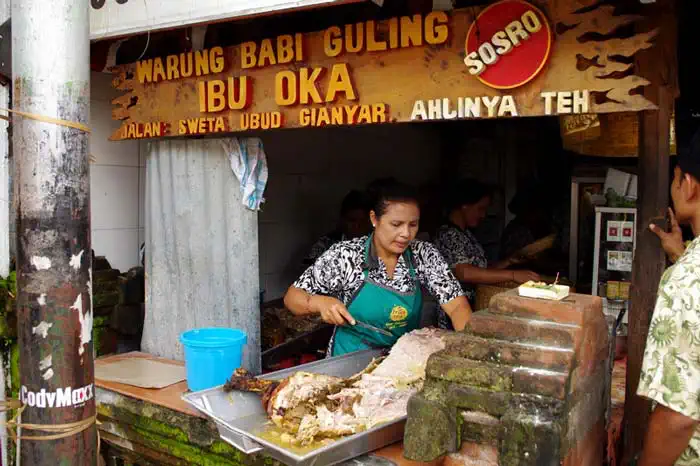
Come earlier rather than later. The restaurant itself says the day’s roast can sell out before the posted closing time.
View Babi Guling Ibu Oka Ubud on Google Maps
For a traditional meal in a garden setting: Laka Leke
Laka Leke is another local family-run restaurant in the Ubud area, owned by Ketut Setia and open since 1997.
It sits near the Monkey Forest in Nyuh Kuning and serves Balinese dishes including crispy duck and nasi campur. It is at Jalan Nyuh Bojog No. 32.
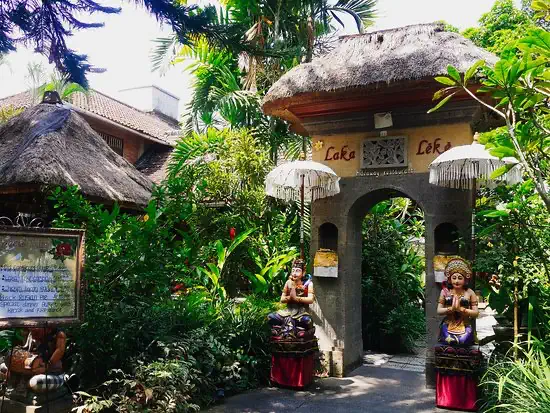
I would choose this for the setting as much as the food. It feels considerably greener and quieter than eating on the main road.
View Laka Leke Ubud on Google Maps
Practical tips
Getting there
Ngurah Rai International Airport is the airport you’ll use for Ubud. There is no railway connection to Ubud or around Bali, so the practical options are a private transfer, taxi or ride-hailing service.
The drive is roughly 40 kilometres, but distance is a poor measure of travel time in Bali. Traffic can make the journey substantially longer, particularly at busy periods.
I would pre-arrange a private transfer for a first arrival. You don’t want to land after a long flight and start negotiating transport while trying to work out which part of Ubud your hotel is actually in.
Getting around
Central Ubud is walkable for many of the main sights, although the pavements are uneven and the roads can be crowded.
Once you start heading to Tegallalang, Kemenuh, Mas, the craft villages or the properties around Sayan and Kedewatan, transport becomes much more useful.
Grab and Gojek operate in Ubud, although coverage and pickup points can vary by exact location. Scooters are useful for confident riders, but Bali’s narrow roads, traffic and steep sections are not forgiving. Carry the appropriate licence and permits if you ride.
For a day with several stops, a private driver is often the least stressful option, especially if you’d rather spend the ride looking at rice fields than watching for traffic. We arrange a private day trip with a driver and guide.
How long should you stay?
Three days is enough to cover the main Ubud sights without feeling completely rushed.
Four or five days is better if you want to combine temples and rice terraces with cooking, craft, wellness and time to simply walk around.
That extra time matters here more than it does in a destination where everything is concentrated in one small centre. If Ubud is part of a longer trip, our 6-day Bali tour and 12-day Bali Essentials tour both include it.
When to go
For Bali generally, the broad dry-season pattern is April to October and the wetter period is November to March, although the exact timing varies and seasons are becoming less predictable.
The dry season is the safer choice for long outdoor days, although the wet season has its own advantages. The rice fields are lush, waterfalls are stronger and the landscape can look spectacular after rain.
July and August are among the busiest months. For a better balance of weather and crowds, I’d look at April to June or September to October.
Money
Cards are widely accepted in the more established restaurants, hotels and shops in central Ubud.
Small warungs, markets, workshops and some local businesses still operate on cash, so keep some Indonesian rupiah with you.
Use ATMs attached to established banks where possible.
At markets and some craft shops, bargaining is normal. It should still be done politely. A few words of basic Indonesian help.
What to wear at temples
Bring or borrow a sarong and sash when visiting temples. Many temple sites require them, and some have them available at the entrance.
Shoulders should be covered, and religious ceremonies should be treated as religious events rather than photo opportunities. At sacred sites, always follow signs and local instructions about where visitors can and cannot go.
Medical care
UbudCare runs a 24-hour clinic on Jalan Raya Teges No. 8 in Peliatan, with an emergency room, ambulance service and other medical services.
For international-standard hospital care, I’d still recommend checking your travel insurance and knowing where the nearest appropriate hospital is before you need it.
Indonesia’s national emergency service number is 112, while the Indonesian police emergency contact is 110.
Leave some space
The best thing I’d tell anyone coming to Ubud is also the simplest: slow down.
The person making offerings outside the family compound at 6am, the woodcarver outside his workshop on Jalan Hanoman who’s been working the same street for years, the warung owner who recognises you when you come back for lunch, these are the moments that change the way you remember a place.
Ubud is full of things worth seeing. It is also one of the places in Bali where you can lose half a morning simply walking somewhere without knowing exactly what you’ll find.
So don’t plan every hour.
Leave room for the ceremony someone tells you about over breakfast, the little restaurant you notice from the road, the workshop you wander into, or the rice-field path that turns out to be much longer than you expected.
Frequently asked questions
Three days is enough to cover the main sights comfortably. Four or five is better if you want time for the rice fields, craft villages, cooking, wellness and a slower pace.
Yes. Ubud is inland and has no beach. Sanur is generally the closest major beach area, while Seminyak and Canggu are further south and travel time depends heavily on traffic.
Not if you’re staying around central Ubud. You can walk much of the centre and use Grab or Gojek for longer trips. A scooter becomes useful once you want to explore independently, but only ride if you’re genuinely confident on a motorbike and have the correct licence and permits.
Yes. The centre is easy to navigate, there is a large café and wellness scene, and it is straightforward to spend a day alone without feeling as though you need a full itinerary. It is also one of the easier places in Bali to join classes, tours and activities when you do want company.
Yes, particularly if you are interested in culture, food, temples, art and landscape. Just don’t treat it as a checklist destination. The best version of Ubud takes a little more time and usually involves leaving the centre at least once or twice.
Yes, provided you understand what it actually is. The Sacred Monkey Forest is a village-managed sacred forest and conservation area within Padangtegal, with temples, ritual sites and a large population of long-tailed macaques. It is open daily from 9am to 6pm, with last entry at 5pm.
Yes, but go beyond the main roadside viewpoint. The rice terraces are part of Bali’s larger subak agricultural landscape, and the experience is much better when you spend time walking through the area rather than simply stopping for a photograph.