Sulawesi
Sulawesi is Indonesia’s strangest shaped island for a reason, four peninsulas stretching out like an orchid, and inside each arm a completely different world. This is wilder territory than Bali, and it draws two very different types of traveler for two very different reasons.
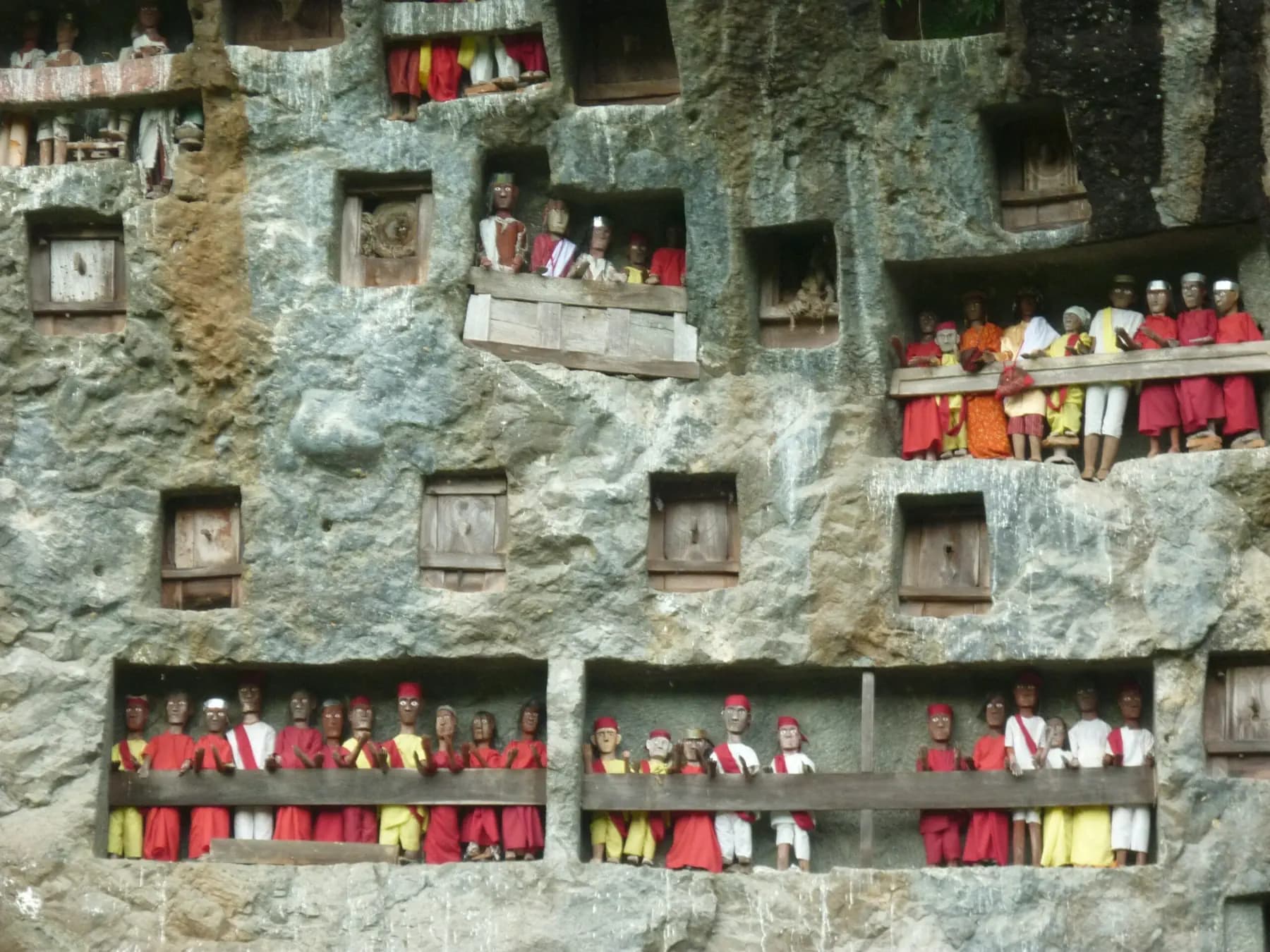
In the highlands, Tana Toraja holds funeral traditions found nowhere else on earth, elaborate ceremonies, cliffside burial sites, effigies of the dead watching over their villages. Off the northern tip, Bunaken and the Manado coastline hold some of the most decorated reef walls in the world and fish density that draws serious divers past Bali entirely.
Most people come here knowing exactly one of these two things exists. Almost none of them know the other is a short flight away.
That’s the problem we solve. Sulawesi is too big to wing. Trying to cover Toraja’s highlands and Bunaken’s reefs on the same loose itinerary usually means you rush both and see neither properly, or worse, you never realize the second half of the trip was possible at all. We build it as one deliberate route with highlands first, where you get the time Toraja’s culture actually demands, then straight north to the coast, where the diving picks up exactly where the culture leaves off. Land and sea, planned as a single trip instead of two separate ones. Here’s how we link them, and what you actually get from each half.
The Orchid Island
Look at a map and Sulawesi makes no geographic sense. Four arms reach out from a mountainous centre, separated by deep gulfs, which is why the island never developed a single dominant culture. Instead you get a patchwork, the Christian Minahasa in the north, the Muslim Bugis and Makassar seafarers in the south, the Toraja in the central highlands, and the Bajau sea nomads who live half their lives on the water. Travel here means crossing between these worlds, and the distances are real, so a Sulawesi trip is planned around regions rather than a single base.
The island splits into six provinces. North Sulawesi, Gorontalo, Central, West, South and Southeast Sulawesi. The two that pull the most visitors are the north (Manado, the gateway to the diving) and the south and central highlands (Makassar, the port of Bira, and Tana Toraja). The Togian Islands sit in the middle, in the Gulf of Tomini, and Wakatobi hangs off the southeast.
Tana Toraja and the Highland Culture
Toraja is the reason a lot of travellers come to Sulawesi, and it is unlike anywhere else in Indonesia. Up in the cool central mountains, the Toraja people build soaring tongkonan houses with roofs shaped like upturned boats, and they treat death as the single most important event in life.
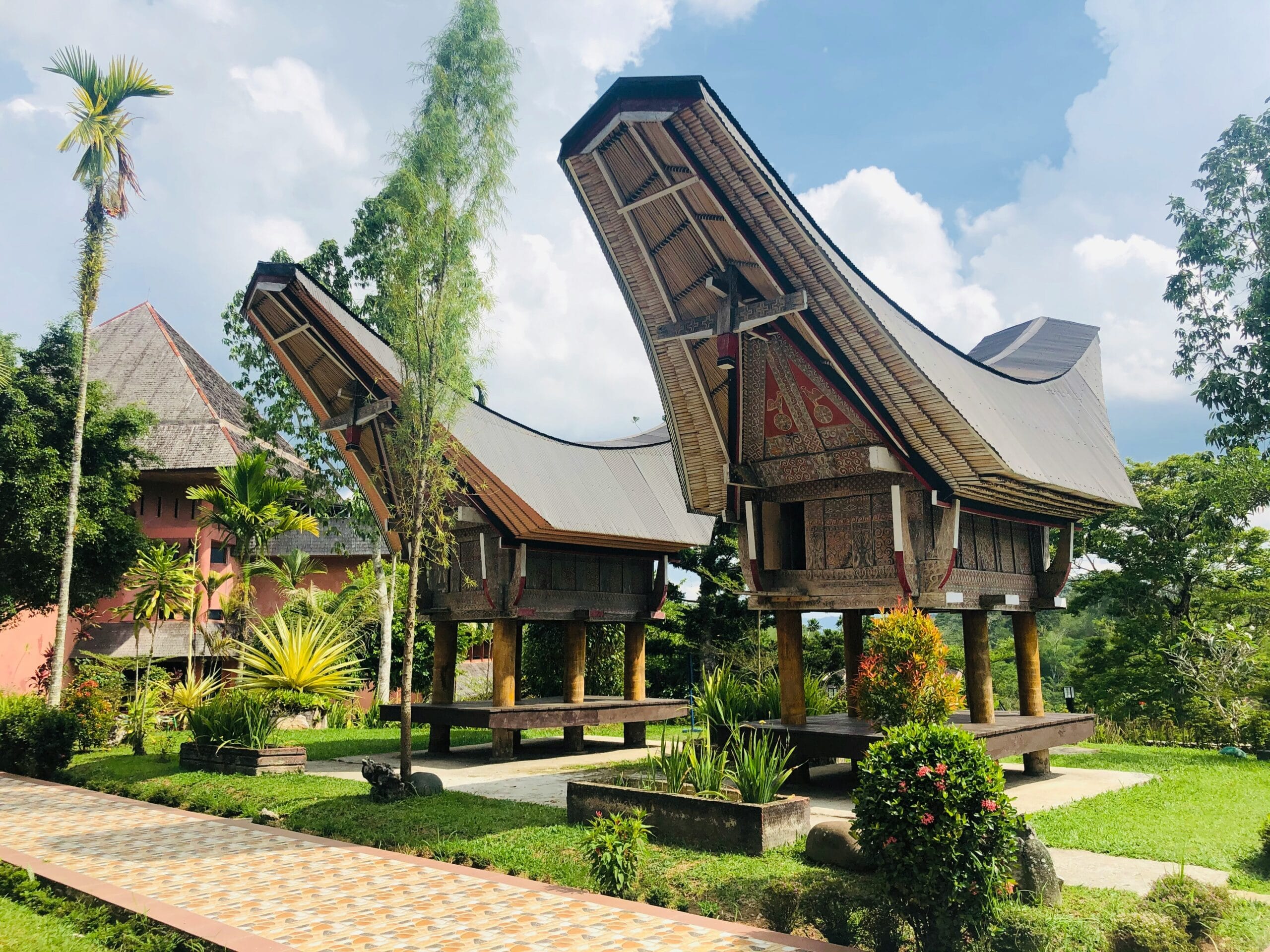
The Rambu Solo funeral ceremonies are the centrepiece. These are days-long events with buffalo and pig sacrifices, processions, feasting and chanting, held sometimes months or years after a death while the family saves for the occasion. The deceased are then laid in tombs carved into cliff faces, with carved wooden effigies (tau tau) standing guard on the rock balconies. Sites like Lemo, Londa and the baby graves in the trees at Kambira make the Toraja relationship with death tangible in a way no museum could.
There is far more to Toraja than the ceremonies. The landscape is terraced rice fields, bamboo forest and limestone karst, ideal for walking. We build trekking into our Toraja itineraries that include walks between traditional villages, market days in Rantepao where you can pick up wood carving and weaving, and time with families who still farm the old way. Our 5 Days Tour in Toraja is the focused way to do it, and the longer 7 Days South Sulawesi tour folds in Lake Tempe and the Rammang-Rammang karst as well.
The South: Makassar, Karst and the Coast at Bira
Most southern trips start in Makassar, the biggest city in eastern Indonesia and the historic home of the Bugis and Makassar seafarers, whose wooden pinisi schooners still get built by hand on the beaches further down the coast. The city is the launch point for everything in the south. The pinisi tradition itself has real history behind it, worth a read in our guide to Indonesia’s pinisi boats, their origins, the ancestral know-how, and how the design has evolved into today’s liveaboards.

Inland from Makassar, Rammang-Rammang is one of the largest karst landscapes in the world with a maze of limestone towers you explore by wooden boat through rice paddies and palm groves. Bantimurung-Bulusaraung National Park nearby is known for its waterfalls, caves and clouds of butterflies, with serious birdwatching for anyone after Sulawesi’s endemic species. Lake Tempe, a shallow inland lake dotted with floating Bugis houses, is a quiet, photogenic stop on the way up to Toraja.
At the southern tip, Bira is the south’s beach with white sand, clear water, and a working boatyard at Tana Beru where you can watch pinisi being built with hand tools and no plans. It is also the jumping off point for Selayar Island and the nearby reefs. Our longer loops stitch the south together, the 9 Days South Sulawesi tour runs Bira, Toraja and Lake Tempe, and the full 18 Days Sulawesi tour adds the Togian Islands on the end.
The Togian Islands and the Gulf of Tomini
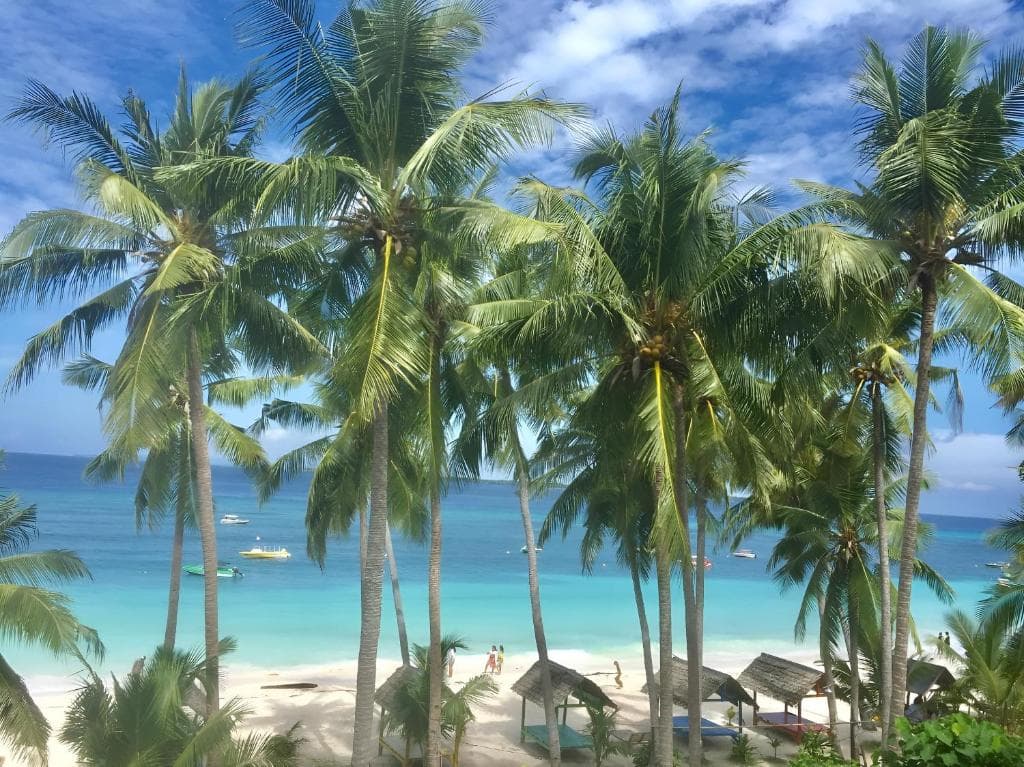
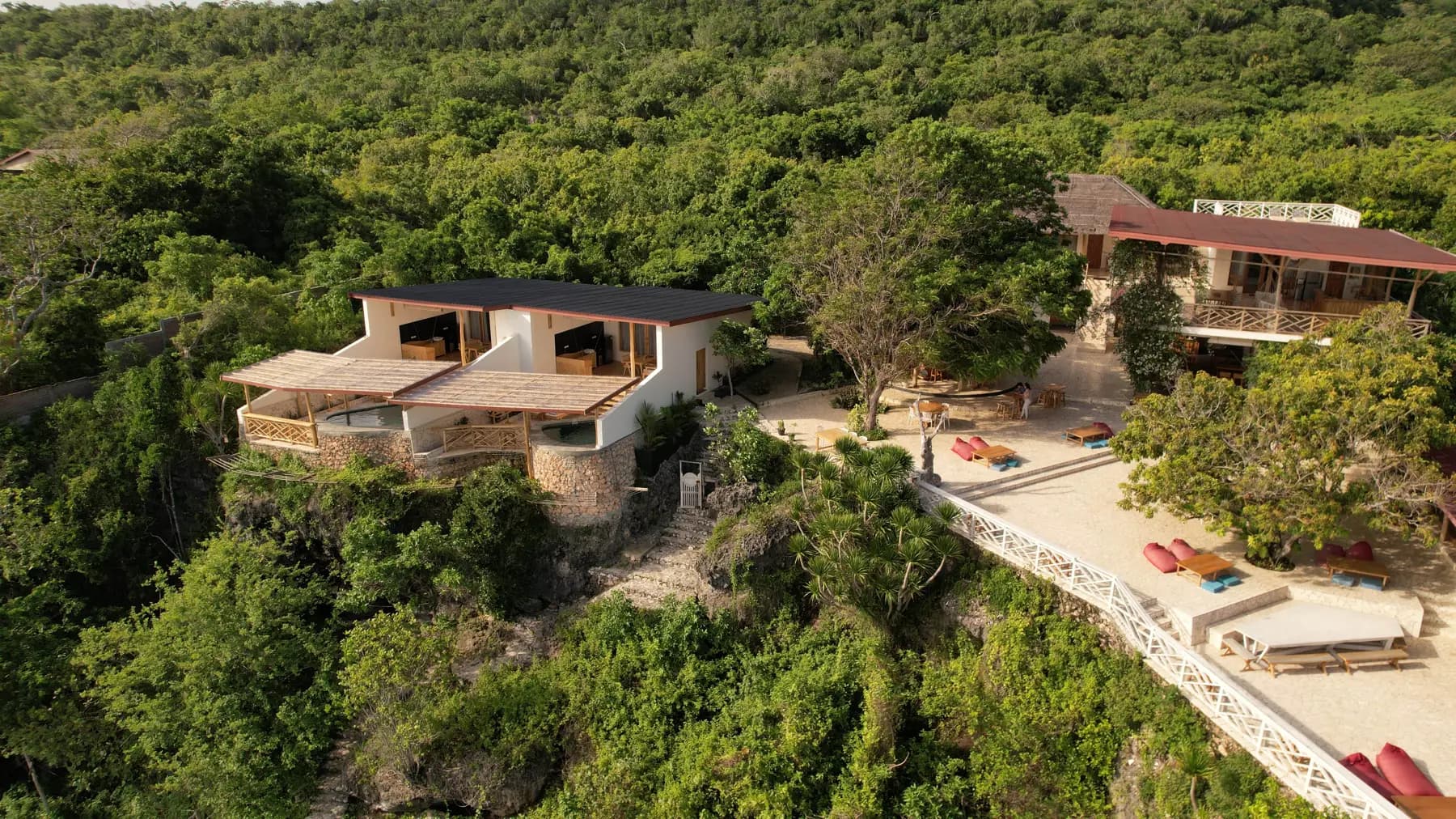
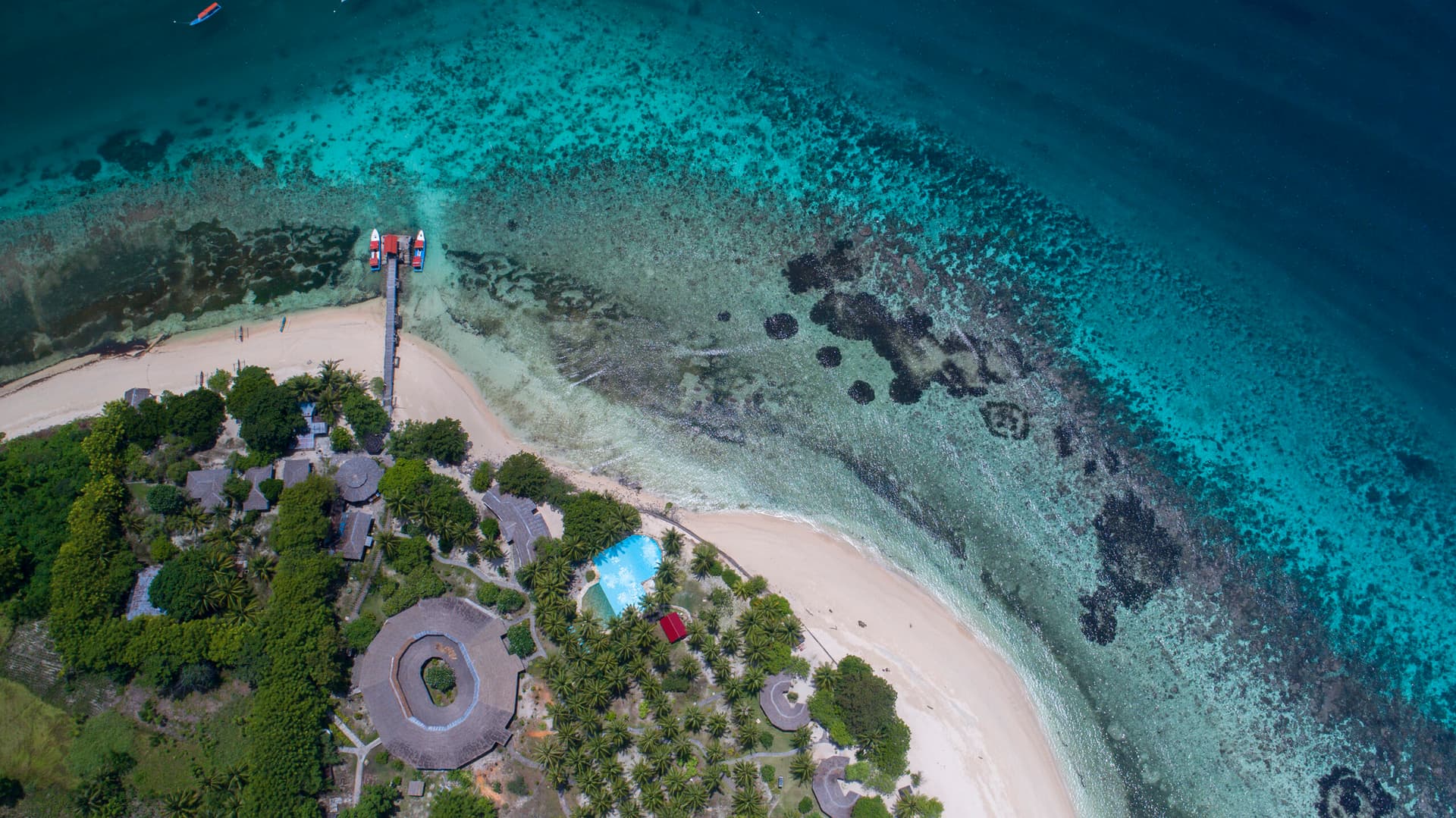
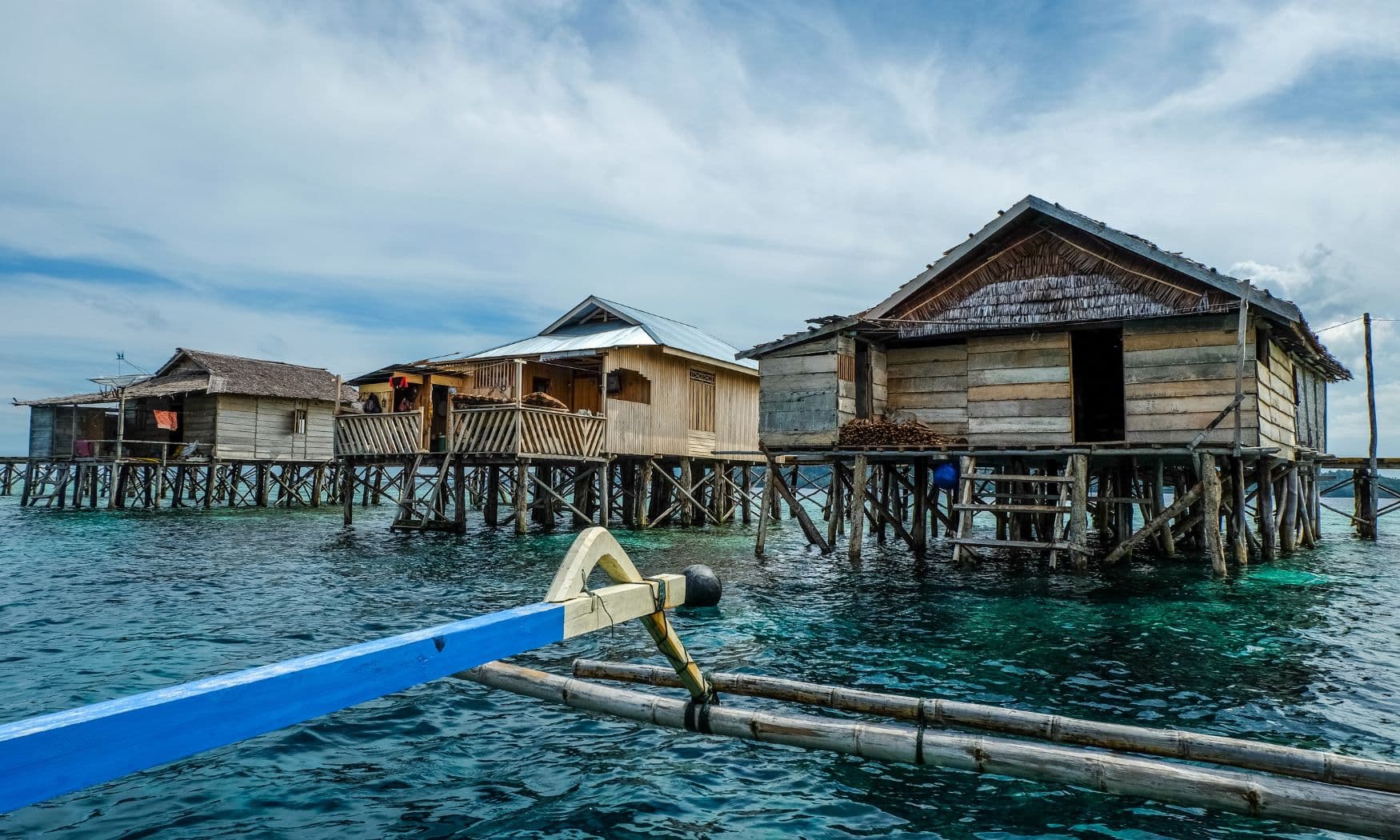
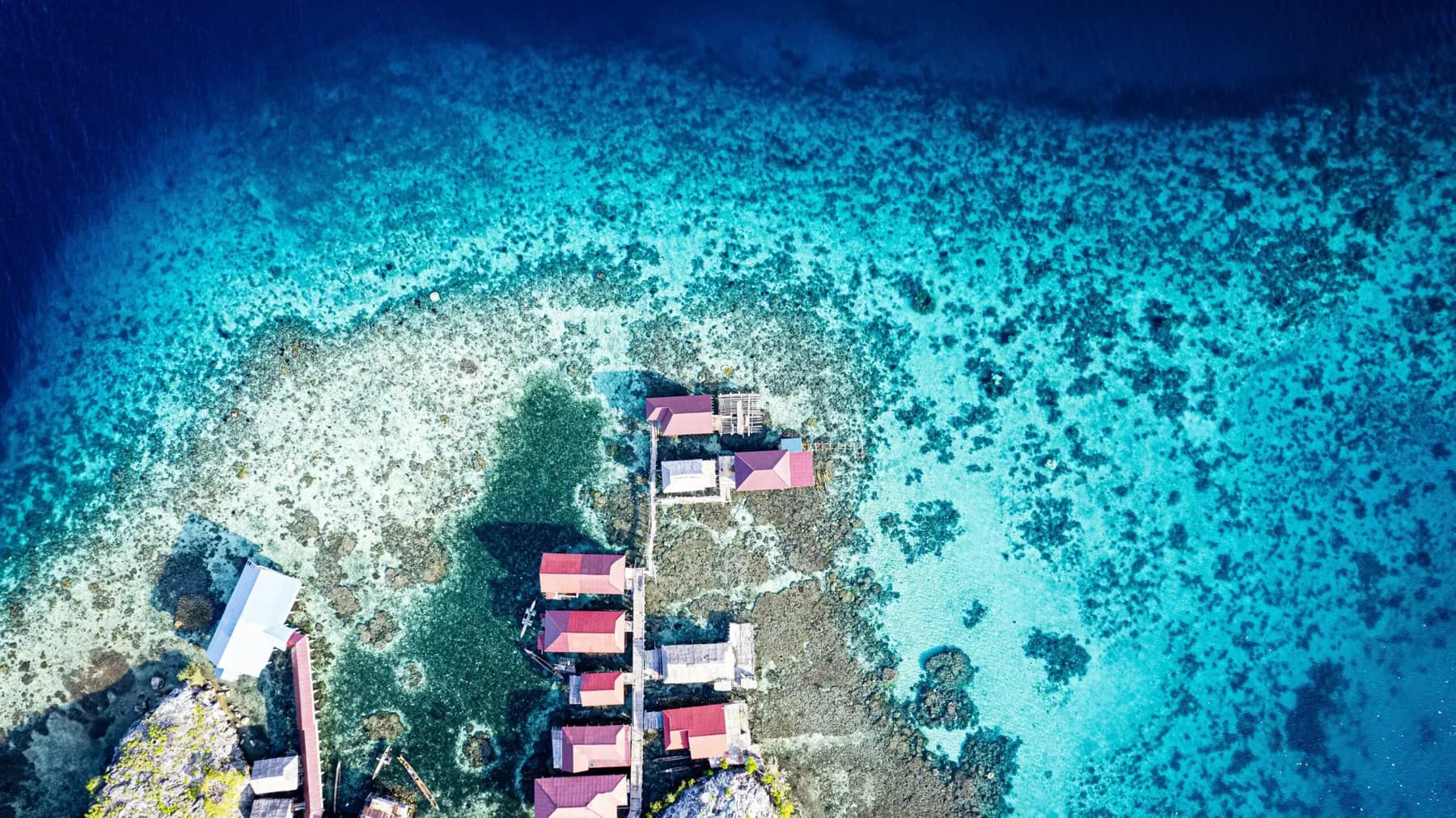
Right in the middle of the island, the Togian Islands sit in the Gulf of Tomini, and they are the place to slow down. This is remote, off-grid Indonesia with simple lodges, white sand islands, clear lagoons, and the Bajau Laut sea nomad communities who live in stilt villages and traditional boats and freedive for their living. Our Togian Islands destination page covers the archipelago in full if this is your main draw to Sulawesi.
The Togians are also where land and sea blur. You can snorkel straight off the beach over coral gardens and a jellyfish lake, watch turtles nest on Padea Beach and help release hatchlings, take a cooking class at one of the lodges, and dive some of the best reefs in the middle of the island. Getting here takes effort, which is exactly why it stays quiet. The 12 Days Sulawesi tour pairs Toraja with the Togians, which is the classic highland plus islands combination.
Wildlife and the Jungle
Because Sulawesi sat isolated for so long, its wildlife went its own way. The island has one of the highest shares of endemic species in Indonesia, and the easiest place to see them is Tangkoko National Park in the north, near Manado. A dawn or dusk walk there gives you a real chance of the tiny, saucer eyed spectral tarsier, the loud black crested macaque, hornbills and cuscus. It pairs naturally with a northern diving trip, since it is a short drive from the Lembeh boats.
Sulawesi’s endemic bird list runs deep, and dedicated birdwatching trips into Tangkoko and the highland forests can turn up hornbills, kingfishers and species found nowhere else on the planet, worth building in extra time if birding is part of why you travel. On the ground rather than in the trees, the island’s strangest resident is the babirusa, a wild pig with upper canines that curve back up through the snout toward the forehead, an animal so odd early naturalists struggled to believe it was real. Seeing one takes patience and a good guide, but it is very much part of Sulawesi’s wider case for being one of Indonesia’s most rewarding wildlife destinations.
Scuba Diving in Sulawesi
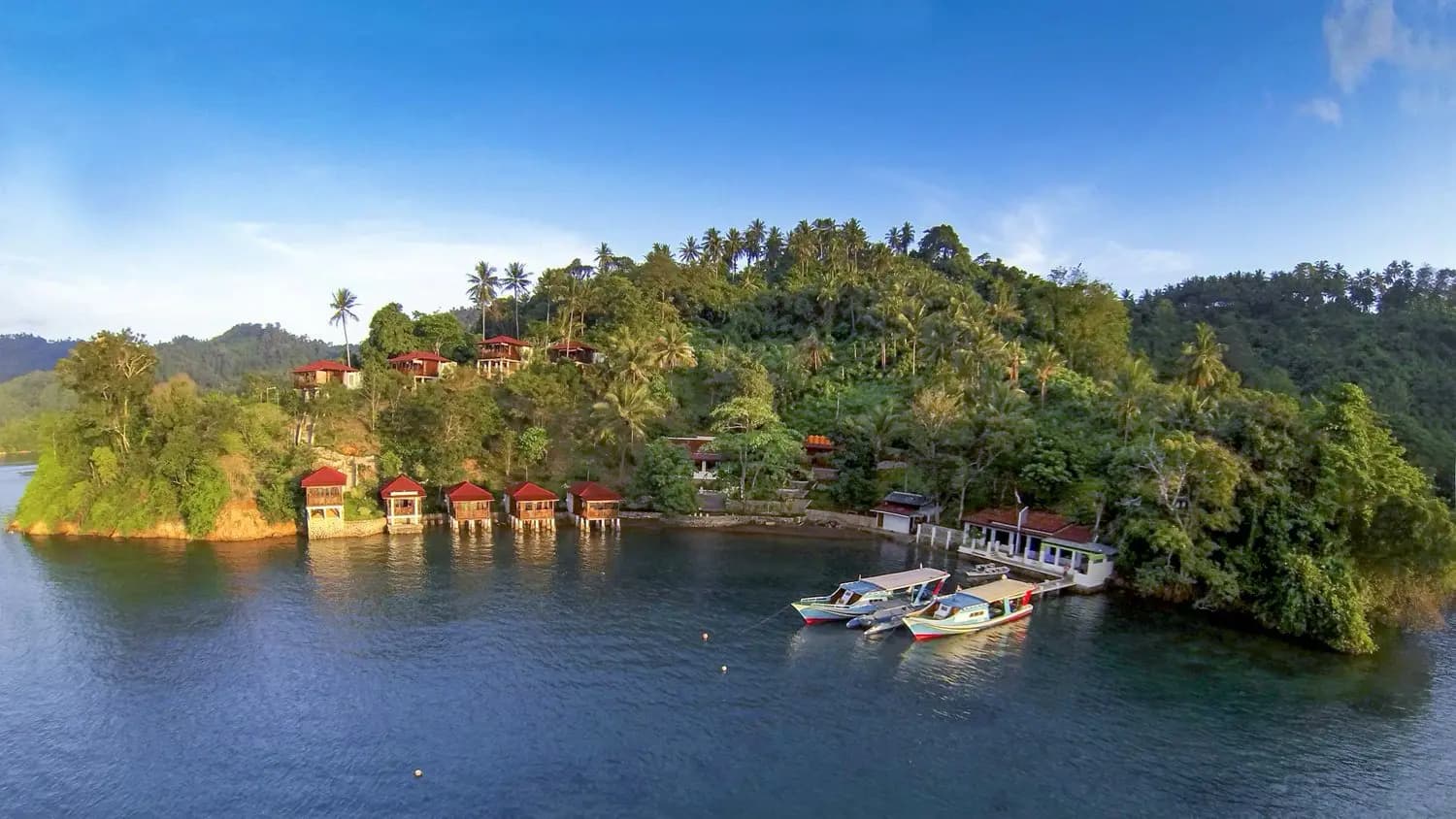
Diving is half the reason people come to Sulawesi, and the north offers two opposite, world-class styles within an hour of each other out of Manado, plus the remote reefs of the Togians, Wakatobi and the deep south.

Lembeh Strait (the muck diving capital). A narrow channel of black volcanic sand that holds the highest concentration of rare critters anywhere on earth. This is “muck diving” where you can hunt the strange small stuff, not cruising coral. Expect mimic octopus, hairy frogfish, flamboyant cuttlefish, harlequin shrimp, wonderpus and blue-ringed octopus. Classic sites include Nudi Falls (nudibranchs), Hairball (frogfish), Critter Hunt, California Dreaming (mimic octopus) and Police Pier for night dives. The diving is shallow with little current, which makes Lembeh a dream for macro photographers of any level.
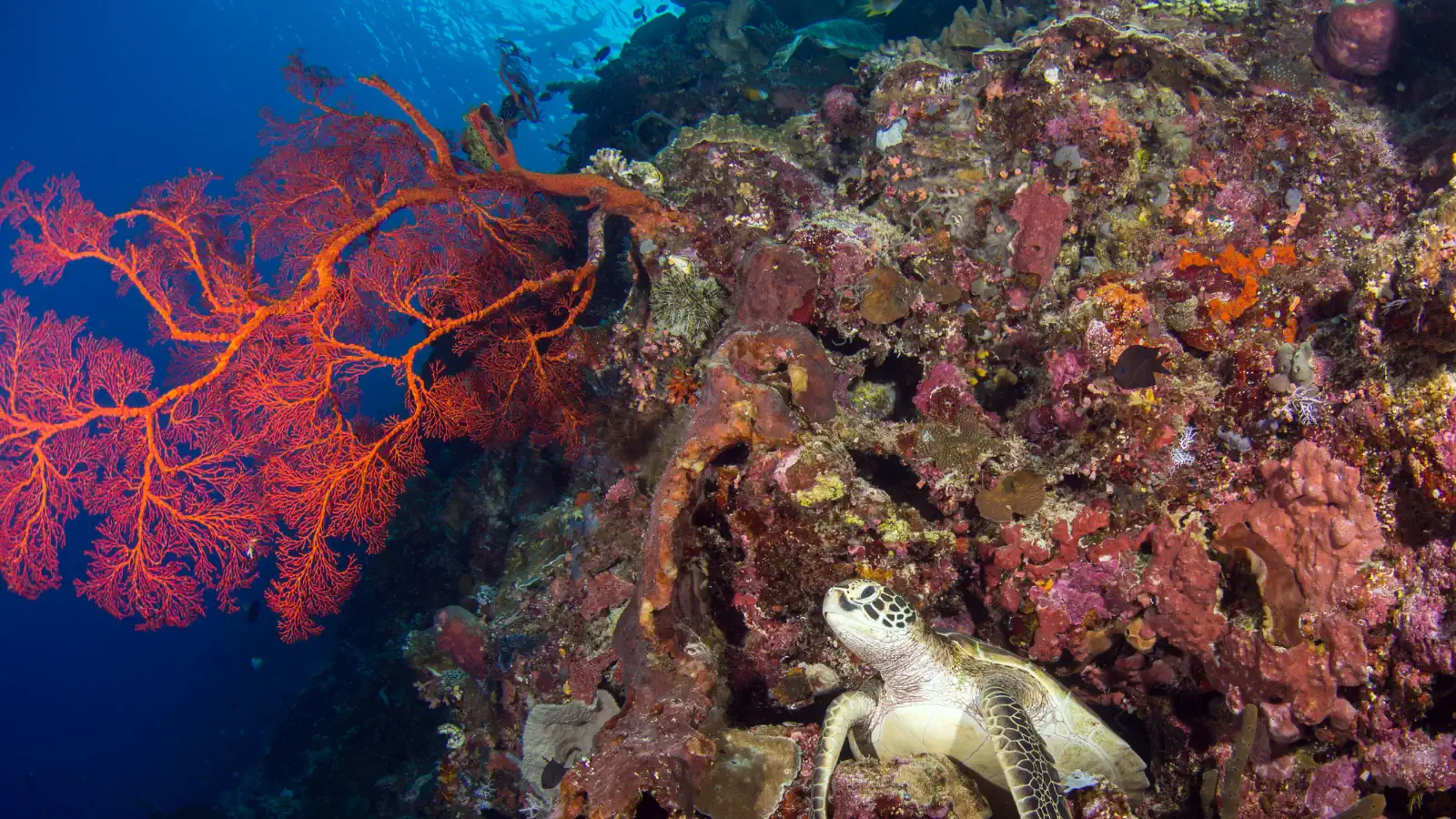
Bunaken (the wall diving). A national marine park of sheer coral walls dropping straight into the blue, with green and hawksbill turtles, reef sharks, big schools of fish and healthy hard coral. Sites like Angel’s Window and Lekuan are the classics. Currents are mild to moderate, the walls work as easy drift dives, and visibility is excellent, so Bunaken suits Open Water divers and up. You can also snorkel here and around nearby Siladen Island.
The reason “muck and walls” trips out of Manado are so popular is the contrast, a morning of tiny critters on black sand, an afternoon on a coral wall full of turtles, all from the same base.
Togian Islands Diving
The Togian Islands offer relaxed reef and wall diving suited to all levels, sites scattered around Kadidiri and Una-Una with healthy coral, a resident jellyfish lake, and good odds of turtles. Current is generally gentle here, which makes the Togians a good, low-pressure add-on to a highland trip rather than a dedicated hardcore dive destination.
Wakatobi
Wakatobi, off the southeast, is a reef destination in its own right, among the richest coral in the triangle, with sites like The House Reef, Roma, Coral Garden and the current-swept Blade. It is remote enough that most people dive it from a liveaboard, and the reward is reef health that rivals Raja Ampat with a fraction of the visitors.
Bira and Selayar
In the deep south, the reefs off Bira and Selayar Island round out Sulawesi’s diving map, easy, uncrowded sites that pair naturally with time at the pinisi boatyards and beaches at Bira, good for a relaxed dive day rather than a dedicated dive trip.
Sulawesi is also a sound place to learn, with warm water and gentle northern sites. See Learn Scuba Diving in Sulawesi for the courses.
When to Go
Sulawesi spans the equator and rainfall is patchy from region to region, so timing depends on where you are heading.
North (Manado, Bunaken, Lembeh, Tangkoko), driest and best roughly May to August, though diving runs year round.
South and Toraja: June to September is the reliable dry window. Toraja funeral season tends to cluster around July and August, after the rice harvest, if seeing a Rambu Solo matters to you.
Togian Islands: best April to October, when seas are calmest for the boat crossings.
Wakatobi: March to November for the steadiest conditions.
Because the island is so big, a well-planned trip can usually dodge the worst of the wet wherever you are.
Getting There and Getting Around
Sulawesi has two main gateways, and which one you fly into depends on your trip.
Manado (MDC) in the north for Bunaken, the Lembeh Strait and Tangkoko. Transfers run from the airport to the dive resorts and liveaboards.
Makassar (UPG) in the south for Toraja, Bira, Lake Tempe, Rammang-Rammang and the southern reefs. Toraja is a long but scenic drive (around eight to nine hours) or a short domestic flight up to Toraja’s airport.
Both connect through Jakarta, Bali or Surabaya, so Sulawesi slots in easily after a first week elsewhere in Indonesia. On the ground, distances are large and roads can be slow, so we run our Sulawesi trips with a private driver guide and pre-arranged transfers rather than leaving you to piece it together. The Togians and Wakatobi add boat legs that need building into the schedule, which is the main reason these regions reward a longer trip.
Frequently Asked Questions
It depends on the region. Toraja and the south work well in 5 to 9 days. Add the Togian Islands and you are looking at 12 days or more, because of the boat crossings. A northern diving trip around Manado (Lembeh and Bunaken) usually runs 7 to 10 days. Seeing the whole island in one go takes two to three weeks, which is what our 18 day loop is built for.
Two things above all, the Toraja highland culture, with its boat roofed houses, cliff tombs and Rambu Solo funeral ceremonies, and the diving in the north, where the Lembeh Strait’s muck and Bunaken’s coral walls sit side by side. Beyond that, there is the Togian Islands, the karst at Rammang-Rammang, endemic wildlife at Tangkoko, and the beaches and boatbuilding around Bira.
The north is best from May to August, the south and Toraja from June to September, and the Togian Islands from April to October. Toraja’s funeral season tends to peak in July and August. Diving in the north runs all year, so timing is mostly about surface conditions and what region you are focused on.
Fly into Manado (MDC) for the north and the diving, or Makassar (UPG) for Toraja and the south, both via Jakarta, Bali or Surabaya. Distances on the island are big, so we arrange a private driver guide and any internal flights or boat transfers as part of the trip.
Travellers who want something deeper and less polished than Bali with culture, real distance from the crowds, jungle and wildlife, and serious diving. It rewards a bit of patience with travel time. It suits divers, culture focused travellers and adventurous families, and it works as a strong second or third stop in a longer Indonesia trip.
Often, yes, especially in July and August after the harvest. Rambu Solo ceremonies are public events that families are usually happy to have visitors attend with a local guide who knows the etiquette and can bring an appropriate gift. We build this into Toraja itineraries when the timing lines up, but exact dates are set by the families, not a calendar.
Yes. Sulawesi pairs well as a second leg after Bali or Komodo, since both Manado and Makassar connect through the main hubs. A common shape is a first week on Bali or in Komodo, then a flight to Sulawesi for Toraja and the islands, or for the northern diving.
Yes, and most divers do. They sit close together near Manado and offer opposite styles, muck versus walls, so you can split your stay between the two and get a very varied week. Lembeh is gentle and shallow, ideal for macro photography, while Bunaken’s walls are easy drift dives suited to Open Water divers and up.
Your adventure starts here
Plan your trip to Sulawesi
Tell us what you want to see and we'll craft the perfect itinerary, usually within 24 hours.
Plan My Trip →Enquire About This Destination
Any question, special request or custom itinerary, we reply within 24hrs.
Tours & Activities in Sulawesi
18 Days Sulawesi Tour: Bira – Lake Tempe – Toraja – Togian Islands
12 Days Sulawesi Tour: Toraja and Togian Islands