Is scuba diving dangerous? Less than most people assume, and in ways most people do not expect. In the United States, where the best records are kept, recreational diving killed about one diver for every 550,000 dives over a ten-year period. Nobody on that list was taken by a shark. Most of them ran out of air, came up too fast, or had a heart problem they brought into the water with them.
That matters if you are planning a first dive in Bali or a liveaboard in Komodo, because Indonesia adds two things to the equation: strong currents and long distances. Neither is a reason to stay home. Both are reasons to know the numbers, and to know where the nearest recompression chamber is before you need one. This article covers both.

How often do divers actually die?
The reference numbers come from Divers Alert Network (DAN), the non-profit that has tracked diving injuries since 1980. A 2018 DAN study counted an estimated 306 million dives by US residents between 2006 and 2015, and 563 recreational diving deaths in the same period. That is 0.18 deaths per 100,000 dives, or 1.8 per 100,000 divers per year.
DAN’s most recent annual report, covering 2020, recorded 146 diving deaths reported to it worldwide, down from 186 in 2019. Those are notifications, not a complete global count, but they give the scale. The British Sub-Aqua Club, which keeps its own records, found 0.54 deaths per 100,000 dives among its members.
To put 0.18 per 100,000 next to activities nobody calls dangerous:
| Activity | Deaths | Source |
|---|---|---|
| Recreational scuba dive (US, 2006 to 2015) | 0.18 per 100,000 dives | DAN, Buzzacott et al. 2018 |
| Skydive (US, 2024) | 0.23 per 100,000 jumps | US Parachute Association |
| Marathon or half marathon finisher (US, 2010 to 2023) | 0.20 cardiac deaths per 100,000 finishers | Kim et al., JAMA 2025 |
| Driving (US, 2024) | 1.19 per 100 million miles | IIHS |
Each line counts one event, so a dive, a jump or a race, and they are not adjusted for how long each takes. Alert Diver’s own comparison, using micromorts, puts a recreational dive at 1.8 to 10 micromorts, a horse ride at 0.5, a ski day at 0.7 and a marathon at 7. Cave and rebreather diving sit at 18 to 40 per dive. That is a different sport with different training, and it is where most of the dramatic headlines come from.
What about Indonesia specifically?
There is one peer-reviewed study. Mukharror, Wardoyo (of DAN Indonesia) and colleagues analysed recreational diving fatalities in Indonesia between 2011 and 2019 and published it in 2026. They estimate about 772,000 dives nationwide in 2017, with the activity growing around 14 percent over the eight years studied. Their finding: the number of fatal accidents stayed roughly flat while dive volume rose, and drowning was the leading cause. Their estimate of the fatality risk is in the same low single digits per million as the US figure.
For a sense of how much diving happens here, DAN Europe logged 235 emergency calls from its members in Indonesia in 2018, more than from Egypt. That is a measure of European divers choosing Indonesia, not of Indonesia being riskier. DAN opened an in-country hotline in Bahasa Indonesia in 2025 for the same reason.
What actually goes wrong
DAN examined 947 recreational diving deaths from 1992 to 2003 and traced each one back through the chain of events. The pattern is consistent enough that it is worth memorising.
- The trigger. In 41 percent of cases the diver ran low on or out of breathing gas. Entrapment (wrecks, caves, lines, nets) accounted for 20 percent and equipment problems for 15 percent.
- What disabled the diver. In 55 percent of cases it was an emergency ascent, usually rushed. Insufficient gas and buoyancy trouble made up most of the rest.
- What killed them. Drowning in 70 percent of cases, arterial gas embolism (lung over-expansion from a fast ascent) in 14 percent, and a cardiac event in 13 percent.
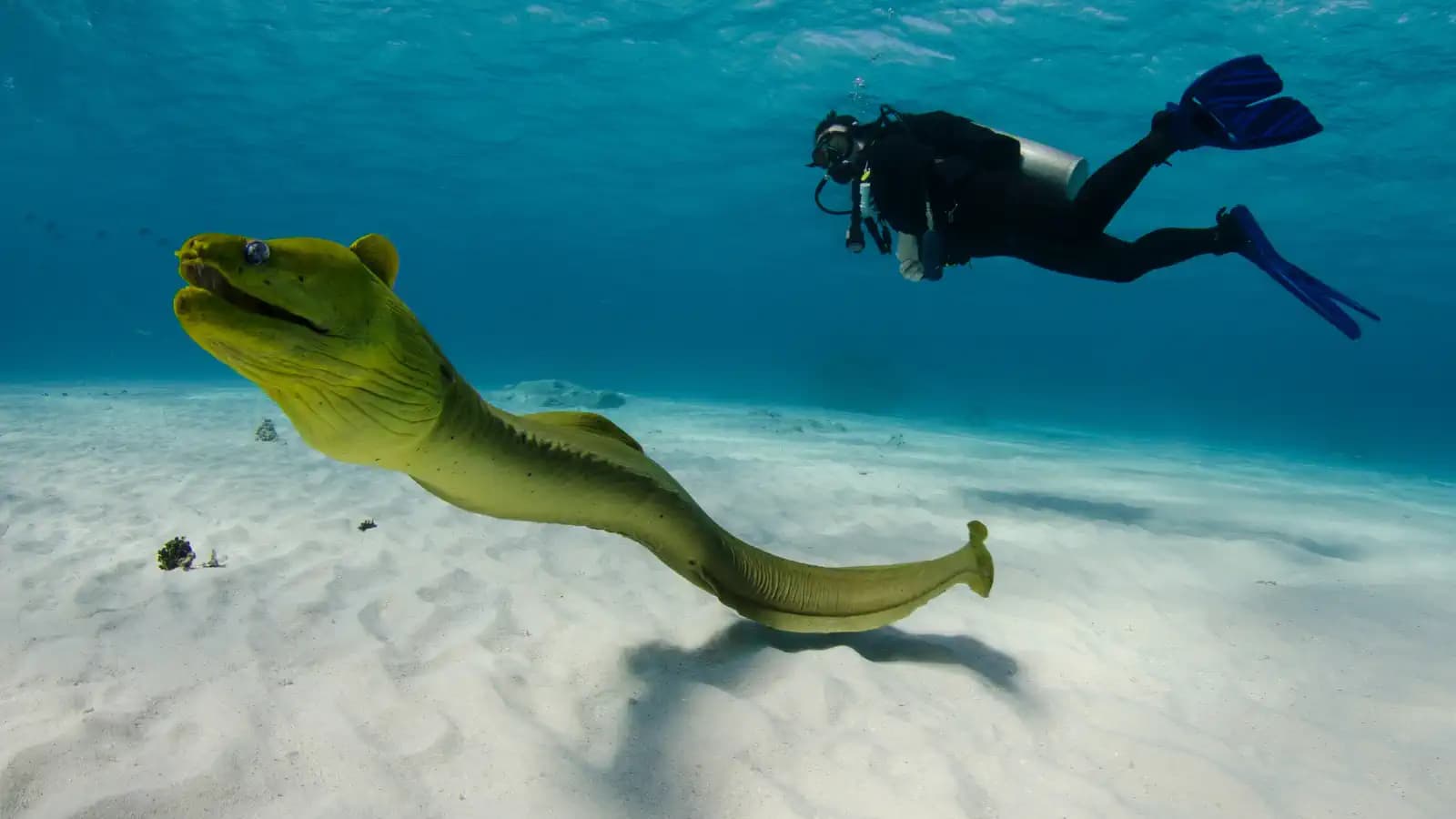
Two things stand out. First, almost every fatal dive started with something routine: not watching the gauge, a poorly set up kit, a panicked bolt for the surface. Second, marine life does not appear on the list. Sharks, morays and jellyfish are what people fear. Gas planning and buoyancy are what keeps them alive.
The heart is the risk nobody talks about
DAN’s cardiologists estimate that roughly one in three diving deaths involves an acute cardiac event. In 2020, 43 percent of the divers who died were 50 or older, and DAN’s data show a diver over 50 has about ten times the risk of a cardiac death underwater compared with a diver under 50. Immersion, cold water, exertion against a current and a gear load of 15 to 20 kilos are a real stress test. DAN’s standing advice is that men over 45 and women over 50 get a periodic medical check, and that anyone with high blood pressure, diabetes or a family history of heart disease talks to a doctor before diving. Our guide to the diving medical questionnaire explains when Indonesian operators will ask for a doctor’s signature.
Decompression sickness: how likely is it?
Decompression sickness (DCS, “the bends”) is the injury divers think about most, and it is uncommon. The MSD Manual puts it at 2 to 4 cases per 10,000 recreational dives. DAN Europe’s own dive database of 39,000 logged dives gives a range of 0.01 to 0.1 percent, with recreational diving at the low end. Most cases are joint pain and skin symptoms, treatable with oxygen and a session in a recompression chamber. Severe neurological DCS is rarer still.

The things that raise your odds are known: repetitive deep dives, fast ascents, skipped safety stops, dehydration, heavy exertion, flying too soon afterwards, and being cold. A liveaboard week in Komodo or Raja Ampat means three to four dives a day for several days, in tropical heat, which is exactly the profile where conservative diving and a lot of water pay off.
One case DAN Asia-Pacific reported from East Kalimantan is worth reading twice. A guide took a diver to about 36 metres after briefing 18 to 20. The diver developed DCS. There was no oxygen on the boat. Nothing about the sea caused that accident.
What Indonesia adds: current and distance
The diving that makes Indonesia famous is current diving. Komodo’s channels, the drift at Nusa Penida, the passes of Raja Ampat and the walls of Bunaken all run on water movement, which is why the fish are there. Current is not dangerous in itself, but it turns small problems into large ones quickly: a diver who cannot hold position burns gas fast, gets separated, and surfaces away from the boat. The answer is honest self-assessment. A newly certified diver with ten dives has no business at Castle Rock on a spring tide, and a good operator will say so.

The second thing is remoteness. Bali has a chamber 20 minutes from Sanur. The Togean Islands are eight hours or more from theirs. That does not make the Togeans unsafe. It means you dive more conservatively the further you are from help, and you make sure your operator carries oxygen, which buys time.
Hyperbaric chambers in Indonesia’s dive destinations
The list below was checked in September 2026 against hospital pages, Indonesian press and dive operator safety pages. Chambers go down for maintenance, and the Waisai chamber in Raja Ampat was out of service when DAN needed it in 2019. So before you set off for any chamber, call DAN. They know which ones are working today.

DAN has put real work into Indonesia in the last three years. In August 2023 it ran a four-day Academy of Diving Medicine in Bali for more than 50 doctors and nurses from across the archipelago, paying for participants from remote areas to attend, and four of those doctors now staff its Indonesian-language hotline. Between 2023 and 2025 it added nine newly opened Indonesian chambers to its Recompression Chamber Network. In April 2026 it completed its One Thousand in One Thousand programme with the Ministry of Tourism: 1,000 deckhands, skippers and dive shop staff trained in basic life support and emergency oxygen within 1,000 days, across Labuan Bajo, Sanur, Amed, Tulamben, Pemuteran, Nusa Penida and Southeast Sulawesi. When you ask a crew whether they know how to give oxygen, that programme is why the answer is more often yes than it was.
DAN emergency hotline in Indonesia: 021-5085-8719 (24/7, Bahasa Indonesia and English). International: +1-919-684-9111. Indonesian emergency numbers: 112 (general), 119 (ambulance), 115 (search and rescue).
| Dive area | Nearest chamber | Notes |
|---|---|---|
| Bali (Sanur, Padang Bai, Amed, Tulamben, Menjangan) | Kasih Ibu Hospital Saba, Gianyar. +62 361 300 3333 | Private, multiplace, 24/7, DAN preferred provider, opened 2019. About 20 minutes from Sanur, 1.5 hours from Tulamben. |
| Bali (Denpasar, Kuta) | RSUP Prof. Ngoerah (formerly Sanglah), Denpasar. +62 361 227911 | Public. Bali’s oldest chamber, running since 1995. Published chamber hours are office hours, so check on emergency cover. |
| Nusa Penida, Nusa Lembongan | No chamber on the islands | Speedboat to Sanur, around 45 minutes, then Kasih Ibu Saba or Ngoerah. |
| Lombok, Gili Islands | RSUD Kota Mataram. +62 370 640774 | Public. Treats DCS and gas embolism on US Navy tables. Open since 2016. From Gili Trawangan, boat to Bangsal then road; one 2026 case reached the chamber in 80 minutes. |
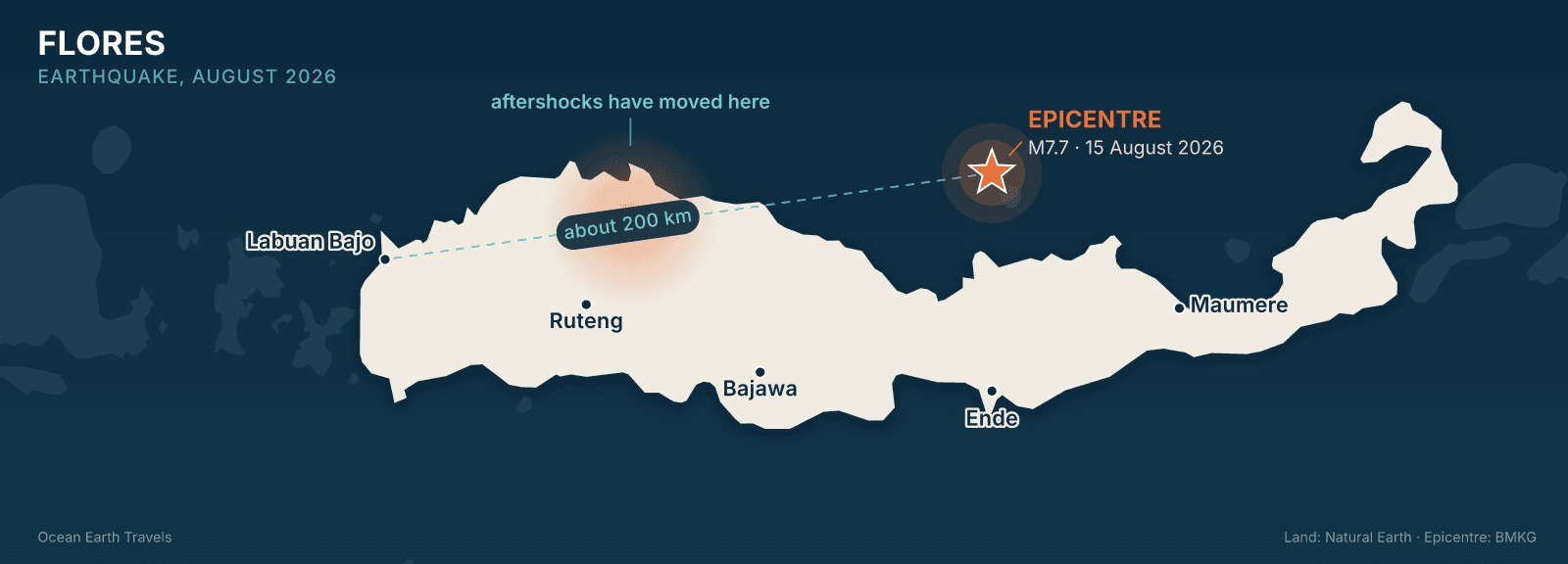
| Komodo, Labuan Bajo | Siloam Hospitals Labuan Bajo. Emergency +62 385 238 1911 | Private. Multiplace, up to 8 people, 24-hour ER. Opened 2018 and still the only chamber in East Nusa Tenggara. From the northern park sites about 30 minutes by speedboat, from the south half a day. |
| Maumere (Flores) | RSUD dr. T.C. Hillers, Maumere | Public. A chamber was delivered in 2018 for divers. We could not confirm its current status. Plan on Labuan Bajo or Bali. |
| Alor | No chamber | Nearest are Labuan Bajo and Bali, by air via Kupang, so 6 to 10 hours. Dive conservatively here. |
| Raja Ampat | Rumkital dr. R. Oetojo (navy hospital), Sorong | Opened October 2024, 18 seats, open to the public. RSUD Raja Ampat in Waisai also has a chamber, but local operators report it is not certified to international standards and it was under repair in 2019. Many resorts still plan evacuation to Manado or Bali. |
| Manado, Bunaken, Lembeh | Siloam Hospitals Manado. +62 431 7290900 | Private, 6-person multiplace, built for divers, since 2018. RSUP Prof. Kandou (public, +62 431 8383058) and RS Bhayangkara Manado (police, 12 seats) also have chambers. About 45 minutes from Bunaken, 1.5 to 2 hours from Lembeh by road. |
| Ambon, Banda Sea | RSAL dr. F.X. Suhardjo (navy hospital), Ambon. +62 911 352547 | Treats DCS, open to the public. From the Banda Islands it is 8 to 12 hours by sea. Liveaboards in the Banda Sea are a long way from help. |
| Wakatobi | RSUD Wakatobi, Wangi-Wangi | Public, 8-person chamber inaugurated 2021. No published dive protocol or 24-hour information. |
| Makassar, South Sulawesi | RSUP Wahidin Sudirohusodo, +62 411 584677, and RS TNI AL Jala Ammari (navy) | Both treat divers. The navy chamber opened to the public in 2021. |
| Togean Islands | RS Bhayangkara Palu (police) | The only chamber in Central Sulawesi, 8 to 12 hours away by boat and road, and marketed for general therapy rather than dive emergencies. |
| Derawan, East Kalimantan | RS Pertamina Balikpapan, +62 542 734020 | The only working hyperbaric centre in Kalimantan. Berau’s own chamber was moved to RSUD Berau in 2025 and its status is unclear. |
| Jakarta | RSAL dr. Mintohardjo (navy hospital), +62 21 5703081 | Hyperbaric centre next to a 24-hour ER. |
| Surabaya | RSAL dr. Ramelan, Lakesla | The Indonesian Navy’s national hyperbaric training centre. |
Two practical notes. Most of these are navy, police or public hospitals that will treat you but expect payment or a guarantee, so carry dive accident insurance. DAN membership with cover starts around 100 US dollars a year, and Alert Diver makes the point that a price that low is itself evidence of how rarely divers get hurt. And a chamber is only useful if you get to it. A boat with oxygen on board, a working radio and a skipper who knows the evacuation plan does more for you than a chamber 200 kilometres away.
When not to dive
Some days the right dive is no dive.
- You have a cold, sinus congestion or an ear that will not clear. Forcing it causes barotrauma, the most common diving injury of all.
- You are hungover or badly dehydrated. Both raise DCS risk and impair judgement.
- You answered yes to anything on the diver medical questionnaire and have not seen a doctor. The form exists because heart and lung conditions are what turn a routine dive into a fatality.
- You are flying within 18 hours of your last dive after a multi-day trip, or 12 hours after a single dive. Build the gap into your itinerary, especially at the end of a liveaboard.
- The briefing said 18 metres and the guide is heading for 30. Say no. The East Kalimantan case above is what happens when nobody does.
- You are scared. Anxiety underwater becomes panic, and panic becomes an emergency ascent, which is the single biggest disabling event in DAN’s records.
How to pick an operator in Indonesia
Training standards are the same everywhere. What varies is whether they are followed. Before you book, ask:
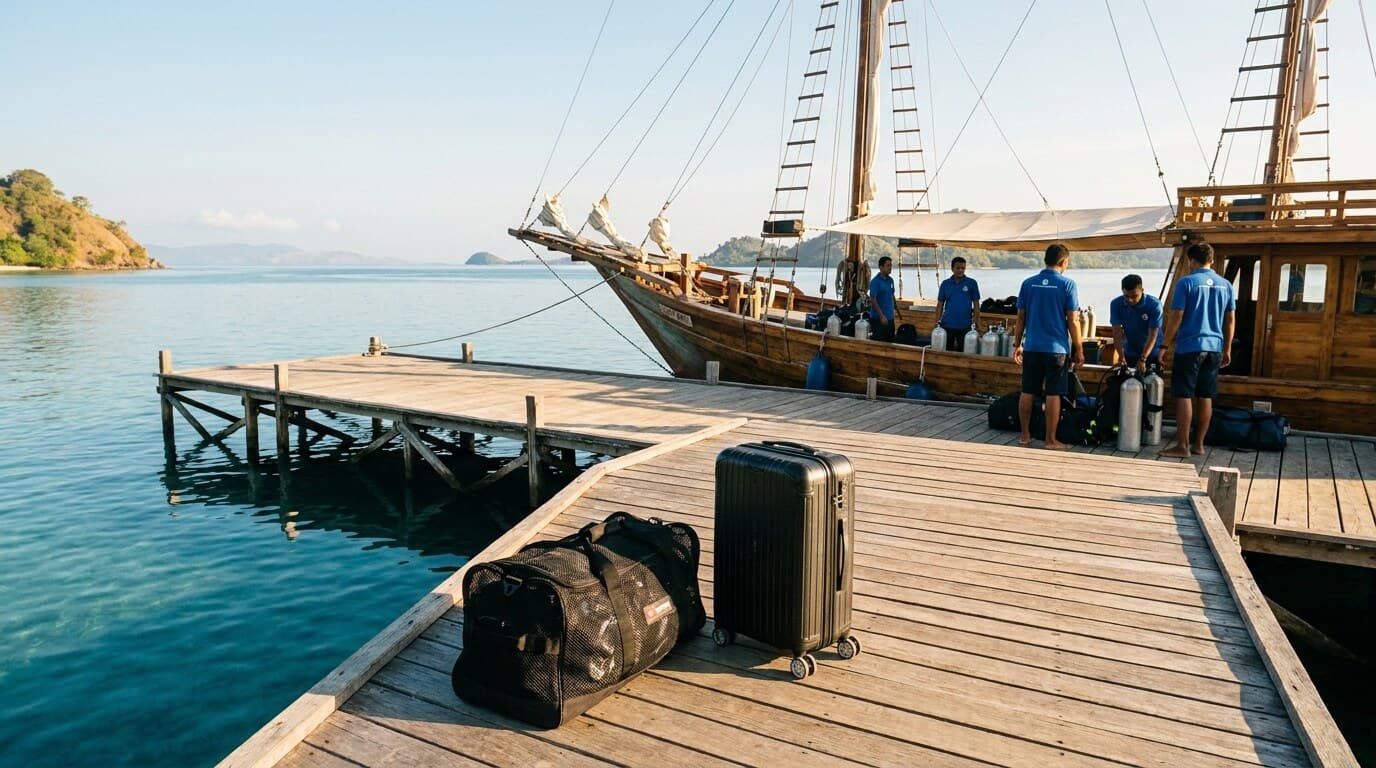
- Is there oxygen on the boat, and does the crew know how to use it?
- What is the guide-to-diver ratio, and are groups split by experience?
- Is there a proper briefing with a maximum depth, and do guides hold to it?
- What is the plan if someone gets bent, and how far is the nearest chamber?
- Does the boat have a radio or satellite phone, rather than a mobile alone?

An operator who answers those five questions without hesitation is one who has thought about them. Every centre and liveaboard we work with has, which is a large part of why we work with them. If you are starting out, our guide to the best places for an Open Water course in Indonesia covers the calm-water sites where beginners belong, and our liveaboard diving guide explains how a multi-day trip is run.
The course that changes how you dive: Rescue Diver
Look back at DAN’s chain of events. It starts with stress, a low gauge or a snag, and it ends with a panicked ascent. The Rescue Diver course is built around breaking that chain, in yourself and in the diver next to you. You learn to spot stress before it turns into panic, to manage a panicked diver at the surface without going under with them, to bring an unresponsive diver up and to the boat, to run a search pattern, and to give oxygen. Both PADI and SSI centres in Indonesia teach it, under different names. PADI calls it Rescue Diver: you need to be 12 or older, hold Adventure Diver (or Advanced Open Water) with the underwater navigation dive done, and have completed Emergency First Response primary and secondary care, or an equivalent CPR and first-aid course, within the previous 24 months. SSI calls it Diver Stress and Rescue: Open Water Diver is enough to enrol, the same first-aid certificate no older than two years is required, and SSI structures it as six academic sessions, three pool sessions and three open water sessions to a maximum of 18 metres. In practice both run over three to four days. The two courses are built on the same World Recreational Scuba Training Council minimum standard for entry-level rescue divers, which both agencies helped write, so a rescue certificate from either is recognised by the other and by dive centres worldwide. The difference is packaging, not content: PADI folds the first-aid course into its own EFR programme and treats Rescue as the step before Divemaster, while SSI offers it as a specialty you can start straight after Open Water, paired with its React Right first-aid course.
It is the hardest recreational course most divers will take, and the one they talk about afterwards. The scenarios are physical, you will be tired, and you will find out how you react under pressure before it matters. Divers who have done it dive differently: they watch their buddy’s gauge as well as their own, they notice the person breathing hard on the surface, and they ask the questions in the list above without prompting.
Indonesia is a good place to do it. Amed, Tulamben, Pemuteran, Nusa Penida and the Gili Islands all have centres with the instructors and the calm training water to run it well, and it fits into a dive trip: three days of training in Bali, then a week of diving in Komodo with skills you will actually use. Our Bali dive course pages list the centres we work with, or tell us where you are heading and we will fit the course in.
Diving is a sport with a real but small risk, and the risk is mostly in your own hands: your gas, your ascent, your health and your honesty about your limits. Get those right and Indonesia’s reefs are as safe a place as any on earth to spend a week underwater. If you want help matching a trip to your experience, tell us what you have done and where you want to go.
Frequently asked questions
Not when it is done through a certified course with a reputable operator. The fatal accidents in DAN’s records come mostly from running out of gas, rushed ascents and untreated heart conditions, which training and supervision address directly. In Indonesia, beginners belong at calm sites like Amed, Pemuteran or the Gili Islands, not in Komodo’s currents.
DAN received reports of 146 diving deaths worldwide in 2020 and 186 in 2019. Its ten-year US study found 0.18 deaths per 100,000 dives, about one for every 550,000 dives, which is close to the rate for a skydive and below the cardiac death rate for marathon runners.
Drowning, in around 70 percent of cases. The chain usually starts with running low on gas (41 percent of triggers) and ends with an emergency ascent. Cardiac events are involved in roughly a third of deaths, and divers over 50 carry most of that risk.
About 2 to 4 cases per 10,000 recreational dives, according to the MSD Manual. Most are mild and respond to oxygen and chamber treatment. Deep repetitive dives, fast ascents, dehydration and flying too soon afterwards raise the risk.
Yes. Bali has Kasih Ibu Hospital Saba in Gianyar (24/7, DAN preferred provider) and RSUP Prof. Ngoerah in Denpasar. Labuan Bajo has a multiplace chamber at Siloam Hospitals, the only one in East Nusa Tenggara. Lombok, Manado, Ambon, Makassar and Sorong also have chambers. Nusa Penida, Alor, the Togean Islands and the Banda Sea do not, so evacuation takes hours.
Yes. Most Indonesian chambers are in navy, police or public hospitals that expect payment or a guarantee before treatment, and a chamber session plus evacuation runs into thousands of dollars. DAN membership with accident cover starts around 100 US dollars a year. Check that your travel policy covers diving to your certification depth.
For a diver with the experience for it, yes. Komodo operators split groups by level and choose sites by tide. The risk is a diver who overstates their experience. Be honest about your logbook and be ready to be told a site is not for you.
Yes. It teaches you to spot stress before it becomes panic, manage a panicked or unresponsive diver, and give oxygen, which addresses the chain of events behind most fatal accidents. PADI’s Rescue Diver and SSI’s Diver Stress and Rescue are built on the same WRSTC minimum standard, take three to four days, and need a first-aid certificate less than two years old. PADI asks for Adventure Diver with the navigation dive, SSI accepts Open Water Diver. Centres in Amed, Tulamben, Pemuteran, Nusa Penida and the Gili Islands run it well, and it fits before a Komodo or Raja Ampat trip.
Yes, and many do. DAN advises men over 45 and women over 50 to have periodic medical checks, because cardiac events cause about a third of diving deaths and the risk rises tenfold after 50. Fill in the diver medical questionnaire honestly and see a doctor if you answer yes to any item.