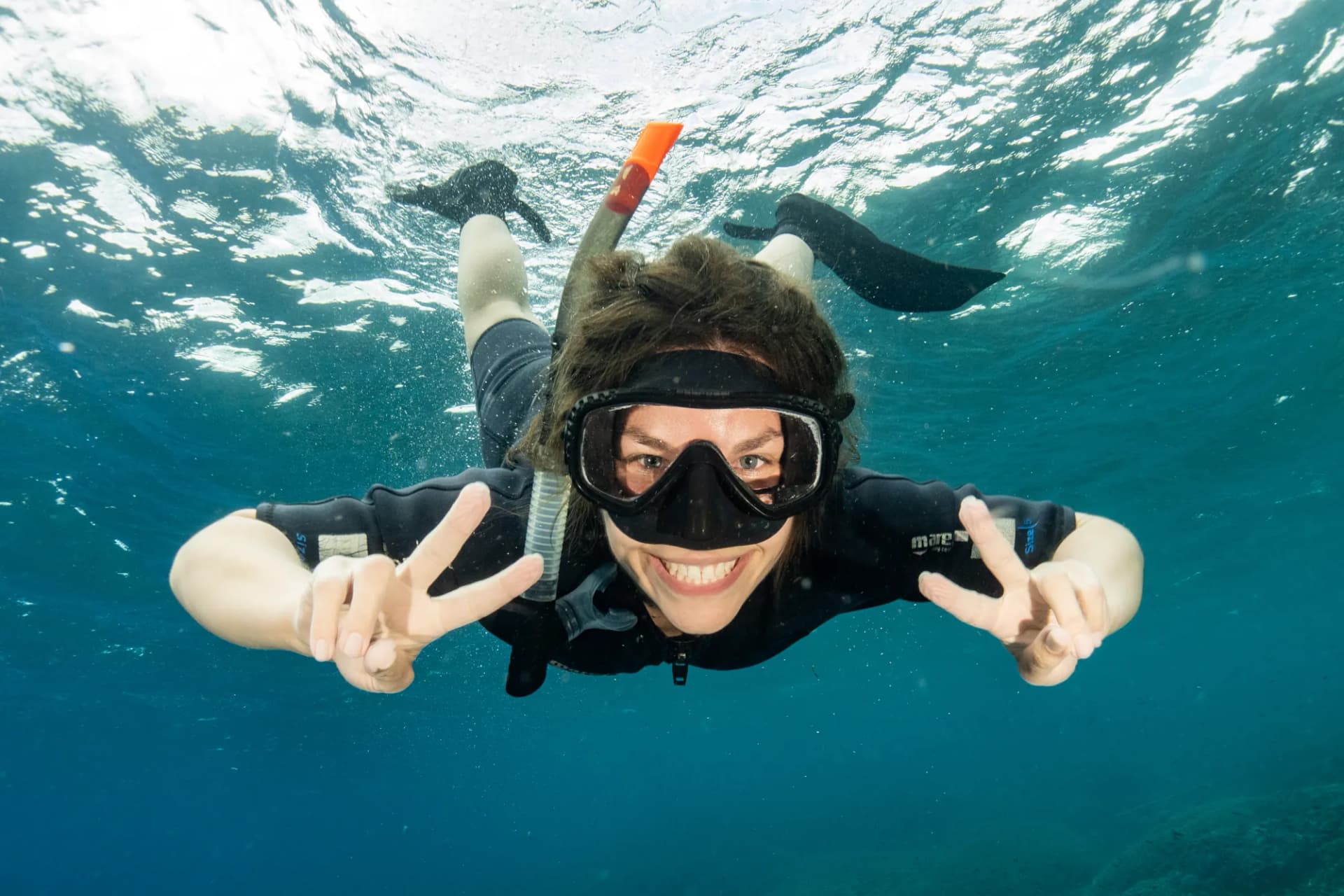
Snorkeling is the easiest way into the ocean. Mask, snorkel, fins, and you’re in. No tanks, no certification, no theory exam. That’s the whole appeal, and it’s also where the gap starts.
We’ve had thousands of guests aboard our liveaboard trips, and the pattern repeats. Certified divers turn up already knowing how to hold themselves in the water, why they shouldn’t touch anything, how close is too close. They learned it in training. Snorkelers get handed a mask and a briefing on where to swim. If you’re planning one, see the Komodo boat trips for snorkelers.
Nobody tells them the rest. That one careless fin kick can snap coral that took decades to grow. That swimming straight at a turtle changes what it does for the next hour. That drifting off alone pulls a guide away from twelve other people who need watching.
So, we wrote this.
Why snorkeling etiquette actually matters
It isn’t a list of rules for the sake of rules, and it won’t make your holiday feel like an exam. You’re getting into someone else’s house. It’s full of animals that live there and people who came to see them, same as you. What you do in the water lands somewhere, whether you notice it or not.
The fix isn’t complicated. You don’t need a hundred logged dives to snorkel well, you mostly need to notice a few things nobody told you to notice. Once you do, the whole thing improves, safer for you, easier on the reef, less irritating for everyone sharing it. It’s the same thinking behind traveling responsibly anywhere in Indonesia, just applied to the two hours you spend face-down in the water.
First time in a mask or tenth trip on a boat with us, this is the stuff worth knowing before you get in.
Before you get in

You’re a guest, not a customer
The moment you book a trip, it’s easy to think of the ocean as another destination to check off. But once you’re in the water, you’ve actually stepped into someone else’s neighborhood. That shift in how you think about it changes everything.
Good guests respect where they’ve been invited. That means picking operators who aren’t just marketing the reef, but actually protecting it. It means checking your mask fits, your fins are comfortable, and your gear won’t fail once you’re floating above a reef. Five minutes of fussing around now beats a distraction or panic later.
It also means listening to your guide, even if you’ve snorkeled before. Every reef is different. Currents move differently. Wildlife behaves differently. Entry points shift. Your guide isn’t handing you rules for the fun of it, they’re teaching you how to enjoy the place without breaking it.
When you’re ready to enter, don’t rush it. No splashing, no thrashing, no loud movements. You’re not invading a space, you’re arriving in one. Settle your breathing, let your eyes adjust, and let what’s there reveal itself at its own pace. The stuff you’ll actually remember happens when you slow down.
Your job is being easy to account for
Snorkeling safety sounds like it’s about you as an individual, but it’s actually about your whole group, most of all your crew.
Stay with your buddy or group. Know where the boat is at all times. Every few minutes, surface and check you’re still where you meant to be. Currents move you further than you think without you noticing.
The reason this matters isn’t theoretical. On our liveaboards, when someone drifts away from the group, everything stops. The crew’s attention shifts from showing people incredible reef life to running a search. Instead of watching the water, they’re watching for the person who went missing. One missing snorkeler pulls a guide away from twelve others who need eyes on them.
When you stay findable, the crew can actually do their job, keeping watch, spotting hazards, making sure everyone’s having a good time. Follow what your guides ask you to do. They’re not limiting your adventure, they’re just making it actually possible.
What the reef actually needs
Buoyancy is everything
Ask about snorkeling damage and people say “don’t touch the coral.” But that’s not where most damage happens. It’s your fins.
You don’t need perfect technique. You just need to stay horizontal and relaxed. Keep your body flat in the water so your fins drift clear of the reef. Go slow. Fast kicks tire you out and make your fins hit things you don’t see. Slow movement gives you control and lets the animals around you actually settle instead of panicking.
That’s it. Horizontal, slow, aware of where your fins are. Once you nail that, the reef below you stays untouched.
Coral isn’t what you think
Coral is an animal. Thousands of tiny polyps building colonies that take decades to grow. Break a branch and you’ve damaged decades of building. One scratch that looks harmless can leave the coral stressed and open to disease. Multiply that by hundreds of snorkelers over a season, and a whole section gets sick.
Even the grey, broken, or dead-looking coral matters. It shelters juvenile fish. It’s the foundation new coral grows on. It breaks waves before they hit the shore. “Just sand” isn’t empty either, it’s usually home to stingrays, garden eels, and creatures perfectly camouflaged into the bottom.
Don’t assume what looks inert is actually dead. Assume it’s doing something.
Your sunscreen matters too. Oxybenzone and octinoxate absorb UV for you, and they stress coral while doing it, which is why Hawaii and Palau have banned both. The catch is that “reef safe” is a marketing phrase, not a standard anyone checks, so a bottle can carry it on the front and still list them on the back. Read the ingredients, not the packaging. Easier still, need less of it: a long-sleeved rash guard covers most of what you would otherwise coat in lotion.
Protecting coral isn’t one big action. It’s a thousand small ones, happening every time someone enters the water. Your buoyancy, your speed, your sunscreen choice. They stack.
Respect wildlife enough to leave it alone

Learn what animals are telling you
Animals communicate stress. Once you know the signals, they become obvious.
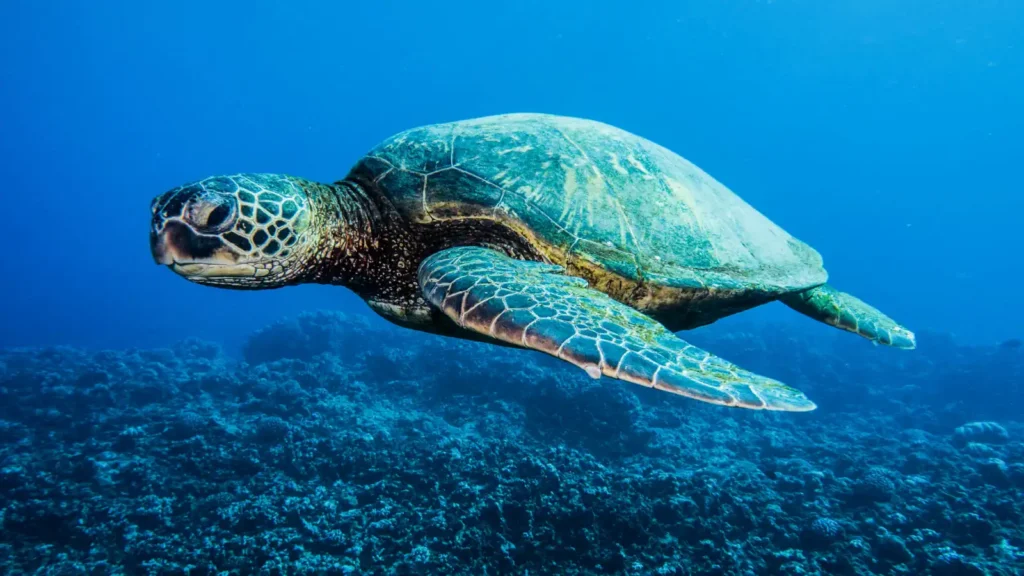
A sea turtle stops eating, lifts its head repeatedly to watch you, swims away, it wants space. A manta ray changes direction, speeds up, or abandons the cleaning station where it was feeding, the encounter is already too close. An octopus shifts color, tightens its arms, or disappears into a crevice it’s stopped exploring and started hiding.
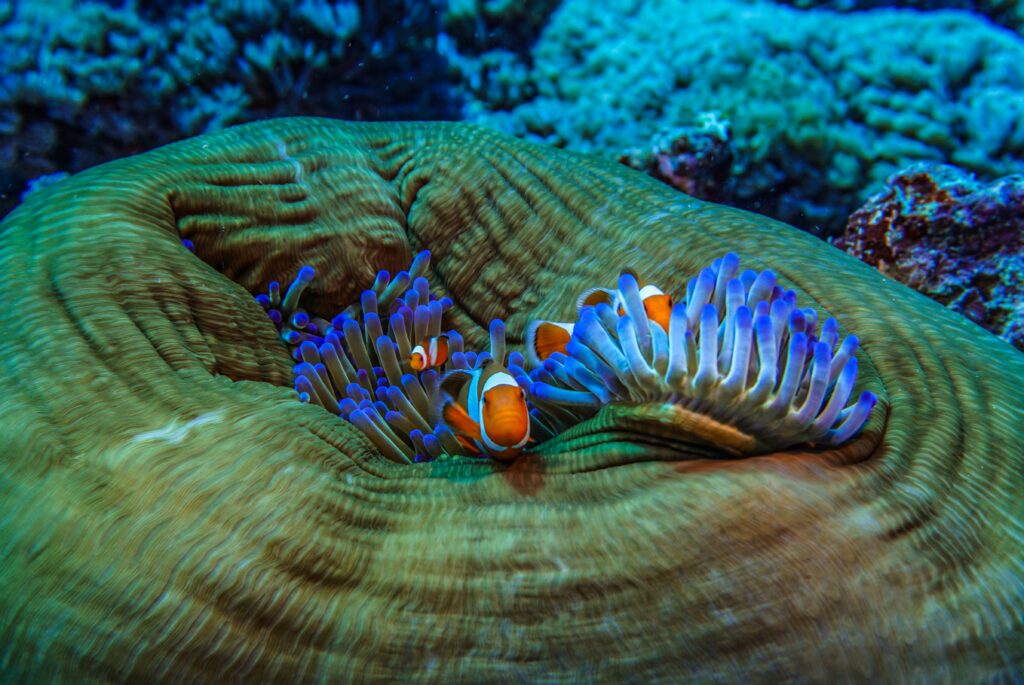
Reef fish are even more honest. When you approach fast, feeding stops. Cleaning stops. Schools scatter. The reef was functioning fine. Now it’s in freeze mode because you’re there.
The difference between a good encounter and an intrusive one is simple: does the animal keep doing what it was doing before you showed up? If it changes behavior because of you, you’ve already crossed the line.
Moving less means seeing more
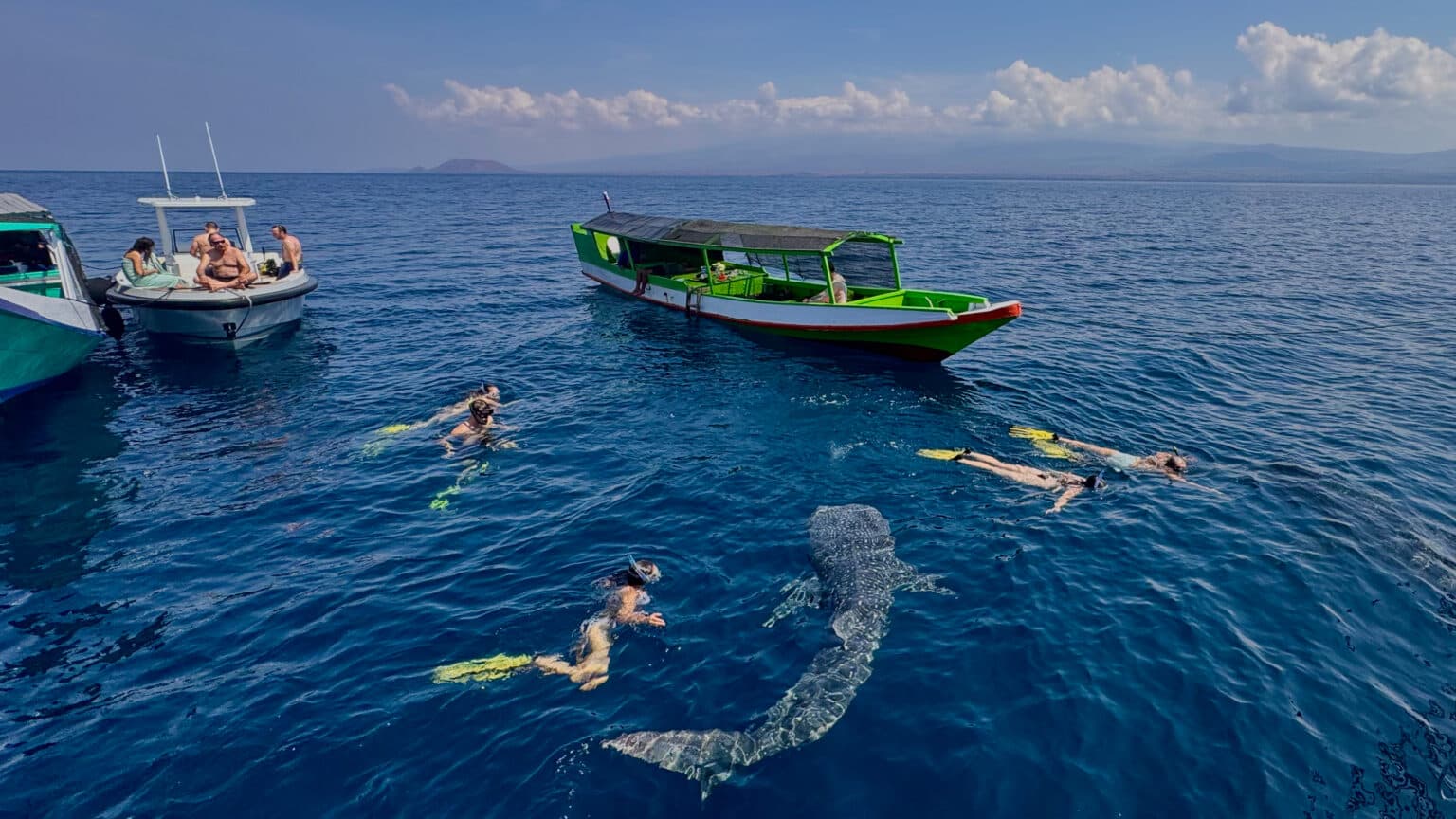
This applies everywhere, to every species. Stingless jellyfish in the Togean Islands’ marine lakes are delicate and unique, but chasing them or scooping them for photos disrupts an entire micro-ecosystem. Whale sharks look too big to be bothered, but swimming in front of them or touching them interrupts their feeding and forces them to redirect. Size doesn’t matter. The principle does: learn the species, notice the animal’s response, adjust.
The instinct is backwards: people chase every turtle and ray they see, worried they’ll miss it if they don’t get closer. That’s usually the fastest way to end the encounter.
Experienced snorkelers do the opposite. Slow down. Float quietly. Let the reef settle. Fish return to feeding. Turtles continue grazing. Shy animals that bolted minutes earlier often come back once they stop seeing you as a threat.
Sea turtles illustrate this perfectly. When one swims away, following it almost never works. Sea turtles don’t know if you’re curious or a predator. If they keep swimming, they’re burning energy they need for feeding, resting, or reaching the surface to breathe. One person following for a minute seems small. Scale it to dozens of snorkelers a day and you’ve stolen hours of a turtle’s life just to get a closer look.
Same with feeding fish. Throwing food creates a frenzy that looks exciting, but it rewires their brains, they start expecting people instead of foraging. Aggressive species gather in unnatural densities. Smaller fish get pushed out. Leftover food tanks the water quality. You’ve traded a few seconds of spectacle for a broken reef ecosystem.
A reef isn’t performing for you. It’s functioning. The less you interrupt those functions, the more real the experience actually is.
The camera changes how you move
The gear got good. Action cameras, phones in housings, everyone comes back with footage. What changed with it is how people behave in the water, and mostly not for the better.
Watch yourself for these: swimming straight at a turtle, closing in on a manta ray with four other snorkelers, hovering over an octopus den so it can’t retreat. Every animal needs a way out. If your position forces it to change direction or abandon what it was doing, you stopped observing and started interfering.
Then there’s making them perform. Tapping coral to flush out an octopus. Chasing a school for the shot. Duck diving at a whale shark again and again to get closer. It works, sometimes, and what you capture is an animal reacting to being harassed. Not the behavior you came for.
The counterintuitive bit is that stillness gets you better footage. Pick a spot, stop moving, wait. Fish come back. The octopus comes out on its own. Animals approach a calm predictable snorkeler far more readily than one swimming at them. Most of the shots worth keeping came from someone who held position and let it happen.
And some encounters are better left unphotographed. Watch it happen instead.
Everyone shares it

Crowds happen fast
Watch what happens when someone spots wildlife. Everyone swims toward it immediately. What could have been a calm encounter turns into a stressful frenzy, the animal bolts, and half the group didn’t even get to see it.
Approach slowly. Give space. Sometimes the best view isn’t the closest one, it’s the one where you can actually see what’s happening without blocking someone else’s line of sight. Your fins matter here too, same as around coral, a careless kick hits another snorkeler, dislodges their mask, startles someone observing quietly nearby.
Point calmly if you spot something. Your guide will get everyone there without turning it into a race.
The trash you didn’t make is still your problem
Don’t take shells or coral home, even if they look abandoned. Shells house hermit crabs and other animals. Broken coral scaffolds the reef and shelters organisms you can’t see. The only souvenir worth keeping is what you photograph or remember.
If you see floating plastic, food wrapper, anything safe to grab, pick it up. One piece of trash is nothing. Thousands of snorkelers picking up one piece is everything.
Before you book, choose operators who actually care, ones that invest in conservation, follow wildlife guidelines, and prioritize reef health over spectacle. Every booking is a vote. Ours run small: a private snorkeling trip in Nusa Penida, the Nusa Penida day trip from Bali, or a day around the Gili Islands, all with guides who brief you properly before you get in.
The questions before you go in
Before you enter the water, ask yourself the things that matter. Do you know where the boat is? Where your buddy is? If you can’t answer fast, you’re not ready. Can you float without touching the reef? If you’re uncomfortable or unstable, you’ll grip coral when you panic. Does your position or speed change what animals are doing? If yes, back off. Are you bringing trash in your pockets or fins? Are you picking better operators for your next trip based on what you saw today?
It’s not about being perfect. It’s about small choices that let the next turtle keep feeding, the next manta keep gliding, the next person see what you saw.
How you know it worked
The measure of a good snorkel isn’t how many turtles you saw or how close you got. It’s whether the turtle kept feeding. Whether the coral stayed untouched. Whether the reef kept functioning exactly the way it would have without you.
After thousands of guests on our liveaboards, one pattern repeats: the best encounters don’t come from swimming harder or chasing faster. They come from slowing down. From noticing. From letting things unfold on their own terms instead of forcing them into your frame.
That’s the whole thing. Every choice, how you hold your body in the water, whether you follow that animal, if you pick up trash on the way back to the boat, which operators you book next time, they stack. One snorkeler making thoughtful decisions is invisible. Hundreds doing it reshape whether these reefs survive the next decade. You don’t need to be perfect. You need to be the person who notices and adjusts.
The ocean doesn’t owe you access. Treating it that way, not as a theme park but as a functioning place that was here first, is how you earn the right to be in it. And maybe do a tiny bit of good while you’re there.
Our oceans deserve better
Reefs in high-traffic areas already take damage from careless snorkeling. Indonesia’s marine corridors, places like Menjangan, Gili Meno, and the outer islands can handle visitors, but only if visitors handle them right. The places that stay perfect are the ones where people care enough to be inconvenient with their cameras.
If you want longer than an afternoon in the water, the 3-day Komodo liveaboard and the 4-day Lombok to Komodo crossing are built around exactly this pace. Or tell us what you want to see and we will build it around guides who know these reefs and can show you where the patient approach still pays off. The difference in what you see, and in what the reef gets to keep, is everything.
Frequently asked questions
Yes. Many beginners who can’t swim still enjoy snorkeling safely by wearing a life jacket, staying close to their guide or buddy, and following the safety briefing. Be honest about your swimming ability, never snorkel alone, and stay within the designated area.
Don’t panic. One brief contact rarely causes lasting damage. If you do touch it, move away slowly and avoid that area for the rest of your snorkel. The real danger is repeated contact from hundreds of visitors, not a single accidental brush. Focus on adjusting your buoyancy so it doesn’t happen again.
If the animal changes behavior because of you, you’re too close. If it keeps doing what it was doing before you arrived, you’re fine. A safe rule: if you have to kick hard to get closer, you’re already far enough away.
No. Even if they approach you, don’t touch them. You don’t know if you’re introducing bacteria or damaging their protective slime layer. Observe from a distance and let them decide whether to stay.
Fish learn to expect food from people instead of foraging naturally. Aggressive species gather in unnatural numbers, pushing smaller fish away. Leftover food tanks water quality. You’ve rewired their survival instinct for a 30 second video.
Read the label. Avoid oxybenzone and octinoxate, which are linked to coral bleaching. Better option, wear a rash guard or UPF clothing and use minimal sunscreen. Less product in the water is always the safest bet.
Take a photo for documentation, but don’t touch it or try to “help.” Report it to your guide or the operator so they can flag it with local conservation groups if needed. The best help is preventing further damage through responsible snorkeling.
Point it out calmly to your guide. They’re there to manage the group and protect the site. Don’t confront other snorkelers directly in the water.