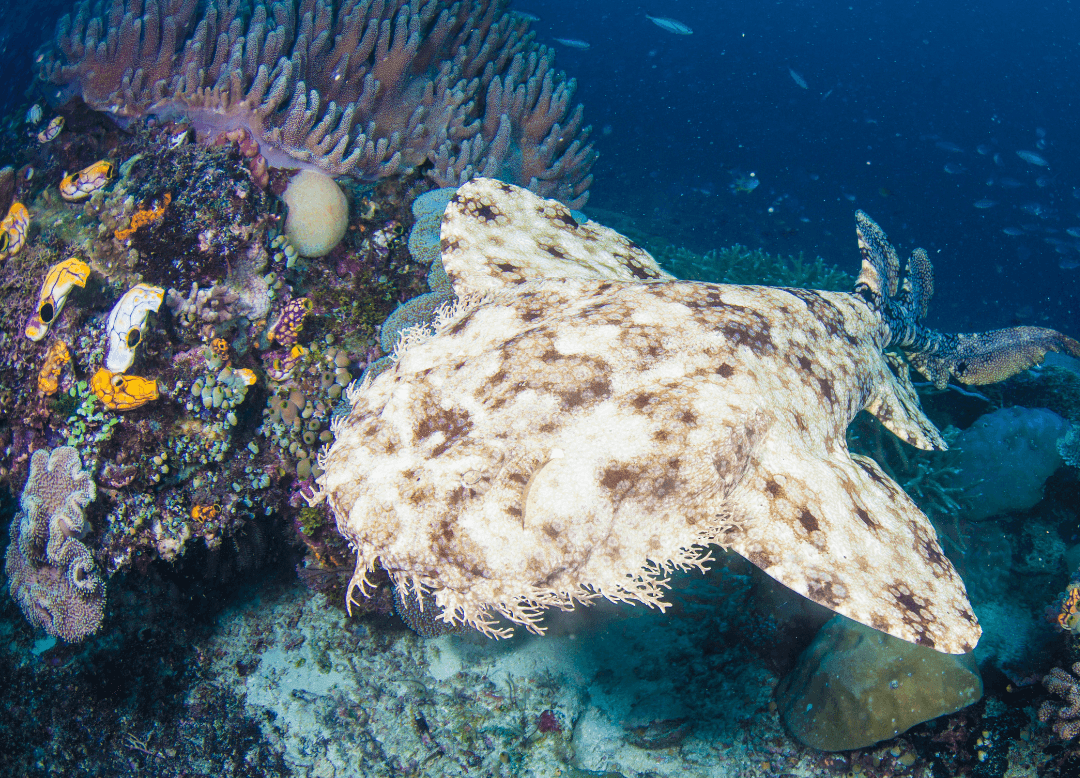
Wobbegongs are carpet sharks of the western Pacific and eastern Indian Ocean. The one divers meet in Raja Ampat is the tasselled wobbegong, Eucrossorhinus dasypogon, which lives from New Guinea across northern Australia. The spotted and ornate wobbegongs of New South Wales are different animals, from the genus Orectolobus. In Raja Ampat every shark and ray, wobbegongs included, has been protected since the regency law of 2012 and the shark sanctuary ratified in 2013. Here is what makes these ambush predators worth a night dive.
Variety of Wobbegong Shark Species
The wobbegong family, Orectolobidae, has 12 species in three genera: ten Orectolobus wobbegongs, including the spotted and the ornate, the cobbler wobbegong in a genus of its own, and the tasselled wobbegong, the only member of Eucrossorhinus and the one you will see in Raja Ampat. All of them share the flattened body, the mottled skin and the fringe of skin flaps around the mouth that let them disappear against the bottom.
Reproduction and Growth
One of the most remarkable aspects of wobbegong sharks is their unconventional reproductive strategy. They undergo a gestation period of 10 to 11 months before giving birth to live offspring. The youngs develop within eggs inside the maternal womb.
Distinct Feeding Habits and Remarkable Abilities
Wobbegongs are clever ambush predators, well-known for their powerful bite. As bottom-dwellers, they use their lower flippers for a unique waddling motion as they move along the ocean floor. What truly distinguishes them is their unique ability to bite their own tails, setting them apart from other shark species. When their prey exceeds their swallowing capacity, they hold onto it until it meets its demise. It allows them to consume it in bite-sized portions, effectively utilizing their surroundings.
Interactions with Divers
Divers frequently have the chance to encounter wobbegong sharks in their natural habitat. The biggest, the spotted wobbegong of Australia, reaches about 3 metres. The tasselled wobbegong of Raja Ampat is a compact species of around 1.2 metres, which is part of why divers get so close. It’s not uncommon to find multiple wobbegongs gathered in one area, sometimes resting beside each other or even on top of one another. There are also instances where wobbegongs exhibit unusual midwater swimming behaviors, interacting with divers, which deviates from their typical sedentary behavior.
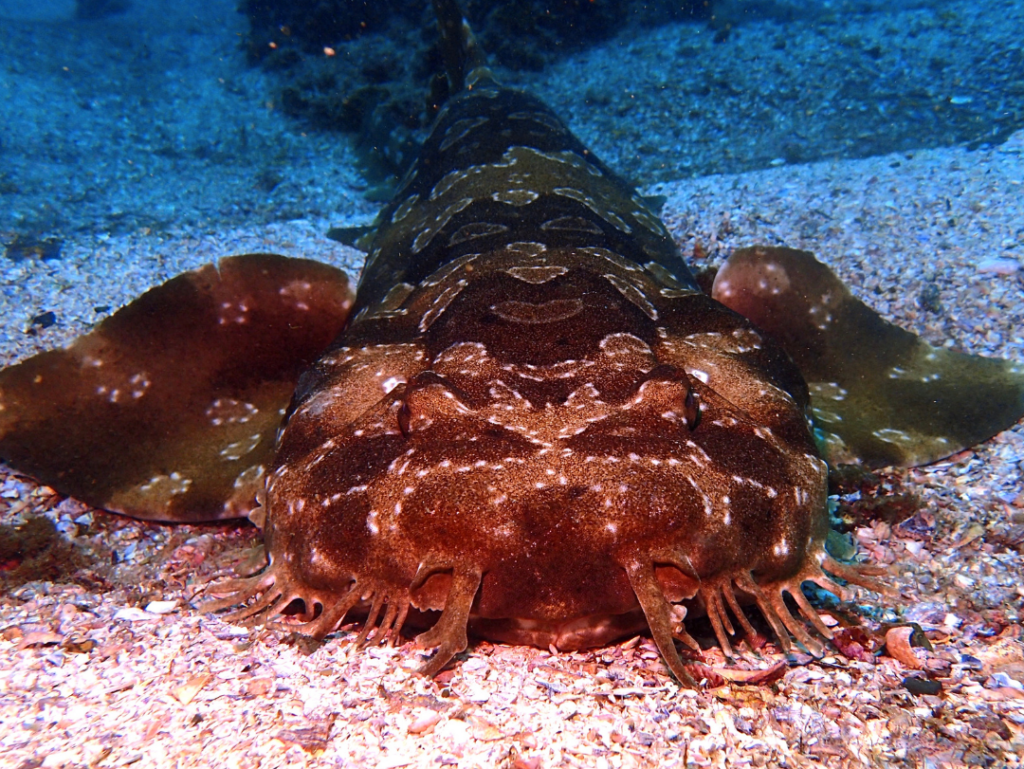
The Wobbegong Shark unique characteristics, diverse species, and exceptional behaviors make them an extraordinary sight for divers exploring the waters of Raja Ampat. Given their integral role in the aquatic ecosystem, it is crucial to prioritize their conservation.
So if you want to encounter a wobbegong shark, join us for a scuba diving trip in Raja Ampat.